Mint Care Guide: Light, Water, Soil, Containment
Practical mint care for pots: containment, 4–6 hours of sun, moist soil, harvest tips, rust checks, and pet safety.
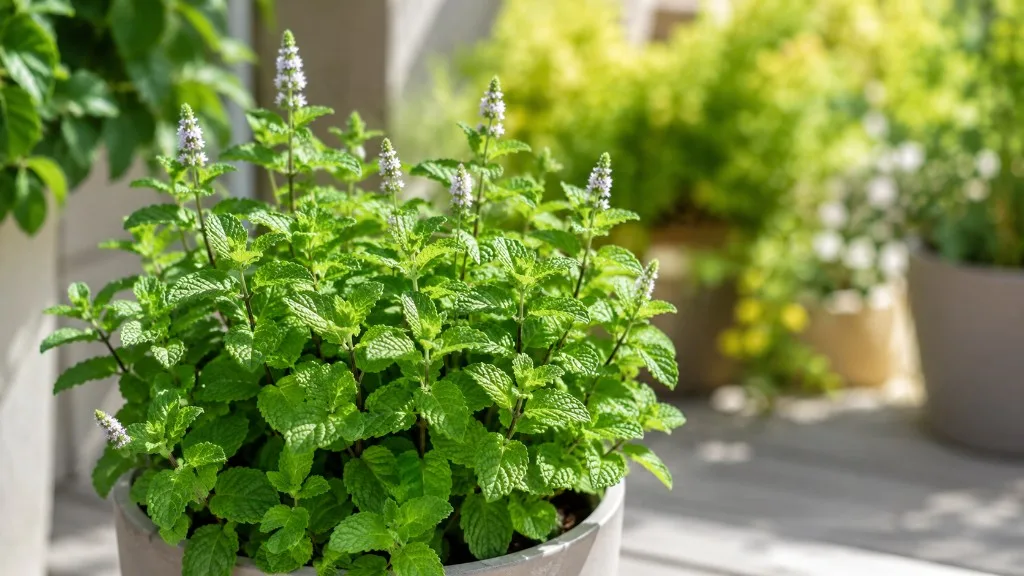
Buy a small mint seedling, ignore the pot for one summer, and you may find rhizomes through a drainage hole, stems rooting into the neighbor’s planter, and a yard corner that smells like spearmint forever. Mint is one of the easiest culinary herbs to keep alive and one of the hardest to keep contained. That combination defines practical mint care more than any watering calendar.
By Sai Ananth, B.Pharmacy (pharmacognosy background) — Reviewed by Prof. Michael Turner, horticulture educator focusing on vegetable and home-garden growing.
This guide is for people who want fresh spearmint for chutney, tea, mojitos, or everyday cooking — usually from a balcony pot, patio container, or sunny windowsill — without turning a garden bed into a mint monoculture. You will leave with a clear setup for light, moisture, soil, harvesting, disease watch-outs, and pet placement.
Who This Guide Helps
Use this page when you want one complete container-mint framework: which Mentha to buy, how to stop rhizomes escaping, how to water and light for flavorful tips, and when rust or pets change the plan. Jump to the canonical mint care hub when you already know the symptom and need a deeper topic or problem page — for example watering, light, rust disease, or yellow leaves.
You are succeeding when young tips stay aromatic, stems stay bushy after pinching, the saucer empties after every soak, and monthly checks find no white runners exiting drainage holes.
What Mentha Is and Why Containment Comes First
Mint is the everyday name for plants in the genus Mentha, in the mint family Lamiaceae. Most share square stems, opposite leaves, fast growth, and aromatic essential oils that give the crushed leaf its smell. North Carolina State Extension describes Mentha spicata (spearmint) as a flowering aromatic herb that spreads by rhizomes and stems that root wherever they touch soil, which is why gardeners treat containment as care, not an optional extra. (NC State Extension)
Survival is easy. Productive, flavorful, non-invasive mint takes a few deliberate choices. Grow it as a harvest crop, not a permanent sculpture: fresh shoots and oil-rich tips matter more than preserving old woody stems. In cold winters, top growth may die back and resprout from underground roots; in mild climates and many Indian plains gardens, it can stay productive nearly year-round with a winter slowdown.
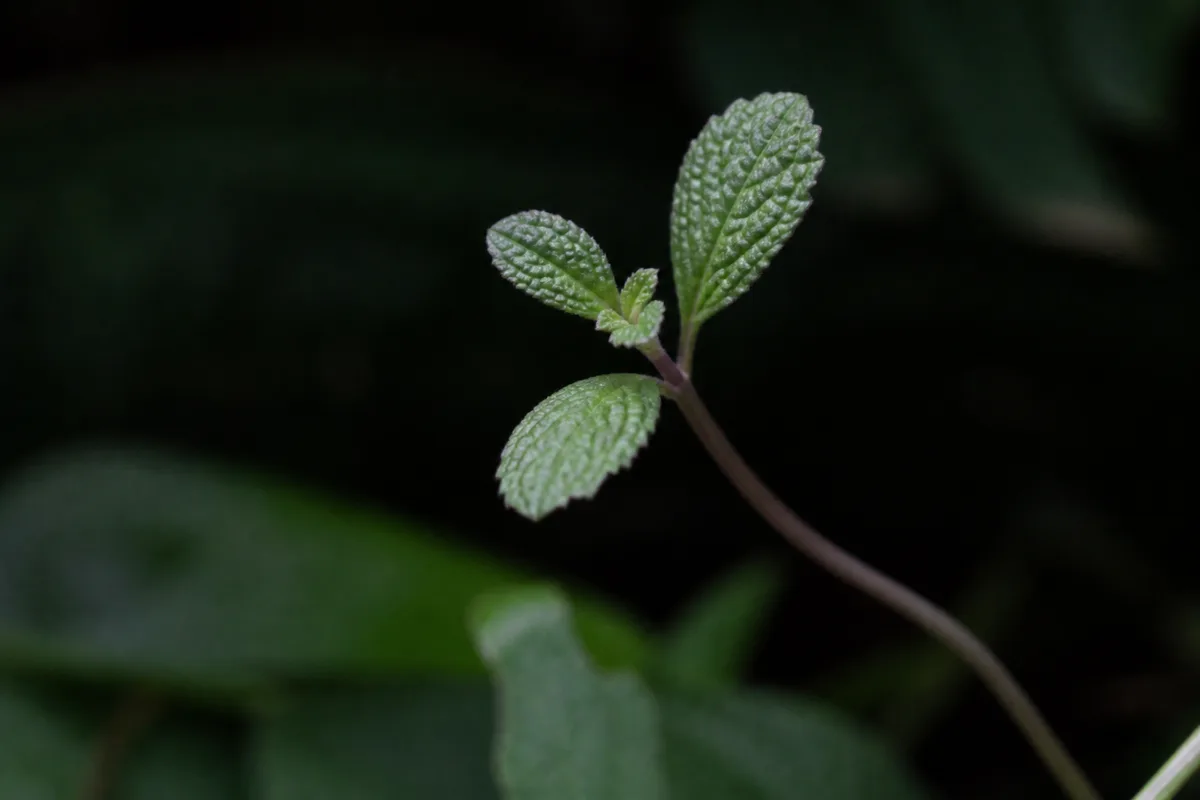
The square stem is a useful ID check. Roll a stem between your fingers and you should feel four sides — the same Lamiaceae clue you get with basil and oregano. Crush a leaf: the youngest tips release the strongest aroma, which is why harvest timing affects flavor as much as fertilizer does.
Spearmint, Peppermint, Specialty Types, and Pennyroyal
Garden centers often label plants simply “mint.” The two you will meet most often are spearmint and peppermint.
| Type | Typical use | Flavor cue | Containment note |
|---|---|---|---|
| Spearmint (M. spicata), pudina | Chutney, raita, sauce, mojitos | Milder, carvone-forward | Aggressive rhizomes; pot first |
| Peppermint (M. × piperita) | Tea, desserts, cooling drinks | Sharper menthol | Same escape habits; 12–16” pot helps |
| Apple / chocolate / pineapple mint | Specialty garnish, tea | Softer or fruity mint | Same rules; variegated types scorch easier |
| Pennyroyal (M. pulegium) | Not kitchen mint | Distinct, not culinary spearmint | Keep away from pets; do not substitute |
Spearmint (Mentha spicata), also sold as garden mint or pudina, has bright green, lightly crinkled leaves and a sweet, mild aroma. It is the default for Indian chutneys, raita, mint sauce, and mojitos where you want herb flavor without intense cooling. NC State lists mature height around 1–2 feet with vigorous spread if unconstrained. (NC State Extension)
Peppermint (Mentha × piperita) is a hybrid of watermint and spearmint with higher menthol, usually darker leaves, and a sharper cooling taste. (NC State Extension) Care mirrors spearmint: sun to partial shade, consistent moisture, and container confinement. Specialty types — apple mint, chocolate mint, pineapple mint — follow the same containment rules. Utah State University Extension notes that variegated pineapple mint can scorch in harsh full sun, and that seed-grown mint often fails to come true because Mentha hybridizes freely. (Utah State University Extension) Buy a named plant, take cuttings, or divide a clump when you care about a specific flavor.
Pennyroyal (Mentha pulegium) is related but is not a culinary substitute for spearmint. The RHS flags pennyroyal as harmful if eaten in horticultural safety guidance and urges buying correctly named plants for intended use. (RHS) Keep it out of pet-accessible spaces and do not treat it as kitchen mint.
Quick Mint Care Snapshot
For healthy container mint, give full sun to partial shade (about 4–6 hours of direct light), keep the mix evenly moist but never soggy, use a draining pot large enough to hold moisture through a hot day, and harvest often so the plant stays bushy. UC IPM recommends at least 4 to 6 hours of sun and growing mint in a container with well-drained soil because it becomes invasive in open beds. (UC IPM)
| Care factor | Baseline target | Deeper guide |
|---|---|---|
| Light | Full sun to part shade, 4–6+ hours | Mint light guide |
| Water | Top ~2 cm dry, then soak and drain | Mint watering guide |
| Soil | Rich, moisture-holding mix with drainage; pH ~6.0–7.0 | Mint soil guide |
| Containment | Pot elevated; block rhizome escape | Mint hub |
| Harvest | Pinch tips regularly; remove flower spikes | Mint pruning guide |
A mint pot in Bengaluru monsoon humidity, a dry Rajasthan balcony, a London patio, and a Toronto windowsill will not dry at the same speed. Good care is matching moisture to how fast your pot uses water, not memorizing a fixed day of the week.
Container Setup That Actually Stops Escape
If you remember one rule from this guide, make it this: grow mint in a container unless you deliberately want a managed ground cover. The Royal Horticultural Society advises growing mint in pots to keep plants contained because underground stems (rhizomes) spread into surrounding soil. (RHS) Utah State University Extension is equally direct: mint is best planted in containers or where roots are confined, because it spreads quickly and is hard to eradicate once established. (Utah State University Extension) UF/IFAS likewise recommends containers so mint does not overrun the rest of the garden. (UF/IFAS Gardening Solutions)
Mint spreads three ways at once. Rhizomes travel under the soil surface. Stolons — stems that run above ground — root at nodes that touch soil. Stem fragments with a node can restart if buried. That is why “just a little mint patch” often becomes a permanent project.
Pot Size, Elevation, and the Drainage-Hole Problem
Aim for a pot roughly 12–16 inches (30–40 cm) wide with at least 6–8 inches of soil depth, and preferably deeper — NC State specifically suggests a 12–16 inch pot for peppermint to help control aggressive spread. (NC State Extension) Too small and you water constantly in heat; too huge and unused mix stays wet around a modest root system. Drainage holes are mandatory — mint needs moist soil, not a sealed bowl of stagnant water.
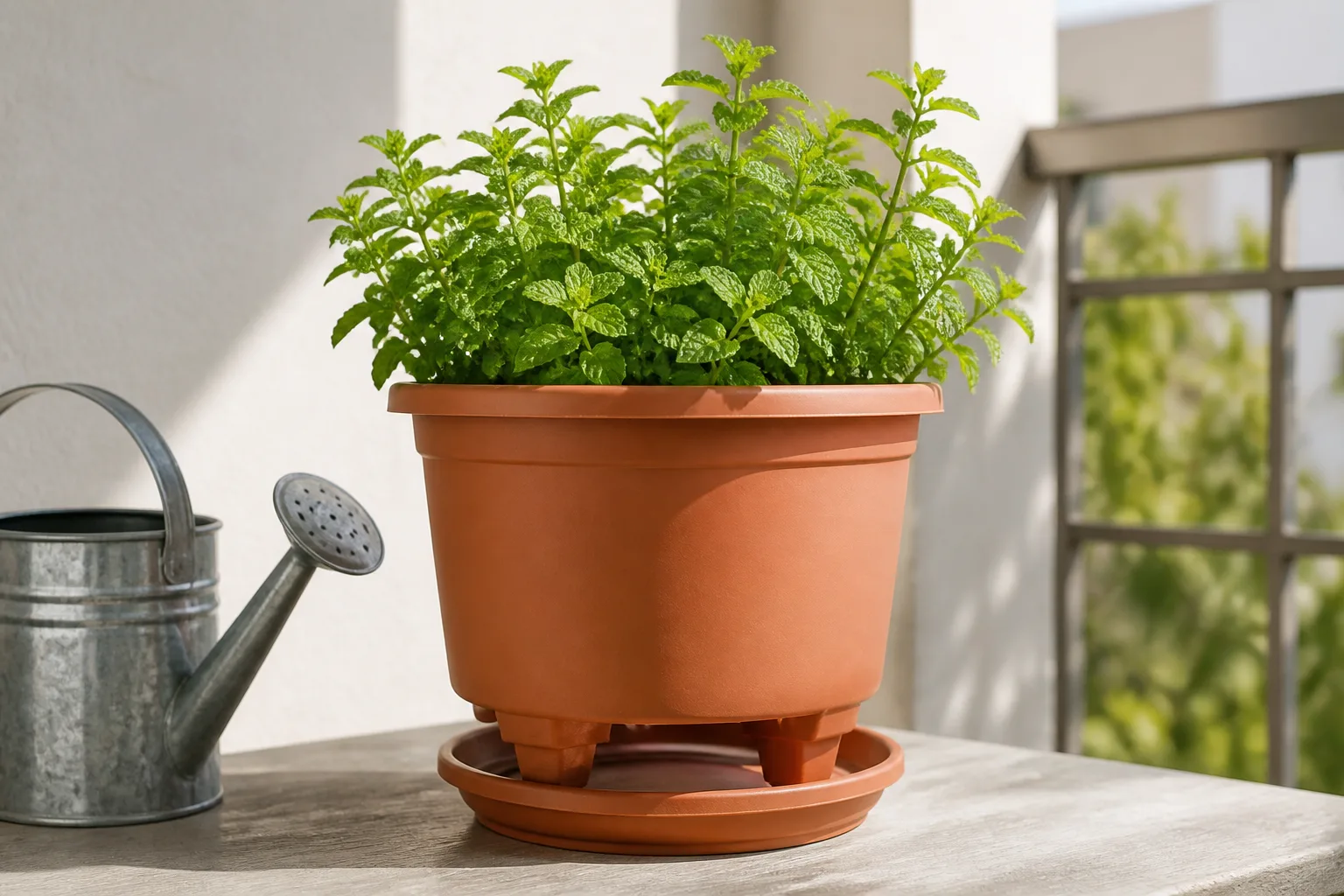
Here is the mint-specific twist: rhizomes will exit drainage holes and root into soil, lawn, or cracked pavers under the pot. Elevate the container on feet or a trivet, and place a solid saucer or barrier between the pot and open ground so roots cannot penetrate downward. Check monthly for white rhizomes poking from holes and trim them before they anchor. Trailing stems that touch soil in a neighboring pot can layer there — harvest or lift them before they root.
What we logged on real pots: On an east-facing Bengaluru balcony, a 12-inch terracotta of spearmint (pudina) sat directly on a soil-filled planter trough in early summer. By week 6–8, thin white rhizomes had exited two drainage holes and begun rooting into the trough mix. The same cultivar moved to a 14-inch plastic pot on 3 cm feet over a solid tray for the rest of the season produced no under-pot runners through August. In May heat that 14-inch pot needed a full soak when the top ~2 cm dried — often every 1–2 days. During cloudy monsoon weeks the same pot often waited 3–5 days. Those intervals are observations, not universal rules; your mix, wind, and root mass will shift them.
Sunk Pots and a Containment Failure Checklist
An in-ground option is a sunk container: bury a sturdy pot (or bottomless cylinder) so the rim stays above soil, plant mint inside, and cut any runners that climb the lip. Utah State University Extension recommends containers that extend about 3–4 inches above and 10–15 inches below the soil surface for rhizome containment. (Utah State University Extension) The RHS similarly suggests sinking a bottomless container or pot with large drainage holes and leaving the rim slightly above the surface so shoots cannot root over the top. (RHS) This reduces escape but is not foolproof — monitor regularly. Never compost mint roots where they can reroot in garden beds; bag infected or escaped rhizomes for disposal if local rules allow.
Containment failure checklist (observe monthly):
- White rhizomes poking from drainage holes or under the pot rim
- Stems rooting into adjacent pots or the trough below
- Mint appearing in neighboring beds more than a meter away
- Saucer or tray cracked so roots can reach open soil
- Shared herb trough with mint mixed among basil/cilantro (mint wins)
Light for Compact Growth and Strong Flavor
Mint grows best in full sun to partial shade. UC IPM states mint performs best with at least 4 to 6 hours of light a day. (UC IPM) NC State lists both full sun and partial shade as acceptable for spearmint. (NC State Extension) Enough light keeps internodes short, leaves fuller, and essential-oil aroma stronger. Dim windowsills keep mint alive but often produce pale, stretched, weakly flavored growth.
Indoors, place the pot within about a foot of a south- or west-facing window, or use a full-spectrum grow light for roughly 12–16 hours if natural light is weak — that photoperiod is a practical indoor norm, not a single extension mandate. Rotate the pot weekly so stems do not lean permanently. For placement troubleshooting and low-light symptoms, use the mint light topic above and the not enough light problem page.
Hot-Climate Shade and Variegated Scorch
In cool or mild summers, open sun usually produces the densest, most aromatic plants. In hot climates — Indian plains afternoons, Florida summers, desert southwest, Mediterranean midsummer — morning sun with afternoon shade often outperforms all-day scorch. UF/IFAS notes mint prefers light or part shade in Florida heat while still warning that unchecked runners overrun beds. (UF/IFAS Gardening Solutions) Look for brown, crispy patches on the sun-facing side: that is heat/sun stress, not a fertilizer failure. Move the pot, add light shade cloth, or shift to an east-facing rail, and keep soil moisture steady during heat waves. See sunburn and scorched leaves on mint when damage is already done.
Variegated mints need extra caution in harsh midday sun. If leaves bleach or crisp after a sudden move from shade to full sun, acclimate over 7–10 days instead of relocating overnight.
Watering Mint: Finger Test, Seasons, and Real Pot Intervals
Mint is a moisture-loving herb, not a swamp plant. Utah State University Extension recommends watering regularly during the growing season — often in the range of 1 to 2 inches per week depending on heat and soil — and warns that excess water promotes root and leaf diseases. (Utah State University Extension) UC IPM advises keeping the root zone moist without creating soggy soil, and prefers drip irrigation over sprinklers to reduce disease. (UC IPM) The RHS similarly keeps container compost evenly moist, especially in hot, dry weather. (RHS)
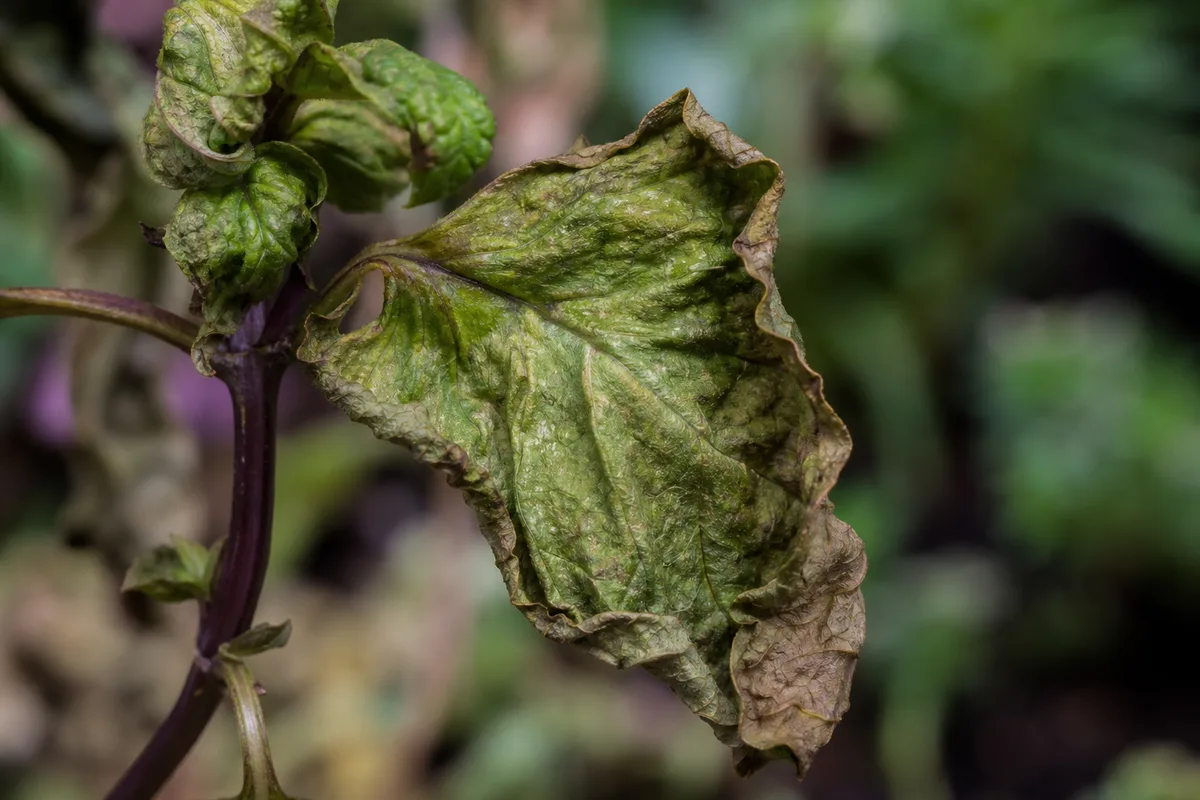
In home pots, translate that to a finger check: water when the top ~2 cm (about 1 inch) feels dry or barely moist, soak until water runs from the drainage holes, then empty the saucer within about 15–30 minutes. If you are still building the habit of checking soil before pouring, pair this with how to water indoor plants the right way — mint sits on the thirstier end of that spectrum, but the check-then-soak logic is the same. In hot active growth that may mean every 1–2 days; in cooler weather every 3–4 days is common — your pot size and mix override the calendar. Mint often wilts dramatically when dry and recovers after a thorough soak; repeated hard wilting still stresses flavor and invites pests. Use the watering row in the snapshot table when you want the dedicated mint watering deep-dive.
Water at the base in the morning so foliage stays dry overnight. Use a simple wilt check before you react: Wet leaves plus crowded stems raise pressure from rust and powdery mildew. Avoid the two failure modes that look opposite but both end in leaf loss:
Wilt + hot dry mix + light pot: thirst. Soak thoroughly, then return to finger checks rather than daily panic sips — see underwatering.
Wilt + cool wet mix + heavy pot + yellow lower leaves: overwatering or root stress. Stop watering until the top layer dries, clear blocked holes, and inspect roots if stems collapse — see overwatering and root rot.
In monsoon weeks pots dry slowly; on dry May afternoons they dry fast. In winter on a cool windowsill, growth slows and intervals lengthen even if the surface looks dry — check deeper before watering again.
Soil, pH, and Feeding Without Diluting Flavor
Mint prefers rich, moist, slightly acidic to neutral soil with reliable drainage. UC IPM targets roughly pH 6.0 to 6.5; peppermint guidance from NC State sits near 6.0–7.0. (UC IPM) (NC State Extension) Utah State University Extension describes rich, moist, slightly acidic conditions and notes most Utah soils work when amended with compost. (Utah State University Extension)
For containers, use a mix that holds moisture for a day or two but drains within hours. Clemson HGIC’s home-herb guidance sits in the same practical lane as other extension sources: give culinary herbs decent light, drainage, and harvest-driven maintenance rather than treating them like low-care foliage. (Clemson HGIC) This house recipe is editorial, not a single extension formula:
- about 60% quality potting soil
- 20% cocopeat or peat-free coir
- 20% compost or vermicompost
- plus 10–15% perlite if the base mix feels heavy
Never use dense garden soil alone in a pot — it compacts and swings between waterlogging and drought. Full mix troubleshooting lives in the mint soil guide.
Fertilizer should support leaves without pushing soft, tasteless growth. A light feed every 3–4 weeks in active spring–summer growth with diluted liquid seaweed or half-strength balanced fertilizer is enough for many pots. Utah State University Extension warns that over-watering and over-fertilizing promote rust and diminish mint oil production. (Utah State University Extension) Skip feed when the plant is newly repotted, stressed, or dormant. High-nitrogen granular feeds make lush garnish leaves with muted flavor — fine for volume, wrong for intense chutney or tea. See the mint fertilizer guide before escalating feed rates.
Harvesting and Pruning for Continuous Tips
Regular harvesting is mint care. Pinch or cut stems just above a leaf node once plants are a few inches tall; two shoots usually emerge below the cut and the plant bushes out. Utah State University Extension recommends harvesting once plants reach 3–4 inches, taking young stems and leaves, and cutting stems to within about 1 inch of the soil up to a few times a season just before bloom for major harvests. (Utah State University Extension) The RHS notes that harvesting young leaves regularly helps keep plants bushy and compact. (RHS)
Remove flower spikes as they appear if leaf flavor is the goal. Flowering shifts energy away from foliage and can leave leaves less aromatic — USU Extension notes oil content drops when plants bloom. (Utah State University Extension) Harvest late morning on a dry day after dew has dried when you want peak aroma for cooking or drying. Fresh stems keep several days in water in the fridge; dried leaves store airtight up to about a year; freezing chopped mint in ice cubes preserves flavor better than freezing whole leaves alone.
When a plant turns woody, sparse, and dull despite decent light and water, divide or restart from a clean cutting rather than nursing exhausted growth forever. Propagation is easy: stem cuttings root in water in roughly 1–2 weeks, and spring division splits rhizome clumps into new pots — details in the mint propagation guide and mint pruning guide.
Problems: Rust, Powdery Mildew, Yellow Leaves, and Pests
Most mint failures trace to wet foliage, stagnant air, weak light, or a pot that never drains. Diagnose from the root zone upward before spraying anything. Fix moisture and spacing first, then remove badly damaged growth once the plant stabilizes.
Mint Rust vs Powdery Mildew
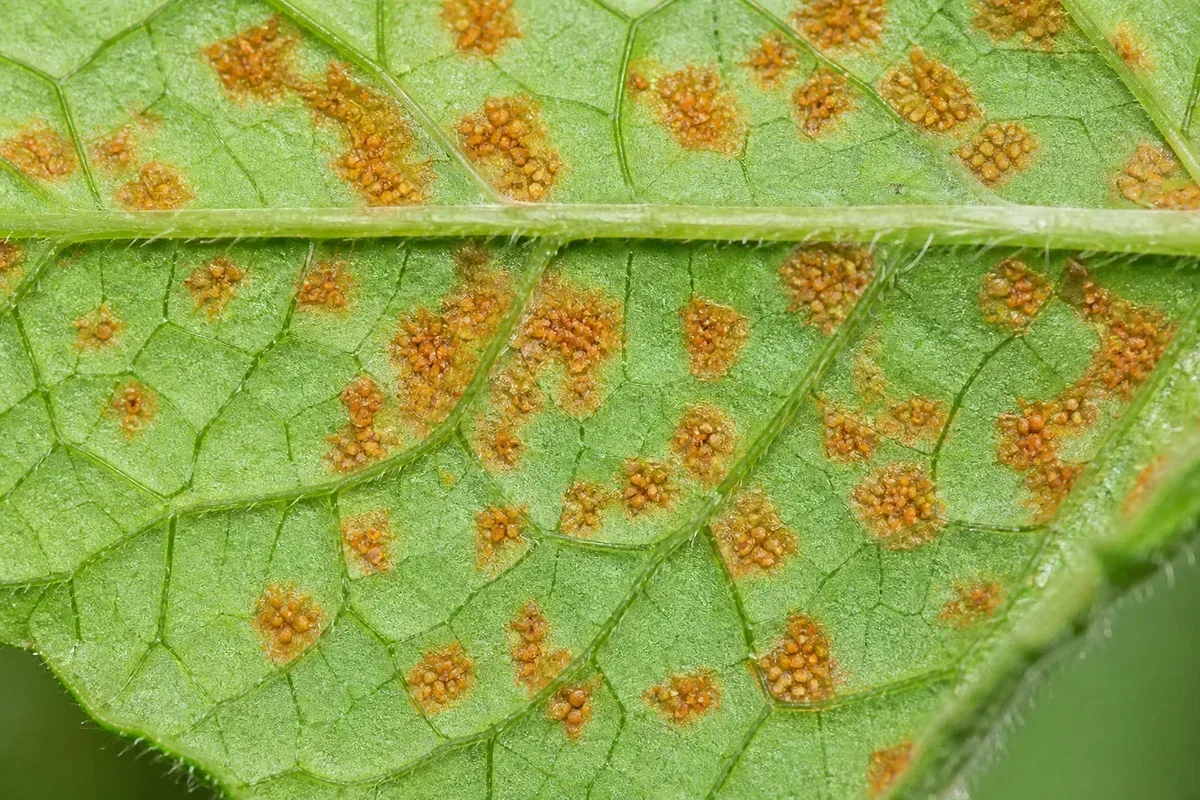
Mint rust (Puccinia menthae) shows as small raised spots that turn orange, reddish, or brown, often on leaf undersides, and can defoliate plants when ignored. Utah State University Extension lists mint rust among common diseases and recommends avoiding wet leaves overnight, using drip irrigation, and watering overhead only before mid-day if you must wet foliage. (Utah State University Extension) NC State also flags rust and leaf spot as common fungal problems on spearmint. (NC State Extension) Remove infected shoots early, thin crowded stems, improve airflow, and restart clean stock in fresh mix if rhizomes stay infected. Use the dedicated mint rust disease page for step-by-step recovery. Do not casually compost heavily infected rhizomes back into beds.
Powdery mildew appears as a gray-white powdery coating on leaves in humid, crowded conditions. Thin stems, water at soil level, increase light and airflow, and remove affected leaves. Persistent cases are covered on the powdery mildew on mint problem page. Do not confuse powdery mildew with dusty soil splash — wipe a leaf; mildew reforms as a coating on living tissue.
Yellow leaves need moisture context. Wet soil plus yellowing and soft stems points to overwatering or root stress. Dry soil plus wilt points to underwatering. Uniform pale stretch with long internodes points to low light. Orange pustules on undersides shift the diagnosis toward rust. Start with yellow leaves on mint when several causes seem plausible.
Leggy growth indoors is almost always insufficient light. Move closer to a bright window or add a grow light, then cut stems back hard to force bushier regrowth — see leggy growth.
Aphids cluster on soft tips and curl leaves; a strong water spray or insecticidal soap usually handles early outbreaks. Spider mites favor hot, dry indoor air — look for stippling and fine webbing. Fungus gnats signal chronically wet surface soil; let the top dry slightly between waterings and improve drainage. Quarantine supermarket herb pots before they share pests with your other plants.
Pet Safety, Oils vs Leaves, and Kitchen Placement
Culinary mint is for people, not a free snack for pets. The ASPCA lists Mentha species as toxic to dogs, cats, and horses, with essential oils as the toxic principles; clinical signs can include vomiting and diarrhea with significant ingestion. (ASPCA) Keep pots on elevated shelves, hanging baskets, or closed kitchen windows. Fresh leaf nibbling is a lower concern than a dog stripping an entire plant or exposure to concentrated mint essential oil products, which carry separate and often higher risks — oils are not the same as a few culinary leaves.
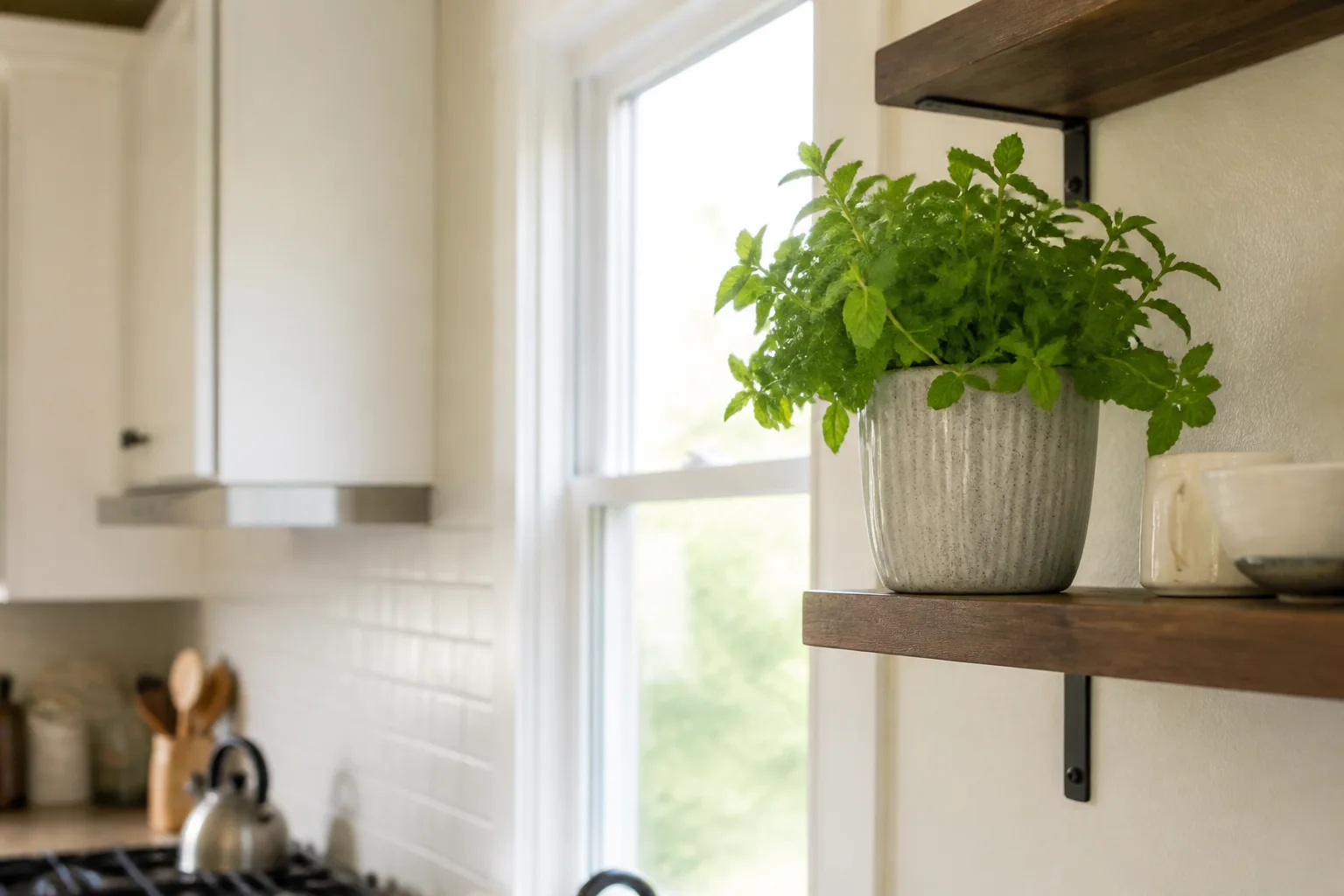
If significant ingestion is suspected, contact your veterinarian and ASPCA Animal Poison Control at (888) 426-4435. Choose pet-safer herbs for floor-level pots if you share your home with chewers; for broader indoor pet placement context, see pet-safe houseplants. Do not use unknown Mentha as medicinal self-treatment, and do not treat pennyroyal as kitchen mint.
Choosing Plants, Cuttings, and When to Restart
Buy a named cultivar when flavor matters. Seed packets labeled only “mint” often hybridize and will not match the parent plant you tasted. Prefer nursery pots with firm new tips, clean leaf undersides, and mix that does not smell sour.
Supermarket cuttings can work: choose stems with several nodes, strip lower leaves, root in clean water, then pot into draining mix once roots are a few centimeters long. Quarantine first — grocery herbs often carry aphids or fungus gnats. RHS propagation guidance favors division or cuttings from known plants for reliable results. (RHS)
Restart when growth stays woody and sparse, rust keeps returning from infected rhizomes, or the pot is solid root with runners exiting every hole. Divide in spring, refresh mix, and discard the exhausted center if needed. For step-by-step division and cutting technique, use propagation and repotting.
If mint already escaped into a bed, dig wide, remove as many white rhizomes as you can find, and monitor for weeks — fragments restart. Prevention (pots) beats remediation.
Winter Dieback and Climate Expectations
NC State lists spearmint hardy roughly through USDA zones 4a–9b, with top growth dying back in colder winters and plants resprouting from underground parts. (NC State Extension) USU Extension describes mint as generally hardy to about -20°F with reduced watering needs as growth slows. (Utah State University Extension) In frost climates, expect herbaceous dieback outdoors; protect containers from freeze-thaw cracking, cut spent tops, and resume active watering when new shoots appear. In mild Indian plains winters, growth often slows rather than fully disappearing — lengthen watering intervals and keep harvest lighter until days warm.
Indoors over winter, prioritize light over heat. A cool, bright window with moist-but-not-soggy mix beats a dark warm corner that stretches pale stems.
Related Guides
- How to water indoor plants the right way — soil-check watering habit that transfers to mint pots
- Best herbs to grow indoors — compare mint with other kitchen herbs for windowsills
- Pet-safe houseplants — placement ideas when pets share kitchen floors
- Symptom deep-dives: powdery mildew, leggy growth, sunburn, root rot
- Culture deep-dives already linked above: fertilizer, pruning, propagation, and repotting pages under
/plants/mint/
Conclusion
Mint care rewards clear priorities: contain the roots, keep the mix moist but draining, give 4–6 hours of usable light, and harvest often so flavor stays in the young tips. The same aggressive growth that makes mint invasive also makes it forgiving — cut it back, divide it, or restart from a cutting when a plant goes woody or disease-scarred.
If you remember one routine, make it this: check the top of the pot before watering, empty the saucer after watering, elevate the container so rhizomes cannot escape, and open the mint care hub when rust, mildew, yellowing, or watering questions need a deeper page than this overview. You are on track when tips stay bushy and aromatic and monthly hole checks stay clean.