Oregano Care Guide: Light, Water, Soil, and Harvest
Origanum vulgare
Grow oregano (Origanum vulgare) in full sun and free-draining soil. Learn when to water pots, harvest leaves, prune flower stems, and protect the roots from winter wet.
Oregano Care Guide: Light, Water, Soil, and Harvest
Start with wateringThe most common care mistake for OreganoWatering guide →Oregano care essentials
Light
Water
Keep oregano on the dry-to-medium side. Water new plants during dry spells; established plants in the ground rarely need extra water, while pots need occasional water when their compost dries in hot, sunny weather.
Soil
Average to sandy-loam soil with good drainage; avoid persistently damp, heavy ground.
Humidity
Temperature
Fertilizer
About Oregano
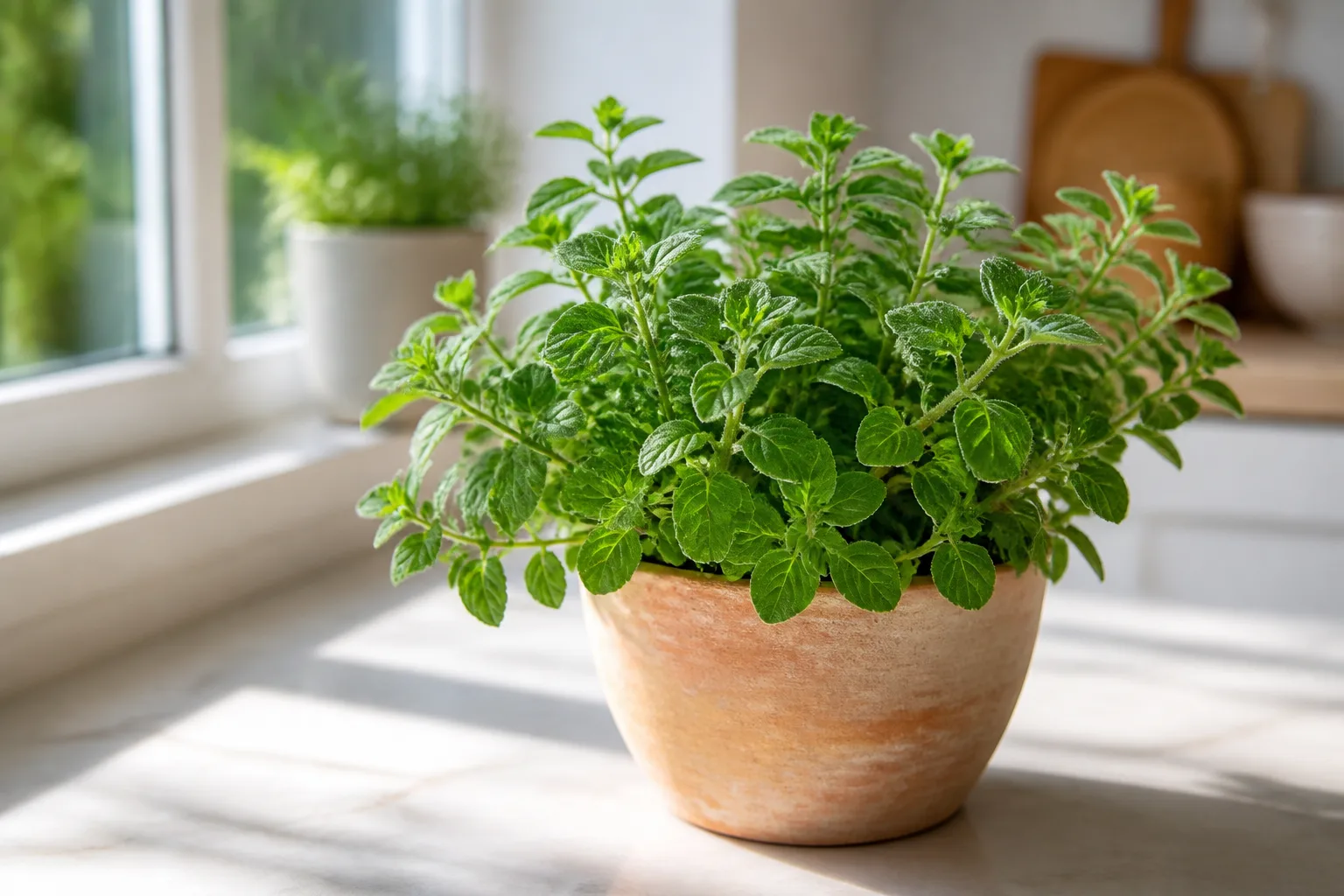
Oregano is native to Europe and Asia, typically reaches Usually 30–90 cm tall and 30–60 cm wide, depending on the variety indoors, with medium growth. Oregano has a bushy, spreading herbaceous perennial with branching stems growth habit and part of the Lamiaceae family. It is also known as Wild marjoram and Winter sweet.
| Detail | Information |
|---|---|
| Also known as | Wild marjoram, Winter sweet |
| Native region | Europe and Asia |
| Mature size | Usually 30–90 cm tall and 30–60 cm wide, depending on the variety |
| Growth rate | Medium |
| Growth habit | Bushy, Spreading Herbaceous Perennial With Branching Stems |
| Scientific name | Origanum vulgare |
| Family | Lamiaceae |
Oregano Care Guide: Light, Water, Soil, and Harvest
Oregano is easiest to keep productive when you grow it like the sun-loving, drought-tolerant herb it is: give it a bright position, let water drain away, and avoid keeping the roots constantly wet. A garden clump can settle in with little extra irrigation, while a pot dries faster and needs more frequent checks. This guide covers common oregano, Origanum vulgare, and shows where cultivars and Greek oregano may differ.
What oregano is and where it grows
Common oregano is a bushy, spreading perennial herb in the mint family. It is native to parts of Europe and Asia, and its branching stems carry aromatic leaves and small summer flowers. NC State describes Origanum vulgare as a perennial for sunny sites with well-drained soil (NC State Extension). That background explains its main care preference: it handles a short dry spell better than a waterlogged root zone.
Oregano can be grown in a border, raised bed, rock garden, or container. Its mature size varies by variety and conditions; the LeafyPixels Oregano plant hub gives the site’s expected size range and profile. Leave enough room for a clump to branch, or use a pot if you want to keep it contained.
How to identify common oregano types
Plant labels can use “oregano” for several related plants. This guide focuses on common oregano, Origanum vulgare. Greek oregano is commonly treated as a subspecies of it, while sweet marjoram is a close relative with a different flavor and growth habit. NC State identifies Greek oregano as Origanum vulgare subsp. hirtum (NC State Greek oregano profile). Gold-leaved and variegated cultivars also exist, so check the botanical name when a label or care note makes a specific claim.
Flavor strength varies among oregano types. If you are growing it for the kitchen, sample a leaf before planting a large patch; do not assume every ornamental or labeled “oregano” has the same flavor as Greek or Italian culinary oregano.
What healthy oregano growth looks like
A healthy plant produces many leafy stems from a compact crown, with new side shoots after pinching or harvesting. Older stems can become woody and open in the center. That does not automatically mean the plant is dying, but it is a cue to harvest regularly, cut back spent flowering stems, or divide a crowded clump.
A spreading habit is useful for filling a sunny edge, but it can outgrow a small pot. Choose a container with drainage holes and enough space for roots to develop; pinch the tips if you want a denser outline rather than long, loose stems.
Give oregano direct sun
Choose a position with at least six hours of direct sunlight when possible. Penn State Extension and RHS both recommend full sun for oregano (Penn State Extension, RHS growing guide). In a dim room, stems may stretch toward the window and the plant will produce less dense growth. If you only have a bright indoor window, place the pot as close to it as practical and turn it periodically so growth stays balanced.
In very hot climates, strong morning sun with some relief from harsh late-afternoon heat can reduce stress in a small container. Acclimate a nursery plant gradually if it has been grown under shade cloth or indoors; abrupt exposure to intense sun can scorch tender leaves.
For a detailed placement and seasonal-light plan, use the Oregano light guide.
Choose a warm, open position
Oregano grows best where air can move around its foliage and rain does not leave the crown wet for long periods. Avoid a low spot that stays damp after watering. A sunny raised bed or a pot on a bright balcony often gives better drainage than heavy ground.
In humid or rainy weather, leave space between plants and remove dead stems so the center does not stay crowded. This is a practical way to shorten leaf-wetness time; it does not mean oregano needs to be kept indoors whenever the weather is humid.
Use soil that drains freely
Use average garden soil or a sandy loam if water moves through it rather than pooling. Oregano does not need exceptionally rich soil. NC State lists sand and good drainage among its cultural conditions, while the RHS advises growing oregano in well-drained soil (NC State Extension, RHS growing guide). If a bed remains soggy, improve the site with a raised mound or grow the plant in a container instead of trying to correct poor drainage with more frequent feeding.
For a pot, choose a free-draining container mix and a pot with an unobstructed drainage hole. Avoid compact garden soil in a small container because it can remain wet and restrict roots. The Oregano soil guide covers container mix and drainage in more detail.
Water according to establishment and pot size
Water a newly planted oregano when the root ball begins to dry during a rainless spell. Once it is established in a garden bed, it usually tolerates dry conditions and needs extra water only during prolonged heat or drought. Penn State advises letting the soil dry between waterings and notes that container plants need supplemental irrigation (Penn State Extension).
In a pot, check below the surface before watering. When the upper few centimetres are dry, water thoroughly and let the excess drain; do not leave the pot standing in a full saucer. A hot, windy balcony can dry a small pot quickly, but the calendar alone is a poor watering signal. If leaves wilt while the mix is dry, water and reassess. If the mix is wet and stems are collapsing, stop watering and check drainage.
Use the Oregano watering guide for a step-by-step check based on bed versus container growing.
Adjust care for container oregano
A container helps limit a spreading clump and makes it easier to move oregano out of prolonged monsoon rain. The trade-off is that a pot has less soil volume, heats up faster, and dries sooner than an in-ground bed. Use a stable pot with drainage, keep it in full sun, and check the mix more often during hot weather. Gardenary’s growing guide also recommends a sunny position and a container with adequate room for oregano’s roots (Gardenary).
Repot when roots fill the container, the compost compacts, or water runs straight through without wetting the root zone. Spring is a useful time to divide or refresh a crowded plant as growth resumes. See the Oregano repotting guide before moving an established clump.
Feed lightly
Oregano is not a heavy feeder. In average soil, start with good drainage and modest organic matter rather than repeated high-nitrogen feeding. Penn State Extension suggests a balanced fertilizer once a year (Penn State Extension). Follow the product label if you use one, and avoid fertilizing a plant whose roots are stressed by waterlogging or a badly compacted mix.
Excess feeding can produce lush growth that is less useful for a compact culinary plant. For a container that has been growing for a long time in the same mix, a light feed during active growth may help replace nutrients, but it is not a substitute for refreshing crowded roots. The Oregano fertilizer guide explains when feeding is useful and when to skip it.
Manage seasonal growth
In a mild or tropical climate, oregano may remain leafy for much of the year, but growth still responds to heat, rain, and light. During a rainy season, shelter pots from prolonged downpours and empty saucers. During a hot dry spell, check containers more often while letting established garden plants use their drought tolerance.
In cooler climates, the top growth may decline after flowering or cold weather. Keep the crown from sitting in winter-wet soil; a pot may need a more sheltered position than a plant in a well-drained bed. Do not force a fixed seasonal schedule if your plant is actively growing in a warm climate. Let new growth and the moisture in the root zone guide care.
Harvest before flowers open
For leafy harvests, cut healthy stems before the plant is in full flower, when the leaves are still abundant. Savvy Gardening describes cutting oregano stems above a leaf pair to encourage side shoots and notes the value of harvesting before flowering (Savvy Gardening). Epic Gardening likewise recommends selecting leafy stems and harvesting before or around flowering for a strong crop (Epic Gardening). Avoid removing most of the plant at once if it is young or stressed.
Use clean scissors and take only firm, leafy stems. You can strip leaves fresh or hang small bunches to dry in a warm, ventilated place. Gardening Know How recommends storing dried oregano in an airtight container away from light to preserve quality (Gardening Know How). For a focused cutting and drying routine, see the Oregano pruning guide and the harvest advice in the Oregano plant hub.
Prune and renew older stems
Pinch the growing tips of a young plant once it has several sets of leaves to encourage branching. During the growing season, harvest stems above a pair of leaves instead of cutting down to bare wood. After flowers fade, remove the spent flower stems to keep the clump tidy. Penn State notes that old, leggy wood can be cut out near the end of winter (Penn State Extension). Avoid cutting every stem hard at once; leave healthy leafy growth for recovery.
An older clump that is sparse in the middle may be easier to divide than to reshape. The dedicated Oregano pruning guide covers how much to remove and how to recover after a cut.
Propagate oregano by division or cuttings
Divide a crowded established clump in spring as new growth starts, keeping healthy roots and shoots together in each section. Softwood cuttings from firm new stems are another option when the plant is actively growing. Penn State Extension lists seed, cuttings, and root division as propagation methods for oregano (Penn State Extension). Seed-grown plants may vary, so division is a reliable way to keep a selected plant’s characteristics.
Place new divisions or cuttings in a bright position and keep the mix lightly moist while roots establish, not waterlogged. Once growth resumes, move the plant toward the same sunny conditions as a mature oregano. Follow the Oregano propagation guide for the method that suits your starting material.
When to use this page vs other Oregano guides
Use this overview to understand the whole growing system and decide which care question to address first. The Oregano light guide is for choosing sun exposure; the watering guide is for checking when a bed or pot needs water; and the soil guide is for drainage and container mix. Read the fertilizer guide for feeding, the repotting guide for crowded roots, the propagation guide for making new plants, and the pruning guide for harvest cuts and old stems.
Related Oregano guides
Start with the Oregano plant hub for its profile and quick-care summary. For focused care, use the light, watering, soil, fertilizer, repotting, propagation, and pruning guides. Each covers one decision in more detail than this overview.
Conclusion
Grow oregano in direct sun, in soil that drains freely, and water according to whether it is newly planted, established in a bed, or growing in a pot. Harvest leafy stems regularly, feed lightly, and divide a crowded clump rather than keeping an old, woody center indefinitely. These simple adjustments suit Origanum vulgare better than a fixed watering calendar or rich, constantly moist soil.
How to care for Oregano?
When should you water Oregano?
Keep oregano on the dry-to-medium side. Water new plants during dry spells; established plants in the ground rarely need extra water, while pots need occasional water when their compost dries in hot, sunny weather.
- Feel the mix below the surface before watering a pot - Water new plants during dry spells; established plants in the ground rarely need extra water, while pots need occasional water when their compost dries in hot, sunny weather.
- do not leave the root zone or saucer waterlogged - Keep oregano on the dry-to-medium side.
- Drain excess water - Water new plants during dry spells; established plants in the ground rarely need extra water, while pots need occasional water when their compost dries in hot, sunny weather.
What soil works best for Oregano?
Average to sandy-loam soil with good drainage; avoid persistently damp, heavy ground.
- Peat-free, soil-based potting compost - Average to sandy-loam soil with good drainage; avoid persistently damp, heavy ground.
- Mix in horticultural grit or coarse perlite to improve drainage - Average to sandy-loam soil with good drainage; avoid persistently damp, heavy ground.
- Choose a pot with clear drainage holes - Average to sandy-loam soil with good drainage; avoid persistently damp, heavy ground.
Grower notes for Oregano
Give Oregano a sunny, open position
Oregano is a bushy, spreading perennial that grows best in a warm, sunny place. Aim for at least six hours of direct sun where possible. Its size varies by variety, so leave room for a clump that can reach roughly 30–90 cm tall and 30–60 cm wide.
Drainage matters more than rich soil
Average or sandy-loam soil is suitable as long as water drains freely. Wet, heavy soil can rot oregano roots; plant in a raised bed or a pot if the garden bed stays damp. For a single young plant, the RHS recommends a container at least 15 cm wide and deep with drainage holes.
Adjust watering for a pot or garden bed
Water a newly planted oregano during dry spells. Once established in the ground, it usually needs no extra watering. Check container compost in hot, sunny weather and water when it has dried; keep pots out of standing water and shelter them from heavy winter rain.
Harvest leafy stems before flowering
Regular picking from spring through autumn encourages fresh, bushy growth. Leaves usually have their best flavor just before flowering. For a larger harvest, cut firm, leafy stems in the morning after dew has dried, before the plant is wilted by heat or drought.
Tidy the plant after its flowers fade
Oregano flowers attract pollinators. Once blooms fade, cut back the old flower stems to keep the clump neat and encourage fresh foliage. You can divide established clumps in spring or after flowering, or raise new plants from layers and softwood cuttings.
Keep pets from chewing oregano
ASPCA lists Greek oregano (Origanum vulgare subsp. hirtum) as toxic to cats, dogs, and horses, with mild vomiting and diarrhea among the signs. That listing names a particular oregano subspecies, so check the plant label; as a precaution, keep pets from eating oregano and contact a veterinarian if ingestion causes concern.
Is Oregano Safe for Pets?
ASPCA lists Greek oregano (Origanum vulgare subsp. hirtum) as toxic to cats, dogs, and horses, with gastrointestinal irritation that may cause mild vomiting and diarrhea. That listing is for a named subspecies; because oregano labels vary, keep pets from chewing the plant and confirm the exact variety if a pet is exposed.
ASPCA classifies Greek oregano (Origanum vulgare subsp. hirtum) as toxic to cats, dogs, and horses. It identifies gastrointestinal irritants and mild vomiting and diarrhea as clinical signs. The listing is subspecies-specific; keep pets away from oregano and seek veterinary advice if an animal eats it or develops symptoms.
Watering Oregano
For Oregano, feel the mix below the surface before watering a pot; do not leave the root zone or saucer waterlogged. and water water newly planted oregano during dry spells. For a container, water when the mix is dry a few centimetres below the surface and let all excess drain away. Reduce watering in cool weather and protect pots from winter rain. Oregano is drought-tolerant once established, but containers dry faster than garden soil in hot, sunny weather.
| Detail | Information |
|---|---|
| How often | Water newly planted oregano during dry spells. For a container, water when the mix is dry a few centimetres below the surface and let all excess drain away. |
| How to check | Feel the mix below the surface before watering a pot; do not leave the root zone or saucer waterlogged. |
| Seasonal changes | Reduce watering in cool weather and protect pots from winter rain. Oregano is drought-tolerant once established, but containers dry faster than garden soil in hot, sunny weather. |
Signs of overwatering
- Compost or garden soil stays wet between waterings
- Weak, collapsing stems or roots affected by rot
- Slow growth in a poorly drained pot or bed
Signs of underwatering
- Leaves lose firmness during a hot, dry spell
- Container mix dries quickly and growth stalls
Soil & potting for Oregano
Use a mix of Peat-free, soil-based potting compost, Mix in horticultural grit or coarse perlite to improve drainage, Choose a pot with clear drainage holes for Oregano. Free-draining soil is essential. Use a raised bed or a container with drainage holes if the garden soil stays wet. Target soil pH around Tolerates acidic, neutral, and alkaline soils; drainage matters more than a narrow pH target. Repot repot when the clump fills its container or the compost becomes compacted; divide vigorous clumps to refresh them., ideally in spring, as new growth resumes.
| Detail | Information |
|---|---|
| Recommended mix | Peat-free, soil-based potting compost, Mix in horticultural grit or coarse perlite to improve drainage, Choose a pot with clear drainage holes |
| Drainage | Free-draining soil is essential. Use a raised bed or a container with drainage holes if the garden soil stays wet. |
| Soil pH | Tolerates acidic, neutral, and alkaline soils; drainage matters more than a narrow pH target. |
| Repotting frequency | Repot when the clump fills its container or the compost becomes compacted; divide vigorous clumps to refresh them. |
| Best season to repot | Spring, as new growth resumes. |
Signs it needs repotting
- Roots fill the pot or emerge from its drainage holes
- Compost compacts or stays wet for too long
- A mature clump becomes crowded and benefits from division