Oregano Light Requirements: How Much Sun It Needs
Oregano Light Requirements: How Much Sun It Needs
Oregano Light Requirements: How Much Sun It Needs
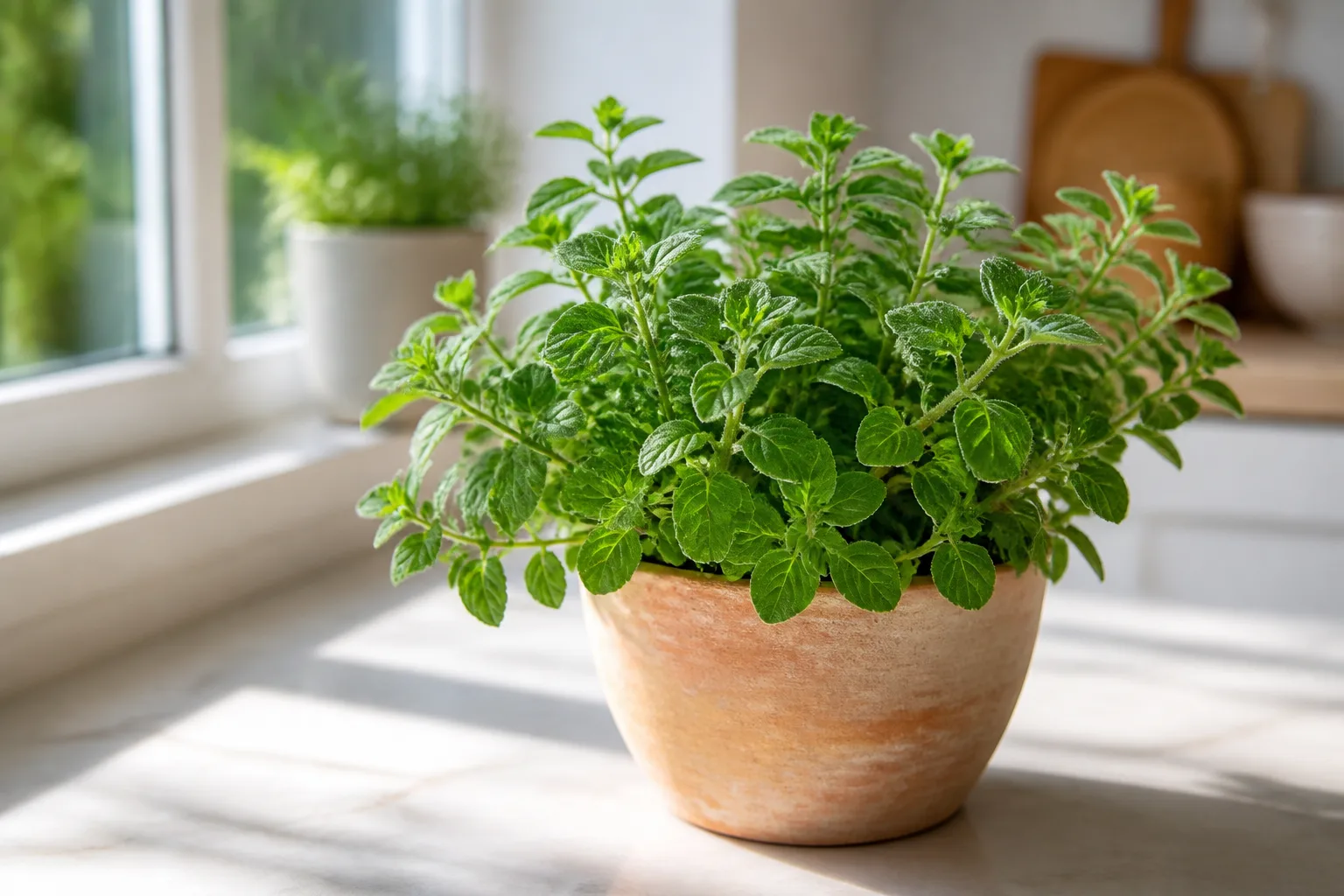
Common oregano (Origanum vulgare) needs a bright, sunny position to stay compact and produce plenty of leafy stems. Aim for about six hours or more of direct sun outdoors. A hot balcony pot may appreciate some relief from severe afternoon heat, but deep shade is rarely a good long-term spot. Indoors, use the brightest window you have and add a plant light if the stems stretch toward the glass.
Quick answer: oregano prefers full sun
For most common oregano, choose full sun: roughly six or more hours of direct light each day. NC State lists oregano as a full-sun plant and notes that it tolerates heat and drought (NC State Extension). Some light shade is tolerated, but expect a looser plant and slower leaf growth than in a sunny position.
This advice applies to true oregano, not every plant sold under a similar common name. Sweet marjoram is a related herb, and Cuban oregano is a different species with thicker leaves and different care. Check the botanical label before following light instructions written for a lookalike.
Why light matters for oregano
Oregano grows from branching stems and is harvested for its leaves. In a bright site it can maintain a compact outline and make new shoots after you pinch or harvest. In shade, the plant may direct more growth toward the nearest light source, leaving long gaps between leaves. That growth is harder to harvest and may make a container look thin even when its watering routine is reasonable.
More sun is not a substitute for good drainage or an appropriate watering routine. If a sunny plant has yellow leaves while its mix stays wet, check the Oregano watering guide and soil guide before moving it into shade.
How many hours of sun oregano needs
Use six hours of direct sun as a practical baseline. NC State defines full sun as six or more hours and gives oregano both full-sun and partial-shade cultural categories (NC State Extension). Penn State and RHS also recommend full sun for growing oregano (Penn State Extension, RHS growing guide). These are garden targets, not a stopwatch requirement: light filtered through dense trees or a shaded balcony is not equivalent to hours of unobstructed sun.
If the site gets four to six hours of direct sun, try it and watch the plant’s shape. Gardenary notes that oregano can grow with four to six hours, while fuller sun generally produces more leaves (Gardenary). In partial sun, give the plant the brightest available morning exposure and keep nearby herbs from shading it.
Choose the best outdoor exposure
In a garden, place oregano where direct sunlight reaches it for much of the day. A sunny border, raised bed, or open balcony is usually easier than a narrow space behind taller plants. RHS describes oregano as thriving in full sun and producing aromatic leaves and flowers there (RHS growing guide). Keep the site airy, but do not mistake a bright open position for a reason to leave the root zone dry all season; light and watering are separate decisions.
Before planting, observe the position at different times rather than judging from one midday glance. A wall or tree can cast a long shadow in the morning or late afternoon. If the plant receives only a brief sun patch, a movable pot lets you test a brighter location without disturbing the roots.
Handle hot afternoons in warm climates
In very hot weather, a small container can heat up as well as dry out. If oregano wilts during the hottest hours despite moist but well-drained compost, move the pot where it receives morning sun and light afternoon shade, then observe whether it recovers. Bonnie Plants recommends partial shade in warmer growing regions while keeping oregano in a sunny position (Bonnie Plants). A temporary afternoon break is different from keeping oregano in deep shade all day.
For a bed, established oregano usually handles heat better than a confined root ball in a dark plastic pot exposed to a hot wall. Use a larger, light-colored container if available, keep the drainage hole clear, and check the mix before watering. RHS notes that container compost can dry quickly in hot, sunny weather (RHS growing guide). The watering guide explains how to check without watering by calendar.
Account for golden and variegated cultivars
Most green-leaved oregano cultivars do best in full sun. NC State notes that golden or variegated forms may perform better with some shade during the hottest part of the day (NC State Extension). Their lighter foliage can show stress sooner under intense heat, so watch the actual leaves rather than assuming every oregano cultivar wants identical exposure.
Greek oregano is a form of O. vulgare and is also a sun-loving culinary herb. NC State lists it for full sun to partial shade, with well-drained soil (NC State Greek oregano profile). Where the day is scorching, a little afternoon shade may be a useful compromise; in milder weather, return the plant to brighter exposure if growth becomes sparse.
Adjust light through the seasons
In temperate climates, the same spot may receive different sun as the angle changes through the year. A spring position under a deciduous tree can become shaded after the canopy fills in. Recheck the plant if it starts stretching or making fewer harvestable stems after the season changes.
In a warm or tropical climate, focus on the intensity and duration of direct sun. Keep a pot out of reflected heat during a heat wave, but avoid moving it into a dark room. If you bring an outdoor plant inside for a cooler or rainy period, place it near the brightest window available. HarvestToTable notes that oregano can be grown indoors in a bright, sunny window or under fluorescent lights (Harvest to Table).
Place container oregano for even growth
Containers make light adjustments simple. Turn the pot a quarter turn every week or two if stems lean consistently toward one side, and move it when a nearby railing or wall blocks the sun. If the plant is crowded by taller herbs, shift it to the edge of the planter where it can receive direct light. Gardenary notes that oregano can be grown in a container and that it spreads along bed or planter edges (Gardenary).
A container that sits in full sun may need more frequent moisture checks than a bed. Sun exposure can dry the pot faster, but the soil should still drain between waterings. Do not keep roots wet to compensate for heat; if the mix remains soggy, fix the drainage first. Use the Oregano soil guide to choose a container mix and pot with clear drainage.
Grow oregano indoors near a bright window
Oregano is easier to grow outdoors, but it can be kept indoors when it gets enough light. Put the pot close to a bright, sunny window, ideally one that receives several hours of direct light. Gardening Know How recommends six to eight hours of sun for indoor oregano and suggests a bright southern exposure or a plant light (Gardening Know How). A dim kitchen shelf may keep the plant alive briefly, but it is unlikely to support a dense harvest for long.
Turn the plant so each side receives light and keep it away from a curtain or object that blocks the window. A window can feel bright to a person while delivering weak light to a plant, especially in winter or when glass faces a shaded courtyard. If fresh growth remains thin, test a brighter location before adding more fertilizer.
Use a grow light when window light is weak
If there is no bright window, use a plant light as a supplement. Follow the light maker’s distance and timing instructions, because output varies between fixtures. Position the lamp so it covers the whole plant rather than only its tallest stem, and raise it as oregano grows. A timer helps provide a steady day length; leave a dark period rather than running lights around the clock.
Do not assume that every ordinary ceiling bulb is strong enough for edible herbs. Watch new growth over several weeks: healthy shoots should stay leafy rather than reaching sharply toward one side. If a grow light is close enough to warm or bleach leaves, raise it and reassess.
Acclimate oregano before moving it outside
A plant raised indoors, under a nursery canopy, or beneath a shaded porch should not go straight into an all-day sun position. Start it outdoors in bright shade, then expose it to morning sun for a few hours and increase exposure gradually over about a week or longer. If leaves develop pale or dry patches, return it to gentler light and resume the transition more slowly.
RHS advises hardening off indoor-raised oregano before planting outside, so it can adjust to outdoor conditions (RHS growing guide). Acclimation matters most when the change is abrupt: indoor leaves formed under filtered light are less prepared for strong direct sun than established outdoor foliage.
Recognize light-related growth changes
Long, thin stems with wide gaps between leaf pairs suggest the plant is reaching for more light. The same appearance can also happen when a crowded plant is competing with nearby growth, so first clear obstructions and check the sun pattern. An oregano plant that flowers is not necessarily short of light; flowering is a normal part of its growth cycle.
Pale, scorched patches on the side facing a hot window or wall may follow a sudden increase in exposure. Move the pot to gentler light briefly, but keep it bright. If leaves yellow across the whole plant while the mix stays wet, investigate watering and drainage before treating it as a light problem. The Oregano overview links light decisions to the rest of the care routine.
Correct the position without stressing the plant
Make one change at a time. If oregano is leggy, move it to a brighter position over several days and pinch or harvest the stretched tips once new growth is responding. If it is scorched, reduce the hottest exposure temporarily and resume direct sun gradually. Avoid a simultaneous hard prune, repot, fertilizer increase, and move to a new window; changing several conditions together makes it harder to tell which adjustment helped.
A sparse plant may also be old or woody. The Oregano pruning guide covers renewal cuts; the repotting guide helps when roots have outgrown the container. Light can improve new growth, but it cannot reverse damaged leaves or replace healthy roots.
When to use this page vs other Oregano guides
Use this page to choose a site or diagnose whether oregano gets enough direct light. Read the watering guide if the plant wilts or the container dries quickly; use the soil guide if water lingers around the roots. The fertilizer guide is for feeding decisions, the repotting guide is for crowded roots, and the pruning guide is for stretching and harvest cuts. For propagation timing, see the propagation guide.
Related Oregano guides
Return to the Oregano plant hub for the whole-plant profile. The overview connects light with watering and seasonal care; the watering, soil, and fertilizer guides cover the most common adjustments after you choose a site. Use repotting, propagation, and pruning for plant renewal and maintenance.
Conclusion
Give common oregano a sunny place with about six hours or more of direct light, then adjust for the heat of your climate and the size of the pot. Golden or variegated forms may benefit from afternoon shade, while indoor oregano needs a genuinely bright window or a plant light. If stems stretch, increase light gradually and check watering, drainage, and crowding before making several changes at once.