How to Water Oregano: Beds, Pots, and Dry Weather
How to Water Oregano: Beds, Pots, and Dry Weather
How to Water Oregano: Beds, Pots, and Dry Weather
Oregano does not need a weekly watering routine once it is established in a sunny garden bed. It prefers dry-to-medium moisture and tolerates drought, but container plants dry faster and need more frequent checks. Feel the soil below the surface before watering: if it is still damp, wait; if the root zone has dried, water thoroughly and let the excess drain. Keeping oregano wet for long periods can lead to root rot.
Quick answer: check the soil, not the calendar
Water newly planted oregano while it establishes, then let the soil begin to dry between waterings. UC IPM describes oregano as heat- and drought-tolerant once established and says it needs little to moderate water (UC IPM). Penn State likewise says established oregano needs little water and recommends waiting until the soil dries between waterings (Penn State Extension).
A pot is the main exception to the “rarely water” rule. Its smaller soil volume dries sooner than the ground, especially in sun or wind, so inspect it more often. Do not give every oregano plant the same amount on the same day just because they share a name.
Understand oregano’s moisture preference
Common oregano (Origanum vulgare) is adapted to dry-to-medium soil when the roots can drain freely. NC State lists good drainage and occasionally dry soil among its growing conditions and warns that root rot can occur in wet, poorly drained ground (NC State Extension). The goal is not to keep the plant bone-dry; it is to avoid leaving the root zone saturated for days.
That balance matters more than a precise amount of water. A small pot in hot sun may need water again soon, while a mature clump in heavy ground may stay wet too long after one deep watering. If drainage is poor, correct the Oregano soil setup before increasing or decreasing water blindly.
Water oregano in a garden bed
After planting, water the root ball enough to settle the surrounding soil. During the first dry spells, check near the base and water if the root zone has begun to dry. As roots spread and the plant becomes established, reduce the frequency. Rainfall, soil texture, and exposure all change how quickly a bed dries, so a standing schedule is unreliable.
Once established, oregano in well-drained garden soil usually tolerates short dry periods without help. UC IPM’s guidance is “little to moderate” water for established plants, and NC State describes oregano as drought-tolerant (UC IPM, NC State Extension). Water during a prolonged hot spell if the root zone is dry and the plant is losing firmness; skip irrigation if the soil is still cool and damp below the surface.
Care for newly planted oregano
A new transplant has a smaller working root system than an established clump. Water it after planting, then check the root ball during dry weather while it begins to grow into the surrounding soil. A small seedling also dries out faster than a mature plant, so do not use the mature clump’s drought tolerance as a reason to ignore new growth.
At the same time, avoid leaving a transplant in muddy soil. If water ponds around it or the planting area remains saturated, improve drainage or move the plant before adding more water. The Oregano overview explains how the sunny, free-draining site supports watering decisions.
Water oregano in a container
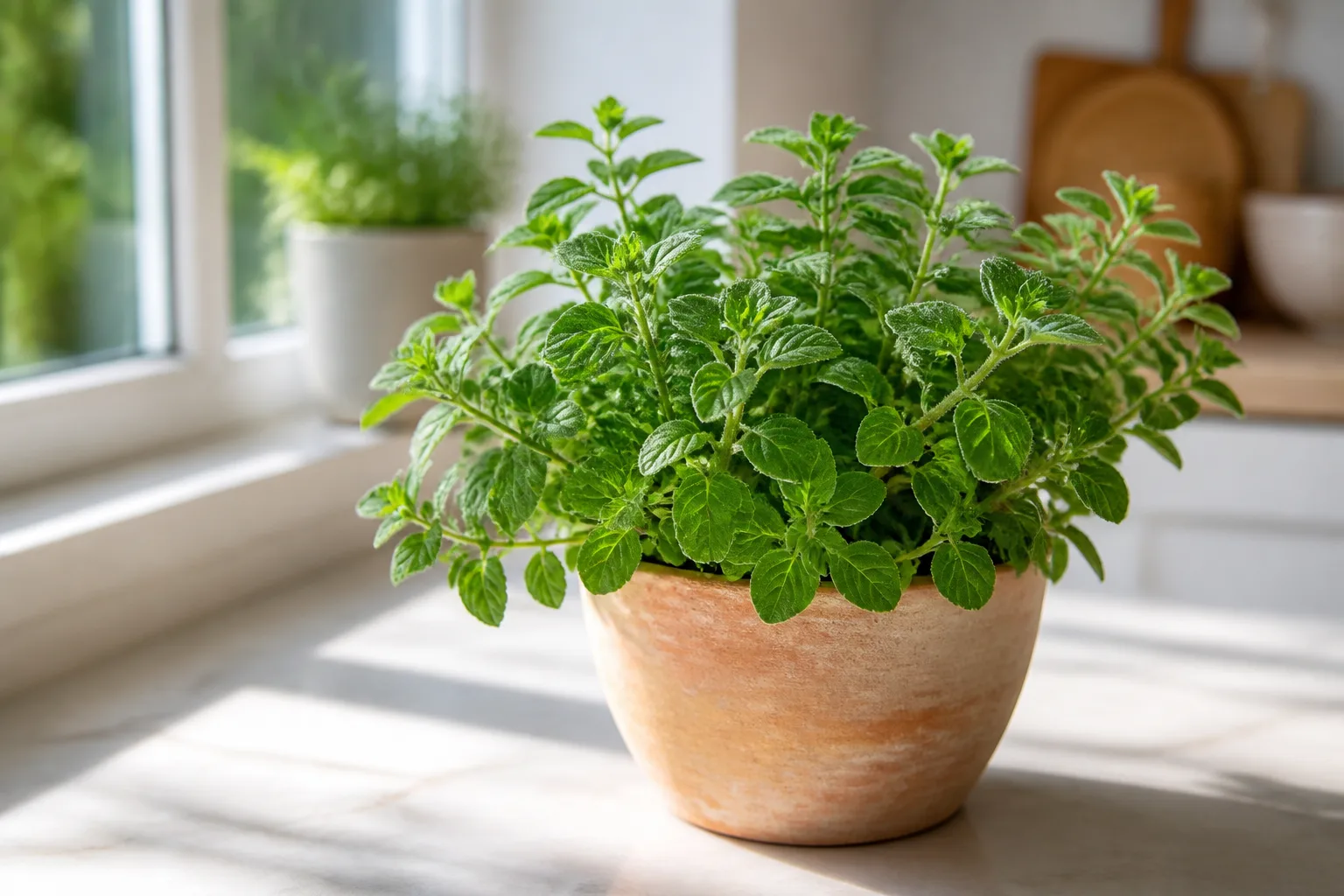
A container oregano needs more observation than a garden bed because compost can dry faster in warm, sunny weather. RHS advises watering container-grown oregano when the compost becomes dry, while warning against waterlogging (RHS growing guide). Penn State also notes that potted oregano needs supplemental irrigation even though established garden plants need little (Penn State Extension).
Check the mix a few centimetres below the surface, not just the top crust. If it is dry at that depth, water slowly until excess flows from the drainage holes. Empty the saucer or cachepot so the roots are not left standing in water. If the pot remains wet for several days, check that the hole is open and the mix is not compacted.
Check the soil before watering
Use a finger or a narrow wooden skewer to test below the surface. The top layer can look dry while the root zone is still moist, especially in a large pot or after rain. In garden soil, UC IPM describes well-drained soil as crumbly rather than forming a wet clump when squeezed (UC IPM). That simple check can prevent unnecessary watering in a heavy bed.
Lift a small pot after watering and again as it dries to learn how much lighter it feels. This is a practical comparison, not a replacement for checking the root zone. Gardenary recommends soaking container oregano until water drains from the bottom, then allowing the mix to dry before watering again (Gardenary). Use that approach only when the container drains freely.
Water deeply and let excess drain
When the root zone is dry, apply water evenly around the base until the whole mix is moistened and excess runs out. A slow pour helps dry compost take up water rather than channeling it straight down one side. Do not rely on a small splash that only wets the surface.
For oregano in containers, Epic Gardening also recommends deep, infrequent watering and letting the soil dry between sessions; it warns that soggy soil can rot the roots (Epic Gardening container guide). That method is more useful than copying an exact weekly volume, because pot size and weather vary. Avoid wetting foliage late in the day when you can water at the base instead.
Adjust watering for heat and dry spells
In hot, windy weather, check container oregano more often, particularly if the pot is small or exposed on a balcony. Heat and sun increase moisture loss, but a wilted plant is not automatically thirsty. Check the mix first. If it is dry, water thoroughly; if it is damp, wait and inspect the drainage.
UC IPM notes that oregano is heat-tolerant and drought-tolerant once established (UC IPM). This means a short dry spell is usually less alarming than prolonged wet soil. Do not try to prevent every midday droop by keeping a pot constantly wet; if a small container overheats, move it temporarily out of intense afternoon sun and check it again when cooler.
Reduce watering in rainy or cool weather
During a rainy season, pots may receive more water from rainfall than from your watering can. Move them under a bright shelter if heavy rain keeps the mix saturated, and make sure drainage holes are not blocked. In a garden bed, allow the soil to dry naturally between showers; avoid adding water based on a routine when rain has already soaked the root zone.
Cooler weather and slower growth usually mean the plant uses water more slowly. Reduce watering when the mix takes longer to dry. The RHS advises never allowing oregano compost to become waterlogged, while NC State links wet, poorly drained soil with root rot (RHS growing guide, NC State Extension). A sheltered pot is often easier to manage than a container left exposed to continuous winter or monsoon rain.
Recognize underwatering and overwatering
If leaves lose firmness during a dry spell and the soil is dry below the surface, water the plant and see whether it recovers. Repeated wilting may mean the pot is drying too quickly, roots are crowded, or the plant receives strong heat; review its position and the Oregano light guide as well as the watering routine.
If leaves yellow or stems collapse while the mix remains wet, stop watering and investigate drainage. NC State warns of root rot in wet, poorly drained soils, and the Greek oregano profile also flags root rot under those conditions (NC State Extension, NC State Greek oregano profile). A sour smell, persistently wet compost, or soft roots is more concerning than a few older leaves turning yellow.
Water indoor oregano carefully
Indoor oregano is usually in a container, so test its mix just as you would outdoors. Gardening Know How recommends letting the soil dry a bit between waterings and using a pot with excellent drainage (Gardening Know How). A sunny window, warm room, or heater can dry a small pot quickly, while a cool dim room may leave it damp for much longer.
Water at the base, let the pot drain fully, and avoid leaving it in a decorative outer pot with collected water. If the plant is growing slowly in winter, check before every watering rather than keeping the summer rhythm. For broader care, see the Oregano overview and light guide.
Recover a plant that stays wet
If the pot stays wet, stop watering until the mix begins to dry and confirm that the drainage hole is open. If the mix is dense or the pot is oversized, move the plant into a draining container mix when it can recover. Trim only clearly dead or mushy tissue with clean scissors; do not combine a severe root prune and hard top cut unless rot is extensive.
If the base has turned soft or most roots are damaged, recovery may be difficult. A healthy stem cutting can sometimes preserve the plant while you correct the potting conditions. The Oregano propagation guide covers taking cuttings; the repotting guide explains when to refresh a crowded or compacted container.
When to use this page vs other Oregano guides
Use this page to decide when to water oregano and how the method differs between a bed and a pot. Read the soil guide if water drains slowly, the light guide if a pot wilts in harsh sun, and the repotting guide if the container dries unusually fast because roots fill it. The fertilizer guide is for feeding, the pruning guide is for harvest and renewal, and the propagation guide is for cuttings or division.
Related Oregano guides
Start at the Oregano plant hub for the species profile and quick-care summary. The overview connects watering to the whole routine. For the linked conditions that affect water use, read light and soil; for a plant that is too crowded or woody, see repotting and pruning.
Conclusion
Let oregano’s soil condition decide when to water. Newly planted herbs need attention while their roots establish; mature plants in free-draining beds need little extra water; container oregano needs more frequent checks. Water thoroughly when the root zone is dry, let excess drain, and keep the plant out of persistently soggy soil.