7 Herbs That Survive Winter: A Practical Guide
Learn which seven culinary herbs can survive winter, which stay harvestable, and how to use drainage, mulch, covers, and containers in cold climates.
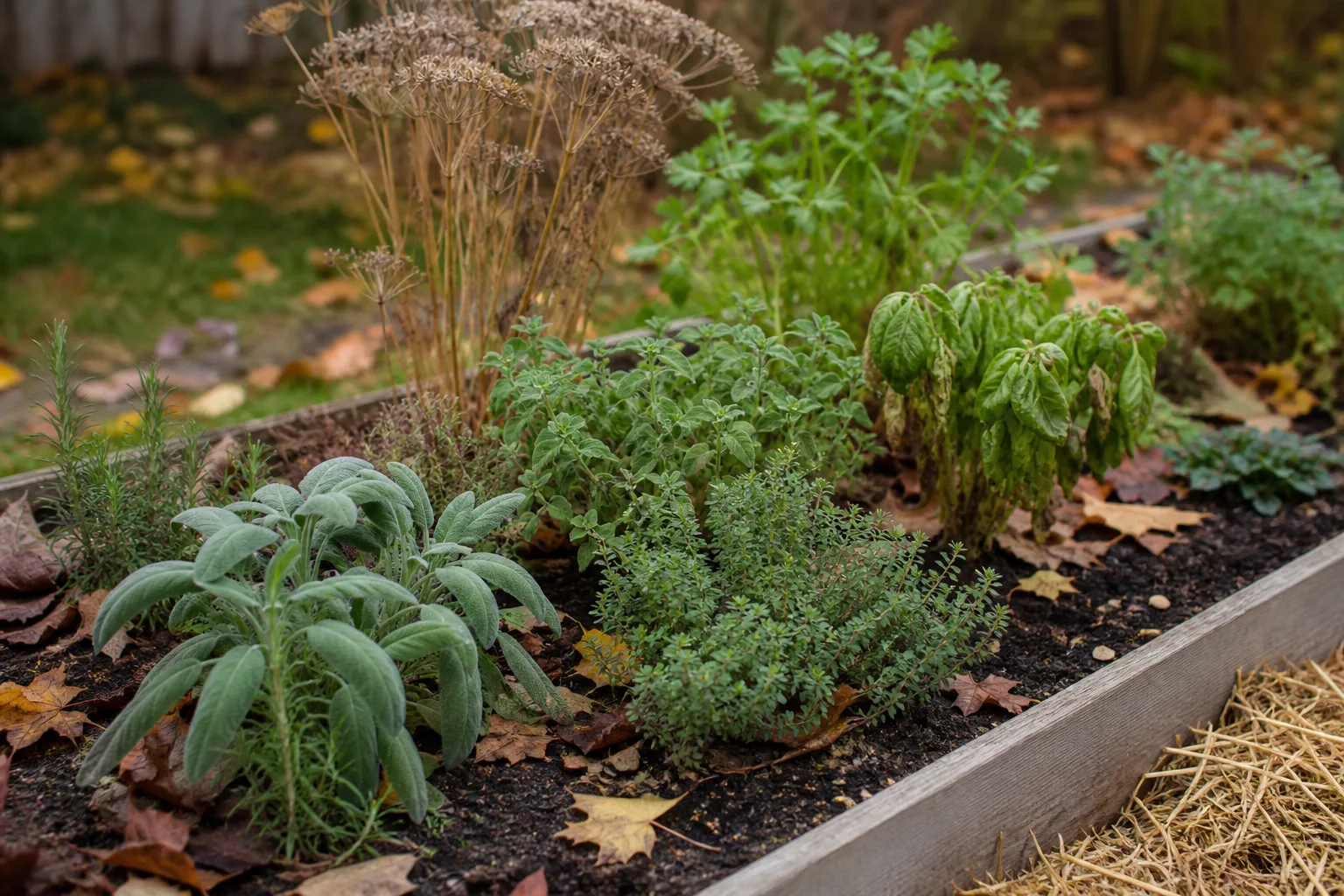
If you want fresh flavor after the vegetable garden has gone quiet, start with herbs that can either tolerate cold or retreat underground and return in spring. The most dependable choices are sage, thyme, parsley, oregano, mint, lovage, and chives—but they do not all survive winter in the same way.
The useful distinction is this: a plant can be alive while dormant, green but barely growing, or actively harvestable. Your soil, cultivar, wind exposure, winter moisture, and whether the plant is in the ground or a pot can move it from one category to another. A hardiness-zone label is a starting point, not a promise.
Winter survival has two meanings
Some herbs keep leaves through much of winter. Sage, thyme, and oregano are the closest matches for that job when they have sun and sharply draining soil. Other herbs, including mint, lovage, and chives, may lose their tops after repeated freezes but keep living roots or crowns below the soil.
Parsley is a different case again. It is a biennial: the first year is mainly leaf production, and the second year is when it flowers and sets seed. A first- or second-year parsley plant can tolerate cold and supply leaves through winter, especially with a cover, but it will eventually bolt and finish its life cycle. This annual-versus-perennial distinction is also emphasized in Gardening Know How’s winter-herb guidance. Surviving winter does not mean every herb will provide a full summer-rate harvest in January.
This distinction matters when you plan a bed. If you want winter color and occasional sprigs, choose evergreen or semi-evergreen herbs. If your priority is spring regrowth, leafy perennials are excellent. If you want reliable winter picking in a cold climate, add protection rather than expecting an exposed plant to grow at summer speed.
Choose by climate, drainage, and harvest goal
Begin with your local hardiness zone, then look at the site. A thyme plant in a sunny, gritty bed can handle conditions that would kill the same cultivar in a low, waterlogged pocket. A sheltered wall can reduce wind stress, while a raised bed can shed winter rain more effectively than heavy ground soil.
The Mediterranean herbs in this list—sage, thyme, and oregano—often fail because their roots stay cold and wet, not because one brief frost is automatically fatal. NC State’s plant profile describes common thyme as frost- and drought-tolerant but also emphasizes full sun, good drainage, and dry, sandy, or rocky soil. Penn State gives common thyme a typical hardiness range of Zones 5–9 and oregano a range of Zones 5–8, but those ranges still assume a suitable site and plant establishment.
Your harvest goal changes the protection decision. For a plant that only needs to return in spring, a light mulch and good drainage may be enough. For leaves in December and January, use a low cover, cold frame, or sheltered container so the foliage is protected from wind and repeated freeze-thaw swings.
Ground or container: which is safer?
For winter survival, an established herb in the ground is usually better insulated than an herb in a small pot. Soil around an in-ground root ball changes temperature slowly; a container can freeze from several sides, and a wet pot can stay cold enough to damage roots even when the air temperature briefly rises.
Containers still have an advantage: you can move a marginal plant. Use a pot with a drainage hole, raise it slightly so the hole cannot seal against a patio, and place it near a sunny wall that blocks prevailing wind. A recent winter-container guide from Gardening Know How likewise stresses free drainage, pot elevation, and a bright sheltered position. Move the container to an unheated garage, cold frame, or sheltered porch during a prolonged severe freeze—not into a dark, warm room for the entire season.
If you combine herbs in one pot, group plants with similar water and light needs. Sage and thyme are poor roommates for a constantly moist parsley mix, while mint will eventually crowd almost anything. The goal is not a decorative combination at any cost; it is a root environment that stays airy in cold weather.
Quick comparison: seven winter herbs
| Herb | Winter behavior | Best winter strategy | Main caution |
|---|---|---|---|
| Culinary sage | Often evergreen or semi-evergreen | Full sun, lean drainage, wind shelter | Do not cut deeply into old wood |
| Common thyme | Low, woody, often semi-evergreen | Sun, gritty soil, light cover in colder zones | Wet soil and heavy pruning are risky |
| Italian parsley | Cold-tolerant biennial | Harvest leaves; use mulch or a row cover | It eventually bolts in its second year |
| Oregano | Perennial; top growth may die back | Full sun and dry-to-moderate soil | Root rot in cold, wet soil |
| Mint | Roots and rhizomes are very hardy | Grow in a pot; sink the pot for insulation | Spreads aggressively in open ground |
| Lovage | Dies back and returns from the crown | Moist but well-drained soil; mark its location | Large plant can outgrow a small bed |
| Chives | Dies back in severe cold, then returns | Leave the crown; cover for tender winter shoots | Seedheads can create unwanted volunteers |
The ranges you see on labels are approximate. A well-established plant in a protected microclimate may outlast the printed range, while a newly planted specimen in a wet, windy site may fail inside it. Treat the table as a selection tool, then adjust the care to your actual exposure.
Culinary sage (Salvia officinalis)
Common culinary sage is a woody perennial with gray-green, aromatic leaves. It is one of the best choices when you want an herb that still looks presentable in the winter garden, but its broad leaves lose water to cold, dry wind. A protected position near a wall or among other plants can be more useful than simply adding more fertilizer.
Give sage full sun and soil that drains quickly after rain. Do not tuck it into the same wet pocket where you grow moisture-loving greens. If your winter is mild, you may pick individual leaves as needed. In colder climates, the top growth may look tired while the woody framework and crown remain alive.
Fall work should be restrained. Remove broken, diseased, or obviously dead stems, and take a final harvest before the weather turns persistently cold. Avoid cutting into thick, leafless old wood simply to make the plant symmetrical; sage is much easier to shape when new growth resumes in spring.
Sage is also a good candidate for a sheltered container if your soil is heavy. The pot must drain freely, and the plant should not sit in a saucer of winter water. A container lets you protect the root ball during an unusually cold spell, but it also makes watering discipline more important.
Common thyme (Thymus vulgaris)
Thyme earns its winter reputation from its small leaves, low growth, and woody base. It is a compact herb for the front of a bed, a rock garden, or a pot where you can keep its roots on the dry side. Penn State Extension lists common thyme as a perennial for Zones 5–9, while NC State describes it as a broadleaf evergreen that tolerates frost and drought.
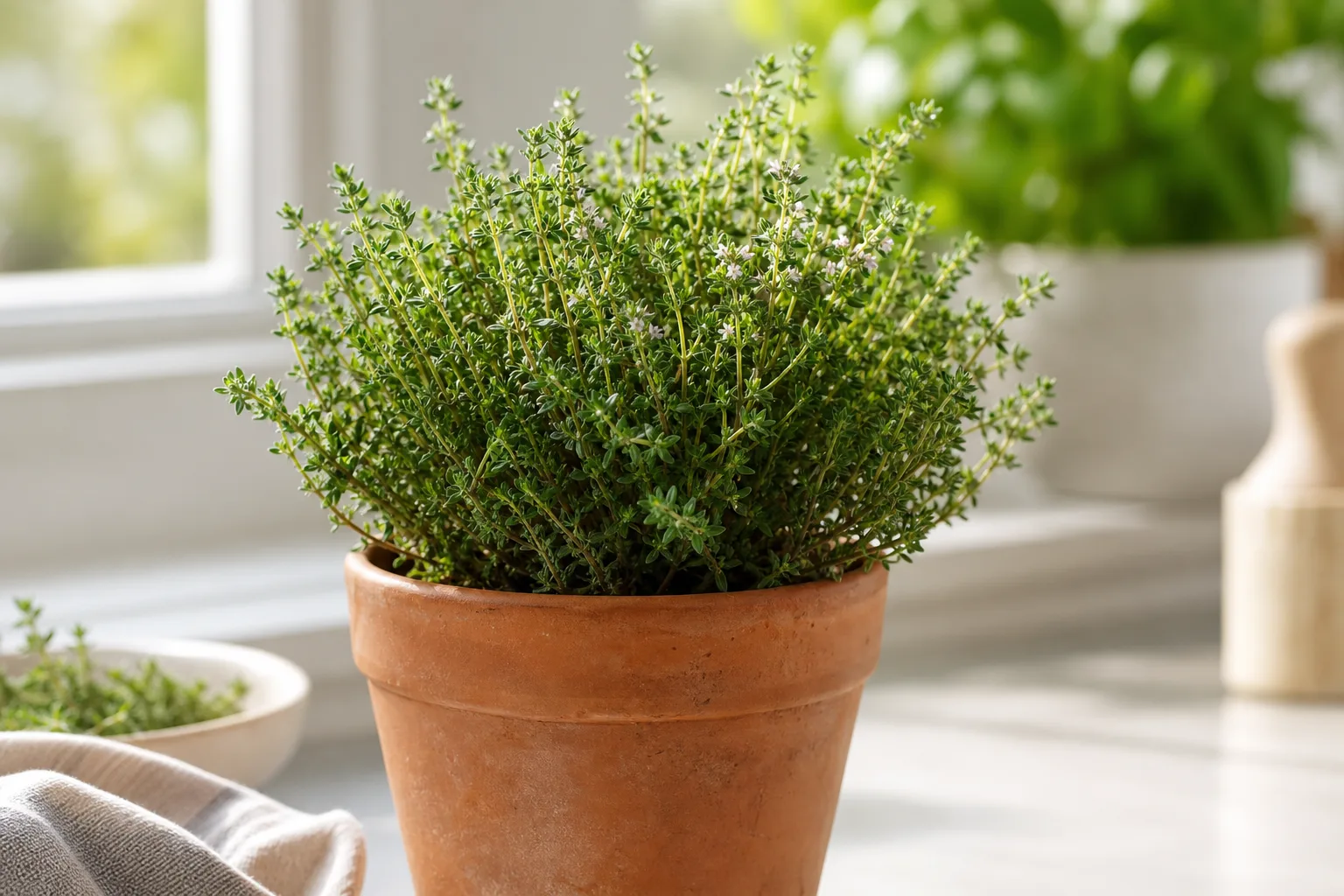
The site matters more than a heroic winter routine. Plant thyme where water leaves quickly, give it full sun when possible, and do not bury its crown under heavy, wet mulch. Penn State Extension’s thyme profile recommends light, dry, well-drained soil, while NC State’s plant database highlights good drainage and intolerance of wet soils. A light layer of loose material can reduce freeze-thaw stress, but a dense blanket that stays damp against the stems can create the very conditions thyme dislikes.
Harvest small sprigs before severe weather and take less than you would during summer. The plant grows slowly in short days, so repeated large cuts can leave it with too little foliage to buffer wind and cold. If the tips turn brown, wait until spring before assuming the entire plant is dead; scratch a small section of stem and look for living tissue before pruning.
Italian parsley (Petroselinum crispum var. neapolitanum)
Italian parsley is one of the most useful winter herbs for cooks because it can keep producing leaves while many Mediterranean herbs pause. It prefers fertile, evenly moist soil rather than the lean, dry mix used for thyme, so place it where the two will not compete for opposite watering habits.
Parsley is technically biennial. During its first season it builds the leafy plant you harvest; in its second, it sends up a flower stalk, sets seed, and finishes. Cold may slow that sequence, but it does not reset the plant’s biological clock. If a plant bolts in late winter or spring, collect seed or replace it rather than trying to force the old rosette to remain productive indefinitely.
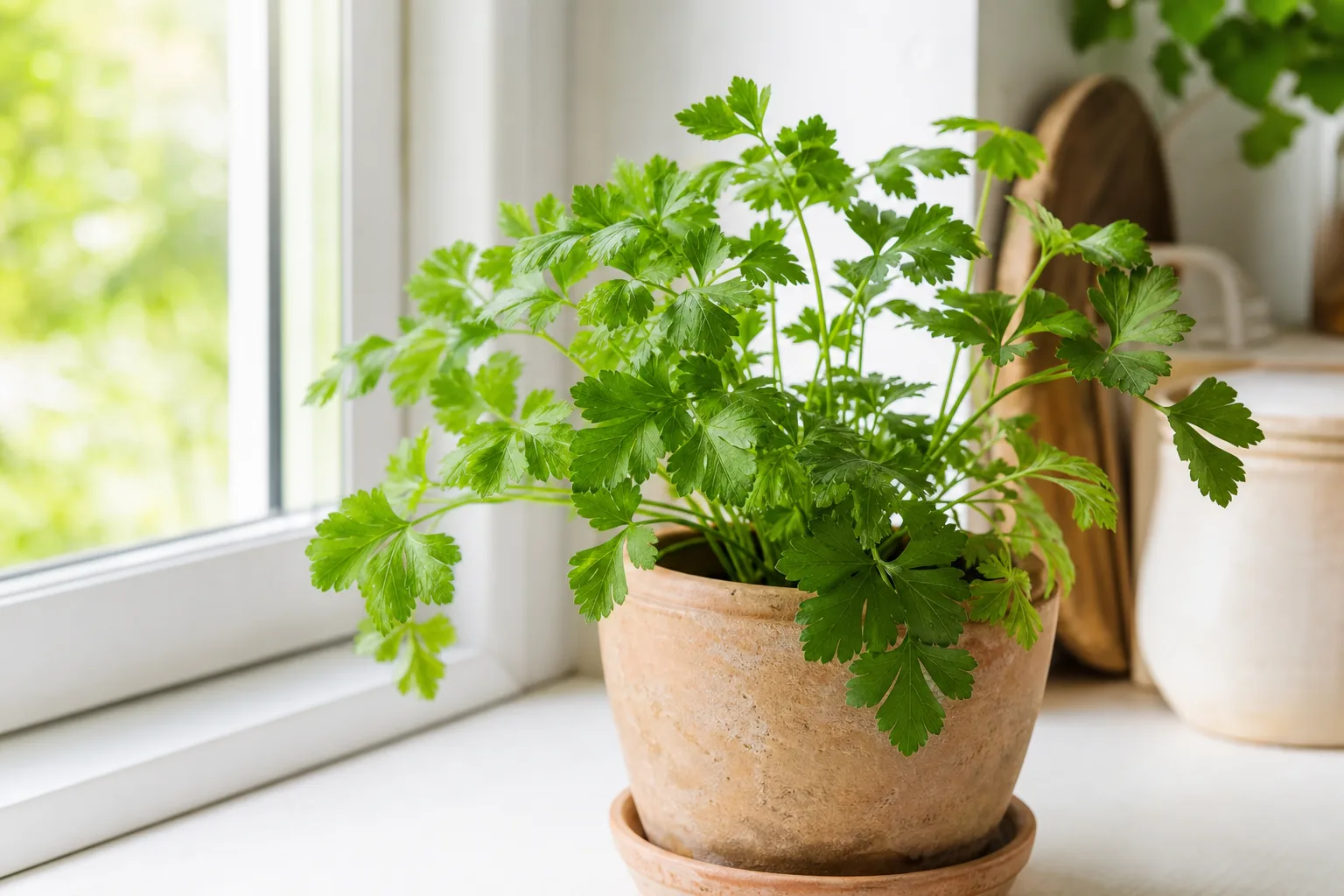
For an outdoor winter harvest, keep the central crown intact and pick the oldest outer stems first. In colder regions, a row cover, cloche, or cold frame can keep leaves usable longer. Fine Gardening’s winter cold-frame guidance includes flat-leaf parsley among the hardy herbs that can continue providing leaves under protection.
Parsley in a pot needs a larger root volume than a tiny supermarket herb container provides. If you are moving it indoors, inspect for pests, transition it gradually to the new light, and place it in the brightest available window or under a suitable grow light. Indoor parsley can survive winter, but low light and consistently wet soil still produce weak, yellow growth.
Oregano (Origanum vulgare)
Common oregano is a vigorous perennial that prefers sun, air movement, and soil that is not rich and waterlogged. Penn State Extension lists it as hardy in Zones 5–8 and recommends full sun, well-drained average soil, and allowing the soil to dry between waterings once the plant is established.
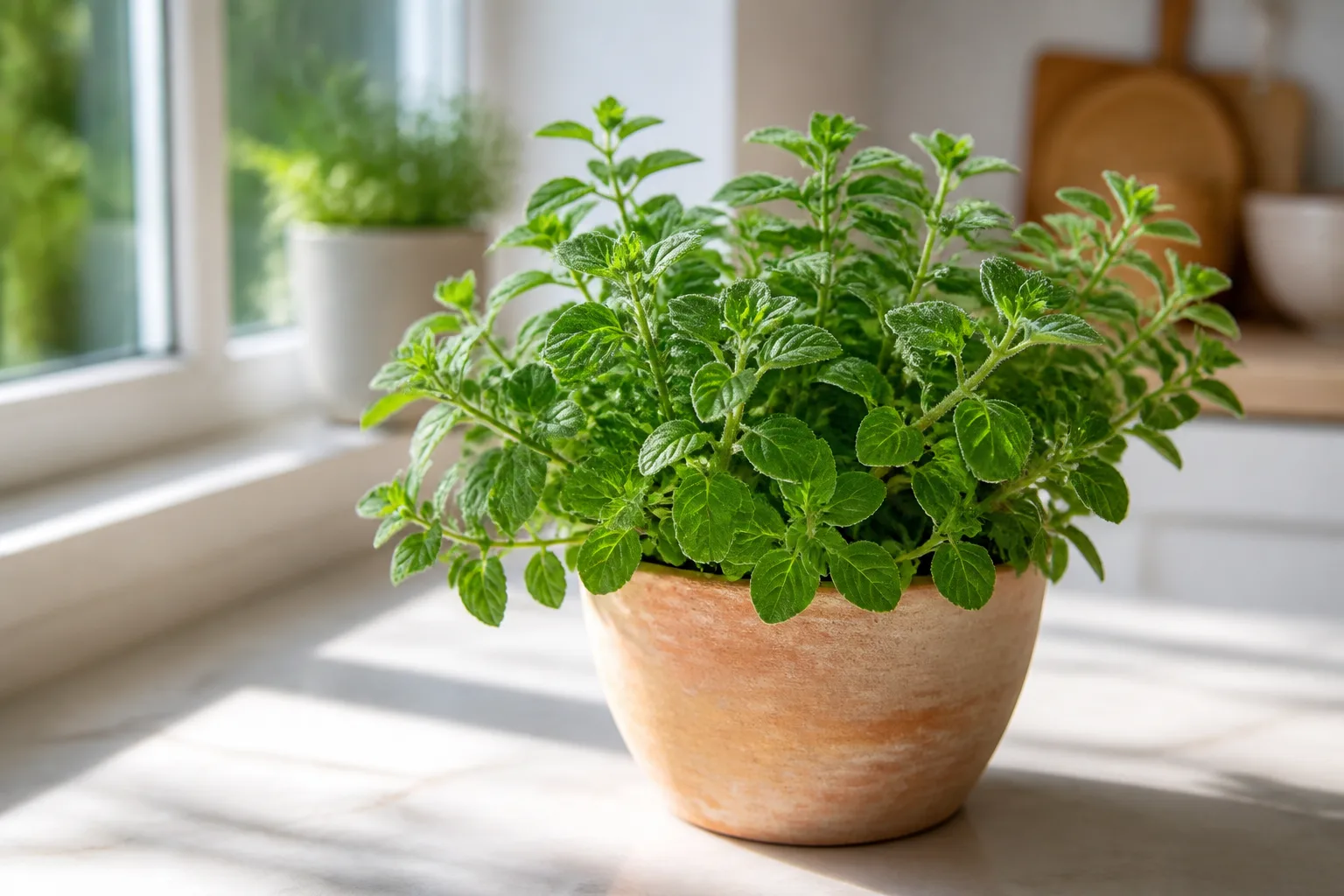
Oregano can look finished in late autumn while low growth remains close to the crown. Do not confuse the loss of tall summer stems with total plant loss. Penn State Extension describes oregano as a sun-loving, well-drained perennial that needs little water once established. In a colder zone, a low tunnel or cold frame can protect that growth and make winter picking more realistic, but an exposed plant may simply rest until spring.
The most common winter mistake is treating oregano as a thirsty container plant. Check the root zone instead of watering by calendar. If it is damp several inches down, wait; if it is dry and the plant is not frozen, water in the morning so excess moisture does not sit around the roots as temperatures fall.
When spring arrives, cut out dead stems and shorten leggy living growth after new shoots show where the plant is active. Oregano can be replaced or divided when old wood becomes unproductive, but winter is not the season for aggressive renovation.
Mint (Mentha spp.)
Mint is one of the easiest herbs to carry through winter because its roots and rhizomes are remarkably persistent. The visible tops may collapse after frost, yet the plant can return strongly when soil warms. Fine Gardening lists many mints as hardy perennials across Zones 3–9 and recommends pots because of their vigorous spread.
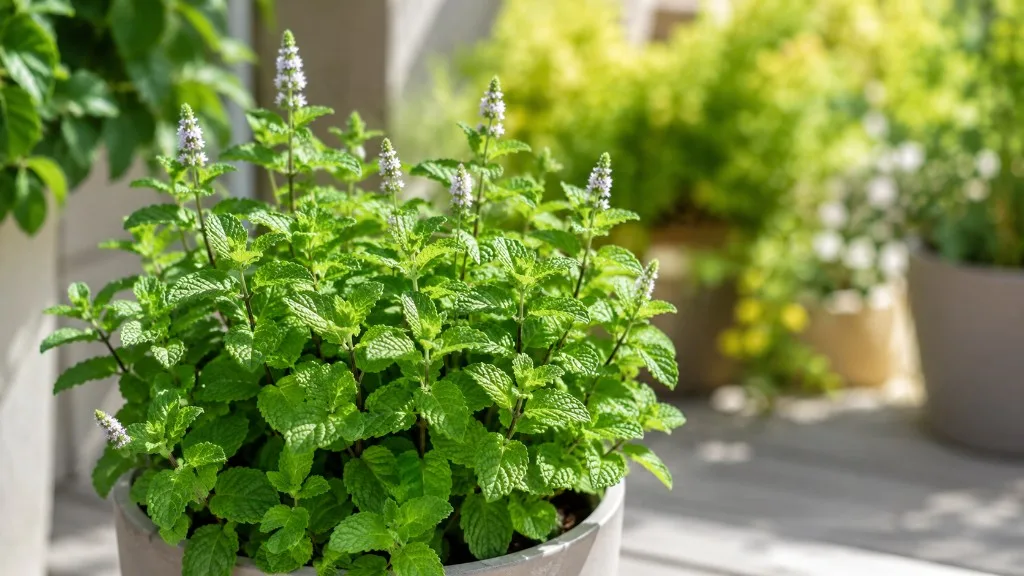
The right winter question is not “Will mint survive?” but “Where do I want it to survive?” Fine Gardening’s cold-frame advice describes mints as vigorous perennials and recommends pots because of their spread. Planting mint directly in a mixed bed can turn a winter-success story into a spring-eradication project. Keep it in a container, or sink the container into the soil or a cold frame with the rim above the surface. The roots get insulation while the rhizomes stay contained.
In a cold frame, a potted mint plant may produce new leaves for a while after outdoor growth stops. Vent the frame on sunny days and avoid keeping the pot saturated. If you leave mint outdoors without protection, let the top growth die back naturally, mark the pot or planting spot, and wait for spring shoots rather than digging up the crown in panic.
Mint is also the most forgiving of the seven if you need to cut it back after a hard freeze. Remove collapsed material for cleanliness once it is clearly dead, but do not use winter cutting as an excuse to disturb the roots repeatedly.
Lovage (Levisticum officinale)
Lovage is a tall perennial celery relative with a strong flavor that works well in soups, stocks, and savory dishes. It is less compact than the other herbs here: a mature plant can become a substantial feature, especially when it sends up its flowering stems.
Lovage commonly dies back aboveground after hard cold and returns from a hardy crown. That makes it a better choice for a permanent back-of-the-bed position than for a small windowsill pot. Mark the location before the stems disappear so you do not accidentally dig through the crown during winter cleanup or early spring bed preparation.
The plant appreciates soil that holds some moisture but still drains. This is the point where lovage differs from thyme, sage, and oregano. Do not force every herb in the list into the same dry, gritty bed; give lovage a deeper root run and regular moisture during establishment, then reduce watering only when the soil is already naturally wet or the plant is dormant.
If you want more plants, allow some flowers to mature and collect seed, or divide an established plant in spring. Winter is mainly a season of patience for lovage: protect the crown from repeated disturbance and wait for new shoots.
Chives (Allium schoenoprasum)
Chives are compact, productive perennials with hollow, grass-like leaves and edible purple flowers. They are among the easiest herbs to grow in a cool-season garden, although the leaves may flatten or disappear during the coldest part of winter.
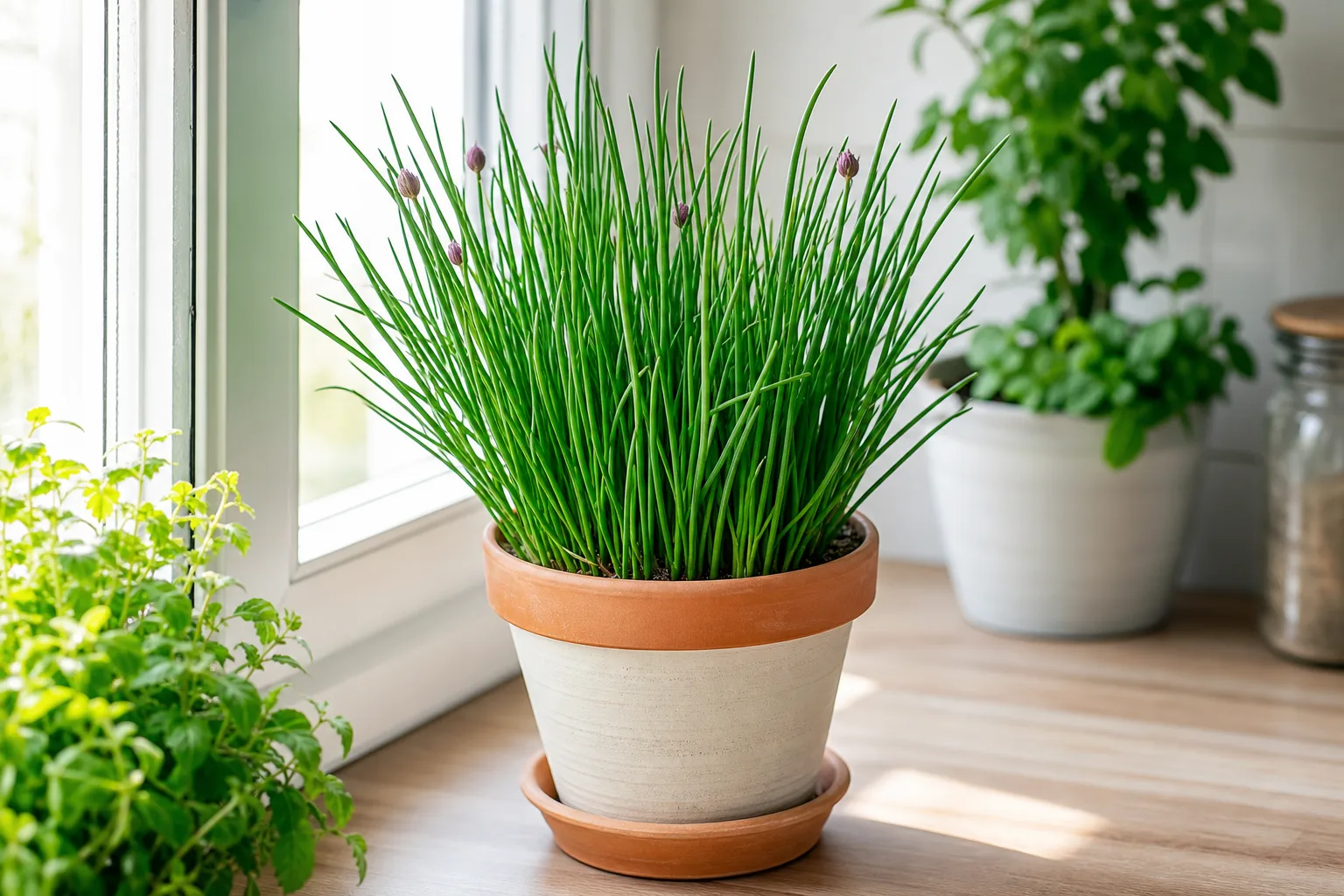
Leave the crown in the soil and avoid digging it up just because the foliage has browned. In milder climates or under a cover, you can continue snipping tender shoots. In colder climates, accept a pause and look for fresh growth in spring. Fine Gardening includes chives among the herbs that can be transplanted into or grown in a cold frame for winter use.
Chives prefer sun to part shade and evenly moist, well-drained soil. They tolerate more moisture than thyme, but waterlogged soil can still damage roots in winter. Keep the clump tidy after frost, and remove spent flower heads if you do not want seedlings appearing in paths, gravel, or neighboring beds.
Divide crowded chives in spring when growth begins. A divided clump establishes faster than a new seedling and gives you several small plants to distribute around the garden or into containers.
Winter prep: the five moves that matter
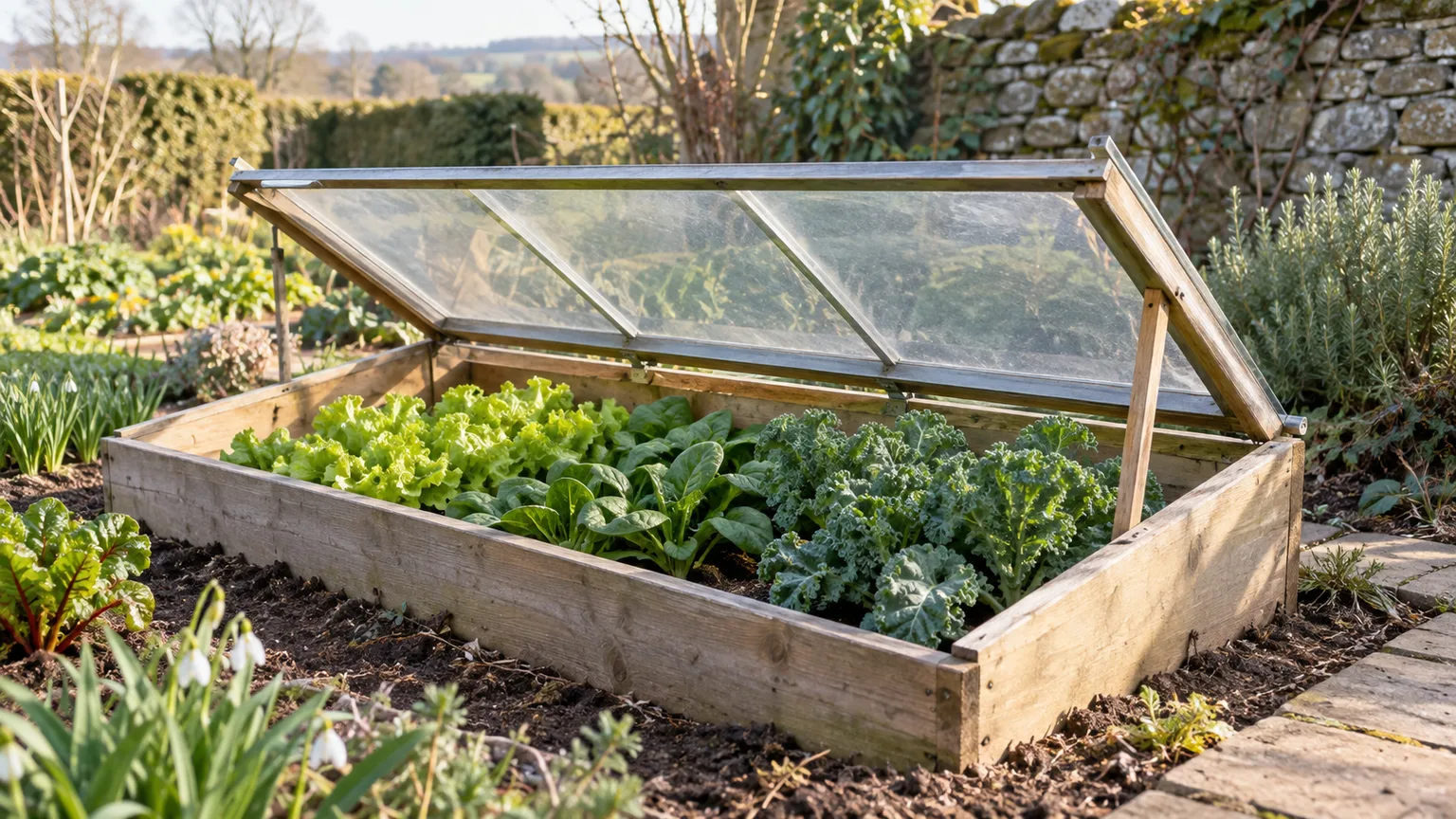
Preparing herbs for winter is less about building a complicated shelter and more about avoiding the conditions that turn manageable cold into root damage.
- Finish planting early enough for roots to establish. A new transplant going into cold soil has less margin than a plant that has spent the growing season building a root system. If you are starting late, favor a pot you can shelter rather than planting a small, stressed herb in an exposed bed.
- Improve drainage before the weather turns wet. Raise a soggy bed, move containers off flat patios, and keep saucers empty. The root zone should be able to lose excess water even when evaporation is slow.
- Tidy with restraint. Remove diseased and broken material, take a final useful harvest, and leave enough healthy structure on woody herbs to buffer wind. Do not cut every herb to the same height.
- Add protection after the soil cools. A light layer of loose mulch around the crown can reduce temperature swings. Keep it slightly away from woody stems, and remove or pull it back once sustained spring growth begins so the crown can dry and warm.
- Use covers as season extenders, not sealed boxes. Row covers, cloches, hoop tunnels, and cold frames can protect parsley, chives, mint, oregano, and thyme from wind and repeated frost. Open or vent them on sunny days; Fine Gardening recommends venting cold frames on warmer days and adding insulation only when extreme cold calls for it. A covered space that overheats or stays humid can cause more trouble than a brief cold night.
Protect roots without smothering crowns
The safest winter protection is a combination of insulation and airflow. In-ground herbs can be mulched lightly after the first hard freeze, while containers need insulation around the pot as well as protection above the foliage. Pot feet, a sheltered wall, or sinking the pot into soil helps keep drainage holes clear and slows temperature swings.
Water only when the root zone is genuinely dry and the ground is not frozen. Cold-weather plants still need water, especially evergreen herbs exposed to wind, but they use it slowly. Water in the morning during a thaw, then let excess drain before the next freeze. The winter-care guidance from Gardening Know How similarly warns that protection and watering must be adjusted to zone and weather rather than applied as a fixed calendar routine.
For a cold frame, add a thermometer if you can. Fine Gardening recommends venting on sunny or warmer days and keeping daytime temperatures below about 60°F for the herbs it discusses. Close the frame before a hard freeze, and add an insulating cover at night when the forecast requires it.
How to harvest when growth slows
Winter harvesting should be conservative. The plant is spending less energy on replacement growth, and a large cut removes the foliage that helps it capture limited light and protect stems from wind.
Use clean snips and take small amounts from several parts of the plant rather than stripping one side. As a practical ceiling, remove no more than about one-third at a time, and take less from a plant that is newly planted, wind-exposed, or already showing cold damage. The evergreen-container guidance from Gardening Know How makes the same basic point: winter herbs grow back more slowly, so harvest lightly.
Pick sage and thyme from healthy green tips, parsley from outer stems, and chives by snipping leaves rather than pulling the clump. Mint can be cut more freely during active growth, but winter shoots are slower and softer. Lovage is usually a spring-and-summer harvest plant; do not disturb its dormant crown for a few leaves.
If the plant is frozen, wait. Frozen stems snap easily, and handling them can tear tissue that might recover during a thaw. Harvest before a forecast freeze when possible, then leave the plant alone until you can see what is truly damaged.
What to do after a hard freeze
Do not prune the entire herb bed the morning after a freeze. First, wait for the plant to thaw and assess it in daylight. Brown leaves are not enough evidence that roots or stems are dead.
Check the crown at soil level. A firm crown is encouraging; a soft, foul-smelling crown points to prolonged wetness or rot. On woody herbs, gently scratch a small stem section with a fingernail. Green tissue under the bark suggests life, while dry brown tissue may be dead—but test only a small area and do not strip the plant.
Remove black, slimy, or clearly diseased material when the weather is dry. Leave firm stems that are merely discolored until spring growth shows where to cut. For mint, chives, and lovage, the crown may be alive even when the top is completely gone. For parsley, protect the rosette if it remains firm, but expect the plant to bolt once its biennial cycle reaches its second season.
If a container froze solid, do not bring it straight into a hot room and water heavily. Move it to a cool, bright, sheltered place, let the root ball thaw gradually, and check moisture before watering. A stable recovery environment is safer than alternating between a warm kitchen and a freezing porch.
Common failure modes
The plant was hardy, but the soil stayed wet. This is especially common with thyme, sage, oregano, and rosemary-like Mediterranean herbs. Improve drainage, reduce winter watering, and keep mulch from forming a wet collar around the crown.
The container was treated like the ground. A pot has more exposed surface area and less thermal mass. Insulate the container, raise it for drainage, and move it during extended severe cold.
Every herb was cut to the soil line. Mint and chives may recover from a low cut after dieback, but sage and thyme can be weakened by deep cuts into old wood. Sort by growth habit before pruning.
A cover was left closed for days. A cloche or cold frame needs ventilation. Warm, humid air and trapped condensation can encourage fungal problems, while a cover that overheats can push soft growth at the wrong time.
Winter harvest was too ambitious. A plant that stays alive is not necessarily growing fast enough to replace frequent large cuts. Take small harvests, leave the crown and main framework intact, and use dried herbs when the garden is dormant.
The wrong herb was placed in the wrong bed. Parsley and lovage appreciate more consistent moisture than thyme. Mint needs containment. The best winter garden is not one uniform mix; it is a set of small microclimates that match each plant’s biology.
Conclusion
The seven herbs on this list survive winter by different strategies. Sage, thyme, and oregano can keep useful foliage when drainage, sun, and shelter are right. Parsley can remain harvestable as a cold-tolerant biennial. Mint, lovage, and chives may retreat to their roots or crowns and return when spring warms the soil.
Choose the herb for your climate, give it the soil moisture it actually wants, and decide whether your goal is winter harvest or spring survival. Then protect the root zone, cover only when the weather calls for it, ventilate shelters, and wait before cutting back freeze-damaged stems. That modest, plant-specific approach is what turns a winter herb bed from a gamble into a reliable part of the garden.