Houseplant Rust Disease: Causes, Diagnosis and Fixes
Diagnose houseplant rust vs edema with a paper-rub test, then isolate, prune, dry leaves, and decide fungicide vs discard.
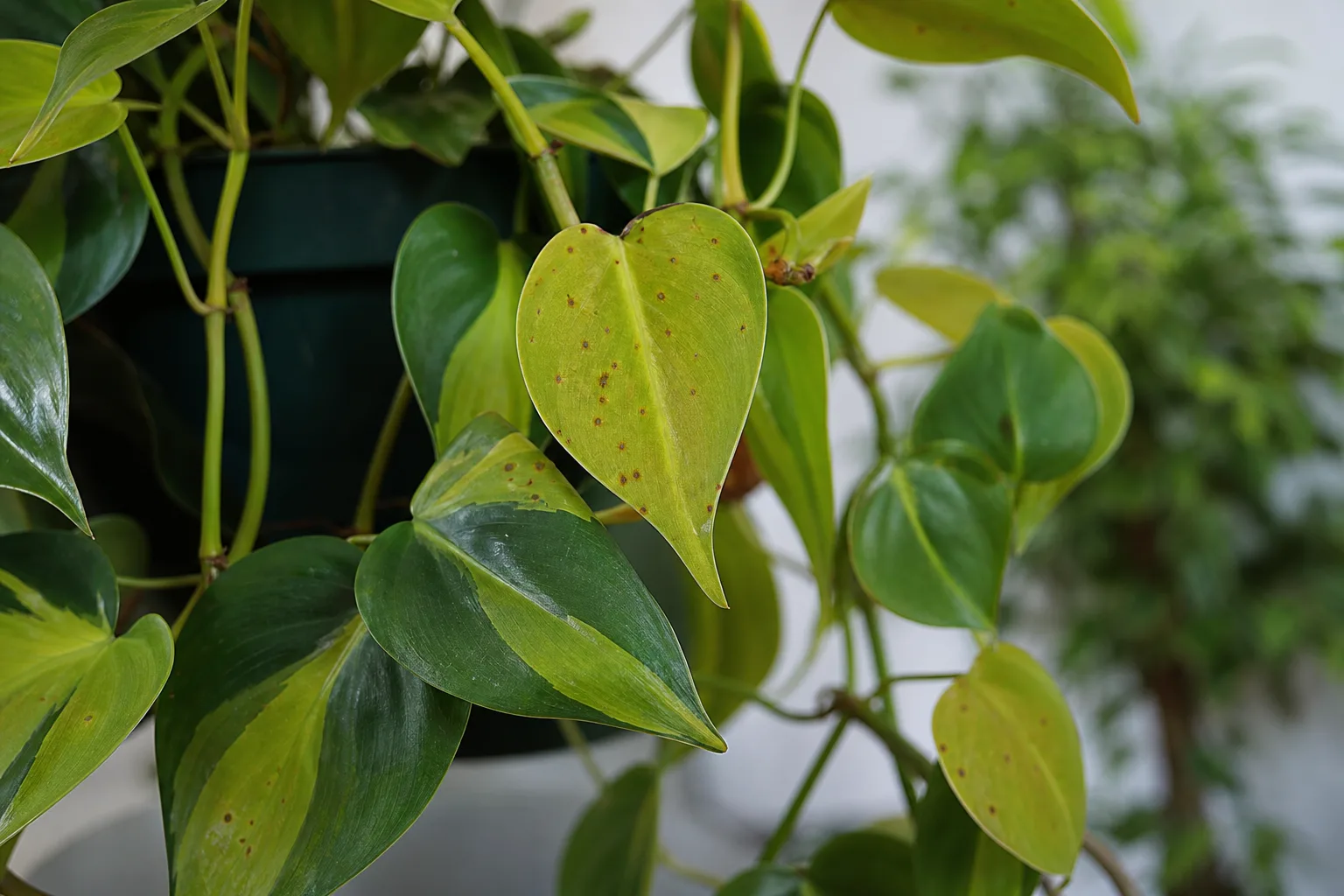
Orange dust on a leaf underside looks alarming, and corky tan bumps look almost the same from across the room. Only one of those patterns is houseplant rust disease—a fungal infection that sheds powdery spores. The other is often edema, a watering and humidity disorder that scars tissue without spreading like a pathogen.
This guide is a diagnose-then-fix path for rust on indoor plants: how to confirm true pustules, separate lookalikes, prune without stripping the plant, and fix the moisture habits that let spores germinate. Spotted tissue does not turn pristine again. Recovery means new leaves stay clean and old pustules stop multiplying. In our kitchen mint checks, the paper-rub test settled more arguments than any product label—colored powder means rust pressure; cork without powder means change watering first.
What Rust Disease Actually Is Indoors
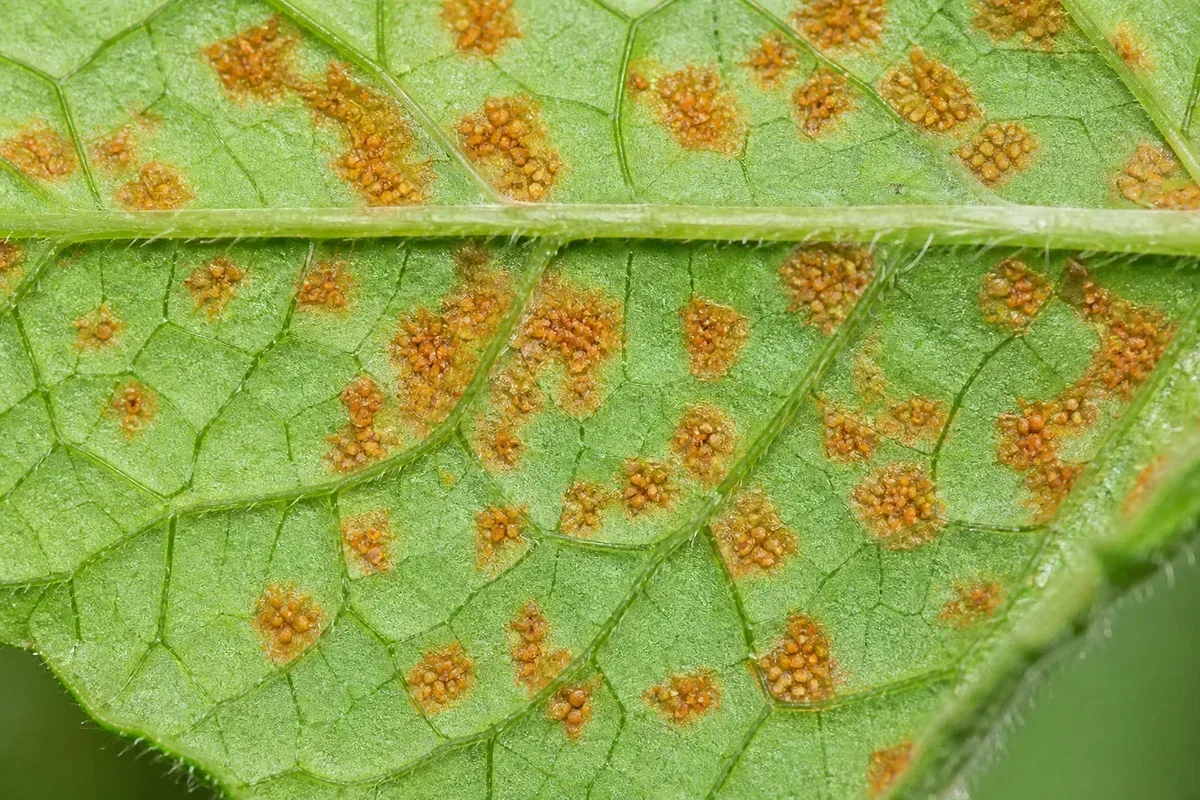
Rust diseases are fungal infections in the order Uredinales. The fungi are obligate parasites—they need living host tissue—and they announce themselves with powdery spore masses called pustules that are often orange, yellow, brown, black, purple, or even white depending on species and spore stage (RHS; UC IPM).
Indoors, rust is less common than garden outbreaks because many homes stay drier and lack outdoor splash and dew. UC IPM notes that foliar leaf spots and blights that thrive outdoors are usually uncommon in homes and offices when humidity is lower and splashing water is limited (UC IPM). When rust does appear on a windowsill or hanging basket, it almost always rides on wet foliage, crowded leaves, or a plant that arrived already infected.
Rust fungi are typically host-specific. The rust on mint is not the same species that attacks roses or snapdragons, and WSU Extension emphasizes that most rusts infect only certain plants (WSU Hortsense; RHS). That host specificity lowers panic about every neighbor plant catching every rust—but shared tools, hands, and splash still move spores between susceptible hosts of the same kind.
How to Spot True Rust Pustules
True rust starts as pale spots that develop into raised, dusty pustules, most often on the lower leaf surface, while the upper surface may show yellow or chlorotic patches above the spore masses (RHS; UC IPM; WSU Hortsense). Severe infection can yellow leaves, curl them, drop them early, and reduce vigor; extreme cases on susceptible hosts can kill plants (RHS; UC IPM).
Flip leaves before you diagnose from the top alone. Many growers only see yellow flecks on the upper surface and miss the orange powder underneath until the canopy is already shedding leaves.
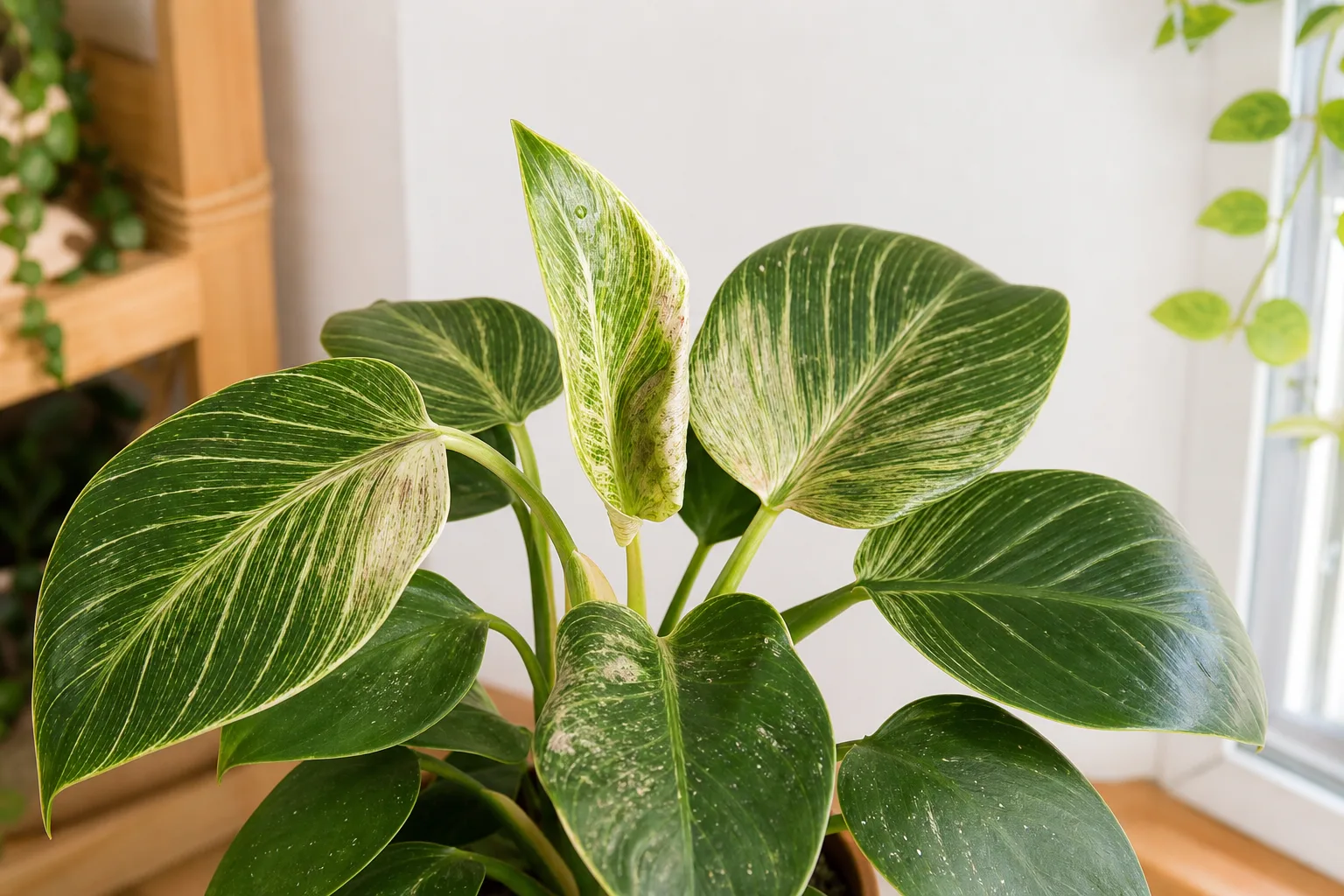
Hobby-name warning: orange or rusty discoloration on aroids (philodendron, pothos, monstera) is often leaf spot, edema, or mechanical marking—not classic Puccinia rust. Confirm powdery underside pustules before you treat anything labeled “rust” in a plant-problem matrix.
The Paper-Rub Test and Color Stages
Gently rub a suspect pustule on white paper. An orange, yellow, or rusty streak of dry powder supports rust spores; a gray-white dry film on the upper surface without underside orange powder points toward powdery mildew instead. Static corky tan bumps that do not shed colored powder favor edema scars.
Color can change with the spore stage. Rose and mint rusts often show bright orange summer pustules (urediniospores) and later darker, black overwintering pustules (teliospores) that are tougher to kill with casual cleanup (RHS; RHS Mint rust). Treat darkening pustules as a cue to remove infected tissue promptly and keep debris out of indoor compost.
Rust Pustules vs Edema
Edema (also spelled oedema) is the lookalike that wastes the most fungicide. Wisconsin Horticulture describes translucent, fluid-filled blisters on undersides of older leaves that later burst and scar into raised tan, corky patches (Wisconsin Horticulture). Clemson HGIC likewise lists oedema as corky swellings on petioles and lower leaf surfaces when soil stays too wet under poor light and cool temperatures (Clemson HGIC).
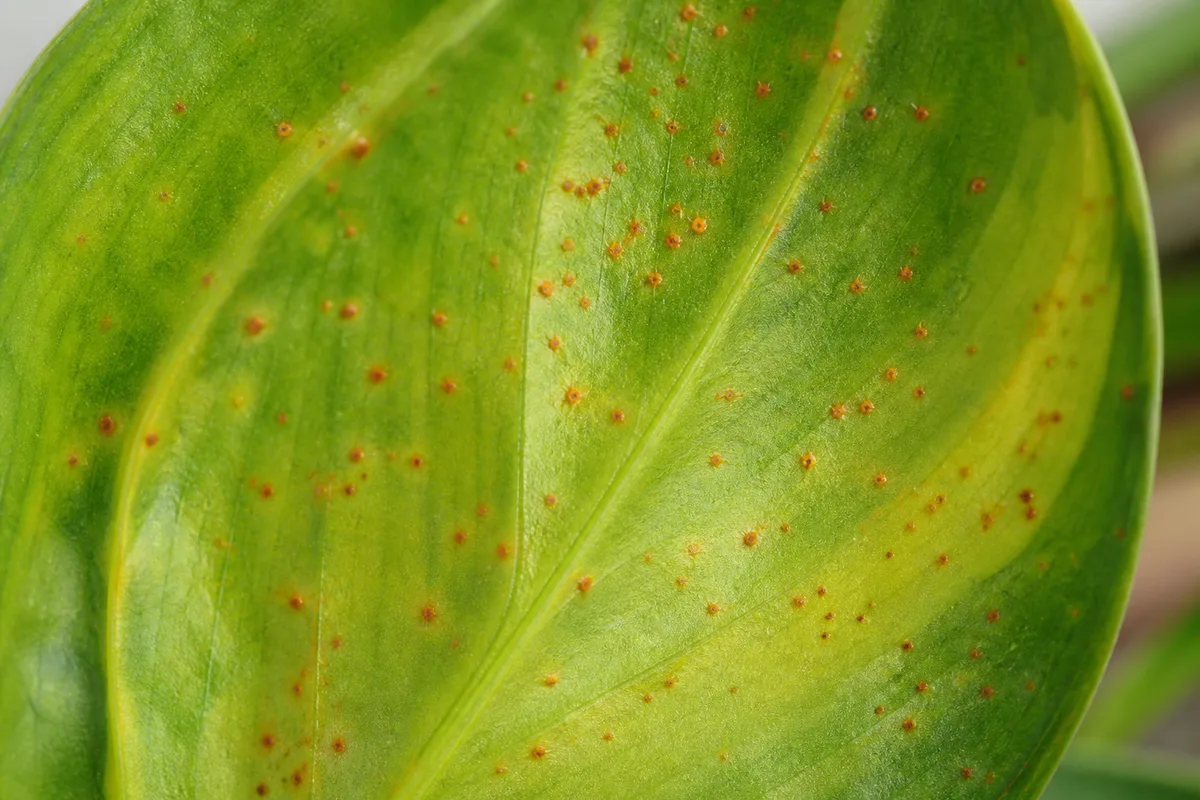
Rust pustules shed colored powder and multiply after wet events. Edema blisters start watery, turn corky, and stay put once scarred unless the moisture imbalance continues. Fungicides do nothing for edema scars, and spraying oil products can worsen edema by interfering with leaf water loss (Wisconsin Horticulture).
| Feature | True rust | Edema (lookalike) |
|---|---|---|
| Typical look | Dusty orange/yellow/brown/black pustules, often undersides | Translucent blisters → raised corky tan scars |
| Powder transfer | Colored spore streak on paper | Little or no colored powder |
| Contagious? | Yes among susceptible hosts via air, splash, tools | No — physiological disorder |
| First fix | Isolate, prune pustuled leaves, dry foliage | Water less in low light; empty saucers; improve airflow |
| Spray role | Labeled protectants may reduce new infections after cleanup | None |
Corky Scars That Are Not Contagious
If undersides feel rough and corky but never dust orange onto your fingers, treat the case as edema first. Wisconsin guidance is direct: water less in cloudy or low-light periods, water in the morning so mix drains by night, increase spacing and air circulation, and empty saucers about 30 minutes after watering (Wisconsin Horticulture). Clemson adds that leaves already showing oedema will not recover cosmetically—you halt new injury by improving light and watering less often (Clemson HGIC).
Do not strip every scarred leaf for cosmetics if the plant still needs canopy for growth. Fix the water and air balance, then judge success by whether new blisters stop forming.
Rust vs Powdery Mildew vs Leaf Spot
Three foliar patterns get mixed up on phone photos. Use this scan table before you buy a spray.
| Pattern | Where / look | Powder? | First move |
|---|---|---|---|
| Rust | Underside dusty pustules; yellow flecks above | Colored (orange/yellow/brown/black) | Isolate, prune, dry foliage |
| Powdery mildew | Often upper surfaces; white/gray flour film | White/gray, upper-biased | See mildew protocol; stop stagnant humid air |
| Fungal leaf spot | Discrete necrotic lesions, halos, target rings | Usually none (no orange underside dust) | Dry canopy; route to leaf-spot guide |
| Edema | Underside corky tan scars | None | Water less in low light; empty saucers |
Powdery mildew makes a dry white or gray coating that often sits on upper leaf surfaces and thrives in humid, poorly ventilated rooms; Clemson lists ventilation and avoiding overwatering among cultural controls, and UC IPM notes humidity reduction and brighter light as environmental levers (Clemson HGIC; UC IPM). For that pattern, use houseplant powdery mildew rather than a rust protocol.
Fungal leaf spot makes discrete tan to brown lesions that may show yellow halos or target rings and spreads mainly by splash—without orange underside powder. Walk that differential through houseplant leaf spot disease when lesions look necrotic and dry rather than pustular.
Rust is the dusty, colored underside pustule story. If you only remember one rule: powder on top that looks like flour is usually mildew; powder underneath that looks like rust pigment is usually rust; cork without powder is usually edema.
Why Indoor Plants Get Rust
Rust infection needs a susceptible leaf, viable spores, and enough surface moisture for germination. UC IPM reports that urediniospores can infect through stomata when water is present for short periods—often 6–8 hours or less—and that heavy dew alone can be enough; after infection, development continues even without free water (UC IPM). Indoors, that wetness window usually comes from misting, overhead watering, shower rinses left wet overnight, or dense canopies that dry slowly.
Wet Leaves, Humidity, and Poor Airflow
High ambient humidity is not automatically the enemy; wet leaf surfaces that stay wet are. UC IPM’s landscape rust guidance says to minimize foliage wetness, avoid overhead watering (or water early so plants dry quickly), reduce excess humidity, improve air circulation, and avoid crowding (UC IPM). RHS likewise notes infection is favored by prolonged leaf wetness (RHS).
Raise humidity with a room humidifier, correct spacing, or a properly used pebble tray aimed at air moisture—not by fogging infected leaves. Pair that habit change with the indoor humidity and pebble trays method so you stop trading dry tips for wet-leaf disease.
Host Specificity, Nursery Introduction, and Hobby Mislabel Risks
Many indoor rust cases start at purchase. UC IPM stresses inspecting plants before bringing them home and rejecting stock with disease symptoms (UC IPM). Quarantine new plants for a couple of weeks, flip leaves during that window, and keep them off shared drip trays with your established collection.
Because rusts are host-specific, a mint outbreak does not mean your snake plant is doomed. It does mean other mint, marjoram, or related hosts nearby are at risk, and that tools and splash can still move spores between plants of the same susceptible group (RHS; RHS Mint rust).
Indoors, classic true-rust frequency skews toward kitchen herbs (mint) and windowsill pelargoniums/zonal geraniums. Aroid “rust” labels in hobby databases often describe color or a different foliar problem—run the paper-rub test before you treat. Chrysanthemum white rust (Puccinia horiana) is a serious production disease under regulatory attention in some regions; hobbyists growing chrysanthemums indoors should isolate suspicious white pustules and seek extension advice rather than casually composting debris (UC IPM).
Confirm the Cause Before You Treat
Work this order before you cut or spray:
- Isolate the plant from neighbors of the same genus or known hosts.
- Photograph upper and lower surfaces of one symptomatic leaf and one clean leaf.
- Run the paper-rub test on a pustule.
- Check recent misting, overhead watering, crowding, and saucer standing water.
- Sort the pattern into rust, edema, powdery mildew, or leaf spot before choosing a product.
Day-0 photo protocol: same angle, same lighting, upper + underside of one bad leaf and one clean leaf. Recheck at day 3–5. New powdery pustules on previously clean leaves after a wet overnight favor rust. Static cork scars with no colored powder favor edema.
If the plant is valuable and the pattern stays ambiguous after dry culture, Penn State’s diagnosing framework supports systematic diagnosis and extension or lab help when field ID is uncertain (Penn State Extension). Guessing “fungicide first” is how edema cases get worse.
How to Fix Rust Step by Step
Cultural cleanup beats spray schedules for houseplant rust. UC IPM and RHS both put sanitation and dry foliage ahead of chemistry: remove affected parts early, avoid excess soft nitrogen-driven growth, dispose of debris carefully, and only then consider labeled fungicides (UC IPM; RHS).
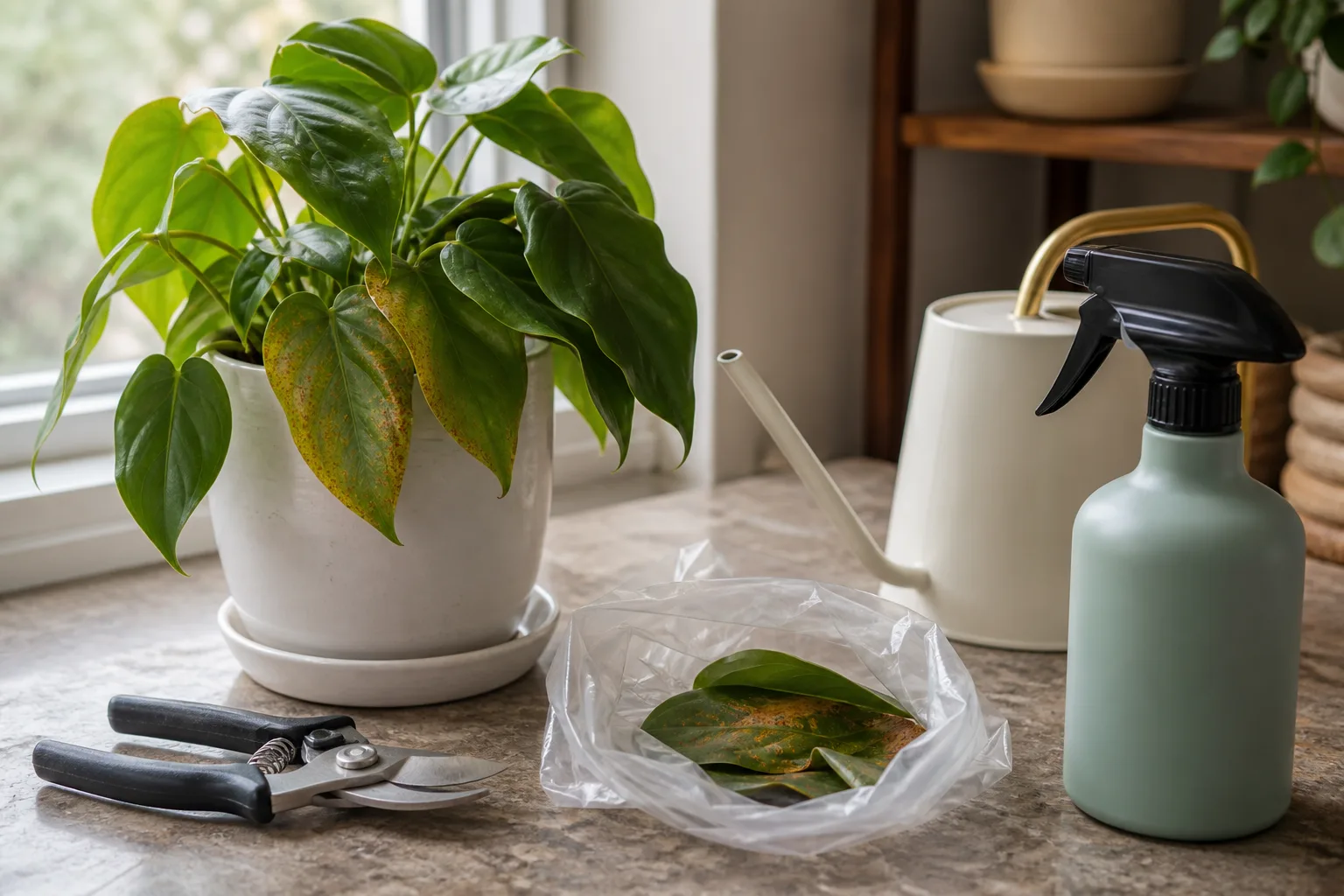
Isolate, Prune, and Bag Debris
Move the plant away from other susceptible hosts immediately. Spores travel on air currents, splash, hands, and tools (UC IPM; WSU Hortsense).
Prune heavily pustuled leaves with clean shears as soon as you see them, provided you are removing a limited share of the canopy—RHS warns that stripping leaves in large numbers can harm the plant more than the disease (RHS). Bag infected tissue in household trash. Avoid indoor compost for late-season material carrying resilient overwintering spores (RHS; RHS Mint rust). Disinfect blades with 70% isopropyl alcohol between plants, matching UC IPM’s sanitation approach for foliar disease work (UC IPM).
Stop Wetting Leaves and Reset Humidity Habits
Water at the soil line only. Skip evening misting and whole-plant showers while pustules are active. Space pots so leaves do not overlap for hours after watering, and run gentle airflow if the room stays stagnant.
Humidity lovers still need moisture in the air—just not free water parked on infected blades overnight. Use pebble trays correctly, group plants with room to breathe, or run a humidifier for the room. If wet soil is also stressing roots, check root rot on houseplants and reset watering with how to water indoor plants the right way.
Fungicides: Ornamental vs Culinary Limits
Fungicides do not erase existing pustules or cork scars. They may protect remaining healthy tissue after you remove infected leaves and fix wetness.
Buy a spray only if pustules shed colored powder, stems stay firm, you have already pruned the worst leaves, foliage will stay dry going forward, and the plant is an ornamental (not a culinary herb you plan to eat). Skip the spray if marks are corky edema scars, the plant is kitchen mint/marjoram/savory you eat, or the canopy is systemically distorted with black resting spores and soft collapse.
UC IPM lists protectants and systemics used in ornamental production (for example mancozeb as protectant and myclobutanil as an eradicant among several options), and notes neem oil has some protectant activity on certain ornamentals but is not effective for rose rust (UC IPM; UC IPM). Clemson’s houseplant disease table focuses home products more on leaf spot and powdery mildew actives; always match the label to your plant and disease, and spray outdoors in shade when treating houseplants (Clemson HGIC).
Read the label for your plant type. Prefer treating outdoors or in a well-ventilated area, keep pets and children away until sprays dry, and wear the PPE the label names. Synthetic actives are not “indoor room sprays”—if you cannot ventilate or move the plant outside briefly, lean harder on cultural control instead of forcing a chemical pass.
RHS generally discourages routine fungicide use for gardeners and notes no fungicides with good activity against rust on culinary herbs are available for home edible use in their guidance (RHS; RHS Mint rust). For kitchen mint, cultural removal beats spray hope.
Plants Most Often Hit Indoors
Mint (Mentha) is the classic indoor-kitchen host: dusty orange pustules from Puccinia menthae, sometimes with pale distorted spring shoots and later yellow or black pustules. RHS advises removing affected plants before black resting spores contaminate soil and rhizomes, and notes culinary fungicide options are effectively unavailable for home herbs (RHS Mint rust). See rust disease on mint for species-specific steps.
Pelargoniums / zonal geraniums show yellow upper spots with dark brown underside pustules in classic geranium rust patterns referenced across extension photo sets (WSU Hortsense; RHS). Keep foliage dry and remove infected leaves early. Geranium leaves also show edema blisters that look similar until you check for powder (Wisconsin Horticulture)—use the paper-rub test.
Other hosts on the site may list rust pages for triage, including string of hearts and portulaca—always confirm powdery underside pustules before treating, because some “rust” names in hobby language describe color, not Puccinia. Start from the rust disease symptom hub when you need a species-indexed entry point after you have confirmed true pustules.
First-Hand Notes From Diagnosing Rust Indoors
These are LeafyPixels editorial observations from indoor setups reviewed while drafting species problem pages—single-setup notes, not controlled trials.
Kitchen mint orange→black progression (February 2026): A windowsill Mentha pot was misted after harvest for “freshness.” Day 0: orange underside pustules that streaked the paper-rub test. By day 10, several leaves showed darker pustules and a few pale, thickened shoots. We stopped misting, bagged heavily pustuled stems (no indoor compost), and started a clean tip cutting in fresh mix away from the old rhizome pot. By day 21 the cutting stayed clean; the original pot kept throwing pustules on new leaves and was discarded. Outcome matched RHS mint guidance: resting spores and rhizomes make heroic salvage of a bad pot a poor bet (RHS Mint rust).
Geranium underside misread as edema (March 2026): A zonal pelargonium on a crowded south sill had yellow upper flecks. The grower assumed corky edema from saucer water. Paper-rub on the underside left a brown powder streak—true pustules, not cork scars. We isolated, pruned the worst leaves (keeping >50% canopy), watered at soil line only, and emptied the saucer within ~30 minutes. Day 14: no new pustules on previously clean leaves; old yellow flecks remained as scars. Outcome: powder transfer decided the case in under a minute.
Nursery quarantine catch (April 2026): A newly purchased pelargonium showed one leaf with underside brown pustules during a two-week quarantine away from the collection. We rejected returning it to the shelf, bagged the leaf, alcohol-wiped shears, and watched for 14 more days—no new pustules after dry culture. Neighbor mint and other geraniums stayed clean. Outcome: host-specific risk still rewards quarantine and underside checks at purchase (UC IPM).
Prevent Reinfection on the Shelf
Buy clean stock and quarantine newcomers. Water early at soil level so leaves dry the same day. Space plants and thin dense stems on herbs so air moves through the canopy. Avoid excess nitrogen that pushes soft, easily colonized growth (RHS).
Clean fallen leaves from the pot surface. Wipe shared trays. Alcohol-wipe shears between plants. For mint beds or long-term pots after a bad outbreak, RHS recommends starting clean divisions in fresh compost away from contaminated mix rather than hoping old rhizomes stay clean (RHS Mint rust). Pair humidity fixes with the indoor humidity and pebble trays approach so you never restart nightly misting on a recovering host.
When to Discard or Get a Diagnostic Lab ID
Discard when pustules cover most of the canopy and keep appearing on new leaves after two weeks of dry, spaced culture, when stems are systemically distorted (mint), or when a soft bacterial pattern was misread as rust and petioles turn foul. UC IPM’s broader houseplant disease guidance favors discarding for systemic bacterial problems where sprays fail—and the same sanitation logic applies when a rusted herb is hopelessly colonized (UC IPM).
Pursue extension or diagnostic-lab ID when a valuable plant shows ambiguous underside marks that do not match clear pustules or clear edema after dry culture, or when a regulated greenhouse rust (for example certain chrysanthemum white rust contexts in commercial production) is suspected (UC IPM; Penn State Extension). Bag late-season debris with black resting spores rather than adding it to indoor compost (RHS Mint rust).
Related Guides (Open When…)
- Leaf spot disease on houseplants — open when lesions are necrotic spots with halos rather than powdery orange pustules
- Powdery mildew on houseplants — open when you see dry white flour-like coating on upper leaves
- Rust disease symptom hub — open for a species-indexed starting point after you confirm true pustules
- Indoor humidity and pebble trays — open when you need humidity without misting infected foliage
- How to water indoor plants the right way — open for soil-line watering that keeps leaves dry
- Root rot on houseplants — open when wet mix and yellowing overlap with foliar symptoms
- Rust disease on mint — open for Puccinia menthae kitchen-herb protocol
- Houseplant diseases identification and treatment — open when rust is one of several disease patterns in the collection
Conclusion
Use this 14-day path instead of hoping orange dust fades on its own:
- Day 0: Photograph upper and lower surfaces; isolate the plant; stop misting and overhead watering.
- Day 0–1: Confirm powdery colored pustules vs corky edema; prune limited pustuled leaves into the trash; alcohol-wipe tools.
- Day 1–5: Keep foliage dry and spaced; empty saucers; watch whether new pustules appear on previously clean leaves.
- Day 5–7: Add a labeled ornamental fungicide only after cleanup on firm-stem fungal rust—not for edema, and not on culinary herbs without a legal labeled option. Spray outdoors with label PPE; keep pets and kids away until dry.
- Day 7–14: Judge recovery by clean new growth, not by old scars vanishing. Discard if the canopy keeps pustulating or stems distort systemically.
Houseplant rust is a wet-leaf fungus wearing an orange costume. Separate true pustules from edema and mildew first, prune with restraint, dry the canopy, fix humidity without misting, and sanitize so the next watering does not restart the outbreak.