How to Keep Mosquitoes Away From Your Patio
Learn how to keep mosquitoes away from your patio by finding breeding water, correcting drainage, managing vegetation, and protecting people outside.
If mosquitoes appear every time you sit outside, look at the patio as a small landscape rather than blaming one plant or one lightbulb. The most useful question is not “What scent attracts them?” but “Where could a mosquito lay eggs, rest during the day, or find a person at close range?”
Start with water. Check flowerpot saucers, toys, tarps, clogged drains, gutters, birdbaths, low spots, and anything that can hold a few days of rain. Then look at irrigation, dense vegetation, and the way lighting and seating concentrate people in one place. The Centers for Disease Control and Prevention recommends emptying and scrubbing, turning over, covering, or throwing out water-holding items at least once a week, including flowerpot saucers and birdbaths (CDC mosquito-prevention guidance).
That order matters because a patio can be damp without being a breeding site, and a patio can look dry while a hidden container is producing mosquitoes. Use the five habits below as an inspection route, then finish with a short reset you can do tonight.
Quick answer: fix breeding water before changing the patio décor
The highest-impact patio habit is leaving small containers or puddles undisturbed. Mosquitoes do not need a pond; depending on species, a bucket, saucer, clogged gutter, wheelbarrow, discarded toy, or depression in the lawn can be enough. Texas A&M AgriLife Extension separates common mosquito pressure into floodwater, container, and stagnant-water situations, and notes that container mosquitoes can go from egg to biter in a matter of days when conditions are favorable (Texas A&M AgriLife Extension).
The practical sequence is simple: remove water when you can, scrub the surface where eggs or organic film may remain, correct the place that keeps refilling, and protect people while the yard settles down. Dense grass and shade can make adult mosquitoes more comfortable, but they are not a substitute for water as the first thing to investigate.
1. Leaving water-holding items in place
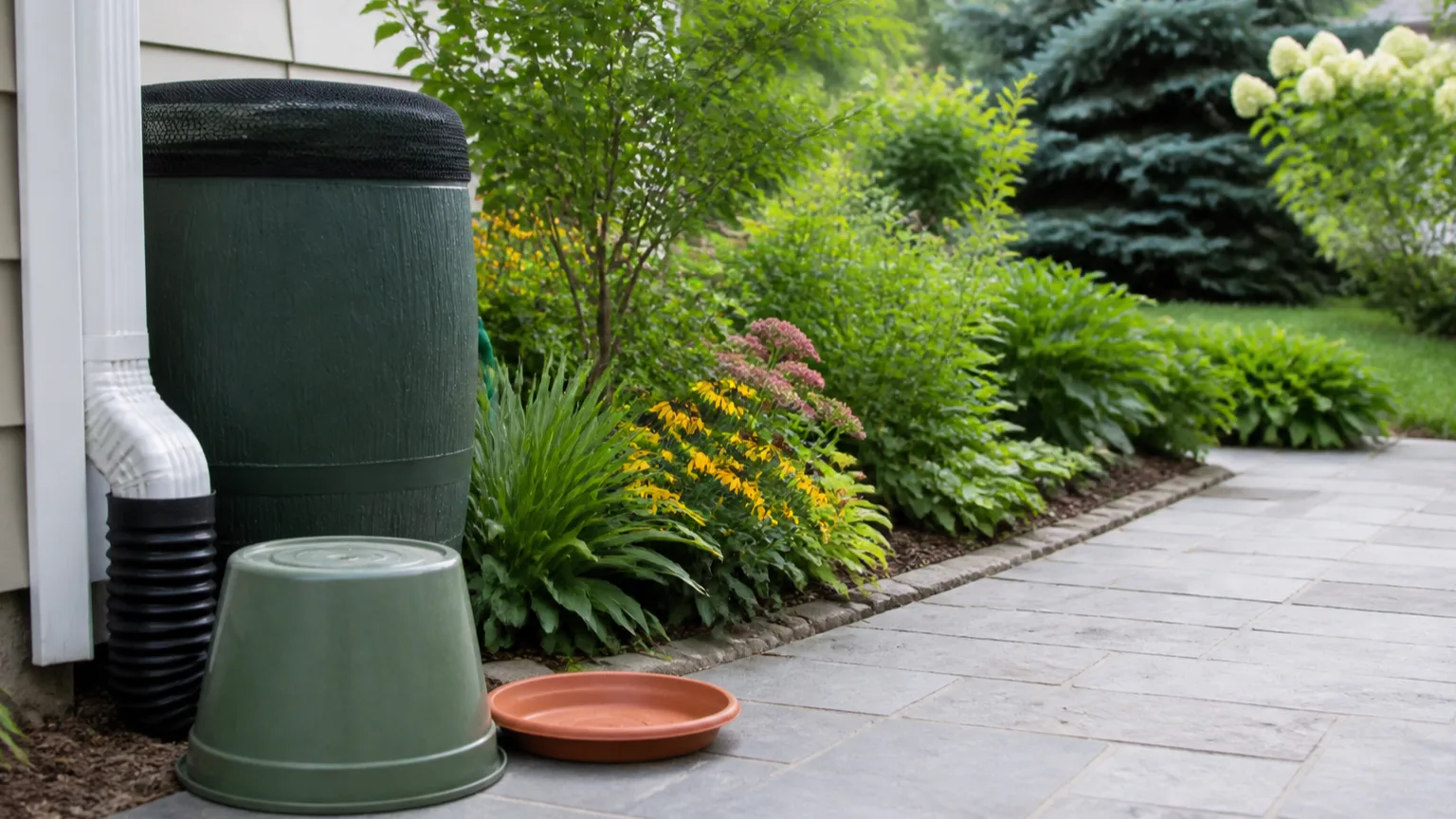
The patio’s smallest objects often deserve the closest inspection. A saucer beneath a container plant, the folded edge of a grill cover, a child’s outdoor toy, an upside-down lid, a clogged umbrella stand, and a decorative bowl can all catch rain or irrigation. Because these items are close to seating, they can create the frustrating impression that mosquitoes are “coming from the patio” when the source is only a few steps away.
Clear water is not automatically safe, and dirty water is not the only kind mosquitoes use. Texas A&M notes that container mosquitoes commonly use tires, buckets, wheelbarrows, gutters, pools, and trash cans, while other species use puddles and low areas after rain. After a storm or a heavy watering day, make a slow lap around the patio and the adjacent lawn rather than checking only the obvious birdbath.
The patio water audit
Walk outward from the chairs in three rings. In the first ring, inspect everything within about ten feet: plant saucers, watering cans, pots without plants, furniture feet, toys, pet bowls, lantern bases, and the folds of covers. In the second ring, check steps, downspouts, drains, the edge of the patio, and the first strip of lawn or planting bed. In the third ring, look under the deck, behind the shed, beneath dense shrubs, and along any place where a hose or irrigation line leaks.

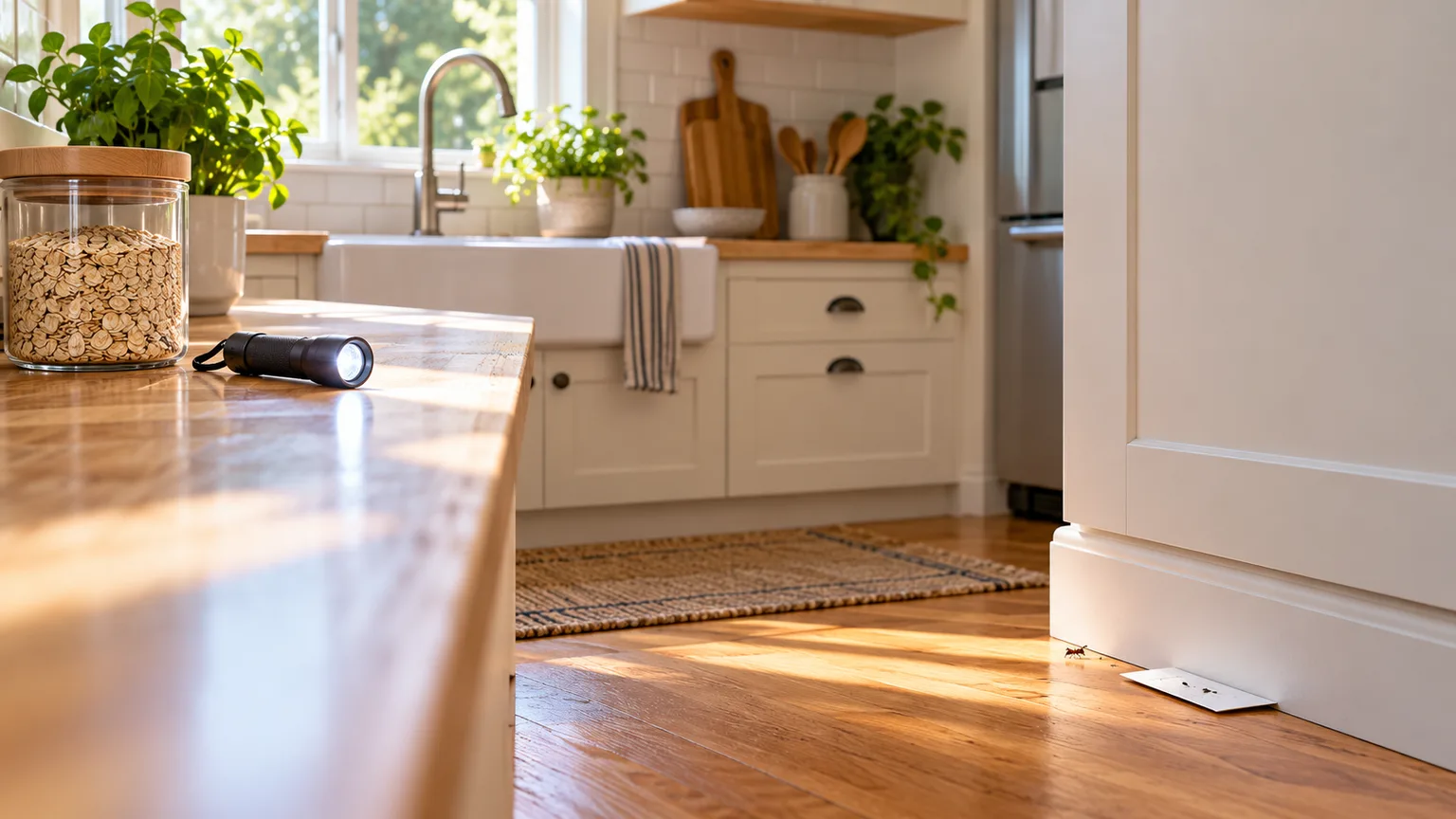
Use a flashlight at a low angle. Shallow water hides in dark plastic and in the rim of a saucer, and a puddle may be visible only after you move a pot. Look for wriggling larvae near the surface, but do not wait to see larvae before acting. Eggs and early larvae can be hard to spot, and the absence of visible “wigglers” does not prove that a container is harmless.
The fastest audit is also the most repeatable. Put a reminder on the same day each week, and add a second check after unusually heavy rain. A weekly rhythm follows the CDC’s general advice, while a post-rain check catches containers that were dry during the last inspection.
When to dump, scrub, cover, or treat
Use the least complicated fix that actually stops the water from supporting mosquitoes.
- Dump and scrub small containers, saucers, toys, and buckets. Emptying kills the water stage, while scrubbing helps remove residue that can cling to the surface.
- Turn over or store dry anything that does not need to stay outside. A bucket that is “usually empty” can still become a breeding site after one storm.
- Cover rain barrels, bins, and other containers with a secure screen or lid that prevents adult mosquitoes from reaching the water. A loose cover that leaves gaps is not a reliable cover.
- Refresh and brush birdbaths regularly. If you want to keep a birdbath, place it where maintenance is easy and make cleaning part of the same weekly patio round.
- Use a labeled larvicide only when water cannot reasonably be dumped, drained, or covered. Products containing Bacillus thuringiensis israelensis (Bti) are commonly used for mosquito larvae in appropriate water bodies, but follow the product label and confirm that the product is intended for that water feature.
For a pond or fountain, do not pour random household chemicals into the water. A pump, bubbler, or other circulation can make a feature less suitable for mosquito larvae, but moving water does not excuse a clogged pump, a stagnant corner, or a neglected basin. Gardeners’ World describes flow from rills and fountains as a design feature and cautions that still water in bowls and containers needs closer attention; its practical guidance recommends changing container water if larvae are present (Gardeners’ World water-feature guidance).
2. Letting water hide under decks and in low spots
The space under a deck can be dark, humid, and difficult to see, which makes it easy to ignore. That environment may provide a daytime resting place for adult mosquitoes, but the real breeding question is whether water collects there: a shallow depression, a leaking hose bib, an overflowing downspout, a tarp fold, or a container hidden behind a joist.
Do not cover every patch of soil with plastic simply because mosquitoes are present. An impermeable barrier can trap moisture, interfere with drainage, create a new pocket where water collects, and affect plants or beneficial organisms. First identify whether the problem is standing water, dense shelter, or both.
Fix drainage without damaging the yard
Start at the source. Extend a downspout far enough that it does not discharge beside the patio or under the deck, repair leaking irrigation, remove leaves from drains and gutters, and reshape only minor low spots that repeatedly hold water. If the area stays wet because of a high water table, a slope, a failed drain, or runoff from another property, a landscape professional can help design a solution rather than simply adding more fill.
A rain garden is not automatically a mosquito pond. The Old Farmer’s Almanac notes that a properly designed rain garden is intended to drain within a day or two and usually does not create the same mosquito risk as a pond; it recommends avoiding overly deep basins and locations where water already stands for long periods (Almanac rain-garden guidance). The useful distinction is drainage time, not whether the landscape contains any water at all.
If you cannot correct a low spot immediately, mark it and inspect it after every rain. A simple record—date, rain, how long water remained, and whether larvae were present—helps you decide whether you need grading, drainage work, a properly labeled larvicide, or local mosquito-control advice.
3. Watering into the evening and leaving wet pockets
Overwatering can make patio mosquito pressure worse, but the explanation needs precision. Wet soil alone is not a mosquito breeding site; most mosquitoes need a relatively still water surface. The problem is irrigation that leaves saucers full, creates puddles in uneven turf, overflows a planter, or keeps a shaded edge wet long enough for water to remain available.
Watering late in the day can also make it harder to notice those failures before evening, when people are using the patio and mosquitoes are active. It is not necessary to force every plant to dry completely, especially in hot weather or with moisture-loving species. The goal is controlled irrigation that reaches the root zone without leaving avoidable water around it.
Better irrigation habits
Check the system while it runs. Watch for a tilted sprinkler head spraying the patio, a cracked connector creating a puddle, a clogged emitter that causes water to spill from a pot, or a hose that leaks beside the deck. Walk the area again after irrigation ends; the wettest-looking spot is not always the spot that stays wet longest.
Prefer a schedule that gives surfaces time to drain before the patio’s main evening use, while adjusting for climate, soil, plant type, and local water restrictions. Morning watering is often convenient because you can see where water went and because foliage and hard surfaces have more time to dry, but timing cannot compensate for poor drainage. A soggy low spot will remain a soggy low spot whether it was watered at 7 a.m. or 7 p.m.
Move plant saucers onto a level surface and empty them as part of watering if they are not needed for the plant. If a container plant truly needs a reservoir, use a system designed for that purpose and maintain it according to its instructions rather than allowing an accidental saucer to become a permanent pool. Do not reduce water so aggressively that plants wilt, drop leaves, or become more vulnerable to heat stress.
4. Letting grass, shrubs, and under-deck growth become a refuge
Tall grass and dense vegetation can give adult mosquitoes a cool, protected place to rest during the day. The same is true of thick growth under a deck or along a shaded fence. This does not mean every shrub is a mosquito factory or that a short lawn will make the patio mosquito-free. It means that unmanaged vegetation can preserve the adults that arrive from elsewhere and make the patio edge more comfortable for them.
Focus on the vegetation closest to the seating area and on places where it stays damp and still. Clear dead leaves from drains, prune branches that touch the deck, keep access open beneath furniture and planters, and manage grass so it does not flop against the patio edge. Preserve healthy beds, flowering plants, and habitat that support pollinators; the goal is a less sheltered patio perimeter, not a sterile yard.
Trim for airflow, not a mosquito-free guarantee
Use a hand pruner or mower to create separation between dense foliage and the patio. Remove only what blocks airflow, hides standing water, or makes inspection impossible. A plant that is healthy, appropriately placed, and easy to inspect is usually more useful than a plant removed solely because it is green.
Do not mistake a dry-looking top layer for a dry planting bed. Leaf litter, mulch, and dense groundcover can conceal a saucer, irrigation leak, or shallow depression. Lift and inspect rather than applying broad pesticide sprays to every plant. Unnecessary spraying can affect bees, butterflies, aquatic life, and other non-target organisms, while it does not fix a container that fills again after the next rain.
If mosquitoes are worst at dawn or dusk, note where they appear to settle before you start cutting. That pattern can reveal a shaded hedge, the underside of the deck, a damp fence line, or a neighboring water source. Targeted habitat management is more useful than trying to make the entire yard look uniformly short.
5. Treating patio lighting as the main culprit
Patio lights can change what you notice, but they are rarely the first thing to fix. A bright lamp makes flying insects easier to see, and some outdoor lighting can attract moths, flies, and other insects that make the area feel busy. Mosquito behavior also varies by species and time of day, so a universal rule such as “this color keeps all mosquitoes away” is too strong.
People are often the strongest reason mosquitoes are near a seating area. Carbon dioxide from breathing, body heat, skin odors, and visual cues help mosquitoes locate a host at close range. Turning off a light may make the insects harder to see without changing the water source or the fact that people are still sitting there.
A calmer lighting setup
Treat lighting as a comfort and observation experiment after the water audit. Shield bulbs so light is directed downward, reduce unnecessary brightness, and place task lighting where you need it instead of flooding the entire yard. Avoid ultraviolet bug zappers as your main mosquito strategy; they can kill many non-target flying insects while doing little to address the breeding water that keeps mosquitoes arriving.
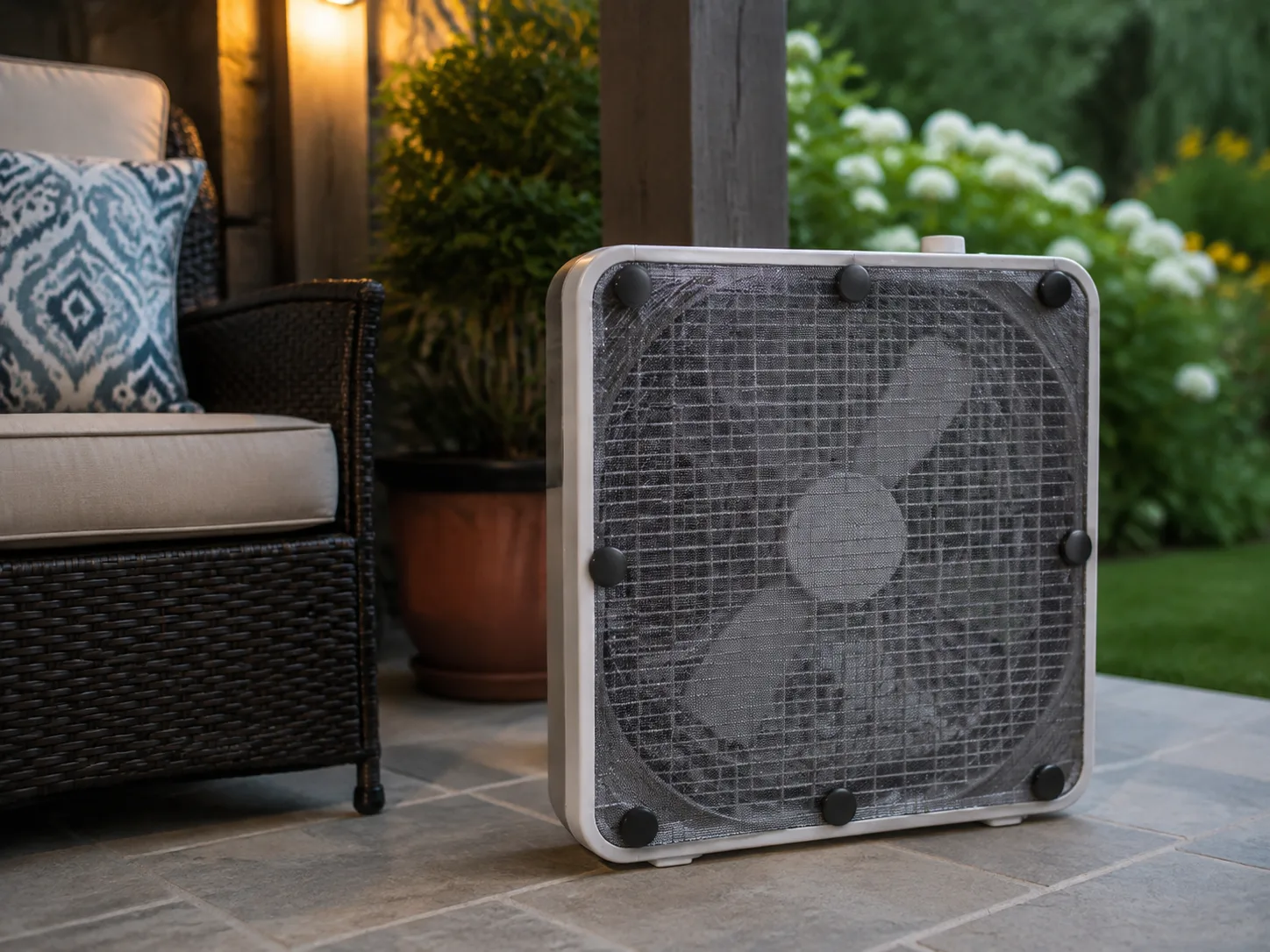
If you want to compare bulbs, change one fixture at a time and observe the actual biting around the seating area for several evenings. Do not assume a cooler or warmer color temperature is a complete control measure, and do not let bulb shopping distract you from a saucer, gutter, or low spot that is producing larvae. A fan directed across the seating area may improve comfort by disturbing weak-flying mosquitoes, but it is a personal-comfort measure, not a replacement for source reduction.
What to do tonight: a 20-minute patio reset
When you want a quick improvement, use a timer and work from the chairs outward.

- Minutes 0–5: empty obvious water. Dump saucers, buckets, toys, covers, and decorative containers. If a container must remain outside, turn it over or cover it securely.
- Minutes 5–10: inspect the edges. Check the downspout outlet, drain grates, steps, the first strip of lawn, the underside of the deck, and any spot where irrigation crosses the patio. Use a flashlight and move pots so hidden rims are visible.
- Minutes 10–14: remove the cause. Clear leaves from a drain, fix a dripping connection, move a saucer, straighten a tilted pot, or redirect a downspout. If you cannot fix a low spot tonight, mark it for inspection after the next rain.
- Minutes 14–17: open the patio perimeter. Prune only branches or grass that touch the seating area or block inspection. Do not strip healthy beds or spray everything in sight.
- Minutes 17–20: protect people. Use an EPA-registered personal repellent according to its label, wear loose clothing that covers exposed skin, or use a screen or net where appropriate. CDC guidance lists EPA-registered repellents, including products with DEET, picaridin, IR3535, oil of lemon eucalyptus/PMD, or 2-undecanone, among proven options when used as directed (CDC bite-prevention guidance).
If you find larvae in water that cannot be dumped, do not improvise with bleach, dish soap, oil, or household insecticide. Use a product specifically labeled for mosquito larvae in that kind of water, follow its directions, and keep children and pets away from treated water when the label requires it.
Why sprays, candles, and “mosquito plants” are not the first fix
Products can have a role, but they work on different parts of the problem. A personal repellent protects the person wearing it. A spatial device or candle may change the immediate experience under particular conditions. A plant may add scent or garden value. None of those options removes the water where the next generation is developing.
Plants sold as citronella plants are a good example of why labels and expectations matter. A scented plant on a table is not the same as a tested spatial repellent, and a few pots cannot form a reliable barrier around a patio. Texas A&M AgriLife Extension notes that the placement, number, and distribution of so-called repellent plants affect any possible benefit, and recommends approved personal repellents for dependable bite protection.
Broad yard spraying also has trade-offs. Adulticides can reduce mosquitoes temporarily, but weather, new arrivals, nearby breeding sites, and label restrictions limit what a treatment can accomplish. If you use a pesticide, identify the target, read the label, avoid drift into ponds or flowering plants, and respect re-entry instructions. For many patios, removing a saucer and correcting a leaking emitter is a better first investment than spraying every shrub.
When to escalate mosquito control
Ask for local vector-control or licensed pest-management advice when mosquitoes remain intense after you have removed container water, corrected obvious leaks, and inspected the property after rain. Escalate sooner if a blocked drain, shared stormwater area, neglected pool, wetland edge, large rain barrel, or neighboring property is likely to be involved.
Bring useful observations: where biting is worst, whether it happens in daylight or after sunset, how long puddles remain, whether larvae were found, and what changes you already made. A professional who starts with a site inspection can distinguish a patio source from adult mosquitoes resting in vegetation or flying in from a larger nearby habitat.
No outdoor space can be guaranteed mosquito-free. Weather can create new breeding sites, mosquitoes can travel from beyond your property, and different species use different water and resting habitats. The realistic goal is to reduce the number of mosquitoes produced on or immediately around your patio, make the area less comfortable for resting adults, and protect people during the times they are outside.
Conclusion: make the patio boring to mosquitoes
The patio habits that matter most are ordinary ones: leaving a saucer full, ignoring a low spot, watering into a leak, allowing dense growth to hide the edges, and expecting a new bulb to solve a water problem. Start with the source that can produce larvae, then improve drainage and inspection access, manage vegetation selectively, and treat lighting as a secondary comfort choice.
Keep a weekly water check, add a quick inspection after heavy rain, and use labeled products only for the job they are designed to do. A patio does not need to be stripped of plants or turned into a chemical zone; it needs fewer quiet nurseries, fewer hidden refuges, and a practical plan for protecting people when mosquitoes are still present.