I Tried 3 Ways to Keep Cut Roses Fresh—The Winner
I compared flower food, vodka and sugar, and aspirin for cut roses. Learn why one wins—and the vase-care routine that matters more than any hack.

The winning method was not the most inventive one: commercial flower food kept the roses in better shape than vodka and sugar or crushed aspirin. The useful lesson, though, is bigger than “buy the little packet.” Flower food works because it is designed to handle more than one problem at once, while most pantry hacks address only acidity, sugar, or microbes—and sometimes make another problem worse.
If your bouquet is on the counter right now, start with the parts that matter regardless of the additive. Wash the vase, remove leaves that would sit underwater, make a fresh cut with a sharp clean tool, dissolve the flower food according to its label, and move the roses away from sun, heat, drafts, and ripening fruit. The RHS guide to conditioning cut flowers and UF/IFAS cut-flower guidance both put this preparation ahead of clever ingredients.
The short answer: use flower food, then protect the water
For cut roses, I would choose a commercial flower-food sachet over vodka and sugar or aspirin. It is the only one of the three options formulated to supply carbohydrate while also managing the water environment; the exact ingredients vary by product, so the packet directions matter more than a homemade guess.
That recommendation has an important qualifier: flower food is not a substitute for clean water and a clean cut. A neglected vase can turn cloudy, a crushed stem can stop taking up water, and a hot windowsill can dehydrate petals faster than a preservative can help. A bouquet in plain, fresh water with well-prepared stems can easily outperform a bouquet in a dirty vase with an impressive-sounding additive.
The practical ranking is therefore flower food plus good care, then plain water plus good care, with vodka-sugar water and aspirin behind those options. If you do not have a sachet, do not panic and do not start combining ingredients. A clean vase, a fresh recut, and a timely water change are a sound temporary plan.
What the test actually measured
A three-method vase test is really a comparison of how long roses keep hydrated, upright, and visually attractive under the same household conditions. It is not a universal verdict for every rose cultivar, shipment, room, or water source. The roses may have started at slightly different stages of opening, and a small home test cannot separate every variable.
The fair question is not “Which liquid is magical?” It is “Which treatment keeps the stems open and the water usable while the flowers continue to age?” That framing also explains why an additive can look promising for a day and fail by day three. Early appearance reflects the roses’ starting condition; later performance exposes water uptake, microbial growth, heat, and handling.
Three failure points decide vase life
Hydration comes first. A rose needs an open path from the vase to the bloom. Dry stem ends, crushed vascular tissue, air entering the cut, and bacterial buildup can all reduce water movement even when the vase still looks full.
The water has to stay biologically manageable. A 2023 study in PLOS One followed bacterial communities on cut flowers and in vase water, including roses, for seven days. Bacterial diversity changed over time, and the researchers describe xylem blockage as a known threat to water balance and postharvest quality. That is why a cloudy vase is not merely unattractive; it is a warning that the stem environment has changed.
The room can speed everything up. Direct sun, heat from a radiator or appliance, warm drafts, and nearby ripening fruit all shorten the margin for error. Ethylene released by ripening fruit is a real flower-aging signal, and the American Floral Endowment’s postharvest research overview explains why commercial growers treat ethylene as a serious quality problem.
How each solution is supposed to work
The three treatments sound as if they cover the same bases, but they do not. Flower food is a formulated system. Vodka and sugar is a two-ingredient compromise. Aspirin is chiefly an acidity experiment. Understanding that difference is more useful than memorizing a winner.
Commercial flower food
Commercial flower food generally aims to do three jobs: provide a carbohydrate source for the cut flower, adjust the water chemistry, and limit microbial growth. The balance is the point. Adding one ingredient from the formula to a vase does not reproduce the formula.
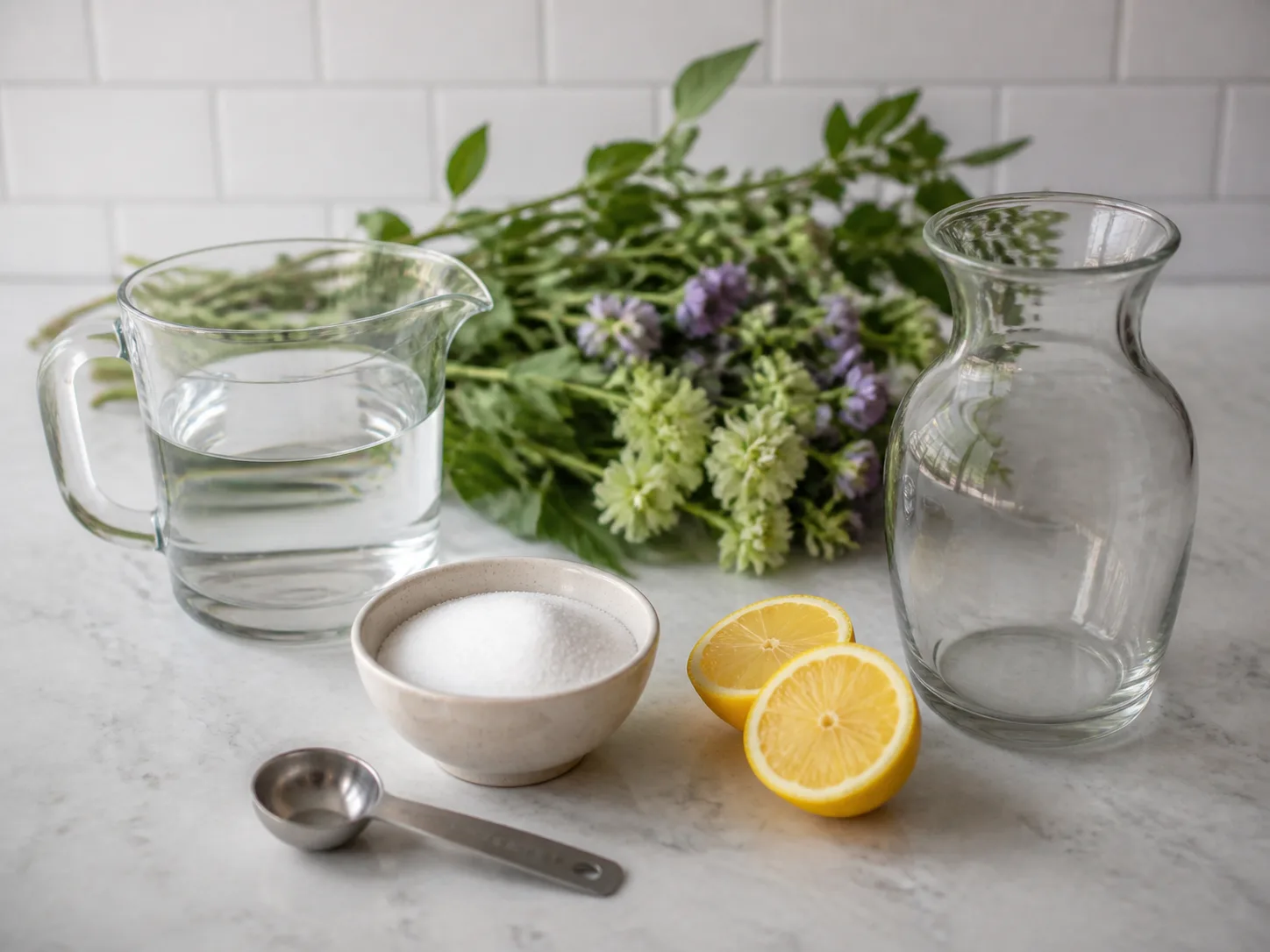
This is why UF/IFAS recommends commercial mixtures over many homemade concoctions for controlling microbes and hydrating stems. The RHS also notes that proprietary flower food is likely to be more effective than a homemade preservative and recommends dissolving it before adding the flowers.
Use the sachet at the water volume on the packet. If you split one bouquet between several vases, split the solution proportionally rather than pouring the whole packet into a small amount of water. Do not add sugar, aspirin, vodka, soda, bleach, or vinegar on top of it; the packet is already the calibrated part of the experiment.
The limitation is that flower food cannot repair old flowers, a damaged stem, or a vase with residue. It also does not mean the roses will stay frozen in their arrival-day shape. Healthy blooms should continue opening, and outer petals may age first. The goal is slower, cleaner aging—not immortality.
Vodka and sugar
The logic is easy to understand. Sugar supplies carbohydrate after the stem has been separated from the plant, while vodka is supposed to suppress bacteria or interfere with the flower’s ethylene response. The problem is that the two ingredients are not a balanced preservative simply because they sound complementary.
Sugar can feed microbes as well as flowers. If the antimicrobial side is weak, a sweet vase may become cloudy faster than plain water. Vodka is also difficult to dose meaningfully in a small home vase: too little may do very little, while more is not automatically safer for living flower tissue. A few drops or a splash is not a validated commercial formula.
I would not choose this method for a valuable bouquet. If it is already in use and the roses look fine, do not keep adding more. Watch the water closely, and at the first cloudiness replace the solution, rinse the vase, and recut the stems. The Gardening Know How discussion of vinegar and cut flowers makes the same broader point about homemade preservatives: changing pH is not a stand-alone solution, and quantities vary enough that a recipe should not be treated as universal.
Aspirin
Aspirin contains acetylsalicylic acid, so the theory is that it will make vase water more acidic and perhaps create conditions that are less favorable to some microbes. That is a narrower job than people often assume. Acidity is not the same as a complete preservative, and an acidic solution does not reopen a crushed or bacteria-blocked stem.
The risk is not that one tablet is guaranteed to kill a bouquet; it is that household dosing is imprecise. Tablet strength, water volume, flower freshness, and the rest of the vase conditions all change the result. Adding more because the first amount did not seem to work is exactly the kind of escalation a small home experiment cannot justify.
If aspirin performed poorly in the comparison, that result makes sense as a decision rule: do not use it as your default rose treatment. A clean recut and a fresh water change address the physical cause of drooping more directly. If you are curious about acidity, treat that as a controlled test with one variable—not as a reason to combine aspirin with sugar, alcohol, or bleach.
How to make the comparison fair
The most useful way to test vase treatments is to control the boring details. Otherwise, the result may measure which vase received the freshest rose, the largest water volume, or the coolest position in the room.
Prep the vase and stems
Use matching, thoroughly washed vases. A quick rinse is not enough if the inside feels slimy or holds mineral residue; wash with detergent, rinse well, and let the vase dry before preparing the solution. If one vase is visibly dirtier than another, it should not be part of a serious comparison.
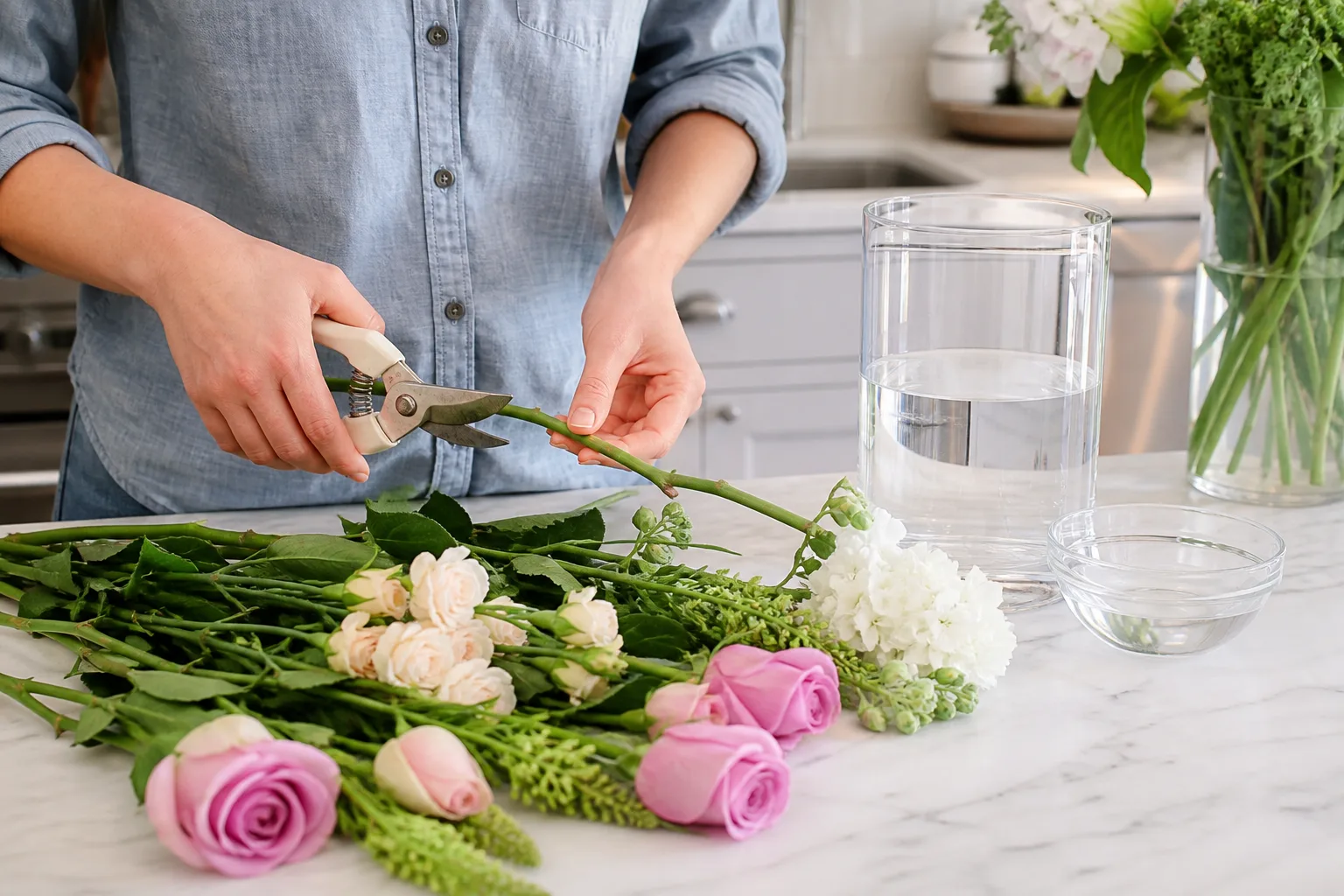
Buy or cut roses from the same source and divide them as evenly as possible. Record how open each bloom is, how long the stems are, and whether any stem is bruised. Roses picked too tightly may not open well, while roses already fully open have less time left no matter what you add. The RHS recommends cutting garden flowers when stems are fully turgid and notes that roses should not be picked in a tight bud if they need to develop fully in the vase.
Remove every leaf that would sit below the waterline. Leave healthy upper foliage unless it is damaged; UF/IFAS explains that removing only submerged or broken leaves preserves useful foliage. Do not strip the thorns to improve vase life. Removing them can damage the stem and create a wound where microbes can enter.
Make the same clean, angled cut on every stem. For woody rose stems, the RHS suggests an additional short vertical cut through the base after the main recut. Do not hammer the ends; the RHS warns that crushing woody stems can increase bacterial infection rather than improve uptake.
Track hydration and bloom health
Score the roses at the same time each day. Note whether the heads are upright, whether the outer petals are crisp or browned, whether the stems remain firm, whether the water is clear, and whether the blooms are opening normally. A photograph from the same distance helps, but it should support—not replace—notes about the stems and water.
Keep every vase in the same room, away from fruit and heat. Rotate their positions if one spot is warmer or brighter. Top up water only when the design of the test calls for it; otherwise, you may accidentally give one group a larger drink. Change all solutions on the same schedule, rinse the vases, and recut all stems together.
Most importantly, define “worked” before you start. I would call a method useful if it keeps the largest share of stems hydrated and upright while the water stays clear and the blooms continue to open. A single dramatic bloom should not outweigh the condition of the whole group.
What worked and what I would repeat
Flower food came out on top because it matched the actual job. Roses need water uptake, some usable carbohydrate, and a solution that does not rapidly turn the vase into a microbial nursery. A formulated packet is designed around those competing needs, while vodka and sugar leaves too much uncertainty and aspirin handles only one narrow part of the chemistry.
The control lesson is just as important: plain water is not a failure. If the alternative is a dirty vase or an improvised mixture, fresh plain water with clean cuts is the better move. This is also why a test can show flower food winning without proving that the packet will rescue every bouquet. The starting quality and the physical routine still set the ceiling.
I would repeat the result as a household rule, not as a promise of a fixed number of days. Use the sachet when you have one, follow its dilution, refresh the vase before the water turns cloudy, and treat a change in the rose’s posture as a signal to inspect the cut end. That routine has a better chance of working in a new bouquet than chasing a different ingredient each time.
The rose-care routine that determines the result
The additive gets attention because it fits in a headline. The routine determines whether the additive has a chance to help.
The first hour matters
Prepare roses as soon as you can after they arrive. Remove packaging, check the water status, and place the stems in a clean container rather than leaving them dry while you choose a vase. If the blooms arrived from a cool delivery truck, give them a little time to adjust while they drink; avoid putting cold, stressed flowers directly beside a heater or into intense sun.
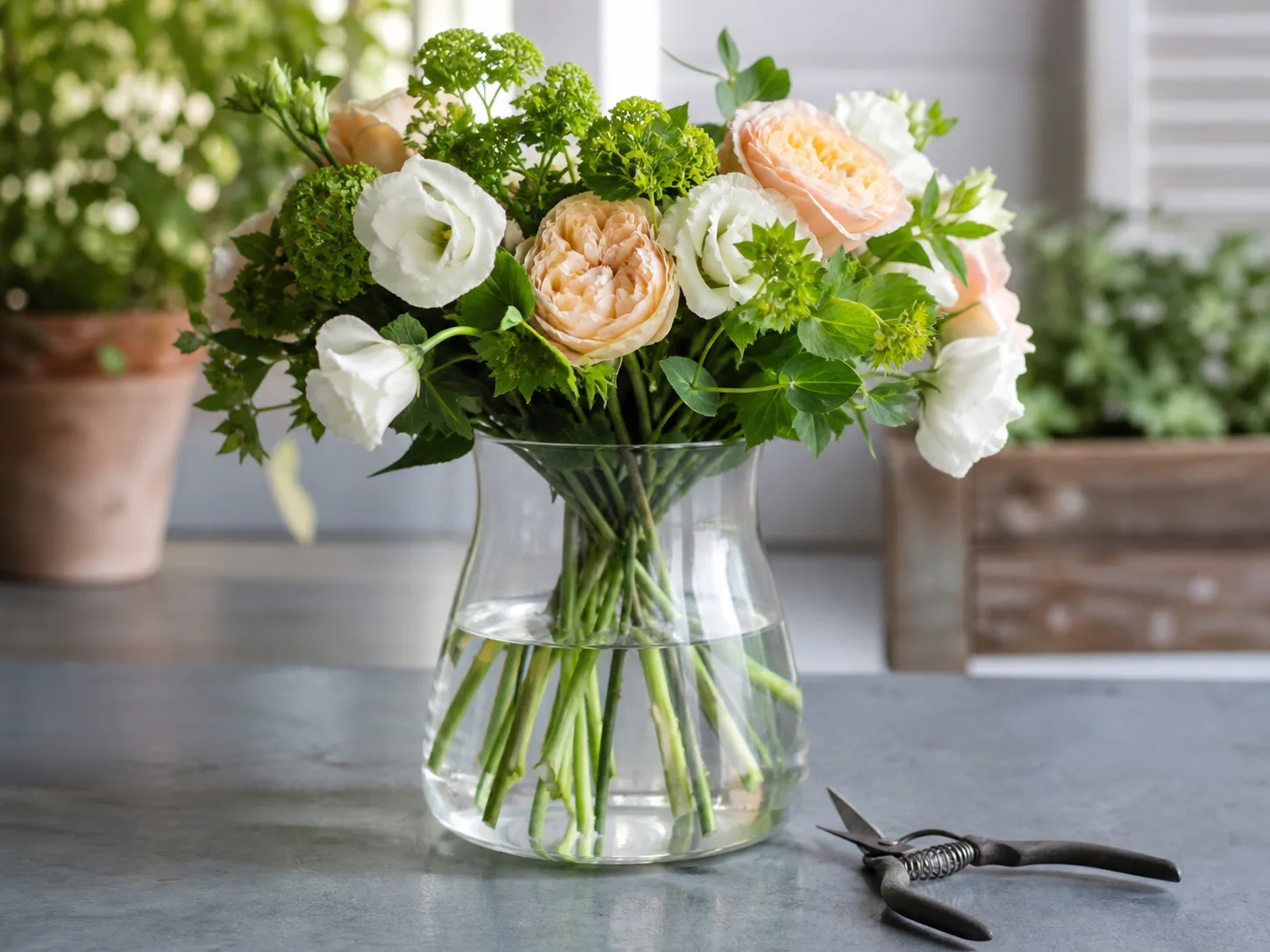
Choose a vase tall enough to support the stems and wide enough that the flowers are not packed tightly together. Fill it high enough for the rose stems to drink well, but keep every leaf out of the water. The exact water depth depends on vase shape and the amount of stem, so a visual check of the waterline is more useful than a fixed “right” number.
For each rose, use a sharp knife or clean pruners to remove a fresh slice from the base at an angle. The angle is not a magical number; the important parts are a clean cut, uncrushed tissue, and immediate contact with water. If the stems have been out of water, the fresh cut matters more than whether the angle is exactly 45 degrees.
Guard petals are the rough outer petals that protect a rose during handling. Remove only petals that are badly bruised, slimy, or distracting. Pulling off layers of healthy guard petals for a perfectly open look can shorten the bloom’s remaining life.
Place the vase in bright ambient light or a comfortable room spot, not direct sun. Keep it away from radiators, air-conditioning blasts, hot appliances, and the fruit bowl. You are reducing water loss and ethylene exposure before you ask any preservative to do its work.
Refresh on a two-day rhythm
Every two to three days, or sooner if the water is cloudy, use the same sequence:
- Remove the roses and set them on a clean surface.
- Pour out the old solution and rinse the vase; wash it if there is slime or residue.
- Remove fallen petals and any leaf that has slipped below the waterline.
- Recut a small amount from each stem with a clean, sharp tool.
- Refill with fresh water and add flower food only at the product’s stated dilution.
- Return the roses to the cool display spot.
The RHS recommends changing water and recutting stems every two to four days, while Flying Flowers advises checking every couple of days and refreshing more often in hot weather. Use the shorter interval when the room is warm, the vase is crowded, the water clouds quickly, or the stems came in thirsty.
Do not merely top off a vase that smells or looks cloudy. Topping up dilutes the problem without removing the bacteria and plant debris already present. Start again with a clean container and new solution.
Troubleshoot the first warning signs
The earlier you respond, the more likely a rose is to recover. A drooping head can mean poor water uptake, but it can also mean the bloom is old, the stem is weak, the room is hot, or the flower has been damaged. Diagnose the setup before changing the ingredient.
Drooping heads or bent necks
First check the waterline and the cut end. If the vase is low or the stem base looks dry, move the rose to a clean vessel with fresh water and recut at least an inch from the bottom. Strip any submerged leaves and let the rose stand supported in a cool place while it rehydrates.
For a garden-cut rose with a woody base, a longer vertical slit through the bottom can improve contact with water, following the RHS conditioning guidance. Do not pound the stem, scrape it aggressively, or keep adding alcohol and sugar. Those actions can damage the tissue or muddy the diagnosis.
If the head remains bent after several hours in fresh water, the stem may be permanently blocked or the bloom may simply be at the end of its life. Remove it from the arrangement so a failing flower does not shed debris into otherwise healthy water. A partially open, firm rose is worth rescuing; a soft, collapsing bloom is usually not.
Cloudy water, yellowing stems, or brown petals
Cloudy, smelly water is a reset signal. Remove the flowers, wash the vase, rinse the stems, recut them, and refill with fresh water. Check for leaves or petals submerged below the surface. If the water clouds again within a day, the bouquet may have a damaged stem, heavy microbial load, or a solution that is too rich; return to clean plain water while you reassess.
Yellowing at the stem base and crispy leaves usually point to dehydration or declining tissue, not a shortage of sugar. Brown outer petals can be normal aging, especially as a rose opens, but darkening that spreads quickly alongside a soft stem suggests the flower is failing. Separate it from the rest.
Never “rescue” cloudy water by adding more preservative. Commercial flower food is meant to be freshly diluted; it is not a disinfectant for a dirty vase. If a pet or child might drink from the container, discard the solution and keep all flower treatments out of reach.
What to do if you have no flower food
Use plain water and do the physical care well. Wash the vase, remove submerged leaves, recut the stems cleanly, and change the water more frequently—especially in a warm room. Keep the roses cool and away from fruit. This approach is less ambitious than a homemade preservative, but it is easy to control and hard to overdose.
If you want to experiment, change only one variable and use a separate small group of similar roses. Do not combine sugar, aspirin, vodka, vinegar, bleach, soda, or copper coins in the same vase. A sweetener can support microbes; an acidifier can change pH without solving blockage; alcohol can be too weak to matter at a casual dose; and bleach can damage flowers or create a household-safety problem if mismeasured. Gardening Know How treats vinegar as only one part of a homemade preservative and emphasizes that quantities vary, while Flying Flowers warns that pantry combinations are not a dependable replacement for flower food.
If you insist on a homemade recipe, use a published formula from a reputable horticultural source, measure the full water volume precisely, label the container, and do not improvise substitutions. But for most bouquets, there is a simpler decision: clean plain water now, a fresh commercial sachet when you can get one, and no stacking of remedies. You will learn more from keeping the vase clean and the stems open than from turning it into a chemistry project.
Conclusion: use the packet, not the pantry
Of the three methods, commercial flower food is the one I would choose for cut roses. It has the best design brief: give the flower energy while helping the solution stay suitable for water uptake. Vodka and sugar sounds clever but is too easy to underdose, overdose, or leave bacteria well fed. Aspirin changes acidity, but acidity alone is not a complete vase-care plan.
The winning routine is simple: clean vase, no submerged leaves, fresh uncrushed cuts, properly diluted flower food, cool placement, and a full water change with recutting every two to three days. If the water turns cloudy or a rose droops, reset the vase before reaching for another additive. That is the part of the experiment worth repeating.