6 Ways to Use Banana Peels in the Garden
Learn six practical ways to use banana peels in the garden, including compost, worm bins, powder, liquid soak, mulch, and planting holes.
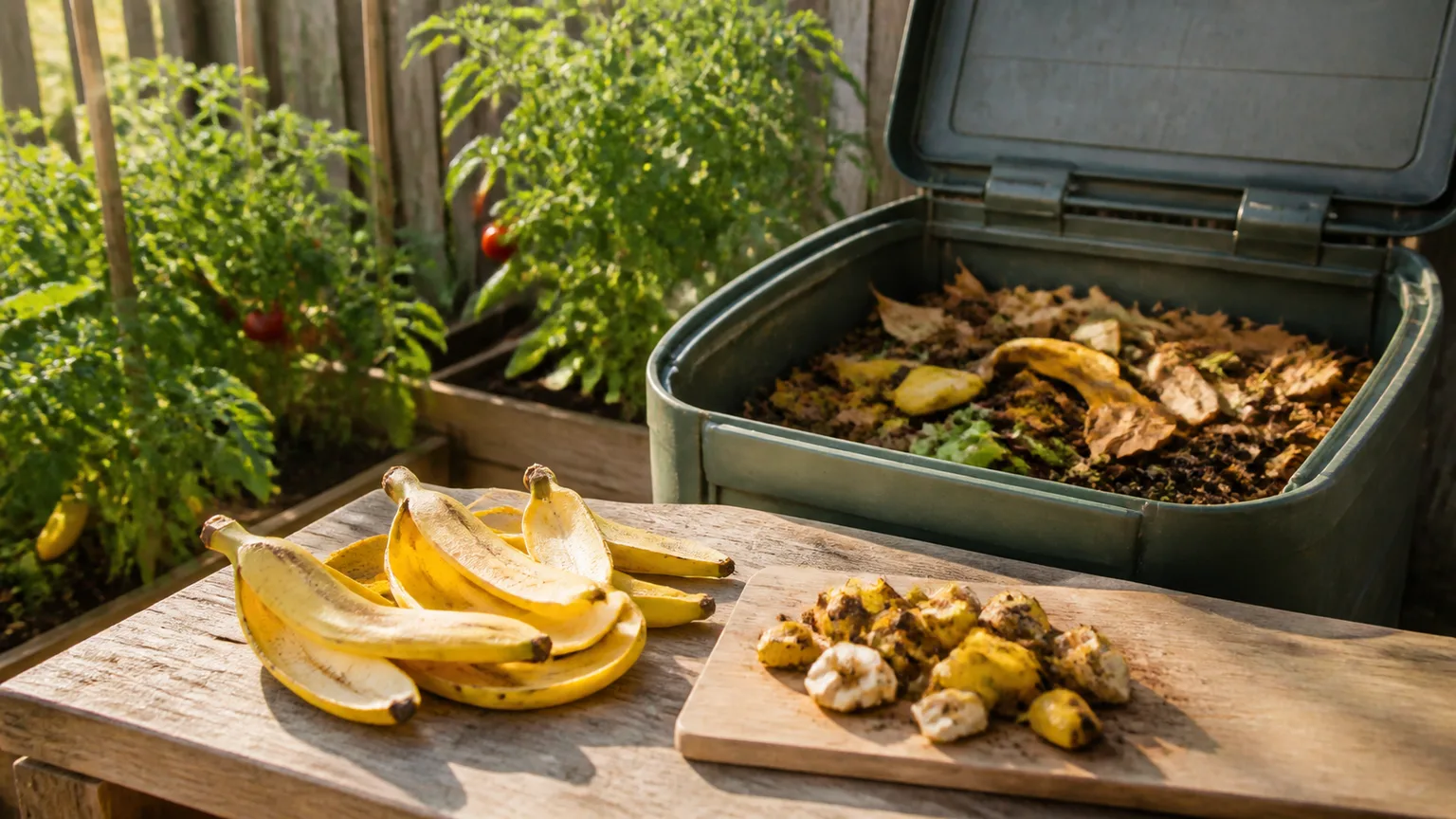
Banana peels are useful garden scraps, but they are not a complete fertilizer and they are not a shortcut to instant blooms. Their best value comes from returning organic matter and a mix of minerals to the soil after the peel has been chopped, composted, dried, or otherwise made easier for decomposers to process.
The simplest rule is this: compost banana peels when you can, and use direct-burial or liquid methods only when you understand their limits. That approach keeps scraps from becoming a pest magnet while giving your garden a steadier source of organic matter.
The practical answer: compost is usually the best use
Put banana peels in a balanced compost pile or worm bin before applying them to a bed. Composting lets bacteria, fungi, insects, and worms break down the peel and turn it into a soil amendment that can hold water, improve porosity, and contribute nutrients over time. Washington State University Extension describes fruit and vegetable waste as an energy-rich compost ingredient that works best when mixed with dry, porous bulking material such as leaves, straw, or small wood pieces (Washington State University Extension’s backyard composting guide).
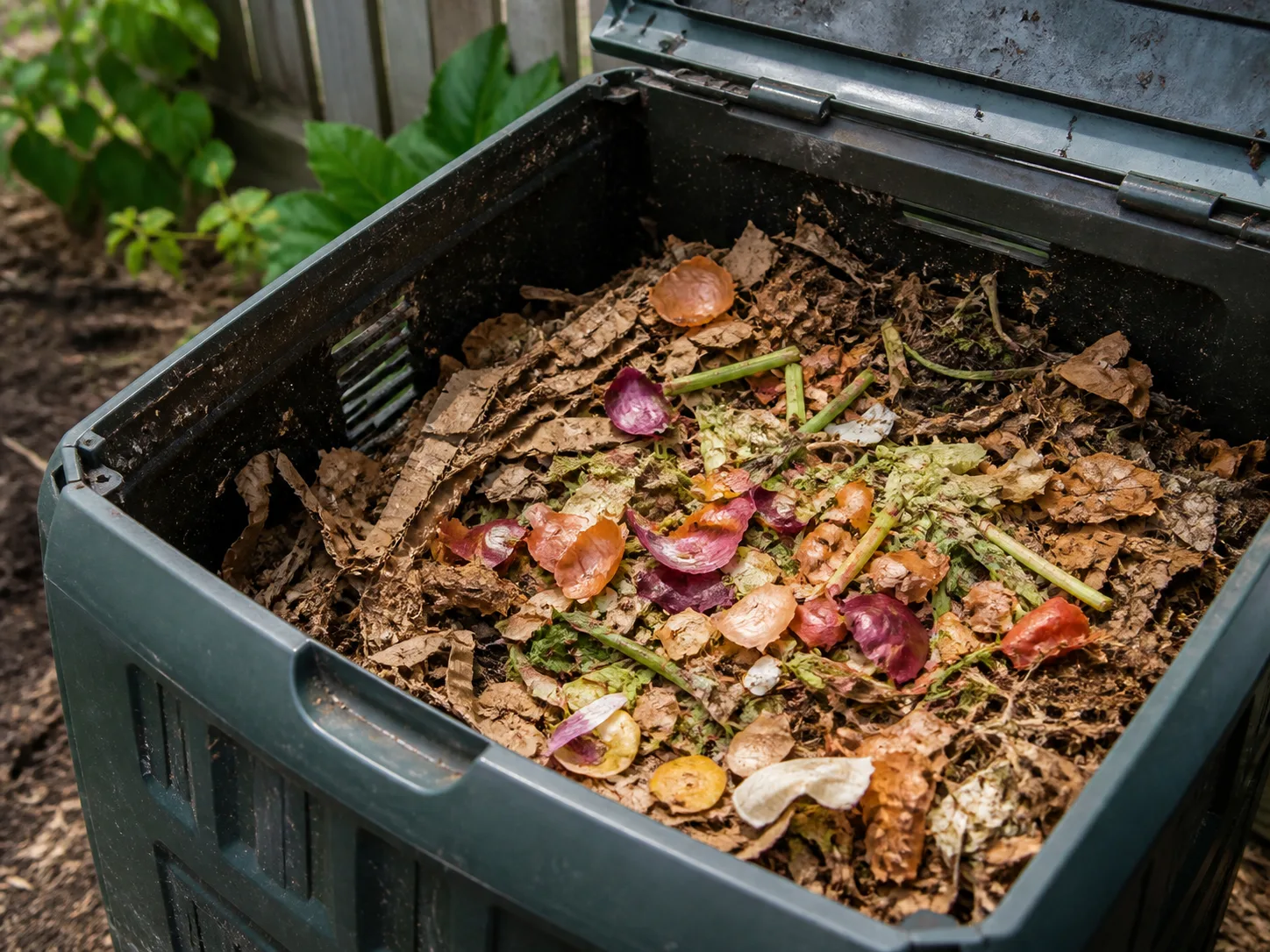
This is a better default than laying a whole peel on the soil. A fresh peel is wet, bulky, and attractive to flies and other scavengers; it may also take longer to break down when buried in a compacted root zone. Gardening Know How likewise recommends composting banana peels first because direct burial can slow the decomposition process compared with a maintained, aerated pile (Gardening Know How on banana peels in compost).
If you do not have a compost pile, a sealed kitchen-scrap collection container, municipal organics program, or worm bin still gives the peel a better destination than the trash. King County notes that composting food scraps creates a soil amendment while reducing waste and that vermicomposting uses worms to convert food scraps into a usable amendment (King County’s backyard composting guidance).
What banana peels can—and cannot—add to soil
Banana peels contain potassium along with smaller amounts of minerals such as calcium, magnesium, and phosphorus. The Royal Horticultural Society lists those nutrients as part of the value of adding skins to compost or using them in other garden applications (Royal Horticultural Society guidance on banana skins).
That does not mean a peel works like a measured bag of fertilizer. The nutrient content changes with the fruit, how much peel is used, how thoroughly it decomposes, and what happens to the nutrients afterward. A peel in a cool, dry bed is not the same as finished compost mixed through a warm, active pile, and neither is the same as a product with a guaranteed N-P-K analysis.
Why potassium gets the attention
Potassium helps plants regulate water use and supports many processes tied to growth, strength, stress tolerance, and fruit production. Gardening Know How explains that potassium deficiency can be difficult to diagnose from leaves alone and recommends soil testing before adding more potassium (Gardening Know How on potassium and plants).
That is why banana peels are often mentioned around tomatoes, peppers, squash, roses, and other flowering or fruiting plants. They are not magic plants that “love” banana peels; they are simply crops for which adequate potassium can matter, especially when the existing soil or fertilizer program is short on it.
Why banana peels are not complete fertilizer
Plants need more than potassium. Nitrogen supports leafy growth, phosphorus participates in energy transfer and roots, and plants also need secondary nutrients and micronutrients in the right amounts. A pile of banana peels cannot tell you whether your soil actually needs any of those nutrients, and a banana-peel soak cannot reliably supply them in a known ratio.
Use banana peels as a supplement to healthy soil management, not as the only food for a vegetable bed or container plant. If leaves are pale, growth is stunted, or fruit production is poor, first check light, water, roots, pests, and soil pH; then use a soil test or a complete fertilizer labeled for the crop instead of guessing that potassium is the missing piece.
Prepare banana peels before they meet your soil
The form you choose determines how quickly the peel breaks down and how much control you have over the application. Before using one, decide whether your goal is long-term soil improvement, a small amount of dry organic material, or a mild liquid supplement.
Wash peels if you are making a liquid soak, especially when you do not know how the fruit was handled. The RHS specifically recommends washing bananas thoroughly before soaking the skins so residues on the peel do not end up in the plant feed. For composting, washing is optional in most home systems, but removing stickers and chopping the peel still makes the process cleaner and faster.
Choose the form that matches the job
| Form | Best use | Main advantage | Main limitation |
|---|---|---|---|
| Chopped fresh peel | Compost or occasional covered burial | No special equipment | Slow if buried in compacted soil; can attract pests |
| Compost | Beds, borders, and potting-mix amendments | Most balanced and forgiving | Requires time and a functioning compost system |
| Worm-bin scraps | Vermicompost | Turns kitchen waste into castings | Too much wet fruit waste can upset a small bin |
| Dried powder | Small soil amendment | Easy to store and measure loosely | Not a tested fertilizer; overuse can add unnecessary salts |
| Peel soak | Occasional root-zone watering | Fast and simple | Nutrient strength is unpredictable and mild |
Cut peels into pieces roughly an inch or smaller for compost or direct burial. Smaller particles expose more surface area to decomposers; Washington State University Extension identifies cutting, grinding, or smashing raw materials as a way to speed microbial access. Do not confuse “faster” with “instant”: a chopped peel still needs moisture, oxygen, and time.
1. Add banana peels to finished compost
This is the highest-value, lowest-drama method for most gardeners. Add peels to the active compost pile, cover them with a layer of leaves or other brown material, and wait until the compost is dark, crumbly, and no longer recognizable as the ingredients that went in.
Banana peels count as a wet, nitrogen-containing “green” ingredient, but one ingredient does not make a balanced pile. Washington State University Extension suggests mixing energy materials with dry bulking agents; its guide gives one part energy material to about two parts bulking agent by volume as a reasonable starting mix for rapid composting. In a home pile, that means adding a few peels alongside plenty of dry leaves, shredded cardboard, straw, or other porous browns rather than creating a soggy banana layer.
Chop the peels, mix them into the center of the pile, and cover fresh scraps so they are not sitting on top. The pile should feel moist but not release water when squeezed. If it smells sour or rotten, add dry browns and turn it to restore air; if it is dry and unchanged, add a little water as you mix.
Use finished compost as a thin amendment around established plants or blend it into a new bed. King County describes compost as a soil-improving material that helps retain water and support healthier landscapes, while WSU recommends smaller annual additions in established beds rather than treating compost as an unlimited fertilizer. The result is more useful than a buried peel because the organic matter has already been processed into a form the soil can incorporate.
2. Feed a worm bin in small amounts
Banana peels are a suitable food scrap for a worm bin, but a small bin can be overwhelmed by a sudden pile of wet fruit waste. Tear or chop one peel, bury it beneath the bedding, and wait until most of it has disappeared before adding more. Covering the food reduces odors and discourages fruit flies.
The goal is not to make the bin “hot” with banana peels; it is to give red wigglers a manageable mix of soft food scraps, damp bedding, and air. If the bin becomes sour, wet, or full of flies, stop adding food temporarily and mix in dry shredded cardboard or paper bedding. Once the finished castings smell earthy and the scraps have broken down, use a modest amount around plants or in a potting mix rather than filling a container with castings alone.
Worm castings are not a reason to skip basic plant care. They can improve the organic component of a growing medium, but a struggling plant may still have poor light, compacted roots, a pest infestation, or a watering problem.
3. Make slow-release banana-peel powder
Drying and grinding peels gives you a shelf-stable material that can be mixed into compost or soil in very small amounts. Slice the peels thinly, dry them until they are brittle all the way through, and grind them only after they have cooled. If any piece feels leathery or damp, keep drying it; partially dried scraps can mold in a sealed jar.
Use a teaspoon or two mixed through a container of potting mix or sprinkled into a large garden bed, then water normally. Treat this as a small organic amendment, not as a measured replacement for fertilizer. A soil test is still the right way to decide whether potassium is needed, and a labeled fertilizer is the right tool when you need a known nutrient ratio.
Do not pile powder against a stem or use it in every watering. Repeated additions of any concentrated organic material can contribute to nutrient imbalance, and dry material can form a crust if it is left on the surface of a container. Mixing it into compost or the top layer of soil is more even and less likely to become a snack for pests.
4. Steep a mild banana-peel liquid
A banana-peel soak is easy to make, but it should be understood as an inconsistent, mild liquid supplement rather than laboratory-formulated fertilizer. The RHS describes soaking banana skins in water for a few days as a homemade plant feed and notes that a gardener may use it as a very mild fertilizer.
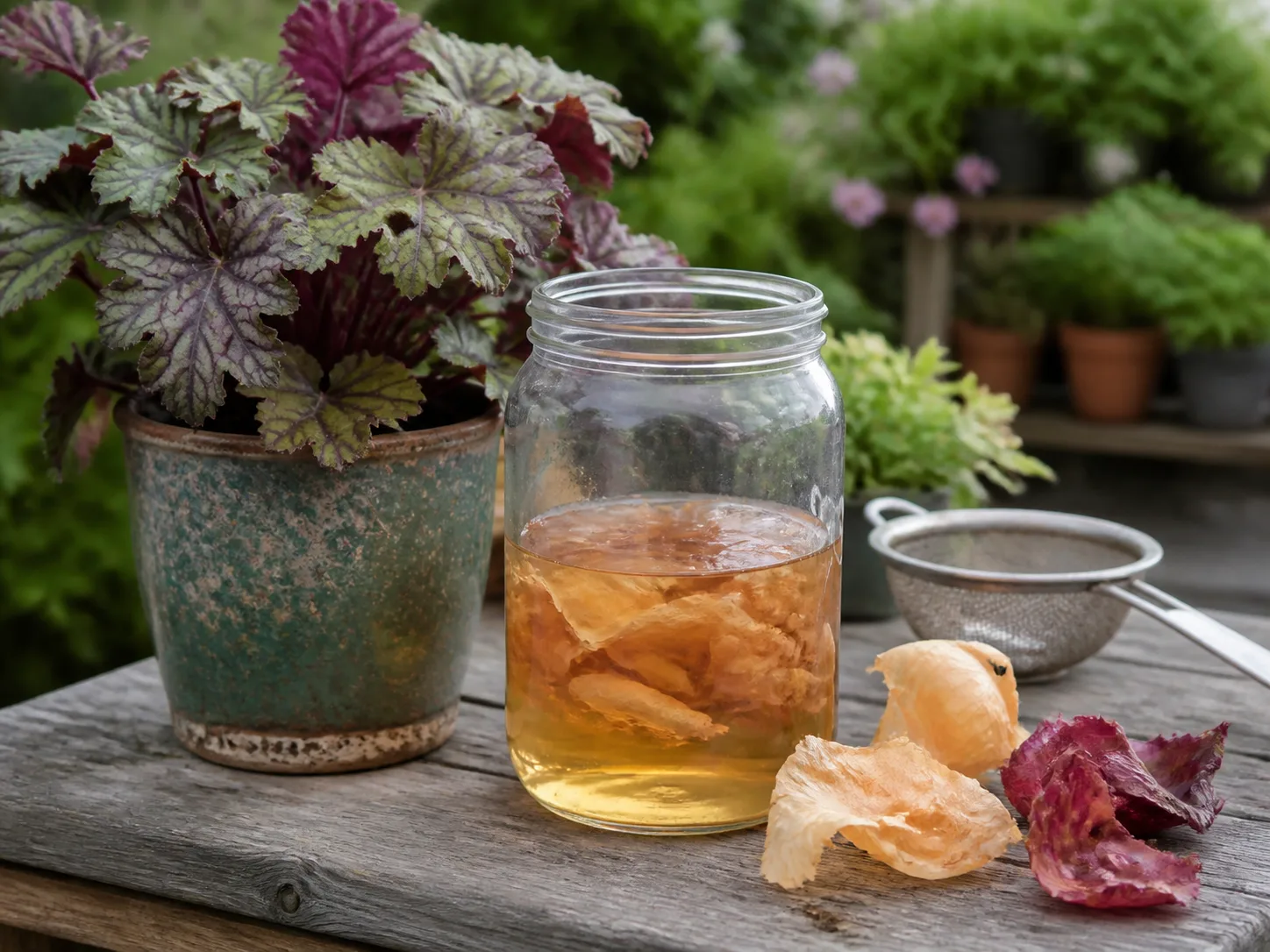
To make a small batch, wash one or two peels, cut them into pieces, and place them in a clean jar or bucket. Cover them with water, keep the container closed but not pressurized, and steep it in a cool, shaded place for about 24 to 48 hours. Strain out the solids and put those solids into compost; do not leave the liquid sitting until it smells putrid or develops a thick film.
Use banana-peel liquid as a supplement, not a schedule
Dilute the strained liquid with at least an equal volume of water for a first use, and apply it to already-moist soil around an established plant. Start with one application, watch the plant and soil, and do not put the liquid on leaves or use it to replace the plant’s normal fertilizer program. If the liquid smells rotten, looks slimy, or causes a sour odor in the pot, discard it and return the peels to compost.
There is no universal steeping time or dilution that produces a guaranteed nutrient analysis. That is the important distinction between banana-peel water and a commercial fertilizer label. It also means the soak is a poor choice for seedlings, drought-stressed plants, recently repotted plants, or containers where salts and moisture already build up easily.
5. Bury chopped peels under mulch
If you want to use a peel directly in the garden, bury small pieces beneath an existing mulch layer rather than leaving the peel exposed. A shallow trench outside the plant’s stem zone lets soil organisms reach the pieces while the mulch hides the smell and helps keep the surface from drying out too quickly.
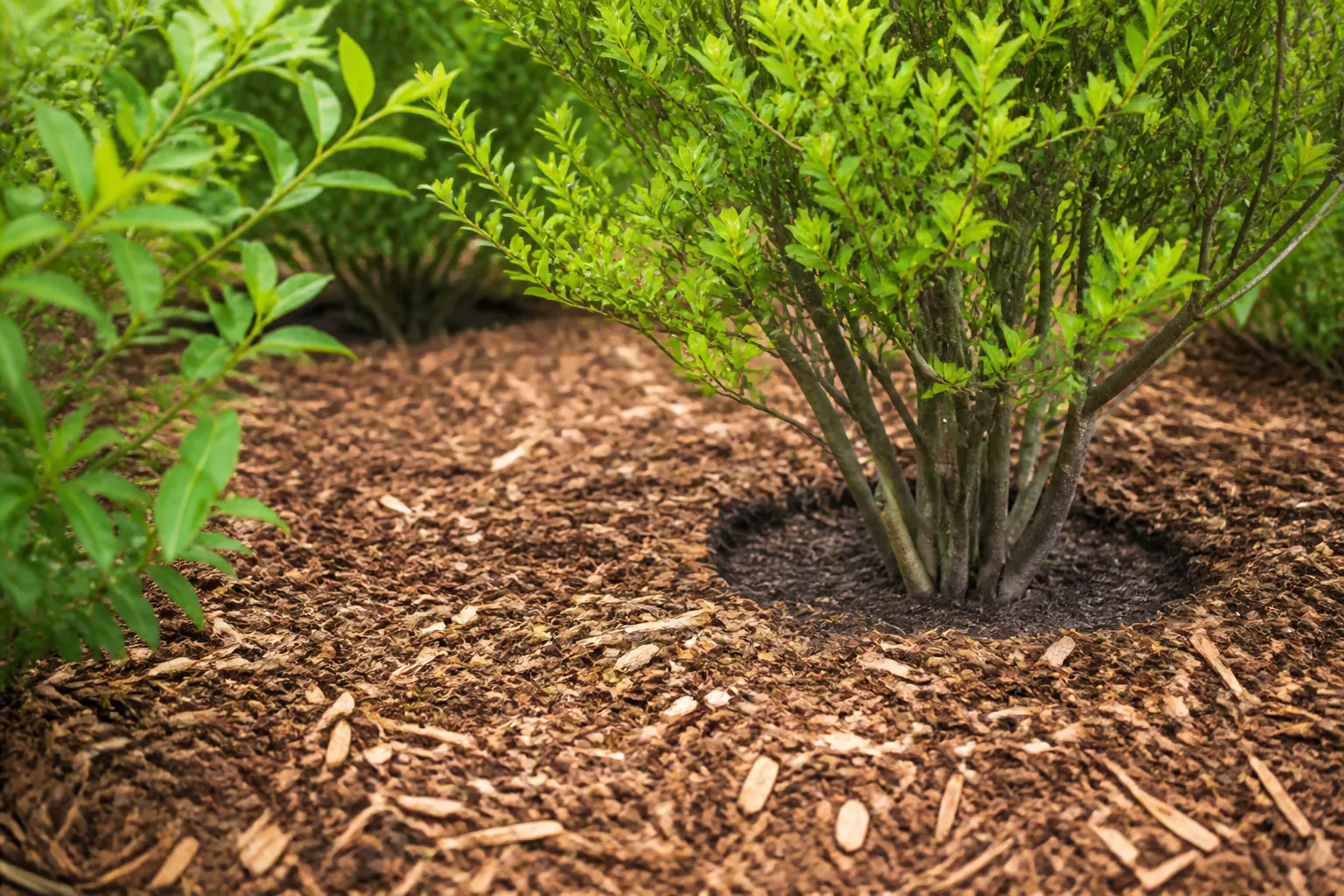
Use only a small amount: one peel divided among several plants is plenty for a trial. Keep the pieces away from the stem and from freshly harvested produce, close the trench, and watch the spot for flies, ants, rodents, or a sour smell. If pests appear, stop direct burial and move all new peels to a covered compost or worm system.
The RHS notes that chopped skins can be buried under mulch or placed in planting holes, but direct burial is still slower and less predictable than composting. Gardening Know How makes the same practical distinction: peels can be used directly, but a maintained, aerated compost pile makes nutrients available through a more reliable decomposition process.
Do not mistake a banana peel for mulch. Mulch is the protective layer that covers the soil; the peel is a wet scrap that is best hidden underneath it. A thick layer of wood chips, shredded leaves, or finished compost will do more for moisture and soil protection than a visible layer of fruit waste.
6. Add a small amount to a planting hole
Direct burial at planting time is the most tempting method because it feels like putting food exactly where new roots need it. It can work as a slow organic input, but fresh peel should never be packed directly against a transplant’s root ball or stem.
If you choose this method, chop one peel into small pieces and put only a thin scattering of pieces in the lower soil beneath the eventual root zone. Cover it completely with soil, place the transplant above that layer, and water the bed normally. For a seedling or small container, skip the peel altogether; the root system is too small and the soil volume too limited to make the trade-off worthwhile.
The main benefit is not a rapid potassium dose. It is the gradual addition of biodegradable material as the soil community breaks it down. The main risks are slow decomposition in wet or compacted soil, localized odor, and a false sense that the plant has received a balanced feeding.
Which plants benefit most from these methods?
Banana-peel compost or a small amendment can be used around many garden plants because the finished material is not plant-specific. Flowering and fruiting plants are often mentioned because potassium supports water regulation and reproductive growth, but healthy results depend more on light, moisture, roots, soil structure, and complete nutrition than on the presence of a banana peel.
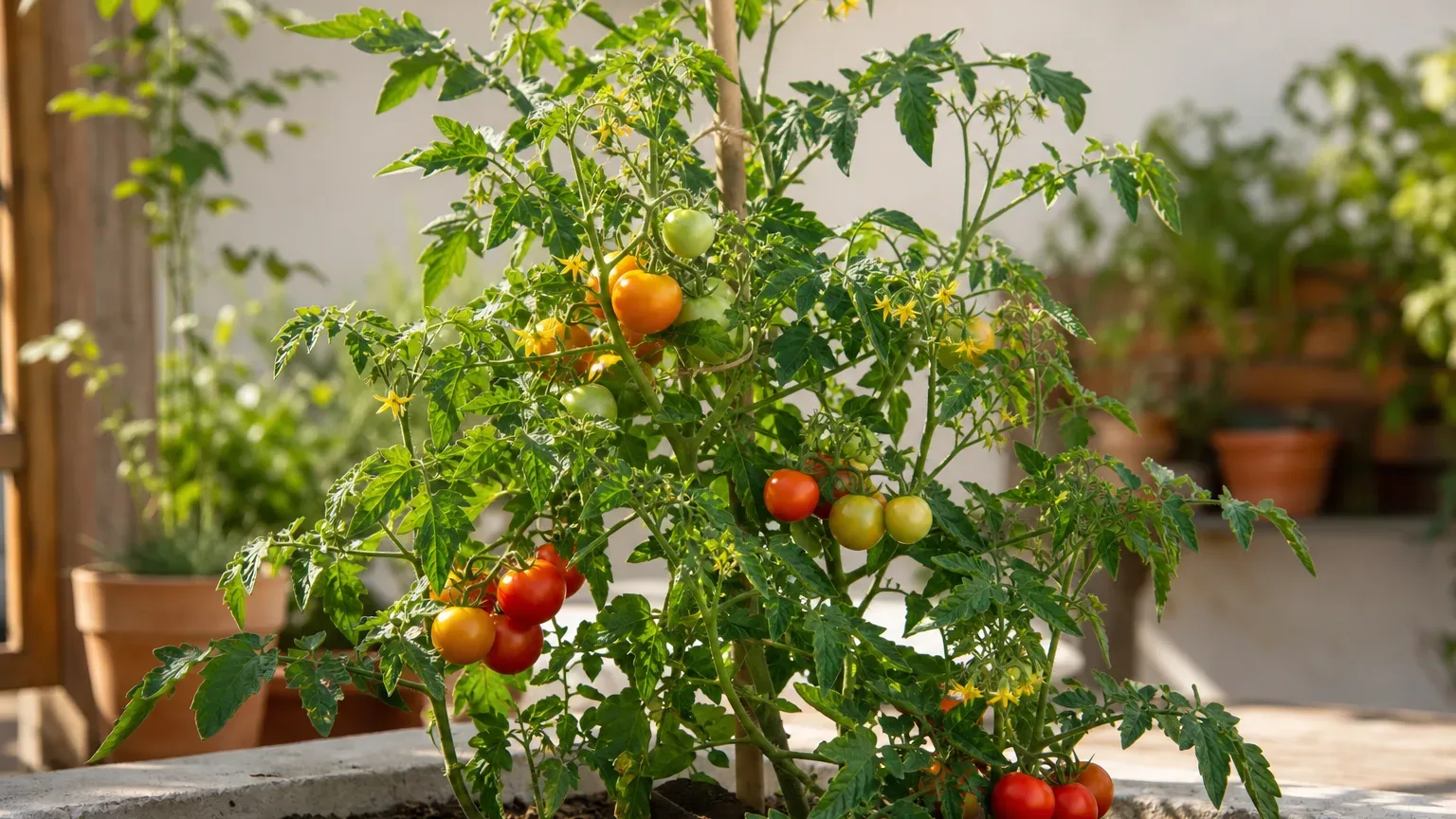
Tomatoes, peppers, squash, melons, roses, dahlias, and other bloom- or fruit-producing plants are reasonable places to use finished compost. For a container tomato or pepper, use compost as part of the potting mix or top-dress lightly; do not bury a whole peel in a small pot where air is limited and moisture changes quickly.
For houseplants, compost or castings are generally easier to control than peel water. Indoor pots have less soil volume, less natural decomposition activity, and more risk of fungus gnats or sour, wet mix. If a houseplant needs fertilizer, use a product formulated for containers and treat banana-peel material as optional organic matter rather than the main feeding plan.
What banana peels will not fix
Banana peels will not correct poor drainage, low light, root rot, pest damage, compacted soil, or an incorrect pH. They will not prevent blossom-end rot simply because they contain calcium, either; that disorder is strongly tied to water movement and calcium delivery within the plant, not just the total calcium sitting in the soil.
They also will not make an underfed plant instantly greener. Potassium is not nitrogen, and a potassium-heavy input can be the wrong answer when a plant actually needs nitrogen, magnesium, or a change in watering. If the same symptom persists after you add compost, stop experimenting with scraps and test the soil or inspect the roots.
Avoid using banana peels as a substitute for a balanced fertilizer in a productive vegetable bed. A labeled fertilizer tells you the nutrient ratio and application rate; a peel tells you only that some organic material and minerals are present. That difference matters most in containers, raised beds with repeated amendments, and gardens where runoff could carry excess nutrients away.
Troubleshoot flies, smells, and stressed plants
Most problems come from using too much fresh material, leaving it exposed, or adding it to soil that is already wet and poorly aerated. The fix is usually to stop adding peels, remove visible scraps, improve airflow, and let the soil dry to the plant’s appropriate watering level before trying anything else.
Use this quick diagnosis:
- Fruit flies or ants: Fresh peel is exposed. Bury it in a compost pile, cover it with browns, or move it to a sealed bin.
- Rotten smell: The material is too wet or oxygen-starved. Add dry leaves or shredded cardboard and turn the compost; remove peel from a waterlogged pot.
- Mold on dried powder: The peel was not fully dry. Discard the batch and start again with brittle, fully dehydrated pieces.
- Yellow or scorched leaves after a soak: Stop the liquid, flush a container with clean water if drainage is good, and check roots, light, and fertilizer salts before feeding again.
- No visible change: That is normal for a slow amendment. Do not keep adding more just to force a quick result; inspect soil and plant conditions first.
Good compost management solves more banana-peel problems than a new recipe. Keep food scraps covered, maintain a mix of wet greens and dry browns, and use finished compost rather than recognizable scraps around living plants.
Conclusion: turn peels into compost first
The best banana-peel garden use is the one that fits your soil system: compost for a dependable amendment, a worm bin for small-scale recycling, powder for a restrained dry addition, a soak for an occasional mild supplement, and direct burial only when you can cover the pieces and accept slower results.
Start with the next peel by chopping it and hiding it in a balanced compost pile. That single habit gives you the benefits of organic matter and minerals while avoiding the biggest drawbacks of fresh scraps: pests, odor, slow decomposition, and the mistaken belief that one kitchen waste item can replace complete plant nutrition.



