The 7 Best Fly Traps for Indoor and Outdoor Use
Find the best fly traps for fruit flies, house flies, patios, windows, and trash cans, with clear placement, safety, and source-control advice.
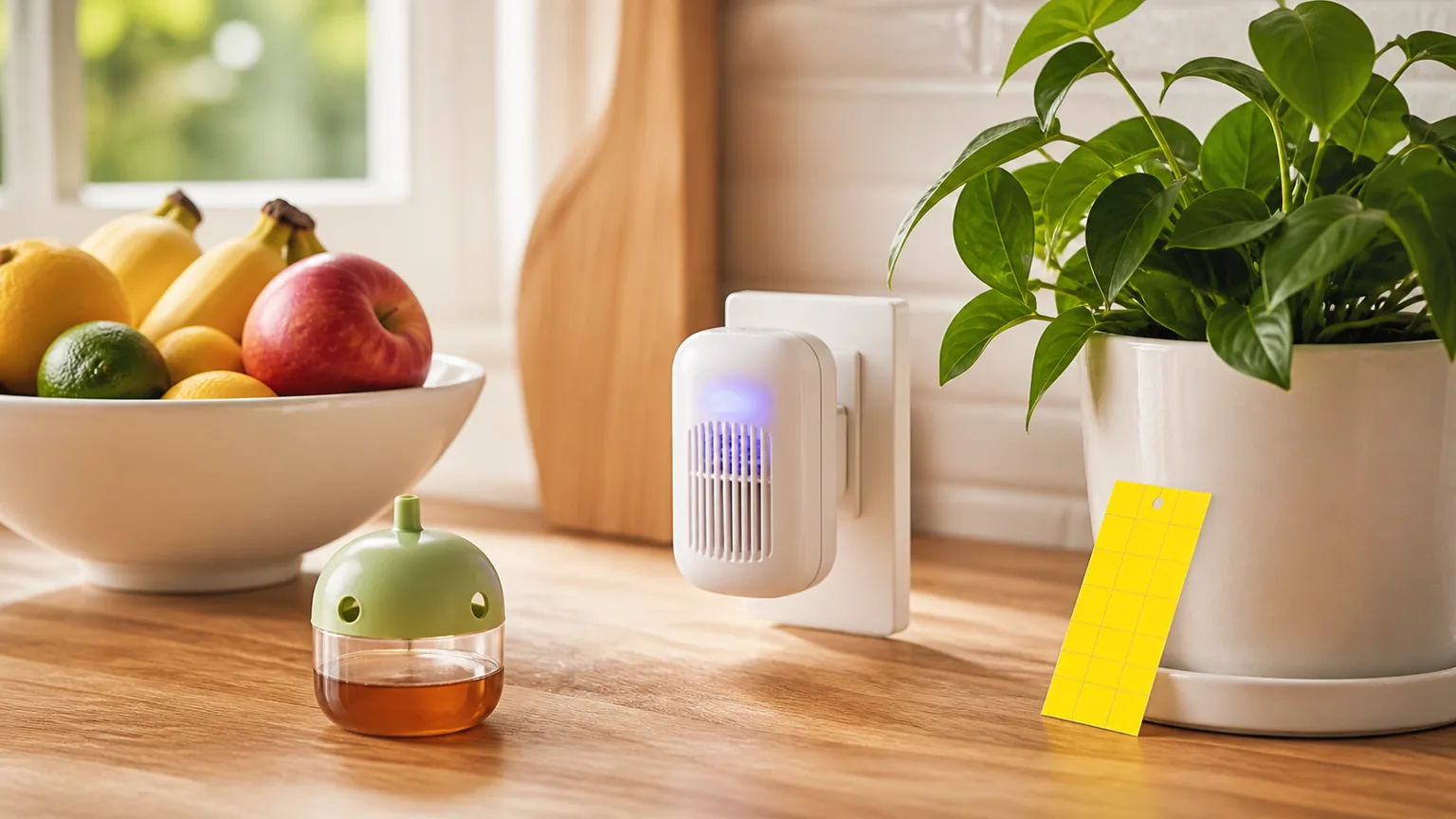
The best fly trap is not the one with the biggest coverage number or the strongest-sounding lure. It is the one that matches the fly you have, the place where it is gathering, and the way you are willing to maintain it.
A small plug-in glue-card trap can quietly reduce fruit flies in a kitchen. That same trap will not solve house flies breeding around an outdoor bin. A pungent bait jug may be excellent beside a garage and unbearable next to a patio table. And if the flies are actually coming from a drain, damp potting mix, or rotting fruit, a trap can catch adults without removing the reason they keep appearing.
I evaluated these seven options as use-case picks, not as a universal ranking. The shortlist covers discreet indoor traps, outdoor bait, electric zapping, window interception, low-cost sticky strips, and a product made for closed trash cans. Product mechanisms and intended settings were checked against manufacturer pages; pest behavior and source-control advice were cross-checked with UC IPM, the Florida Department of Agriculture and Consumer Services Fruit Fly Methods Development Lab, and practical guidance from Gardening Know How and Good Housekeeping.
Start with the fly and its breeding source
Before ordering anything, watch where the insects land and how they move. Fruit flies are tiny, often tan or brown, and cluster around ripening produce, recycling residue, wine, vinegar, trash, or a damp disposal. Fungus gnats hover around potting mix and houseplants. Drain flies look fuzzy or moth-like and usually stay close to plumbing. Larger gray house flies, blow flies, and cluster flies need a different approach from all three.
The distinction matters because an attractant is not interchangeable. UC IPM notes that fruit-fly eggs and larvae can remain hidden in fruit, while pupae may be in organic litter or topsoil; traps mostly intercept adults. Its guidance is bluntly useful: sanitation suppresses abundance, and specialized traps may reduce numbers but do not provide complete control. That is why the trap list below is followed by a source-control plan.
A quick identification check before you shop
Use the location as a clue, not proof. Flies at a fruit bowl, recycling bin, or sink are more likely to be vinegar flies; flies rising from consistently wet potting mix may be fungus gnats; flies that sit on a bathroom wall with a fuzzy, triangular outline may be drain flies. If you see larvae inside otherwise sound berries or other ripening fruit, that is a crop-pest problem rather than an ordinary kitchen fruit-fly nuisance.
If you cannot identify the pest, start with a low-risk monitoring step: place one sticky card near the activity for a day, photograph the catch, and compare the body shape and setting before choosing a lure. Do not buy an outdoor odor bait just because the label says “all flies.” Strong attractants can pull more insects into the wrong area when the source is inside your home.
Adult traps are most useful after you remove the buffet that keeps producing adults. Throw out or refrigerate overripe produce, rinse sticky bottles and cans, empty food waste, clean residue from the garbage disposal, and inspect damp mop heads or forgotten spills. Gardening Know How also recommends keeping compost contained and turned rather than leaving fruit scraps exposed.
For outdoor fruit, pick damaged or fallen fruit promptly. UC IPM explains that larvae can develop in infested fruit and that some pupae remain in ground litter, so a jug trap alone cannot protect a neglected crop. Think of a trap as the adult-capture part of an integrated plan, not as a substitute for removing eggs, larvae, and food sources.
How the main fly-trap types work
Most household fly traps use one of four mechanisms: a light that guides insects to glue, a food or pheromone-like bait that draws a target fly, a sticky surface that intercepts whatever lands on it, or an electric grid that kills insects on contact. None is automatically best. The trade-off is usually between discretion, target specificity, odor, visibility, coverage, cleanup, and the chance of catching non-target insects.
Light-and-glue traps for indoor flying insects
Plug-in light traps use blue or ultraviolet light to make a nearby landing surface more attractive. The trap is quiet, does not spray, and hides the catch behind a card or panel. That makes this format a good fit for kitchens, apartments, and bedrooms where you do not want a ribbon hanging in view.
Light is not a guarantee. A bright window, porch door, kitchen lighting, open fruit bowl, or competing lamp can win the attraction contest. Put the trap in a dimmer location near the activity, not directly beside an open window, and expect to replace the glue card as it fills or loses tack.
Bait, sticky, and electric traps for larger spaces
Liquid bait traps are better suited to outdoor house-fly pressure because scent travels farther than a small indoor light. The cost is smell and placement: a trap that attracts flies should sit near the source and away from people, doors, dining tables, and play areas.
Sticky traps are simple and inexpensive, but the catch is visible and the adhesive can transfer to walls, curtains, skin, or pet fur. Electric zappers cover a larger outdoor area and require no glue card, but they need power, make a sharp sound when they fire, and can kill insects indiscriminately. Use the mechanism that fits your setting, not the one that sounds most powerful.
Best overall: Zevo Flying Insect Trap
The Zevo Flying Insect Trap is the best all-around choice for a home with small flying insects indoors. It combines blue and UV light with a replaceable adhesive cartridge, so it works continuously without the odor of a bait jug or the crackle of an exposed zapper. Its front-facing design is discreet enough for a kitchen or hallway, while the captured insects stay on the hidden side of the cartridge.
This is the trap I would choose for a mixed indoor problem when you are seeing fruit flies, gnats, or the occasional small house fly and want a low-effort first step. It is especially useful when you do not want an open bowl of vinegar near food or a hanging ribbon in a visible room.
The limitation is that the device does not remove the breeding source, and its performance depends on placement and a functioning cartridge. Do not hide it behind a curtain or put it beside a bright window. Keep the adhesive cartridge away from children and pets, and budget for refills; the ongoing cost matters more than the starter price if the trap stays plugged in year-round.
Best for: kitchens, apartments, bedrooms, and mixed indoor flying insects.
Skip it if: you have large outdoor house-fly pressure, a drain-fly problem, or a source that has not been cleaned up.
Best for outdoor fly pressure: TERRO Fly Magnet T380
For a garage, animal area, shed, or yard with large house flies, the TERRO Fly Magnet Reusable Fly Trap T380 is the strongest match in this group. It uses a water-activated attractant in a reusable jug. Flies enter for the bait and are held in the liquid rather than being shocked or stuck to an exposed ribbon.
The important word is outdoor. The bait is deliberately potent, so hang or place the trap downwind and well away from seating, doors, windows, grills, and the path you use to carry food. Start with at least 10 feet from a patio if your yard allows it, then move it closer to the likely source—not closer to the people you are trying to protect.
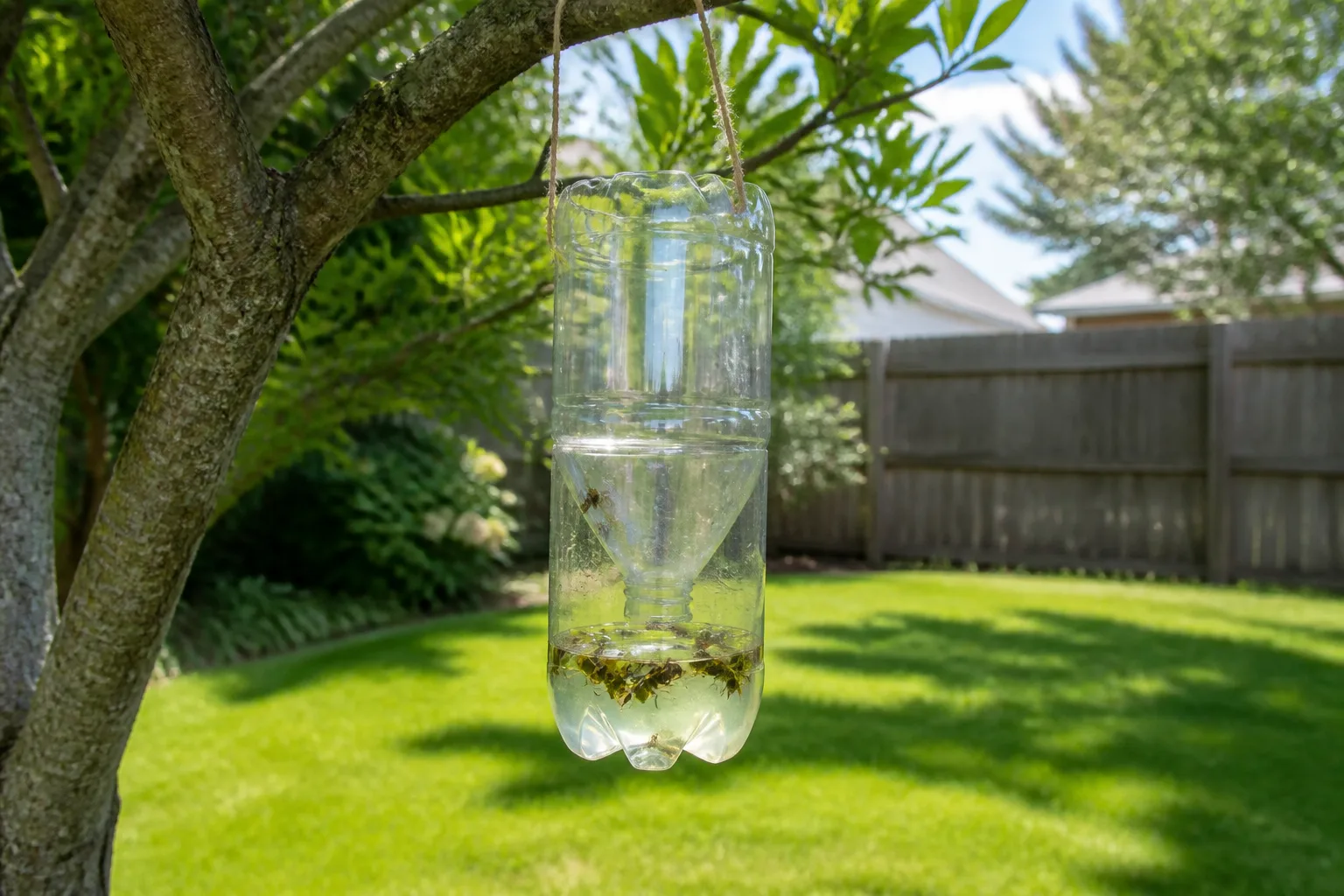
Its reusable body is an advantage during a long fly season, but the liquid eventually becomes full of insects and needs careful disposal. Wear gloves, follow the product directions for mixing and emptying, and wash your hands afterward. A bait jug reduces adult activity around a source; it does not replace removing manure, rotting food, animal waste, or overflowing garbage.
Best for: outdoor house flies, blow flies, barn flies, and fly pressure near a source.
Skip it if: the only problem is a few fruit flies in a kitchen or you cannot keep a strong-smelling trap away from doors and people.
Best for fruit flies and gnats: Safer Home Indoor Fly Trap
The Safer Home Indoor Fly Trap SH502 is the better indoor pick when the catch is mostly fruit flies, gnats, and small moths. It uses a UV LED light and a replaceable glue card, with the sticky surface facing inward so the device looks less like a traditional fly strip. Safer lists it for indoor flying insects, and the format is compact enough for a kitchen outlet or a plant room.
Put it near the sink, fruit bowl, recycling area, or plant shelf where you see activity—but not where water can splash onto the electrical base. In bright daytime rooms, a light trap can be less compelling; a shaded outlet or evening operation often gives it a better chance. The glue card is the real capture surface, so replace it when it is crowded, dusty, or no longer tacky rather than waiting for every square inch to fill.
This trap is not a drain treatment and not a cure for fungus gnats breeding in wet soil. If the cards fill with tiny dark gnats while the potting mix stays wet, reduce unnecessary moisture and inspect the plants instead of buying more refills.
Best for: fruit flies and gnats in kitchens, plant rooms, and other indoor spaces.
Skip it if: you need a long-distance outdoor lure or the insects are coming from a drain biofilm.
Best electric outdoor option: Flowtron BK-40D
The Flowtron BK-40D Electronic Insect Zapper is the best fit when you want a powered outdoor perimeter trap and do not want bait odor or glue cards. Its UV light draws flying insects to an electrified grid, and the housing can be hung or placed on a stable surface. It makes a small snapping sound as insects are killed and needs a nearby outlet or outdoor-rated extension setup.
Treat the advertised coverage as a best-case operating envelope, not a promise that a whole yard will be fly-free. Light traps work best where their light is not competing with brighter windows, landscape lighting, or a porch fixture. Put the unit between the likely fly source and the area you use, but not directly above a dining table or beside a door that leads indoors.
Unlike a glue-card trap, this option creates dead-insect debris inside the housing. Unplug it before cleaning, follow the manual, and keep children, pets, and cords away from the unit. It is a poor choice for a quiet indoor room and an overpowered choice for a small kitchen fruit-fly problem.
Best for: patios, decks, and outdoor areas with access to safe power.
Skip it if: you need silent indoor operation or want tight species selectivity.
Best for windows: Catchmaster Window Fly Traps
The Catchmaster Window Fly Traps make sense when flies repeatedly land on a particular window, sunroom pane, porch enclosure, or garage window. The transparent adhesive strips catch insects at the surface where they are already congregating, so you do not need to lure them across the room.
Their narrow job is also their strength. A window strip will not solve flies breeding at a trash can on the other side of the house. Use one or two at the active pane, ideally in a corner or high position where children and pets cannot touch them. The catches remain visible, which is helpful for monitoring but not attractive in a living room.
The adhesive is strong enough to hold larger insects, so keep the strips away from flowering plants and areas where beneficial insects may pass. Replace the trap when it is crowded or dusty, and peel it slowly so you do not damage paint or leave adhesive behind.
Best for: windows, porches, garages, sheds, and a localized fly landing zone.
Skip it if: the flies are spread throughout a large room or you need a hidden catch.
Best budget choice: Raid Fly Ribbon
The Raid Fly Ribbon is the cheapest, simplest option for a utility area where appearance is secondary. It needs no outlet, bait mixing, or refill cartridge: unfold the adhesive ribbon, hang it from a secure point, and replace it when it is full or dusty. A pack can provide practical coverage for a shed, covered porch, garage, or waste area.
The drawbacks are the reason it belongs in a utility-space category rather than as the best overall pick. The dead insects are visible, the ribbon is easy to brush against, and adhesive can transfer to walls or skin during setup. Unfold it slowly, keep it well away from food-prep surfaces, and place it where children, pets, and beneficial insects cannot reach it.
Do not hang a ribbon directly over a vegetable bed or flowering border just because it catches flies. Broad sticky surfaces can catch non-target insects. A bait trap placed near the actual waste source—or better sanitation—may be a more responsible choice outdoors.
Best for: low-cost, low-maintenance capture in garages, sheds, and covered utility areas.
Skip it if: you need discretion, have curious pets, or care about visible catches in a living space.
Best for lidded trash cans: TERRO Garbage Guard T800
The TERRO Garbage Guard T800 is designed for a very specific job: reducing insects inside a lidded trash can. It is not a room trap and not a substitute for tying off waste. Use it only in the closed container and setting named on the current product label; do not put it in an open compost pile, food pantry, or indoor living area.
This category is useful because a trash can can be both a food source and a protected breeding site. The small adhesive-backed device stays inside the lid or upper wall, where its vapor can work in the enclosed space without hanging a smelly lure beside the back door. The benefit is low maintenance; the limitation is that it cannot intercept flies elsewhere in the yard.
Clean the bin when food or pet-waste residue accumulates, keep the lid closed, and replace the product on the label schedule. If flies remain after the bin is washed and the guard is installed correctly, inspect neighboring bins, compost, pet waste, drains, and spilled recycling liquids before increasing product use.
Best for: outdoor garbage cans with secure lids.
Skip it if: the container is open, the source is compost or soil, or you need a general-purpose trap.
Place a fly trap where it can intercept flies
Placement is not a finishing detail. It determines whether a trap intercepts flies already in the problem zone or advertises an attractant from your patio, garden, or open window. Start with the place where flies are resting or breeding, then consider light, wind, people, pets, and doors.
Indoor placement that does not pull flies toward you
For a plug-in light trap, choose an outlet near the activity but away from a bright window or frequently opened exterior door. Kitchen examples include the side of a pantry, a dim wall near the recycling bin, or a counter-adjacent outlet that is not directly over food preparation. Keep the trap dry and leave enough clearance for the cartridge or glue card to be removed.
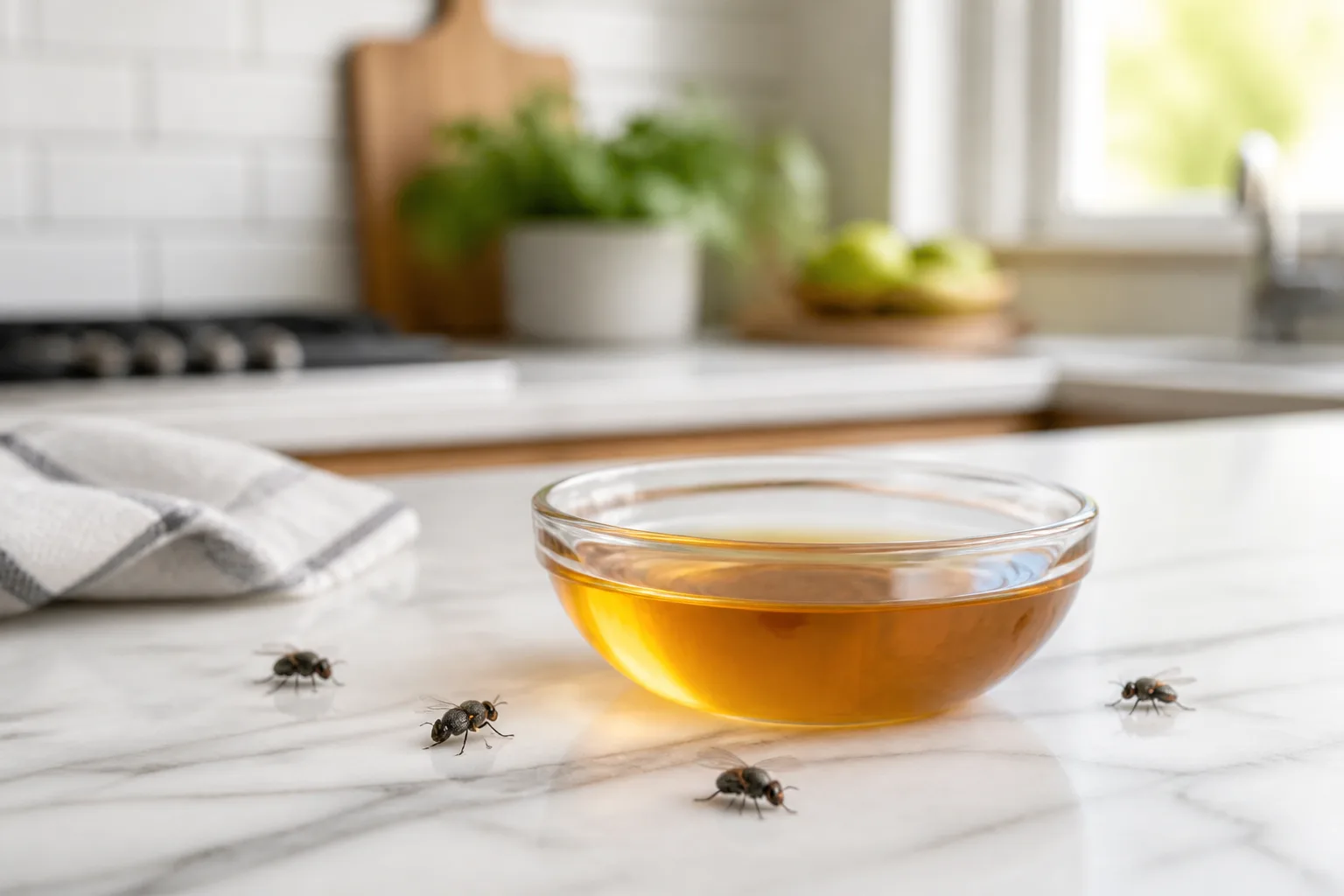
For a window strip, work at the window where flies land. For a DIY vinegar trap, put the container near the fruit bowl, sink, or recycling area, then remove the source and refresh the bait. Do not put a stronger attractant on the opposite side of the room and hope it will solve a hidden drain or disposal problem.
Outdoor placement that keeps bait away from people
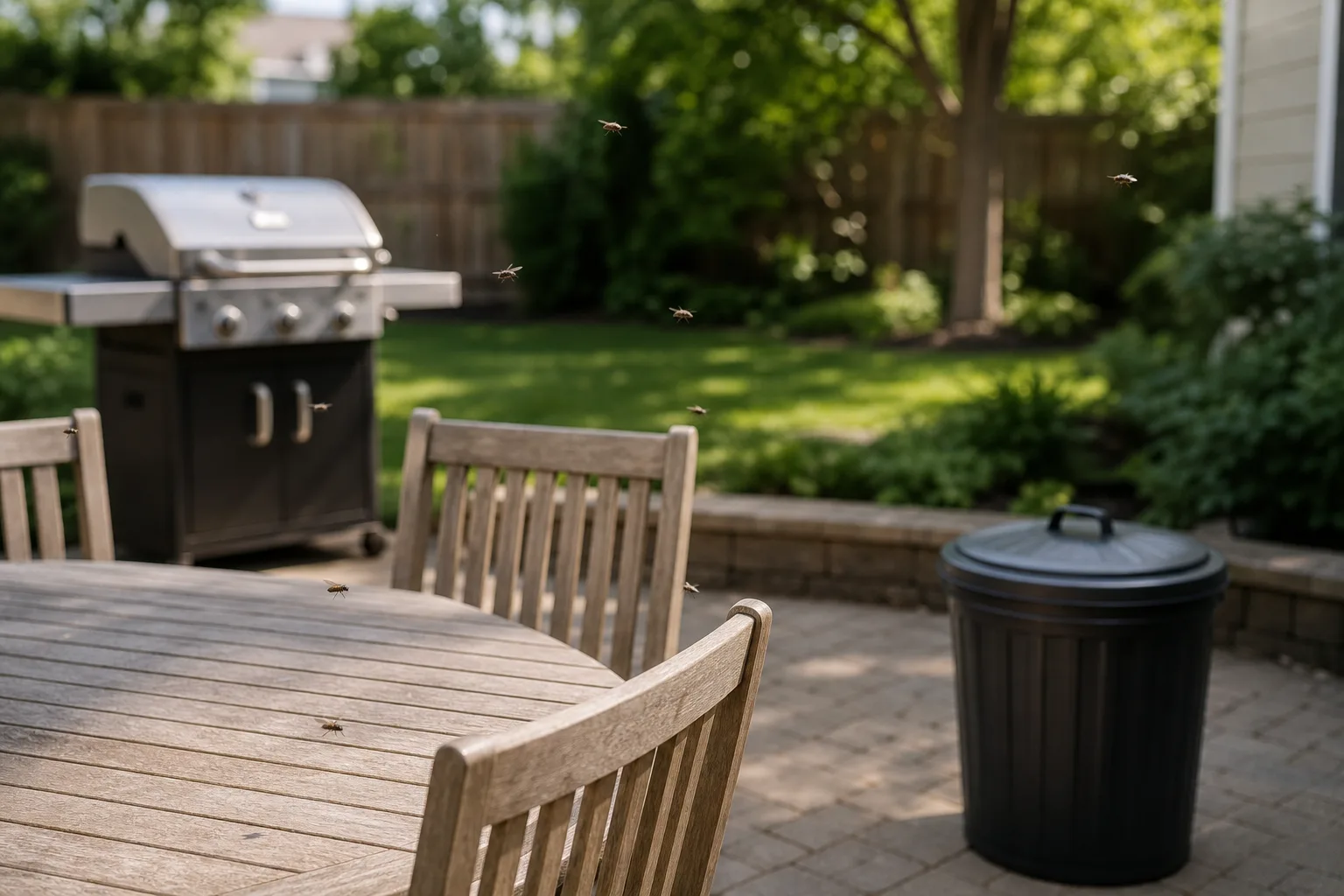
Outdoor bait traps belong near the source and away from the destination. That usually means beside a garage, near a covered waste area, or downwind from a patio—not next to the table, back door, grill, or children’s play space. Avoid placing sticky traps where pollinators visit flowers, and keep electric zappers where cords cannot become a trip or chewing hazard.
If you have several outdoor activity zones, use one monitor at each source rather than one large trap beside the area where you sit. A trap that catches flies near a bin is doing its job even if the patio remains busy because the bin itself still needs cleaning or exclusion.
Pair the trap with source control
The fastest way to make a trap look ineffective is to leave a better food source beside it. Indoors, rinse bottles and cans, store ripe fruit in the refrigerator when practical, empty food waste, clean the disposal and sink edges, and wash reusable mop heads. Gardening Know How specifically emphasizes removing rotting produce and keeping compost scraps from piling up.
Outdoors, close trash lids, clean pet-waste areas, remove fallen fruit, and keep compost covered and aerated. On edible crops, pick ripe fruit promptly and remove damaged fruit from the plant and ground. UC IPM cautions that traps do not provide complete control of fruit flies because eggs, larvae, and pupae may be hidden where an adult trap cannot reach them.
For houseplants, do not call every tiny fly a fruit fly. Fungus gnats usually track wet potting mix, so let the growing medium dry as appropriate for the plant and inspect roots or drainage if the problem persists. Drain flies need drain cleaning and biofilm removal, not a new UV cartridge. If the same spot produces flies after a week of cleanup and correct trapping, look for a hidden leak, drain, wall void, dead animal, or neglected waste source.
Safety, cleanup, and non-target insects
Read the current product label or manual before use, especially for baited, vapor, and electric products. “No spray” does not mean “safe to place anywhere.” Keep glue cards, liquid bait, ribbons, and electrical units where children and pets cannot touch them; protect cords from chewing; and never put a trap where it can contaminate food or water.
Use gloves when emptying a liquid trap or handling a heavily used sticky surface. Unplug zappers before opening or cleaning them. Put full glue cards and used ribbons into a closed waste bag, and wash your hands after handling any captured insects. Do not improvise pesticide mixtures or use a trash-can vapor product in an open container.
Sticky traps and zappers are broad tools. They may catch moths, gnats, mosquitoes, beneficial insects, or other non-target insects along with flies. If the trap is near flowers, a greenhouse vent, or a plant shelf, inspect the catch and move it if you are capturing more helpful insects than pests. The Florida agriculture lab’s work on lures illustrates the principle: attractants can be highly target-specific, but the target has to be identified first.
What to do when a fly trap is not working
Work through the failure in this order instead of buying a second type at random:
- Recheck the identification. A fruit-fly bait will not solve drain flies, fungus gnats, or a large outdoor house-fly source.
- Find the source. Inspect fruit, recycling, drains, disposal residue, damp soil, compost, trash, pet waste, and dead organic material.
- Check the trap. Replace a full or dusty glue card, refresh liquid bait, confirm the device is powered, and make sure the opening is not blocked.
- Move it. Put indoor light traps away from competing windows and outdoor bait traps closer to the source but farther from people.
- Remove competing attractants. A sticky bottle, ripe banana, open compost scrap, or dirty bin can outcompete the trap.
- Give the plan enough time. Adult capture can lower activity quickly, but hidden immature stages may continue emerging after the source is removed.
If you still see a heavy stream of flies after careful sanitation and correct product use, stop escalating traps and identify the source. A pest professional or local extension office is more useful than placing several stronger attractants around the house.
Conclusion
Choose the Zevo Flying Insect Trap for a discreet indoor starting point, the TERRO Fly Magnet for strong outdoor house-fly pressure, the Safer Home Indoor Fly Trap for fruit flies and gnats, the Flowtron BK-40D for a powered outdoor perimeter, Catchmaster Window Fly Traps for a specific pane, Raid Fly Ribbon for a cheap utility-area solution, and TERRO Garbage Guard for a lidded trash can.
Then do the less exciting part that makes every trap work better: remove rotting food, wash residue, clean drains and bins, keep compost contained, and pick up fallen fruit. A trap can reduce the adult flies you see. Source control is what keeps the next wave from replacing them.