The 11 Best Cordless Leaf Blowers for Every Yard
Compare 11 of the best cordless leaf blowers for small patios, wet leaves, large yards, and quiet cleanup, with clear CFM, MPH, runtime, and battery advice.
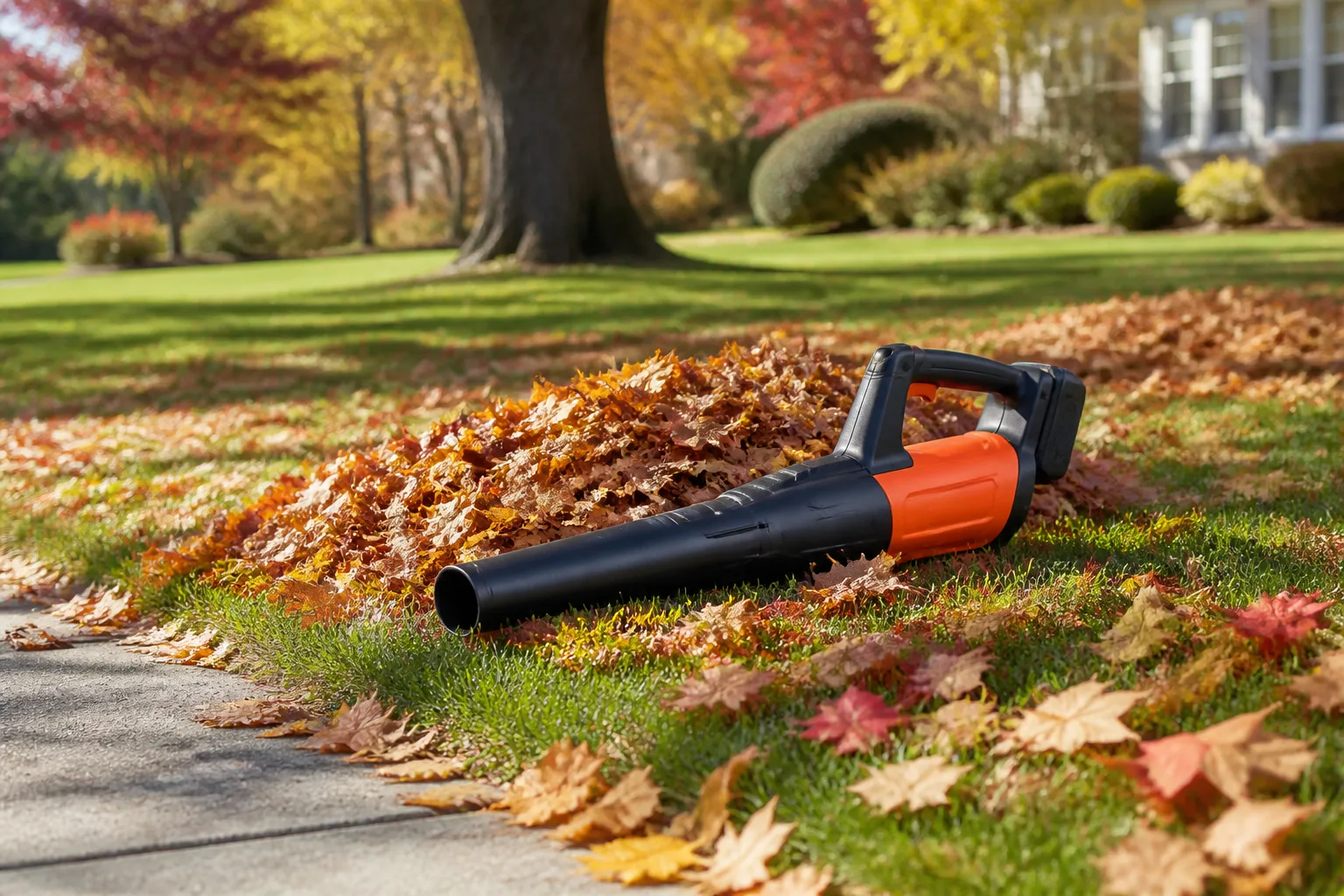
The best cordless leaf blower is the one that moves your leaves with enough force, runs long enough for your routine, and does not leave you wrestling with a battery or an uncomfortable tool. For most homeowners, the EGO POWER+ LB7654 is the strongest all-around choice because it combines high air volume, useful nozzle options, and a mature 56V battery system. If quiet operation matters most, choose the Milwaukee M18 FUEL 3017-20. For large properties, the RYOBI 40V HP 850 CFM Backpack Blower is easier to carry through a long cleanup than a powerful handheld.
This guide reviews 11 current cordless models across different battery platforms and yard sizes. The recommendations are based on current manufacturer specifications, published kit contents, practical feature tradeoffs, and independent review context. The “best” label means best fit for a particular job; it does not mean that one blower wins every test. Manufacturer runtime figures are maximum claims that depend heavily on speed, nozzle, leaf density, temperature, and battery age.
| Blower | Best for | Published output | Battery detail |
|---|---|---|---|
| EGO POWER+ LB7654 | Most homeowners | Up to 765 CFM, 200 MPH | 56V 5.0 Ah kit |
| WORX WG547 | Small jobs and value | 270–360 CFM, 55–75 MPH | 20V, two-battery kit options |
| Milwaukee M18 FUEL 3017-20 | Lower-noise cleanup | 500 CFM, 120 MPH | M18; tool only |
| RYOBI 40V HP 800 CFM | Heavy-duty value | 800 CFM, 180 MPH | 40V 8 Ah kit |
| RYOBI 40V HP 850 CFM Backpack | Long large-yard sessions | 850 CFM | 40V backpack kit |
| Toro 60V MAX 51827 | Maximum published output | 900 CFM, 165 MPH | 60V kit |
| STIHL BGA 60 | Adjustable handheld control | Not listed on page | AK battery system |
| Makita GBU01Z | Precision and platform use | Up to 565 CFM, 143 MPH | 40V XGT; tool only |
| DEWALT DCBL722B | Existing 20V MAX owners | 450 CFM, 125 MPH | 20V MAX; tool only |
| Greenworks 80V 770 CFM | Gas-like battery power | 770 CFM, 180 MPH | 80V 4 Ah kit |
| EGO POWER+ LB6504 | Medium yards | 650 CFM, 180 MPH | 56V 5.0 Ah kit |
Quick Answer: Which Cordless Leaf Blower Should You Buy?
Choose the EGO LB7654 if you want one handheld blower for lawns, driveways, patios, and seasonal leaf piles. Its 765 CFM turbo output gives it enough moving volume for broad piles, while the variable-speed range is more useful for edging beds and clearing clippings without scattering them everywhere. It is a kit, so the battery and charger are included, but it is also one of the heavier and more expensive platform commitments in this group.
Choose the WORX WG547 for a small patio, garage, walkway, or occasional light cleanup. Its lower output is a limitation on wet leaves and broad lawns, but the compact 20V format and two-speed control make it less tool than you need for a ten-minute job. The exact kit contents vary, so confirm whether the listing includes one or two batteries and a charger.
For a large yard, look at the RYOBI 40V HP 850 CFM Backpack Blower or Greenworks 80V 770 CFM kit. A backpack harness shifts the battery and motor load away from one hand, while an 80V handheld offers high output without requiring a backpack. If you already own batteries, staying inside your platform is often a better value than buying a slightly more powerful tool on a new system.
How We Chose the Best Cordless Leaf Blowers
We compared current official specifications for output, control, weight, noise, runtime, battery compatibility, kit contents, warranty, and included or optional nozzles. We also checked specialist guidance on blower measurements, safety information from CDC and NIOSH, and garden advice about using fallen leaves. This approach is useful for shopping, but it has a boundary: a manufacturer’s CFM, MPH, and runtime numbers are not interchangeable across brands, and no specification table can reproduce your yard’s slope, leaf moisture, wind, or battery temperature.
The most useful recommendations therefore combine a number with a job. A blower with the highest MPH may lift stuck leaves quickly but still move less material across a lawn than a model with higher CFM. A tool-only blower may be inexpensive if you already own the battery, but a poor deal if you are starting from zero. And a “quiet” model can still be loud enough that hearing protection is sensible during a long session.
CFM and MPH: What Each Number Actually Does
CFM measures the volume of air a blower moves. More CFM generally helps push a broad, loose pile across grass or pavement. MPH measures air speed. More MPH can help break leaves free from corners, cracks, damp surfaces, or matted grass when paired with a suitable nozzle. A.M. Leonard’s explanation of blower specifications makes the same practical distinction: think of CFM as how much material the tool can move and MPH as the focused force at the nozzle (A.M. Leonard’s explanation).
Do not compare either number without checking the test condition. “Up to” figures may describe turbo mode with a tapered nozzle, while the everyday variable-speed range is lower. A tapered nozzle can increase air velocity for stubborn debris; a wide or flat nozzle can spread the airflow for moving a larger area. For ordinary leaf work, a controllable blower with enough CFM is usually more useful than the biggest top-line MPH number.
The 11 Best Cordless Leaf Blowers
1. EGO POWER+ LB7654 — Best Overall
The EGO POWER+ LB7654 is the best all-around handheld for a homeowner who wants substantial power without moving to gas. EGO lists up to 765 CFM in turbo mode and up to 200 MPH with the tapered nozzle. Its variable-speed range is listed at 260 to 580 CFM, so it can handle delicate bed edges as well as heavier lawn piles. EGO also lists up to 90 minutes of average runtime with a 5.0 Ah battery, but its more detailed mode figures show why turbo work will be much shorter than low-speed clearing (EGO’s LB7654 specifications).
The kit includes the battery and charger, and the tool has both tapered and spread nozzles. That combination makes it easier to change from focused clearing around steps to broad cleanup across a driveway. The tradeoff is size and cost: if you already own EGO 56V batteries, the tool-only LB7650 may make more sense; if you have a small yard, this much output is unnecessary.
2. WORX WG547 — Best Budget Pick
The WORX WG547 is a sensible pick for light, frequent cleanup rather than a full-property leaf assault. WORX lists two speeds from 270 to 360 CFM and 55 to 75 MPH, with a compact form that is easier to grab for a porch, shed, garage, or narrow walkway. Its 20V Power Share compatibility can also make it attractive to someone who already owns tools in that system (WORX’s WG547 specifications).
The limitation is exactly what makes it approachable: it does not have the air volume of the 40V, 60V, and 80V machines here. Damp leaves, deep piles, and long lawn rows will take more passes. Treat it as a low-commitment cleanup tool, and verify the battery and charger configuration because WG547 package numbers can differ.
3. Milwaukee M18 FUEL 3017-20 — Quietest
The Milwaukee M18 FUEL 3017-20 is the best choice when noise is a deciding factor and you already use M18 batteries. Milwaukee publishes 500 CFM, 120 MPH, 12.2 newtons of blowing force, and a 54 dB(A) rating, along with a variable-speed sliding lock and compatibility with the M18 system (Milwaukee’s published 3017-20 specs). The lower sound rating does not turn it into a silent tool, but it is a meaningful design priority compared with many high-output blowers.
This is a tool-only model, and Milwaukee recommends an M18 High Output battery for the intended performance. Its output is enough for clippings, dry leaves, and normal driveway cleanup, but it is not the pick for the biggest wet piles. The sliding lock is helpful when you want steady airflow without holding a trigger continuously.
4. RYOBI 40V HP 800 CFM Whisper — Best Heavy-Duty Value
The RYOBI 40V HP Brushless 800 CFM Whisper Series kit is a strong value for someone who wants near-commercial-looking output and a broad battery ecosystem. The current kit page lists 800 CFM and 180 MPH, variable triggering, cruise control, two modes, and more than 85 minutes of runtime with a 40V 8 Ah battery when used on low with the variable trigger (RYOBI’s current 800 CFM kit page). That last condition matters: the number is useful for planning gentle clearing, not for estimating 85 minutes of turbo work.
RYOBI’s Whisper Series design uses noise-dampening features, and the company makes a large noise-reduction claim compared with gas equipment. Consider that a manufacturer comparison, not a universal dBA measurement. The kit is a good middle ground for larger lawns if you want high output, included battery capacity, and access to many other 40V outdoor tools.
5. RYOBI 40V HP 850 CFM Backpack — Best Backpack
The RYOBI 40V HP 850 CFM backpack is the most practical cordless option here for long cleanup sessions where arm fatigue is the main problem. The backpack format carries the battery and blower assembly on your back, leaving your hand to guide the tube. Its 850 CFM output is close to the top of this handheld-heavy list, and the 40V platform lets one battery system cover other yard equipment (the current 850 CFM kit listing).
The harness adds setup time and bulk, so it is excessive for a few steps or a small patio. It also does not make a battery infinite: sustained high output will still drain a pack faster than low-speed gathering. Choose this model when you routinely create large piles, have a long driveway, or want to make fall cleanup less dependent on one hand holding a heavy motor.
6. Toro 60V MAX 900 CFM 51827 — Most Powerful
The Toro 60V MAX 51827 has the highest published air-volume figure in this group: up to 900 CFM and 165 MPH. It includes variable speed, cruise control, one-tap turbo, and a velocity nozzle. The official page also lists a 4 Ah battery and charger in the kit, with mode-specific runtime figures of up to 428 minutes on low, 16 minutes on high, and 10 minutes in turbo (Toro’s 51827 specifications).
Those mode figures are the reason this is the “most powerful” pick rather than the “longest runtime” pick. Use low or high for gathering and reserve turbo for compacted or damp material. The 60V platform is appealing if you expect to add Toro outdoor tools, but it is a new battery commitment for shoppers who already have another system.
7. STIHL BGA 60 — Best Adjustable Blower
The STIHL BGA 60 stands out for an adjustable blower tube and a control layout designed for changing reach and airflow during a job. It uses STIHL’s AK battery system, has variable speed and boost control, and is positioned for residential work, including areas where noise deserves consideration (STIHL’s BGA 60 product page). The scraped official page does not publish CFM or MPH in the same way as several competitors, so do not force it into a ranking based on numbers it does not provide.
This is a good fit for someone who values handling, a reputable servicing network, and a more adjustable handheld format. Look closely at the package: the tool-only version requires an AK battery and charger. If the price of a complete kit is close to a higher-output competitor, the reason to choose STIHL should be its control, service, and battery-system fit rather than an assumed power advantage.
8. Makita GBU01Z — Best for Precise, Repeated Cleanup
The Makita GBU01Z is a polished option for existing 40V XGT users who want speed control and a relatively light tool without buying into another voltage family. Makita lists up to 565 CFM and 143 MPH, a variable range up to 476 CFM, cruise control, a speed lock, and up to 35 minutes with a 4 Ah battery. The tool weighs 5.2 pounds without the battery and is rated at 61 dB(A) (Makita GBU01Z specs).
It is especially useful for repeated cleanup of walkways, shop floors, decks, and lawn edges where control matters more than maximum pile-moving output. It is a tool-only purchase, and the battery adds weight, so compare the complete system weight rather than the bare-tool number. Optional attachments, including a gutter kit and shoulder strap, make it more adaptable than a basic blower.
9. DEWALT DCBL722B — Best 20V MAX Option
The DEWALT DCBL722B is the practical answer for shoppers who already own DEWALT 20V MAX batteries. DEWALT lists up to 450 CFM and 125 MPH with the concentrator nozzle, plus a variable-speed trigger and speed lock. The official configuration is tool only, with the battery and charger sold separately (DEWALT DCBL722B specs).
Its output is well suited to dry leaves, grass clippings, garage debris, and routine driveway work. It is not the best value if you need to buy a battery system from scratch, and it will take longer on big wet piles than an 800- or 900-CFM 40V-plus model. Platform compatibility is the main reason to choose it: using a pack you already own can outweigh a higher specification on an unfamiliar system.
10. Greenworks 80V 770 CFM — Best 80V Platform Pick
The Greenworks 80V 770 CFM blower is the best fit for someone who wants high cordless output and plans to build around an 80V outdoor-tool platform. Greenworks lists 770 CFM, 180 MPH, a 4 Ah battery and charger in the kit, a tool-only weight of 5.95 pounds, and up to 40 minutes at moderate speed in its current guidance (Greenworks’ cordless blower guide). The current kit listing is the better place to confirm package details (current 80V listing).
This is a strong choice for broad lawns and larger seasonal piles, but the 80V system is overkill for a small property. As with any high-output battery blower, the useful runtime depends on how often you hold the trigger open. Use moderate speed to gather leaves into a manageable line, then switch to a higher setting only where the pile resists.
11. EGO POWER+ LB6504 — Best Medium-Yard Kit
The EGO LB6504 is a more balanced EGO kit for a medium-size yard or for shoppers who want strong output without stepping all the way up to the LB7654. EGO lists 650 CFM, 180 MPH, a variable range from 225 to 470 CFM, up to 90 minutes of average runtime, and a 64 dB rating. The kit includes a 5.0 Ah battery and charger, while the LB6500 is the tool-only configuration (EGO’s 650 CFM specifications).
It has enough power for regular lawn and driveway cleanup, and the lower maximum output can be easier to control around mulch and planting beds. The LB7654 is the better choice for the largest piles or when you want maximum handheld force; the LB6504 is the more proportionate kit when your cleanup is measured in one or two medium sessions rather than a full property.
How to Match a Blower to Your Yard
For patios, balconies, garages, and short walkways, prioritize low weight, a variable trigger, and a battery you can charge quickly. A 20V or compact 40V blower is usually enough for dust, grass clippings, and a thin layer of dry leaves. Higher output can actually make these jobs worse by scattering material into beds, cars, or neighboring property.
For a typical lawn and driveway, look for a controllable 40V-to-60V handheld with roughly 500 CFM or more. If leaves are often damp, dense, or trapped in grass, prioritize CFM and a tapered nozzle rather than MPH alone. You will still need to wait for leaves to dry when possible; no handheld blower turns a saturated mat into effortless cleanup.
For large properties, long driveways, or repeated fall sessions, choose a high-capacity battery kit or backpack format. The right question is not only “How powerful is it?” but “Can I finish the route without stopping to cool down, change packs, or rest my arm?” Two batteries may be more useful than a higher turbo number if your property requires continuous work.
How to Use a Cordless Leaf Blower Efficiently and Safely
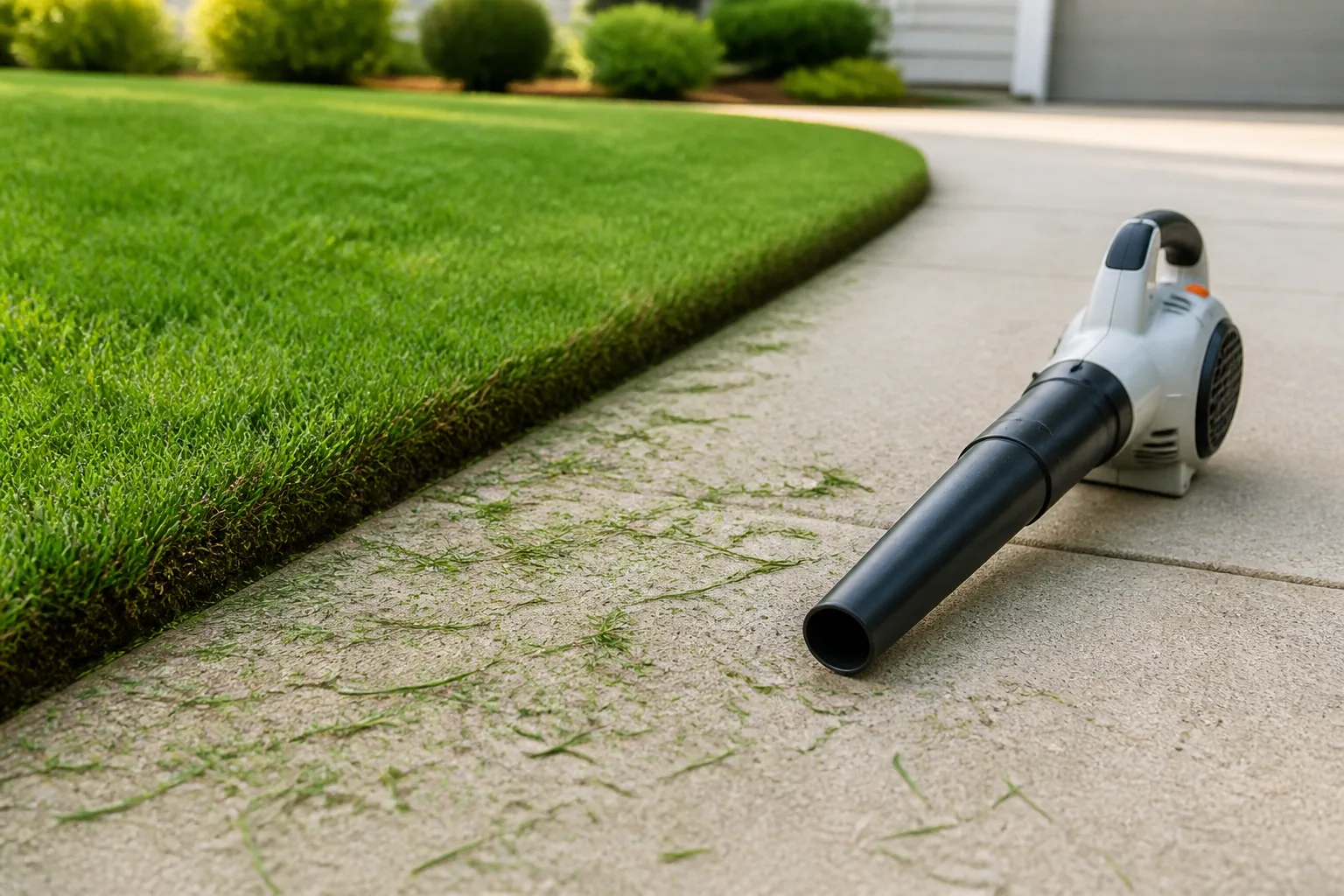
Start at the lowest speed that moves the material. Work from the outer edge of the lawn toward one collection zone, and use short angled passes instead of pointing straight down. A low angle keeps the air under the leaves and reduces the tendency to blast soil, mulch, and dust into the air. Save turbo for a stuck corner, wet patch, or final consolidation of a pile.
Work with the wind when you can, but do not assume a gust will carry your leaves where you want them. Close garage doors and windows near the work area, move cars away from the line of travel, and check where the air stream will send dust before you squeeze the trigger. A blower is a cleanup tool, not a substitute for planning: dampen or rake dusty material when appropriate, and stop if visibility drops.
Use eye protection, sturdy shoes, and hearing protection during extended sessions. CDC and NIOSH describe 85 dBA averaged over an eight-hour workday as an occupational recommended exposure limit, and exposure time becomes shorter as sound levels rise; lawn and power equipment can reach the range where hearing deserves attention (CDC and NIOSH noise guidance). The exact dBA rating on a product page is not a guarantee of what you hear at your ear, so keep people and pets away from the discharge path and follow the owner’s manual.
Leaves, Battery Care, and Common Buying Mistakes
Blow leaves into a few manageable rows or piles rather than chasing individual leaves across the property. Afterward, use them as mulch, add chopped leaves to compost, or make leaf mold when the material is suitable. Fine Gardening notes that fallen leaves can improve soil and water retention, while thick whole-leaf layers on a lawn can block light and air; use the destination of the leaves to decide whether you should mulch, rake, or remove them (Fine Gardening’s leaf-use guidance). Avoid spreading diseased leaves or leaves from plants whose residues you do not want in a particular bed.

Store lithium-ion batteries in a dry, temperate place and follow the manufacturer’s charging and storage instructions. Do not assume water resistance: a blower may tolerate light outdoor use while its battery, charger, or specific electrical connections have different limits. Let a hot pack cool before charging, inspect it for damage, and keep contacts clean. If you buy tool only, price the battery and charger before comparing it with a complete kit.
The most common mistake is shopping by MPH alone. The next is treating “up to” runtime as a promise for turbo mode. Other avoidable errors include buying a new battery platform for a small output gain, ignoring the weight with the battery installed, skipping the harness on a large property, and choosing maximum power when a gentle variable-speed tool would protect your mulch and neighbors. Confirm the exact model number, battery, charger, warranty, and nozzle contents because package details can change.
Conclusion
For most homeowners, the EGO POWER+ LB7654 is the best cordless leaf blower because it balances strong air volume, useful speed control, and a complete kit. The WORX WG547 is a better match for small jobs, the Milwaukee M18 FUEL 3017-20 is the quiet-focused choice, the RYOBI 40V HP backpack is the comfort pick for long sessions, and the Toro 60V MAX 51827 offers the highest published CFM in this comparison. Choose by your yard, battery platform, and typical cleanup conditions—not by a single headline number.



