Potassium Deficiency in Houseplants: Signs and Fixes
Nutrient problems are often misdiagnosed as watering or light issues. Potassium Deficiency produces Brown leaf edges, weak stems, poor flowering when plants cannot access or process nutrients correctly. Before adding more fertilizer, confirm whether you are dealing with deficiency, excess, or locked-out nutrients in old soil. Track weekly progress after you change care, and note watering, light, and repotting dates so you can tell whether the symptom is improving or returning. Compare upper versus lower leaves, new versus old growth, and soil moisture at root depth before you treat, because the same visible symptom can come from watering, light, pests, or normal aging on different plants.
Potassium Deficiency on Houseplants
Still unsure?Match your symptoms to the most likely problems in under a minute.Run diagnosis →Understand and fix potassium deficiency
Nutrient problems are often misdiagnosed as watering or light issues. Potassium Deficiency produces Brown leaf edges, weak stems, poor flowering when plants cannot access or process nutrients correctly. Before adding more fertilizer, confirm whether you are dealing with deficiency, excess, or locked-out nutrients in old soil. Track weekly progress after you change care, and note watering, light, and repotting dates so you can tell whether the symptom is improving or returning. Compare upper versus lower leaves, new versus old growth, and soil moisture at root depth before you treat, because the same visible symptom can come from watering, light, pests, or normal aging on different plants.
Overview
Nutrient problems are often misdiagnosed as watering or light issues. Potassium Deficiency produces Brown leaf edges, weak stems, poor flowering when plants cannot access or process nutrients correctly. Before adding more fertilizer, confirm whether you are dealing with deficiency, excess, or locked-out nutrients in old soil. Track weekly progress after you change care, and note watering, light, and repotting dates so you can tell whether the symptom is improving or returning. Compare upper versus lower leaves, new versus old growth, and soil moisture at root depth before you treat, because the same visible symptom can come from watering, light, pests, or normal aging on different plants.
How to identify it
- Compare old leaves vs new leaves-deficiencies often start on older or newer growth specifically
- Review last fertilizer date and dose
- Check if soil has not been changed in 2+ years
- Look for brown crispy leaf edges after feeding (burn)
- Note whether only one plant in the same window is affected
When to worry
Rapid leaf burn after fertilizing, or widespread collapse with very pale new growth, needs flushing soil and stopping feed immediately.
Common causes
Under-fertilizing during active growth
Plants in bright light and fresh soil use nutrients quickly. Long periods without feed can cause Potassium Deficiency.
Over-fertilizing or wrong concentration
Salt buildup from too much fertilizer burns roots and leaf edges, mimicking drought stress.
Old, depleted potting mix
Nutrients wash out with repeated watering. Plants in the same soil for years run out of available minerals.
pH or soil chemistry imbalance
When soil pH is off, roots cannot absorb certain nutrients even if they are present-showing as Brown leaf edges, weak stems, poor flowering.
Step-by-step fix
Identify which leaves show symptoms
Older-leaf yellowing suggests mobile nutrient issues; new-leaf damage points to immobile deficiencies or burn.
Flush soil if fertilizer burn is suspected
Water deeply several times to leach salts. Hold fertilizer for 4–6 weeks.
Feed at half strength during growing season
Use a balanced houseplant fertilizer monthly in spring and summer if deficiency is likely.
Repot if soil is exhausted
Fresh mix restores baseline nutrition for plants that have not been repotted in years.
Monitor new growth
Healthy new leaves confirm you corrected the issue. Persistent symptoms may need a more specific supplement.
Prevention tips
- Fertilize lightly during active growth, not in winter dormancy
- Flush soil annually if using synthetic fertilizer regularly
- Repot on schedule so soil does not become depleted
- Always dilute fertilizer more than package minimum indoors
Common mistakes
- Fertilizing a dry or stressed plant
- Using full-strength outdoor fertilizer doses indoors
- Adding random supplements without diagnosing which nutrient is lacking
Potassium deficiency is easy to name and difficult to prove from appearance alone. The classic description—yellowing and browning along the edges of older leaves—overlaps with dry roots, excess fertilizer salts, damaged roots, hot or cold exposure, low humidity, and several diseases. Adding potassium without checking those alternatives can waste time or make a stressed root zone saltier.
A sound diagnosis connects three kinds of evidence: the pattern on the plant, the conditions around the roots, and the plant’s recent care history. A laboratory test can add confidence when the plant is valuable or the problem persists, but most home growers can first make a cautious, reversible assessment.
This guide synthesizes extension and university plant-health guidance for indoor containers. It does not claim that a photograph, a single damaged leaf, or a generic feeding calendar can identify one nutrient problem with certainty. The goal is to decide whether potassium shortage is plausible, rule out more common causes, and correct care without creating a second problem.
What Potassium Does in a Plant
Potassium is one of the three primary nutrients listed on fertilizer labels as N-P-K. Unlike nitrogen, it is not built into proteins, and unlike phosphorus, it is not a structural part of nucleic acids. It remains active as an ion and contributes to water regulation, stomatal movement, enzyme activation, carbohydrate transport, and stress responses. The UC Integrated Pest Management potassium guide summarizes its role in plant growth and describes characteristic deficiency patterns.
That broad physiological role explains why severe shortage can affect more than color. Plants may have reduced vigor, weaker growth, poor tolerance of water stress, and lower flowering or fruiting performance. None of those signs is specific enough to diagnose potassium by itself. Low light, root restriction, disease, and several other nutrient problems can produce the same general decline.
Potassium is also mobile within plants. When supply is inadequate, a plant can move some potassium from older tissue toward active young growth. That redistribution is why a true deficiency often becomes visible first on mature or lower leaves. “Often” matters: species, severity, root condition, and interacting stresses can alter the pattern.
The Symptom Pattern Most Consistent With Low Potassium
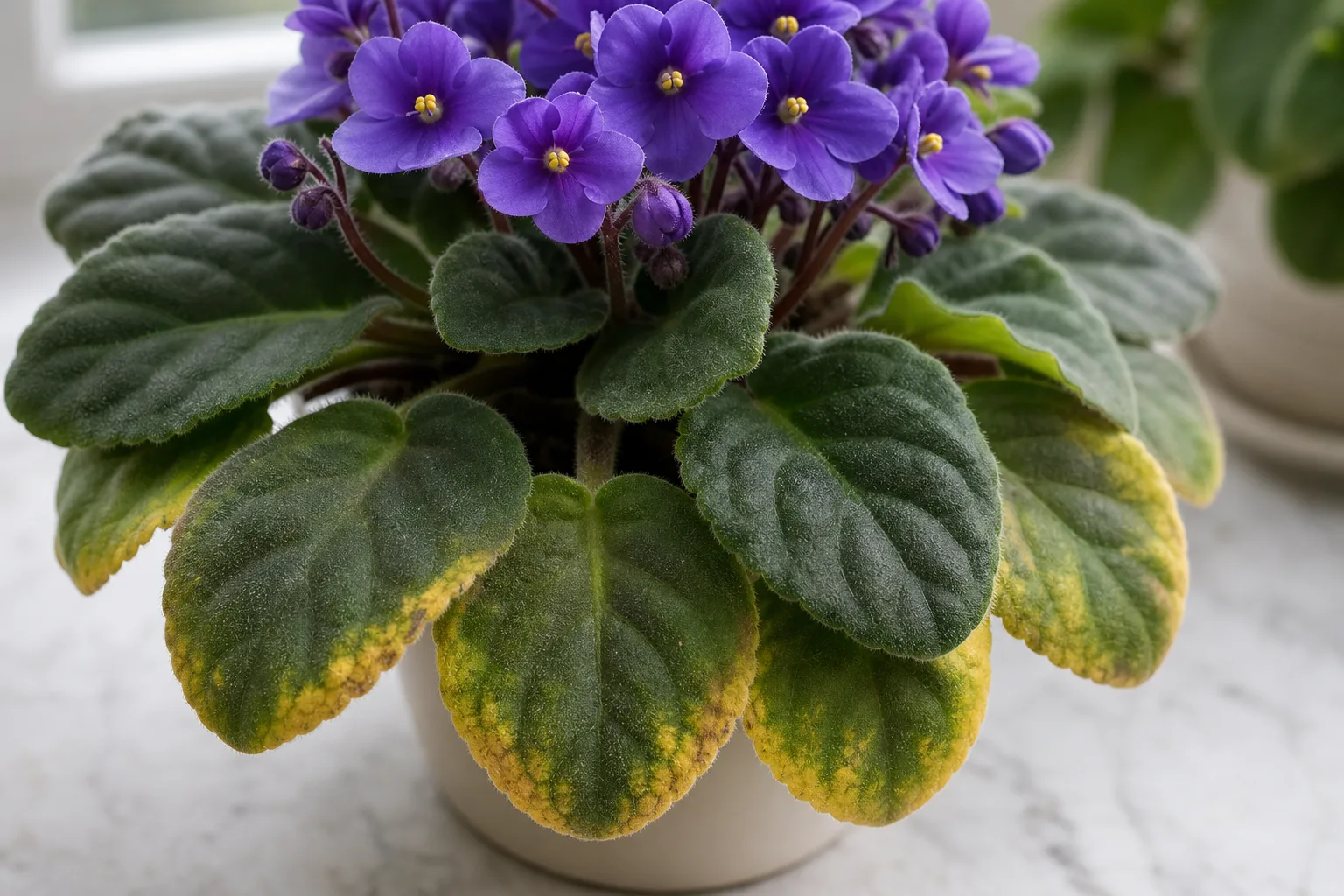
The most characteristic pattern begins on older leaves, usually with pale or yellow tissue near the margins. Marginal tissue may then turn tan or brown, producing a scorched appearance that moves inward. The area near major veins can remain greener for longer. In advanced cases, older leaves may become brittle, curl, or die while overall growth slows.
West Virginia University Extension’s overview of nutrient deficiencies in plants identifies potassium as a mobile nutrient and associates deficiency with marginal chlorosis and necrosis on older leaves. The University of Minnesota likewise notes that symptoms begin on older tissue in several crops and can be confused with other disorders. UC IPM describes marginal and interveinal chlorosis that can progress to necrosis. These patterns are useful for screening, but none is a houseplant-specific laboratory diagnosis.
Look for a repeatable distribution, not one imperfect leaf. A single brown edge could reflect physical damage or one dry episode. Potassium shortage becomes more plausible when several mature leaves develop a similar edge-first pattern, new growth is comparatively less affected, and the plant has a credible reason to be underfed or unable to take up nutrients.
Why Older Leaves Usually Show Trouble First
Mobile nutrients can be redistributed inside a plant. When potassium supply to the roots falls short of demand, the plant may draw from older foliage, protecting actively growing tissues for a time. The resulting symptom progression—older leaves first, newer leaves later if the stress continues—is diagnostically useful.
This age pattern helps separate potassium from some immobile-nutrient disorders. Iron deficiency, for example, commonly appears in young growth because iron cannot be readily moved out of old tissue. Nitrogen deficiency also begins on older foliage, however, and magnesium problems can produce interveinal chlorosis there. Leaf age narrows the field; it does not settle it.
Record which leaves are affected before pruning. Mark two or three leaves with removable ties or photograph the entire plant. If the supposed deficiency appears only on new leaves, only on one side facing a window, or as isolated round lesions, reconsider the diagnosis before feeding.
What the Images Can—and Cannot—Tell You
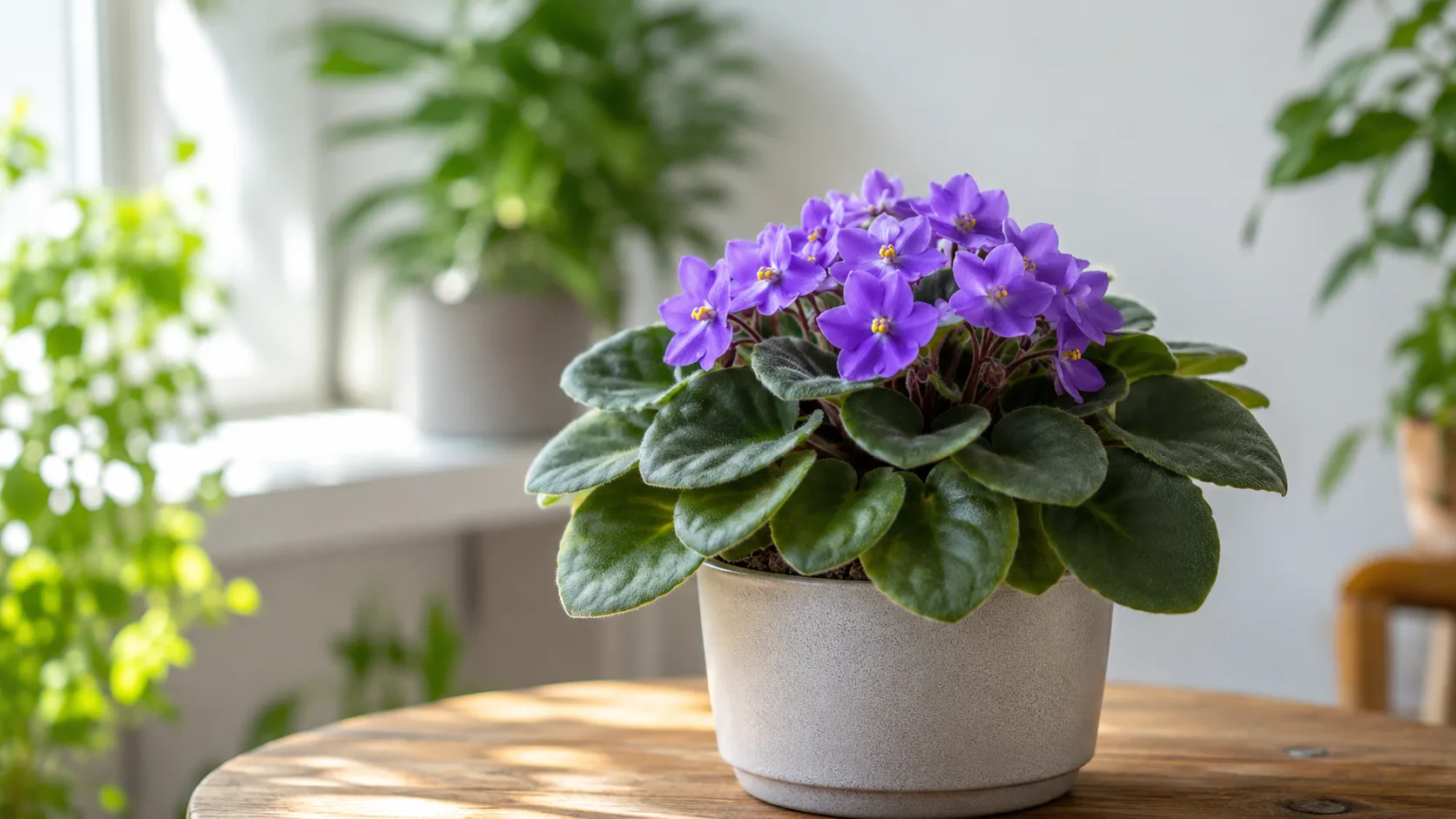
The African violet image offers a useful view of how marginal discoloration may appear on a compact rosette. Compare the placement of damage across leaf ages and whether multiple leaves repeat the same pattern. Do not use color alone: camera exposure, cultivar pigmentation, previous water spots, and old mechanical injuries can distort the impression.
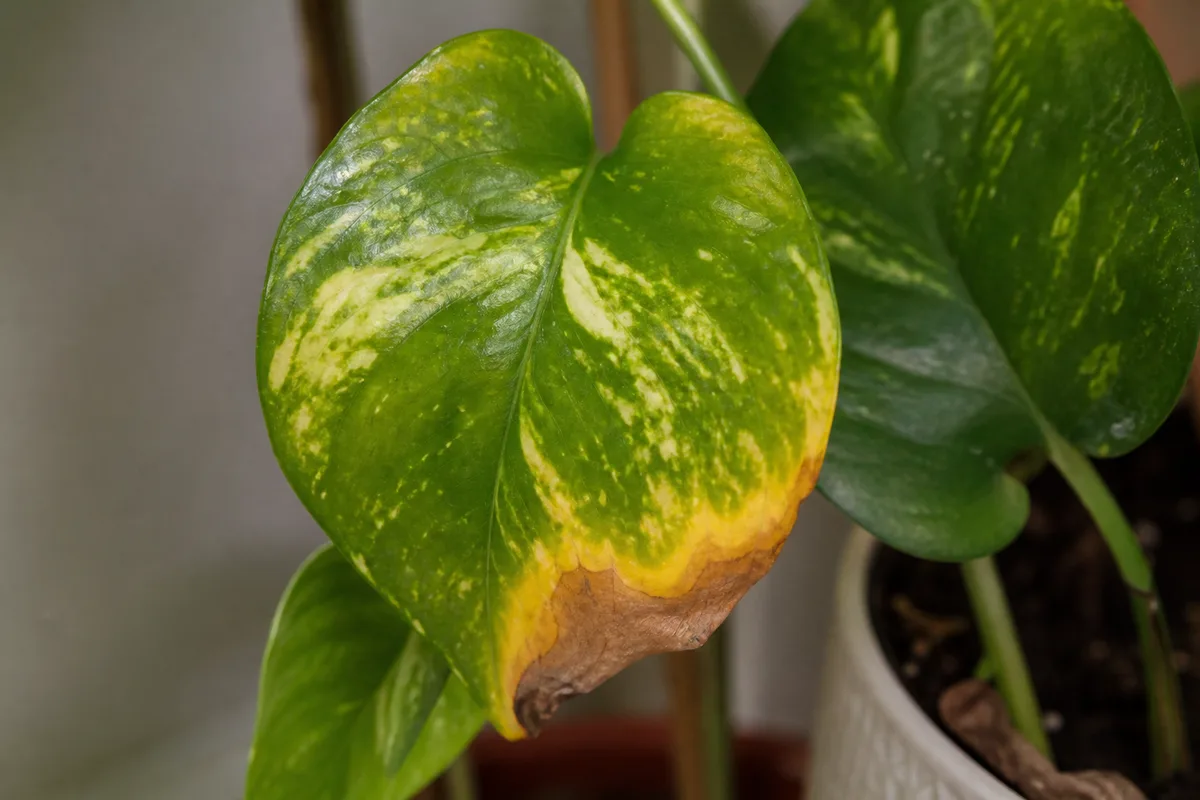
The pothos close-up is best used to inspect the shape and boundary of damaged tissue. Edge-first scorch supports a nutrient or root-zone hypothesis, but it is also common after drought or salt accumulation. A photograph contains no direct information about fertilizer concentration, substrate pH, root texture, or how long the pot stayed dry. Those missing facts are essential.
Potassium Deficiency Look-Alikes
Brown margins are among the least specific houseplant symptoms. Dry air can increase water loss at leaf edges. Inconsistent watering can dehydrate marginal tissue. Soluble salts can injure roots or accumulate at leaf tips. Cold glass can kill a sharply bounded patch. Root rot can limit water and nutrient uptake even when the potting mix contains adequate potassium.
The University of Maryland Extension indoor-plant diagnosis guidance recommends evaluating environmental and cultural causes before assuming a pest or disease. Apply the same discipline to nutrients. Ask whether the symptom maps to the plant’s age pattern, whether the root zone is functional, and whether there is a plausible shortage.
Do not diagnose from vague signs such as “weak stems” or “few flowers.” Those outcomes depend heavily on species, light, maturity, pruning, season, and general plant energy. Treat them as context only.
Deficiency Versus Fertilizer Burn
Potassium shortage and excessive fertilizer can both produce brown leaf margins. The history often separates them better than the leaf. True deficiency is more plausible after a long period without feeding in an actively growing, well-lit plant, especially when the potting mix is old and the root system is otherwise healthy. Fertilizer injury is more plausible when damage followed a concentrated application, repeated feeding without leaching, fertilizer applied to a very dry root ball, or visible crusting on the soil or pot.
Soluble salts draw water and can damage root tissue. Iowa State University Extension notes that excess soluble salts can accumulate in potting media and advises periodic leaching where appropriate. A white crust is supporting evidence, not a complete diagnosis; hard-water minerals can also leave deposits.
If burn is plausible, stop feeding. Do not “balance” an overdose with another product. Confirm that the pot drains, remove standing water from the saucer, and leach only if the plant and substrate can tolerate thorough watering. A severely damaged or poorly draining root ball may need a different intervention.
Deficiency Versus Drought, Root Damage, and Disease
Drought typically comes with a light pot, dry mix through much of the root ball, wilting, curling, or crisp tissue. But a pot can look wet at the surface while the inner root ball is dry and hydrophobic. Probe gently at root depth or inspect through a drainage hole rather than relying on the top centimeter.
Root damage creates the opposite confusion: a wet plant may wilt and develop nutrient-like yellowing because injured roots cannot supply water or minerals effectively. Slide the root ball out only when evidence warrants disturbance. Healthy roots vary by species but are generally firm; advanced rot often produces soft, dark tissue and an unpleasant odor.
Leaf-spot diseases more often create discrete lesions, sometimes with halos, rather than a symmetrical edge-first progression across old foliage. Pests can cause stippling, distortion, sticky honeydew, or webbing. Use a bright light and hand lens on both sides of leaves before deciding that nutrition is the only explanation.
Why Potassium Becomes Unavailable in a Pot
A container may have genuinely little potassium because the mix was low in nutrients initially, the plant has grown in it for a long time, or repeated watering has leached mobile ions. Yet “deficiency” can also be an uptake problem rather than an empty reservoir.
Damaged, oxygen-starved, or drought-injured roots absorb poorly. Unsuitable pH can reduce nutrient availability. High soluble-salt concentration can impair water uptake. Very cold roots slow physiological activity. Imbalances among nutrients can complicate absorption, which is one reason aggressive single-nutrient correction is risky.
Container media also differ from garden soil. Many mixes contain peat, coir, bark, perlite, or other soilless components and are designed to work with a fertilization program. Their chemistry changes as components decompose and irrigation water contributes alkalinity and salts. A generic garden-soil recommendation is not automatically appropriate for an indoor pot.
A Five-Step Diagnostic Check
1. Map the symptom. Photograph the full plant and identify whether old, middle, or new leaves are affected. Potassium becomes more plausible when repeated marginal yellowing and scorch begin on older foliage.
2. Reconstruct the timeline. Note the last three fertilizer applications, product analysis, dilution, watering state at application, repot date, and any move or temperature event. The N-P-K numbers report nutrient proportions, not proof that the plant used them.
3. Check water and roots. Confirm drainage, inspect the saucer or cachepot, assess moisture deeper in the root ball, and look for firm versus decaying roots if decline is substantial.
4. Check competing causes. Inspect for pests, localized cold or sun injury, residue from sprays, and disease-like lesions. Compare nearby plants, but remember different species have different tolerances.
5. Decide the evidence level. If the pattern, history, and root condition align, make a conservative correction. If they conflict, stabilize care and test rather than guessing.
Use this decision table:
| Evidence | Best next action |
|---|---|
| Old-leaf marginal scorch, long feeding gap, healthy roots | Resume a complete fertilizer at label-directed indoor strength |
| Damage started just after feeding; crusting or high salt likely | Stop fertilizer and address salt accumulation |
| Wet mix, soft roots, yellowing and wilt | Treat the root-zone problem before nutrition |
| Dry root ball, crisp foliage, pot extremely light | Rehydrate correctly and stabilize watering |
| Persistent pattern despite sound care | Request substrate or tissue testing |
When Testing Is Worthwhile
Testing is worthwhile for a rare, valuable, production-scale, or repeatedly declining plant. A laboratory substrate test can report pH, electrical conductivity, and extractable nutrients using a method suited to container media. Tissue analysis can show nutrient concentrations in sampled leaves, but interpretation depends on species, leaf age, sampling method, and reference ranges.
Do not rely on an inexpensive garden probe to measure potassium directly; most consumer meters estimate moisture, light, or pH with limited precision. A home soil pH result can be a clue, but soilless media often require specialized extraction methods for meaningful interpretation.
Testing is also the cleanest way to distinguish “not enough potassium in the root zone” from “potassium present but roots unable to acquire it.” If professional testing is impractical, use a cautious complete-fertilizer trial only after roots, moisture, and salts have been assessed.
Treat a fertilizer trial as a monitored intervention, not proof. Record the product, dose, substrate moisture, and date; then hold the other major variables steady. Improvement in later growth supports—but does not conclusively establish—the nutrient hypothesis because corrected watering, seasonal light, or root recovery may occur at the same time. If damage advances after a correctly measured application, stop repeating the treatment and reassess salts, roots, pests, and disease.
How to Correct a Likely Deficiency
Begin by fixing the conditions that control uptake. Give the plant appropriate light for its species, restore a reasonable wet-dry cycle, confirm unobstructed drainage, and keep roots within the plant’s safe temperature range. Fertilizer cannot compensate for decaying roots or chronically saturated media.
If the plant is actively growing and evidence supports underfeeding, apply a complete houseplant fertilizer that includes potassium. Follow the product label for container plants and measure accurately. Starting at the low end of the labeled range is prudent for a stressed plant, but arbitrary dilution rules are not universal because products differ greatly in concentration and formulation.
Water the root ball evenly. Empty drainage water rather than leaving the pot immersed. Do not expect burned margins to reverse; recovery is shown by healthy later growth and the absence of new damage.
Choosing and Applying Fertilizer
The third number in an N-P-K analysis represents potash expressed as K₂O, not elemental potassium by weight. More is not automatically better. A balanced or foliage-plant formula often supplies enough potassium when used correctly, while specialty formulas may suit particular crops or water systems.
Choose a product with clear labeling and application directions for potted plants. Check whether the formulation includes micronutrients, whether it is a liquid, soluble powder, or controlled-release product, and whether another fertilizer is already present in the mix. Combining products makes the total dose difficult to track.
Apply fertilizer to a root zone that is not severely dry or damaged. Never estimate concentrated liquid by eye. Record date and dose so later symptoms can be interpreted. North Carolina State Extension’s discussion of potassium deficiency and tissue testing is crop-focused, but its core diagnostic lesson transfers: visual symptoms should be supported with environmental history and testing rather than treated as definitive.
Restoring a Damaged Root Zone
If excess salts are likely and the plant is otherwise stable, thorough leaching with suitable water can move soluble salts out of a freely draining mix. Use enough water to wet the entire root ball and allow it to drain completely; do not let runoff collect around the pot. Skip repeated flushing when drainage is poor or roots are already badly rotted.
Repot when the mix is structurally collapsed, drainage remains poor, roots are severely compromised, or reliable testing shows the substrate is unsuitable. Choose a pot only modestly larger than the healthy root mass and use a species-appropriate mix. Removing every particle of old medium is rarely necessary and can injure fine roots.
After root work, prioritize stable light, warmth, and moisture over immediate feeding. Newly disturbed or pruned roots may not be ready for fertilizer. Resume nutrition according to the plant’s growth and the fertilizer or substrate manufacturer’s guidance.
What Not to Use as a Shortcut
Banana-peel water, wood ash, Epsom salt, and unmeasured kitchen scraps are poor diagnostic tools. Banana material contains nutrients, but homemade steeping produces an unknown concentration and can add decomposing organic matter without proving potassium shortage. Wood ash is alkaline and can sharply alter pH and salts. Epsom salt supplies magnesium and sulfur, not potassium.
Do not mix several remedies “to cover everything.” That approach hides the result of each change and increases the chance of imbalance or root injury. Do not foliar-spray fertilizer on an unidentified leaf problem unless the product label explicitly allows that use for the plant; leaf sensitivity, concentration, temperature, and drying conditions all affect phytotoxicity.
Avoid calendar feeding during low-light, slow-growth periods merely because a month has passed. Nutrient demand depends on growth, species, light, temperature, root volume, water quality, and the nutrient charge already in the substrate.
How to Measure Recovery
Recovery is a trend, not the repair of dead tissue. Brown, necrotic margins will not become living green tissue. Partly chlorotic leaves may stabilize, but the strongest evidence is that newly developing leaves emerge with normal color and shape and that damage stops advancing to additional older leaves.
Take a weekly photograph in similar light. Track the number of newly affected leaves, new growth, pot-drying interval, fertilizer events, and any root changes. Give a slow-growing plant enough time to produce evaluable growth; repeatedly changing treatment every few days destroys useful evidence.
Escalate when decline continues despite corrected conditions, the stem base softens, roots deteriorate, lesions spread rapidly, or the plant is valuable enough to justify professional diagnosis. Local extension offices or diagnostic laboratories can advise on sampling and tests.
Prevention for Container-Grown Plants
Use a complete fertilizer matched to the plant, substrate, water, and growth rate. Follow the label, measure rather than guess, and keep a simple record. Refresh or repot structurally degraded media before it becomes chronically airless. Periodically inspect drainage holes and remove runoff from cachepots.
Water thoroughly enough to wet the root ball, then allow the species-appropriate degree of drying. This approach helps avoid both concentrated salt pockets and chronic saturation. If irrigation water is very hard or salty, consider an appropriate alternative and seek local guidance before making broad chemistry changes.
Inspect the oldest leaves during routine care. A pattern caught early is easier to diagnose because fewer secondary stresses have accumulated. Most importantly, resist treating every brown edge as hunger. Prevention is a stable root environment plus proportionate nutrition—not constant supplementation.
Conclusion
Potassium deficiency in houseplants is plausible when repeated marginal chlorosis and scorch begin on older leaves, the plant has a credible nutrition gap, and roots are healthy enough to absorb nutrients. It is not proven by brown tips, weak growth, or one photograph.
Check the pattern, timeline, moisture, roots, salts, and competing causes before feeding. When evidence supports a shortage, use a measured complete fertilizer and judge success by healthy new growth. When evidence conflicts or symptoms persist, substrate or tissue testing is more reliable than adding another home remedy.
Plants commonly affected
These houseplants often struggle with potassium deficiency. Open a care guide or plant-specific troubleshooting page for tailored fixes.
 Medium
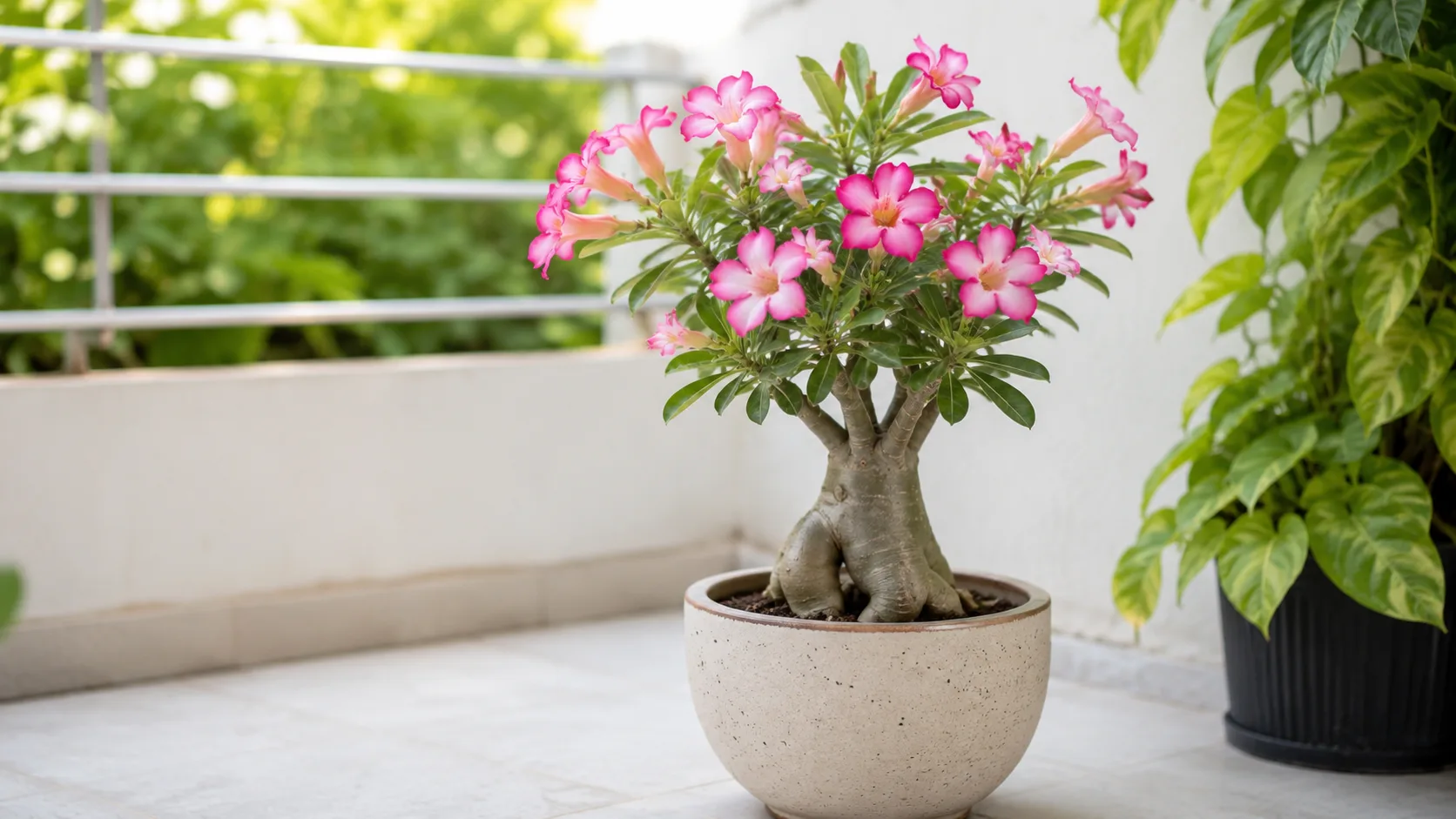
Adenium
Likely causeCommon potassium deficiency pattern on Adenium under indoor care stress.
Quick fixInspect roots, watering, light, and pests; adjust one variable and monitor new growth.
 Medium
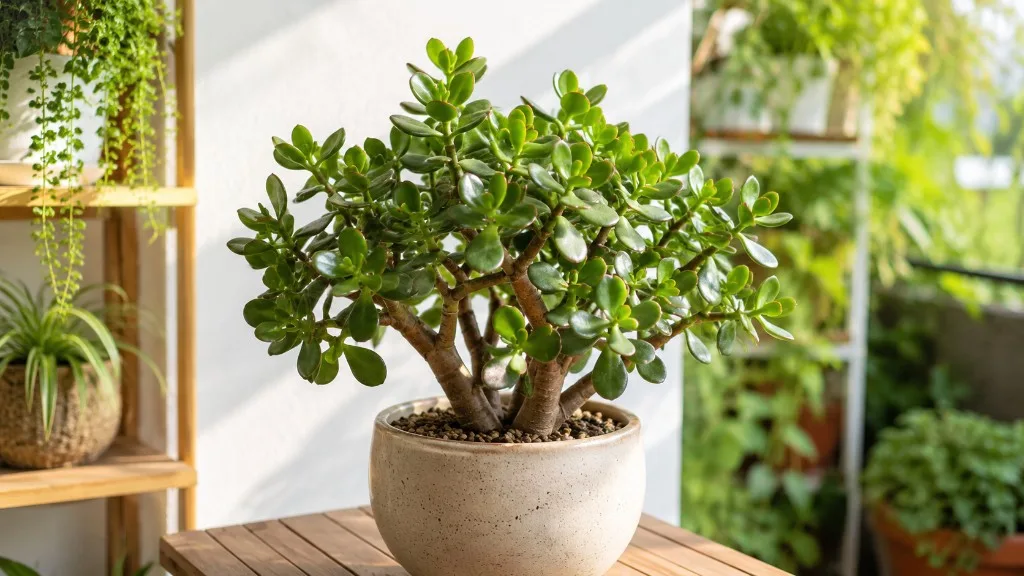
African Milk Tree
Likely causeCommon potassium deficiency pattern on African Milk Tree under indoor care stress.
Quick fixInspect roots, watering, light, and pests; adjust one variable and monitor new growth.
 Medium
African Violet
Likely causePotassium Deficiency on African Violet: Potassium Deficiency is a condition which describes an African Violet that is not getting enough potassium (K), also referred to as potash. Potassium is an essential element for the growth and vitalit
Quick fixInspect African Violet, confirm potassium deficiency matches your symptoms, then adjust care or treat per authoritative guides.
 Medium
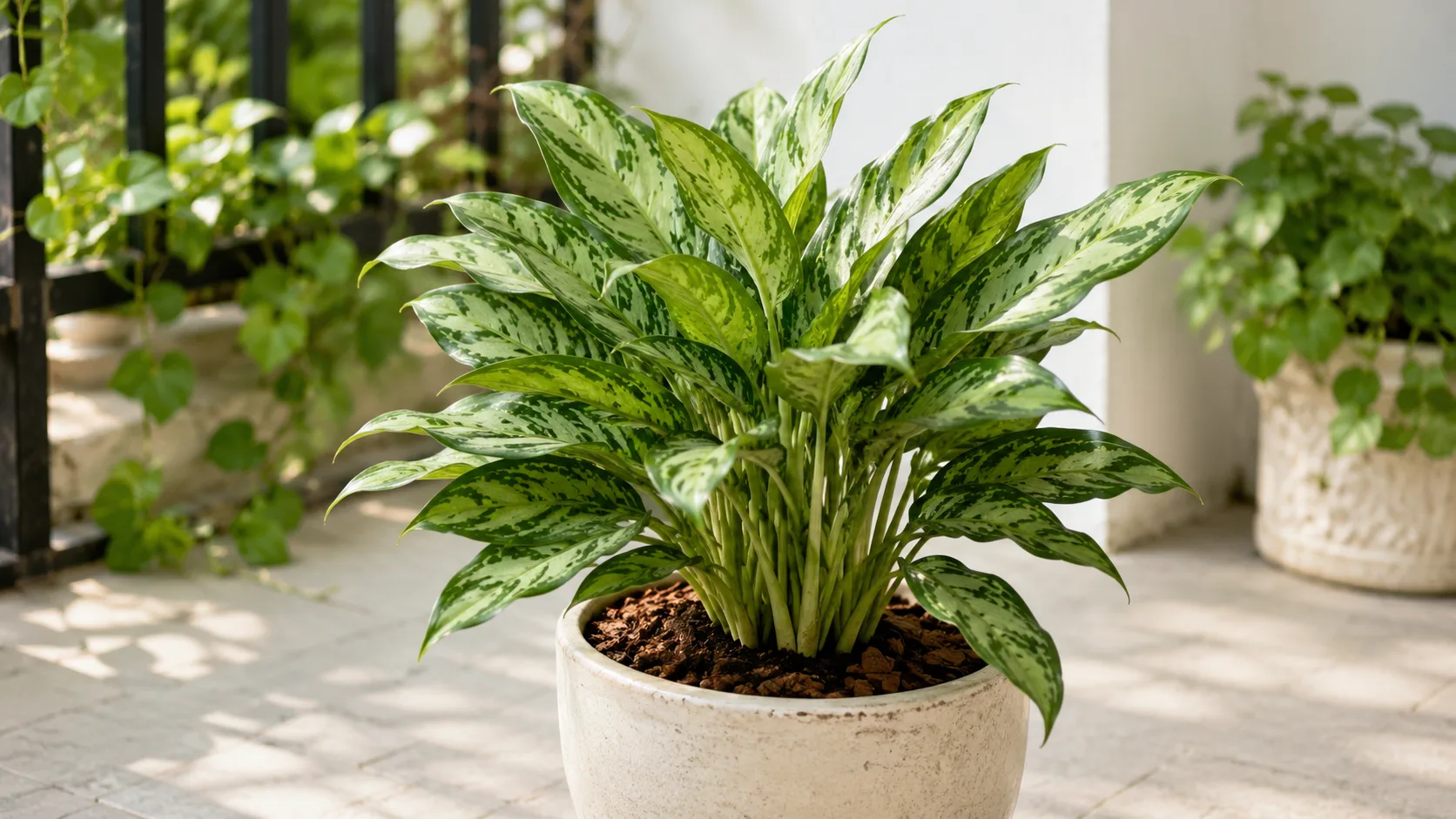
Aglaonema
Likely causeCommon potassium deficiency pattern on Aglaonema under indoor care stress.
Quick fixInspect roots, watering, light, and pests; adjust one variable and monitor new growth.
 Medium
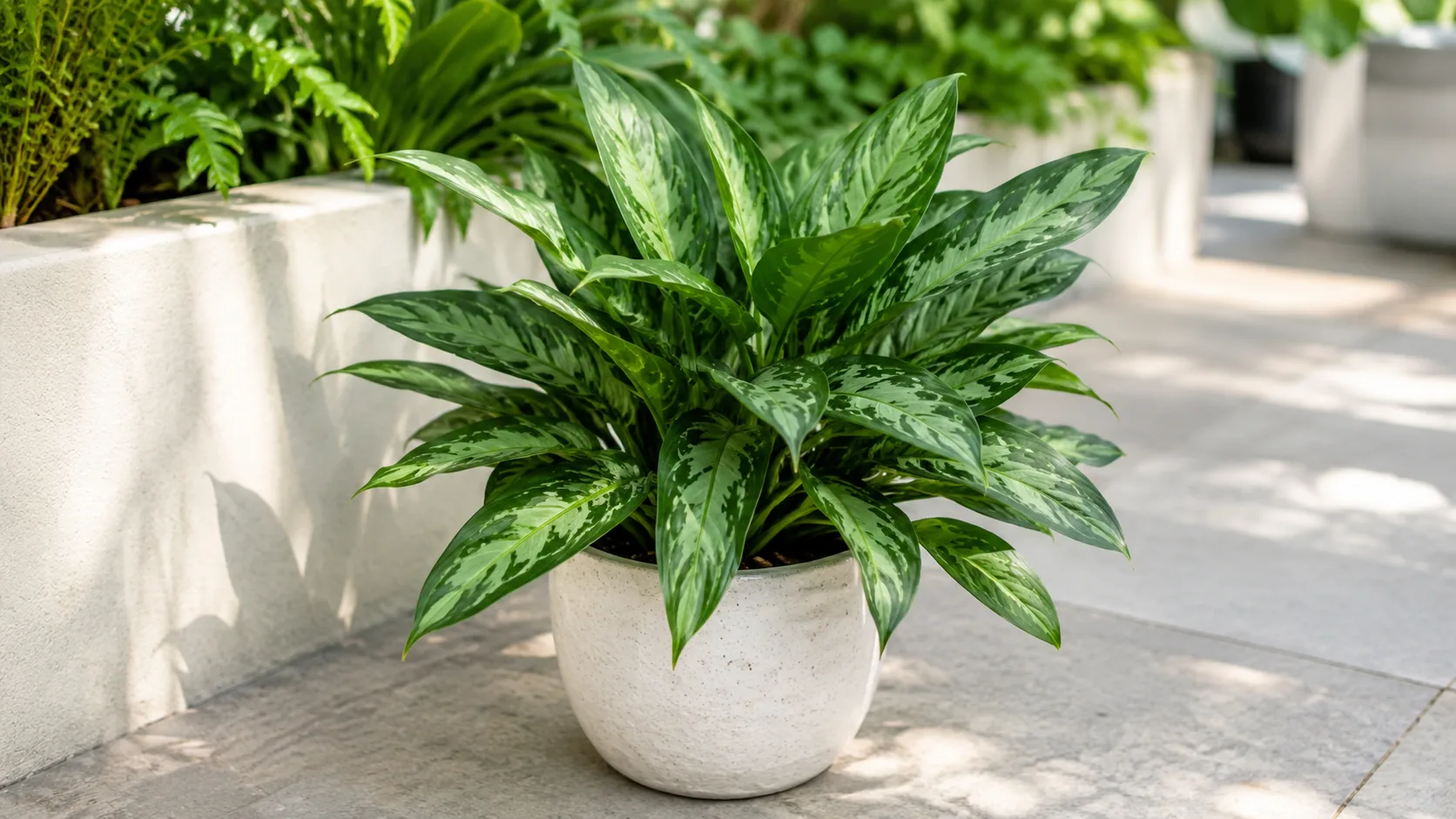
Aglaonema Cutlass
Likely causeCommon potassium deficiency pattern on Aglaonema Cutlass under indoor care stress.
Quick fixInspect roots, watering, light, and pests; adjust one variable and monitor new growth.
- Medium
Aglaonema Lady Valentine
Likely causeCommon potassium deficiency pattern on Aglaonema Lady Valentine under indoor care stress.
Quick fixInspect roots, watering, light, and pests; adjust one variable and monitor new growth.
- Medium
Aglaonema Maria
Likely causeCommon potassium deficiency pattern on Aglaonema Maria under indoor care stress.
Quick fixInspect roots, watering, light, and pests; adjust one variable and monitor new growth.
- Medium
Aglaonema Pictum Tricolor
Likely causeCommon potassium deficiency pattern on Aglaonema Pictum Tricolor under indoor care stress.
Quick fixInspect roots, watering, light, and pests; adjust one variable and monitor new growth.
 Medium
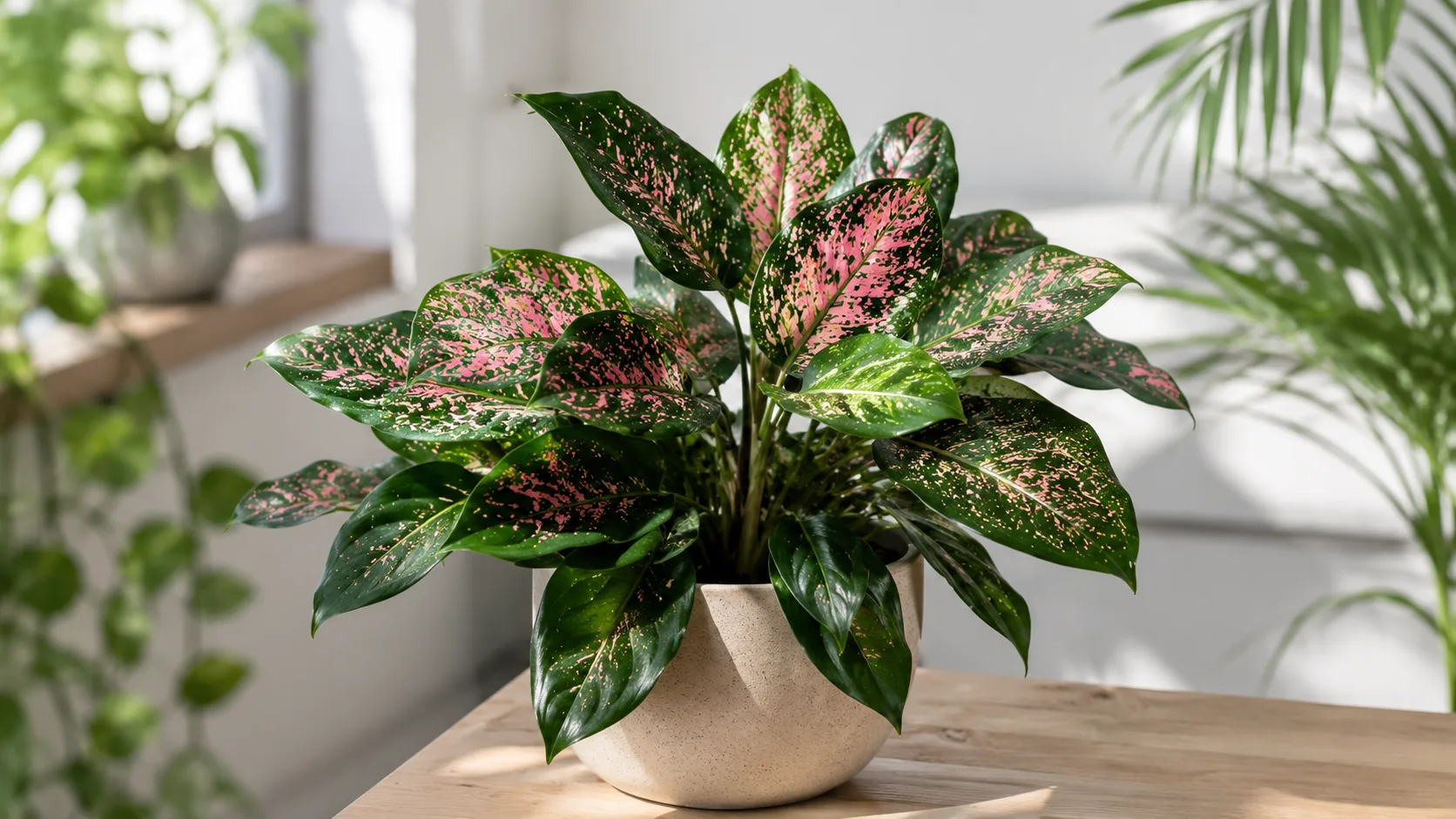
Aglaonema Pink Dalmatian
Likely causeCommon potassium deficiency pattern on Aglaonema Pink Dalmatian under indoor care stress.
Quick fixInspect roots, watering, light, and pests; adjust one variable and monitor new growth.
- Medium
Aglaonema Red Siam
Likely causeCommon potassium deficiency pattern on Aglaonema Red Siam under indoor care stress.
Quick fixInspect roots, watering, light, and pests; adjust one variable and monitor new growth.
 Medium
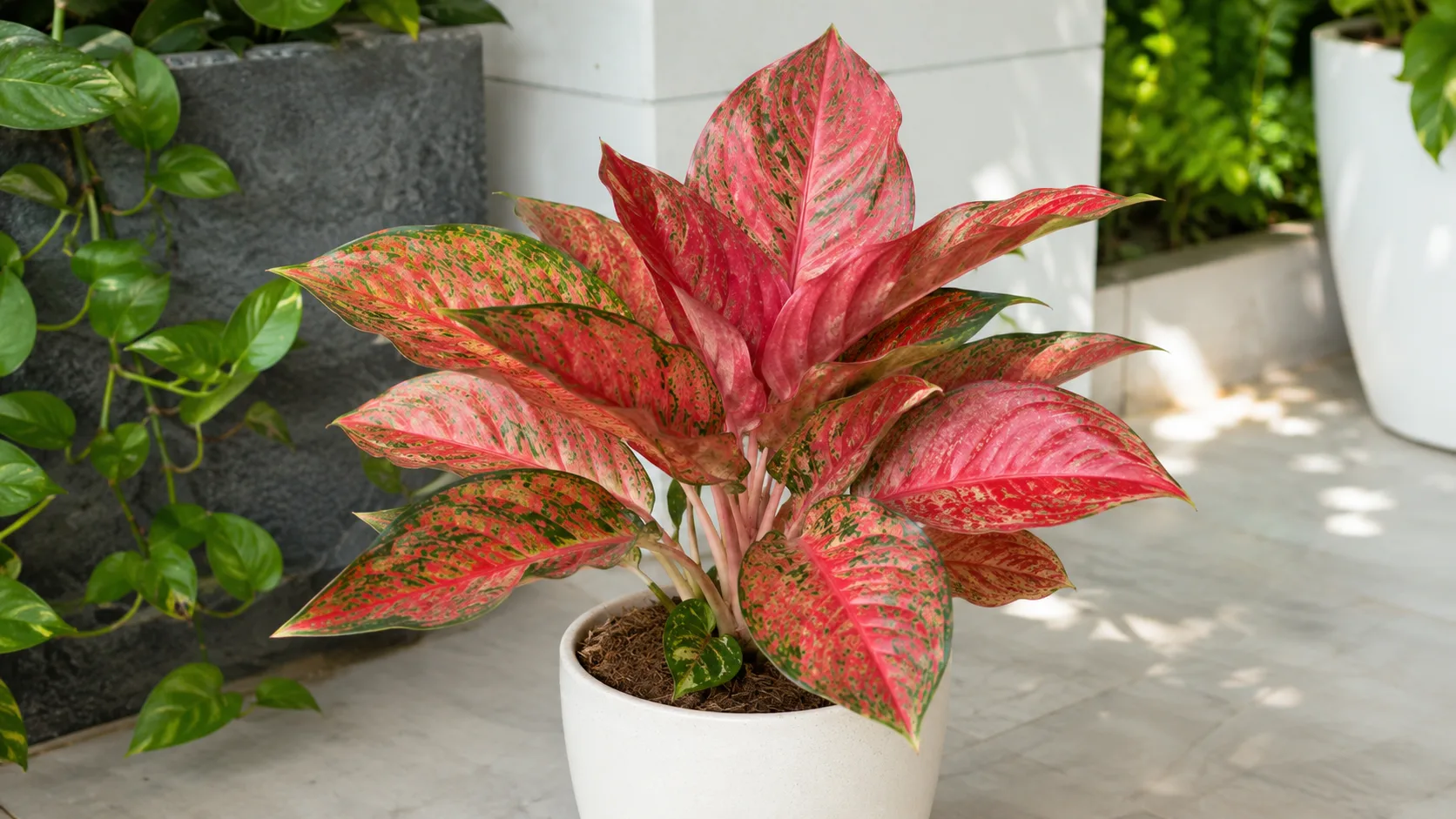
Aglaonema Red Valentine
Likely causeCommon potassium deficiency pattern on Aglaonema Red Valentine under indoor care stress.
Quick fixInspect roots, watering, light, and pests; adjust one variable and monitor new growth.
 Medium
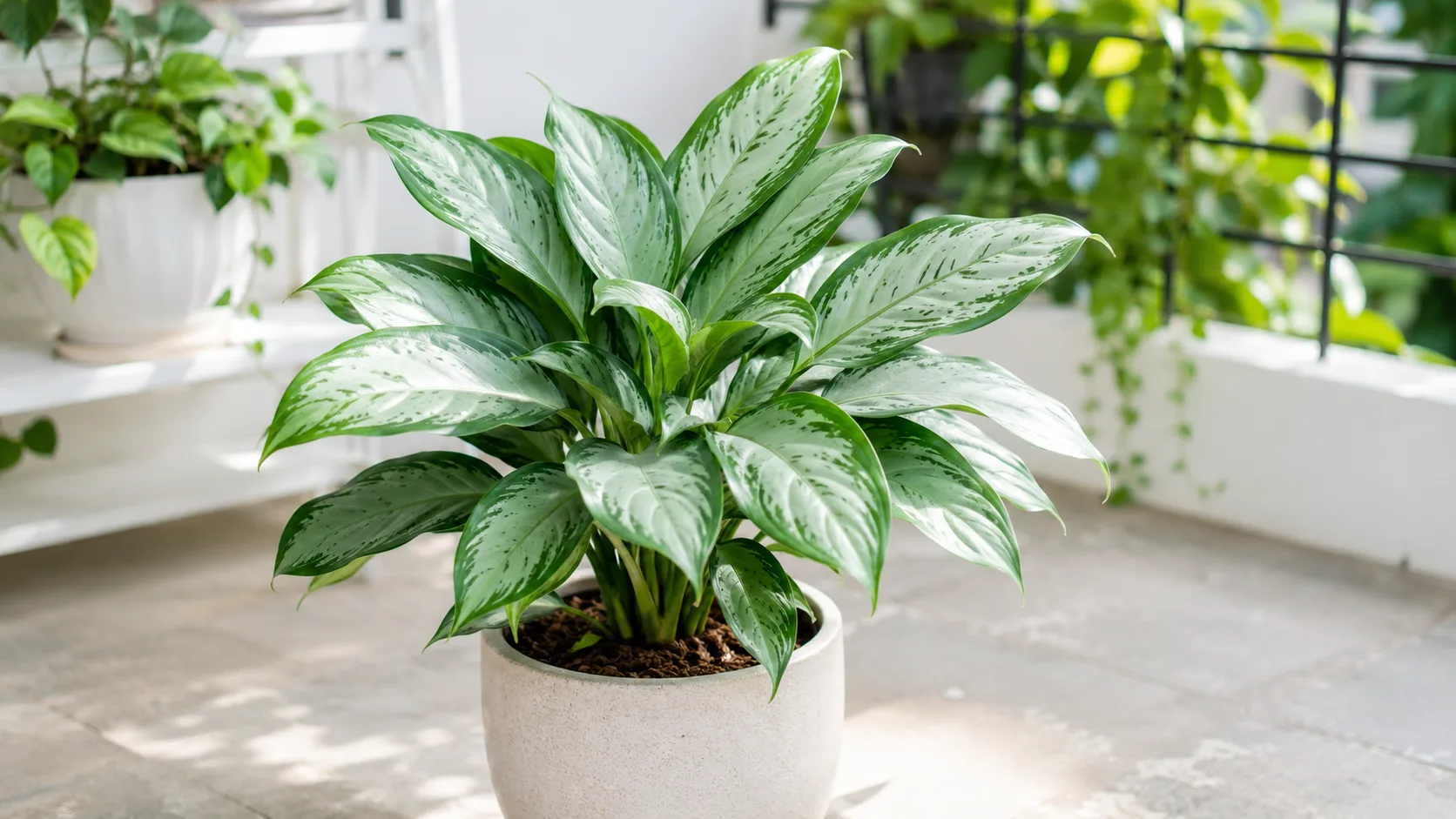
Aglaonema Silver Bay
Likely causeCommon potassium deficiency pattern on Aglaonema Silver Bay under indoor care stress.
Quick fixInspect roots, watering, light, and pests; adjust one variable and monitor new growth.