Houseplant Purple Leaves: Causes, Diagnosis and Fixes
Purple houseplant leaves can mean genetics, cold, light stress, or phosphorus issues. Learn a clear diagnosis order before you fertilize.
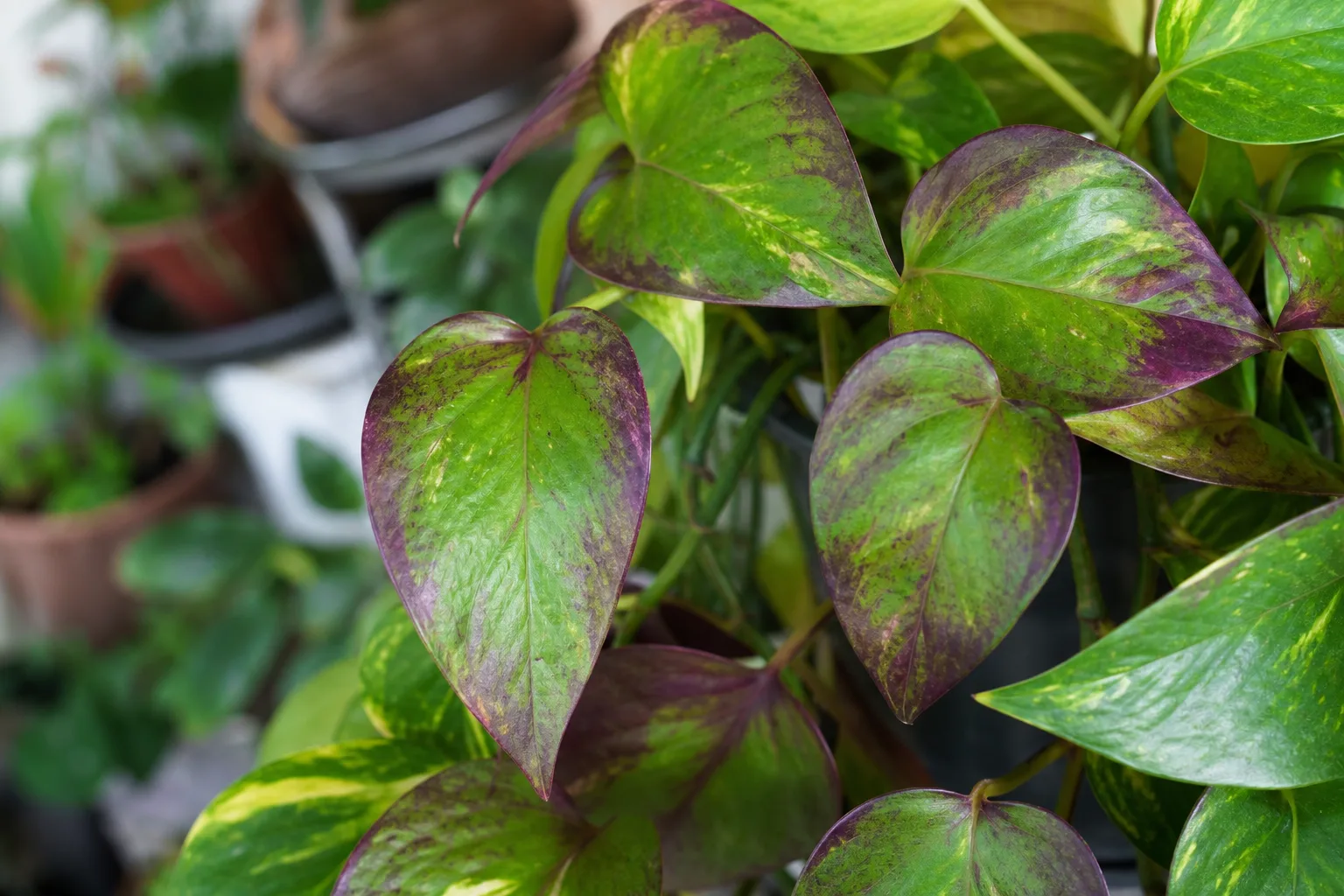
You notice a leaf that looks bruised, wine-stained, or oddly red along the veins — and your first thought is usually fertilizer. Sometimes that is right. Often it is not. Purple leaves on houseplants can mean genetics, cool-weather anthocyanin buildup, chilling injury, intense light, root uptake failure, or a true phosphorus shortage. The color alone does not name the cause.
This guide is the deep cross-species diagnosis hub: confirm what is normal for the plant, map purple to leaf age and temperature history, then choose a fix that matches the evidence. For a short symptom overview, use the purple leaves symptom hub. For a condensed problem-page walkthrough of the same symptom family, see purple leaves on houseplants. Species follow-through lives on plant pages such as pothos and African violet. Written by Sai Ananth; horticulture review by Dr. Priya Menon (botanist and indoor plant specialist).
Bench note (Tradescantia vs pothos, same cold edge, February 2026): On an east apartment sill, a purple Tradescantia held deep burgundy year-round at about 200–350 ft-c daytime. We moved a normally green Golden pothos to the same glass edge for seven nights. Only the pothos developed a dull reddish cast on window-facing older leaves while new tips stayed smaller. Same microclimate, two stories — cultivar color versus cool-sill stress.
What Purple Leaves Actually Mean
Purple, reddish, or maroon leaf color is a symptom pattern, not a disease name. The pigment behind most stress purples is anthocyanin — the same family of compounds that colors many flowers and autumn leaves. Plants can ramp anthocyanins up when sugar transport, light, or temperature conditions change, even when no pathogen is present.
That means two plants can look “purple” for opposite reasons. One is a purple-leaf cultivar doing exactly what its genetics promise. Another is a normally green plant showing cool-night pigment, phosphorus stress on older leaves, or early chilling discoloration after a drafty night. Your job is to separate those stories before you pour high-phosphorus fertilizer into the pot.
Anthocyanins, Chlorophyll, and Why Color Shifts
Green leaves look green because chlorophyll dominates. When chlorophyll production slows, or anthocyanins accumulate on top of remaining green tissue, the eye reads purple, red, or bronze. Extension diagnostic keys routinely list reddening or purpling among nutrient and cold cues — Penn State Extension includes “nutrient deficiency (reddening or purpling of leaves)” and cold injury in its houseplant symptom lists.
Anthocyanins are not automatically bad. Cool temperatures can trigger protective pigment in otherwise healthy plants, especially on seedlings and new growth outdoors; the same physiology shows up on indoor sills that run cold at night. The practical question is whether the plant is still growing, whether older leaves are darkening and stalling, and whether tissue is merely tinted or actually collapsing.
Physiology in one line: anthocyanin can sit on top of chlorophyll as a protective tint; mobile phosphorus can move from older leaves into new growth when the plant is short, which is why classic P stress often starts low on the plant.
Genetics First: Natural Purple Foliage
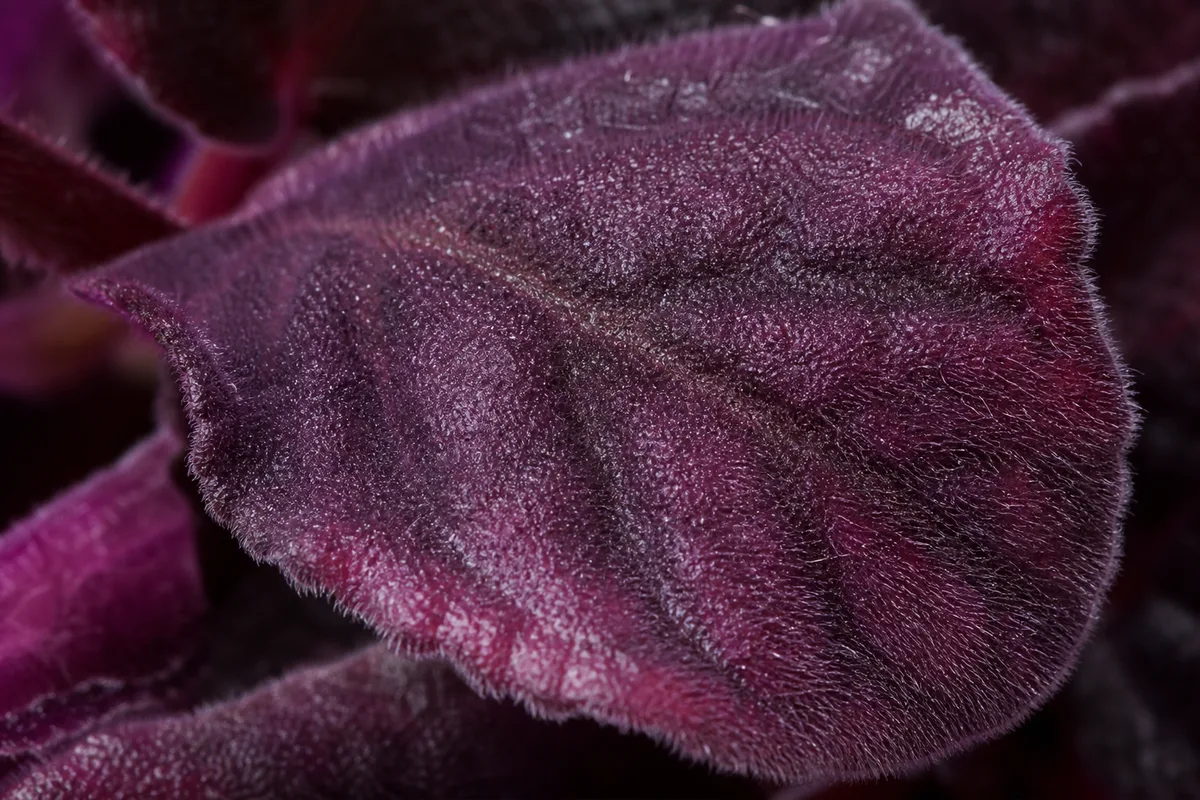
Before you treat anything, answer: is this plant supposed to be purple? Many popular houseplants are selected for burgundy, violet, or silver-purple foliage. Others keep green tops with naturally purple undersides. Treating that as deficiency wastes fertilizer and can burn roots.
If every leaf — including vigorous new growth — has looked this way since you bought the plant, and the plant is still producing firm, expanding leaves, genetics is the working answer. Compare the plant to its cultivar description, nursery tag, or a known healthy specimen of the same variety. Stress purple usually appears as a change from a previously greener baseline, often paired with slower growth.
Naturally Purple vs Stress-Purple Plants
Use this as a scannable first filter, not a lab diagnosis:
| Usually cultivar / normal color | More often stress-tinted when it changes |
|---|---|
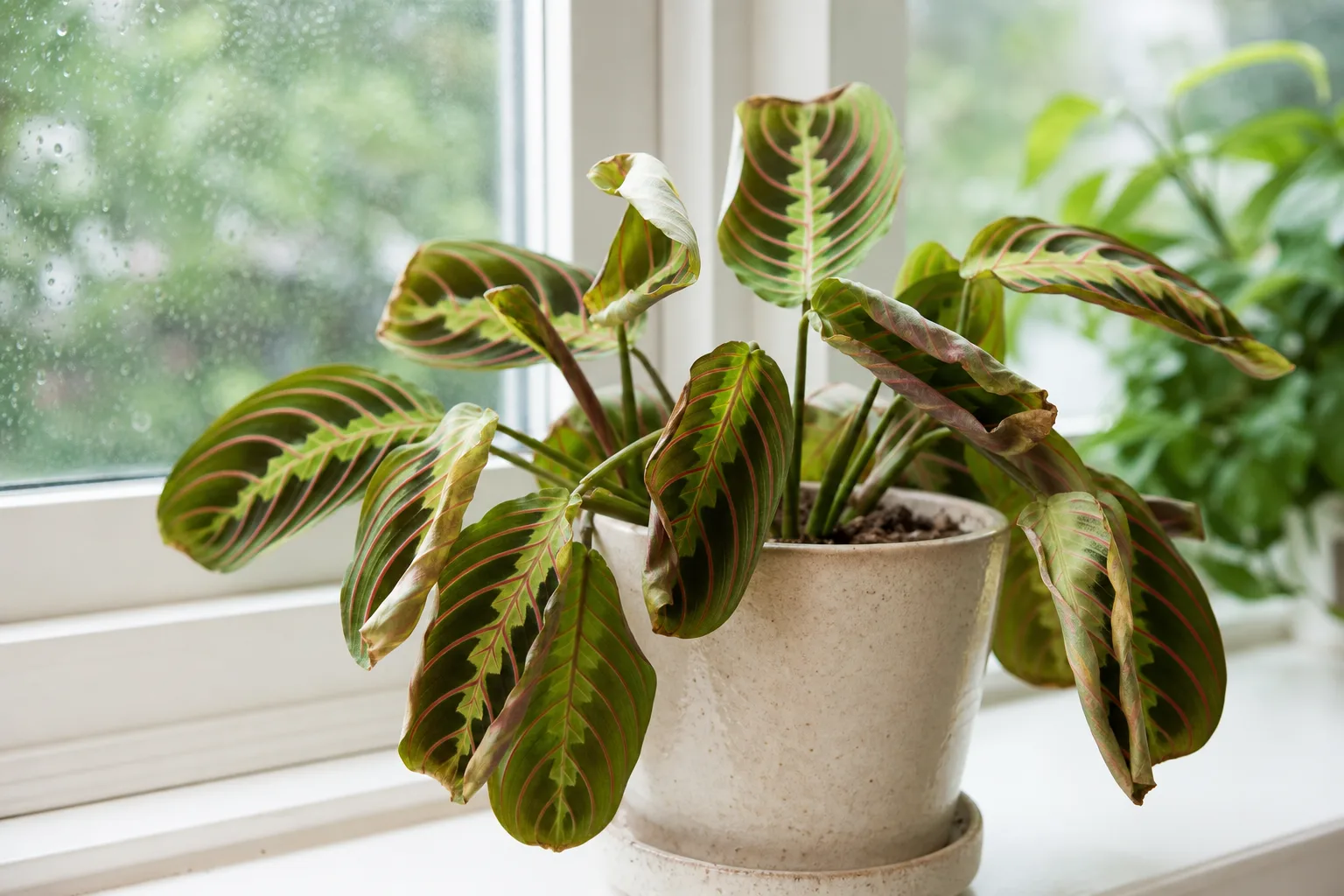
| Purple passion plant, many Tradescantia and Oxalis selections | Green pothos or Monstera that suddenly bronze on older leaves |
| Purple-leaf philodendron and syngonium cultivars; decorative coleus | African violet foliage that darkens after a chill or draft |
| Green tops with rose/purple leaf backs on some aroids | Window-facing flush after a sudden light jump on shade-grown plants |
Some aroids show rose or purple backs on young leaves even when the face stays green. That underside blush can intensify in brighter light without meaning the plant is starving. If you are still unsure whether the tint is cultivar or stress, check purchase photos, keep notes for two weeks of stable care, and watch new leaves. Genetic color repeats on new growth. Stress color often eases on new growth once temperature, light, and roots are corrected.
Phosphorus Deficiency: Classic Purple Older Leaves
Phosphorus (P) is a primary macronutrient tied to energy transfer, root development, and flowering. When plants cannot get enough usable P, older leaves often darken and take on purple or red tones, especially on undersides and along veins, while growth slows. NC State Extension’s soils and plant nutrients handbook describes phosphorus deficiency as reduced growth with dark-green leaves that show purple or red color in older leaves — especially the underside along the veins — plus possible leaf distortion, thin stems, and limited root growth. Phosphorus is mobile in the plant, so symptoms typically start on older tissue as the plant moves P into new growth.
UConn Home & Garden groups purplish-red coloring among core deficiency symptom categories and notes that phosphorus deficiency appears on older leaves first as purpling of leaves and margins with stunted growth and delayed maturity. Missouri Botanical Garden similarly links lack of phosphorus to reduced growth and purplish foliage on older leaves, and notes that container plants need regular complete fertilizer because potting mixes do not behave like garden soil banks.
Indoors, true “empty potting mix” phosphorus shortage is more common than many outdoor garden soils — but it is still not the only purple pathway. Cold roots, damaged roots, and extreme pH can create a functional shortage even when fertilizer salts are present in the bag.
Houseplant mixes also lose nutrients faster than garden beds because pots are small, watering leaches soluble fertilizer, and many peat-based mixes start nearly inert. If you have not fed an actively growing plant for months and older leaves darken purple while internodes stay short, underfeeding belongs on the shortlist. If you feed monthly and the pot is cold and wet, uptake failure belongs higher than “buy more phosphorus.”
Cold Root Zones and Outdoor-to-Indoor Transfer Rules
Cold media slows root activity and phosphorus uptake. That is why outdoor seedlings often purple after a cold snap even when soil tests are adequate — and why a houseplant on a freezing windowsill can look “P deficient” without the fertilizer bottle being empty.
Outdoor / landscape rules that transfer: older-leaf purple with stunted growth can still signal low available phosphorus; cold soils reduce P uptake; mobile nutrients show on older leaves first. Houseplant-only twists: a small pot chills faster than garden soil; leaching from frequent watering strips soluble nutrients; peat mixes start nearly empty; and landscape “P is rarely deficient in established beds” guidance does not mean your indoor pot never underfeeds — it also does not mean every purple leaf needs bone meal.
Warm the root zone and correct drafts before you assume the mix is stripped of phosphorus. If older leaves purple after nights against cold glass, check leaf-height and pot-side temperatures. A room thermostat at 68°F does not guarantee the root ball is warm. Pull the pot off the sill, insulate it from glass contact, and give the plant a week of stable warmth before adding a phosphorus-heavy product. If growth resumes and new leaves emerge greener, uptake — not a missing bag of bone meal — was the constraint.
Bench note (cold-glass uptake lag, January 2026): A jade that had been green all fall sat against single-pane glass. Overnight min/max at the pot rim logged 44°F (7°C) while sofa-height air held 68°F. Older leaves took on a firm reddish-purple cast over five cold nights; new tips slowed. We pulled the pot 6 inches off the glass, raised overnight pot-rim lows to the mid-50s°F within three nights, and held fertilizer. By day 14, new growth looked greener and the tint stopped spreading. No bloom booster was added.
Cold Stress and Chilling Injury
Cold does two different things that both create color changes. Cool-weather anthocyanin can tint leaves reddish-purple while tissue stays firm and the plant remains alive. Chilling injury is actual tissue damage from cold above freezing; UC IPM defines chilling injury as damage from cold temperatures above 32°F and notes that tropical and subtropical plants are most susceptible. UC IPM specifically states that chilling commonly causes leaves and shoots to wilt or discolor purplish to red, and cites African violet leaf necrosis from chilling or refrigeration cold.
Clemson HGIC explains that chilling injury can hit tropical plants even when temperatures never drop below 32°F, and that freezing ruptures cells as ice forms. Indoors, the usual triggers are cold window glass, door drafts, AC blasts, and winter shipping — the same patterns covered in depth in our houseplant cold-damage guide.
Use this split: firm purple tint after cool nights with ongoing growth points to pigment stress; limp, water-soaked, then black or translucent patches after a chill point to injury. Damaged tissue will not re-green. Stabilize temperature, wait for the live/dead line, then prune what is clearly dead. Do not “fix cold” by flooding the pot or force-feeding fertilizer the same day.
Thermostat vs Sill Temperature
Central thermostats measure hallway or living-room air. Leaf and pot temperatures near glass can run much colder. That mismatch is why growers swear the room is warm while older leaves purple or chill.
Thermometer protocol we use on problem sills: place one min/max sensor at leaf height within about an inch of the glass, and one at the same height three to four feet into the room. Log overnight lows for two or three cold nights. If the glass-side low is roughly 10–15°F colder than the room sensor, treat that sill as a purple/chill risk zone for tropical foliage — even when the thermostat looks fine.
High Light and Sudden Exposure
Anthocyanins also act like a photoprotective sunscreen. Move a shade-grown plant into intense south light or under a strong grow light overnight, and some species flush red or purple on the most exposed leaves. The plant is not necessarily phosphorus-starved; it is reacting to a light jump.
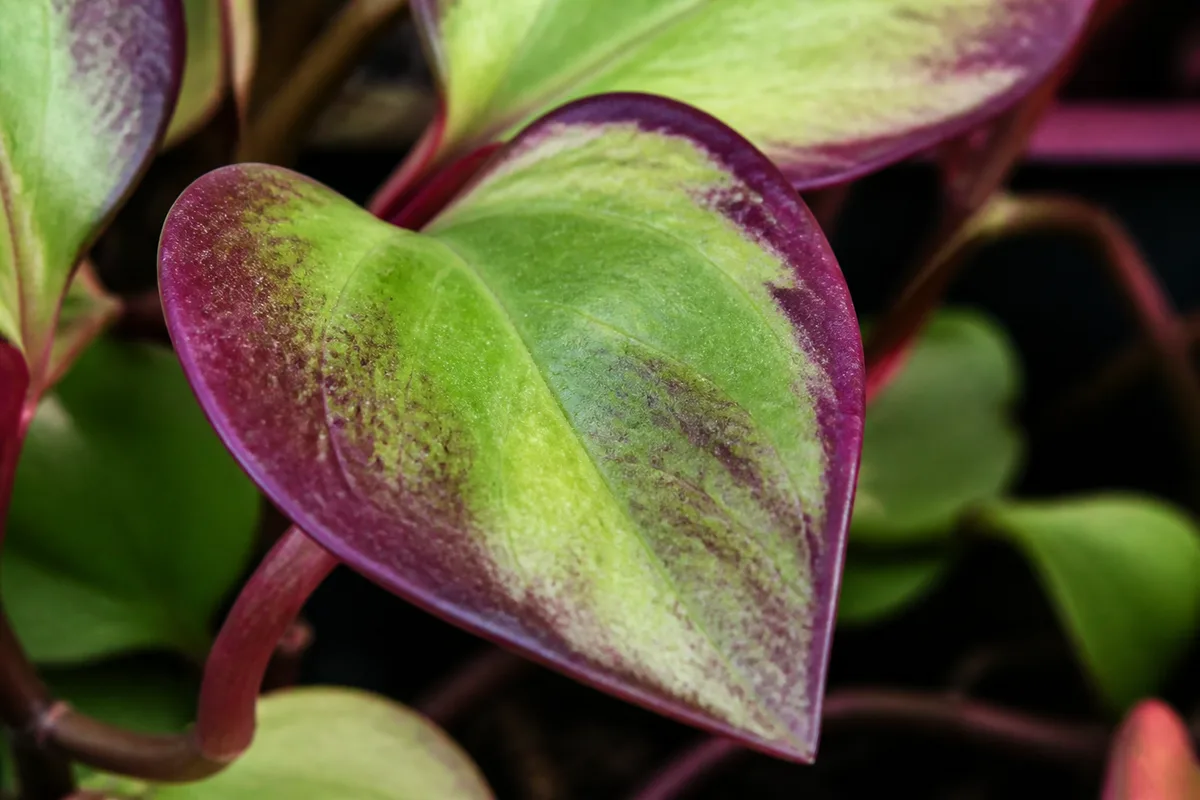
Watch for a directional pattern: the side facing the window or lamp colors first, while shaded interior leaves stay greener. Soften the transition — sheer curtain, move back a foot, shorten daily light hours — and give a week before changing fertilizer. If tips bleach or crisp white-tan, you may be into sunscald territory rather than pigment alone. Pair light corrections with the rest of the diagnosis so you do not miss a cold sill that is also bright.
Bench note (light-jump flush, March 2026): A shade-shelf Monstera deliciosa moved under a brighter south exposure developed a bronze-purple flush on the most window-facing mature leaves within four days. Interior leaves stayed greener. We diffused the light with a sheer curtain and held fertilizer. New leaves over the next three weeks emerged closer to the plant’s normal green; older flushed blades kept some tint but stopped darkening. Directional pattern + recovery on new growth pointed to photoprotection, not a phosphorus bottle.
Root Dysfunction, pH, and Salt Stress
Roots that cannot breathe or absorb will mimic nutrient deficiency on the leaves. Chronically wet mix, compacted peat, circling roots, and fertilizer salt crusts all reduce uptake. Purple older leaves plus a heavy, sour-smelling pot should push you toward root inspection, not a bloom-booster bottle. See overwatered plant when the mix stays wet for days and leaves soften.
Media pH outside a plant’s preferred range can lock nutrients even when the label says the fertilizer contains phosphorus. High soluble salts from repeated feeding without leaching can burn roots and block uptake — another path to “deficiency look” that is actually excess fertilizer stress. Clemson’s indoor fertilizing guidance is a practical baseline for light, containers, and feeding rhythm; match rate to growth season rather than to leaf panic. For balanced feeding habits after the plant stabilizes, use fertilize indoor plants.
Bench note (wet roots mimicking deficiency, February 2026): A pothos in a decorative cachepot without drainage sat soggy for weeks. Older leaves darkened toward bronze-purple while new growth stalled. The mix smelled sour; several roots were brown and soft. We stopped fertilizing, unpotted, trimmed mushy roots, and repotted into a freer mix with a drain hole. Adding phosphorus that week would have stacked salts on a failing root system. New growth resumed after about three weeks of careful watering.
Lookalikes: Potassium Deficiency, Pale Leaves, Cold Damage
Mislabeling every odd color as “phosphorus” delays the real fix. Three lookalikes matter most indoors.
Potassium deficiency usually yellows and scorches older leaf margins rather than painting the whole blade purple. UConn Home & Garden notes potassium symptoms start on older leaves as yellowing and necrosis of the margins, with brown dead edges in severe cases while upper new leaves may stay green. If you see crisp yellow margins without the classic underside vein purple of P stress, do not treat it as the same problem.
Pale leaves point toward light shortage, nitrogen or iron issues, or washed-out variegation — a fading or yellowing story, not a purple pigment story. Use that hub when leaves look washed or chlorotic rather than wine-toned.
Cold damage (see the cold damage symptom hub and the full cold-damage guide below) covers limp, water-soaked, then blackened tissue after drafts, glass contact, or shipping chill. Purple tint from cool nights can overlap the early chilling window; once tissue collapses, you are past pigment and into injury triage.
If several plants on the same sill purple together after a cold snap, environment beats species-specific deficiency. If only one underfed plant in warm, bright conditions stalls with purple older leaves and thin new growth, phosphorus or general underfeeding rises in the ranking.
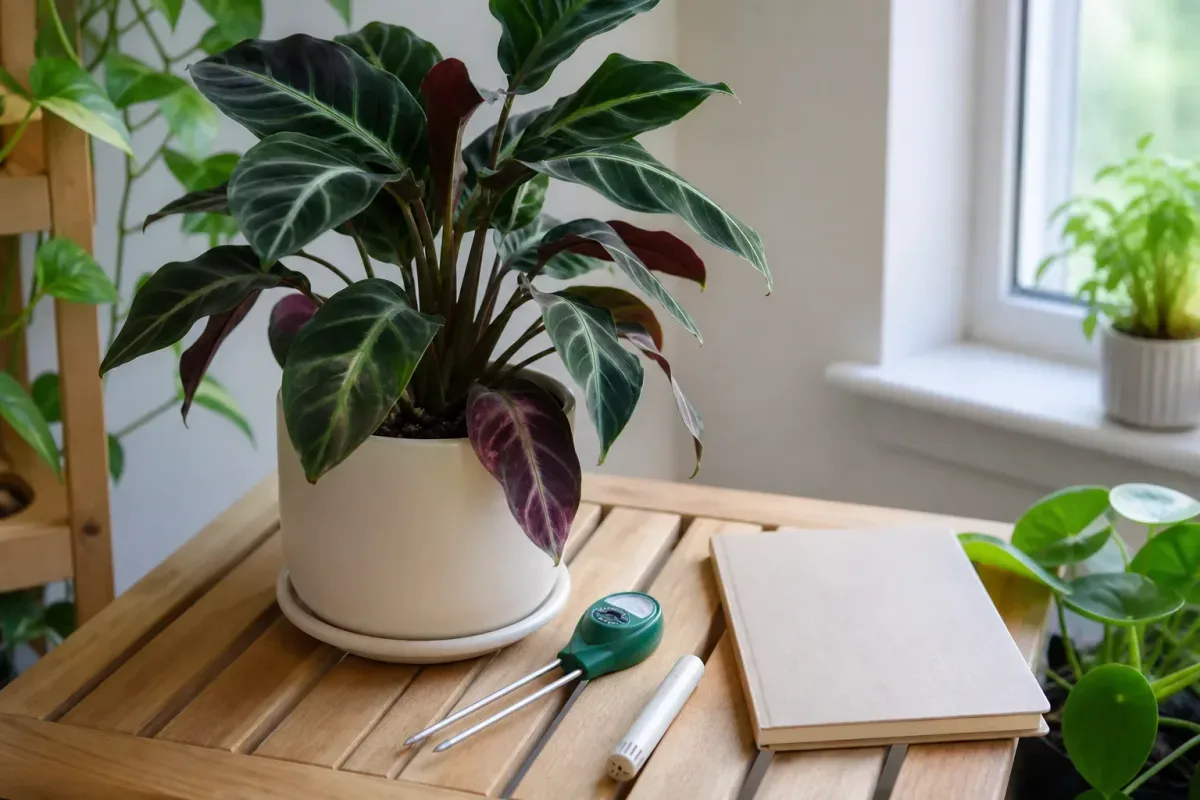
Step-by-Step Diagnosis Checklist
Work this order every time. Skipping to fertilizer is how healthy purple cultivars get burned and cold-injured plants get root rot.
- Identify the plant and cultivar. Is purple normal for this variety?
- Timeline the last two weeks. Move, draft, shipping, grow-light change, fertilizer stop, or repot?
- Map which leaves changed. Oldest lower leaves, newest tips, window-facing side, or whole canopy?
- Feel tissue. Firm tint versus limp, water-soaked, or blackening.
- Check root-zone moisture and temperature. Pot weight, finger test at depth, cold glass contact; thermometer at sill if purple follows cold nights.
- Scan for pests and salt crust. Sticky residue, webbing, or white fertilizer crust changes the plan.
- Only then decide on fertilizer, prune, or relocate.
If the picture is mixed, run the houseplant symptom checker and come back with companion symptoms (yellowing, droop, spots) filled in.
Photograph the plant in the same light each week. Purple that intensifies while new leaves stay tiny after you already warmed the sill is different from purple that fades as soon as the pot leaves the glass. Those two timelines save you from treating a solved environmental issue with another round of salts.
Pattern Table: Where Purple Starts
| Pattern | Likely bucket first | First move |
|---|---|---|
| Always purple since purchase; vigorous new growth | Genetics / cultivar | Stop treating; confirm variety |
| Older leaves purple underneath; stunted new growth; warm plant | Phosphorus / underfeeding | Confirm roots healthy; then balanced feed |
| Purple after cold nights; pot against glass; firm leaves | Cool anthocyanin / uptake lag | Warm placement; wait before high-P products |
| Limp, water-soaked, then dark after a chill | Chilling / freeze injury | Stabilize temp; see cold-damage guide |
| Window-facing flush after a light jump | Photoprotection / light stress | Soften light; watch new growth |
| Purple plus soggy mix / foul roots | Root dysfunction mimicking deficiency | Fix water/roots before fertilizer |
| Yellow/brown leaf edges, not purple veins | Potassium-type pattern | Use potassium-deficiency path, not bloom booster |
Fixes Matched to Cause
Genetics: Enjoy it. Adjust light only if the cultivar’s care guide asks for brighter conditions to keep color saturated. Do not strip “discolored” leaves that are the plant’s normal look.
Cool pigment / cold uptake lag: Move off cold glass, keep foliage from touching panes, avoid door drafts, and use room-temperature water. Give 7–14 days. New growth is your scoreboard.
Chilling injury: Follow cold-damage first aid — stabilize, do not overwater, wait for the live/dead boundary, then remove collapsed tissue. Propagate sound cuttings if the crown fails.
Light jump: Step the plant back or diffuse light. Resume normal feeding only after new leaves look typical for the species.
True underfeeding / P shortage in containers: After roots are healthy and the plant is warm and growing, resume a complete houseplant fertilizer at label rate in the active season. Missouri’s container note still holds: pots need regular complete fertilizer such as a balanced product, not a one-time bone-meal dump. Prefer measured liquid or slow-release complete feeds over guessing with raw rock phosphate in a small indoor pot.
Bench note (true underfeeding after warmth confirmed, April 2026): A neglected pothos in a warm interior spot (overnight pot-rim lows stayed near 64°F) had not been fed for roughly five months of active growth. Older leaves showed firm underside purple along veins; new leaves were small. Roots were firm and the mix drained. After two half-strength complete liquid feeds two weeks apart, new growth over the following month looked larger and greener while older tinted leaves kept some color. Warm roots + older-leaf pattern + feed response on new growth is the only time we treat purple as a fertilizer problem first.
Root / salt / wet mix: Dry the cycle appropriately, leach salts if crusted, improve drainage, and repot only when the plant can handle it. Feeding a drowning root system makes purple worse.
Fertilizer Decisions Without Guessing
Ask three questions before any phosphorus-heavy “bloom booster”:
- Is the purple new compared with this plant’s baseline?
- Are older leaves the main site, with stunted growth, in a warm root zone?
- Are roots firm and the mix oxygenated?
If you cannot answer yes to those, fertilizer is premature. When you do feed, choose a complete NPK product sized for houseplants and follow the label. UConn’s broader advice still applies: visual symptoms can mimic each other, and soil or tissue testing beats endless product swapping when you are stuck. Avoid stacking bone meal, superphosphate, and a bloom booster in the same week — salt load climbs fast in a small pot.
Prevention for Drafty Sills and Cool Seasons
Keep tropical foliage a finger-width or more off winter glass. Use a thermometer at plant height on problem sills. Water with room-temperature water; cold water shocks roots and foliage on sensitive plants (Clemson HGIC notes cold-water spotting on some houseplants). Feed on a growth-season schedule rather than as panic response to every color change. When you bring plants home in winter, protect them from parking-lot and porch chill the same way you would for known cold-sensitive species.
Seasonal context — light drop, dry heat, and watering slowdowns — lives in winter houseplant care. Prevention is mostly placement and timing, not a special purple-leaf tonic.
If you collect tropical foliage, treat late-fall through early-spring as a higher-risk window for false phosphorus diagnoses. Growth naturally slows, rooms run cooler near windows, and people fertilize on a summer schedule. Align feeding with actual growth, keep pots off icy glass, and you will see fewer mystery purples that vanish after one warm week.
Mistakes That Make Purple Worse
Do not assume every purple leaf is phosphorus deficiency. Do not add bone meal to a cold, wet pot and call it a cure. Do not fertilize the day after a chill event. Do not strip every tinted leaf from a purple cultivar. Do not ignore soggy roots because the internet said “add P.” Do not prune cold-blackened tissue on day one before the boundary is clear. Do not stack bone meal, bloom booster, and liquid feed in one week. Each of those mistakes either burns roots, removes functional leaves, or delays the environmental fix that actually matters.
When to Worry and Escalate
Worry less when purple is cultivar-true or a brief cool-night tint on firm leaves. Worry more when purple arrives with stalled growth, thin weak stems, spreading collapse, foul wet media, or black water-soaked patches after a known cold event. Soft crowns, mushy stems, or more than about a third of the canopy declining in a week deserve root checks and possible propagation of clean cuttings.
Lab testing of media or tissue is rarely the first step for a single houseplant, but it is reasonable for collections, expensive specimens, or cases that do not respond after warmth, light, and root corrections. Visual diagnosis has limits — UConn is explicit that disease, drought, excess water, salts, and genetics can mimic nutrient patterns. For ambiguous multi-factor cases, a local extension office or master gardener desk can help interpret media tests without guessing another fertilizer product.
When to Use This Guide vs Nearby Pages
Use this guide when you need deep cross-species triage for unexpected purple or reddish houseplant leaves — genetics vs cool pigment vs chilling vs light vs roots vs true phosphorus shortage — before you fertilize. Use the purple leaves symptom hub for a short cross-species overview and species exits. Use purple leaves on houseplants for the condensed problem-article walkthrough of the same symptom family. Use houseplant cold damage when tissue is limp, water-soaked, or blackening after a known chill. Use fertilize-indoor-plants guidance only after warmth and roots check out. Use overwatered-plant triage when the mix stays wet and roots are soft. Use indoor plant yellow leaves when the story is chlorosis, not purple pigment. Use winter houseplant care for seasonal placement and feeding rhythm. For mixed symptoms, start with the houseplant symptom checker.
Related Guides
- Houseplant cold damage — drafts, glass contact, shipping chill, prune timing
- Purple leaves symptom hub — short cross-species symptom overview
- Pale leaves — chlorosis and washed-out foliage differentials
- Potassium deficiency — margin yellowing/scorch vs purple vein patterns
- Fertilize indoor plants — complete feeds after the plant is stable
- Overwatered plant — wet roots mimicking nutrient stress
- Species examples: African violet, pothos, Monstera deliciosa, Tradescantia
Conclusion
Purple houseplant leaves are a fork in the road, not a single fertilizer ticket. Confirm genetics first, then read leaf age, tissue feel, and the last two weeks of temperature and light. Treat cool anthocyanin and cold uptake lag with placement and patience. Treat chilling injury as tissue damage. Treat true phosphorus shortage only when older-leaf purple pairs with stunted growth in a warm, healthy root zone. Keep potassium deficiency, pale leaves, and cold damage in the differential so you fix the cause that matches the pattern — and let new growth, not panic feeding, tell you the fix worked.