4 Shrubs You Can Prune in December (and 3 to Skip)
Four shrubs may tolerate a December trim, but timing matters. Get the exact cut limits for spirea, weigela, viburnum, and panicle hydrangea plus three shrubs to skip.
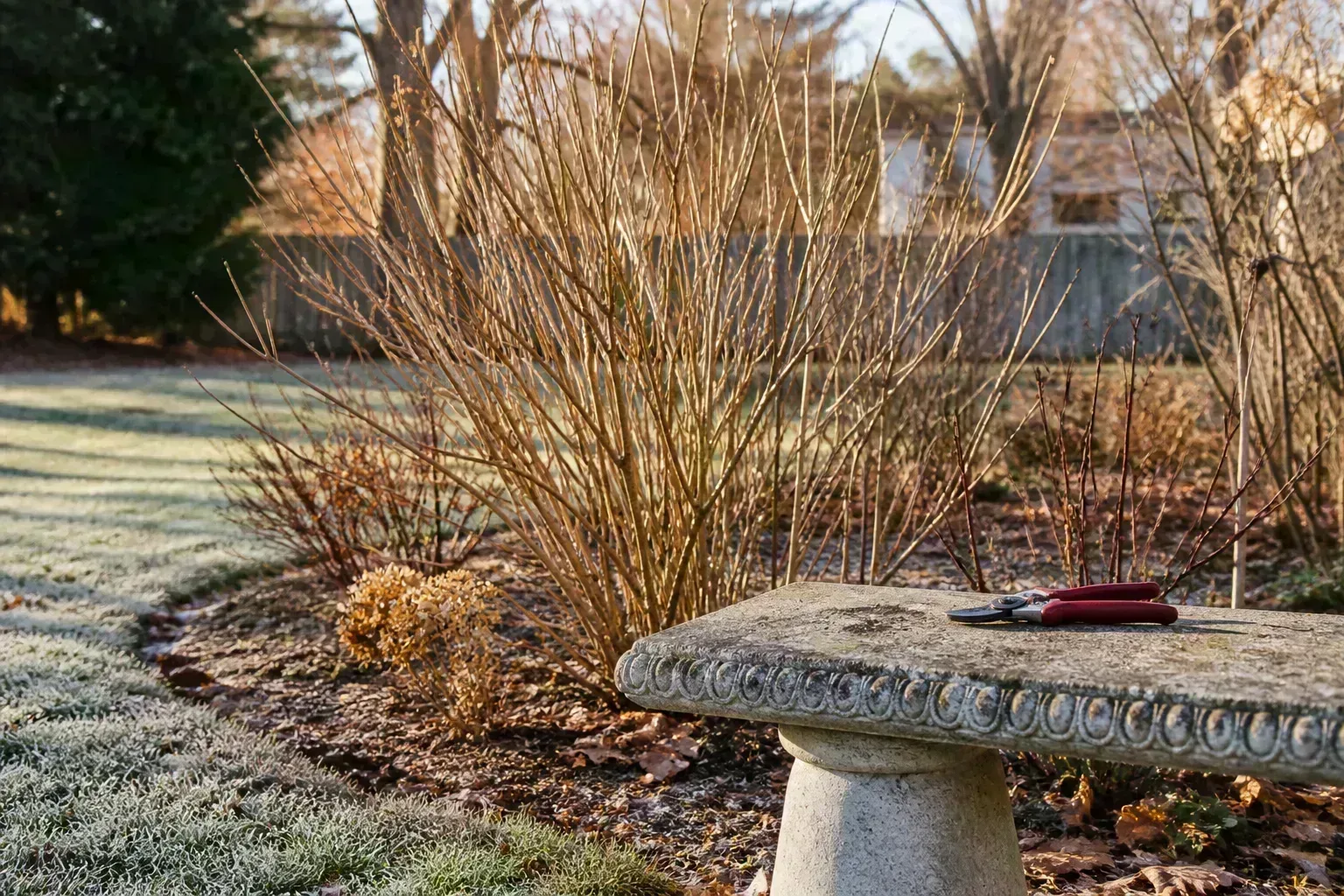
December is a tempting pruning month because fallen leaves reveal the shrub’s framework. You can finally see the branch that rubs, the stub that died back, and the stem leaning across a path. But bare branches do not mean every healthy stem is ready for the shears.
The useful answer is conditional: you can do light, selective work on weigela, some spireas, many established viburnums, and panicle hydrangeas in December—but the cut must match the plant and your weather. Spring-flowering shrubs may already be carrying next season’s flower buds, while a shrub pruned too early can face weeks of freeze with fresh wounds.
This guide gives you a practical December decision rule, then walks through four candidates and three shrubs to leave alone. The goal is not to make every plant smaller before New Year’s Day. It is to remove what truly needs to go, preserve the buds and wildlife value you want, and save major shaping for the window when the plant can respond well.
December pruning quick answer: light cleanup, not a blanket haircut
If a shrub is fully dormant, the ground is not frozen or waterlogged, and the forecast gives you a mild, dry stretch, December can be a good time to remove dead, broken, diseased, rubbing, or genuinely hazardous branches. That kind of maintenance is different from cutting the whole plant down for size. The first job protects structure and health; the second changes the plant’s future flowering and regrowth.
For a healthy live branch, ask what you are trying to accomplish. A single branch blocking a walkway may justify a selective thinning cut now. A dense, overgrown shrub that needs a 30% reduction can usually wait until its recommended pruning season. The Missouri Botanical Garden’s flowering-shrub guidance separates these jobs well: light removal of dead, diseased, crossing, and unwanted shoots is not the same as an annual “haircut.”
There is also a climate distinction. In a mild region, a completely leafless shrub may have a usable dormant window in December. In a colder area, December can be early winter rather than late winter; severe cold may still be ahead. For that reason, consider the four plants below December-tolerant in the right situation, not four commands to cut immediately.
Check dormancy and weather before making a cut
Calendar dates are a useful reminder, but the plant and the forecast are better guides. A shrub that still has green leaves, flexible late-season shoots, or actively swelling buds is not giving you the same dormant signal as a leafless plant that has been resting for weeks.
Use old wood versus new wood as your bloom test
Old wood is a branch that grew before the current winter. Many spring bloomers make their flower buds on those older stems during the previous summer. Cutting a healthy old-wood branch in December may remove the flowers you expect to see in spring, even though the shrub looks dormant and the cut feels harmless.
New wood is the growth a shrub produces after spring growth begins. Summer- and fall-flowering plants that bloom on new wood make their flower buds later, on shoots that have not emerged yet. Pruning those plants while dormant can reset the framework without deleting next season’s flower buds. The RHS pruning groups use this same biology to distinguish early-flowering shrubs, summer hydrangeas, and late-season shrubs.
Flowering time is a useful clue, not a complete identification test. Weigela and bridal-wreath spirea bloom in spring on older branches, while Japanese spirea and some other spireas bloom later on current-season growth. Viburnums vary widely: some flower in winter or spring, some fruit, some keep evergreen leaves, and some need almost no pruning. If you cannot identify the species or cultivar, remove only obvious dead or dangerous wood and postpone cosmetic cuts.
Pick a dry, thawed weather window
Prune on a day when the branches are dry and above freezing, with no major cold plunge immediately afterward. Frozen wood can splinter instead of cutting cleanly, wet bark makes disease transfer easier, and icy footing turns a small shrub job into an avoidable injury. If your forecast shows several nights of unusually hard freeze after a December warm spell, wait for a later window.
The RHS December advice for trees and shrubs allows dormant-season pruning for many deciduous plants but specifically flags tender plants, evergreens, and some hydrangea timing as exceptions. It also recommends leaving old hydrangea flowerheads until later in cold conditions because they help protect the shoots from frost. That is a useful reminder that “dormant” and “ready for a hard cut” are not synonyms.
Before you start, check three conditions:
- The plant: Is it fully dormant, established, and correctly identified?
- The cut: Are you removing a problem branch or reshaping healthy wood?
- The weather: Are the wood and ground unfrozen, dry, and safe to work on?
If one answer is no, stop at deadwood removal or wait. A month of delay is usually cheaper than a spring with no flowers.
Four shrubs that may be pruned in December
These are the four shrubs often offered as December candidates, but each has a different ceiling. The most reliable December work is selective thinning and deadwood removal. Save hard renovation for the plant’s true pruning window unless the shrub’s label, local extension advice, and weather all support doing more.
Weigela: dead, crossing, and wayward branches only
Weigela is a classic spring-flowering shrub that blooms on one-year-old wood. That makes it a poor choice for a December haircut: most healthy stems you shorten may be carrying next spring’s flower display. The RHS classifies weigela with early-flowering shrubs, and Gardening Know How explains that the normal shaping window is after flowering, before the next season’s flowering wood has matured.
So what can you do in December? Start by removing a dead stem at its origin, a broken branch back to sound wood, or a branch that rubs against another. You can also take out one badly placed shoot that is growing into a doorway or splitting the plant’s framework, but make the cut where that shoot joins a larger branch rather than shearing the outside of the shrub.
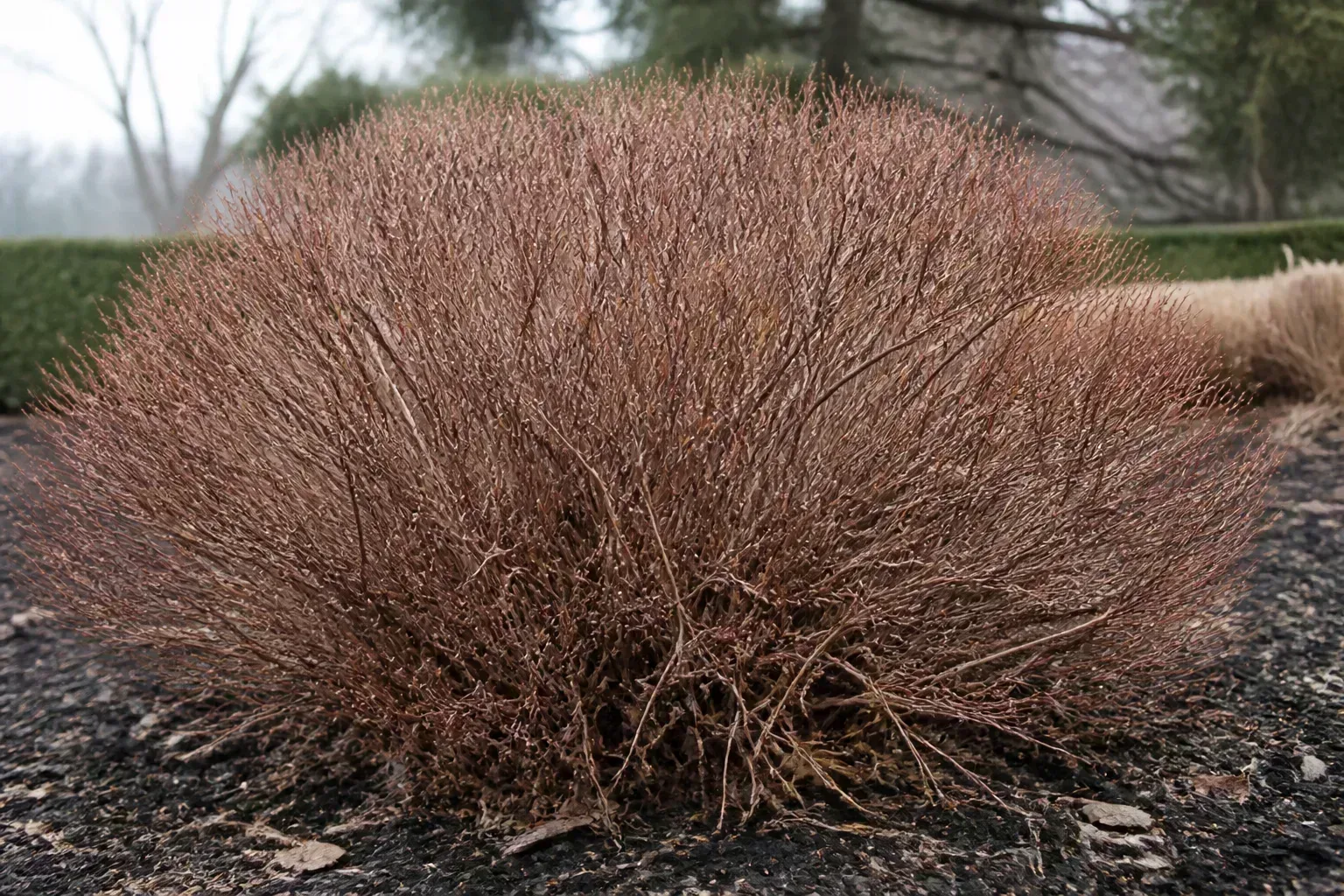
Do not use hedge shears to flatten weigela into a ball. Surface shearing leaves older, flower-bearing wood in place while encouraging a dense shell of weak shoots at the tips. For a neglected weigela, remove up to one-third of the oldest stems at ground level after flowering over successive seasons. That renewal sequence opens the base and keeps the shrub’s natural arching habit without sacrificing every bloom at once.
If the shrub has a few dead-looking tips after a harsh winter, wait until you can see where live wood resumes before removing large sections. Brown twigs are not always dead at the first cold check; scrape a tiny area or bend a small twig to distinguish brittle dead wood from flexible living wood, then make the final cut to a healthy junction.
Spirea: identify the type before shaping
“Spirea” is not one pruning category. Spring-blooming bridal wreath types, including many Spiraea × vanhouttei and S. prunifolia plants, flower on old wood and should be shaped right after they bloom. Summer-blooming Japanese spirea and Bumald spirea flower on new wood and are better candidates for a dormant-season reduction.
The Colorado State University Extension PlantTalk guide makes this distinction practical: spring bloomers are pruned after flowering, while summer shrubs such as Bumald and blue-mist spirea are pruned in early spring. That means a December cut is reasonable only when you have a new-wood type, the plant is fully dormant, and you are doing a modest reset rather than an emergency renovation.
Look at your records before your shears. If the shrub had white flower clusters in early to mid-spring on arching canes, treat it as an old-wood bloomer and wait. If it produced pink or white clusters in summer on fresh, leafy shoots, it is more likely a new-wood type. A nursery tag or cultivar name is better evidence than leaf shape alone, especially with compact hybrids.
For a confirmed summer-blooming spirea, remove dead and weak stems first, then thin out a few of the oldest branches at the base. If the plant needs size control, shorten selected stems by about one-third to an outward-facing bud or side branch. Do not cut every stem to the same height; that creates a flat top, a crowded outer shell, and fewer useful branching points.
If you cannot tell which spirea you own, make December a diagnostic month. Photograph the bare structure, note when it flowers next year, and prune after bloom once its cycle is clear. The shrub will not resent your patience, and you will avoid trading a tidy outline for an empty spring display.
Viburnum: structural cleanup on established shrubs
Viburnum is another name that covers several different pruning responses. Some species are deciduous, some evergreen, some flower in winter or spring, and many make colorful fruits that matter to birds. The RHS viburnum growing guide says many viburnums need little or no regular pruning; some are pruned after flowering, while others are shaped lightly to control height.
That makes December suitable for structural cleanup on an established, deciduous viburnum, not a default hard cut. Remove dead, diseased, or rubbing stems at the base, particularly where congestion traps moisture. If a branch is growing inward through the center or dragging on the ground, trace it to a natural junction and remove the entire branch instead of clipping its end.
Be more conservative with a winter-flowering viburnum, an evergreen viburnum, or a shrub carrying valuable fruit. Pruning a winter-blooming type before it flowers can erase the display; cutting a fruiting stem can remove winter food. If you need to reduce size, wait until after flowering and confirm the species’ response. The right season varies within the genus, so a generic “prune viburnum in winter” rule is too broad to trust.
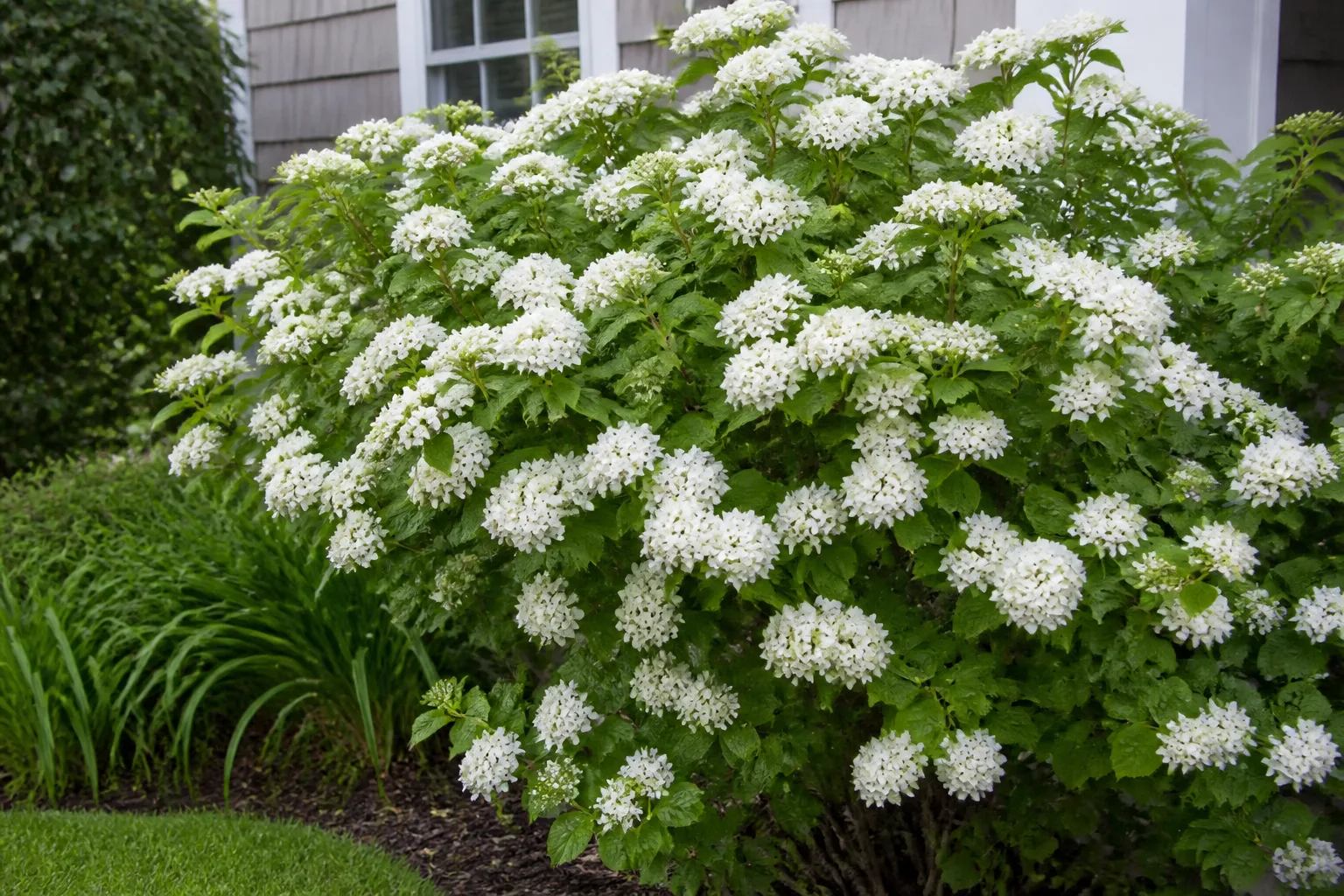
For a crowded deciduous plant, try a renewal approach over two or three seasons. Remove the oldest one or two stems at ground level in the correct post-bloom window, then allow younger shoots to fill the space. This preserves the shrub’s rounded habit and avoids the flush of weak, upright shoots that often follows a severe cut.
Panicle hydrangea: the most forgiving December candidate
Panicle hydrangea (Hydrangea paniculata) is the strongest December candidate in this group because it flowers on new wood. Its summer flower buds form on the current season’s shoots, so dormant pruning does not remove a set of spring flowers the way it can on bigleaf, oakleaf, or many old-wood hydrangeas.
Even here, December is not automatically the best month. North Carolina Extension’s Plant Toolbox notes that panicle hydrangea can be pruned severely in late winter or spring because it blooms on new growth. Proven Winners’ panicle hydrangea guide allows pruning in late fall once the plant is completely dormant, described there as leafless for at least two weeks, or in early spring as new growth begins. In colder climates, the RHS recommends early spring and leaving old flowerheads in place longer for protection.
Use that difference to make a local decision. In a mild climate with a truly dormant plant and no severe freeze coming, remove dead stems, thin weak side branches, and shorten the previous season’s growth by roughly one-third. Cut just above a healthy pair of buds or a strong outward-facing branch, keeping the framework balanced rather than reducing every stem to a uniform stump.
In a cold climate, or when the plant still has attractive dried flowerheads, wait until late winter. The old panicles add winter structure and can shield tender buds from frost. A spring cut also lets you see which stems were damaged by snow or ice and which buds are alive, so you do not prune healthy wood that would have recovered.
Do not use a hard cut as a permanent size-control strategy. A large panicle hydrangea has a large root system and can respond to a severe chop with a flush of long, soft shoots that flop under the summer flowers. If the mature plant is simply too large for its space, move it or replace it with a naturally compact cultivar rather than repeating an oversized cut every year.
Three shrubs to leave alone until after bloom or late winter
“Leave alone” does not mean ignore a branch that threatens a person, roof, or walkway. It means postpone healthy live-wood shaping when the cut would remove flower buds, berries, winter habitat, or weather protection. These three are better handled with a narrow exception rather than a broad December trim.
Winterberry holly: keep berrying branches for birds
Winterberry holly (Ilex verticillata) is a deciduous holly grown for its bright berries after the leaves fall. Those berries are not just decoration: they provide winter food for birds, and the bare stems are part of the plant’s seasonal value. The RHS notes that many viburnums and berrying shrubs can support birds, while Proven Winners’ winterberry guide explains that winterberry forms its next season’s flower buds on old wood and recommends avoiding regular pruning.
Do not thin a female winterberry in December just because the shrub looks crowded. A healthy cut can remove next year’s flowers and, later, next year’s fruit. It also removes the berries birds are using now. If you want branches for an indoor arrangement, take a small number of stems deliberately and accept that those stems will not remain part of the shrub’s future display.
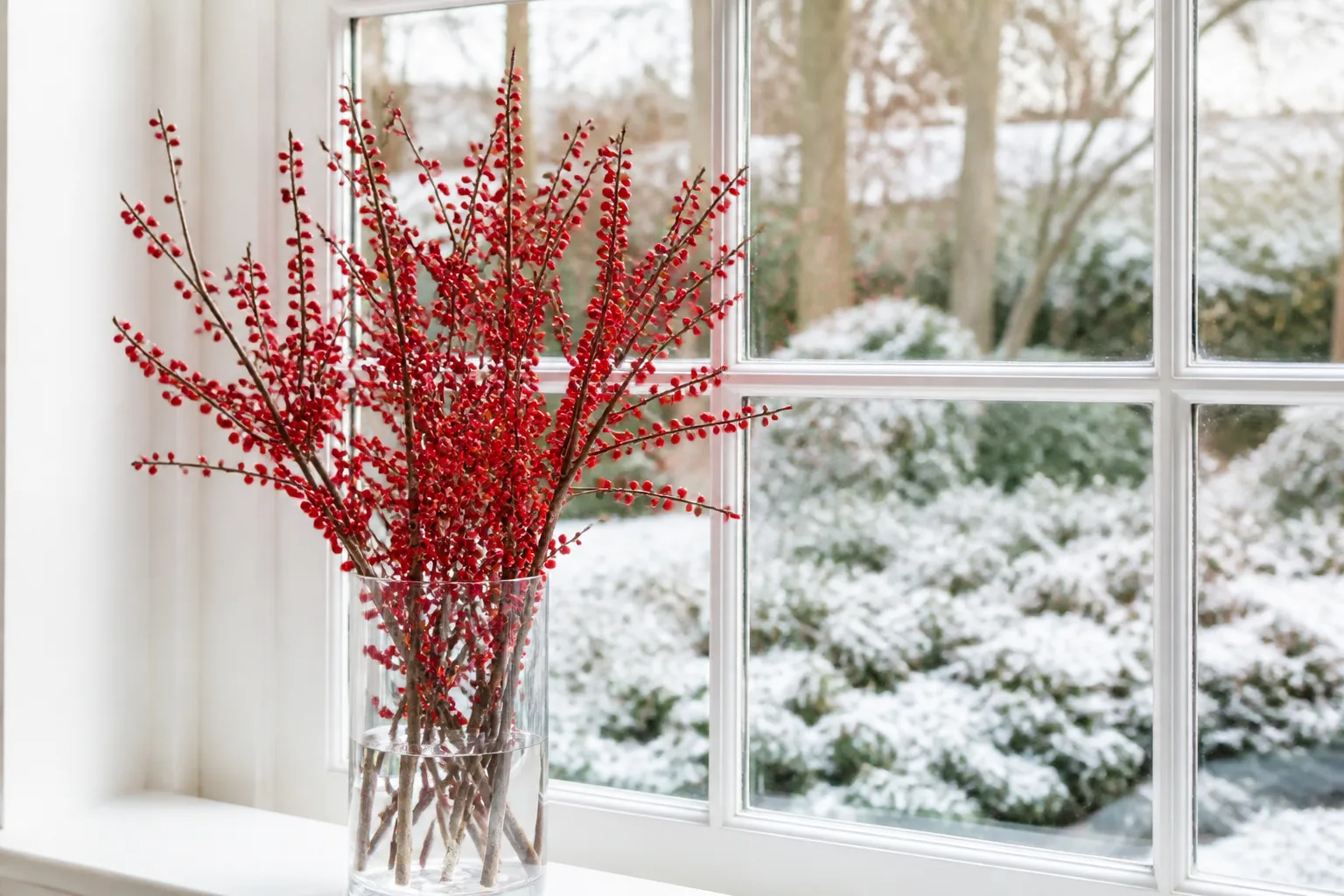
For maintenance, remove a clearly dead or broken branch, then leave the rest until early spring or the species-specific window. If you want more berries, pruning is rarely the first solution: winterberry plants are male or female, and fruiting also depends on a compatible male pollinator, sufficient light, and a site that does not dry out.
Carolina rose: protect dormant cover and live buds
Carolina rose (Rosa carolina) is a deciduous native shrub with a loose, suckering habit. It flowers in late spring to early summer, then makes red hips that feed wildlife. The NC State Extension Plant Toolbox recommends late-winter to early-spring pruning and describes the shrub as year-round wildlife cover with hips eaten by birds and small mammals.
That timing is a good reason to skip cosmetic December shaping. A winter cut can remove live canes before you know which buds will carry flowers, and a heavy reduction can open the protective thicket that small animals use through cold weather. Let the plant keep its natural outline unless a cane is broken, diseased, or invading a place where it creates a genuine problem.
If dead stems are present, do not automatically strip every hollow cane to the ground. NC State’s profile notes that native bees use dead, hollow stems and recommends leaving some standing where practical. Remove unsafe or diseased material, but keep harmless standing stems and hips when your goal is a wildlife-friendly garden.
In late winter or early spring, prune the shrub’s shape with a light hand. Remove the oldest or most awkward canes at the base, shorten a wayward branch to a strong outward-facing bud, and watch for suckers spreading beyond the space you can maintain. Thick gloves are sensible; the thorns are part of the plant’s defense, and they make rushed cuts more likely.
Azaleas: preserve next spring’s flower buds
Azaleas often look like they could use a December tidy because their evergreen leaves can be wind-tossed or their deciduous forms can look twiggy. Resist the urge to reshape live branches now. Azaleas generally set their spring flowers on old wood, and the buds that open next year may already be sitting along the stems.
The practical exception is obvious damage: remove a dead or broken branch back to a healthy junction. For size and shape, wait until flowering finishes in spring. Gardening Etc’s pruning guidance warns against late-summer and fall pruning because it can remove the flower buds forming for the following spring, while the RHS places evergreen-shrub pruning largely in mid- to late spring.
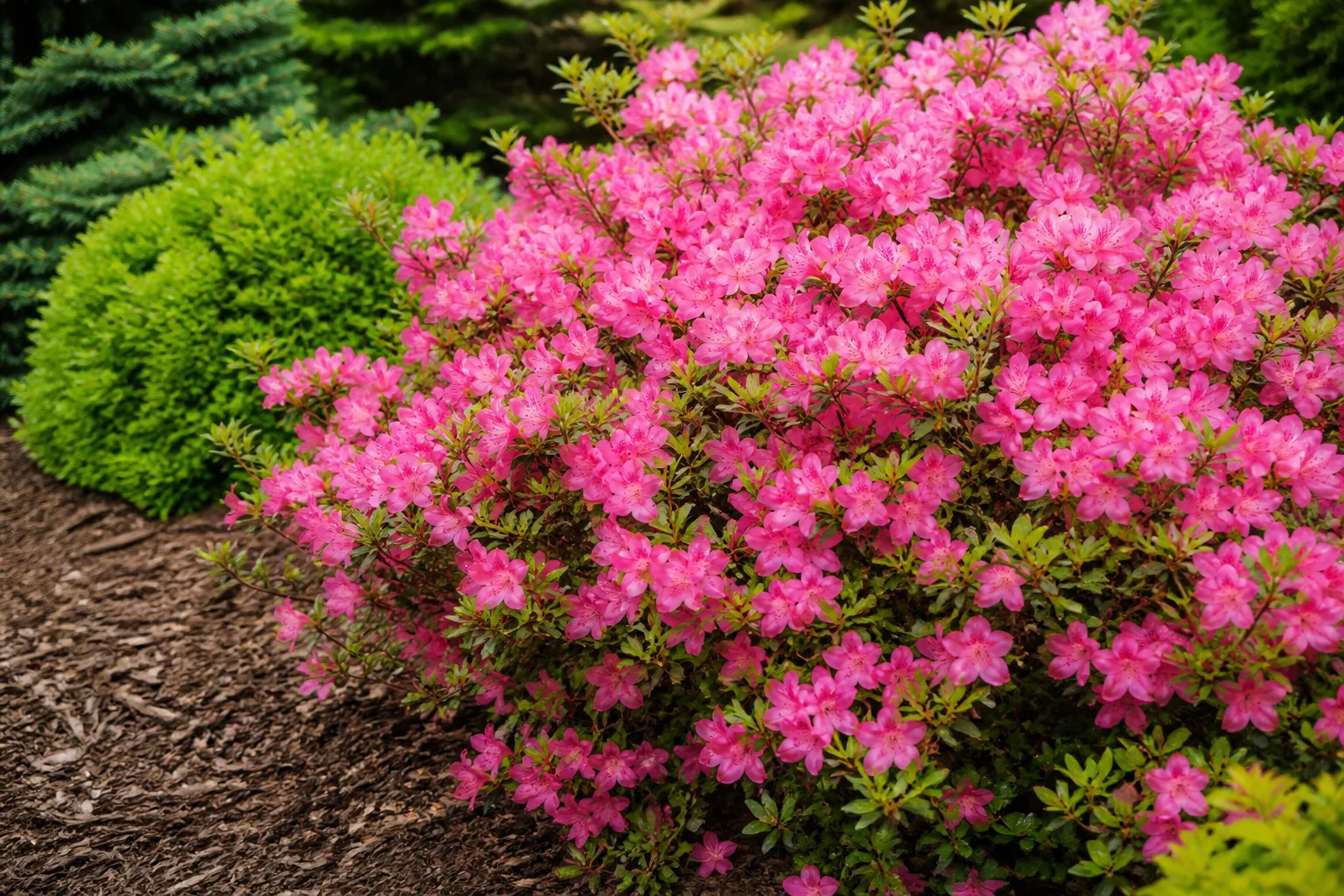
Do not confuse an evergreen azalea with a plant that needs constant clipping. Most azaleas need only occasional thinning to keep light and air moving through the center. If a mature shrub truly needs rejuvenation, make that a planned late-winter or early-spring project and expect a heavy cut to reduce or delay flowering. For a small correction, remove a few whole branches rather than shearing the outside into a dense, flower-poor shell.
How to prune safely in December
Once the plant and weather pass the test, the physical act of pruning is straightforward. The quality of the result comes from choosing the right tool, placing the cut correctly, and stopping before enthusiasm turns a maintenance session into renovation.
Choose cuts and tools that match the branch
Start with sharp bypass pruners for small stems. Their crossing blades make a clean slice instead of crushing the tissue. Use loppers when a branch is too thick for a comfortable, single-motion pruner cut, and switch to a pruning saw for larger wood that would require twisting or repeated pressure. If you need a ladder, the shrub is no longer a casual job; postpone it or call a qualified arborist, especially near power lines.
Use a thinning cut when you want to remove a branch completely. Follow it back to the point where it joins a larger branch or the base, and cut just outside the branch collar—the slight swelling at the union—without leaving a long stub. Use a heading cut when you want to shorten a branch; make the cut just above a healthy bud or side branch that points into the open space where you want growth to go.
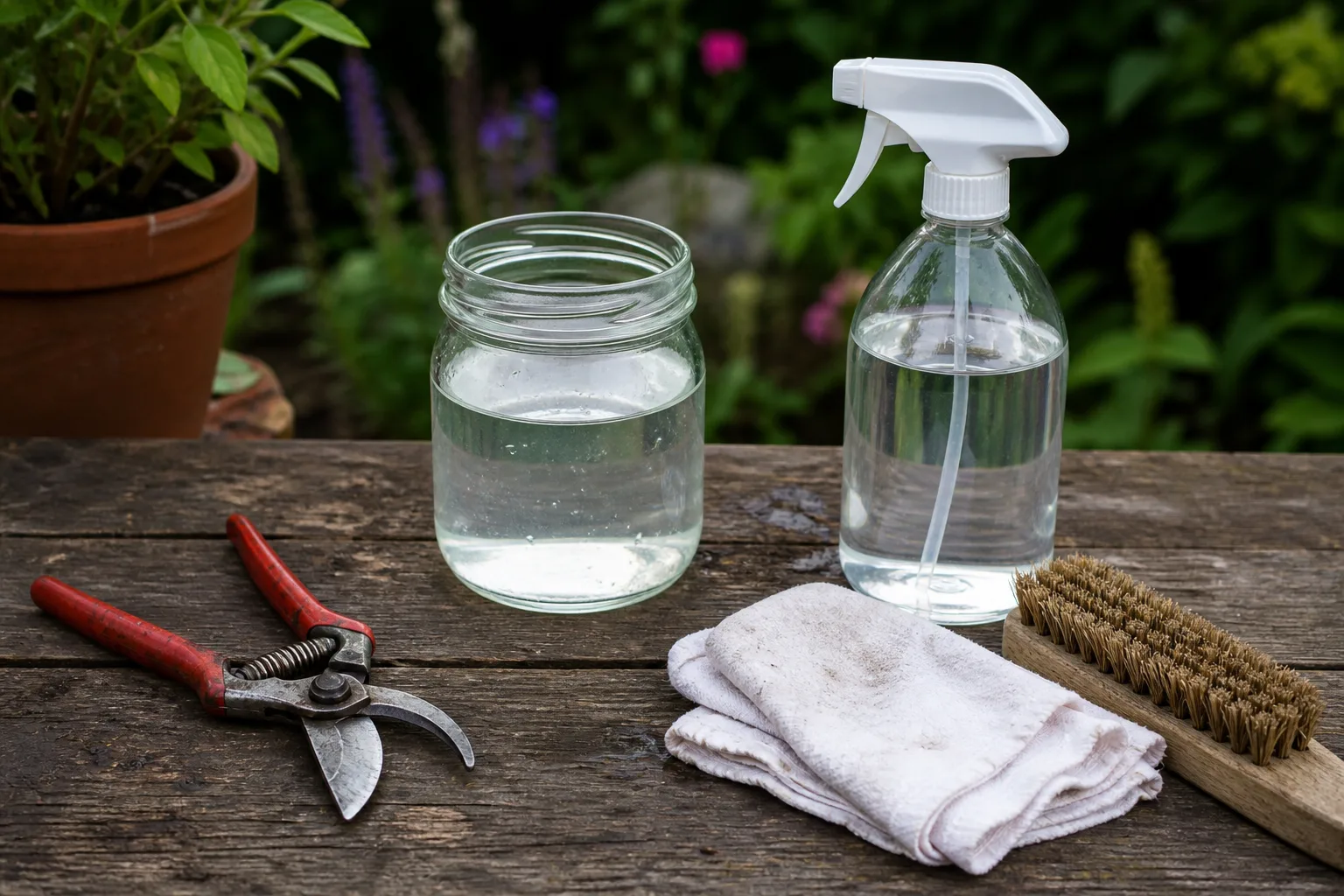
Clean the blades before you start and between shrubs, especially when you remove diseased tissue. Montana State University Extension’s pruning guidance recommends sanitizing tools and using bypass pruners for clean cuts. A household disinfectant or rubbing alcohol can work when used according to its label; remove sap and debris first so the solution can contact the blade.
Do not paint ordinary pruning wounds with a sealant. A clean, correctly placed cut is generally better left to the plant’s natural wound response. Collect diseased branches rather than adding questionable material to a home compost pile, and keep the work area clear so you can step back and evaluate the shrub instead of making every cut from one position.
Stop at the one-third line
For most December maintenance, you should remove far less than one-third of the shrub. Once you start cutting healthy stems for size or renewal, the one-third rule is a useful default: remove no more than about one-third of the live wood in one year, then reassess after the plant responds. Montana State Extension recommends limiting removal to about 30% and staging larger projects across multiple years.
The rule is not a license to remove one-third every winter. On an old-wood shrub, one-third can still mean losing many flower buds. On a newly planted, drought-stressed, or marginally hardy shrub, even a moderate reduction may be too much. On a plant intentionally grown for colorful young stems, a different hard-pruning system may apply—but that is a species-specific plan, not a December shortcut.
Stand back after each major branch. If the center has more light, the remaining stems are spaced naturally, and the shrub still looks like itself, stop. A good pruning session often ends with a smaller pile of branches than you expected because the best cut is the one that solves a real problem without creating three new ones.
What to do after pruning—and when to call it
Leave the shrub’s root zone stable after a December cut. Do not respond by pushing a flush of tender growth with nitrogen fertilizer; the plant is supposed to be resting. Keep mulch a few inches away from the stems, and water only when the soil is dry enough to need it and the ground is not frozen. Newly planted shrubs and plants in exposed sites may benefit more from protection than from additional pruning.
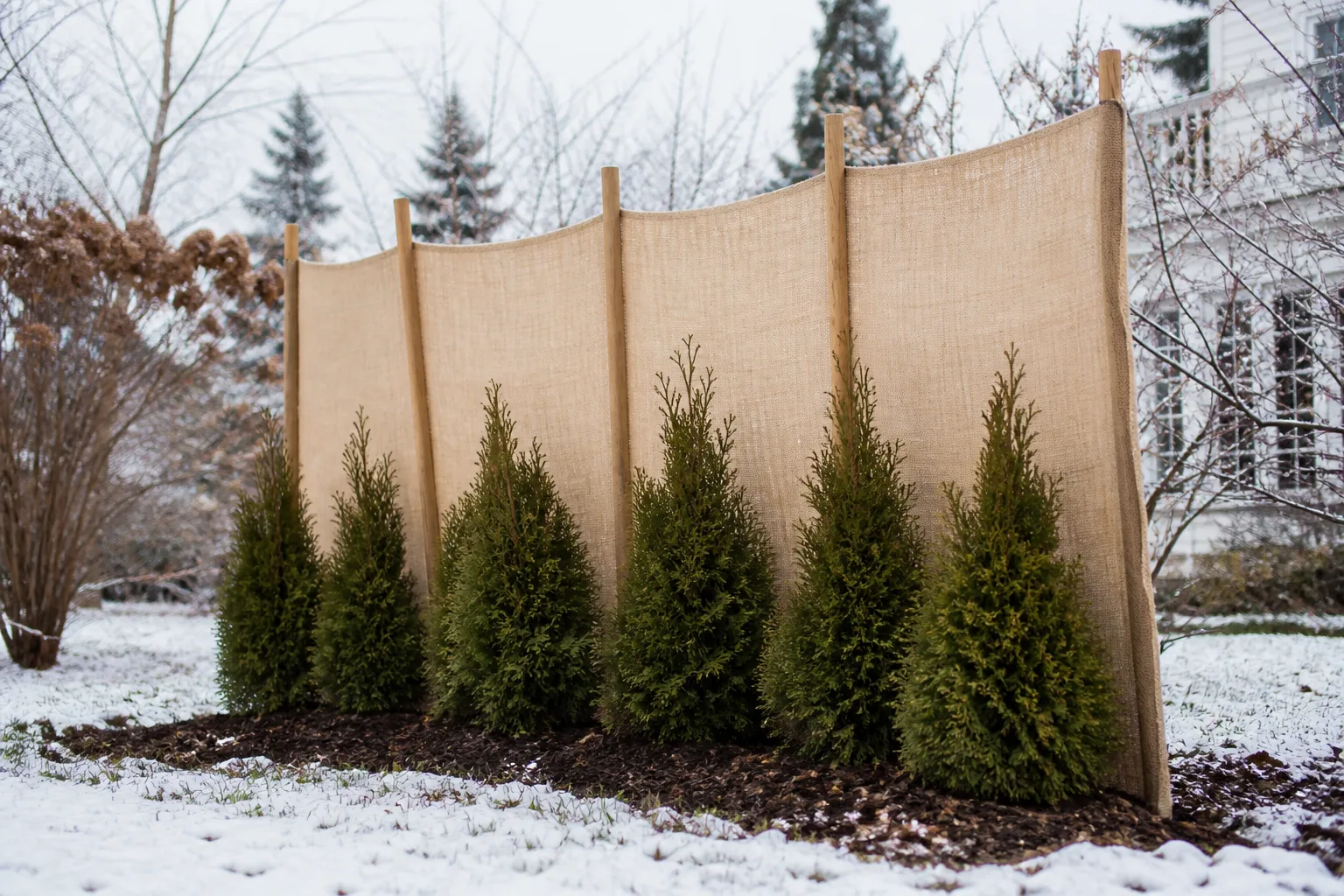
Watch for the things that can turn a careful cut into winter damage: a branch splitting under snow, a fresh cut followed by extreme cold, or an exposed evergreen drying in wind and sun. Tie or support vulnerable branches when appropriate, brush off heavy snow gently rather than shaking the plant, and use a temporary windbreak for a newly planted or tender specimen. Do not wrap foliage tightly or trap wet material against the stems.
Call an arborist for large limbs, branches over a roof or path, work near power lines, unstable trees, or any job that requires climbing. If a shrub has extensive cankers, dieback, or an unknown decline, identify the problem before cutting away large sections. Pruning can remove symptoms without fixing compacted soil, root loss, poor drainage, browsing, or a disease that is still active.
Conclusion
The four shrubs you can still prune in December are weigela, spirea, viburnum, and panicle hydrangea—but only within their biological and weather limits. Weigela and spring-flowering spirea usually get deadwood and selective structural cleanup now, with shaping after bloom. Summer-blooming spirea and established deciduous viburnum can take a modest dormant-season adjustment when their type and flowering cycle are known. Panicle hydrangea is the most forgiving, yet late winter or early spring remains the safer broad recommendation in cold climates.
Leave winterberry, Carolina rose, and azalea largely alone through December so you preserve berries, wildlife cover, and spring flower buds. Whichever shrub you choose, start with dead or damaged wood, use sharp clean tools, make cuts at a natural junction, and stop well before the plant loses its natural framework. The calendar can tell you when to look; the shrub, the forecast, and the purpose of the cut should decide whether you actually prune.



