How to Grow and Care for Society Garlic
Learn to grow society garlic (Tulbaghia violacea): sun, soil, watering rhythm, edible harvest, division, winter care, and cultivar picks for borders and groundcovers.
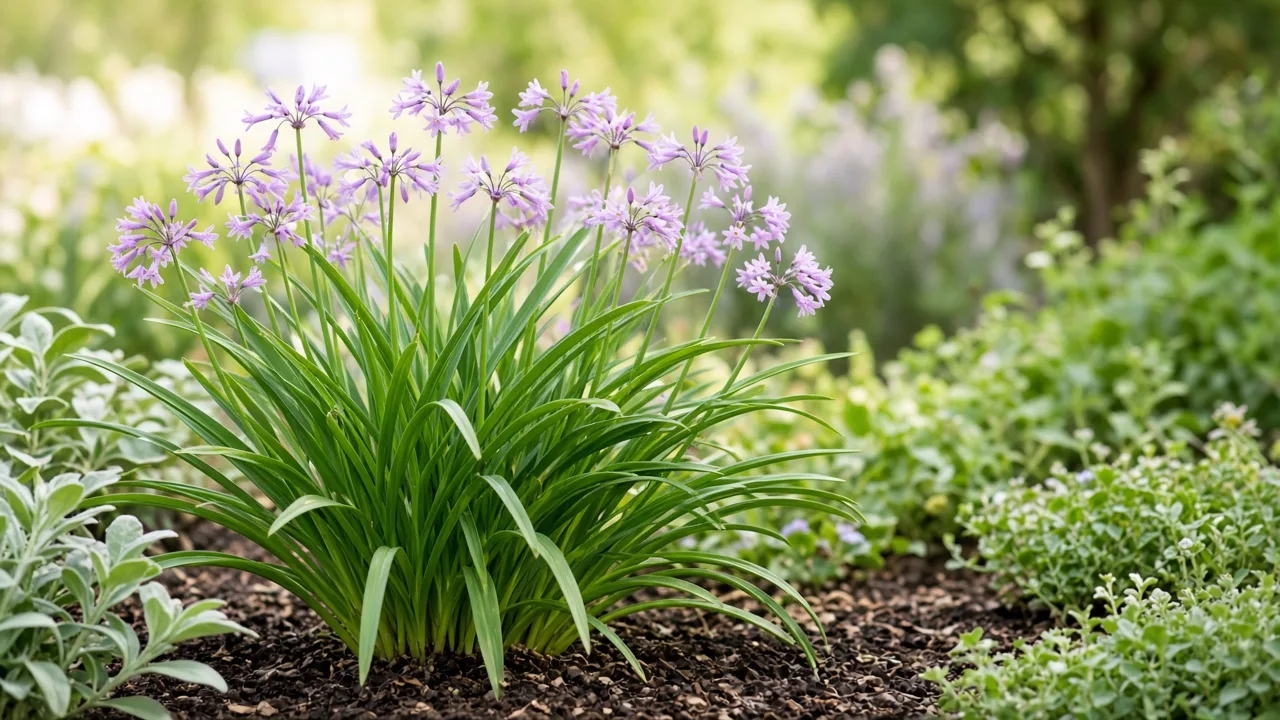
Society garlic (Tulbaghia violacea) looks like a small clump of chive-like foliage until it sends up airy stems of lavender, star-shaped flowers that hummingbirds and bees treat like a buffet. Crush a leaf and the garlic scent confirms the common name — yet the flavor in the kitchen is gentler than true garlic, which is why cooks and herbalists have kept this South African perennial in herb beds and borders for generations.
The plant is not fussy once its roots are established, but it is very particular about one thing: wet feet. Rhizomes that sit in soggy soil rot quickly. Give society garlic full sun, sharp drainage, and a watering rhythm that respects both summer growth and winter dormancy, and you get a low-maintenance edible groundcover that can bloom for months in warm climates.
What Society Garlic Is — and What It Is Not
Society garlic is a clump-forming, rhizomatous perennial in the Amaryllidaceae family. It is often sold beside true garlic and onions, yet it belongs to the genus Tulbaghia, not Allium. NC State Extension notes that gardeners frequently confuse it with garlic chives (Allium tuberosum), which share strap-like leaves but differ in flower structure, root habit, and cold tolerance.
The nickname pink agapanthus describes the flower shape, not the relationship — agapanthus is a different genus entirely. Other market names include wild garlic, sweet garlic, and spring bulbs, which adds to the confusion at the nursery bench. Always check the label for Tulbaghia violacea before you plan spacing or winter protection.
The society garlic name reflects folk wisdom that eating the leaves or flowers adds garlic-like flavor without the lingering breath associated with raw Allium bulbs. That claim is anecdotal, not clinical, but it explains why the plant moved from South African kitchens into ornamental gardens worldwide. The genus honors Rijk Tulbagh, an eighteenth-century governor at the Cape of Good Hope.
Botany, Naming, and Common Look-Alikes
Mature clumps reach roughly 1 to 2 feet tall and wide, with linear green leaves that arch from a tight crown. Flower stalks can push closer to 20 inches above the foliage, carrying terminal umbels of tubular, six-tepaled blooms in lilac, lavender, or pink. The RHS profile describes a strong-growing rhizomatous plant to about 50 cm with grey-green basal leaves and fragrant pale purple flowers in late summer and early autumn — timing shifts earlier in frost-free regions.
If you need a quick comparison at the garden center: garlic chives produce flat, solid leaves and white umbels; society garlic has rounder, more grass-like foliage and pink-purple flowers on slender scapes. Both smell like garlic when bruised. Only society garlic gives you the lavender ornamental show with the same edible-herb habit.
Society Garlic at a Glance
| Feature | Practical target |
|---|---|
| Botanical name | Tulbaghia violacea |
| Type | Rhizomatous bulbous perennial |
| Mature size | 12–24 in. tall × 12–24 in. wide |
| Hardiness | USDA zones 7–10; RHS H3 (frost-tender in harsh winters) |
| Light | Full sun for best bloom; tolerates partial shade |
| Soil | Well-drained loam or sandy soil; pH roughly 6.8–7.5 |
| Bloom | Late spring through fall in warm areas; peak summer–autumn in temperate gardens |
| Water | Moderate while growing; reduce during bloom; minimal in dormancy |
| Edible parts | Leaves and flowers (mild onion–garlic flavor); rhizomes used sparingly |
| Key strengths | Drought tolerance, deer resistance, salt tolerance, long bloom season |
| Main risk | Root rot from overwatering or heavy clay |
Use the table as a planning snapshot, not a substitute for seasonal adjustments. A container on a hot patio dries faster than a mass planting under eaves, and bloom months stretch longer in zone 9 than in zone 7.
Choosing the Right Site
Site selection matters twice with society garlic: once for flower power, and once for human traffic. Leaves release a noticeable garlic aroma when brushed, which deer avoid but some people find strong along narrow paths. UNF Botanical Garden recommends full sun and well-drained soil for easy performance in northeast Florida — the same principles apply anywhere the plant is hardy.
For ornamental impact, place clumps where the flower stems backlit at dawn or dusk. For culinary use, tuck plants inside the herb garden where you will harvest often anyway. For groundcover, choose a bed you can keep weed-free for the first year while clumps fill in.
Light, Soil, and Drainage
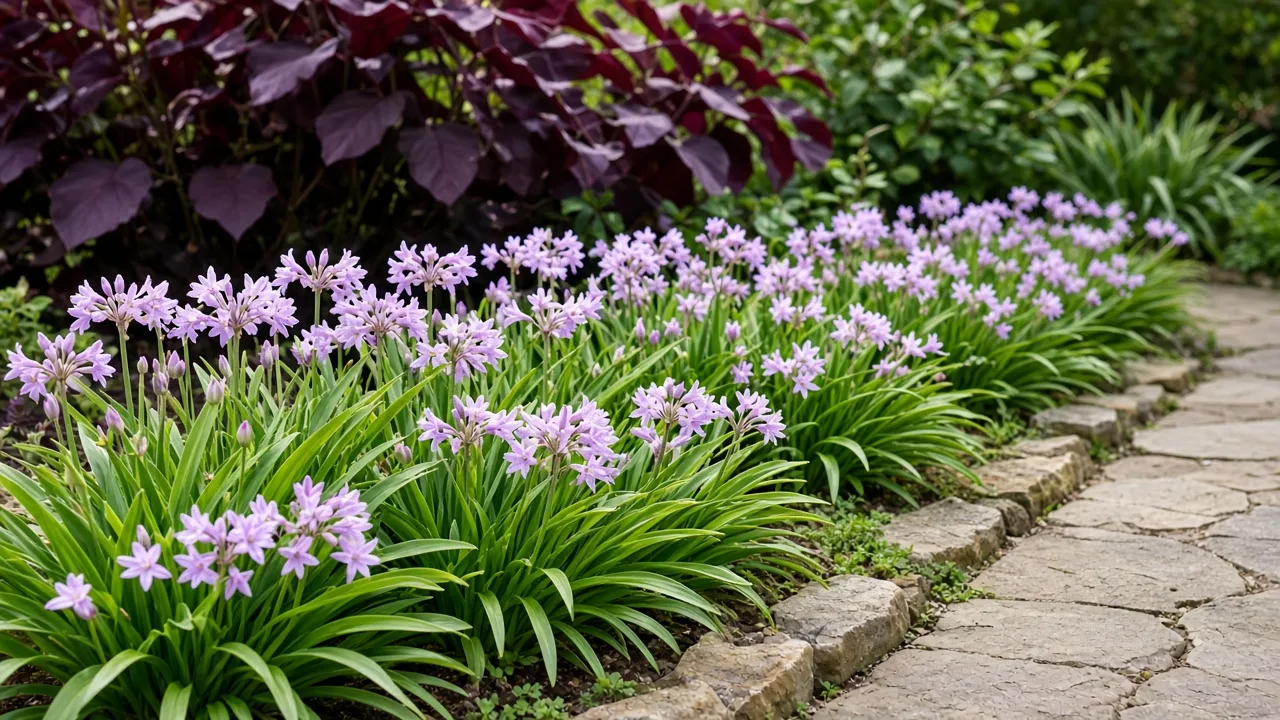
Light: Aim for at least six hours of direct sun daily if you want heavy flowering. Society garlic survives in partial shade, but bloom count drops and stems stretch. NC State Extension lists both full sun and partial shade as acceptable, with the understanding that shade equals fewer flowers.
Soil: Sandy loam is ideal. The plant adapts to clay only if you amend for drainage — raised beds, gravel mulch, or berm planting beat digging a hole in heavy soil and hoping. pH between 6.8 and 7.5 (near neutral) matches most garden soils without special acidifying.
Drainage test: After a hard rain, the root zone should not hold puddles for hours. If water pools, move the planting uphill or mix coarse sand and compost into the top 8–12 inches before setting rhizomes.
Planting Society Garlic Step by Step
Spring planting, after soil warms and frost danger passes, gives the easiest start in zones 7–8. In frost-free zones, fall planting also works and can align with division timing. You can start from nursery pots, shared divisions, or seed, though seed is the slowest route to a flowering clump.
From containers: Dig a hole as deep as the root ball and slightly wider. Set the crown at the same level it grew in the pot — burying too deep invites rot. Water in thoroughly, then let the surface dry before the next soak.
From divisions: Tease apart rhizome sections with healthy roots and at least a few leaves. Trim foliage by half if roots were damaged during digging; this reduces transplant shock while new roots grow. Replant immediately at the original depth.
From seed: Sow in warm soil after frost. Germination is relatively quick, but seedlings need a season or two to build rhizomes large enough for regular harvest. Thin to final spacing when plants are a few inches tall and roots hold soil.
Use pots at least 8 inches deep if you are growing in containers. Rhizomes need vertical room, and shallow bowls dry out unevenly on hot days.
Spacing for Borders vs Groundcover
For border accents, space individual clumps 15–18 inches apart center to center so mature foliage does not overlap neighbors. For groundcover, the same spacing applies initially; over three to five years, rhizomes merge into a continuous mat you can divide to control spread.
Society garlic spreads by rhizomes, but it is not an aggressive invader in most gardens. Expect slow lateral growth the first year, then noticeably faster fill once established. Weed diligently early on — the low, strappy leaves do not shade out tall weeds until clumps knit together.
Watering and Fertilizing Through the Seasons
Established society garlic is drought tolerant, yet it flowers most generously when soil moisture stays even through the active growing season. The mistake to avoid is treating drought tolerance as a license to ignore water all summer, then drowning the plant when flowers fade.
Spring (active growth): Water deeply when the top 2–3 inches of soil feel dry. Deep soaks encourage roots downward; light daily sprinkles keep roots shallow and rot-prone.
Summer (peak heat): Maintain the same dry-down rule. In container culture, you may water every two to three days on a windy patio; in-ground plantings often need weekly deep irrigation during dry spells.
Fall: Taper as growth slows. In zones with mild winters, foliage may stay evergreen with occasional drinks during dry weeks.
Winter: Allow soil to approach dry during dormancy. Rhizomes store moisture; constant winter wet is a common kill switch in marginally hardy zones.
The Bloom-Period Dry-Down
Experienced growers often slightly reduce watering while umbels are open. Excess moisture during peak bloom can shorten the display or push energy into foliage instead of flowers. This is a fine-tuning step, not a drought stress test — wilted leaves mean you pulled back too far.
Fertilizer: Society garlic does not demand heavy feeding. Work 2–3 inches of compost into the soil surface each early spring. That single organic boost supports leaves and flowers without the soft, floppy growth excess nitrogen causes.
If soil is very poor (rock gardens, sandy fill), a slow-release balanced fertilizer (such as 5-10-10) mixed lightly into the top few inches alongside compost is reasonable. Skip mid-summer nitrogen pushes; they rarely improve bloom and can attract aphids on tender new leaves.
Hardiness, Frost, and Winter Care
NC State Extension lists USDA zones 7a through 10b as suitable for in-ground culture with adequate drainage and, in colder pockets, winter mulch. The RHS rates the plant H3, meaning it needs protection in all but the mildest areas — treat that as a reminder that wet cold kills faster than dry cold.
Zone 9–10: Foliage often stays evergreen. Remove frost-nipped leaf tips after cold snaps for tidiness; new growth follows quickly.
Zone 7–8: Expect top growth to die back after hard freezes. Apply 3–4 inches of dry mulch (straw, shredded leaves, pine needles) after the ground cools, keeping mulch off the crown to prevent rot. Pull mulch back in early spring.
Below zone 7: Grow in containers and move to a cool bright room for winter, or treat as an annual replacement. Unheated garages that dip below freezing without protection will damage rhizomes unless pots are heavily insulated.
After light frost, trim damaged foliage to the ground. The plant rebounds from the rhizome if roots stayed dry and intact.
Overwintering Containers in Cold Climates
Choose frost-proof pots with drainage holes. Before the first hard freeze, move containers to a 40–50°F (4–10°C) space with bright indirect light — a cool sunroom or unheated porch that does not freeze solid works. Reduce watering to occasional sips; dormant rhizomes tolerate dry soil for weeks.
Do not fertilize dormant plants. Resume normal watering and a compost top-dress when you see new green shoots in spring, then move pots back outdoors after frost passes.
Edible Uses and Harvest Timing
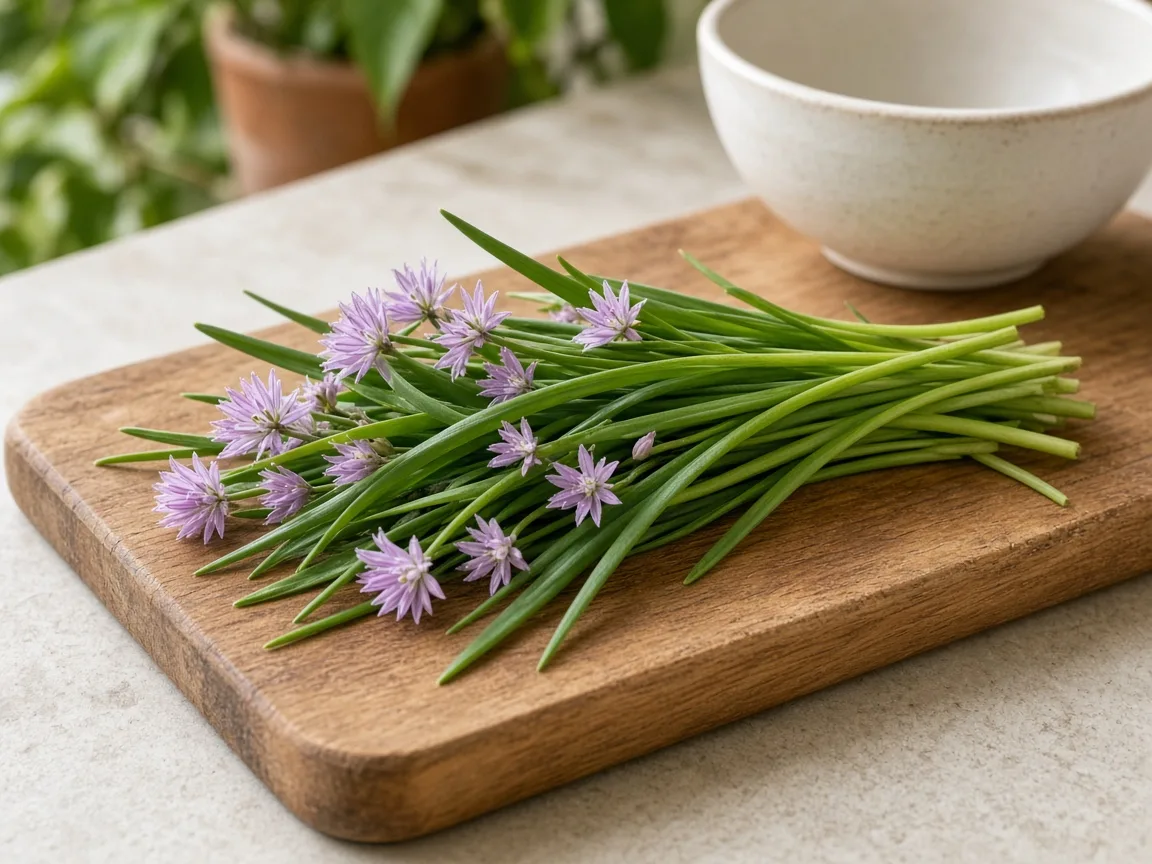
Leaves and flowers are edible with an onion-to-pepper flavor profile. NC State Extension lists flowers and leaves for soups and salads; flowers add color as well as flavor. Use leaves like garlic chives: snip outer blades near the base, never removing more than one-third of the clump at once.
Flowers are best fresh — garnish salads, eggs, or potato dishes the day you pick them. Leaves work fresh or dried; hang washed bundles in a warm, airy spot for about a week if you want winter pantry jars.
Rhizomes are traditionally used in some cuisines but contain concentrated sulfur compounds. Culinary guides including Epic Gardening’s society garlic overview recommend favoring leaves and flowers and limiting rhizome intake to small amounts until you know your tolerance. This is sensible caution, not alarm — the same garlic chemistry that deters deer can upset a stomach if you eat large quantities of any allium-type plant.
Wait until plants have at least one full growing season before heavy harvesting. Young divisions need foliage to rebuild rhizomes.
Best Cultivars and How They Differ
Species society garlic is already excellent, but named selections add variegated foliage or shifted bloom windows.
| Cultivar | Foliage | Bloom | Notes |
|---|---|---|---|
| Species (T. violacea) | Green, grass-like | Lilac–lavender, long season | Most common; best all-round performer |
| ’Silver Lace’ | Blue-green with white margins | Lavender; spring peak | Dies back in hot summer in some climates; strong contrast plant |
| ’Variegata’ | Green and white striped | Lilac-pink | Deer resistant; blooms into fall in mild areas |
| ’Tricolor’ | Silvery-green with pink-white edges | White, pink, and purple tones | Compact to about 2 ft.; early spring flowers |
When choosing, match bloom timing to your design. If you need summer color beside black mondo grass or dark sedums, the straight species or ‘Variegata’ usually outlasts ‘Silver Lace’ in hot-summer regions where variegated forms rest midseason.
Propagating by Division (and Seed)
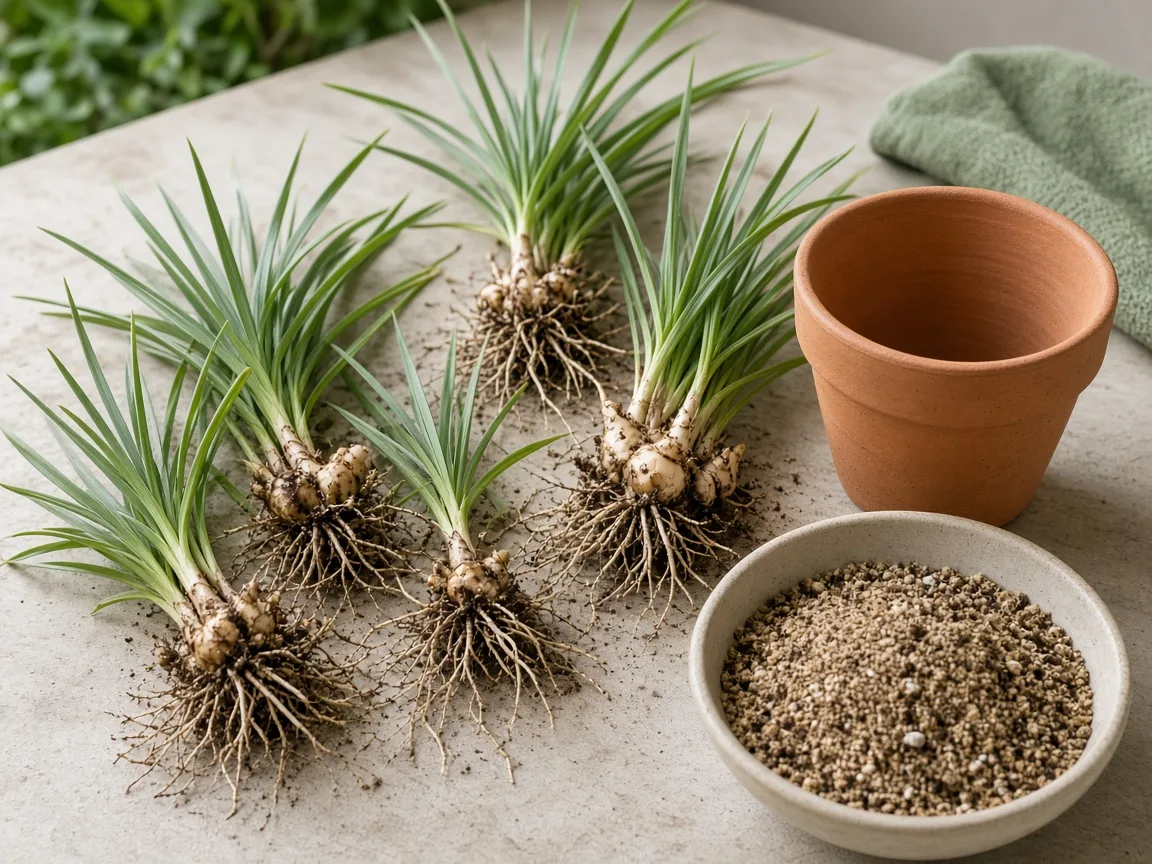
Division is the reliable method. Every two to three years, dig overcrowded clumps after flowering in late autumn or early winter while soil is workable. Lift the rhizome mass with a fork, split sections by hand or with a clean knife, and replant at the same depth.
Each division needs roots plus several living leaves. Trim leaves halfway to balance root loss, water once, then follow normal dry-down watering. Divisions often skip a heavy bloom year while resetting — plan extra plants if you need continuous flower coverage.
Seed propagation is possible: collect dried capsules, sow in sandy mix, and keep warm and bright. Seedlings vary slightly from parents and take patience. For identical cultivars, division — not seed — preserves variegation.
Groundcover, Borders, and Pond-Edge Planting
In borders, society garlic excels at the front edge where low height will not hide taller perennials. Pair with dark foliage — ophiopogon, purple heuchera, or bronze carex — for contrast that makes lavender flowers pop.
As groundcover, it handles foot traffic poorly because of the scent release, so keep it off main paths. It shines along walkway margins you do not brush constantly, or between stepping stones spaced wide enough that stems, not leaves, sit underfoot.
For pond margins, plant on the bank where soil stays moist but never submerged. Pond Informer’s Tulbaghia guide emphasizes moist well-drained bank soil rather than standing water — society garlic evolved on savanna grasslands with seasonal rain, not permanent inundation. Offset plantings slightly from splash zones if compost runoff into the pond is a concern.
Salt spray tolerance makes society garlic useful in coastal courtyards when drainage is sharp. Inland, the same trait helps near salted winter walkways if you rinse foliage in spring.
Pests, Diseases, and Quick Fixes
Serious disease is uncommon outdoors. Root rot from overwatering or heavy clay is the primary killer — yellowing, mushy bases, and a sour soil smell are clues. Stop watering, improve drainage, and divide out healthy outer sections if the center is lost.
Slugs and snails may notch leaves in damp shade. Handpick at night, use iron phosphate baits if needed, or improve air circulation by thinning crowded divisions.
Aphids and whiteflies appear mainly on greenhouse or indoor overwinter plants. A strong water spray dislodges early colonies; insecticidal soap follows label directions if pests persist.
| Symptom | Likely cause | First fix |
|---|---|---|
| Few or no flowers | Too much shade | Move or prune overhanging branches |
| Mushy crown | Wet soil | Improve drainage; divide healthy parts |
| Brown leaf tips after freeze | Cold damage | Trim; mulch before next winter |
| Sticky leaves indoors | Aphids/whiteflies | Rinse; isolate from other houseplants |
| Slow groundcover fill | Weed competition | Mulch and hand-weed until clumps merge |
Deer and rabbits generally avoid the garlic-scented foliage. That resistance is a major reason society garlic replaces true alliums in unfenced suburban beds.
Conclusion
Society garlic rewards a simple contract: sun, drainage, and seasonal watering you adjust instead of autopilot. Plant it where the lavender umbels will matter visually and where brushed leaves will not bother you on daily walks. Feed lightly with compost, divide every few years, and harvest leaves and flowers with restraint while clumps mature.
Get those basics right and Tulbaghia violacea becomes one of the most useful dual-purpose plants in a warm-climate garden — ornamental enough for the front border, tough enough for dry banks, and flavorful enough to earn a permanent spot in the herb patch. In colder zones, a deep pot and a cool winter room keep the same plant going year after year without replacing it like an annual.



