Robellini Palm Care for Healthy Indoor and Outdoor Growth
Learn how to grow a Robellini palm indoors or outdoors with practical guidance on light, watering, soil, feeding, safe pruning, repotting, and common problems.
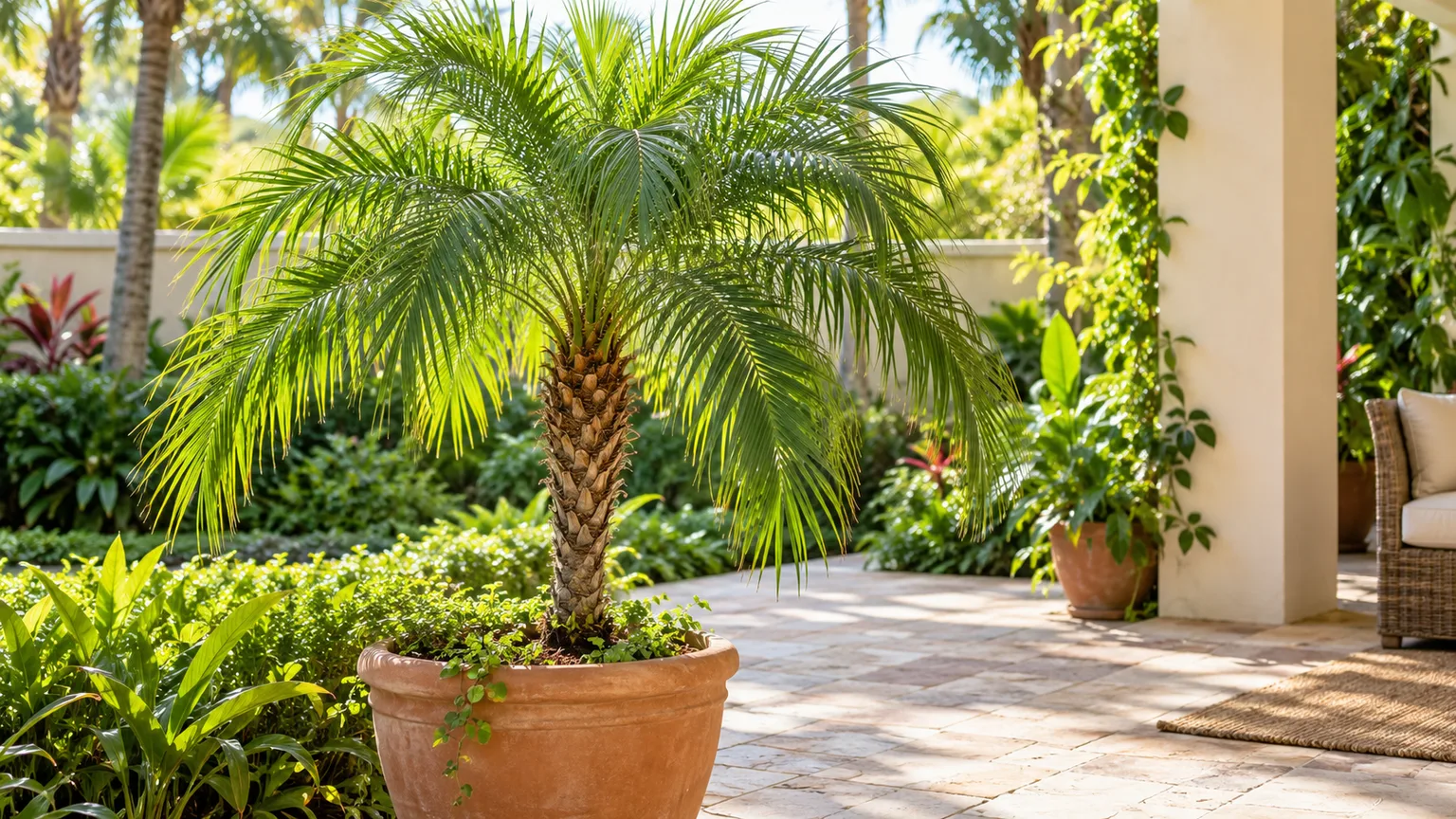
A Robellini palm (Phoenix roebelenii), also called a pygmy or miniature date palm, is a small, slow-growing feather palm with a narrow trunk and arching, finely divided fronds. It can live for years in a container or make a compact landscape accent in a warm climate, but it is not a miniature version of every palm-care routine: its sharp spines, sensitivity to cold, and species-specific nutrient problems deserve attention. NC State Extension describes its riverbank habitat and container use; UF/IFAS Extension gives practical landscape dimensions and documents common palm deficiencies.
The most reliable care plan starts with the plant’s setting. Indoors, give it bright filtered light and water when the mix begins to dry; outdoors, prioritize warmth, drainage, and a site where the palm can be protected from hard cold and salt spray. A calendar can remind you to inspect the plant, but it cannot replace checking the soil and the newest and oldest fronds.
Robellini Palm Care at a Glance
| Need | Practical starting point |
|---|---|
| Light | Bright indirect light indoors; full sun to partial shade outdoors after gradual acclimation. |
| Water | Water thoroughly when the upper layer of mix begins to dry, then let the pot drain completely. Check more often in warmth and less often in cool, dim conditions. |
| Soil | Moisture-retentive but open and fast-draining; a container must have unobstructed drainage holes. |
| Temperature | Best treated as a warm-climate palm. UF/IFAS lists it as cold hardy around USDA zone 10A while noting that it is also grown in 9B landscapes. |
| Feeding | Use a palm fertilizer with potassium, magnesium, and micronutrients; follow the label and avoid repeated high-nitrogen feeding. |
| Repotting | Infrequent. Move up only when roots crowd the pot or the mix breaks down, and disturb the root ball as little as possible. |
| Pruning | Remove fully brown dead fronds only. Protect hands and eyes from sharp spine-like leaflets near the frond bases. |
Treat this as a starting point rather than a prescription. A palm in a small nursery pot beside a warm window will dry faster than one in a large cachepot in a cool room, and an outdoor palm in sandy soil behaves differently from one planted in heavy, poorly drained ground.
What a Robellini Palm Is—and Where It Fits
The species name is Phoenix roebelenii. “Robellini” and “pygmy date palm” are common nursery names for this same species, not separate care categories. Its fine, arching feather fronds and slender trunk usually stay more compact than those of larger date palms, which is why the species appears in patios, small yards, conservatories, and indoor plant collections.
In its native range across southern China and parts of Southeast Asia, NC State Extension notes that the palm grows along fast-moving rivers. That habitat is a useful clue: it can use consistent moisture, but its roots are not adapted to sit in stale, oxygen-poor water. The drainage requirement is as important as the watering requirement.
A mature landscape specimen may reach roughly 12 feet tall and 6–8 feet wide under favorable conditions, according to UF/IFAS. Indoors, growth is generally slower and a container plant may remain around 5–6 feet, though age, light, and pot size change the result. Do not buy one expecting a tabletop palm or assume a small nursery specimen will remain that size forever.
Robellini palms are often sold as a cluster even though an individual cultivated trunk is generally solitary. The natural species can form basal shoots, but NC State Extension notes that many cultivated plants do not sucker; nurseries often place several seedlings together to create a fuller crown. That distinction matters when you plan propagation or try to identify whether a second stem is actually a new offshoot.
Choose an Indoor, Container, or Landscape Spot
Use a container if winter temperatures regularly reach freezing or if you want to move the palm into shelter during cold spells. A pot gives you flexibility but also dries more quickly in heat and wind, becomes top-heavy as the crown expands, and can be heavy to move once the palm matures. Choose a stable container before the palm is large enough to make seasonal moving awkward.
In a frost-free or reliably warm garden, an in-ground Robellini palm can be a focal point or one element in a small group. It needs room for the fronds to arch without brushing a narrow walkway, and the spine-tipped leaflet bases make a spot beside a frequently used path a poor choice. UF/IFAS also notes that this species does not tolerate salt spray or saline soil, so an exposed beachfront bed is a bad fit even when winter temperatures are mild.
Give the Palm the Right Light
Robellini palms adapt to full sun or partial shade outdoors, while indoor plants need a bright position with filtered light. The RHS plant profile recommends bright indirect light under glass and shade from hot sun; NC State lists both full sun and partial shade for landscape use. The practical difference is that outdoor foliage can acclimate to stronger exposure, while leaves grown behind glass can scorch when moved suddenly into midday sun.
Indoor Light and Seasonal Outdoor Moves
Set an indoor palm near a bright east-facing window, or near a south- or west-facing window where a sheer curtain softens the strongest rays. A spot several feet back from a window may still look bright to you but deliver far less light to the plant. If new growth becomes sparse or the crown leans steadily toward the glass, move it closer in small steps or supplement with a grow light rather than immediately exposing it to harsh sun.
If you move the palm outside for summer, start in open shade for a week or two, then increase morning sun gradually while watching for bleached or crispy patches. Reverse the process before bringing it indoors for a cold season, and inspect the leaf undersides and crown for pests first. GardenGuides’ Robellini care article also recommends bright indirect indoor light and an east-facing window; that is a useful starting placement, not a guarantee that every room has the same light intensity.
Outdoor Sun, Shade, and Exposure
In a mild coastal or tropical garden, morning sun with light afternoon shade is a forgiving site, especially where summers are hot and dry. A plant hardened to outdoor sun can also grow in a sunnier position, but do not equate “full sun” on a plant profile with an abrupt transition from a dim greenhouse or living room. Start with the cooler side of the site and let new growth show whether more exposure is appropriate.
If the palm develops pale, bleached patches on the side facing a window or afternoon sun, reduce direct exposure and keep watering consistent while it produces fresh growth. If fronds are long and weak in deep shade, improve light gradually; extra fertilizer will not make up for a dark location. The right position is one that provides enough light without repeatedly burning foliage or keeping the root zone hot and dry.
Water by Checking the Root Ball
Water when the upper inch or two of potting mix feels dry, then apply water slowly over the entire surface until it drains through the bottom. Empty the saucer or outer cachepot after the excess stops running; roots should not sit in a reservoir. During warm, bright weather, check more often, while a cool indoor palm in winter may need water much less frequently.
Do not use “twice a week” or a daily routine as a fixed rule. Pot material, pot diameter, airflow, light, temperature, root density, and the mix itself all change drying speed. A wooden skewer pushed several inches into the mix can help: if it comes out damp and dark, wait; if the top is dry and the deeper mix is only slightly moist, water thoroughly.
For a newly planted landscape palm, water the root zone deeply enough to wet the original root ball and surrounding soil, then adjust as the roots establish and weather changes. Daily watering can be appropriate briefly in unusual heat or with a very small transplant, but following it for weeks in cool or rainy conditions risks saturation. A moisture check and the palm’s response are more useful than a universal schedule.
If the mix dries completely and pulls away from the pot, water in two or three slow passes so it can absorb moisture instead of channeling water along the pot wall. If it stays wet for many days, check drainage holes, pot size, and the amount of light before cutting water by guesswork. Persistent wetness calls for correcting the root-zone conditions, not simply waiting while a root-damaged plant declines.
Choose a Draining Soil and Planting Depth
Use a mix that holds some water around the fine roots but still has enough air space for excess moisture to drain. A commercial palm or tropical-plant mix can work if it does not stay soggy; if it is dense, blend in perlite, pumice, or fine bark to open its structure. A practical starting blend is two parts quality potting mix to one part perlite or pumice, adjusted for your watering habits and the pot’s material.
Avoid dense garden soil in a container and do not add a gravel layer to the bottom as a substitute for a drainage hole. A pot with open holes and a consistent mix drains more predictably than a sealed pot with stones under the soil. Outdoors, choose a site where water does not collect after rain; if your ground is heavy clay, a raised bed or a container is often safer than digging a deep amended pocket that holds water like a bowl.
When planting in the ground, keep the root ball at the same depth it grew in the nursery container. UF/IFAS identifies planting too deeply and poor drainage as factors associated with iron deficiency in this palm. Keep mulch a few inches away from the trunk and do not pile soil against the crown, where persistent moisture can contribute to decline.
Manage Warmth, Humidity, and Seasonal Shifts
Robellini palms are tropical plants and should not be treated as reliably frost-proof patio palms. UF/IFAS describes the species as cold hardy around USDA zone 10A, while noting it is widely grown in zone 9B in Florida; the exact outcome depends on how cold it gets, how long the cold lasts, wind, soil moisture, and whether the palm is established. A zone label describes an average annual minimum, not a promise that every individual palm will tolerate a freeze.
In a cooler region, move a potted palm indoors before nights approach freezing rather than waiting until a frost warning. Keep it away from cold windows, exterior doors, air-conditioning vents, and heating registers, which can expose the fronds to repeated temperature swings or drying air. Give it the brightest indoor position available and reduce watering as growth slows, but do not let the root ball dry into a hard, shrunken mass.
Moderate to high humidity is helpful, particularly in a heated home, but misting is not a lasting humidity treatment. If the room is persistently dry and the frond tips repeatedly brown after you have ruled out poor watering and fertilizer-salt buildup, a room humidifier can raise humidity more consistently. Leave space around the crown for airflow and avoid crowding the plant against a damp wall.
When warm weather returns, harden the palm off before leaving it outdoors full time. Put it in sheltered shade first, extend its outdoor time and light exposure gradually, and bring it back in if an unexpected cold night is forecast. The same gradual adjustment prevents sun scorch and reduces the stress of a sudden move.
Fertilize for Palm-Specific Nutrition
Use a fertilizer labeled for palms and containing potassium, magnesium, and trace micronutrients, then follow the product directions for the palm’s container size or landscape area. A routine dose of a high-nitrogen lawn fertilizer can make nutrient imbalances worse, and more fertilizer is not a reliable fix for yellow fronds. Do not put concentrated granules against the trunk or crown.
For Florida landscapes, UF/IFAS recommends a controlled-release palm fertilizer with an analysis such as 8-2-12 or 8-0-12 plus magnesium and micronutrients; those field rates and formulations are regional guidance, not a universal container dose. For an indoor container, select a palm fertilizer whose label explicitly covers container plants and use the listed rate during active growth. Reduce or stop feeding when growth slows in winter, and do not fertilize a severely dry or recently repotted palm until it has settled and resumed growth.
Nutrient symptoms can overlap with root stress, planting depth, high pH, or the wrong fertilizer ratio. UF/IFAS palm-nutrition guidance notes that potassium deficiency on pygmy date palms often affects older leaves first, while manganese symptoms begin on emerging leaves; a yellow plant is not enough to identify which nutrient is short. If symptoms recur despite correct care, take a clear photo of the oldest and newest fronds and ask a local extension office or palm professional about diagnosis before adding a separate nutrient product.
Pot and Repot Without Stressing the Roots
Choose a heavy pot with several unobstructed drainage holes and only a modest increase in diameter over the current root ball. A container much larger than the root system holds more wet mix than the palm can use, while a very light pot can tip under a broad, arching crown. A stable pot also reduces the need to move the palm by its fronds, which are easy to damage.
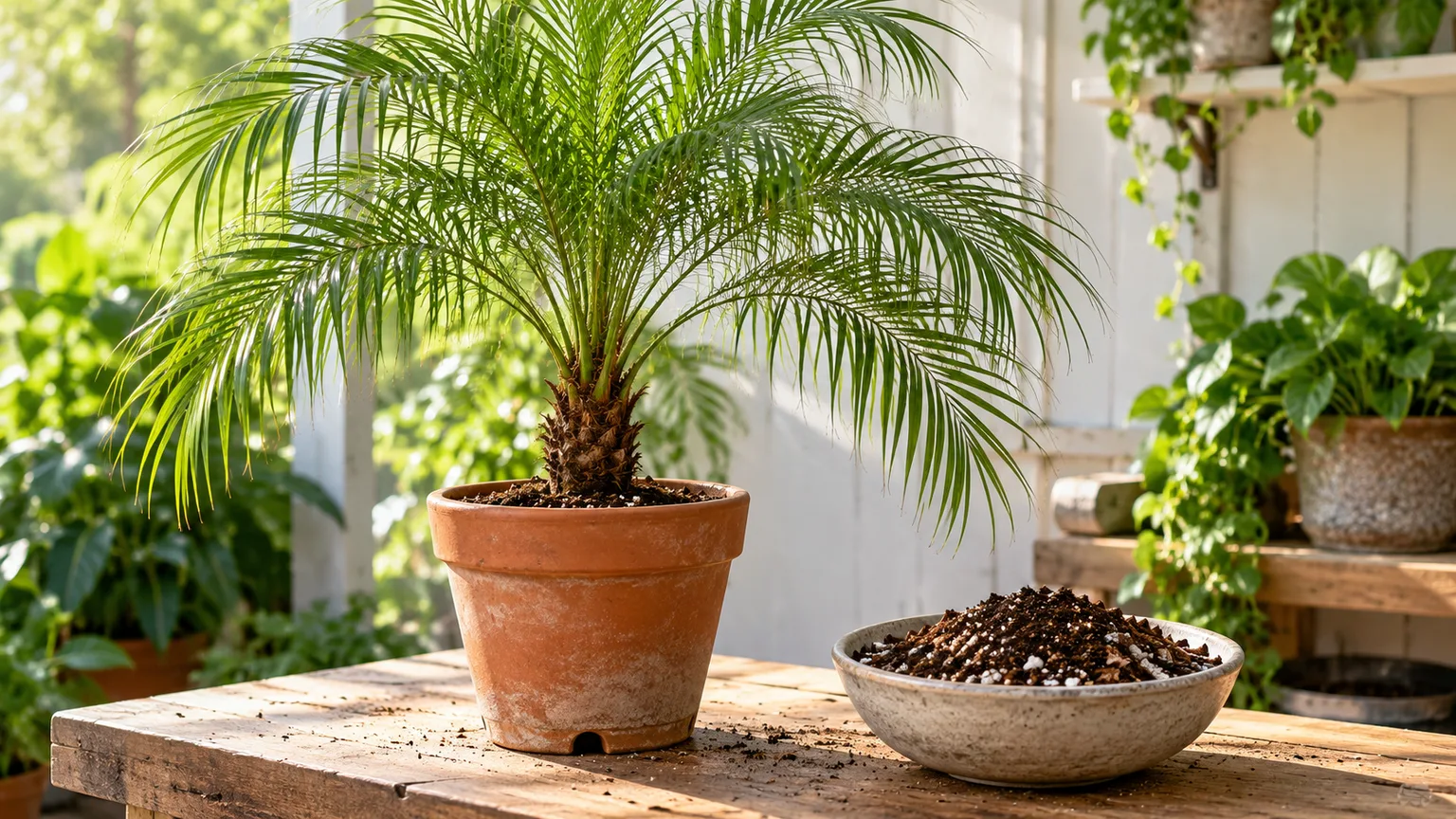
Repot in warm weather when roots are circling densely, escaping through the drainage holes, or the mix has broken down and no longer drains well. Slide the plant out carefully, preserve the root ball, and backfill around it without burying the trunk base. If the palm is healthy and merely snug in its pot, leave it; NC State Extension notes that this species prefers to be slightly root-bound and does not require frequent repotting.
After repotting, water enough to settle the mix, let the pot drain, and return the palm to bright filtered light while it adjusts. Do not immediately shift it into full outdoor sun, prune healthy leaves, and apply a heavy fertilizer dose at the same time. Changing one major condition at a time makes it easier to see whether the palm is recovering.
Plant a Robellini Palm Outdoors
Plant outdoors only where winter exposure is compatible with a tropical palm and the site drains freely. Give the crown room to spread, keep the trunk away from walkways and play areas, and avoid a salty beachfront position. A site with morning sun and some protection from fierce afternoon heat is a good first choice for a nursery-grown palm.
Dig a hole no deeper than the root ball and several times wider only if the surrounding soil is not a poorly drained clay basin. Roughen the sides if they are glazed or compacted, set the root ball at its original grade, and refill with the native soil rather than creating a sharply different pocket of potting mix. Water slowly to settle the soil, then apply a shallow mulch ring while keeping mulch away from the trunk.
Water consistently while roots establish, but let rainfall and soil moisture decide how often. In sandy ground, the surface can dry quickly even when the root ball remains damp below; in compact soil, the top can look dry while the lower root zone is still wet. Check a few inches down beside the original root ball before adding water, and improve drainage or relocate the palm if water repeatedly stands around it.
The palm works as a specimen, a sheltered poolside accent, or a warm-patio container, but allow the crown to spread beyond the trunk. A nursery clump may widen as its trunks develop, so site it for mature canopy clearance rather than its checkout size.
Prune Carefully Around the Sharp Spines
The lower leaflets on a Robellini palm frond are modified into stiff, sharp spines. Wear sturdy gloves, long sleeves, and eye protection when you handle the crown, keep children and pets from brushing against it, and avoid gripping the frond bases while turning the pot. When the palm is tall or the crown is difficult to reach, hire someone equipped for palm pruning rather than climbing or reaching through the spines.
Remove only fronds that are fully brown and dead, cutting the stalk close to the trunk without cutting into the trunk or the central growing point. Partly green fronds still support the palm; UF/IFAS cautions that removing potassium-deficient leaves before they are completely dead can speed decline because the palm can draw nutrients back from them. A few aging lower fronds are normal and do not mean the plant needs a drastic haircut.
Never remove the newest spear leaf or cut off the top to control height. A palm’s single growing point sits in the crown, and damage there can be fatal; topping also does not create a shorter, branching palm. Disinfect pruning tools between plants if you are removing diseased tissue, and do not remove multiple green fronds just to expose a bare trunk.
Propagate from Seed, Not an Assumed Sucker
The dependable home propagation method is seed. NC State Extension describes the palm as dioecious, meaning male and female flowers occur on separate plants; only a pollinated female produces fruit. The seed-grown route takes patience, and young palms will not immediately look like a mature landscape specimen.
If you have fresh ripe fruit from a female plant, remove the fleshy pulp, rinse the seed, and sow it in a clean, moist but airy medium. Keep the container warm and evenly moist rather than waterlogged, and check it periodically instead of digging up the seed to see whether it has germinated. The RHS cultivation profile lists spring sowing at about 19–24°C; household temperatures fluctuate, so treat that as a useful range rather than a guaranteed germination timetable.
Do not assume a potted plant has a detachable sucker just because several trunks emerge from the nursery pot. NC State Extension explains that growers often plant several seedlings together because cultivated palms commonly do not sucker, even though the species can form basal shoots in nature. If you can clearly identify a rooted offshoot, ask a local palm grower before separating it; cutting into a crowded crown without a viable root system can ruin both plants.
Check for Pests and Diseases Before Treating
Inspect the undersides of leaflets, the central spear, and the bases of the fronds when you bring a new palm home or move it back indoors. Fine stippling with delicate webbing can indicate spider mites, while fixed bumps and sticky residue suggest scale; cottony clusters can be mealybugs. Isolate a suspected infested houseplant and confirm the pest before using a treatment, following the label for any product applied indoors.
A persistent leaf spot pattern deserves a closer look, especially if lesions spread across several fronds or reach the rachis and petiole. UF/IFAS lists Pestalotiopsis leaf spot among diseases found on pygmy date palms and notes that severe cases can kill a palm. Improve airflow, keep routine irrigation off the crown when practical, and seek a local diagnosis if new spots keep appearing; do not assume a broad-spectrum fungicide is appropriate for every brown mark.
Ganoderma butt rot is a serious landscape disease associated with decay at the lower trunk, and UF/IFAS reports no control for it. A rotting base, structural weakness, or a palm leaning unexpectedly calls for prompt help from a certified arborist or local extension service; do not try to solve trunk decay with fertilizer or extra water. Avoid planting another palm in a spot where a palm has died from confirmed Ganoderma without first getting site-specific advice.
Troubleshoot Yellow, Brown, or Frizzled Fronds
Start with the pattern, not a bottle of fertilizer. Note whether the damaged leaves are old or newly emerging, whether discoloration is uniform or patchy, whether tips are crispy or soft, and whether the mix is dry or wet. Also check recent cold exposure, a change in window light, salty crust on the pot, and pests before concluding that the palm has a nutrient deficiency.
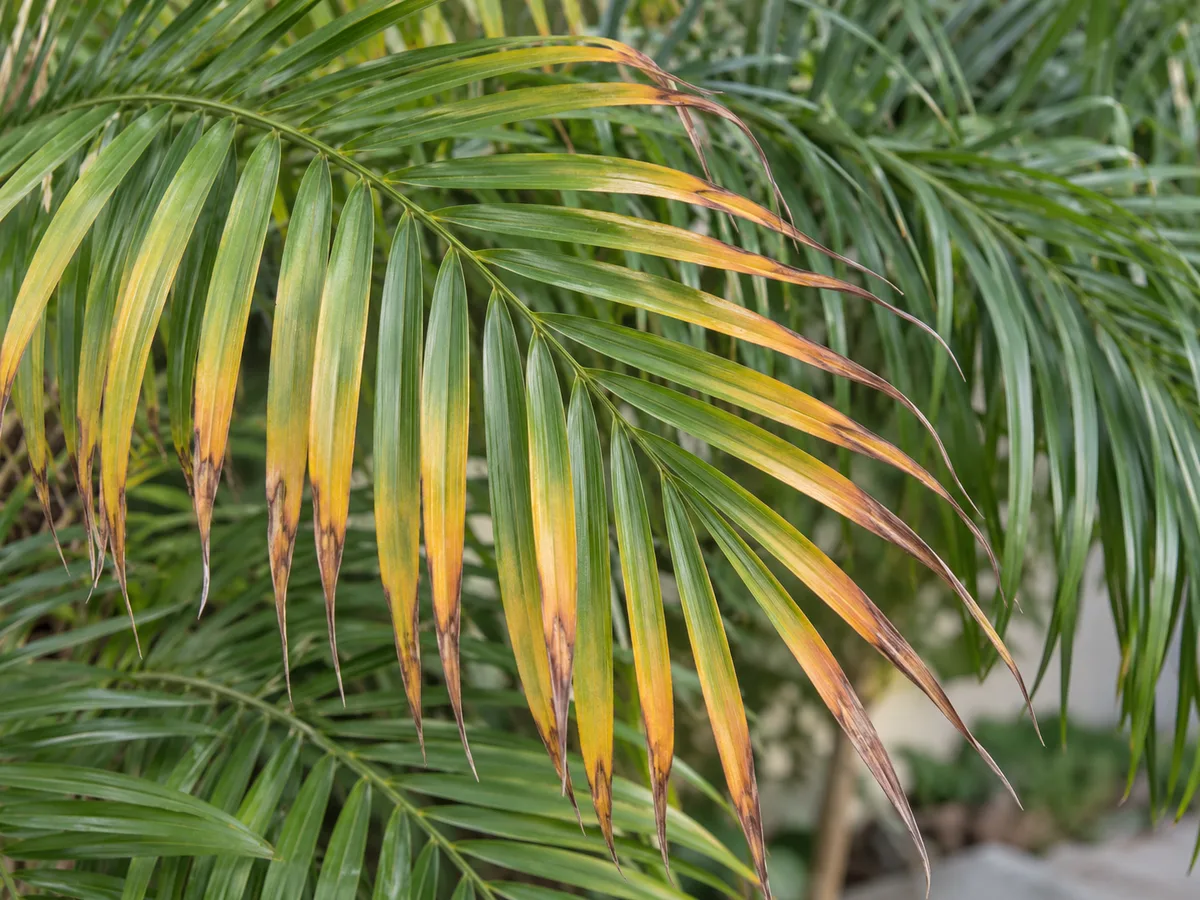
On a pygmy date palm, orange discoloration and leaflet-tip necrosis on older fronds can fit potassium deficiency; compare the pattern with new growth and growing conditions before treating.
Read Nutrient Symptoms by Frond Age and Pattern
UF/IFAS describes potassium deficiency on pygmy date palms as orange discoloration and necrotic leaflet tips that show first on older fronds, often more strongly toward the tips. Do not cut those leaves off while they still have green tissue; once nutrition improves, the palm replaces damaged foliage slowly, and existing symptoms do not turn green again.
Magnesium deficiency can also yellow old fronds, but UF/IFAS describes a broad yellow band along leaflet margins with a sharper transition to a green center and typically no leaflet-tip necrosis. Manganese deficiency is more associated with new leaves that show streaking, chlorosis, and later a frizzled or withered appearance; planting in alkaline soil can raise the risk. These visual differences help you decide what to investigate, but a photo cannot replace a nutrient analysis when symptoms are severe or persistent.
Uniform yellowing in new growth can point to iron uptake problems, particularly if the palm is planted too deeply or the soil drains poorly. That does not automatically mean the soil needs an iron supplement; UF/IFAS notes that correcting planting depth and drainage is central because the issue may not be a shortage of iron in the soil itself. Check grade and drainage before applying anything, and get a local diagnosis if the crown continues to pale.
Brown tips alone are less specific. Dry air, irregular watering, salt buildup, harsh sun after a move, cold drafts, and normal aging can all leave brown leaflet tips; if the rest of the frond remains green, correct the likely environmental stress and watch the next new leaf rather than cutting the whole crown back. If the potting mix smells sour or stays wet, inspect drainage and roots instead of increasing watering to “green it up.”
Tell Pests from the Palm’s Normal White New Growth
A pale coating on a newly opening Robellini frond is not automatically a pest. UF/IFAS notes that young pygmy date palm leaves may have a naturally occurring whitish material that falls away as the leaf ages, and it can be mistaken for scale, mealybugs, or whiteflies. Look for insects, webbing, honeydew, or cottony clusters that persist and spread before treating the palm.
If you see small mobile mites or webbing, rinse accessible foliage and improve plant isolation while identifying the problem. For scale or mealybugs, remove only what you can safely reach, then use a product labeled for that pest and plant if needed; spot-test sensitive foliage and follow all label directions. Avoid spraying a pesticide because a young leaf looks pale or because one old frond has turned brown.
Conclusion
A Robellini palm is easiest to keep healthy when its placement fits its climate: bright filtered light and careful moisture checks indoors, or a warm, draining site with gradual sun acclimation outside. Use a palm-specific fertilizer modestly, repot only for a clear reason, and let partially green fronds remain while you investigate a nutrient pattern. Protect yourself from the basal spines, correct drainage or planting depth before treating yellow leaves, and give the slow-growing palm time to respond to better conditions.



