African Iris Care: How to Grow, Divide & Overwinter
Learn African iris care for Dietes iridioides: plant in sun and well-drained soil, water new clumps, divide crowded fans, and protect pots from winter freezes.

African iris (Dietes iridioides) is a rhizomatous, evergreen or semi-evergreen perennial with upright fans of narrow leaves and delicate white flowers marked in yellow and violet. It suits warm gardens where it can spread into a broad clump, but it can also grow in a pot that moves to shelter before severe winter cold. The reliable formula is simple: give it bright light, soil that drains, and regular water while it establishes; after that, let the soil guide watering instead of keeping the roots constantly wet.
The details matter most in two situations: a bed that stays soggy in winter and a plant that has stopped flowering. African iris tolerates periods of dryness once established, yet it will not reward a wet crown or deep shade with more flowers. Start by identifying the plant and checking where water goes after rain, then decide whether an in-ground planting or movable pot is the better fit.
African Iris at a Glance
| Care question | Practical answer |
|---|---|
| Botanical name | Dietes iridioides; a member of the iris family, Iridaceae |
| Mature habit | Evergreen or semi-evergreen clump of sword-shaped leaves, commonly around 2–4 feet tall |
| Light | Full sun encourages the heaviest bloom; part shade is workable, especially in hot afternoons |
| Soil | Moisture-retentive but well-drained; avoid a crown that stays waterlogged |
| Water | Keep evenly moist as new roots establish; water deeply during long dry spells after that |
| Flowers | Short-lived individual blooms appear successively through a long warm-season display |
| Winter | Published hardiness estimates differ; drainage and freeze duration matter as much as the zone label |
The Royal Horticultural Society describes D. iridioides as a rhizomatous evergreen perennial from southern and eastern Africa, with narrow, sword-shaped leaves and successive iris-like flowers in spring and summer. NC State Extension’s broader Dietes profile gives a mature height of roughly 2–4 feet and notes that best flowering comes in full sun, with some afternoon shade also useful. Those descriptions fit the plant’s landscape role: a foliage clump with a succession of small, short-lived flowers rather than one synchronized flush. (RHS plant profile; NC State Extension Plant Toolbox)
First, confirm which “African iris” you bought
The common name is not always precise. This guide focuses on Dietes iridioides, whose flowers are white with yellow and violet markings; D. bicolor, often called yellow wild iris, has yellow flowers, and D. grandiflora has larger white flowers. The genus and common names overlap in nursery catalogs, so a botanical label helps you compare a plant’s expected size and cold tolerance. (PlantZAfrica/SANBI; NC State Extension Plant Toolbox)
Before planting, look at both the flower and the label. If the plant has no flowers yet, a photo from the seller or cultivar name is more reliable than “butterfly iris” or “fortnight lily” alone. This check is especially useful when you are choosing a spot based on mature size or deciding whether to overwinter it outdoors.
Pick a Site That Balances Sun and Drainage
Choose a place that receives several hours of direct light, has open air around the foliage, and does not collect standing water after a storm. The plant can handle a range of garden settings, but the combination of light and drainage drives the tradeoff: shade may keep foliage lush while reducing flowers, and a poorly drained site can turn a drought-tolerant perennial into a rot problem.
Light: Favor Sun, Soften the Hottest Afternoons
Aim for about six hours of sun for the most reliable flowering. African iris can grow and bloom in partial shade, but a bed shaded for most of the day is a common reason for healthy leaves with few flower stalks. In very hot regions, morning sun followed by light afternoon shade can reduce stress without sacrificing the light the plant needs to bloom. NC State Extension and Gardenia.net both describe full sun to part shade, with better flower production in brighter conditions. (NC State Extension Plant Toolbox; Gardenia.net plant profile)
Watch the plant through the day before you decide a site is sunny. An area that looks bright at noon may be shaded by a wall or tree during the morning hours, and that can leave the clump with less direct light than expected. If the plant is established but flower stalks remain sparse, improve light first if you can do so without moving it into a hotter, drier exposure.
Soil: Keep Water Moving Through the Root Zone
African iris is adaptable to loam, sand, and even some clay, but it needs the water to move through the root zone rather than sit around the crown. NC State lists good drainage and a range of soil textures; Gardenia.net similarly favors moist but well-drained soil. This is why a raised bed, a slight slope, or a freely draining pot can outperform a rich low spot. (NC State Extension Plant Toolbox; Gardenia.net plant profile)
Do not add sand to heavy clay as a quick fix; a small amount can make the texture denser. If you are preparing a bed, improve the soil structure across a broad area with organic matter and choose a position that drains naturally. The sources do not point to a narrow pH target: NC State lists a neutral range, while Gardenia reports a broader tolerance, so test the soil before trying to change its acidity.
Plant African Iris Without Burying the Crown
Plant nursery stock after the danger of hard frost has passed in a cold-winter region; in a mild climate, spring or early fall gives the roots time to settle before heat or cold stress. Set a potted plant at the same depth it was growing in its nursery container, spreading circling roots gently if they are tightly packed. For a rhizome division, keep the crown at or just below the soil surface instead of burying the leaf bases deeply.
Plan space around the mature clump. A gap of about 2–3 feet between plants lets individual fans develop and makes later division easier; closer spacing creates a fuller mass sooner but means you may need to thin it earlier. If the soil is heavy, a raised bed or container is safer than planting into a hole that acts like a sump.
Water the planting hole thoroughly after backfilling so soil settles around the roots, then keep the root zone moderately moist while new growth appears. Do not leave a saucer of water under an outdoor pot, and do not bury a crown in mulch. A thin surface layer of mulch can conserve moisture, but keep it pulled back from the center of the clump.
Water Often at First, Then Read the Soil
For the first growing season, water deeply whenever the upper soil begins to dry; shallow daily sprinkles encourage shallow roots and do not wet the whole planting zone. The exact interval changes with heat, rainfall, soil texture, and pot size, so use a finger test or trowel rather than a weekly rule. In sandy beds, the root zone may dry faster; in clay, the bigger risk is watering again before the previous irrigation has drained.
Once established, African iris can tolerate a dry spell, but drought tolerance is not the same as a preference for chronic dryness. During a long hot stretch, a slow soak at the base can support new foliage and more dependable flowering. Gardenia.net and Gardening Know How both note its ability to handle drier periods once established, while describing better performance with regular moisture. (Gardenia.net plant profile; Gardening Know How)
Use a different rhythm for containers. Potting mix dries faster than garden soil, especially in wind and summer sun, so check the top inch or two and water until excess drains from the bottom. Empty excess water from cachepots or saucers; standing water can keep the crown and roots wet even when the surface looks dry.
Feed Lightly and Protect Repeat Bloom
African iris does not need a heavy feeding program. If it is planted in fertile soil and produces steady leaves and flowers, you may not need to fertilize at all. If growth is weak and a soil test or the surrounding garden suggests low fertility, apply a balanced slow-release fertilizer in spring at the label rate, keeping granules away from the crown.
Avoid using high-nitrogen fertilizer as a bloom remedy. It can push leafy growth while leaving the plant with no better flower display, and it cannot compensate for shade or a crowded clump. A better sequence is to check light, drainage, and crowding before adding nutrients; fertilize only if those basic growing conditions are already sound.
What the Flowers Do—and When to Deadhead
A single African iris flower may last only a morning or a day, but a branched stalk carries buds that open in succession. That pattern makes a mature clump look as if it flowers repeatedly over a long season, rather than keeping any one bloom open for weeks. PlantZAfrica/SANBI notes that the flowers open continually during a flowering spell and that new plantlets can form on flower stems; Gardening Know How also describes short-lived individual flowers and repeated seasonal bloom. (PlantZAfrica/SANBI; Gardening Know How)
Do not cut a healthy stalk down just because its first flowers have faded. Look for unopened buds farther along the stem; remove the stalk only after it has finished flowering. If you want to limit self-sown seedlings, remove developing seed capsules after the stalk is done, but leave some pods if you want to try seed propagation. Deadheading is mainly a tidiness and seed-control choice, not a daily chore.
Prune Foliage Only When It Needs It
Remove yellow, brown, broken, or frost-damaged leaves at their base with clean, sharp shears. Take only the damaged leaves rather than shearing the whole plant into a uniform mound; healthy green foliage continues to support new growth. If the clump looks tired after winter, wait until you can distinguish cold-damaged leaves from live fans before cutting.
Old leaves at the outside of a clump naturally age and can be pulled or clipped away as they loosen. If a large portion of the plant yellows at once, pause before pruning and check soil moisture, drainage, and the base of the fans. Cutting off symptoms may make the plant look neater, but it will not correct root rot or drought stress.
Divide a Crowded Clump to Renew Growth
African iris spreads through rhizomes and gradually forms a wider clump. Divide when the center becomes bare, fans crowd one another, flowering declines despite adequate light, or you need new plants—not automatically every two or three years. A crowded root mass is harder to water evenly, and separating it restores airflow and gives each division fresh growing space.
Spring is a straightforward time to divide in cold-winter climates because the plant has a long growing season to re-establish. In mild-winter gardens, early fall can also work if the soil remains warm and the new divisions can root before dry or cold weather. Gardenia.net recommends propagation by division or seed; NC State lists both as propagation options. (Gardenia.net plant profile; NC State Extension Plant Toolbox)
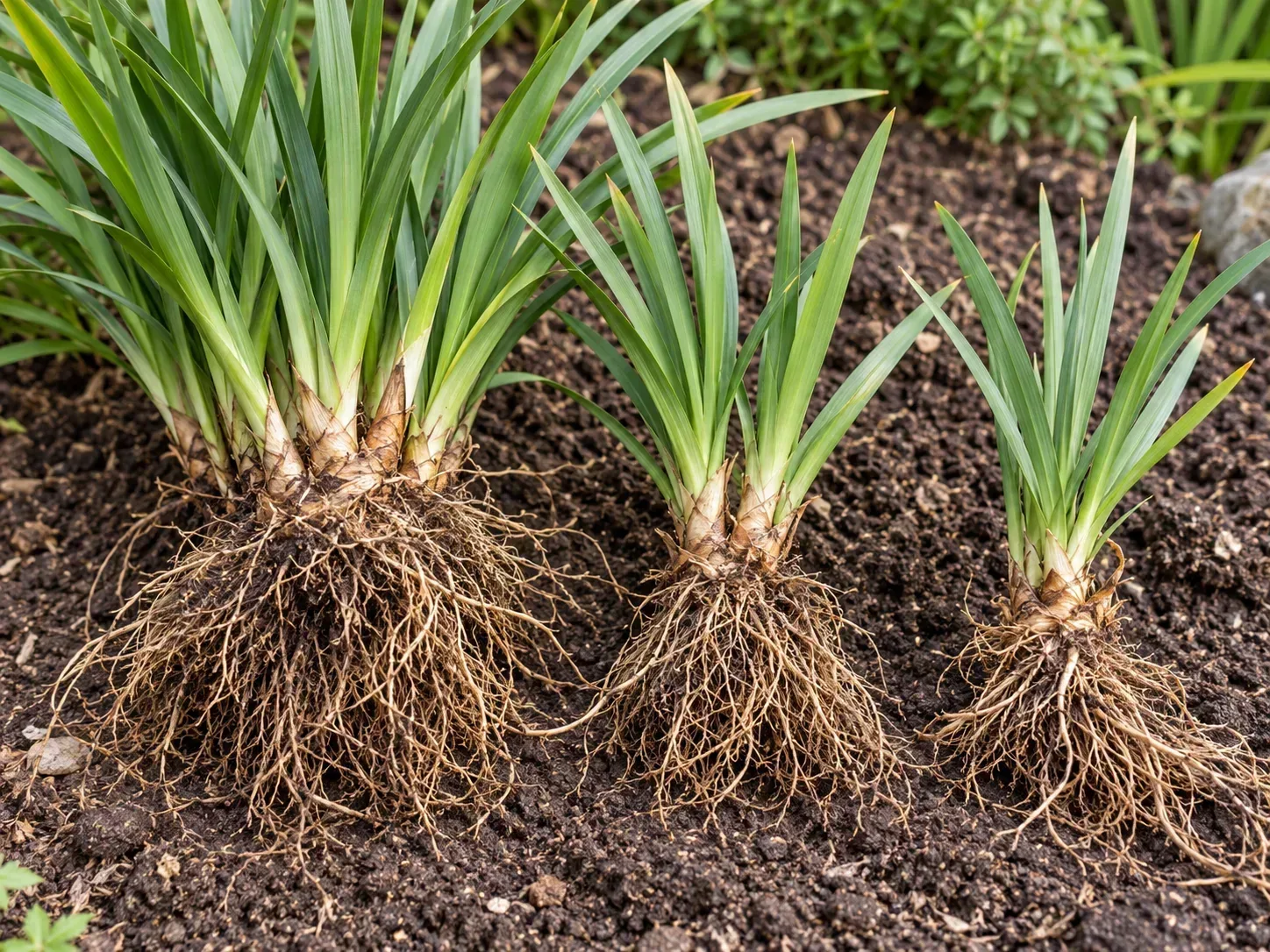
Division Steps
- Water the plant the day before lifting if the soil is dry; moist soil is easier to work and reduces root breakage.
- Use a spade to cut around the clump, then lift a manageable section rather than forcing the entire plant out at once.
- Shake or rinse enough soil away to see the crowns and roots. Pull apart naturally separated fans or cut the rhizome with a clean, sharp knife.
- Keep divisions that have healthy roots and at least one strong fan; discard soft, hollow, or decaying sections.
- Replant each section at its former depth, firm the soil gently, and water it in.
- Keep new divisions evenly moist while roots recover, then shift to the established-plant watering pattern.
Do not make every division as small as possible. A tiny piece with few roots may survive but take longer to resume flowering, while a substantial section with several fans establishes faster. If you are dividing to rejuvenate a clump, keep the healthiest outer sections and replant those; the oldest, weakest center is often the part to discard.
Grow African Iris From Seed or Stem Plantlets
Seed is useful when you want many plants or are curious to grow seedlings, but it is slower and less predictable than dividing a known clump. Let a seed capsule mature and dry on the stalk, collect the dark seeds, and sow them in a clean pot filled with a free-draining seed-starting mix. Cover lightly, keep the mix lightly moist rather than saturated, and place the pot in a warm, bright location.
PlantZAfrica/SANBI recommends sowing seed in spring and describes seed capsules that release black seeds when they mature. Seed-grown plants may not match a named cultivar exactly, and they need time to form a substantial clump before they resemble a mature flowering plant. Do not assume every capsule will germinate at the same time; keep the pot evenly moist and discard any seedlings that damp off or fail to develop. (PlantZAfrica/SANBI)
Some Dietes flower stalks also form small plantlets that can root when they touch the soil. If you see a rooted plantlet on a bent stalk, leave it in contact with the soil until roots hold, then separate it from the parent and pot or transplant it. This is less predictable than deliberate division, but it can explain volunteer plants around an established clump.
Use a Container When Drainage or Winter Is the Problem
A pot is a practical choice if garden soil stays wet, you have limited space, or winter freezes make permanent planting risky. Choose a sturdy container with several drainage holes and enough width for a spreading clump; a 12–16-inch pot is a workable starting size for a nursery plant, with a larger pot needed as it matures. Use a quality potting mix rather than dense garden soil, and keep the crown near the surface.
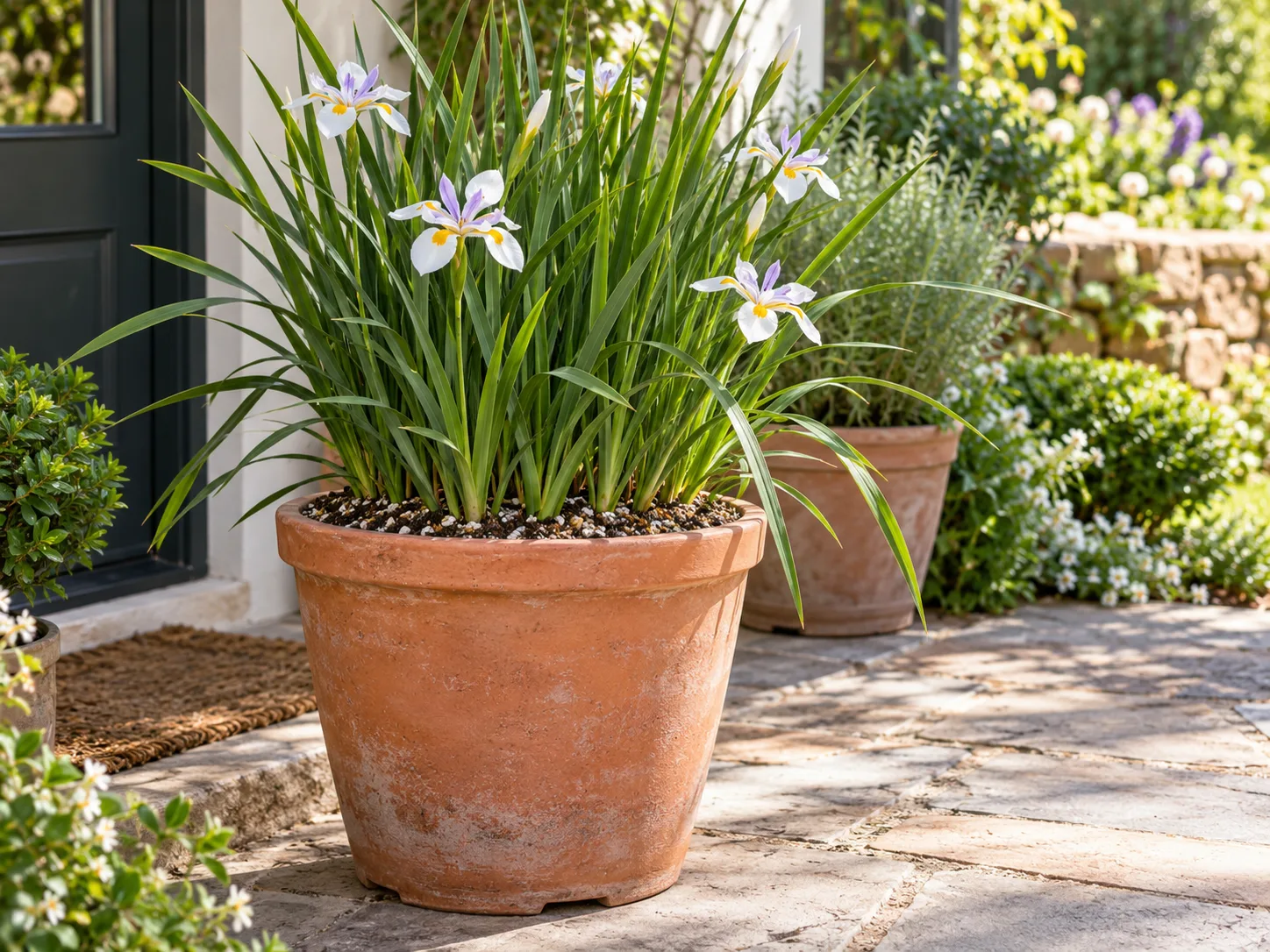
Place the pot where it gets sun for a good part of the day, with some afternoon shade in extremely hot locations. Check moisture more often than you would in a bed, but do not water by the calendar if the mix is still damp. Repot or divide when roots fill the container, water runs straight through without wetting the mix, or flowering drops along with overcrowded growth.
Overwinter by Climate, Not by Calendar Alone
Published hardiness ranges are not identical. NC State Extension’s Dietes profile lists USDA zones 9–11, while Gardenia.net lists zones 8–11 for D. iridioides; PlantZAfrica says the species tolerates frost in its native growing context. These are not a guarantee that every plant will survive every winter at the same zone number. Duration of a freeze, exposure, drainage, and whether a plant is in the ground or a pot all affect its odds. (NC State Extension Plant Toolbox; Gardenia.net plant profile; PlantZAfrica/SANBI)
Use this decision rule:
- Mild winters with only brief light frost: Leave a well-established plant in the ground if the site drains well; remove cold-damaged leaves after the event.
- Occasional harder freezes or uncertain drainage: Grow it in a movable pot or plant it in a protected, raised bed. A layer of mulch around the root zone may buffer brief cold, but keep mulch away from the crown.
- Long or repeated hard freezes: Move a container to a bright, frost-free place before the freeze. Water less while growth slows, but do not leave the root ball bone-dry for months.
- Seasonal planting in a cold region: Treat the plant as an annual or lift and store the rhizomes. NC State lists cool storage in peat or vermiculite at about 41–50°F (5–10°C); keep stored material labeled and check it for decay rather than assuming storage guarantees success. (NC State Extension Plant Toolbox)
The pot route is usually simplest because you can protect the entire root system without digging the clump each fall. A sheltered indoor position should stay cool and bright rather than hot and dim; resume stronger watering as new growth starts in spring, then move the pot outdoors gradually after hard frost risk has passed.
Diagnose Yellow Leaves, Weak Bloom, and Rot
A few old leaves yellowing around the outside of a clump is different from the whole plant declining. Before you cut or fertilize, inspect the soil and crown and look for a pattern: stress across the entire clump usually points to a growing condition, while isolated leaf damage may be age, weather, or a pest.
| What you see | First check | What to do |
|---|---|---|
| A few older outer leaves turning yellow | Are new fans still firm and green? | Remove only the old leaves and keep monitoring |
| Many leaves yellowing or wilting | Is the soil wet below the surface or sour-smelling? | Pause watering, check drainage, and inspect the crown for softness |
| Brown or crisp tips during hot weather | Has the root zone dried for an extended period? | Water deeply and add a thin mulch layer without covering the crown |
| Plenty of foliage, few flowers | Is the clump shaded, crowded, or heavily fertilized? | Improve light, divide if congested, and stop excess nitrogen |
| Collapse at the plant base | Are roots or rhizomes dark, soft, or decaying? | Lift the affected section, remove rot with clean tools, and replant only firm tissue in draining soil |
Root and crown rot are more likely when water remains around the base of the plant. If you find soft tissue, do not simply add fertilizer or cut the leaves shorter; remove affected parts and correct the drainage problem before replanting. If a large clump is collapsing or the symptoms keep spreading, ask a local extension service or plant clinic to confirm the cause.
Pests and Disease: Inspect Before You Treat
African iris is generally low-maintenance, but NC State identifies nematodes and scale among the pests that may affect Dietes. Scale insects appear as small, fixed bumps on foliage or stems; nematode injury is less obvious and can look like progressive leaf damage. Confirm the problem before using any control, because yellowing alone is not proof of an insect or disease. (NC State Extension Plant Toolbox)
Check the underside of leaves, the base of the fans, and the root zone. Remove badly damaged leaves, clear dead debris from the clump, and avoid keeping foliage wet overnight if fungal spotting is recurring. Do not spray neem or another pesticide on a fixed weekly schedule: use a product only when you have identified the pest, confirmed that the label permits that use, and followed the label directions.
Conclusion
For reliable African iris care, choose a sunny spot with well-drained soil, water new plants until they establish, and then respond to actual soil dryness rather than a fixed calendar. Leave flower stalks in place while they still carry buds, and divide only when a clump becomes crowded or its center weakens. If your winter brings prolonged freezes or the bed stays wet, a movable pot gives you a safer way to enjoy the plant and protect its roots.
The first check is simple: confirm that the label says Dietes iridioides, then watch how quickly the intended site drains after rain. If those two conditions fit, the rest of the routine is modest; if they do not, choose a raised bed or container before planting.