How to Grow and Care for Yaupon Holly
Learn how to grow yaupon holly, choose a cultivar for your space, water it as it establishes, prune it well, and understand its berries and safety.
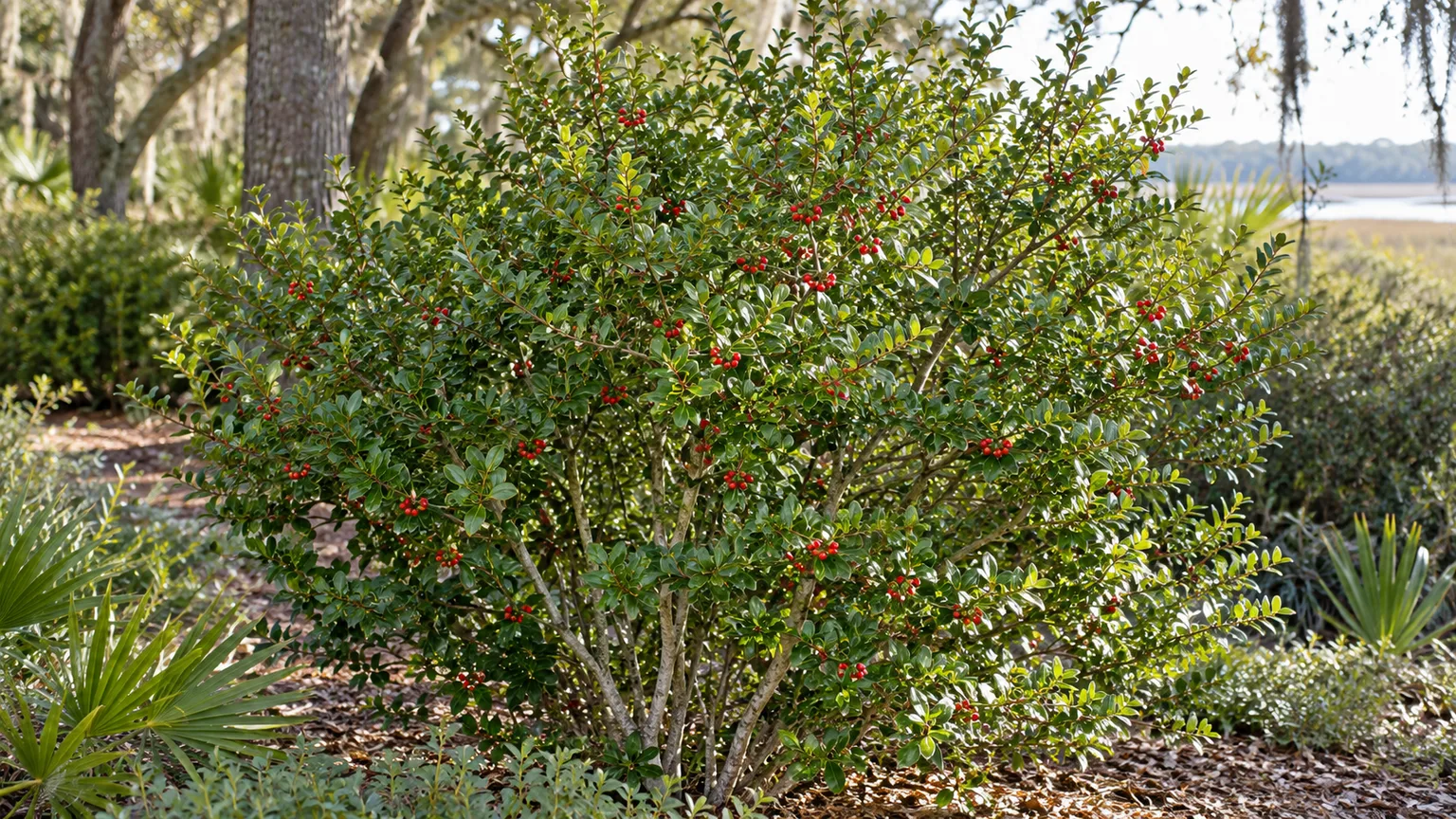
Yaupon holly is a southeastern native that can grow as a dense evergreen shrub, a small multi-trunk tree, or a clipped screen. The useful first decision is not how often to fertilize it; it is which form belongs in the space you have, because the species can eventually become a substantial plant while dwarf and weeping cultivars behave differently.
Once established, yaupon is adaptable to sun, shade, drought, salt spray, and a range of soils. That toughness does not make every site or watering routine suitable: a plant in shade may be thinner and fruit less, a recently planted shrub still needs careful moisture management, and a poorly chosen cultivar can outgrow a narrow foundation bed.
Yaupon Holly at a Glance
Yaupon holly, Ilex vomitoria, is an evergreen broadleaf shrub or small tree in the holly family. It is native across much of the southeastern United States and into Mexico, where it grows in varied coastal and inland habitats. Small, leathery leaves, smooth gray older branches, and reddish young stems help distinguish it from the larger, often sharper-leaved hollies.
For planning purposes, the species is commonly described as reaching roughly 15 to 25 feet tall with a similar spread, though local references and growing conditions produce a range of estimates. Many landscape cultivars are smaller or have a distinct weeping or columnar shape; do not use the species maximum to predict a named cultivar, and do not assume that every plant sold as dwarf will stay miniature. UF/IFAS Extension’s plant profile and the NC State Extension Plant Toolbox describe the species’ landscape range and cultivar variation.
The plant is often chosen for year-round foliage, berries, pollinator blooms, and tolerance of coastal or urban sites. Its branches can also send up root suckers, so decide whether a multi-stem thicket is welcome or whether you want to maintain a defined trunk and footprint.
Choose a Form That Fits Your Space
Buy yaupon holly by its mature habit and cultivar name rather than by its nursery-pot appearance. A compact plant can look like a tidy low mound when young, then gradually occupy more width than a narrow walkway or foundation strip allows.
Size, habit, and cultivar choices
The straight species can become a broad shrub or small tree, often with several trunks. A mature plant may work well as a specimen, informal screen, wildlife planting, or small tree where its eventual canopy has room; it is a poor choice for a tight gap simply because the plant currently fits a small container. UF/IFAS describes species plants around 15 to 25 feet tall, while NC State’s profile gives a similar but somewhat narrower typical range and notes rapid growth and suckering.
Cultivars let you choose a different silhouette. ‘Will Fleming’ is a narrow, upright form; ‘Folsom’s Weeping’ and ‘Pendula’ have arching or drooping branches; ‘Pride of Houston’ is valued for fruit; and ‘Nana’ or ‘Dwarf’ is a compact, rounded selection. ‘Stokes Dwarf’ (also called ‘Schilling’s Dwarf’) is another compact male selection. Check current nursery labels and local references because common names and cultivar synonyms are not always used consistently.
“Dwarf” is a relative description, not a maintenance-free size guarantee. A cultivar sold for a low hedge still needs room to widen, and older plants can become much larger than the dimensions printed on a small tag suggest. The Extension Master Gardener Volunteers of Durham County’s field account notes that a dwarf selection can spread wider than it grows tall, while Nature & Garden’s dwarf yaupon profile documents how slowly expanding shrubs may become broad over time. Use the dimensions for the specific cultivar, then add clearance for pruning access and future growth.
Male and female plants: plan for berries
Yaupon holly is dioecious: male and female flowers usually grow on separate plants. A female plant can form fruit only when pollen reaches it from a compatible male plant whose flowers overlap in bloom. If berries are a priority, ask the nursery to identify the sex of the cultivar and whether it is a fruiting female, a pollen-producing male, or a selection that does not fruit; simply buying two plants is not enough if both have the same sex.
There is a real labeling wrinkle around ‘Nana’ and ‘Dwarf’. UF/IFAS lists ‘Nana’ as a male, non-fruiting selection, while NC State describes its ‘Dwarf’ entry as a compact, sterile female. Some sellers use these names as synonyms, and stock may also be sold without a sex label. Do not assume the name tells you whether berries will appear. When fruit matters, choose a plant already showing berries or get written confirmation of a female clone and a suitable male pollinizer from the grower.
Site, Light, and Climate
Yaupon holly is most at home in the southeastern United States, where hot summers and variable moisture suit its native range. UF/IFAS lists it for USDA hardiness zones 7A through 9B. That zone range is a useful starting point, not a guarantee for every cultivar or exposed site; a cold pocket, winter wind, poor drainage, or a recently planted root ball can change how a shrub fares. In colder regions, select a locally recommended cultivar and plant in a protected microclimate rather than relying on a generic hardiness label.
The species tolerates full sun through deep shade, but appearance changes with light. More sun generally supports a denser canopy and better fruit display; in deep shade the plant may grow thinner, lean toward openings, and set fewer berries. If you want a clipped screen or colorful fruit, give it several hours of direct light if your site allows. If the space is shaded, yaupon can still be useful, but plan for a looser, less fruit-heavy form.
It tolerates salty coastal air and urban conditions better than many broadleaf evergreens, and it can withstand periods of drought once rooted. Extension profiles also describe tolerance of occasional flooding, but that does not mean a new plant should sit in stagnant water or a compacted planting hole. Look at the site after rain: if water remains for days, improve the planting location or choose a plant suited to persistent wet soil. NC State also flags yaupon as highly flammable; in a wildfire-prone area, keep it out of the home’s defensible-space zone and follow local fire guidance.
Planting Yaupon Holly
Plant when the soil is workable and the shrub can settle in before the most stressful heat or cold. In much of the South, fall or spring can work; spring gives roots time to establish before summer, while fall planting can succeed where winters are mild. Avoid planting into waterlogged soil, frozen ground, or a heat wave when you cannot keep the root ball evenly moist.
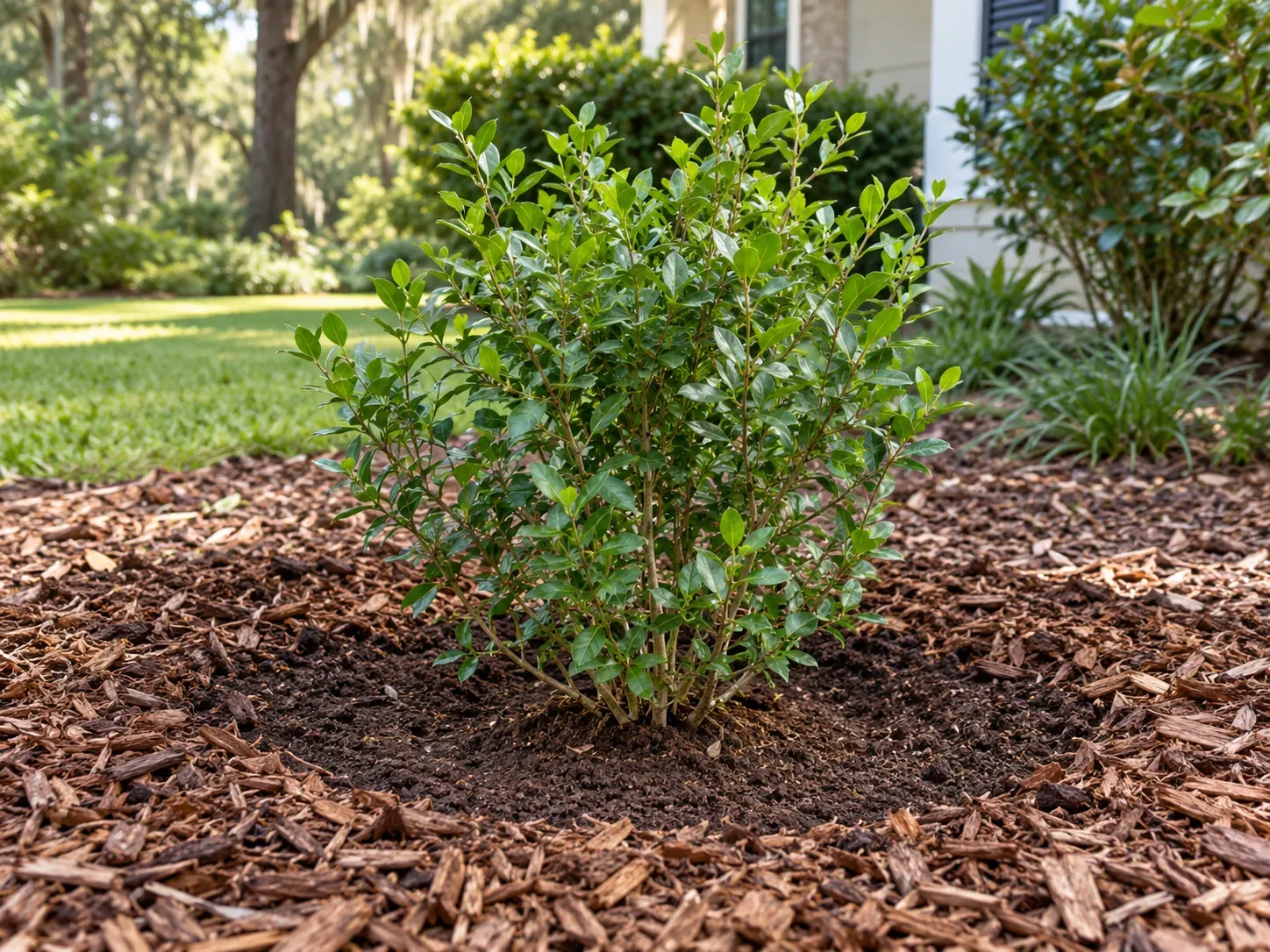
Set the root ball at grade and space for mature width
Before digging, confirm the cultivar and estimate its eventual width. For a specimen or small tree, leave room for the full canopy and enough access to prune; for a screen, space plants according to their mature cultivar width and how quickly you want the gaps to close. A tight row of small pots may look efficient on planting day but can become a crowded hedge that needs repeated shearing and develops bare interior branches.
Dig a broad hole no deeper than the root ball and about two to three times as wide when soil permits. Loosen circling roots around the outside, set the top of the root ball level with or just above the surrounding grade, and backfill with the soil removed from the hole. Avoid placing a rich amendment pocket in the center of ordinary native soil; it can encourage roots to remain in the hole instead of growing outward.
Water slowly after planting to settle soil around the roots, then add a two- to three-inch mulch layer over the root zone. Keep mulch several inches away from stems so the base stays visible and air can circulate. A mulch ring helps reduce competition and slows surface drying, but a tall “mulch volcano” against the trunks can keep bark wet and conceal problems. The UF/IFAS profile describes yaupon as adaptable to landscape and urban conditions, and the Master Gardener account above offers a useful example of using a dwarf cultivar in a mixed native bed rather than crowding it into an unsuitable hedge.
Watering: Establish First, Then Adjust
The right watering interval depends on planting date, soil texture, rainfall, temperature, wind, and root-ball size. Do not water a new shrub two or three times a week by default, and do not stop checking it because yaupon is drought tolerant. The root ball can dry faster than nearby clay or mulch-covered ground while the plant is establishing.
For the first growing season, check moisture at the root ball rather than judging by the surface. Push a finger or a narrow trowel a few inches into the soil near the edge of the original root ball. If it is beginning to dry, water slowly and deeply enough to moisten the root zone; if it is still cool and damp, wait and check again. During hot, windy weather, inspect more often, while rainy periods may eliminate the need for supplemental water for days.
As roots spread into surrounding soil, taper irrigation. An established plant usually needs extra water only during an extended dry spell, especially in sandy soil, extreme heat, or the first drought after planting. Water the root area deeply instead of sprinkling foliage briefly, then let the surface begin to dry before watering again. Persistent yellowing, wilt in wet soil, or a sour-smelling root zone can signal overwatering or poor drainage rather than thirst.
Container plants are the exception to the “low water once established” rule. Their limited soil volume dries faster than a garden bed, so check moisture more frequently in warm weather and water until excess drains from the pot. The goal is consistent moisture with air in the root zone, not a permanently wet saucer.
Soil, Mulch, and Fertilizer
Yaupon holly grows in a broad range of soil textures and tolerates acidic through alkaline conditions, including sandy and clay soils. What matters in practice is matching the site to the plant’s tolerance: ordinary garden soil is usually adequate if water drains, while dense compaction and standing water around the root ball can stress even a resilient shrub. UF/IFAS notes a wide soil tolerance, and the county Master Gardener account specifically cautions against heavily compacted, wet soil.
Do not add lime, sulfur, compost, or a fertilizer blend just because the plant is an evergreen. If growth is weak or foliage color is unusual, check drainage, planting depth, light, and irrigation first; then use a soil test to identify a nutrient or pH problem before applying amendments. Fertilizer cannot correct a root system that sits in water or is buried too deeply.
A light organic mulch layer can moderate soil temperature and reduce weeds. Refresh it as it breaks down, keeping the root flare and lower stems uncovered. Avoid piling fertilizer beneath the mulch or applying a high-nitrogen product on a fixed spring-and-fall schedule; there is no reason to feed a healthy yaupon solely to force growth, and excess soft growth can make pruning more frequent.
Pruning Without Fighting the Plant
Yaupon holly takes pruning well, but it usually does not need a severe annual haircut. Start by removing dead, damaged, crossing, or inward-growing branches with clean, sharp pruners. Make cuts just outside the branch collar rather than leaving long stubs, and step back between cuts so you preserve the plant’s natural rounded or arching outline.
Light shaping and hard size reduction are different jobs. Shearing the outer shell repeatedly can leave a dense green surface with a shaded, bare interior; cutting far into old wood may produce new shoots, but the plant can look sparse while it rebuilds. If a yaupon is badly overgrown, decide whether it is worth restoring over several seasons or whether replacement with a correctly sized cultivar is the better use of time.
Timing depends on the result you want. A light trim after spring flowering can tidy a hedge, but it may remove developing growth that would otherwise carry that season’s fruit. If berries are part of the reason you planted a female shrub, keep pruning selective and avoid cutting away most of the outer canopy before the fruit display. The species tolerates heavier pruning, but the UF/IFAS profile notes that little pruning is required; treat tolerance as a recovery option, not a reason to shear on a strict calendar.
Decide between a hedge, screen, or small tree
For a formal hedge, shape the sides slightly narrower at the top than the base so lower branches receive light. Use hand pruners to thin occasional shoots and hedge shears only to refine the surface; a broad, tapering profile is less likely to become bare at the bottom. Leave enough space between the hedge and a walkway or wall for air movement and future maintenance.
To train a multi-stem shrub into a small tree, choose the strongest central trunks while the plant is young, then remove only a few competing stems at ground level each year. Gradual training reduces shock and reveals the naturally smooth, often sculptural trunks. Weeping cultivars should generally be allowed to show their arching habit rather than cut into a tight ball, while columnar cultivars are best used where their narrow upright shape is the point.
Growing Yaupon Holly in a Container
A compact cultivar such as a dwarf form is more practical in a container than the straight species. Choose a heavy pot with several unobstructed drainage holes and enough volume to hold the root ball plus room for growth. A lightweight nursery pot may tip in wind once the evergreen canopy catches it, and an oversized pot filled with wet mix can stay saturated around a small root system.
Use a quality outdoor container mix that drains freely rather than dense garden soil. Set the root flare at the same depth as it grew in the nursery pot, water thoroughly, and let excess drain away. Do not leave the container standing in a full saucer; waterlogged roots and winter freeze-thaw are harder on a pot-grown shrub than on one planted in open ground.
Check the mix by touch instead of relying on a weekly schedule. In hot weather, a small container may need water more often than a larger one, but frequent soaking is not helpful if the mix remains wet. If water runs down the sides without wetting the root ball, the mix may have shrunk away from the pot; rehydrate slowly and consider repotting if roots have filled the container.
Container yaupon is an outdoor shrub, not a long-term indoor plant. Give it outdoor light and airflow, protect the pot from prolonged hard freezes in the colder part of its range, and move it only when necessary. Repot when roots circle densely, water drains immediately through the pot, or growth stalls despite suitable light and moisture.
Flowers, Berries, Wildlife, and Safety
Small, inconspicuous flowers appear in spring and attract bees and other pollinators. Fruit develops on female plants after successful pollination, then often colors red and persists into the cooler months. A plant without berries is not necessarily unhealthy: it may be male, too young, growing in deep shade, pruned before fruit set, or planted without a compatible male nearby.
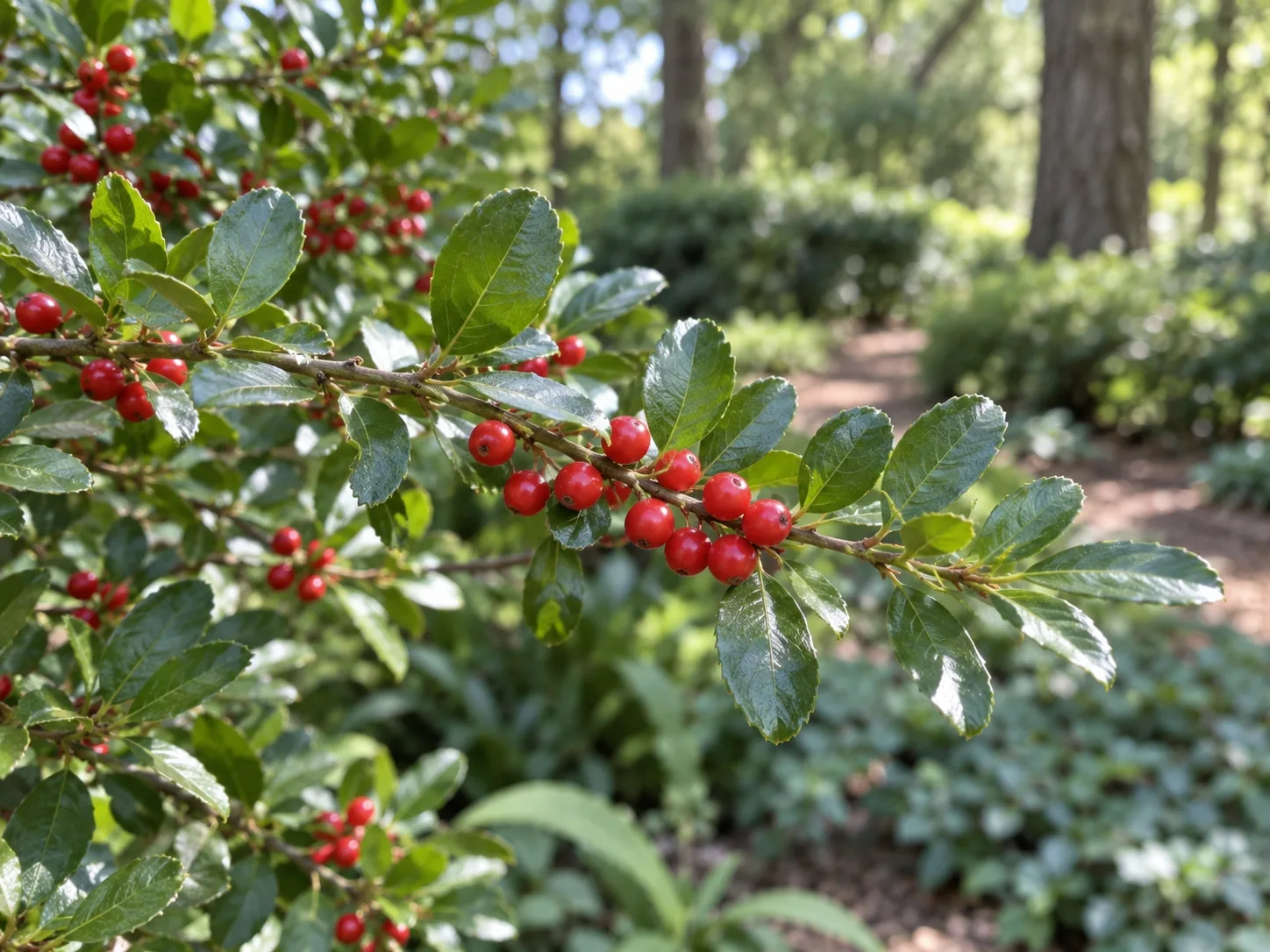
Yaupon fruit is useful to birds and small mammals, and its evergreen branches provide cover. NC State Extension lists the plant as a host for the Henry’s Elfin and Holly Azure butterflies and notes that the flowers supply nectar to pollinators. That wildlife value is part of the planting’s appeal, but it does not make the berries safe for people to eat.
NC State’s Plant Toolbox flags the fruit as poisonous to humans at low severity and lists nausea, vomiting, and diarrhea as possible symptoms after ingestion. Keep berries away from young children and pets, and do not let the common name or the plant’s wildlife value imply that fruit is edible. If a child or adult eats berries, contact Poison Control for case-specific advice; if a pet chews the plant, call a veterinarian or animal poison service and share the plant’s identity. The “vomitoria” part of the botanical name refers to a historical use of yaupon leaves in strong ceremonial drinks, not a recommendation to consume any part of a landscape plant.
Common Pests and Problems
Yaupon holly is generally a resilient landscape plant, and many pest sightings do not require treatment. NC State lists occasional holly leaf miner, spider mites, whitefly, scale, and several leaf diseases, while UF/IFAS notes that pests and diseases are not usually serious. First identify the symptom and inspect the plant closely before reaching for an insecticide or fungicide.
Look beneath leaves and along stems for scale covers, mites, or signs of leaf miners. A fine stippled appearance can point to sap-feeding pests or drought stress; distorted new growth may have another cause. Photograph the symptom, check whether it is spreading, and compare affected leaves with healthy growth. If damage is minor and the plant continues to grow, monitor it instead of treating every mark.
Leaf spots or persistent leaf drop can follow poor airflow, prolonged wet foliage, root stress, or a disease issue. Remove fallen diseased leaves, avoid overhead irrigation late in the day, and correct crowded conditions before applying a product. If symptoms persist, take a fresh sample to a local Extension office or use its plant-diagnostic service; treatment depends on the actual cause and the product label, not just the word “holly.”
Manage root suckers and dense growth
Root suckers are shoots that emerge from the root system around the plant. They are a normal growth habit, not a disease, and they can help a yaupon form a thicket or fill an informal screen. In a small bed, repeated shoots can be inconvenient, especially when digging or disturbing soil under the canopy prompts more sprouts.
If you want a single-trunk or clean-edged shrub, cut unwanted suckers at their point of origin rather than mowing off only the tips. Check the plant several times during the growing season while shoots are small. Avoid cultivating deeply beneath the canopy; shallow hand removal and mulch are gentler on the roots and often reduce the disturbance that triggers another flush.
A large old plant with many suckers may be telling you that its site or form no longer matches your maintenance preferences. You can keep removing shoots, train selected stems into a multi-trunk specimen, or replace it with a cultivar whose mature habit fits better. Repeatedly shearing the top while ignoring the spreading base usually increases work without solving the source of the problem.
Read leaf and branch symptoms before treating
Brown leaf tips alone do not identify a disease. Check whether the damage is on the sunny or shaded side, whether the soil is dry or saturated, whether a recent freeze or transplant preceded it, and whether the root flare is buried. A pattern affecting only one exposed side often suggests environmental stress; expanding spots, webbing, insects, or stem dieback point to other possibilities.
If leaves are yellowing while the soil stays wet, pause irrigation and assess drainage before adding fertilizer. If leaves look dry and crisp during a heat spell, test the original root ball rather than the mulch surface; a newly planted shrub can be dry inside while the surrounding bed feels damp. Remove only dead tissue once you know the underlying condition, since pruning healthy branches will not fix a water or root problem.
For a diagnosis, bring clear photos of both leaf surfaces, stems, the whole plant, and the planting site to your county Extension service. Include the plant’s cultivar name if known and describe watering, planting date, recent weather, and any products used. This information helps separate a minor cosmetic issue from a root problem that needs a different response.
Propagating Yaupon Holly
Yaupon holly can be propagated from seed or stem cuttings, but the best method depends on whether you need a plant that matches a named cultivar. Seed-grown plants may vary in habit and sex, and they will not reliably reproduce the exact shape or berry traits of a selected clone. For a particular dwarf, weeping, or fruiting form, purchase a labeled plant or root a cutting from a correctly identified parent.
Stem cuttings are generally the more predictable home-garden route for preserving cultivar traits. Take healthy semi-hardwood material from a vigorous, pest-free plant, use clean shears, remove lower leaves, and place the cut end in a clean, evenly moist propagation medium. Keep humidity high but allow airflow, and protect the cuttings from harsh afternoon sun while roots form; waterlogged medium encourages rot, while drying cuttings fail quickly.
Seed propagation is slower and less predictable because holly seeds may have dormancy requirements. Collect only fully mature fruit from a known female plant, remove the fleshy pulp, and use a propagation reference suited to yaupon rather than assuming a seed will sprout after ordinary indoor sowing. If your goal is a uniform hedge or a known berry-producing clone, buying named nursery stock is often faster and more reliable than starting from seed. NC State Extension lists both seeds and stem cuttings as propagation routes.
Winter Care and Recovery
In suitable zones, yaupon is evergreen and normally needs no indoor overwintering. The first winter after planting is the time to watch most closely: roots are still colonizing the soil, and cold wind combined with dry ground can stress foliage even when the shrub is technically hardy in the area.
Water the root zone before a hard freeze if the soil is dry and the ground is not frozen, then maintain the mulch ring without piling it against trunks. Container roots are more exposed than ground-planted roots, so group pots in a sheltered position or insulate the outside of the container during severe cold spells. Keep the plant outdoors; a warm indoor room can disrupt its normal seasonal conditions and does not solve root exposure.
After a cold snap, wait for new growth before removing branches that look damaged. Evergreen leaves may bronze or scorch while stems remain alive; scratch a small section of bark on a questionable branch to see whether green tissue remains beneath. Remove confirmed dead wood after the worst cold has passed, then review whether wind exposure, winter dryness, poor drainage, or a cultivar outside its local hardiness range contributed to the damage.
Conclusion
The easiest yaupon holly to care for is the one chosen for the right footprint and purpose. Give it room, plant at the correct depth, water by checking the root zone while it establishes, and avoid feeding or pruning on autopilot.
Before buying, confirm the cultivar’s mature size and—if berries matter—its sex and pollination needs. A little planning prevents the common frustrations of an oversized hedge, a dry root ball, repeated suckers, or a fruitless plant whose label never explained what you were getting.



