How to Grow and Care for Bush Daisy (Euryops pectinatus)
Learn bush daisy care for Euryops pectinatus: choose a sunny, well-drained site, water by soil conditions, prune lightly, and protect it from winter frost.

Bush daisy (Euryops pectinatus) is a South African evergreen shrub with finely divided gray-green leaves and cheerful yellow, daisy-shaped flower heads. It is a long-blooming choice for a sunny bed, rock garden, border, or large container—but it is not a carefree perennial in every climate. Its success depends less on a complicated feeding routine than on two early decisions: give it a site that drains well, and be realistic about winter cold.
In a mild climate, an established bush daisy may flower for much of the year and need only occasional trimming. Where freezes are routine, grow it in a pot that can be moved to shelter, or choose a hardier shrub instead. The guidance below helps you make that call before planting, then adjust water, pruning, and propagation to the conditions you actually have.
Identify bush daisy before you plant
The common name can point to several plants, so confirm the label says Euryops pectinatus. This species is also sold as golden euryops, golden shrub daisy, or gray-leaved euryops.
It belongs to the Asteraceae, the daisy family, but its growth habit is shrub-like: a woody, rounded framework carries fine, fernlike foliage and many small yellow flower heads on long stalks. It is not the same plant as a Shasta daisy or a typical herbaceous border daisy.
The leaves give you a useful identification clue. They are narrow and deeply divided, creating a soft, gray-green texture that contrasts with the bright flowers.
The flowers are roughly two inches across rather than the very large blooms of some annual or florist daisies. North Carolina State Extension describes the plant as a compact, evergreen shrub native to the rocky slopes of the South African Cape, with blooms that can appear almost year-round in mild climates (NC State Extension Plant Toolbox).
Size depends on cultivar, climate, and how often you trim it. In Florida landscapes, UF/IFAS Extension describes plants around two feet tall and three feet wide; Gardenia lists a broader mature range of roughly three to six feet in height and spread.
Use the plant tag and the space available as your guide rather than assuming every bush daisy stays a small mound. A compact young nursery plant can eventually fill a broad spot, especially in a long, mild growing season.
Decide whether your winter suits bush daisy
Bush daisy is best treated as a warm-climate evergreen shrub, not as a dependable cold-hardy perennial that returns after a severe winter. Gardenia places it in USDA Zones 9–11, and NC State Extension advises a sheltered location away from frost-prone areas. UF/IFAS reports that it performs as a perennial in its mild Florida setting, while also noting that cold and freezes can damage foliage and reduce winter flowering (Gardenia plant profile; UF/IFAS Extension).
A zone number is a useful screening tool, not a promise that a shrub will survive every winter at that address. Wind exposure, cold-air drainage, wet soil, duration of a freeze, and the plant’s maturity all change the result.
In a mild coastal or Mediterranean-type garden, a protected in-ground plant may stay leafy and bloom through winter. In a region with repeated hard freezes, the top growth may be damaged or the plant may be lost, even if it grew well through summer.
If your winter is uncertain, decide before you buy. A container gives you a way to move the plant to a bright, cool, frost-free place during cold spells.
A protected wall or sheltered courtyard can reduce exposure, but shelter cannot make a warm-climate shrub reliably hardy in a cold garden. If you want a shrub that can remain outside through your usual winter without intervention, choose a plant whose published hardiness fits your local low temperatures.
Choose full sun and fast-draining soil
Give bush daisy at least six hours of direct sun if your goal is a dense plant with the fullest flowering. It can tolerate some partial shade, but expect fewer flowers and looser growth when it receives less light.
A sunny border, south- or west-facing bed, rock garden, or open patio is generally a better fit than a shaded foundation strip beneath trees. NC State Extension and UF/IFAS both identify full sun as the preferred exposure (NC State Extension; UF/IFAS Extension).
Drainage matters as much as sun. The plant’s native habitat includes rocky slopes, and cultivation references consistently recommend well-drained soil. Average garden soil can work if water moves through it instead of pooling around the roots.
Sandy or gravelly beds often suit it; dense clay is a higher-risk site, especially where rain or irrigation keeps the root zone wet for long periods. Do not try to fix poorly drained ground by watering less while the root ball remains saturated; correct the site or use a raised bed or container.
Check how quickly the planting site drains
After a soaking rain, look at the area where the shrub would sit. If water remains pooled well after nearby beds have drained, or the soil stays sticky and airless, choose another spot or raise the planting area.
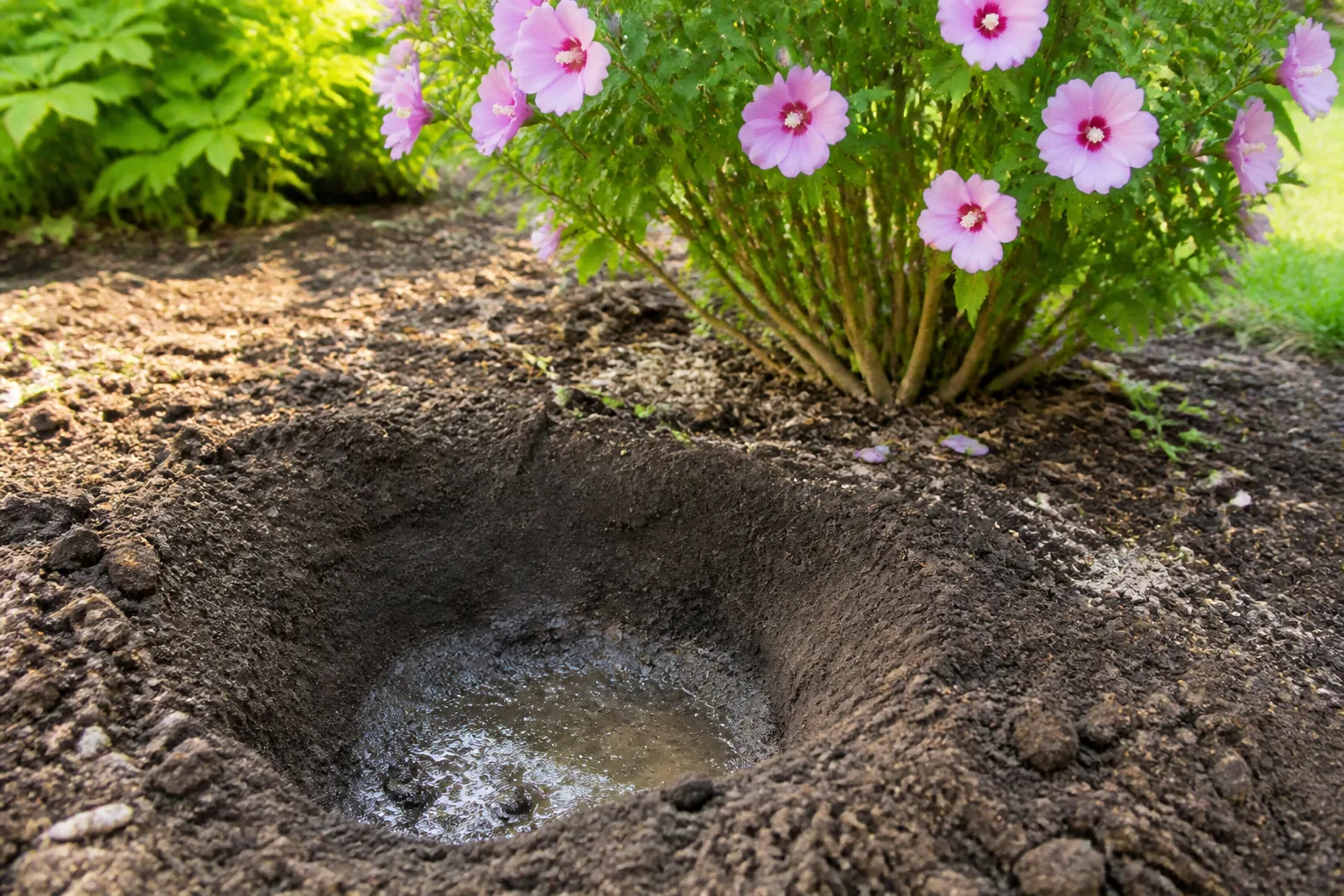
A simple test is to dig a small hole, fill it with water, let the first filling drain, then refill it and observe whether water continues to move down rather than standing for hours. This is a practical screening check, not a formal soil test, but it can reveal a site where a drought-tolerant shrub is likely to struggle from excess moisture.
Do not add a layer of gravel to the bottom of an ordinary planting hole as a substitute for drainage. It does not change the texture of the surrounding soil and can leave water perched above the gravel.
If the bed is heavy, improve a broad area with organic matter or build a raised bed that drains as a whole. In a pot, use a container with open drainage holes and a free-draining potting mix; the hole, not a rock layer inside the pot, is what lets excess water escape.
Plant bush daisy with room to spread
Plant during a mild stretch when the soil is workable and the shrub will have time to settle before heat or cold becomes extreme. In warm-winter climates, spring or fall planting is usually convenient; avoid transplanting during a heat wave if you can.
In colder regions, plant only if you intend to grow it as a seasonal container specimen or have a dependable frost-free place for winter. Nature & Garden also favors spring or fall planting in light, drained soil and recommends protection from winter winds (Nature & Garden: Euryops planting and care).
Choose spacing according to the size you want to maintain. UF/IFAS describes mass planting at about 24-inch intervals for a close groundcover effect in its regional landscape setting. For an individual shrub or a larger cultivar, Gardenia lists spacing from 36 to 72 inches.
Those recommendations serve different design goals: close spacing fills a bed faster but reduces air and working room; wider spacing lets a plant develop its natural outline. Follow the label for the cultivar you buy and leave enough room to reach the crown for pruning.
Set the root ball at the same depth it grew in its nursery pot. Loosen circling roots gently, position the plant, and backfill with the soil removed from the hole unless it is unusually heavy or poorly draining.
Firm the soil enough to remove large air pockets without compacting it, then water thoroughly to settle the root zone. A two- to three-inch mulch layer can reduce surface drying, as UF/IFAS recommends for its Florida landscape use, but keep the mulch a few inches away from the stems so the crown is not constantly damp.
A newly planted shrub needs a different watering approach from an established one. Check the root ball as well as the surrounding bed, because nursery mix can dry at a different pace from native soil. Water when the root zone begins to dry rather than letting the plant wilt repeatedly; after roots extend into the bed, lengthen the interval and let rainfall do more of the work.
Water by establishment and soil condition
Water regularly while the root system establishes, then reduce irrigation once the plant is growing steadily beyond the original root ball. UF/IFAS recommends watering to establish bush daisy and then as needed; Gardenia describes the mature shrub’s summer water needs as occasional to low. That shift is important: a plant that needs dependable moisture during establishment can become more tolerant of dry spells later, while still blooming less freely if it is stressed for too long (UF/IFAS Extension; Gardenia).
There is no useful universal schedule such as “twice a week.” A sandy bed during a hot, windy spell may dry quickly; clay soil after rain may stay wet much longer. Check the soil several inches down near the root zone.
If it is still cool and moist, wait. If it is drying, water slowly enough to reach the roots, then let excess drain. This approach avoids two opposite problems: shallow, frequent sprinkling that encourages surface roots, and frequent soaking that leaves roots short of air.
Watch the plant alongside the soil. A short dry spell may slow flower production without harming a mature, well-rooted shrub, but repeated wilting, scorched leaf edges, or a sudden stop in new growth suggests that the root zone is staying dry too long.
Conversely, yellowing combined with persistently wet soil can point to stressed roots rather than a need for fertilizer. Adjust one factor at a time and give the plant a few weeks to respond; changing light, irrigation, fertilizer, and pruning all at once makes the cause harder to identify.
Containers dry faster than in-ground beds, particularly in wind and summer sun. Check a pot more often, but do not water by habit if the mix is still wet.
Water until it runs from the drainage holes, empty any cachepot or saucer, and allow the upper layer of mix to begin drying before the next irrigation. In winter, reduce watering in proportion to cooler temperatures and slower growth while avoiding a completely dry root ball.
Feed lightly, if the plant needs it
Bush daisy does not need a heavy fertilizer program. Gardenia recommends moderately fertile soil, and NC State Extension describes deep, well-drained soil and moderate water rather than a specialized feeding regime. In a healthy in-ground shrub growing in reasonable garden soil, adding fertilizer automatically can create extra work without solving a real problem (Gardenia plant profile; NC State Extension).
Start with the plant’s growth, not a calendar. If leaves are normal in color, stems are growing, and flowers appear in season, leave it alone. If growth is consistently weak, first check sun, drainage, root condition, and moisture; poor flowering is often a light or winter issue rather than proof that the shrub needs more food.
In a pot that has been growing for several seasons, nutrients may be depleted as water leaches through the mix, so a modest dose of a balanced container fertilizer during active growth may be reasonable. Follow the product label and stop feeding as growth slows for winter.
Avoid a high-nitrogen rescue dose. Pushing a stressed shrub with extra fertilizer can raise salt levels around the roots and does not repair waterlogging, freeze damage, or poor light.
If you suspect a nutrient problem—especially yellowing in alkaline soil—test the soil or ask your local extension service before adding iron or changing pH. Correcting an actual deficiency is more reliable than treating every yellow leaf with a product.
Grow bush daisy in a container
A pot is useful if your winters are too cold for reliable in-ground survival, if your soil drains poorly, or if you want a flowering accent on a patio. Choose a sturdy container with several unobstructed drainage holes and enough volume to support a woody shrub; an undersized pot heats and dries quickly and can become unstable as the plant fills out. A pot only slightly larger than the root ball is easier to manage than a very large container full of wet mix.
Use a high-quality container mix that drains freely but still holds some moisture. Avoid filling the pot with dense garden soil, which can settle and remain waterlogged.
Place the container in full sun, rotate it periodically if growth leans toward the light, and check moisture more often than you would in a bed. If roots circle densely or water runs down the sides without wetting the mix, repot in spring into a pot one size larger and loosen only the outer roots.
A container also lets you adjust exposure. In hot, dry weather, a pot on a paved surface may need more frequent checks than one set into a garden bed. In a windy location, the shrub may dry quickly and the container may tip as it grows.
Move it to a more sheltered position or use a heavier pot rather than compensating with constant watering. Treat the plant as a woody shrub that needs room and stability, not as a short-lived bedding annual.
Protect a container plant from freezing weather
Move the pot before a hard freeze is forecast, not after the leaves have been damaged. Nature & Garden recommends bringing container-grown euryops into a bright, cool place that stays above freezing when local winters are cold (Nature & Garden).
A bright unheated sunroom, sheltered greenhouse, or cool bright room can work better than a warm, dim living room. Avoid placing it beside a heater, where hot dry air can stress foliage.
Reduce watering while the plant is cool and growing slowly, but check the root ball occasionally so it does not dry completely. Do not fertilize during this rest period.
Once the risk of frost has passed, acclimate it outdoors gradually: start with a sheltered position and increase sun exposure over several days. Moving it directly from a dim indoor location to strong midday sun can scorch leaves, even though the shrub ultimately needs a bright outdoor site.
Prune lightly after flowering
Prune for shape after a flowering flush or when the shrub becomes untidy, using clean, sharp pruners to shorten selected stems just above healthy foliage. Both NC State Extension and Gardenia recommend removing spent flowerheads and trimming the shrub after flowering; Nature & Garden likewise suggests a light post-bloom trim to renew vigor (NC State Extension; Gardenia; Nature & Garden).
A light trim keeps the outline compact and encourages fresh shoots without forcing you to cut through most of the woody framework. Avoid repeatedly shearing the outer surface into a tight shell; that can leave a dense exterior over bare interior stems.
Instead, shorten the longest stems selectively, remove dead or frost-damaged growth when new growth begins in spring, and preserve some healthy leafy growth on each branch. If a shrub has become very woody and open, rejuvenate it gradually over more than one season rather than cutting it down to bare stems at once.
Deadheading is optional if you are happy with the seed heads or the plant is still producing flowers. Removing faded heads improves appearance and can keep the shrub looking tidier, while a light overall trim after a main flush can remove many spent stems at once. In warm climates where it flowers repeatedly, do not sacrifice a continuous display by trimming too frequently; wait until the plant has enough faded growth to justify the cut.
Propagate bush daisy by seed or cutting
You can start new plants from seed or stem cuttings. The two methods serve different purposes: seed is useful when you want several young plants and do not need them to match a parent exactly, while a cutting is the more direct way to reproduce a plant whose compact habit or flower display you already like. NC State Extension lists both seed and stem cutting as propagation strategies, and Gardenia describes spring sowing and late-spring to summer cutting windows (NC State Extension; Gardenia).
Root softwood or semi-hardwood cuttings
Take cuttings when the shrub is actively growing and not under drought or heat stress. Choose a healthy, non-flowering shoot tip that is still flexible but firm enough to stand upright.
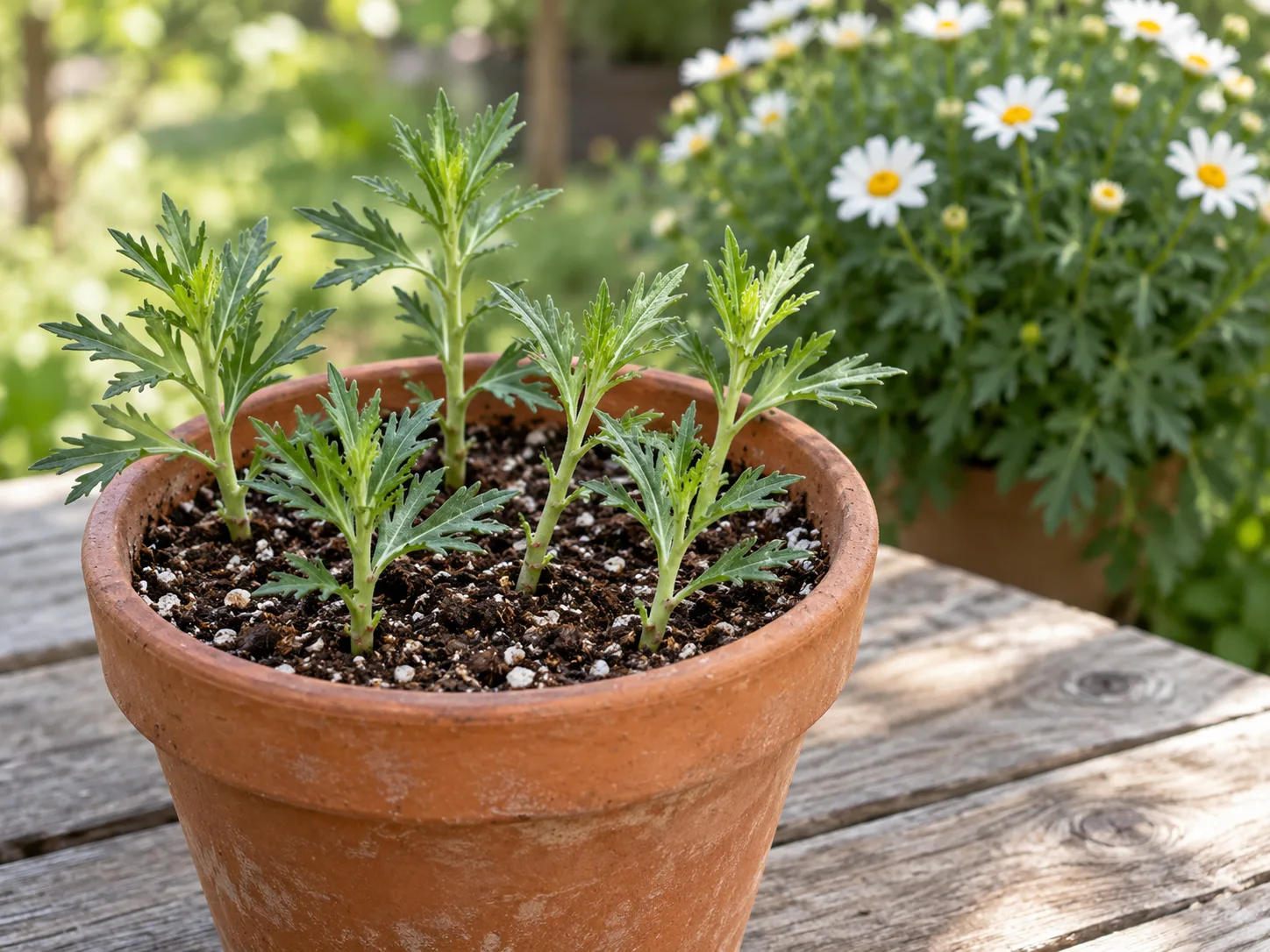
With clean pruners, cut a section several inches long, remove the leaves from the bottom portion, and place it in a clean pot of moist, free-draining propagation mix. A rooting hormone is optional; it cannot compensate for a waterlogged medium or a cutting taken from a weak plant.
Set the pot in bright, indirect light and keep the mix lightly moist, not saturated. A clear cover can slow drying, but leave some ventilation and remove excess condensation so the cutting does not stay wet.
Check for resistance with a gentle tug after a few weeks rather than disturbing it daily; the timing varies with warmth and the maturity of the stem. Once roots hold the mix and new growth appears, move the young plant into a small pot, then harden it off before placing it in full outdoor sun.
Late spring is suited to softer new growth; semi-hardwood cuttings taken in summer have firmer stems. The key is not a precise calendar date but a healthy shoot, warm growing conditions, and a medium that drains.
If a cutting blackens at the base, discard it, clean the container, and restart with a less saturated mix. Keep one or two extra cuttings if you want a backup, since not every cutting will root.
Start seed in spring
Sow fresh seed in spring in a shallow tray filled with clean seed-starting mix. Cover it lightly, keep the surface evenly moist, and provide bright light and gentle warmth; avoid leaving the tray in standing water.
Gardenia lists spring seed propagation at approximately 50–55°F (10–13°C), a cool sowing temperature compared with what many gardeners assume for a South African plant. Treat that as a source-specific starting point and follow the instructions supplied with your seed, because seed freshness and local conditions affect germination.
When seedlings are large enough to handle, pot them separately and let them build roots before hardening them off outdoors. Move them into stronger sun over several days, then plant or pot them after they have adjusted.
Seed-grown plants can vary in vigor and shape, so do not expect every seedling to be an exact copy of a named cultivar. If you want to preserve a particular compact plant, use cuttings instead.
Troubleshoot weak growth and yellow leaves
Before changing care, check the order of likely causes: recent cold, poor drainage, insufficient sun, and inconsistent moisture. These conditions can all reduce growth or flowering, and their symptoms overlap.
Note when the change began, whether it affects old or new leaves first, how wet the root zone is, and whether the plant experienced frost or a move between indoors and outdoors. A short observation log helps you test one correction at a time.
Restore flowering when blooms are sparse
Bush daisy usually flowers less freely when it receives too little direct sun, is repeatedly water-stressed, or is recovering from cold damage. Confirm that nearby shrubs or seasonal growth have not shaded it, then check whether the root zone is staying wet or drying hard between waterings.
In a pot, inspect whether roots have filled the container and whether the mix still accepts water evenly. Correct the limiting condition first; fertilizer is not a substitute for sun or healthy roots.
| What you notice | First check | First action |
|---|---|---|
| Healthy leaves, few flowers | Hours of direct sun | Move the pot or reduce shade if practical |
| Wilting during dry weather | Moisture below the surface | Water deeply, then reassess drying rate |
| Yellowing and wet soil | Drainage and saucer water | Let the root zone drain; correct the wet site |
| Sparse growth after a cold snap | Stem tissue and new buds | Wait for new growth, then trim dead tips |
A plant may also bloom in seasonal waves rather than continuously. NC State Extension describes nearly year-round flowering in mild climates, while UF/IFAS notes that cold weather can reduce winter flowers even in Florida. If the shrub is otherwise healthy and flowering again as temperatures rise, that seasonal pause is not necessarily a care failure.
Investigate yellow leaves before adding iron
Yellowing can result from several different problems. If older leaves yellow after a cold spell, wait to see whether new growth is healthy before pruning heavily.
If the entire plant pales in soil that stays wet, suspect root stress and drainage first. If newer leaves are yellow while their veins remain greener, iron availability can be part of the picture, especially in alkaline soil; UF/IFAS Extension notes that bush daisy can develop yellow foliage from iron deficiency in alkaline Florida soils (UF/IFAS Extension).
Do not apply iron simply because one leaf is yellow. Confirm that the plant is in suitable light, the root zone is draining, and symptoms match a nutrient issue; a soil test or local extension diagnosis can distinguish high pH from water stress or root damage.
If a local expert recommends chelated iron, follow its label carefully. UF/IFAS warns that its foliar iron material can stain concrete and stone, so protect hard surfaces and avoid spraying in windy conditions.
Check for pests and disease without overreacting
The species is not known as a disease-prone shrub in typical garden conditions. NC State Extension reports no known insect pests or diseases for Euryops pectinatus, and Gardenia likewise describes serious pest and disease problems as uncommon (NC State Extension; Gardenia). That does not mean no insect can ever visit the plant; it means a routine spray schedule is not justified by the plant’s profile.
If you see distorted tips, sticky residue, webbing, or chewed foliage, inspect the affected growth closely and identify the cause before treating. Check whether the problem is limited to one branch or widespread, and look at leaf undersides and the newest shoots.
Remove a small damaged tip or rinse a confirmed soft-bodied colony with water if practical, then recheck the plant. Because the flowers attract bees and butterflies, avoid broad insecticide use on open blooms; if damage continues, consult local extension guidance about the identified pest and a targeted option.
Avoid the mistakes that shorten the display
The most common trouble starts before the first flower fades. Planting in shade leads to a loose shrub with fewer blooms; planting in a low, wet pocket puts roots at risk; and treating a frost-sensitive shrub as a hardy perennial can mean losing a plant you expected to return. Make the climate and drainage decision first, then set expectations for water and winter care around that decision.
Other avoidable mistakes include watering an established plant as often as a new transplant, feeding every time flowering slows, and pruning repeatedly into old wood. Use the plant’s response as a guide: establish roots with regular checks, then water less often as the shrub matures; feed only when growth or soil evidence points to a need; and trim lightly after flowering instead of cutting the whole plant back at an arbitrary date. These adjustments keep care proportional and make problems easier to diagnose.
Do not confuse a winter pause with a dead shrub too early. After frost, mark a damaged branch and wait for a mild spell to show where new buds are active; then remove clearly dead tips.
If the plant was exposed to a hard freeze, recovery is uncertain, so avoid fertilizing or pruning aggressively in an attempt to force regrowth. Protect the crown, keep the soil from remaining soggy, and reassess when temperatures rise.
Conclusion: match care to climate and drainage
Bush daisy rewards the right setting with a long show of yellow flowers above fine gray-green foliage. Plant Euryops pectinatus in full sun and soil that drains freely, water more closely while it establishes, and ease off as the roots mature. Lightly prune after flowering, use cuttings or spring seed to make new plants, and treat yellow leaves as a clue to investigate rather than an automatic call for fertilizer.
Most importantly, plan for the winter you actually have. In a mild, sheltered garden, bush daisy can remain an evergreen shrub and bloom for much of the year; where hard freezes are common, a movable pot or a hardier alternative is the more dependable choice. That climate-first decision prevents disappointment and gives the plant the conditions it needs to keep flowering.