How to Grow and Care for Candytuft in Every Season
Learn how to grow and care for candytuft with practical advice on sunlight, drainage, watering, pruning, propagation, containers, and winter protection.
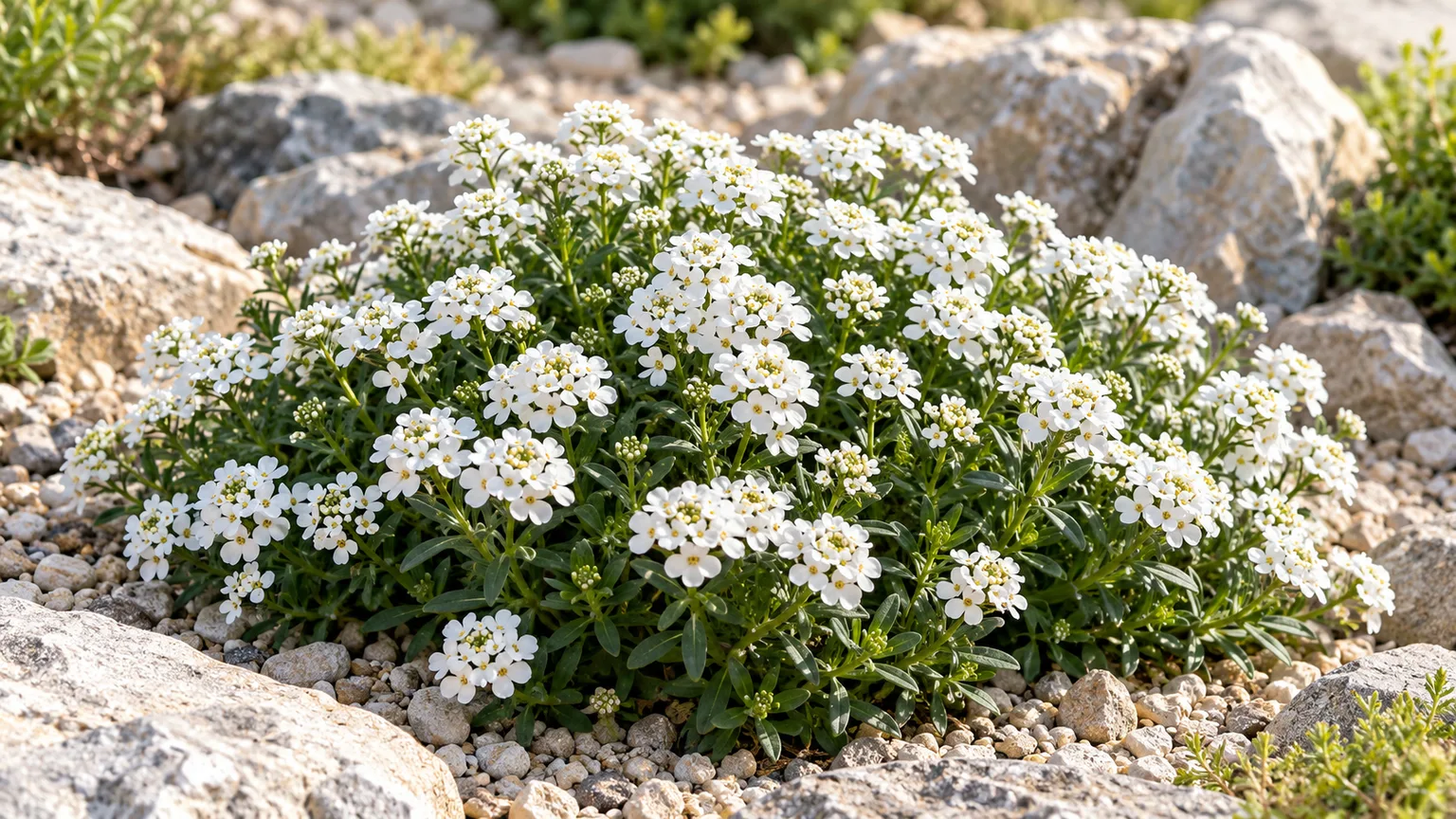
Candytuft is a compact spring bloomer that earns its place where many perennials struggle: along a dry path, at the lip of a raised bed, or in a sunny rock garden. The trick to keeping it handsome is not constant feeding or watering. It is giving its woody crown a site that sheds excess water, then trimming lightly after its main flowering flush.
The name usually refers to evergreen candytuft, Iberis sempervirens, a low, spreading perennial with narrow dark-green leaves and dense clusters of white flowers. It is often listed as hardy across a broad range of USDA zones, but gardeners get better results by matching the cultivar and winter conditions to the site than by relying on a zone number alone. The practical guide below covers planting, seasonal care, propagation, and the signs that tell you what to change.
What Candytuft Is—and Where It Works
Evergreen candytuft is a woody-based subshrub that many references group with herbaceous perennials. That distinction matters: the plant keeps a woody center even when its flowers and soft new shoots make it look like a small perennial ground cover. It typically forms a mound about 6 to 12 inches tall and 12 to 18 inches wide, though cultivar size varies; its dark, narrow leaves may stay evergreen in mild winters and thin out in colder, exposed gardens. NC State Extension’s profile describes the plant as evergreen or semi-evergreen depending on climate, while Oregon State University’s landscape profile notes its spreading habit and spring-to-early-summer bloom.
Candytuft is most useful as a low edging plant, a small-scale ground cover, or a soft spill over a wall. It is not a fast carpet that will smother weeds in one season, and it does not like sitting in a damp pocket under taller plants. Think of it as a flowering evergreen cushion: give it a visible front edge, enough room to spread, and neighbors with similar sun and drainage needs. Its flowers also draw pollinators; Birds & Blooms’ reviewed growing guide highlights its value in borders and rock gardens.
Choose a Site That Dries Quickly
A sunny bed with freely draining soil solves more candytuft problems than any fertilizer or pruning trick. Before planting, watch the spot after a soaking rain: does water move away, or does the crown sit in a puddle or in sticky soil for much of the day? If the location stays wet, choose another pocket, plant on a raised slope, or build a broad raised bed. A gravel surface can look dry while clay below holds water, so judge the soil beneath the mulch as well as the top layer.

Sun and Air Movement
Aim for full sun when you want the most flowers and the tightest growth. Candytuft tolerates light shade, but it may flower less and grow more loosely there. In hot-summer regions, a little late-afternoon shade can take the edge off heat, but keep the plant in bright light for most of the day rather than placing it beneath dense trees or a wall that blocks morning and midday sun.
Air movement matters in humid or rainy climates. A humid region does not automatically rule candytuft out; a crowded, shaded, persistently wet planting is the larger risk. Space plants so leaves dry after rain, water near the soil rather than showering the foliage, and avoid tucking the crown into a lush bed that stays damp. Those adjustments reduce the conditions that favor leaf spots and mildew, which NC State Extension lists as occasional problems.
Soil, Slope, and Drainage
Candytuft accepts a range of soil types but performs best in average to lean soil that drains quickly. Neutral to alkaline soil is a good fit, yet there is no reason to add lime automatically: test before changing pH, because a plant that is yellowing in waterlogged clay will not be rescued by a pH amendment. NC State Extension notes its preference for neutral-to-alkaline soil and intolerance of wet or poorly drained ground.
In heavy clay, improve a wide planting area or use a raised bed rather than filling one small planting hole with loose potting mix. A pocket of amended soil surrounded by dense clay can behave like a basin and hold water around the roots. On a slope or rock garden, position the root crown level with the surrounding soil and let stones stabilize the bed without pressing against the stems. Skip a thick, moisture-holding mulch over the center of the plant; gravel or a thin organic layer around, but not over, the crown keeps the surface open.
Plant Candytuft Without Burying the Crown
Plant nursery starts in spring or early fall, when the weather is mild enough for roots to settle before summer heat or deep winter. Check the label for mature width and leave roughly 12 to 18 inches between average-size plants if you want them to meet as an edging band; dwarf cultivars may need less room. If the tag gives a different spacing, follow the cultivar information rather than forcing every candytuft into the same grid.
Water the plant in its pot before removing it, loosen circling roots gently, and set the root ball so its top sits level with the surrounding ground. Do not bury the crown to make the plant look tidy; wet soil packed over the center can lead to decline. Backfill, firm lightly, and water once to settle soil around the roots. A new transplant needs regular checks while it establishes, but it should not be kept constantly soggy. If the site takes days to dry after rain, fix the location before the plant struggles instead of trying to manage the excess water with more careful watering.
Water by Root-Zone Moisture, Not the Calendar
Newly planted candytuft needs more attention than an established mound. For the first several weeks, check the root ball and surrounding soil every few days; water deeply when the upper inch or two is drying and rain has not replenished it. The goal is to moisten the whole root zone, then let excess water drain—not to keep the surface shiny-wet with daily sprinkling. Container plants dry faster than in-ground plants and need more frequent checks, especially in wind or warm sun.
Once established, candytuft tolerates short dry spells, but drought tolerance does not mean “never water.” During an extended hot, rainless period, check beneath the foliage and water slowly at the base if the soil is dry several inches down and the plant begins to lose turgor. A brief droop during intense afternoon heat that recovers by evening is different from persistent wilt in wet soil. If leaves yellow, stems soften, or the crown smells sour while the soil is wet, stop adding water and investigate drainage; more irrigation is the wrong response to root stress. Birds & Blooms likewise emphasizes moist-to-slightly-dry, well-drained soil and warns that persistently wet ground can contribute to root rot.
Fertilizer: Why Less Is Usually Better
A healthy candytuft in suitable soil generally does not need a regular fertilizer schedule. Heavy feeding—especially with a high-nitrogen lawn or border fertilizer—can encourage soft leafy growth at the expense of flowers, and it will not correct shade, wet roots, or a plant that was pruned at the wrong time. If the plant is green and growing, leave it alone rather than feeding it every spring by habit.
If growth is weak across the whole bed, check the basics first: sunlight, drainage, root crowding, and whether nearby trees are competing for water. A soil test is more useful than guessing at phosphorus or lime. If the test or local extension advice supports an amendment, use the labeled rate and keep granular fertilizer away from the crown. A thin top-dressing of finished compost around—not over—the plant can improve a poor bed gradually, but candytuft does not need a rich, moisture-retaining planting mix to flower well.
Prune After the Main Spring Bloom
The safest routine is a light trim soon after the main spring flower display fades. Cut back the spent flower stems and the upper portion of leafy growth—about one-third is a reasonable ceiling for a healthy, overgrown mound—so the plant branches and keeps a compact outline. Use clean shears and make cuts where green leaves remain. This timing gives new growth time to mature before winter and avoids removing next season’s developing buds.
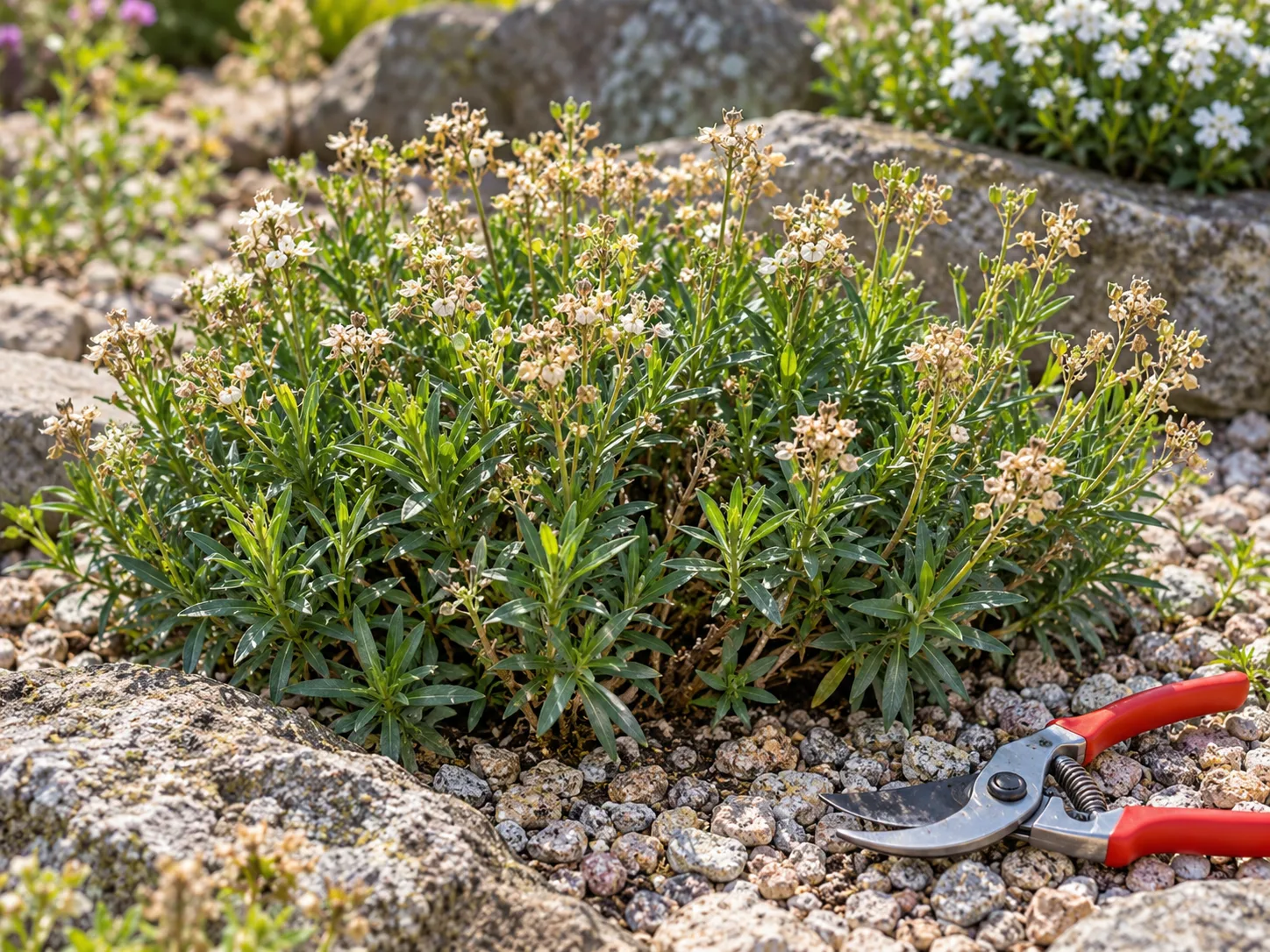
Candytuft is woody at the center, so do not routinely shear it to the ground or cut deep into bare brown stems. A hard cut may leave no leafy buds to push new growth, especially on an old or drought-stressed plant. If the mound has become open and woody, remove dead or damaged stems first, then reduce the leafy edges gradually over a season or two. When you want seed for sowing, leave a few flower clusters until pods dry; deadheading every stem removes that option. Oregon State University and Birds & Blooms both recommend trimming after bloom, while the precise cut should preserve living foliage and the woody crown.
Propagate by Layering, Seed, or Cuttings
Layering is usually the most straightforward way to make another plant that matches the parent. A flexible outer stem can root where it touches soil, so you can encourage that natural habit without digging up a mature, woody clump. Seed is useful for filling a larger area or growing the species, while cuttings are an option if you want to try a second vegetative method. Remember that seedlings from named cultivars may not retain the parent’s exact flower color, height, or bloom timing.
Layer a Stem for a Reliable Clone
In spring or early summer, choose a healthy outer stem long enough to reach a small patch of open, gritty soil. Remove any leaves from the short section that will touch the ground, press that section against the soil, and pin it with a bent wire or a small stone. Keep the soil just lightly moist while roots form; do not bury the entire stem or leave the crown sitting in a wet pocket.
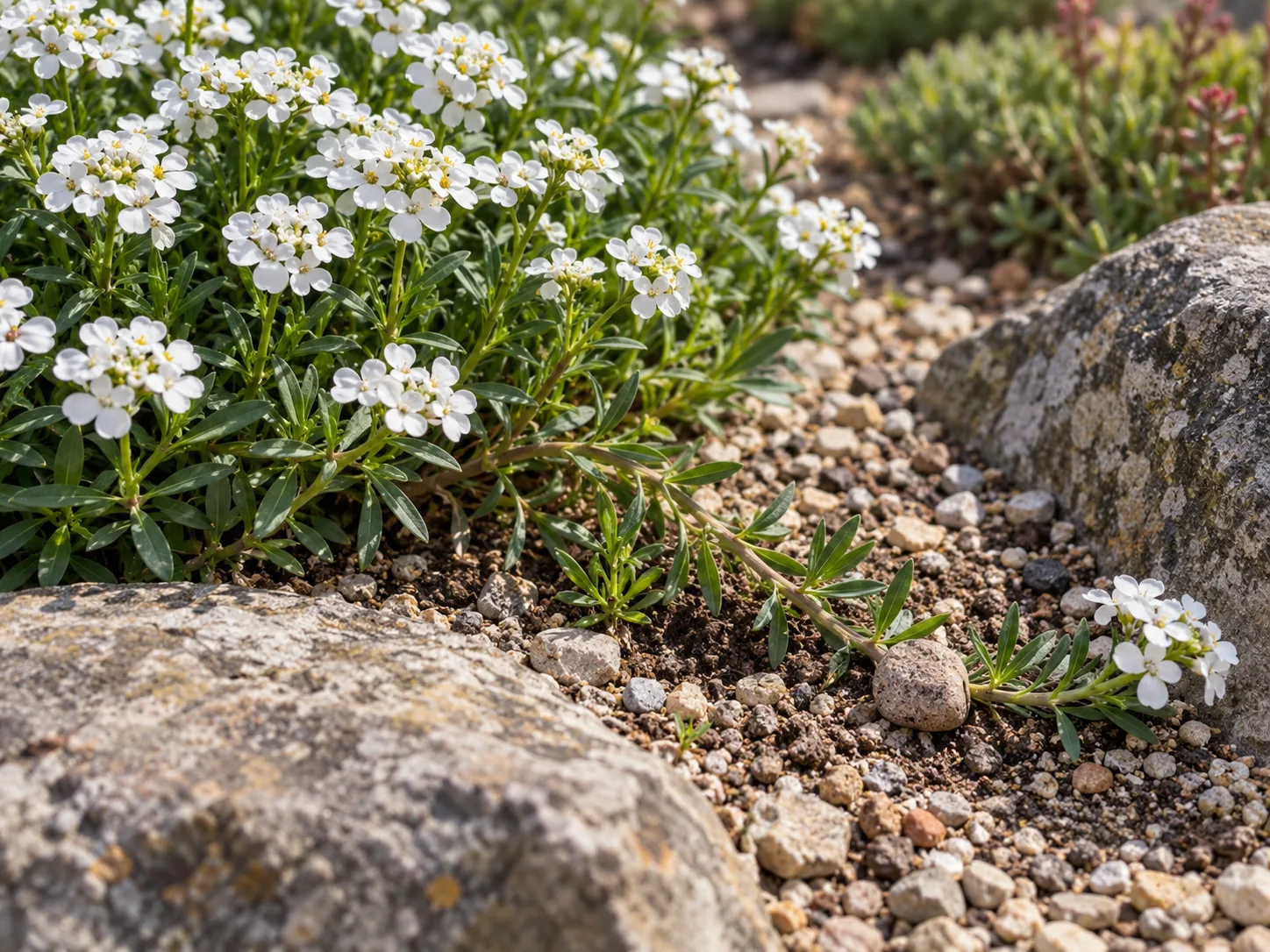
After several weeks, tug gently on the stem. Resistance suggests roots have formed; if it lifts freely, leave it attached and check again later. Once rooted, sever the connection to the parent with clean pruners and transplant the new plant with a small root ball. NC State Extension notes that candytuft stems can root where they contact soil, which makes layering a practical low-disturbance method. If a stem has already rooted naturally, you can carefully lift and replant that rooted section instead of forcing a division through the old woody crown.
Grow Species Plants from Seed
Collect seed only after the small pods have dried and begun to turn tan. Store them cool and dry, then sow in spring after the soil has warmed and is workable; cover lightly according to the seed packet and keep the surface evenly moist until seedlings appear. Thin or transplant seedlings once they are large enough to handle, spacing them for the mature width rather than crowding them to create an instant carpet.
Seed-grown plants take longer to fill in than a nursery start, and a named cultivar may not come true from seed. If uniform flower color or a particular compact form is important, propagate that named plant by layering or buy another labeled start. Gardening Know How’s candytuft guide also describes direct sowing and midsummer softwood cuttings; for cuttings, take several healthy nonflowering tips, keep the medium airy and barely moist, and expect some losses while roots form.
Grow It in a Pot or Retaining Wall
Candytuft can grow in a container, especially when you want it to spill over a sunny wall or soften the edge of a raised planter. Choose a broad pot with generous drainage holes; width matters because the plant spreads sideways more than it grows tall. Use a free-draining container mix amended with grit or perlite, and keep the crown at the same height it had in its nursery pot. A pot without drainage holes is a poor fit, even if you add a layer of gravel at the bottom.
Check container moisture more often than bed moisture, but still let the mix drain between waterings. Empty any saucer after rain, and raise the pot slightly on feet so holes do not seal against a flat surface. In winter, roots in a pot experience colder swings than roots in the ground; move the container to a sheltered, unheated spot or insulate the pot in a cold climate. Repot only when roots crowd the container or the mix stops draining freely. A large, wide container with a stable sunny position works better than a small decorative pot that dries out every afternoon.
Keep It Through Winter
Candytuft’s foliage may remain evergreen in mild regions and become semi-evergreen or look scorched in colder, windy gardens. Zone listings vary: NC State Extension includes zones 3a through 8b, while Oregon State University lists the plant hardy to zone 4. Treat that difference as a reminder to check your cultivar and local growing conditions, not as a promise that every plant will overwinter equally well everywhere.
In cold, exposed sites, the main risk can be drying wind and winter wet as much as low temperature. Water normally through fall while the soil is still workable, then avoid piling wet mulch against the crown. A light layer of mulch or evergreen boughs can reduce exposure in the coldest locations, but keep air around the base and remove protection as growth resumes. In mild areas, no special cover is usually needed. If foliage browns after winter, wait until spring growth shows what is alive before pruning; brown outer leaves do not always mean the crown has died.
Get More Flowers—and Diagnose Few Flowers
Candytuft usually blooms from mid- to late spring into early summer, with timing shifting by climate and cultivar. Oregon State University describes spring-to-early-summer flowers; NC State Extension records bloom from spring into summer. Some selections may repeat later, but do not plan on every plant flowering all summer. The mass of small flowers can nearly cover the mound, then fade to reveal the evergreen leaves again.
When a plant has healthy leaves but few flowers, look at light first. A spot with only a few hours of direct sun can support foliage but give a weaker display. Next, consider pruning: a late-summer or fall haircut may have removed buds or left too little time for growth to mature. Finally, check fertilizer and age; excess nitrogen, recent division, and a young transplant can all shift energy away from flowers for a season. Correct the cause rather than adding high-phosphorus fertilizer automatically. If the plant is vigorous and the flowering window is simply over, leave some spent heads for seed or trim lightly after the main flush. Deadheading may tidy the mound, but it cannot reliably force a second bloom.
Pests, Disease, and Fast Troubleshooting
Candytuft has relatively few serious pest problems when it grows in a sunny, well-drained site. Slugs and snails may chew tender growth in persistently damp spots, while caterpillars can remove patches of foliage. Look under leaves and around the crown before choosing a response; hand-picking or removing hiding places may be enough for a small problem. Avoid spraying a broad-spectrum insecticide by default, particularly when flowers are open and pollinators are visiting.
Wet crowns are a more serious warning than a few holes in leaves. If a plant yellows and wilts while the ground is wet, check whether water drains away and whether the base has softened. Improve the bed or move healthy rooted sections to a drier location; a plant with extensive crown rot may not recover. Powdery mildew, downy mildew, leaf spots, and rust are occasional foliar issues. Improve spacing and airflow, water at soil level in the morning, and remove badly affected material instead of keeping leaves wet overnight. NC State Extension lists these diseases and crown rot among candytuft’s potential problems. If symptoms spread despite cultural changes, identify the disease before using a fungicide and follow the product label exactly.
Yellow leaves on a few older stems can be normal seasonal turnover; widespread yellowing calls for a root-zone check. Stunted growth may follow poor drainage, root damage, or a crowded woody center. Brown foliage after winter points more toward cold, sun, or desiccating wind than a need for fertilizer. Look at the whole pattern—soil moisture, which leaves are affected, and recent weather—before treating a symptom as a diagnosis.
Choose a Cultivar That Fits the Job
Cultivar selection is mainly a choice about footprint, flower color, and bloom timing. ‘Little Gem’ is a compact option for a small front edge; ‘Purity’ makes a wider white mat; and ‘Snowflake’ is known for larger clusters and broader, leathery leaves. ‘Alexander’s White’ is an early-flowering selection with fine-textured foliage. NC State Extension and Oregon State University list these among the named forms worth comparing, though local availability and mature size may vary by nursery.
For color, ‘Pink Ice’ offers pink flowers that can deepen toward purple as the season progresses, according to Birds & Blooms. Read the plant tag for expected height and spread before buying; names such as “dwarf” do not tell you how wide a cultivar will become. If you need a continuous low border, prioritize mature width and a uniform cultivar. If you want a rock-wall spill, select a spreading form and give it room to drape without covering neighboring plants. For pollinator interest, choose the flower form that fits your design and avoid routine pesticide use while it is in bloom.
Conclusion
Candytuft is easy to keep when its growing site matches its natural preference for sun and quick drainage. Plant the crown at soil level, water new starts as their root balls dry, and then let an established mound cycle between watering rather than staying wet. After the spring display, trim only the leafy growth you need to shape; preserve the woody base so it can send up new shoots.
If the plant struggles, check the site before reaching for fertilizer: wet soil, shade, winter exposure, and poorly timed pruning explain more failures than a lack of feeding. Choose a cultivar for its mature footprint, use layering when you want a dependable clone, and protect the crown from winter wet. With those few decisions right, candytuft can give you a low evergreen edge and a bright spring flush without demanding constant care.



