Bleeding Heart Vine Care: Light, Water and Winter Tips
Grow bleeding heart vine with the right light, watering, pruning, and winter protection. Get clear care tips for Clerodendrum thomsoniae indoors or outdoors.
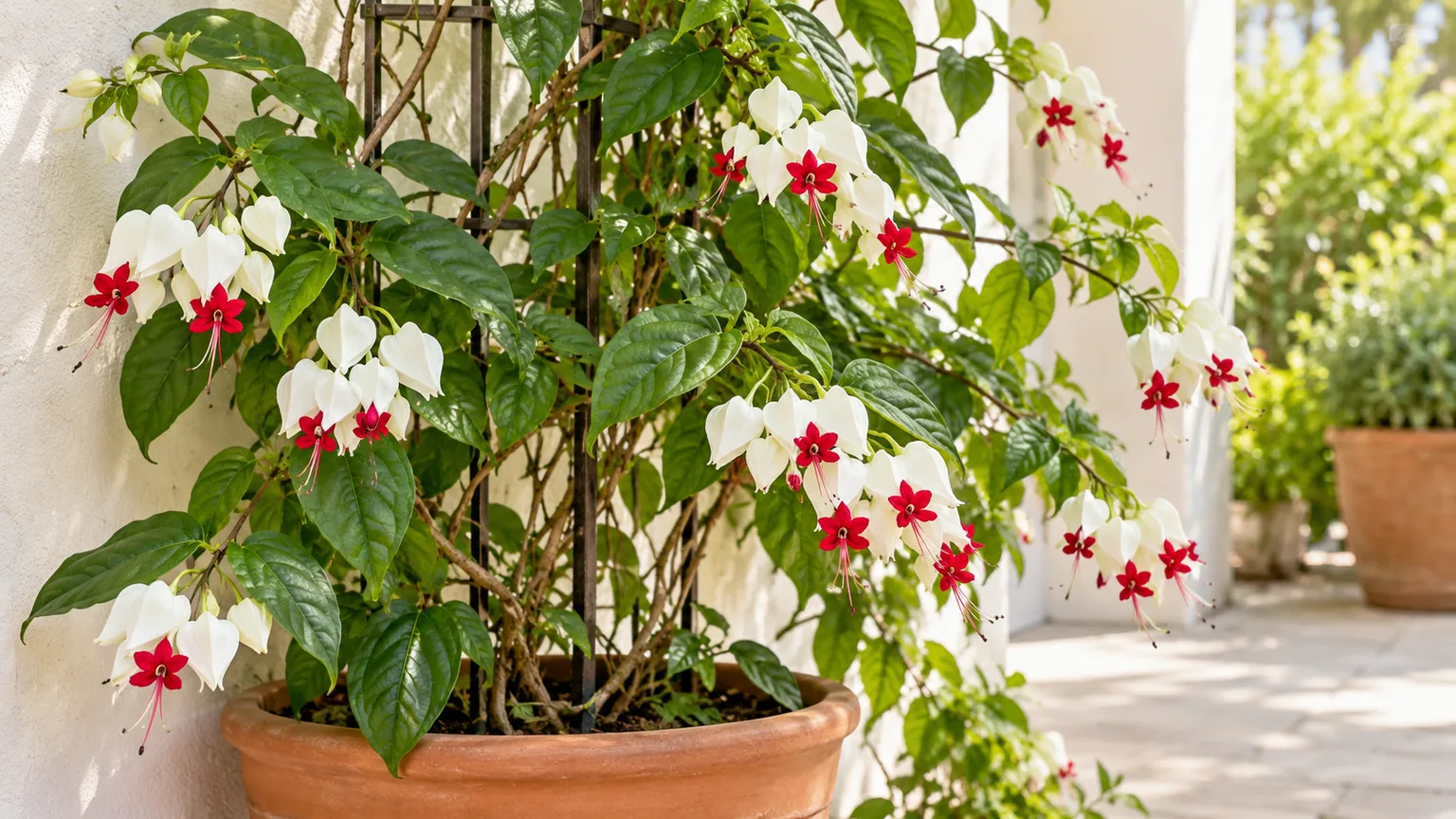
The bleeding heart vine is a warm-climate climber with glossy leaves and pendulous clusters of white calyces that open to crimson flowers. Give it bright light, evenly moist but well-drained soil, room for its stems to twine, and shelter from cold; grow it in a container if winter temperatures threaten it.
First, check the label: this is Clerodendrum thomsoniae, sometimes sold as glory bower or bag flower. It is not the herbaceous bleeding heart that flowers in a shady spring border. That distinction matters because this vine needs considerably more warmth and light, grows by twining, and is managed as a woody tropical plant.
Identify the vine before choosing a care routine
A true bleeding heart vine has opposite, smooth, glossy, oval leaves and slender woody stems. Its flowers sit in clusters: each red corolla protrudes from a papery, balloon-like white calyx. As the flowers age, the white parts can turn pink or lavender and remain decorative after the red corollas fade. The University of Wisconsin–Madison Extension describes the species’ clusters and seasonal changes.
The common bleeding heart is Lamprocapnos spectabilis, still widely sold under its former botanical name Dicentra spectabilis. It is a clumping, herbaceous perennial with fernlike divided leaves and arching stems lined with dangling pink or white heart-shaped flowers. It belongs to Papaveraceae, while the vine is in the mint family, Lamiaceae; NC State Extension’s Plant Toolbox confirms the perennial’s identity and habit. The accepted name and West Tropical African range of C. thomsoniae are recorded by Kew’s Plants of the World Online.
If a plant tag says only “bleeding heart,” look for the botanical name before you decide where to plant it. A photo of heart-shaped flowers alone can be confusing: the vine’s white calyx and red flower are a two-part structure, not a dangling pink heart. A label that says Clerodendrum thomsoniae is the one this guide covers.
Bleeding heart vine care at a glance
| Care factor | Practical starting point |
|---|---|
| Light | Brightest practical position; several hours of gentle direct sun or bright filtered light |
| Soil | Rich, airy, well-drained potting mix or garden soil |
| Water | Water thoroughly when the top layer begins to dry; empty the saucer |
| Temperature | Warm growing conditions; protect from frost and move containers before temperatures approach 45°F (7°C) |
| Feeding | Balanced fertilizer while actively growing; reduce or stop when growth slows |
| Support | Slim trellis, lattice, or pergola for climbing; hanging basket or pruning for a smaller form |
| Pruning | Shape after the main flowering flush; remove cold-damaged growth once new growth resumes |
| Propagation | Semi-hardwood cuttings or serpentine layering |
Treat these as starting points, not a fixed calendar. An outdoor vine in warm, humid weather uses water much faster than a cool indoor plant, and a small nursery pot dries sooner than a large container. The basics are consistent—light, drainage, warmth, and a watchful seasonal routine—but the interval between watering or feeding depends on the conditions around the pot.
Choose indoor, outdoor, or container growing
In frost-free tropical and subtropical gardens, bleeding heart vine can grow on a fence, pergola, or trellis as an evergreen or partly evergreen climber. It can reach roughly 10 to 15 feet in favorable conditions, while containers and pruning keep it more manageable. The Royal Horticultural Society lists it as a sheltered climber for warm, frost-free positions; the National Parks Board of Singapore records a woody twining vine that can reach several meters.
In a cooler climate, a pot is the simplest insurance policy. Grow the vine outdoors through warm weather, then bring it inside before cold nights; indoors, place it near the brightest window and offer a small trellis or let it trail from a sturdy elevated container. If it stays indoors all year, it can still grow and flower, but low winter light and cool rooms often slow it down.
Decide between a planted bed and a movable pot
Plant in the ground only where winter cold is not a recurring problem and the vine has a place to climb. In cold-winter regions, a container lets you move the plant before a chill damages the leaves and stems. It also gives you more control over how far the plant spreads, which is useful because warm-climate plants may send shoots beyond the original support.
Keep a newly purchased plant shaded from harsh afternoon sun for its first few days outside, then increase exposure gradually. That transition reduces scorch on leaves grown under nursery shade or behind glass. Before bringing it indoors, inspect leaf undersides, stems, and the pot rim for insects, and rinse away dust or hitchhiking pests.
Cold-hardiness statements need context. UW–Madison notes that established roots may survive around USDA Zone 9a, but the plant is still tropical and should be protected from freezing; it recommends bringing a container indoors when temperatures fall below about 45°F. That root-survival note does not mean the whole vine is reliably evergreen in a borderline zone. Cold may kill the top growth even if roots resprout later, so use the pot as a movable plant rather than betting a valued specimen on a mild winter.
Give it bright light for sturdy growth and flowers
Put the vine in the brightest practical spot you can provide. Outdoors, full sun to light afternoon shade can work; in very hot climates, morning sun with protection from the harshest afternoon rays is a sensible balance. Indoors, a bright south- or west-facing window is often more reliable for flowering than a dim room several feet from the glass. Recommendations vary by climate: UW–Madison Extension recommends direct sun for good bloom, while Gardening Know How allows partial or dappled light when moisture is adequate. In a hot climate, morning sun and protection from harsh afternoon exposure balance flowering with leaf protection.
Low light usually shows up as long gaps between leaves, thin stems reaching toward the window, and abundant foliage with few flowers. Move the plant in stages to a brighter place so the leaves acclimate rather than scorch. If the leaves bleach or develop dry brown patches on the window-facing side after a sudden move outdoors, reduce the most intense sun for a week and acclimate more gradually.
Light and warmth work together. A warm room with dim light can produce a lanky plant that looks active but will not set many flowers; a bright but cold windowsill can stall growth. If your vine is healthy but has never flowered, increase light before adding more fertilizer.
Use rich, well-drained soil
The roots like regular moisture, not an airless pot. Choose a quality potting mix that holds some water but drains freely, and use a container with unobstructed drainage holes. A peat-free, loam-based mix is suitable under glass, while compost-rich garden soil can work outdoors if water does not collect around the roots; the RHS recommends moist but well-drained conditions and full light with good summer ventilation.
For a container, a general tropical-plant or houseplant mix amended with perlite or fine bark is a practical choice if the mix stays soggy after watering. Avoid filling the pot with straight garden soil, which can compact and drain poorly in a container. You do not need a special acidic mix: the RHS lists the plant as tolerant of acid, neutral, and alkaline soils.
Do not add lime, eggshells, or other calcium sources as a routine bloom treatment. The Singapore NParks profile mentions calcium among cultivation considerations, but that does not establish a universal deficiency in home pots. If leaves yellow or growth stalls, check moisture, roots, light, and fertilizer history first; use a soil test if you have a garden bed and suspect a pH or nutrient problem.
Water by soil condition, not by calendar
During active growth, keep the mix evenly moist but never swampy, the balance also recommended by the RHS and NParks. Check the top inch of soil with a finger; when it feels just dry, water slowly until excess drains through the base, then empty the saucer. On hot, bright days a patio pot may need attention much more often than an indoor plant, so the plant’s environment—not a weekly inch target—should set the rhythm.
Letting the entire root ball dry until the leaves wilt can interrupt growth and flower production. On the other hand, watering again while the mix is still wet reduces oxygen around roots and raises the risk of root rot. If the pot feels heavy and the surface stays wet for days, improve light and airflow, check the drainage holes, and use a looser mix when you next repot instead of adding water on schedule.
A clay pot, a small root-filled container, a windy balcony, or a heat wave can all speed drying. A cool room, low winter light, a large plastic pot, or rainy weather can slow it. Lift the pot occasionally to learn the difference between “recently watered” and “ready for another drink”; this simple check is more useful than copying someone else’s watering frequency.
Keep it warm and plan for a winter slowdown
This is a tropical vine, not a frost-hardy perennial. Bring a container inside before temperatures approach 45°F (7°C), and do not wait for the first frost warning. Chilly air can trigger leaf drop or stem dieback; a sheltered doorway may not provide enough protection if the temperature drops sharply overnight. UW–Madison Extension notes that roots may resprout in spring after cold-weather dieback, but a warm, frost-free winter is the safer way to preserve the whole vine.
The plant may slow down or shed leaves when days shorten and temperatures fall. Some growers give C. thomsoniae a cooler, drier winter rest to support spring and summer flowering; Logee’s cultural sheet describes this seasonal approach for the species. Think “less water as growth slows,” not “leave the pot bone-dry.” If the plant is leafless and resting in a cool room, water sparingly enough to keep the root ball from becoming dust-dry, and pause fertilizer until new growth appears.
If your home stays warm and the vine keeps making leaves, continue to water when the surface begins to dry rather than forcing dormancy. Keep it away from cold drafts, heating vents, and glass that becomes very cold at night. A dropped leaf or two during seasonal adjustment does not automatically mean the plant is dying; check stems for firmness and wait to see whether buds or new shoots swell as light and warmth return.
Feed during active growth, then pause
A balanced fertilizer supports the new stems that carry flowers, but more food is not a shortcut to more blooms. Use a complete liquid fertilizer at the label’s container-plant rate while the vine is actively putting out leaves and stems. For many home growers, a monthly feed during spring and summer is a cautious starting schedule; cut back or stop when growth slows in winter. NParks lists monthly soluble fertilizer or bimonthly slow-release feeding for its tropical cultivation context.
If the leaves are lush and green but flowers are scarce, first rule out low light and untimely pruning. Excessively frequent high-nitrogen feeding can favor leafy growth over a balanced flowering habit. Do not double the dose to compensate for a skipped week, and avoid fertilizing a plant whose roots are stressed by cold or soggy soil.
A potting mix with a starter charge may not need immediate fertilizer after repotting. Follow that mix’s label, then begin feeding when new growth resumes. If pale new leaves persist despite sound light and watering, inspect the roots and check water quality before changing fertilizer or adding a micronutrient supplement.
Train the twining stems onto a support
Bleeding heart vine climbs by twining its stems, so give it a narrow trellis, lattice, wire support, or other framework it can wind around. A sturdy support should be installed before the pot becomes crowded with roots; setting a stake later can damage the root ball. The plant can also be pinched into a bushier mound or grown as a trailing plant in a large hanging basket if vertical height is not practical. UW–Madison Extension notes that all three forms—climbing, shrub-like, and hanging—are possible.
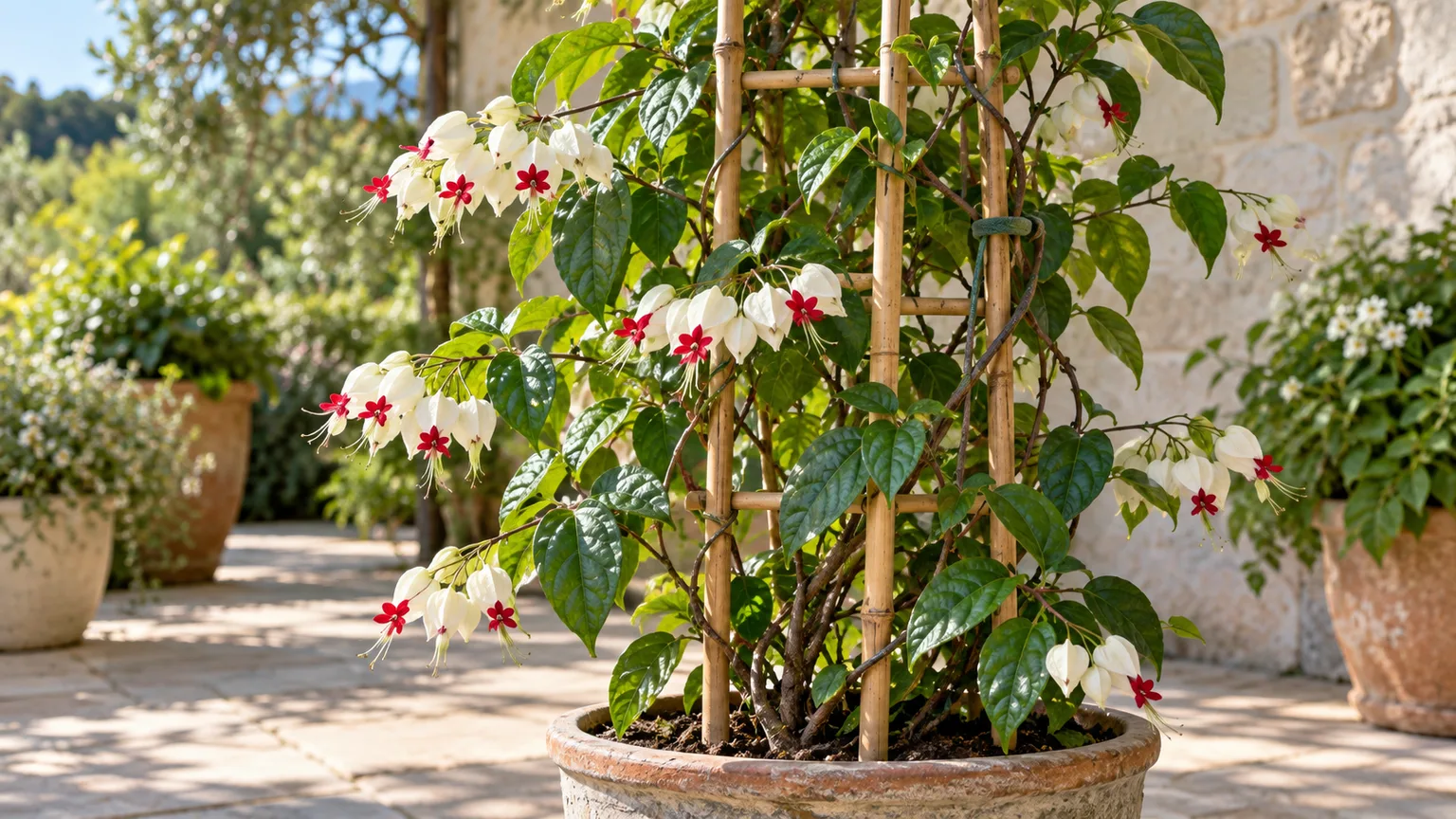
Young stems may need a loose tie to show them where to go, but do not cinch a tie tightly around a growing stem. Use soft garden ties, position the stem against a crosspiece, and leave room for it to thicken. Check ties as the vine grows so they do not cut into the bark.
The natural vine can become long and heavy. Attach a freestanding trellis securely to the container or wall, and do not expect thin decorative wire to carry several seasons of growth. A smaller frame also makes indoor pruning and moving the plant easier.
Prune after flowering without removing the next flush
Bleeding heart vine blooms on fresh growth and responds well to pruning, but the timing should follow your flowering cycle. The simplest rule is to do structural shaping after the main flush has faded, before the next round of buds forms. Remove dead, crowded, or awkward stems first, then shorten the longest healthy shoots enough to fit the support and encourage branching. UW–Madison Extension advises cutting back after blooming; regional flowering schedules vary, so do not rely on a single month for every climate.
For light shaping, cut just above a healthy leaf node. To make a fuller plant, pinch the tips of young shoots once they have grown a few sets of leaves; this encourages side shoots and gives the plant more places to flower later. Clean, sharp pruning shears make a smooth cut and reduce the chance of tearing soft new growth.
A severe renovation is possible on a vigorous established plant, but it carries more risk than routine trimming: you lose leaf area, the vine may take time to rebuild, and a badly timed cut can remove developing bloom wood. If the plant has become tangled, thin a few old stems at the base over more than one season rather than shearing every stem to a stump. In a cold-climate container, wait until the plant resumes spring growth before deciding which apparently bare stems are truly dead.
Repot when the roots or mix call for it
Repot when roots circle tightly around the root ball, escape through drainage holes, or the mix has become compacted and hard to wet evenly. A plant that wilts soon after watering because its pot is almost all roots also needs room. If it is healthy, drying at a reasonable rate, and flowering, there is no need to disturb it just to follow an annual repotting schedule.
Move up only one container size, with drainage holes at the base. A pot that is dramatically larger than the root ball stays wet longer, especially indoors in low light, and can create the very root problems you are trying to avoid. Gently loosen only the outermost circling roots, set the plant at its former soil level, and water it in so the new mix settles around the roots.
A slight restriction of roots is not a necessary flowering trigger. Do not leave the vine dehydrated or pot-bound to force flowers; instead, keep it stable in a pot that supports the root system and lets excess water escape. If you want a smaller, more floriferous-looking container specimen, maintain its size with pruning rather than deliberately withholding water or nutrients.
Propagate with semi-ripe stem cuttings
The easiest home method is a stem cutting taken when new growth has begun to firm up but is not fully woody. Choose a healthy, nonflowering shoot after a flowering flush, and use clean pruners. A 4- to 6-inch piece with at least two nodes gives you a practical length: remove leaves from the lower node, keep one or two leaves at the top, and trim just below a node where roots can form.
Set the cutting into moist, free-draining propagation mix, covering the lower node. A clear bag or propagator can hold humidity, but keep the cover from touching the leaves and open it briefly each day for fresh air. Place it in warm, bright indirect light; direct sun can overheat a covered cutting and cause it to wilt before roots develop. Keep the mix slightly moist rather than saturated.
You can also root a cutting in water, then move it to potting mix once roots are visible. Water-rooted cuttings sometimes sulk while adjusting to the denser medium, so handle their new roots gently and keep the first potting mix evenly moist. UW–Madison Extension reports that roots may form in about two weeks under favorable conditions, but warmth, cutting maturity, and humidity change the timing. New growth and resistance to a gentle tug are better signs of establishment than a calendar date.
If one cutting fails, check that the stem had viable nodes and that the mix was not cold or waterlogged. Try several cuttings from a healthy parent plant to improve your odds, but do not remove so much growth that the parent loses its next flowering structure. Layering a flexible stem into a neighboring pot is another option when you want a new plant without detaching the shoot before it roots.
Get more flowers by fixing the limiting factor
A well-grown vine may flower most heavily in summer, and in warm, bright conditions it can repeat flowers over a longer period. The white calyxes remain attractive longer than the red corollas, so a cluster that has lost some red petals may still be developing normally. UW–Madison Extension notes that sufficient light and warmth can extend flowering for much of the year, with the strongest display in summer.
Work through the main bloom limits in order. First improve the light if the plant is growing lanky stems indoors or sitting under deep shade outdoors. Then check whether it is warm enough for active growth, whether the mix is drying fully between drinks, and whether you have recently pruned off the newest shoots. Only after those factors are in range should you review fertilizer timing or root health.
Do not cut the whole vine back just because one cluster fades. Remove spent clusters for a neater appearance, but leave healthy leaves and stems to support new growth. If you need a major trim for transport or indoor space, do it after flowering and expect the plant to spend time rebuilding before it flowers again.
No single trick can guarantee a bloom. A root-bound pot, a spoonful of calcium, or a high-phosphorus fertilizer cannot compensate for weeks of dim light or cold roots. A bright position, warm growing season, measured feeding, and pruning that leaves fresh shoots in place are the dependable levers.
Diagnose leaf drop, yellowing, and pests
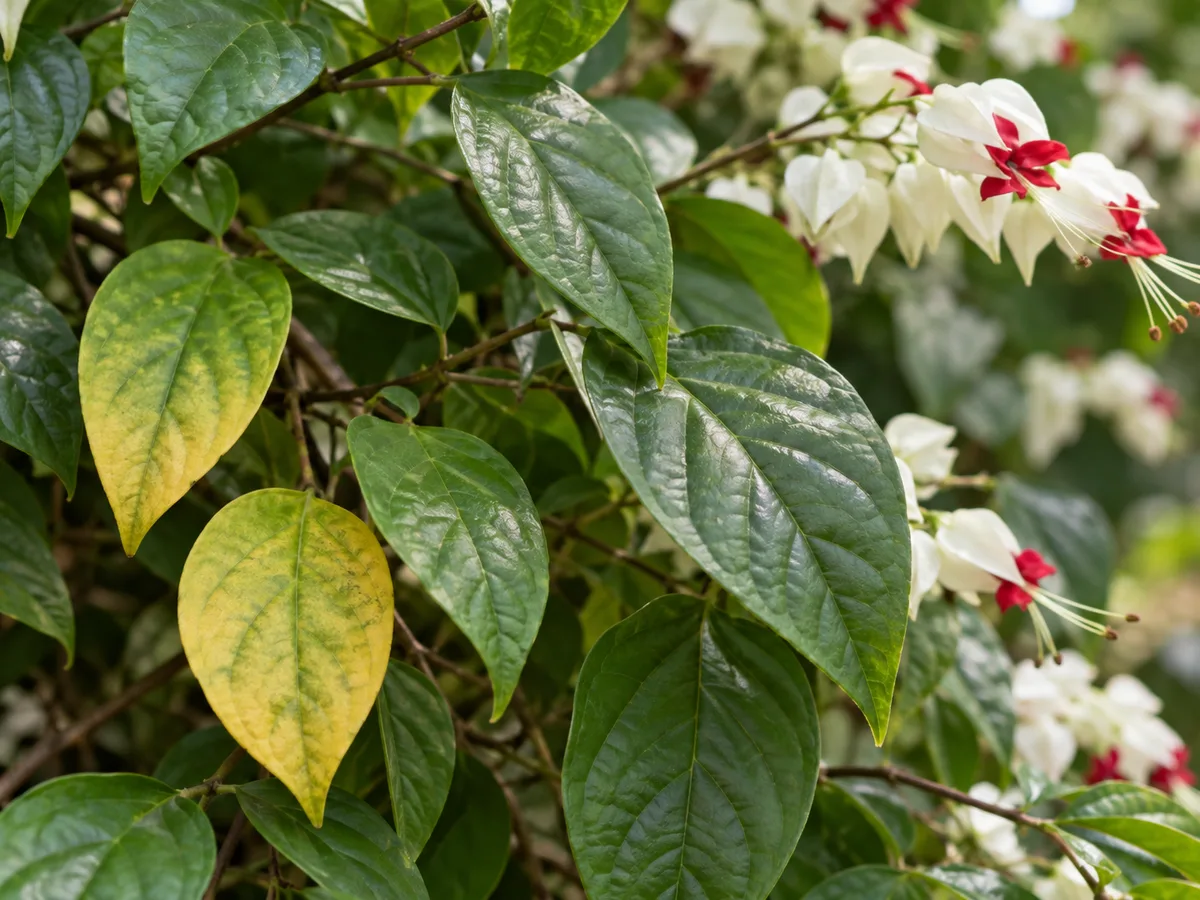
Yellow leaves are clues, not a diagnosis. Start by asking whether the plant recently moved, had a cold night, changed watering, or has been in lower winter light. A few older leaves yellowing as growth slows can be seasonal; many leaves yellowing while the potting mix is wet for days points more strongly toward root stress. Check soil with a finger and inspect the drainage holes before adding fertilizer.
| What you notice | Check first | Useful next step |
|---|---|---|
| Many leaves fall after a cold night or move | Temperature and drafts | Move it to a warm, bright, sheltered place; wait for new growth before cutting bare stems |
| Lower leaves yellow while mix stays wet | Drainage and root condition | Empty the saucer, let the surface dry, and inspect roots if decline continues |
| Leaves droop and the root ball feels very light | Dry mix and container size | Water thoroughly, drain well, and check again sooner during heat |
| Pale, crispy patches appear on the window side | Sudden sun exposure | Reduce harsh afternoon sun and acclimate to brighter light gradually |
| Stems stretch with long gaps and no flowers | Low light | Move closer to a bright window or a brighter outdoor position |
Do not assume yellow leaves mean iron, manganese, or calcium deficiency. Nutrient symptoms can look similar to waterlogged roots, cold stress, and normal leaf aging. If the plant remains pale after correcting light, temperature, and watering, check for pests and root damage; test garden soil before applying amendments.
Check mealybugs, spider mites, and whiteflies early
Inspect the undersides of leaves, nodes, and the point where stems meet the support. Mealybugs leave small white cottony clumps; spider mites can cause pale stippling and fine webbing; whiteflies flutter up when a leaf is disturbed. The RHS lists all three among pests that may affect plants grown under glass, and Logee’s recommends checking leaf undersides for pests.
If you find insects, isolate the container from other plants. Rinse the foliage, wipe visible clusters with a damp cloth or cotton swab, and repeat inspections over the next few weeks because pests can return from eggs or hidden nodes. If the infestation persists, use a product labeled for the pest and plant, following its directions; test it on a few leaves first and keep treated foliage out of strong direct sun until it is dry.
Soggy soil and damaged roots call for a different response from insects. If roots are brown and mushy or smell sour, trim only the damaged tissue with clean shears and repot into fresh, free-draining mix. A watering adjustment alone may not rescue roots that have already rotted, but a healthy stem cutting can preserve the plant while the remaining roots recover.
Treat the plant as a possible spreader and keep it away from pets
Bleeding heart vine is not the same plant as the aggressively spreading glorybower species you may read about in local invasive-plant lists, but it can still be vigorous in warm gardens. The University of North Florida Botanical Garden notes that this vine may spread by underground shoots and by stems that root where they touch the ground. In a small bed, near natural habitat, or anywhere you need strict boundaries, grow it in a container and remove rooted runners before they establish.
Pet-safety claims also deserve care. The Pet Poison Helpline groups plants under Clerodendrum and says some species are considered non-toxic while others may cause gastrointestinal upset or contact dermatitis; that is not a species-specific clearance for C. thomsoniae. Keep a chewing pet from the plant and ask your veterinarian or a pet poison service for advice if an animal eats it. The unrelated herbaceous bleeding heart is a different plant with a better-established toxicity warning, another reason to identify the vine by its botanical name.
Conclusion
Grow bleeding heart vine as the tropical twining climber it is: give it bright light, warm conditions, rich but draining soil, and enough support to keep its stems orderly. Water when the surface starts to dry rather than by the calendar, reduce care when the plant naturally slows, and protect it before cold reaches the container.
Most bloom problems improve when you correct light, warmth, watering, or pruning timing instead of adding fertilizer or forcing the roots to stay crowded. Identify the plant accurately, watch it through one full seasonal cycle, and make the next adjustment from the evidence the vine gives you.



