20 Cabbage Companion Plants to Help Them Grow Stronger
Find 20 cabbage companion plants by purpose, plus spacing, timing, and pest-control limits so flowers and vegetables help without crowding your cabbage crop.
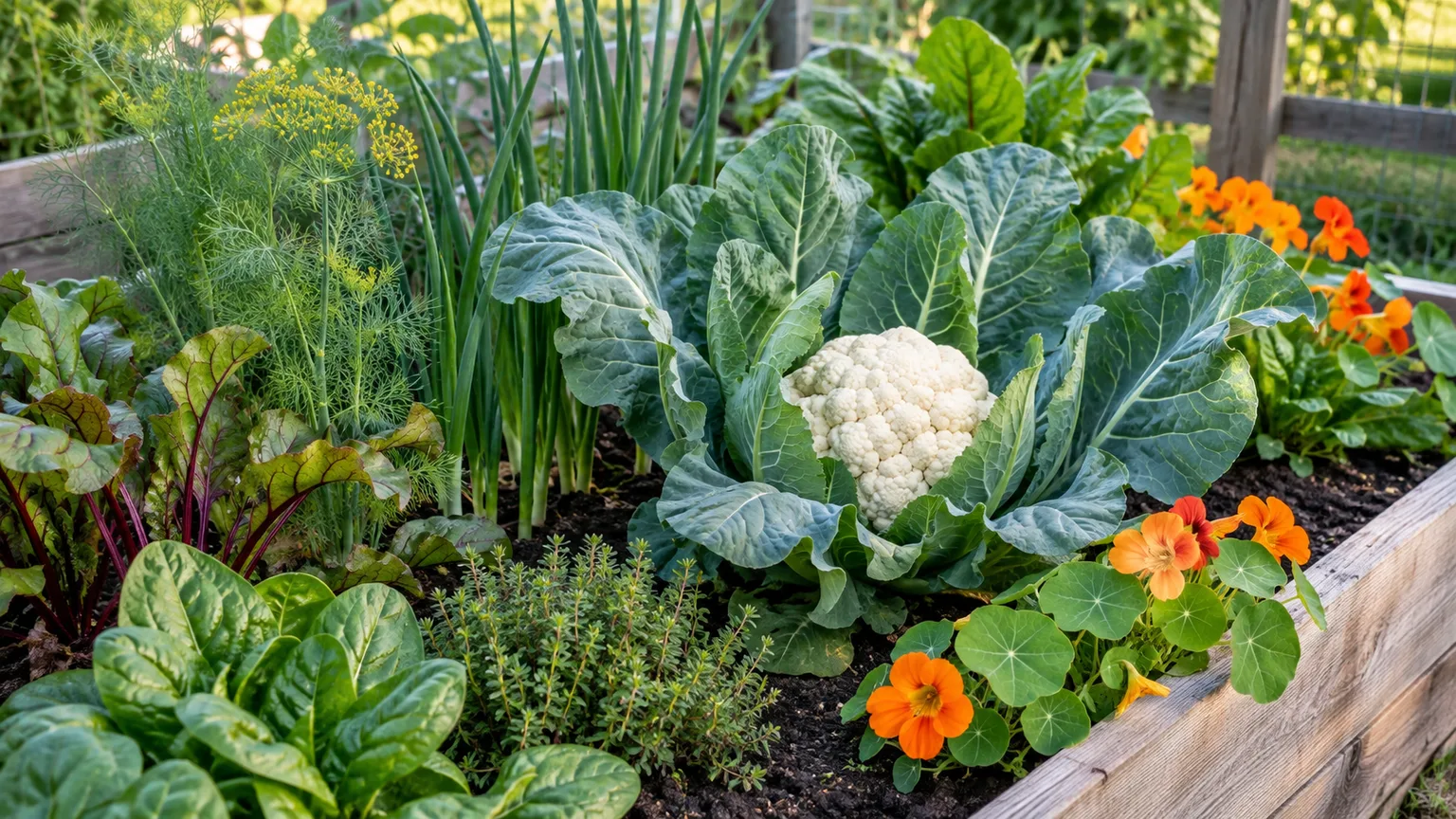
Cabbage can share a bed with flowers, herbs, and quick vegetables, but no single neighbor will reliably repel every cabbage worm or guarantee a bigger head. The most useful cabbage companion plants do a specific job: fill space before the leaves spread, provide flowers for beneficial insects, make a monitored trap-crop experiment, or add a harvest without shading the crop.
That distinction matters because companion planting is not a fixed list of plant friendships. The result depends on the species, how many plants you grow, when they flower, where you place them, and which pests are already in your garden. Treat the choices below as a menu. Pick one or two that fit your bed, preserve the cabbage’s growing room, and keep the crop easy to inspect.
What companion planting can do for cabbage
A companion can help in three practical ways. A short-season vegetable can turn open soil into an earlier harvest; a flowering plant can supply nectar or pollen to adult predators and parasitoids; and a diverse planting may make it harder for some pests to locate a single host crop. Those are different mechanisms, and they do not all have equally strong evidence for cabbage.
A small 2009 Iowa State field trial reported less cabbage-caterpillar damage in some plots with onion, nasturtium, or thyme than in the control, while a later trial tested thyme, marigold, hyssop, and peppermint. Both reports came from one research farm and limited field demonstrations; they offer leads worth testing, not proof that a pot of thyme will protect a home cabbage bed. The 2009 Iowa State report notes an unusually wet, mild growing season and two replications; the later report describes trap crops as tools for monitoring and control that may not solve a pest problem completely.
More recent white-cabbage trials in Germany and Japan also show why broad claims need caution. Wheat undersowing reduced one aphid species but not cabbage aphid, sweet alyssum brought more adult hoverflies in Germany but not Japan, and alyssum intercropping increased flea beetles on cabbage at both sites. Neither treatment significantly changed cabbage harvest weight. The peer-reviewed study is useful because it reports both the potential benefit and the trade-off: a companion that feeds beneficial insects can still help a pest or fail to improve yield.
So what is the best companion plant for cabbage? The honest answer depends on the job. Lettuce or spinach is a sensible space-sharing choice; buckwheat or flowering herbs add insect habitat; thyme or nasturtium may be worth a small monitored trial; and row cover is a more dependable choice when your main goal is to stop cabbage butterflies laying eggs. The Royal Horticultural Society’s companion-planting guide similarly treats space use, insect management, and plant support as separate reasons to combine plants.
Give cabbage room before adding neighbors
Cabbage needs sun, fertile soil, steady moisture, and enough air and light to build a head. Its final size varies by variety: University of Minnesota Extension recommends roughly 18 inches between plants in a home garden, while other guidance allows closer spacing for compact types. Follow your seed packet, and remember that the outer leaves spread wider than the head. A neighbor fits only if you can still reach the cabbage, water the root zone, and see both sides of its leaves.
The low-risk rule is to keep the cabbage’s own spacing intact and use the gaps early, while plants are small. Sow quick crops in a strip near the edge, not directly against the stem. Put tall or woody companions beyond the mature leaf line. If a plant needs a different watering pattern—rosemary and sage, for example, usually prefer sharper drainage than cabbage—grow it in a nearby pot or at the driest edge rather than inside the cabbage row. For spacing and care, see University of Minnesota Extension’s cabbage guide and the RHS cabbage-growing guide.
The entries below are not 20 pest repellents. Some are reliable space-sharing crops, some are nectar sources, and a few are experimental companions whose effect depends on local pest pressure. That is a more useful way to choose than expecting every plant on a chart to protect every cabbage.
20 cabbage companion plants, sorted by job
Flowers that feed beneficial insects
Small open flowers matter because many adult beneficial insects need nectar or pollen, while their larvae or offspring may prey on aphids, caterpillars, or other pests. Flowers can support that food web, but they cannot summon predators on schedule or keep a moth from landing on a cabbage leaf. Fine Gardening’s horticulture overview of companion planting explains the role of nectar, pollen, and prey in maintaining beneficial insects; use this group as habitat, not as a physical barrier.
1–6: Sweet alyssum, buckwheat, dill, cilantro, parsley, and yarrow
1. Sweet alyssum is a compact flower often used as an insectary plant because its small blooms are accessible to tiny beneficial insects. A field-scale cabbage study tested it alongside trap crops, but the alyssum itself did not consistently reduce pest numbers on cabbage; a separate Germany–Japan trial found more flea beetles on cabbage when alyssum was intercropped. Try it at the outer edge if flea beetles are uncommon in your garden, and skip it or keep it away from the cabbage if those beetles are a recurring problem.
2. Buckwheat is a fast annual that can flower quickly and provide a short-lived nectar source. In a field-scale organic cabbage system, researchers used buckwheat as an insectary plant beside a trap-crop mix; natural enemies increased on some trap-crop plants, but the study did not show that buckwheat alone reduced pests on the cabbage crop. Use a short border strip, cut it before seed set if you do not want volunteers, and do not let it shade young heads.
3. Dill earns its place when you let some plants flower. The flat flower clusters provide a landing and feeding site for small insects, and the feathery foliage occupies less ground than a broad flower clump. Plant dill at the end of a row so mature stems do not fall across cabbage leaves. Harvest a few plants for the kitchen and leave one or two to bloom; a dill plant cut before flowering cannot provide the same flower resource.
4. Cilantro (coriander) bolts quickly in warm weather, which can be inconvenient if you want leaves but useful if you want flowers. Sow a small succession at the edge of a spring cabbage bed, harvest leaves while the weather is cool, and let one sowing bloom after it becomes too hot for good leaves. It is a low-cost habitat experiment, not a proven cabbage-worm repellent, and self-seeded plants should be thinned before they crowd the crop.
5. Parsley is slower to flower because it is usually grown as a biennial. A plant that survives winter may send up flower stems in its second year and serve as a longer-lasting insectary, but its foliage is not a quick pest shield. Keep parsley at the edge where it is easy to cut and inspect. If you need every inch for cabbage heads, use a small pot rather than sacrificing crop spacing to a plant that may not flower during the first season.
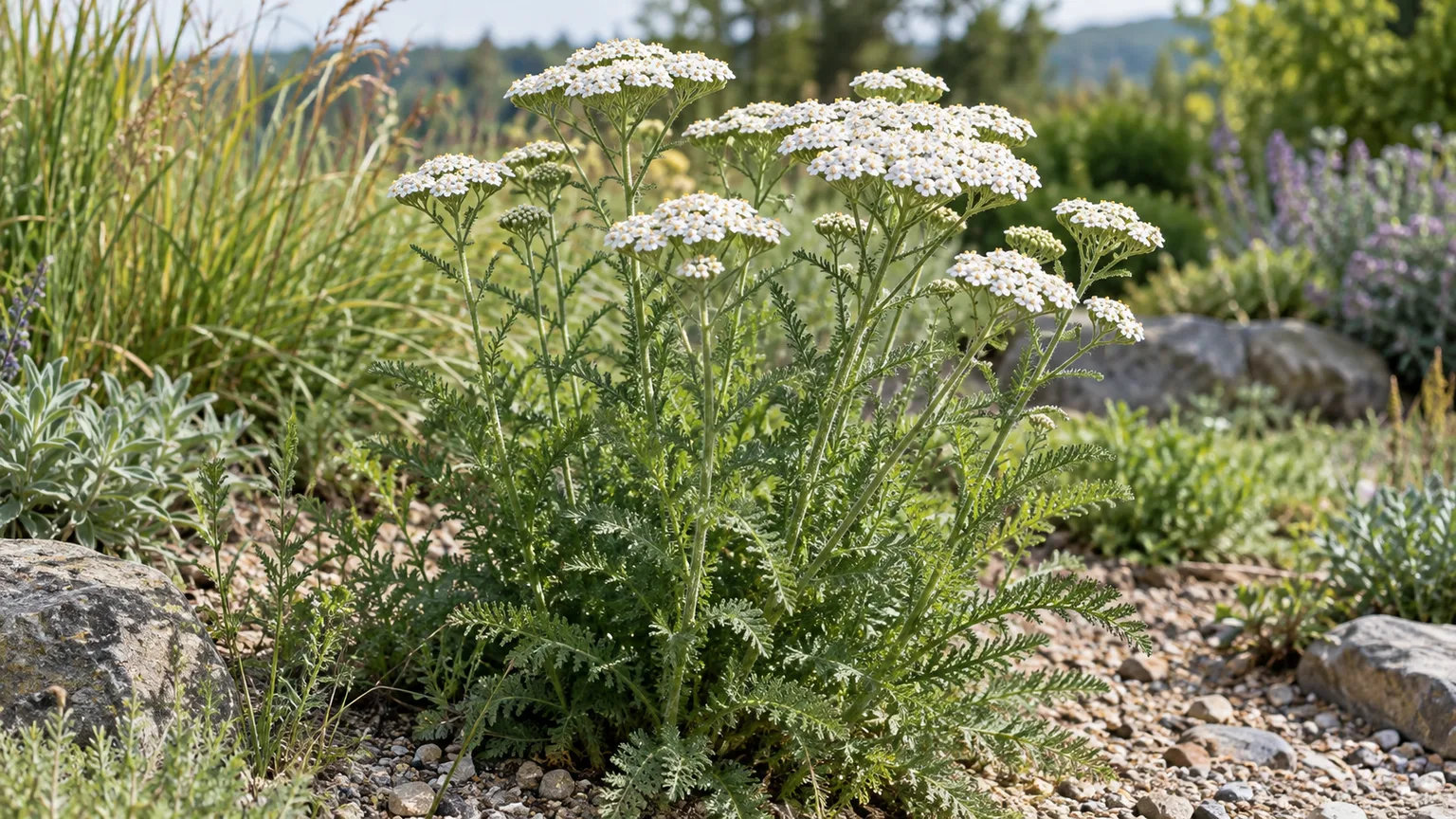
6. Yarrow is a perennial border plant with clusters of small flowers that can support a range of insects. It is useful beside a vegetable bed rather than between cabbage plants: established clumps spread, and their tall flowering stems can shade neighboring leaves. Choose a site where it can flower without leaning over the crop, and check whether the variety is suited to your region before planting; some yarrows self-seed freely.
7–9: Chamomile, calendula, and French marigold
7. Chamomile brings a fine-textured, low annual or perennial flower to the bed edge, depending on the species. It can make a cabbage patch more diverse and gives you a flower to observe for visiting insects, but there is little reason to treat its scent as a dependable cabbage-worm control. Keep it out of the central row, and remove spent plants if they become a dense mat that traps moisture or blocks access to the cabbage stems.
8. Calendula is an easy cool-weather flower for a sunny border and can bloom while spring cabbage is establishing. Its main reliable value here is an additional flower and a visual marker at the edge of the planting, not guaranteed repellence. Leave enough room to reach the cabbage; if calendula self-seeds into the row, thin the seedlings while they are small rather than allowing a thick patch to compete for water.
9. French marigold is widely promoted as a general pest repellent, but that is too broad a promise for cabbage. Certain marigold treatments have shown effects on particular pests and crops, yet results do not establish that a few marigolds will repel cabbage butterflies or stop loopers. A small Iowa field report did record less caterpillar damage in some cabbage treatments with marigold, but it was a single-site demonstration. Grow it for flowers or as a monitored experiment, and keep row cover ready if caterpillars are the real problem.
Quick crops that use open bed space
A quick crop can be a better companion than a “repellent” because its benefit is visible: you harvest something before cabbage fills the bed. The RHS describes this as intercropping fast-maturing plants such as lettuce and radish with slower crops, then harvesting them before the larger plant casts shade. The same timing rule works for cabbage. If leaves begin to overlap and the small crop is struggling, harvest or remove it rather than insisting that the pairing remain in place.
10–14: Lettuce, spinach, Swiss chard, carrots, and beets
10. Lettuce is one of the simplest gap crops for young cabbage. Sow a short row near the bed edge at transplanting, then harvest leaf lettuce as the cabbage canopy expands. Do not plant a mature head-lettuce row inside the cabbage’s future leaf spread; you will lose air circulation and have to reach through the cabbage to harvest it. In hot weather, lettuce may bolt before the cabbage is ready, so treat it as a spring or fall crop.
11. Spinach shares the cool-season window and stays relatively compact when harvested young. It can fill a strip of open soil in early spring or fall, but it still needs water and light. Sow it outside the cabbage planting hole and pick leaves before they are buried under the cabbage canopy. If spinach begins to bolt, turn tough, or remain wet and shaded under large leaves, pull it and keep the area open for airflow and inspection.
12. Swiss chard can produce a longer harvest than lettuce or spinach, but its mature leaves are broad enough to compete with cabbage. Use one or two plants along the sunny edge instead of a continuous row, harvest outer leaves regularly, and remove a plant that starts leaning over the cabbage. Chard is a useful companion when you want another leafy crop and have a larger bed; in a narrow bed, spinach is easier to clear before it crowds.
13. Carrots make a reasonable space-sharing crop because their tops stay modest when thinned and the roots do not form a wide leaf canopy. They take longer to establish than lettuce, so sow them early and keep the seedbed evenly moist until they emerge. Avoid repeated digging close to established cabbage roots when you harvest. The benefit is a second crop in the bed, not an assurance that carrot scent will protect cabbage from insects.
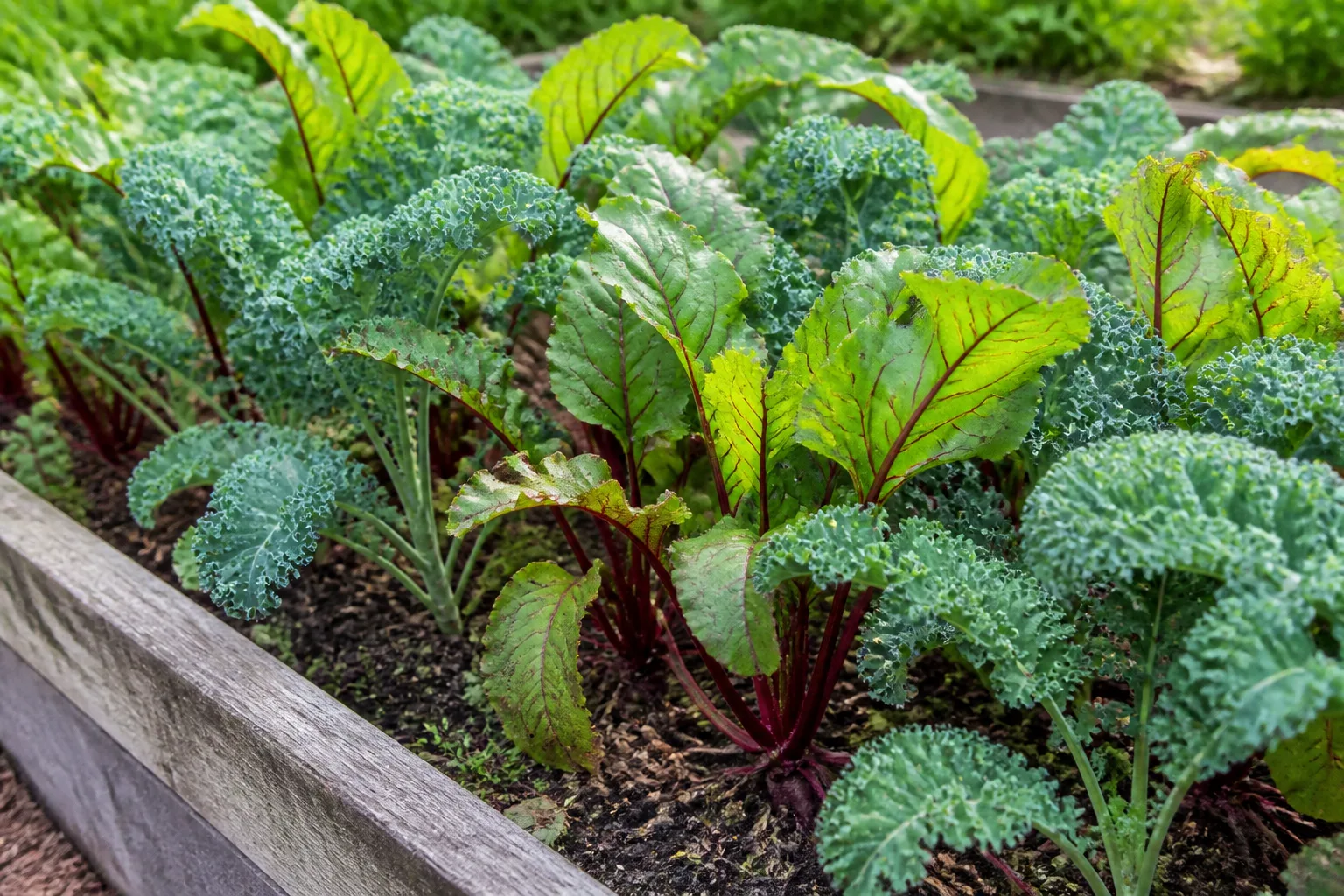
14. Beets are another cool-season root crop, with edible leaves as well as roots. Sow a short row where cabbage leaves will not shade it later, thin crowded seedlings, and harvest the roots before the cabbage closes over them. Beets can share a bed for part of the season, but their roots still compete for moisture and nutrients. The RHS guide to companion planting uses beets and lettuce as examples of crops that can occupy space between larger vegetables when timing and mature size are managed.
Alliums, an herb, and a monitored decoy
Aromatic foliage is often described as a way to “confuse” pests. Insect behavior can respond to plant odors, color, and shape, but the effect depends on the pest and the planting pattern; a few scented leaves do not form an invisible shield. These last six choices have other clear uses—edible harvest, a compact border, or a deliberate trap-crop trial—so they remain worthwhile even when pest pressure does not change.
15–19: Peas, onions, garlic, chives, and thyme
15. Peas can share a cool-season calendar with cabbage, especially if you grow a short bush variety or finish the pea crop before a fall cabbage transplant needs the space. Do not place a tall pea trellis on the sunward side of cabbage; the leaves and support can shade the heads. Peas fix nitrogen in partnership with soil bacteria, but a living pea plant does not instantly pass a measured dose of nitrogen into its neighbor. Their most dependable companion value is a separate harvest and a possible rotation benefit after residues break down.
16. Onions have narrow leaves and can fit along a bed edge without taking much overhead space. They are a practical harvest companion, but do not count on onion odor alone to stop cabbage worms. A small Iowa State trial reported lower caterpillar damage in some onion treatments, but its limited design is not enough to promise that a row of onions will protect your cabbage. Test the idea in a small area rather than planting a dense ring around every head. Leave room to pull bulbs without disturbing the cabbage’s root zone.
17. Garlic can occupy a border or a different part of a bed through much of the cabbage season. Its smell is often said to repel pests, but reliable protection from cabbage caterpillars has not been established for an ordinary home planting. Use garlic because you want to harvest it and can give both crops enough light, not because it replaces netting. If the garlic was planted the prior fall, harvest it before a later cabbage crop expands into the same space.
18. Chives are a compact perennial allium with edible leaves and flowers. A small clump at the edge is easier to manage than spreading mint or a large woody herb, and the flowers add another nectar source when allowed to bloom. Chives will return each year, so do not place them where you need to rotate cabbage or other Brassicas; keep the clump in a separate border or pot that can stay put.
19. Thyme is worth distinguishing from the sweeping claim that every aromatic herb repels pests. Thyme was among the more promising companions in a small Iowa field report, including lower cabbage caterpillar damage in some arrangements, but the result is not enough to make it a guaranteed control. It also prefers well-drained soil and can become woody, so a sunny bed edge or nearby pot is a better fit than the moist, crowded center of a cabbage row. The Old Farmer’s Almanac’s cabbage-worm guide also presents thyme as a possible companion; use that as a trial idea, not a substitute for monitoring.
20: Nasturtium
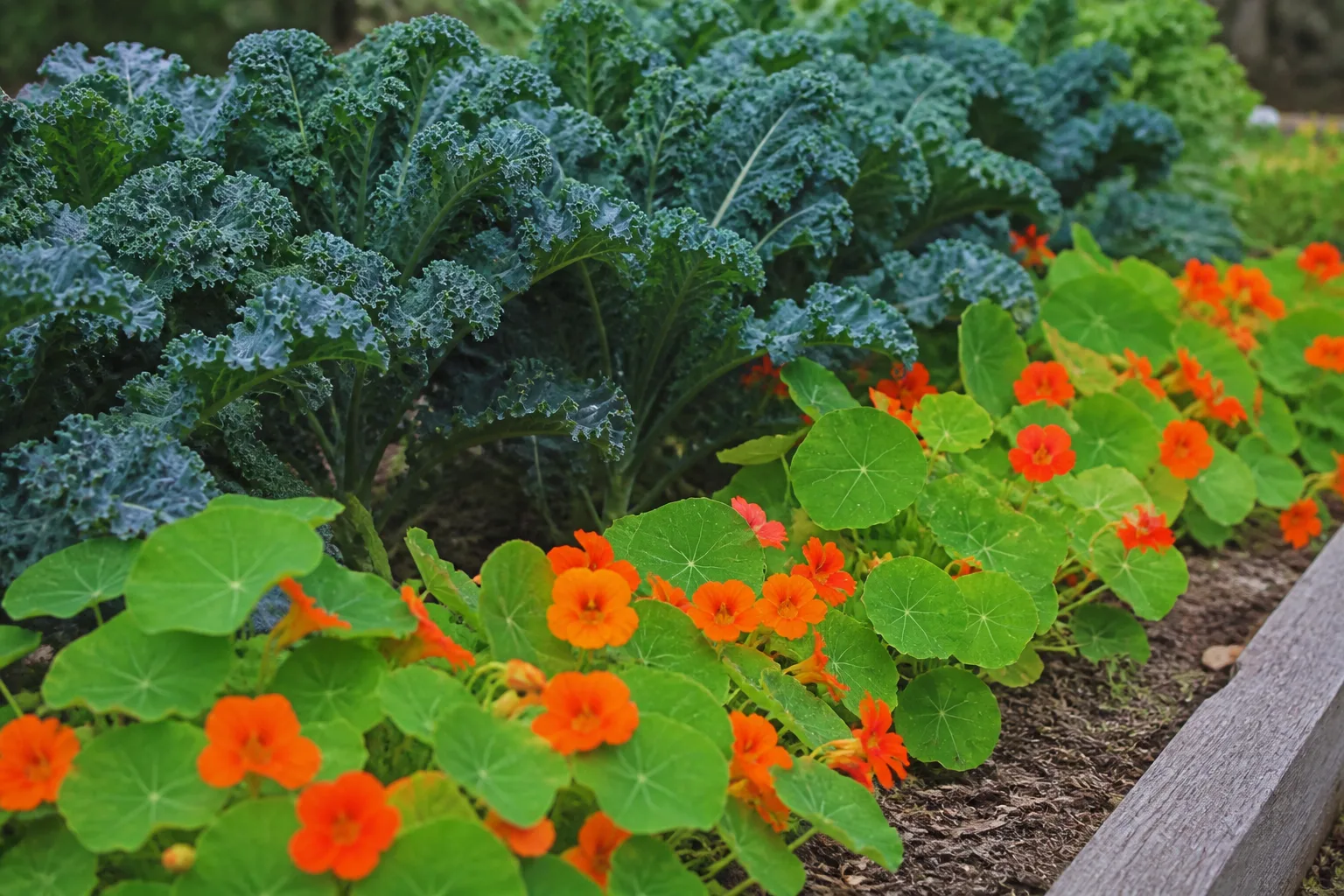
20. Nasturtium is a useful flower to grow when you want to test a monitored decoy, not a plant to scatter through the whole cabbage row. It can attract aphids and may draw some feeding insects, but a trap crop only works when you check it and act before pests spread back to the crop. Plant one small clump outside the cabbage leaf zone, inspect it at least as often as the cabbage, and remove or manage it if aphids or caterpillars build up. A single Iowa trial included nasturtium among several companion treatments; that does not prove it will draw cabbage moth eggs away in every garden.
Three low-crowding layouts to try
Spring cabbage in a small bed
Keep the cabbage plants in their planned row and use only the front edge for temporary crops. Sow a short strip of leaf lettuce or spinach as the cabbage goes in; if the bed is wide enough, place a small row of beets or carrots farther forward. Add one dill or cilantro plant at a corner and let it flower after you finish harvesting leaves. Put chives or thyme in a pot beside the bed if you want a perennial herb that should not move with the cabbage rotation.
As the cabbage grows, check the arrangement from above once a week. If a companion’s leaves overlap the cabbage, harvest or remove the companion. Do not squeeze an extra cabbage between plants to make room for flowers; cabbage heads that compete for light, water, and air are more likely to disappoint than a bed with a little visible soil. A companion row is optional, while the cultivar’s recommended spacing is part of the crop plan.
Fall cabbage with flowering edges
For a fall crop, you can harvest an early lettuce, spinach, pea, or garlic planting and use the cleared bed for cabbage. Sow or transplant the cabbage on the schedule that fits your local frost date, then place a small flowering strip beyond the row rather than between every head. Buckwheat can provide a short burst of flowers if it has time to bloom; alyssum, calendula, or marigold can be tried along an edge, with the caveat that alyssum may draw flea beetles in some conditions.
Leave a walking or hand-reach lane so you can lift the leaves and check undersides. A beautiful mixed border is not useful if it hides caterpillars or makes it hard to secure row-cover edges. In a very small bed, one flower pot just outside the crop may provide a simpler trial than interplanting several species.
What to keep away and what to do instead
Avoid placing tall tomatoes, pole beans, sprawling squash, or large gourds on the side that shades the cabbage. Their main problem is size and timing, not a mysterious chemical incompatibility. A trellis can work on the north side of a bed in the Northern Hemisphere if it does not block light or access; sprawling vines are usually easier to give their own space. If you only have one raised bed, grow those crops in sequence or outside the cabbage’s canopy rather than wedging them between heads.
Do not crowd the row with broccoli, kale, cauliflower, Brussels sprouts, mustard, or radishes just because they are listed as “good neighbors” elsewhere. These crops belong to the same broad Brassica group and can share pests and diseases. A small mustard or kale strip can be a deliberate trap-crop experiment for a gardener who will scout and remove infested plants, but an unmanaged cluster may simply give pests more host plants. University of Minnesota Extension recommends a four-year break before planting cabbage and several other Brassicas again in the same spot; companions do not cancel crop rotation.
Clover deserves the same careful treatment. The RHS companion-planting guide describes low clover or trefoil cover as one way to make cabbage less visible to cabbage root fly. But clover can compete with cabbage for water and nutrients if it grows too dense or is established too early; the peer-reviewed cabbage intercrop study notes earlier reports of yield loss when clover was seeded before cabbage. It is an advanced living-mulch experiment, not the easiest companion for a first cabbage bed. If you try it, keep a narrow strip, mow or cut it before it crowds the plants, and compare damage and growth with a cabbage row on bare or mulched soil.
Peppermint is another poor in-row choice. It can spread aggressively and overwhelm smaller crops, even if aromatic herbs are part of the companion-planting tradition. Keep mint contained in a pot or separate bed. The practical test for any proposed companion is straightforward: if it steals light, makes watering uneven, blocks access, or becomes a pest reservoir, move it or remove it.
Make companions part of a pest-management plan
Companion plants can support a more diverse garden, but they cannot keep adult cabbage butterflies from reaching the crop. If imported cabbageworms, cabbage loopers, or diamondback moth larvae are your main concern, the most direct home-garden tactic is a well-secured floating row cover or insect mesh installed as soon as you sow or transplant. Cabbage does not need insect pollination to form the edible head, so a cover can usually stay on through the crop, provided you leave enough room for growth and check moisture and temperature underneath. University of Minnesota Extension’s caterpillar guidance recommends lightweight covers and regular inspection.
Scout at least weekly, and more often when moths are active. Look on both sides of outer leaves, along the midrib, and down inside the forming head for eggs, small green larvae, or frass. Small caterpillars are easier to remove before they grow and feed heavily. Hand-pick them into soapy water, and remove badly infested crop residue when the harvest is finished. Flowers may support predators and parasitoids, but you still need to spot a pest early enough for those allies or a direct control to matter.
If you want to learn whether a companion helps in your own garden, make the trial small and fair. Plant two similar cabbage groups under the same light and water conditions; add one companion to one group and leave the other as a comparison. Keep notes on the date you planted, first pest sightings, leaf damage, whether the companion flowered, and whether cabbage heads reached their expected size. Change one factor at a time. That simple record will tell you more than a general claim that a plant “repels” pests.
The basic priorities remain healthy transplants, fertile but well-drained soil, consistent moisture, appropriate spacing, crop rotation, physical exclusion when pest pressure warrants it, and scouting. The University of Minnesota’s home-garden companion guide notes that crop density, ratio, and relative planting time all shape how plants interact. That is why a short strip of lettuce beside a well-spaced cabbage can be a better plan than filling every gap with a permanent herb.
Conclusion
The best cabbage companion plants are the ones that fit your goal and your bed. Start with lettuce, spinach, or beets if you want an early second harvest; add a small flowering edge of dill, buckwheat, calendula, or another flower if you want more insect habitat; and treat thyme, nasturtium, alyssum, and trap crops as experiments that need observation rather than promises.
Keep the cabbage’s mature spacing clear, remove companions that shade or crowd it, and use row cover when you need a dependable barrier against egg-laying butterflies. A companion is doing its job when it adds a harvest, flowers, or useful habitat without making the cabbage harder to grow and inspect.



