New Guinea Impatiens Care: A Complete Growing Guide
Learn New Guinea impatiens care for beds, pots, and indoors: choose the right light, water well, feed, prune, troubleshoot, and overwinter your favorite plants.
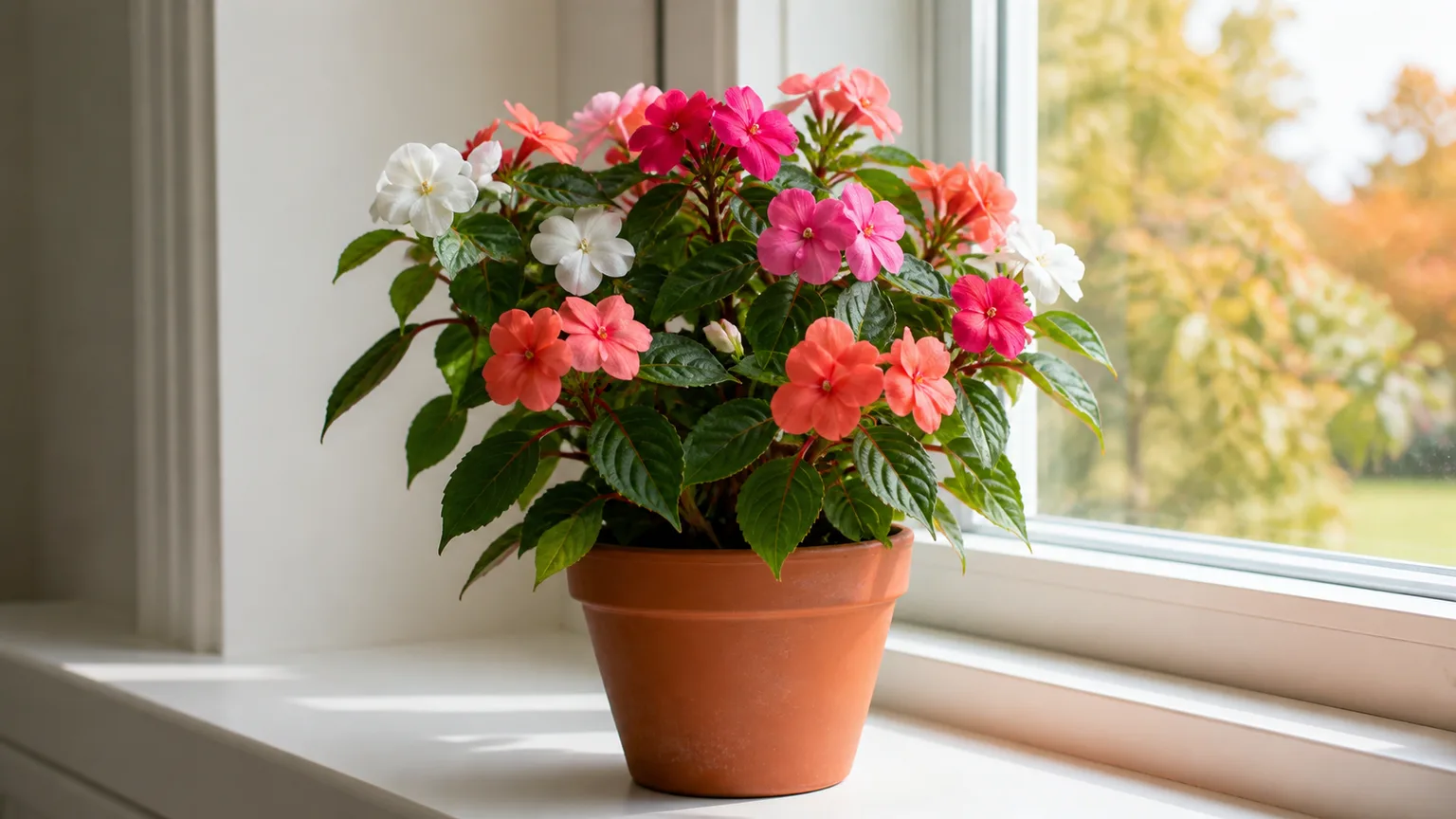
New Guinea impatiens bring larger flowers and more light tolerance than common bedding impatiens, but that does not make every cultivar a full-sun plant. For the most reliable flowers, give them bright light or gentle morning sun, protect them from harsh afternoon heat, and keep the root zone consistently moist without leaving it waterlogged. The exact routine changes with the cultivar, container size, weather, and whether you grow the plant indoors or outside.
The simplest way to prevent most failures is to check the plant’s label, then judge the soil before watering and the leaves before changing the light. A New Guinea impatiens can recover quickly from a brief dry spell, but repeated moisture stress can cost buds; roots sitting in wet mix can decline just as fast. Iowa State University Extension notes that both overly wet and overly dry soil cause problems, so balance matters more than a fixed watering calendar.
Quick care at a glance
| Need | Practical starting point |
|---|---|
| Light | Bright shade or morning sun with afternoon shelter; follow the cultivar label |
| Water | Check the top inch of mix; water thoroughly when it begins to dry, then let it drain |
| Soil | Moisture-retentive but free-draining garden soil or a quality container mix |
| Feeding | Moderate feeding during active growth; choose slow-release or liquid feeding rather than stacking both at full strength |
| Planting time | Wait until frost danger has passed and nights are no longer cool |
| Winter | Treat as an annual where freezing occurs; bring a favorite inside or take cuttings before cold damage |
Use the table as a starting point, not as a promise that every cultivar has identical needs. Modern series differ in size, sun tolerance, and branching, so a plant tag is more useful than assuming all plants sold under the same common name behave the same way. For a bed, check the surrounding soil after rain; for a pot, check the mix itself and make sure water can escape through open drainage holes.
Identify your plant: New Guinea, common, or SunPatiens?
Most plants sold as New Guinea impatiens are Impatiens hawkeri hybrids, sometimes listed as Impatiens × New Guinea hybrids or the New Guinea Group. They tend to have broader, often darker or reddish leaves and larger flowers than common garden impatiens, I. walleriana. North Carolina State Extension describes the New Guinea type as a mounding plant with flowers from spring through fall and best performance in partial shade with moist, well-drained soil.
The comparison matters most when choosing a site. New Guinea selections generally handle brighter conditions better than common impatiens, while some named SunPatiens and Sun Harmony series are bred for more sun than a typical shade-bedding type. Those names describe selected hybrid series, not a blanket rule for every New Guinea plant; check the label for the cultivar’s exposure and mature size. RHS guidance for the New Guinea Group lists both full sun and partial shade, with sheltered conditions and moist but well-drained soil.
New Guinea types are also often described as resistant to impatiens downy mildew, the disease that can devastate I. walleriana. Treat that as a useful advantage, not immunity to every disease: New Guinea impatiens can still suffer root rot, powdery mildew, thrips damage, and viruses. Knowing which impatiens you bought helps you avoid moving a shade cultivar into baking sun or dismissing a separate problem because one disease is less likely.
Choose the right place for it
New Guinea impatiens work well in part-shade beds, patio pots, hanging baskets, and bright indoor spaces. Their fleshy stems and showy flowers make them effective in a small border or as a single container specimen, while a block of one color can fill a shaded edge without needing a mixed planting. They are also visited by butterflies, according to the NC State Extension plant profile.
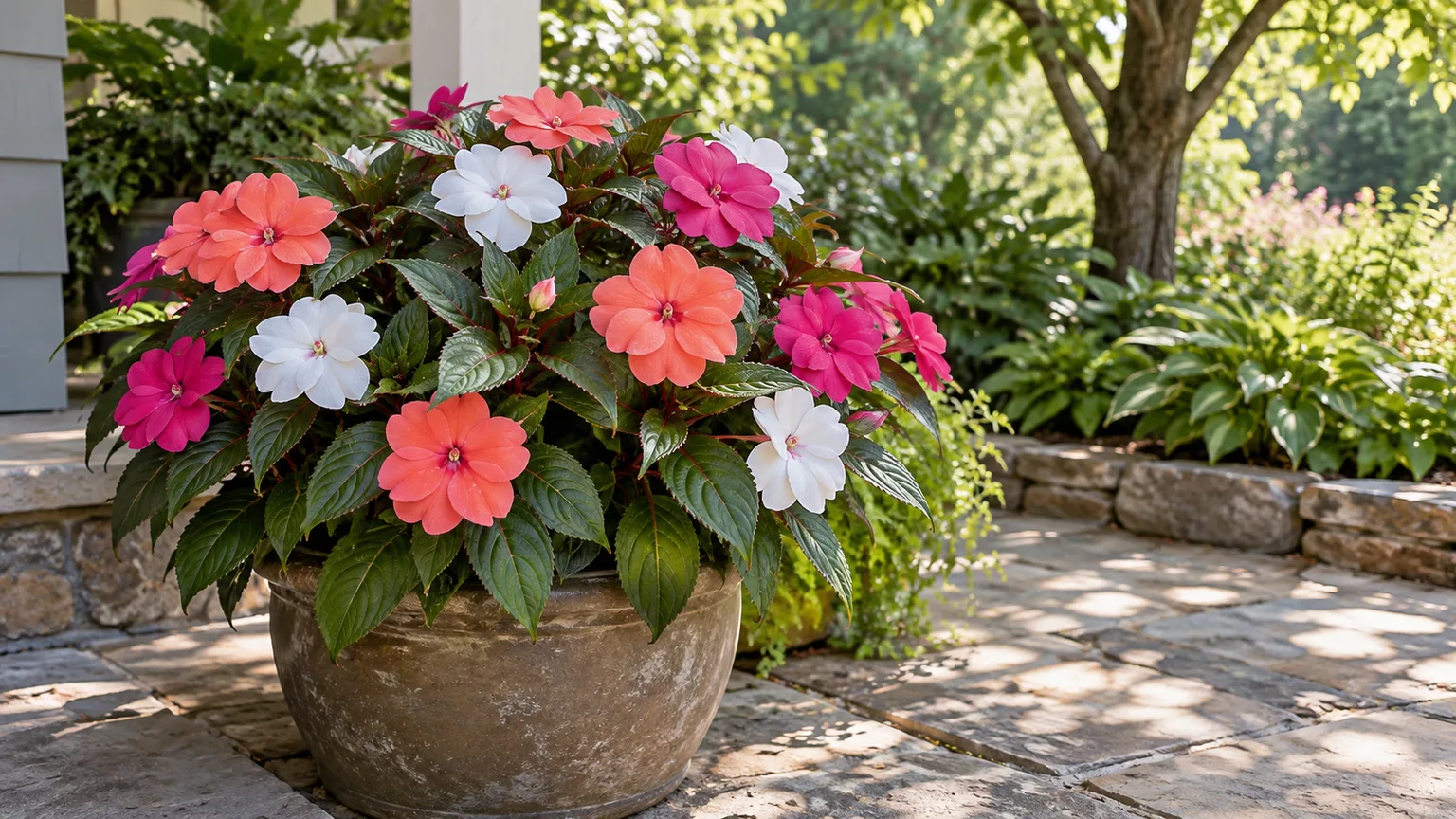
In garden beds and borders
Choose a spot that gets useful light early in the day but is sheltered when the afternoon sun and heat are strongest. An east-facing bed, the filtered edge of a tree canopy, or the bright side of a porch often works; dense shade can keep the foliage alive but usually gives you fewer flowers and longer, looser stems. Avoid planting into a low area where water pools after rain, because a plant that wilts in saturated soil may already have roots short of oxygen.
Use New Guinea impatiens as a low border, a pocket of color between taller shade plants, or a repeated row along a walkway. Leave enough room for the particular cultivar to reach its listed width instead of squeezing the starts together to make an instant solid display. Crowding makes it harder to see the soil, inspect leaf undersides, and keep foliage dry when watering.
In pots and hanging baskets
Containers are useful when a bed gets too much sun because you can move the plant as the season or tree cover changes. They also dry much faster than in-ground soil, especially when the pot is small, dark, exposed to wind, or hung under a roof that blocks rainfall. Check a basket frequently in warm weather; frequent checking does not mean watering on a fixed daily schedule.
Choose a container with several open drainage holes and enough room for the roots to grow, but avoid jumping from a tiny nursery cell into an oversized tub full of wet mix. A very large volume of soil can remain damp around a small root system, particularly in cool or low-light conditions. If you use a decorative cachepot, let the nursery pot drain outside it and empty collected water rather than leaving the roots standing in runoff.
As a houseplant
New Guinea impatiens can grow indoors in bright, indirect light, such as near a well-lit window where strong midday rays do not scorch the leaves. Turn the pot every week or two if one side leans toward the glass, and keep it away from cold drafts and hot air vents. The Royal Horticultural Society notes that New Guinea hybrids are commonly grown as houseplants and may flower indoors in bright indirect light.
Indoor plants often need less water than outdoor baskets because they grow more slowly and receive less light. Before watering, feel the mix below the surface and lift the pot to learn how heavy it is when moist. If the plant comes inside from outdoors, inspect leaf undersides and stem joints for pests, rinse the foliage, and keep it separate from other houseplants while you monitor it.
Light: morning sun works; hot afternoon is different
Bright shade or morning sun followed by afternoon shade is the dependable starting point for most New Guinea impatiens. They can take more direct light than common impatiens, especially when gradually acclimated and well watered, but hot afternoon exposure can make flowers smaller, scorch leaf edges, and increase water loss. Iowa State Extension recommends morning sun and afternoon shade and reports that excessive sun can reduce flowering and damage foliage.
Use the plant’s response to refine its spot. If it stays green but becomes stretched with long gaps between leaves and few flowers, move it gradually toward brighter light, preferably gentle morning sun. If leaves bleach, develop crisp margins, or wilt while the sun is on them and recover in shade, reduce the afternoon exposure before adding more fertilizer or water.
Do not take a greenhouse-grown or indoor plant directly into all-day sun. Harden it off over several days in a protected, bright location, increasing direct exposure a little at a time. A cultivar labeled for sun can still need extra water in a hot, dry site, and high temperatures may pause flowering even when the light level is technically suitable; UF/IFAS Extension notes that New Guinea impatiens in Florida may stop blooming during summer heat.
Water: keep the root ball evenly moist
Water when the mix is beginning to dry at the surface, not when the plant has been wilted for hours. In a pot, check the top inch with a finger; in a garden bed, check a little deeper because the surface can dry while soil around the roots remains damp. Then water slowly at the base until the entire root ball is wet and excess water runs from the drainage holes.
New Guinea impatiens may wilt dramatically in dry soil and often perk up after a thorough drink, but repeated cycles of wilting and recovery can cause buds to abort, reduce flowers, and brown leaf edges. In a raised hanging basket during hot, windy weather, a daily check may be necessary; a shaded bed after rain may need no water that day. Iowa State Extension suggests checking container soil frequently and using a deep soak for established bed plants as a starting point, with adjustments for weather and soil.
The opposite mistake is responding to every droop with more water. If the plant is limp while the pot feels heavy and the mix stays wet, stop watering and check the drainage hole, saucer, and root zone. Persistently wet roots can develop rot, so moisture should be steady but the soil should not be saturated for days.
Soil, pot size, and drainage
In a garden, New Guinea impatiens need soil that holds enough moisture for the roots but drains after rain. Work compost into poor or sandy ground to improve its structure, and loosen compacted soil before planting rather than filling a hole with a different, water-retentive mix. A slightly acidic pH is often recommended, but do not buy amendments just to chase a number if plants grow well and a soil test does not call for a change; the RHS New Guinea Group profile lists suitability across acidic, neutral, and alkaline conditions.
For pots, use a fresh, airy potting mix made for containers, not heavy garden soil. Drainage comes from the holes and the mix, not from a layer of pebbles in the bottom. A rock or gravel layer can leave a saturated band of mix higher in the pot instead of improving drainage; University of Connecticut Extension explains why coarse material under potting soil can keep the root zone wetter. If mix falls through a large hole, cover the opening with a small piece of mesh rather than building a false bottom.
Repot only when roots have filled the container, the plant dries unusually fast despite appropriate watering, or growth is crowded. Move it into a pot only modestly larger, set the crown at its former soil level, and water once to settle the mix. Repotting into a much larger container is not a cure for wilting or slow flowering when light, temperature, or root health is the actual problem.
Planting and spacing: wait for steady warmth
Set nursery plants outside after frost danger has passed and nights have warmed. New Guinea impatiens dislike cool nights, so Iowa State Extension recommends planting them about two weeks after the average last spring frost, rather than planting as soon as the first sunny afternoon arrives. Use that timing as a regional guide and watch your local forecast, especially in a low spot or exposed balcony.
Harden plants off before transplanting: place them outdoors in bright shade for a few days, then introduce short periods of gentle morning sun. Plant at the same depth as the nursery pot, gently loosen roots circling the bottom, and water the root ball in. Space plants according to their mature width on the label; many compact types stay under two feet, while vigorous selections can spread farther.
After planting, watch for the first week rather than feeding immediately. Temporary droop around midday can reflect transplant stress or heat, but the response should improve overnight if the roots are moist and the plant is protected from harsh sun. If it stays limp, check the root ball itself; surrounding garden soil can be moist while a dry peat-based nursery plug repels water.
Fertilizer: feed enough, not constantly
New Guinea impatiens flower over a long season and benefit from moderate feeding, but extra fertilizer will not fix a poor site or damaged roots. For containers, Iowa State Extension recommends a water-soluble fertilizer about every two weeks; for beds, a slow-release fertilizer worked in before planting is generally enough. Follow the product label and choose one routine rather than applying a full slow-release dose and frequent full-strength liquid feed on top of it.
If a potting mix already contains fertilizer, check its label before adding more. A white crust on the soil or pot rim, brown leaf margins, or stalled growth after feeding can indicate salt buildup or root stress, not a request for stronger fertilizer. Water the plant normally, pause extra feeding, and confirm the drainage is open; resume a lighter schedule only after the plant is growing well again.
Feed actively growing plants, not a plant that is wilted in dry soil, sitting in saturated mix, or declining from cold. Once the underlying stress is corrected, new leaves will tell you more than one quick fertilizer application. Avoid a high-nitrogen dose intended to push foliage when the plant has stopped flowering because of low light or summer heat.
Pruning and flowering: fix conditions before cutting
With enough warmth, light, and water, New Guinea impatiens can bloom from late spring through fall in a temperate garden. In frost-free regions they may continue longer, but intense summer heat can slow flowers even when foliage remains healthy. If buds stop appearing, first check the light, root moisture, and temperature rather than assuming the plant needs a stronger fertilizer.
Deadheading is optional for many modern impatiens: spent petals often drop on their own, but removing old blooms can keep a container neat and reduce soggy debris after rain. Pinch a young plant only if you want extra branching or a more compact shape; some newer New Guinea varieties branch freely and do not need routine pinching. The RHS profile recommends careful deadheading to extend the display, while North Carolina State’s production guidance notes that newer varieties can be free-branching.
If an established plant becomes leggy, cut back a few stretched stems to just above healthy leaves or a node, then give it stable care while it regrows. Avoid shearing the whole plant hard during a heat wave or drought; removing too much foliage at once can slow its recovery. A light trim is useful for shape, but it cannot compensate for deep shade, dry roots, or root rot.
Propagate a favorite from stem cuttings
Stem cuttings are the most reliable way to keep a particular hybrid’s flower color and growth habit. Many commercial New Guinea impatiens are hybrids that may not come true from saved seed, while cuttings reproduce the parent plant. Use only a healthy plant with clean leaves and stems; do not take cuttings from a plant with unexplained rings, black lesions, or a spreading pest problem.
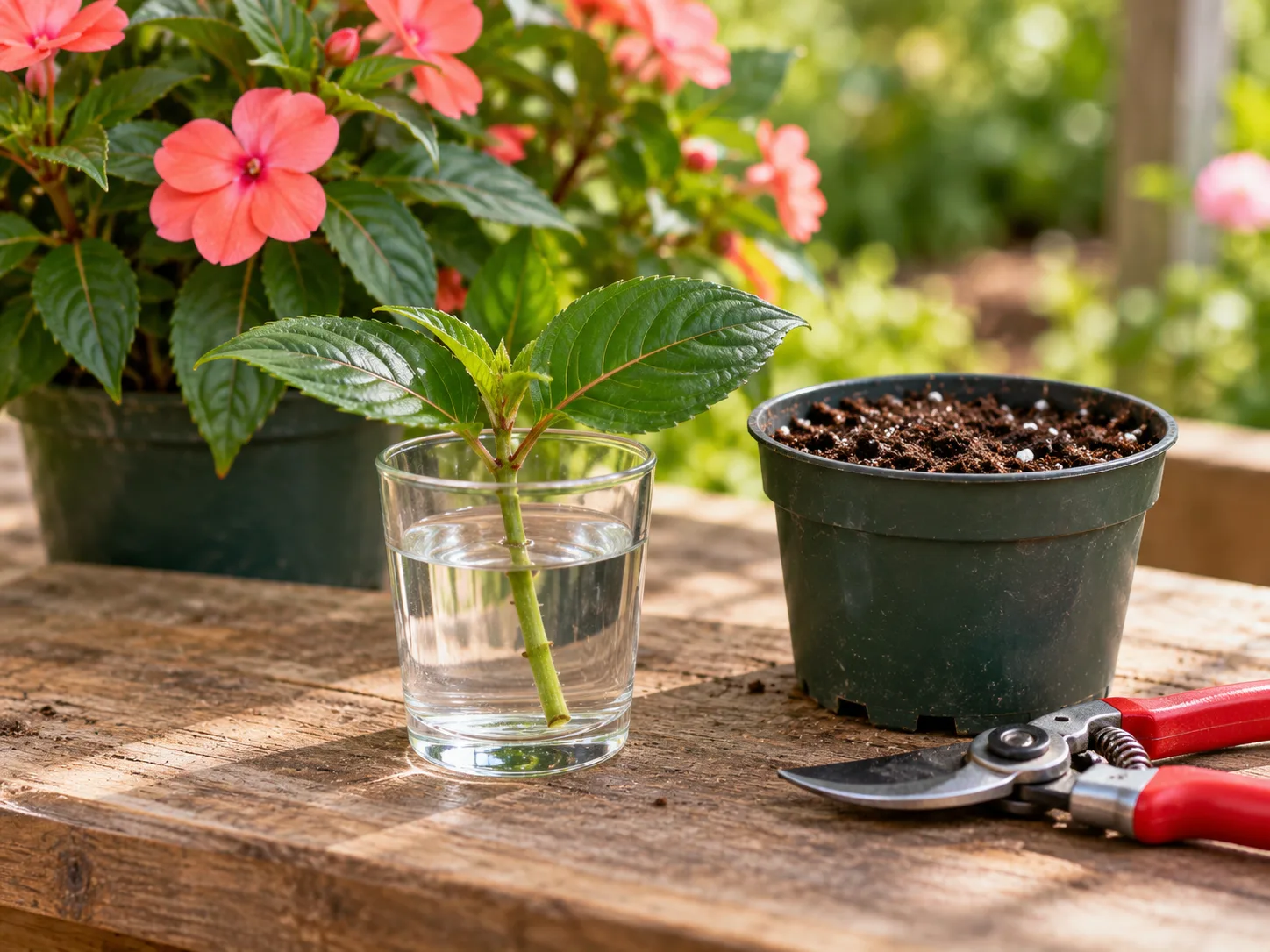
Take a 3- to 4-inch tip cutting from firm, non-flowering growth with at least two leaf nodes. Use clean pruners, remove leaves from the lower node, and keep the remaining foliage above the water or rooting mix. You can root it in a small glass of clean water or insert it into lightly moist, airy seed-starting mix; Ohio Tropics’ documented impatiens propagation guide demonstrates water rooting, while the RHS guide also describes softwood cuttings.
Place the cutting in warm, bright indirect light and keep the medium lightly moist, not waterlogged. Water roots are easy to see, but they are delicate when moved into soil; pot the cutting once it has a small, branching root system and keep the new mix evenly moist while it adjusts. If you root directly in mix, a clear cover can slow moisture loss, but lift it daily for fresh air and remove it when new growth begins.
Check the cultivar label before propagating named selections, especially before sharing or selling plants; the RHS guide notes that some impatiens are protected by plant-breeder rights. For an indoor winter project, take several cuttings before cool weather rather than waiting until the parent has been damaged by cold. That gives you backup plants without carrying a large, pest-prone pot indoors.
Start New Guinea impatiens from seed only when it makes sense
Seed is useful when you can buy a variety specifically sold as seed-grown, but it is not the best way to preserve a favorite hybrid. Seedlings from hybrid parents can vary in flower color, leaf markings, height, and vigor; a packet labeled for a seed series is more predictable than seed saved from a random patio plant. Iowa State Extension notes that only some New Guinea selections are commonly offered from seed, while many are propagated from cuttings.
Start purchased seed indoors about 10 to 12 weeks before you expect to plant outside. Use clean seed-starting mix, follow the packet’s sowing depth, keep it evenly moist, and provide warm conditions; NC State Extension gives 70–75°F as the soil temperature range for successful germination. Seedlings need bright light after emergence so they grow compact instead of stretching toward a window.
Do not start seeds so early that seedlings become crowded and lanky before outdoor conditions are ready. Pot them on only when roots fill the small cell, harden them off gradually, and wait until nights are warm to transplant. If your goal is to save an exact cultivar for next season, a cutting is simpler and more faithful to the parent.
Overwintering: save a pot or take cuttings
In regions where winter brings frost, New Guinea impatiens are usually grown as warm-season annuals. They can survive as tender perennials in frost-free climates, or continue growing indoors if you provide enough light and warmth, but a hard freeze kills the soft stems. Treat USDA-zone labels as a rough guide to winter climate rather than a guarantee that a plant outdoors will tolerate a cold snap.
Bring a healthy container plant indoors before cold weather damages it, not after the first frost. Inspect leaf undersides, stems, and flowers for pests, rinse the foliage, remove dead material, and keep it apart from other houseplants for a couple of weeks. Give it a bright window with indirect light or a grow light, and reduce watering as growth slows while still preventing the root ball from drying hard.
Indoor plants may lose a few leaves or stop flowering while they adjust to lower light. Avoid trying to force dormancy by withholding water; New Guinea impatiens are not drought-tolerant. The Laidback Gardener’s overwintering notes emphasize that indoor plants can rot when overwatered but wilt quickly when allowed to dry, which is why checking the mix is more reliable than following a calendar.
If there is no room for the whole plant, take several stem cuttings in late summer or early fall and root them indoors. In spring, prune out weak growth, refresh the potting mix if roots have filled the container, and move the plant outdoors only after frost risk has passed. Acclimate it again to outdoor light over several days; indoor leaves are not prepared for full outdoor sun.
Pests and diseases: diagnose before treating
Aphids gather on soft tips and flower stalks; spider mites cause pale stippling and may leave fine webbing; thrips can scar leaves and deform flowers. UC IPM lists aphids, spider mites, thrips, and whiteflies among impatiens pests. Inspect the undersides of leaves, new growth, and blooms, especially when bringing a plant inside. For a small infestation, isolate the pot, rinse pests off with a firm but gentle stream, and repeat the inspection over the next several days; if you use a treatment, choose one labeled for the plant and follow its directions.
New Guinea impatiens are highly tolerant of impatiens downy mildew, the disease most associated with common I. walleriana, but they are not disease-proof. Iowa State Extension calls I. hawkeri highly tolerant, while Penn State Extension lists other problems that can affect New Guinea impatiens, including powdery mildew and root rot. White, powdery growth on leaf surfaces, a plant wilting in persistently wet mix, and leaf spots with black rings require different responses.
Impatiens necrotic spot virus and tomato spotted wilt virus can also infect New Guinea impatiens. Watch for black or brown rings, distorted new growth, black stem marks, and unexplained stunting, but do not diagnose a virus from one mark alone because water stress, pests, sun injury, and disease can overlap. UMass Extension explains that western flower thrips transmit these viruses and infected plants cannot be cured; isolate a suspicious plant, do not propagate it, and discard it if a diagnosis is confirmed or symptoms keep spreading.
Root rot is more likely when a plant wilts despite wet soil, lower leaves yellow or fall, and roots turn brown or mushy. Improve drainage and remove standing water first; simply adding another drink can worsen the damage. Do not use a fungicide as a catch-all fix for a plant that may have a virus or environmental stress, and never apply a pesticide or fungicide in a way its label does not allow.
Common problems and first fixes
| Symptom | Check first | First response |
|---|---|---|
| Wilting, light pot, dry mix below the surface | Drought or a hot, exposed position | Water deeply at the base; add afternoon shade if heat is intense |
| Wilting, heavy pot, mix still wet | Blocked drainage or root damage | Stop watering on schedule, empty the saucer, and inspect the drainage hole and roots |
| Brown leaf edges or bleached patches | Hot sun, wind, or fertilizer buildup | Move the pot to bright shade; pause extra fertilizer and check drainage |
| Few flowers and long stems | Too much shade, repeated moisture stress, or heat | Increase gentle morning light or correct watering; change one factor at a time |
| White powder on leaves | Possible powdery mildew | Remove badly affected material, improve air movement, and confirm the problem before treatment |
| Rings, black stem marks, or distorted new growth | Possible virus or thrips feeding | Isolate the plant and inspect for thrips; do not propagate it while the cause is uncertain |
A red or purple underside can be normal on some cultivars, so color alone is not a diagnosis. Look for a change from the plant’s normal pattern, spreading damage, distorted new leaves, or a soil condition that points to stress. If a plant is declining quickly and the cause is unclear, take a clear photo and contact a local extension office or plant clinic rather than combining fertilizer, insecticide, and fungicide at random.
Conclusion
New Guinea impatiens are easiest to grow when you match the cultivar to the light, keep moisture steady, and let excess water drain away. Start with morning sun and afternoon shelter, check the mix rather than watering by date, and feed moderately while the plant is actively growing. Those three habits prevent more trouble than frequent pruning or a strong fertilizer dose.
For a favorite plant, take healthy cuttings before cold weather; for seed-grown color, choose a variety sold for seed and expect some variation. If foliage or flowering changes, check the root zone and light first, then isolate suspicious pest or virus symptoms. A compact plant in the right spot can keep flowering from late spring until cold weather without a complicated routine.



