How to Grow and Care for Catawba Rhododendron
Catawba rhododendron needs cool roots, drainage, and careful pruning. Get planting steps, bloom advice, container tips, and fixes for yellow leaves.
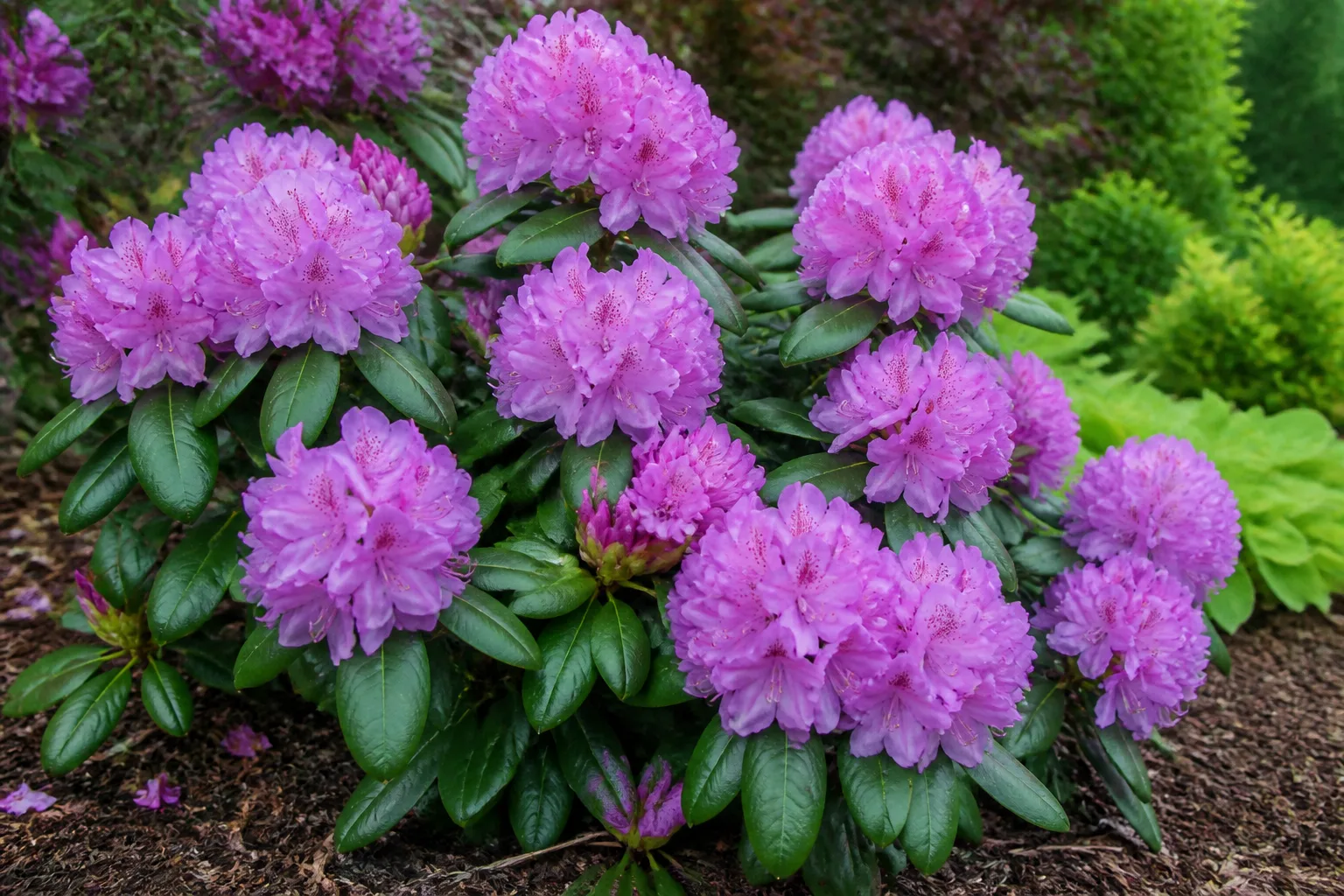
Catawba rhododendron is a broadleaf evergreen for a cool, partly shaded garden with acidic soil that stays evenly moist but drains freely. Give it a site like that, keep its shallow roots covered with mulch, and prune only after its spring flowers fade. The shrub is native to Appalachian woodland slopes and ridges, but it can be fussy in hot, exposed, compacted, or alkaline sites.
Before you buy one, check the soil and the mature width on the cultivar tag. A healthy start depends more on those two choices than on frequent feeding or elaborate pruning.
Catawba rhododendron at a glance
Rhododendron catawbiense, also called Catawba rosebay, is an evergreen shrub with leathery leaves and rounded clusters of lavender, pink, or purple flowers. University plant profiles describe a typical mature shrub around 6 to 10 feet tall and 8 to 10 feet wide, with some plants growing taller in favorable conditions. Its native range follows the southern Appalachian Mountains, so it is adapted to cool woodland conditions rather than a hot, dry, exposed bed. (NC State Extension; University of Connecticut Plant Database)
| Feature | What to plan for |
|---|---|
| Growth | Evergreen, multi-stemmed shrub; often 6–10 feet tall and nearly as wide |
| Light | Partial shade or dappled light; protect from harsh afternoon sun and drying wind |
| Soil | Acidic, organic, evenly moist, and well drained; test before changing pH |
| Bloom | Mid- to late spring; local timing shifts with climate and cultivar |
| Space | Allow the cultivar’s full mature spread, not the nursery-pot width |
This is a long-lived landscape plant when the site suits it, but not a shrub to squeeze into a narrow foundation strip. NC State also flags high flammability, so place it outside the home’s defensible space where that is relevant to your local wildfire guidance.
Choose a site that suits its woodland roots
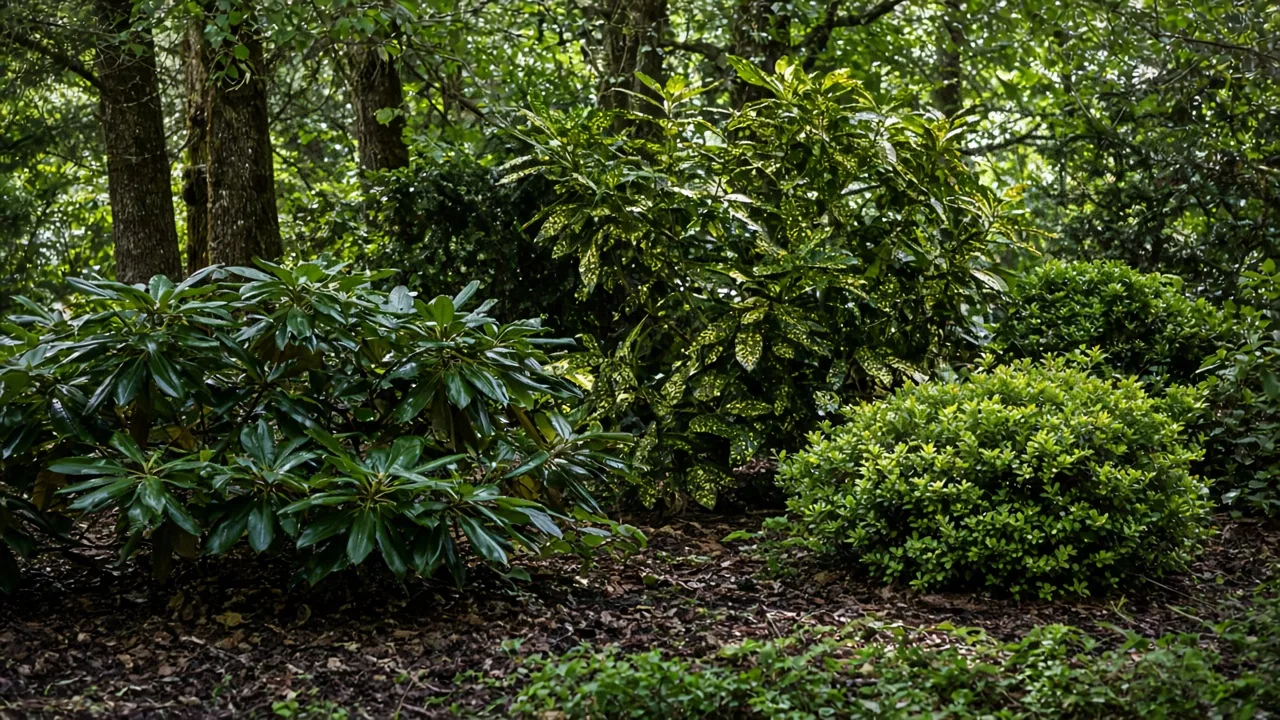
Think about the conditions under the canopy of an open woodland: bright filtered light, leaf litter, steady moisture, and air movement. That combination is a better model than either deep, dry shade or an exposed planting island that bakes all afternoon. The Royal Horticultural Society recommends sheltered dappled shade for rhododendrons and cautions against planting under dense tree cover, where shade and root competition can both become limiting.
Light: bright shade beats deep shade
In cooler parts of its range, Catawba rhododendron can take some morning sun. In a hot-summer garden, favor bright shade through the afternoon, especially if the shrub is newly planted or sits near a west-facing wall. Direct afternoon sun can heat the root zone and scorch leaves; deep shade beneath a dense tree canopy can reduce flowering and leave the shrub open and leggy.
Watch the site on a clear day before planting. If it receives several hours of harsh afternoon sun, choose another spot or create a more suitable planting pocket with shade from an open canopy. Do not solve every light problem by moving it directly under a large tree: established tree roots may intercept water and make the shallow rhododendron root system compete for moisture.
Soil: acidic, organic, and well drained
Aim for a soil pH around 5 to 6, with plenty of organic matter and no standing water. The range in references varies slightly, so a soil test is more useful than guessing from the color of a leaf or applying sulfur by habit. The RHS describes a pH of 5.0 to 6.0 as suitable for rhododendrons, while NC State lists the species as preferring acid soil below 6. (RHS; NC State Extension)
Drainage matters as much as acidity. After a heavy rain, notice whether water remains in the planting area or runs toward a low spot. If it does, choose a raised, wide bed or another location; do not dig a deep hole in clay and fill it with loose compost, which can hold water around the roots like a basin. If the soil is naturally alkaline, changing a whole bed’s pH can be slow and unreliable. A container with fresh ericaceous mix or a different shrub may be the more practical decision.
Plant shallow, not deep
Plant in spring or early fall while the soil is workable and the shrub can establish before severe heat or freezing conditions. Water the root ball before planting. Dig a hole wider than the root ball but no deeper, loosen the outer roots only if they are circling tightly, and set the top of the root ball level with or just above the surrounding grade. Rhododendrons are surface-rooting; burying the root crown can keep it too wet and deprive roots of air.
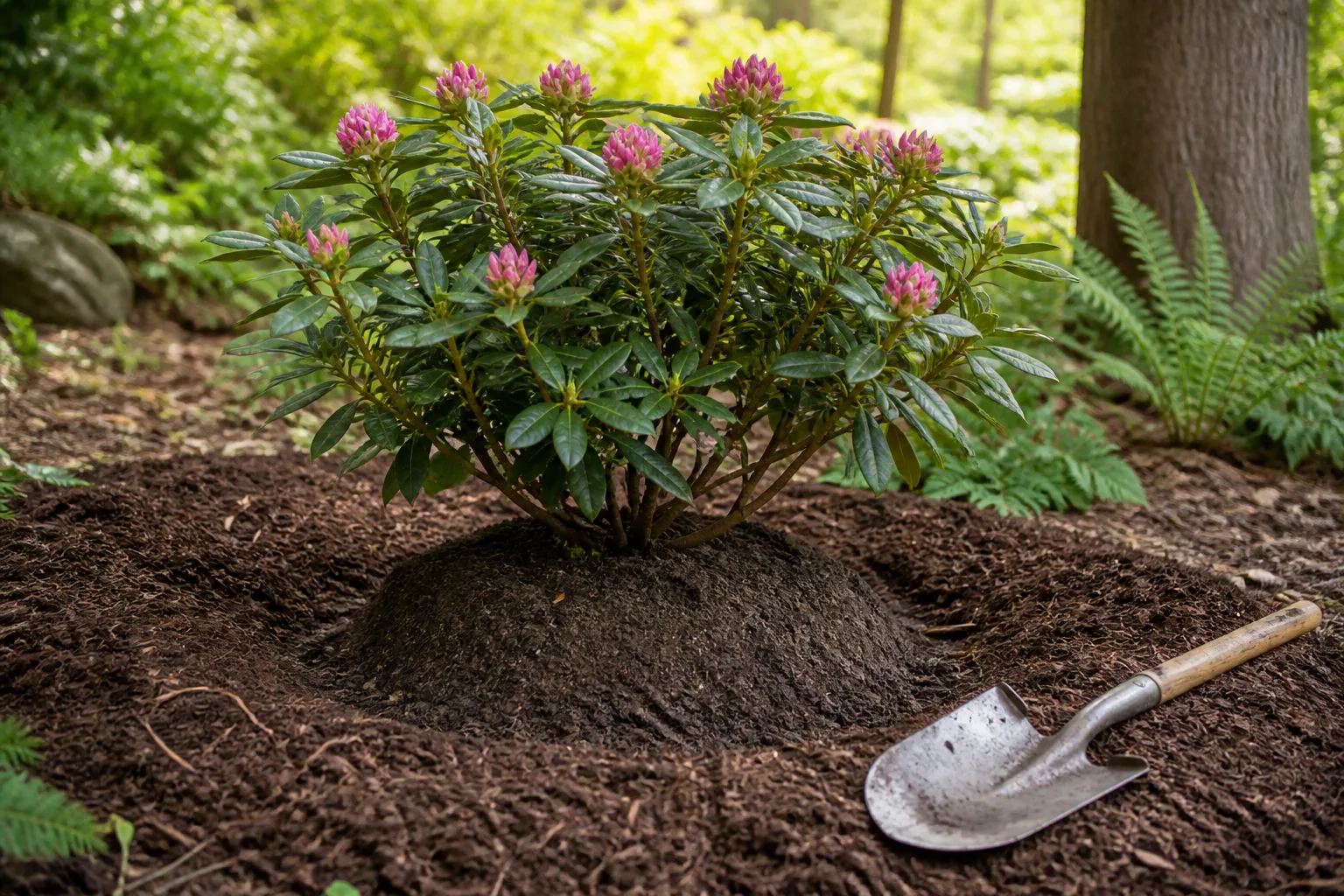
Backfill with the site’s soil and organic matter rather than creating a sharply different pocket of potting mix. Water slowly to settle soil around the root ball, then spread a 2- to 3-inch layer of bark, leaf mold, or pine-based mulch across the root zone. Keep mulch a few inches away from the stems. The Old Farmer’s Almanac Garden Planner likewise recommends setting the root ball high and disturbing roots as little as possible.
Water and mulch to protect the root zone
Newly planted shrubs need more attention than established ones. During the first growing season, check the soil at the edge of the root ball every few days in warm, dry weather; water deeply when that zone is beginning to dry, rather than giving the surface a quick splash. A container-grown root ball can dry faster than the surrounding soil even after the planting bed is watered, so check both.
Once established, use rainfall as your guide and water during extended dry spells, particularly in late summer when next season’s flower buds are forming. Keep moisture steady, not saturated. A mulch layer reduces evaporation and buffers soil temperature, but it does not correct a poorly drained site. Renew mulch when it thins, without piling it against the stems, and pull weeds by hand instead of cultivating around the shallow roots.
If your tap water is hard and you water a container frequently, rainwater can help avoid a gradual calcium buildup in the acidic mix. The RHS notes that hard tap water can reduce acidity around rhododendron roots. Occasional tap-water use is not a reason to panic; prioritize a sound soil mix, drainage, and regular moisture first.
Fertilize only when the plant needs it
Do not treat annual fertilizer as a requirement. If a shrub is producing healthy dark-green growth and flowering normally in suitable soil, extra feeding may create soft growth or damage its fine roots without solving anything. Mulch with organic material and get the soil tested before adding an acidifying product or a nutrient fertilizer.
If a soil test or a clear deficiency points to a need, use a fertilizer labeled for azaleas or rhododendrons at the product’s stated rate, preferably after flowering and while new growth is active. Water the root zone afterward. Avoid scattering strong fertilizer against the stems, applying it to dry soil, or feeding late in the season when tender growth may be vulnerable to cold. Container plants have less soil volume and can need spring feeding more often, but still follow the label rather than increasing the dose to compensate for yellow leaves.
Get more from spring flowers
Catawba rhododendron produces terminal clusters of funnel-shaped flowers, usually in mid- to late spring. In parts of North Carolina, the species may bloom from April into June; northern gardens and different cultivars can shift that window. Do not judge the plant by a single calendar date. A mature shrub may flower over several weeks, but weather, exposure, and cultivar affect the show.
Young plants may need time to settle before flowering well. For an established shrub with few buds, check the previous summer first: late-season drought can interfere with flower-bud formation, while deep shade, high soil pH, or poorly drained roots can weaken growth. Water during dry periods from midsummer onward, and avoid pruning away terminal buds in fall, winter, or early spring.
After flowers fade, deadheading is optional but useful when reachable. Snap or snip off the spent flower cluster without removing the new leafy growth at its base. The University of Connecticut Plant Database and NC State Extension note that removing spent trusses can support new growth and next year’s bud set. On a large shrub, skip the ladder and leave some flowers for visiting pollinators rather than risking a fall.
Prune after bloom and preserve next year’s buds
Catawba rhododendron usually needs little pruning beyond removing dead, damaged, or crossing branches. If you want to reduce or reshape it, prune right after flowering, before new flower buds develop for the following spring. Use clean, sharp pruners and cut back to a healthy branch or leaf cluster instead of shearing the whole shrub into a tight ball.
Late pruning is the common mistake: flower buds form on older growth, so a winter haircut can remove the next display even if the foliage looks tidier afterward. For an overgrown plant, avoid taking off a large amount at once unless you know the plant can break from lower dormant buds. Gradual selective cuts over more than one season are safer than suddenly reducing a mature shrub to bare framework. If it has outgrown the space, transplanting while young or replacing it with a compact cultivar may be more sensible than repeatedly forcing it smaller.
Choose a cultivar for your climate and space
The straight species is not the only option. University of Connecticut lists selections such as ‘Purpureum Elegans,’ with blue-purple flowers, and ‘Roseum Elegans,’ a vigorous pink-flowering plant. Names and parentage can be confusing: many plants sold in the large-leaved rhododendron group are hybrids, not pure selections of R. catawbiense. Ask the nursery for the actual cultivar name and its mature height, width, and hardiness, then compare that with your site.
A cultivar label saying “rhododendron” is not enough to plan spacing. Some selections remain much smaller than the species, while others can grow broad enough to cover a large part of a border. If you want a compact plant, use a cultivar with a published mature size rather than relying on the current pot or an imprecise “dwarf” label. Also check local winter performance: species hardiness does not automatically guarantee the same hardiness in every hybrid.
Grow Catawba rhododendron in a container
A pot is useful when your ground soil is alkaline, drainage is poor, or you want to grow a compact cultivar on a shaded patio. It also gives you control over the root mix, but it makes watering and winter protection your responsibility. A full-size Catawba rhododendron will eventually outgrow many containers, so select a genuinely compact cultivar and a sturdy pot with unobstructed drainage holes.
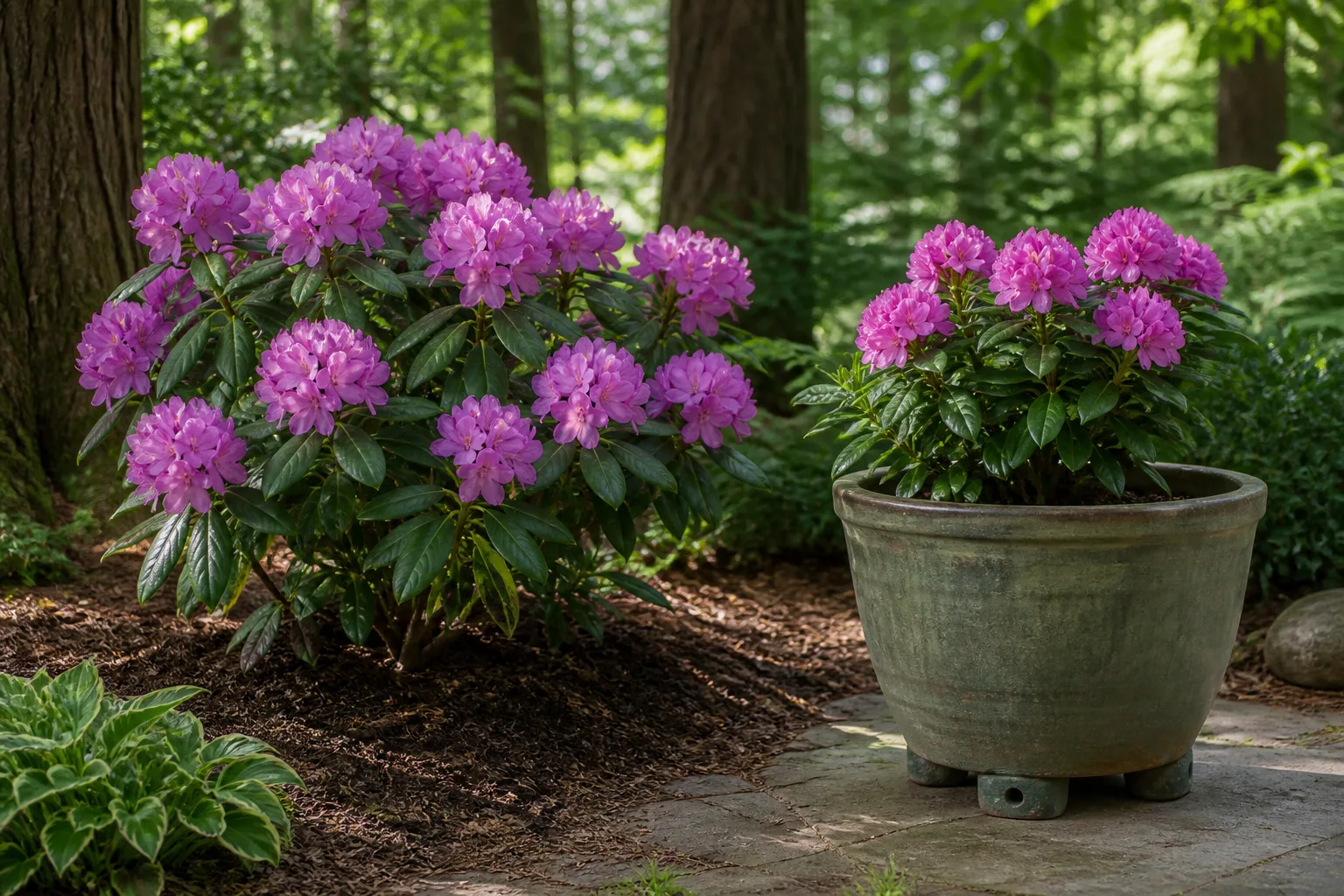
Use a peat-free ericaceous potting mix, set the root ball at the same level it grew in its nursery pot, and leave space for watering. Check moisture often during hot or windy weather; a small root volume can swing from dry to waterlogged quickly. Repot into fresh mix when the compost has broken down or roots fill the container, usually every couple of years. In cold-winter regions, move the pot to a sheltered spot and insulate the container so the roots do not experience the full air temperature. Do not bring an evergreen shrub into a heated room for winter.
Propagate with cuttings or layering
If you want an exact copy of a named cultivar, use vegetative propagation. Seedlings can vary from the parent, while cuttings or layering preserve the parent’s traits. This is one reason seedlings are better for patient growers experimenting with species plants than for someone trying to reproduce a particular flower color or compact habit.
Semi-ripe cuttings are taken from the current season’s growth after it begins to firm in late summer or early fall. Keep cuttings humid but not waterlogged, and expect rooting to take patience; success varies with cultivar and conditions. Layering is slower but straightforward: bend a low branch to the soil, wound a small section on its underside, pin that section under a little acidic mix, and leave the growing tip exposed. Keep the contact point lightly moist and separate it only after it has formed its own roots, which may take a year or more. The RHS describes layering as a slow method and notes that named cultivars should be propagated vegetatively rather than from seed.
Diagnose yellow leaves and drooping before treating
One yellow leaf does not automatically mean the shrub needs fertilizer. First note which leaves are affected, whether yellowing is uniform or between the veins, how quickly it appeared, and whether the soil is dry or wet. A pattern gives you a better first step than applying iron, sulfur, fertilizer, or more water at random.
Yellow leaves: check age, pattern, and pH
A few older leaves yellowing and dropping as new growth appears can be normal for an evergreen shrub. Widespread yellowing on new leaves, especially with greener veins, points toward chlorosis and often means the soil is too alkaline for the roots to access iron. Test the pH before changing it. Acidifying a whole landscape bed is not an instant correction, and too much sulfur or fertilizer can create a different problem.
Uniform pale older leaves, tiny stippled spots, and leaf-edge notches suggest different causes. Savvy Gardening’s rhododendron symptom guide recommends checking whether the leaves are old or new and looking at the pattern before treating. If you see fine pale speckling on top, turn the leaf over and look for lace bugs or their dark droppings; irregular notches around the edge can be adult weevil feeding. (Savvy Gardening; NC State Extension pest guide)
Wilting: check moisture before adding water
A plant with dry soil may wilt because it needs a thorough drink, especially during heat or its first summer after planting. Water slowly, then check again after the root ball has had time to absorb moisture. If leaves recover in the evening or after a cool spell, heat stress may be part of the picture; that alone does not prove disease.
Persistent wilt while the soil is wet is different. Phytophthora root rot is favored by saturated or poorly drained soil; affected roots darken, and the shrub may remain wilted even when watering is adequate. Do not keep adding water to a wet root zone. Improve drainage where possible, limit movement of wet soil from the affected area, and ask a local extension office or plant diagnostic lab to confirm the cause before treating nearby plants. (Pacific Northwest Plant Disease Management Handbook; NC State Extension)
Identify pests, disease, and deer damage
Inspect leaf undersides and stems before reaching for a spray. Rhododendron lace bugs feed under leaves, producing pale stippling above and dark specks below; black vine weevil adults notch leaf edges, while their larvae can feed on roots. A borer can cause a branch to wilt and brown, sometimes with holes or sawdust-like frass on the stem. Remove and discard a badly infested branch when appropriate, and use current local extension guidance for any pest treatment because approved products and timing vary.
Root and crown rot is a site problem as much as a disease problem: waterlogged soil and damaged roots favor infection. A plant that declines in a persistently wet pocket is unlikely to be rescued by routine fertilizer. Deer also browse rhododendrons, so look for cleanly nipped shoots and protect young plants with a barrier if deer pressure is high.
Keep people and pets from eating the plant
Treat every part of Catawba rhododendron as inedible. Rhododendrons contain grayanotoxins; the amount and response vary, and serious poisoning is associated with larger ingestions even though small accidental exposures in people often cause only mild symptoms. The ASPCA lists rhododendron as toxic to dogs, cats, and horses. Keep children and pets from chewing leaves or flowers, and do not use the plant in tea, food, or homemade remedies. (Poison Control; ASPCA)
If a person or animal eats any part of the plant, contact Poison Control or a veterinarian promptly for advice rather than waiting for symptoms. Keep the plant label or a clear photo available so the species can be identified. This shrub can still be grown in a family garden, but a barrier or a different plant is the better choice where curious pets routinely chew landscape foliage.
Conclusion: build the right root zone first
Catawba rhododendron is a strong choice for an acidic, partly shaded bed with room for a broad evergreen shrub. Give it a shallow planting, open drainage, mulch, and steady moisture through dry spells; these basics prevent more trouble than extra fertilizer or frequent pruning.
If your soil is alkaline, the site stays waterlogged, or the only planting spot is hot afternoon sun, solve that mismatch before buying a shrub. A compact cultivar in a container can work where you can keep the mix acidic and evenly moist. Once established in the right place, Catawba rhododendron asks for little: inspect it, prune just after bloom if needed, and leave next year’s flower buds intact.