How to Grow and Care for the Red Button Ginger Plant
Learn red button ginger care, from filtered light and evenly moist soil to winter protection, pruning, propagation, and fixes for weak growth or rot problems.
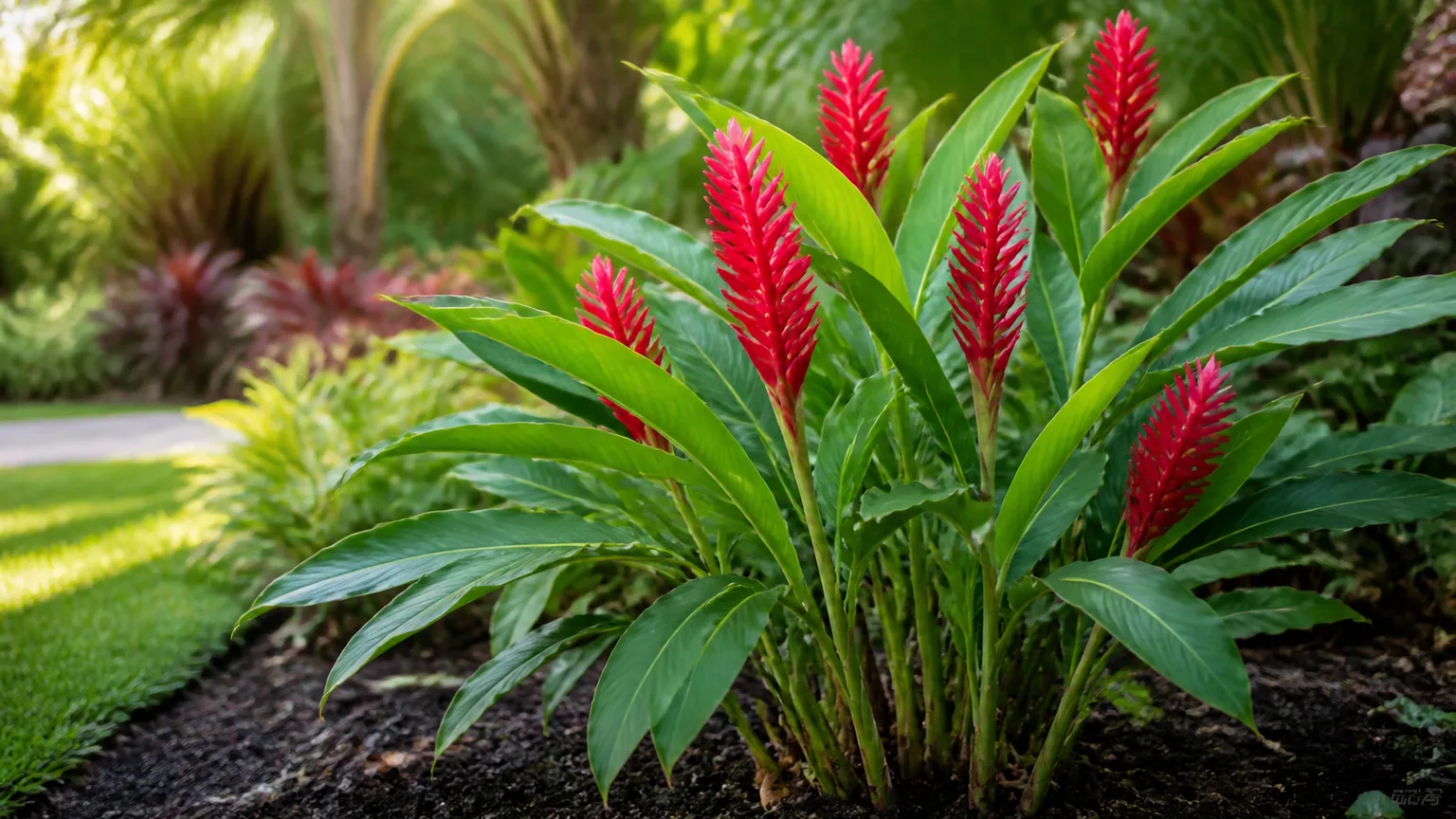
Red button ginger grows best when its fleshy rhizomes stay warm and evenly moist, but never sit in airless, waterlogged soil. Give it bright filtered light or gentle sun, protect it from cold, and leave enough room for a clump to widen. Those few choices matter more than a rigid watering calendar or a special “bloom booster.”
The common name can cause confusion. Red button ginger is Costus woodsonii, an ornamental spiral ginger in the Costaceae family; it is not the culinary ginger sold as a root and is not the plant commonly called red ginger. Confirm the botanical name on the plant label before applying care advice meant for another ginger.
Start by confirming the plant’s identity
Look for leaves arranged in a spiral around upright stems and a rounded, red cone of overlapping bracts at the stem tip. Small orange-yellow flowers emerge between the bracts one at a time.
UF/IFAS Gardening Solutions describes this spiral leaf arrangement and terminal cone as characteristic of Costus; the agency lists red button ginger as a popular Costus woodsonii species that typically reaches about 3 to 4 feet tall in its Florida landscape guidance. The accepted name is Costus woodsonii in the ITIS taxonomic database.
The family distinction is useful, not just botanical trivia. Costus belongs to Costaceae, a family separated from true ginger relatives in Zingiberaceae; the plant is grown for foliage and flowers, not the aromatic rhizome used in cooking.
Do not assume that a plant sold as “red ginger” is this species. ITIS lists Alpinia purpurata as red ginger in the Zingiberaceae family in a separate species record. That different species and family name settle the common-name confusion before you transfer any growing advice.
Common names on nursery tags are inconsistent, and flowering gingers include many genera with different sizes, light needs, and winter behavior. Both Epic Gardening’s ornamental ginger roundup and Gardening Know How’s guide to flowering ginger types illustrate that “ginger” is not one care category.
Use the species name to narrow your advice, then adjust it to your own climate and container. If you are comparing other ornamental types, see our guide to flowering ginger plants.
Choose a warm site with filtered light
Red button ginger is suited to warm gardens where it can grow through a long season. UF/IFAS lists spiral gingers for part sun, filtered sun, or shade, and notes that cold winters in northern and central Florida can make them go dormant until warm weather returns. That range gives you room to adapt: bright shade is not automatically too dark, and full afternoon sun is not automatically better.
Light: morning sun, afternoon protection
In a hot climate, start with morning sun and afternoon shade or dappled light. A few hours of gentle sun can support compact growth, while a wall, overhead canopy, or taller planting can soften the harshest rays. If the foliage develops dry tan patches on the exposed side after a heat wave, reduce direct afternoon exposure before increasing water.
In a cooler coastal or northern location, the plant may accept more sun if the soil remains evenly moist. Increase exposure gradually over a couple of weeks instead of moving a shade-grown plant directly into midday sun. If stems become thin, lean toward the brightest side, and produce few flowers, the site may be too dim; move it brighter in small steps and reassess new growth rather than expecting old leaves to change.
Indoors, choose the brightest warm position available without pressing leaves against hot glass. An east-facing window or a bright south or west window softened by a sheer curtain can work. If the room is dim through winter, allow growth to slow instead of encouraging soft shoots with heavy fertilizer.
Winter: treat cold tolerance as a local question
A hardiness zone is a broad regional guide, not a guarantee for a specific plant in a wet bed or exposed balcony. A sheltered foundation planting can stay warmer than an open garden, while a pot may chill faster than the surrounding ground. Ask the nursery for the cultivar’s cold tolerance, compare it with the lowest temperatures your site usually experiences, and consider frost frequency as well as the number on a zone map.
In a reliably warm garden, a clump can stay outdoors. Where frost is occasional, mulch the root area after the soil cools and keep mulch from packing tightly against the stems. In a colder climate, grow red button ginger in a container that can move under cover before frost; do not wait until the foliage has been blackened to make the winter plan.
Decide between a garden bed and a container
Choose a bed if the site is warm, the soil drains well, and you have space for a widening clump. In-ground soil holds moisture longer than a pot and buffers brief temperature swings, but a spreading rhizome is harder to control once it is established. Leave room around the plant rather than squeezing it between a path and another shrub.
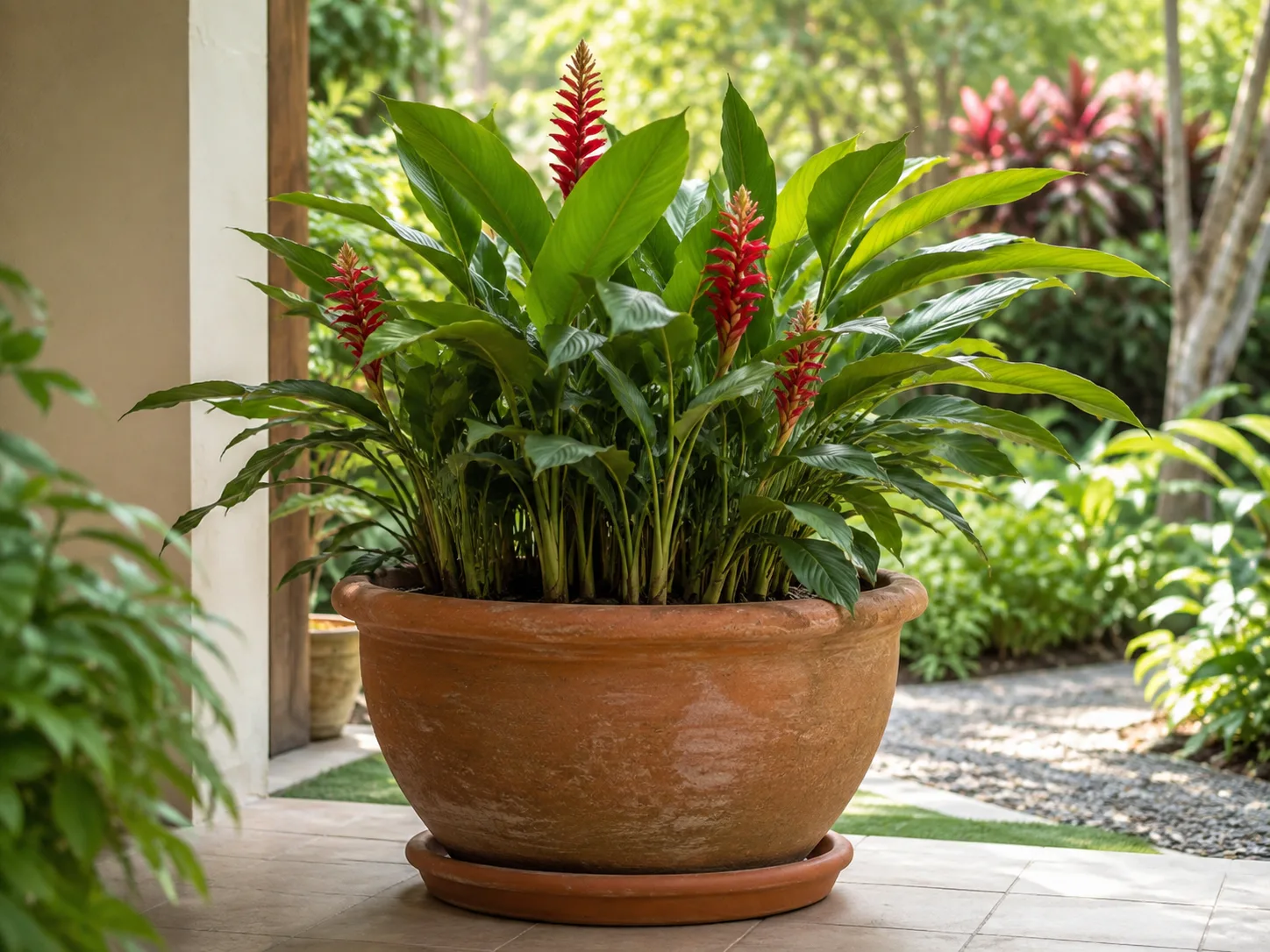
A container makes the plant easier to move and keeps the rhizome contained. It also dries faster, heats more quickly in direct sun, and can become crowded sooner. Choose a sturdy pot with several drainage holes and enough width for new shoots; a shallow decorative bowl without drainage is a poor match for a plant that needs steady moisture but cannot tolerate stagnant water.
If you are unsure whether the plant will overwinter outdoors, begin in a container for a season. That lets you learn how quickly the mix dries, see how much light your site provides, and move it before cold arrives. Plant it in the ground only after you know the winter conditions and have chosen a location you can maintain.
Build moist, airy soil around the rhizomes
The goal is soil that holds water between checks but still drains after a thorough soak. In a bed, loosen compacted ground and blend in mature compost or leaf mold through the planting area. Avoid filling one small planting hole with a rich, spongy amendment surrounded by heavy soil; that pocket can hold water like a basin around the rhizome.
For a pot, use a quality container mix and add a modest amount of fine bark, perlite, or pumice if the mix stays wet for too long. The exact recipe matters less than what happens after watering: water should pass through the pot, and the medium should remain lightly moist rather than becoming sour, compacted mud. Do not place gravel in the bottom as a substitute for drainage holes.
Red button ginger tolerates a useful range of garden soils when moisture and drainage are balanced. If a bed puddles after rain, improve the site or use a raised bed before planting. If a pot dries completely in a day, check whether roots have filled it, whether it sits in hot reflected sun, and whether water is channeling around a dry root ball.
Plant nursery starts and divisions at the right depth
Plant after the danger of frost has passed and the soil has warmed. A leafy nursery plant can be set at the same depth it was growing in its pot; burying the stem base deeper does not make it more stable and can keep that area too wet. Water it in once, then monitor the root zone while it establishes instead of keeping the planting hole constantly soaked.
Set a rhizome division shallowly, with its growing point close to the surface and roots spread into the soil. Cover it enough to hold it in place, but do not bury a small, leafless division under a deep layer of wet mix. A division has less foliage and fewer roots than a full plant, so it uses water slowly at first; let the top layer begin to dry before watering again.
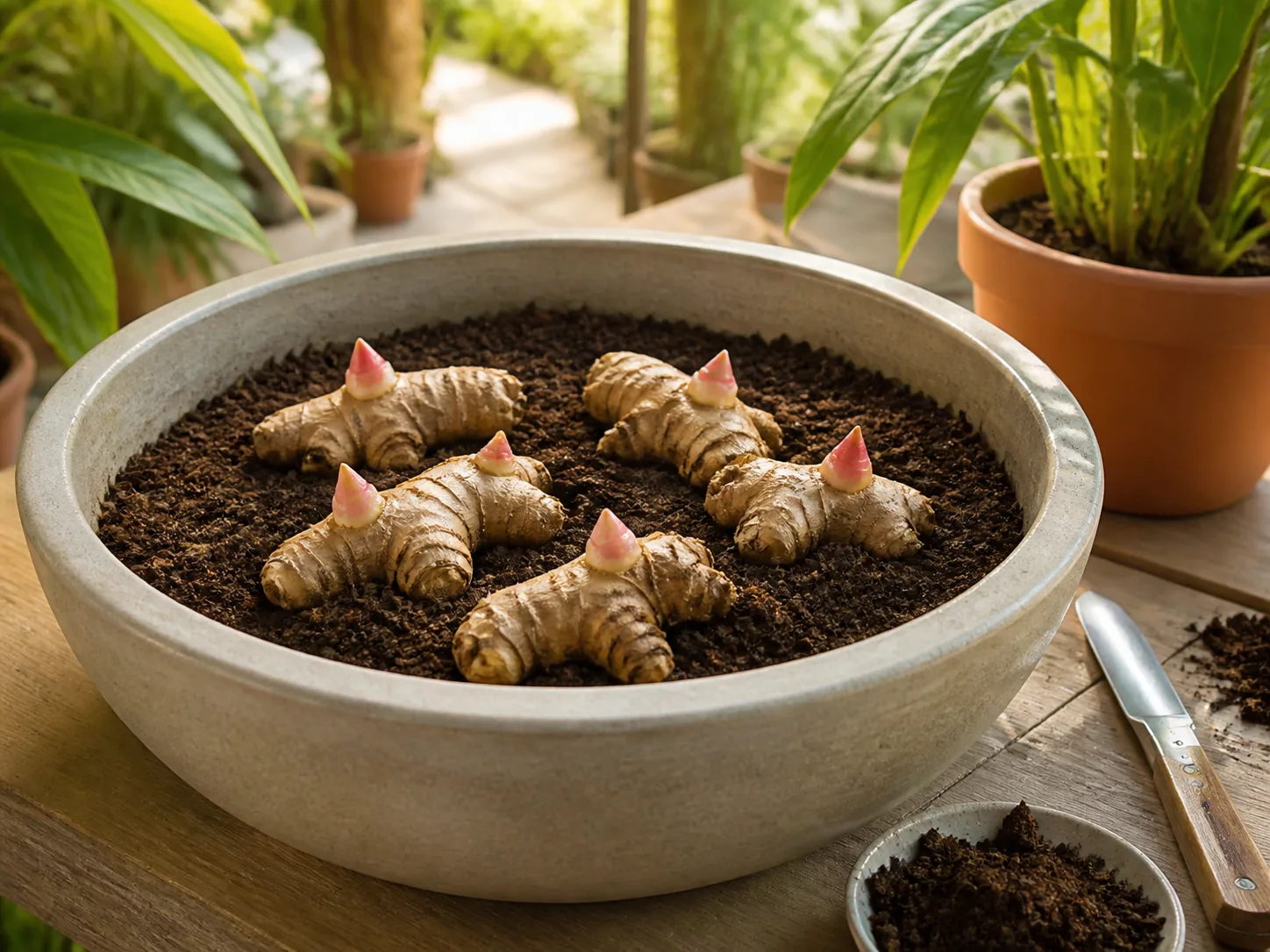
Space plants according to the mature width on the nursery tag, not the size of the pot you bought. A starting gap of roughly 18 to 24 inches gives a small Costus clump room to fill in, but a larger cultivar or a border planting may need more. In a container, one healthy division can fill a pot over time; planting several close together gives quicker fullness but also makes division and moisture control more urgent.
Water by checking the root zone
During active growth, keep the soil consistently moist without leaving it saturated. Check the top inch of mix with a finger, then water when that layer begins to dry; in a garden bed, probe deeper if the surface has dried after wind or sun. Water thoroughly enough to wet the root zone, and let excess drain away.
There is no reliable once-a-week schedule for every plant. A small terracotta pot on a hot patio may need water much more often than a large plastic pot in bright shade, while rain can keep an in-ground plant moist for days. Check more often during heat, wind, and active growth, and less often in cool weather or after flowering slows.
Use the plant’s condition as a cross-check. Leaves that curl or droop while the root ball feels dry usually point to insufficient water or too much heat.
Yellow leaves on a plant whose mix stays wet, especially with a soft stem base or a sour smell, suggest a drainage or root problem; more water is the wrong response. Correct the cause rather than treating every wilt as thirst.
UF/IFAS notes that spiral gingers are fairly drought tolerant, but that is not a reason to let a container dry out repeatedly. A short dry spell may only pause growth; cycles of severe drying can shorten flowering and make new leaf edges crisp. Aim for even moisture, not permanent wetness and not drought stress.
Feed only when the plant is actively growing
Red button ginger does not need frequent fertilizer to prove it is healthy. If you improved the bed with compost, that may be enough for a season. For container plants or pale new growth in otherwise good conditions, use a balanced, complete fertilizer at the label rate while the plant is actively producing leaves and stems.
Do not feed a cold, dormant, newly divided, or waterlogged plant. Fertilizer cannot replace warmth or light, and feeding damaged roots can add stress rather than growth. If leaf tips turn brown soon after feeding or a crust forms on the mix, pause fertilizer and flush the pot with clean water if drainage is good.
A plant with lush leaves and no flowers does not automatically need a high-phosphorus “bloom” formula. First check light, warmth, maturity, and whether it had enough steady growth to store energy. A fertilizer adjustment comes after those basics, not before.
Understand the red cone and flowering cycle
The red “button” is a cone of overlapping bracts, not a single large flower. Individual orange-yellow blooms emerge from between those bracts, so a cone can remain colorful while different flowers open over time. The effect is more architectural than fragrant; it comes from the bracts and spiral foliage as much as from the small flowers.
Bloom timing depends on warmth, region, and growing conditions. UF/IFAS reports bright red bracts from late winter into early spring in its Florida profile of Costus woodsonii, while other sources describe flowering over a broader warm-season window.
Treat those as regional observations rather than a universal calendar. A plant that blooms later where you live is not necessarily unhealthy.
When a mature plant flowers poorly, check for too little usable light, a recent cold spell, repeated drought, or heavy shade from nearby growth. A new division may spend its first season rebuilding roots and stems. Give it a complete warm growing period before judging it, and avoid repeatedly digging around the rhizome to see whether it is active.
Do not force a bloom with extra fertilizer if the plant has not recovered from stress. Keep the root zone moist but aerated, protect it from harsh afternoon sun, and wait for strong new stems. If the plant is old and crowded, careful division in warm weather may restore vigor over time, although it can delay flowers while the new sections establish.
Prune stems without sacrificing healthy growth
Remove spent flower bracts if they look untidy, but do not shear every stem to the same height after flowering. The leafy stems are the plant’s working canopy, and healthy foliage helps the rhizome support the next flush of growth. Use clean, sharp pruners to remove a stem at its base only when it is dead, badly damaged, or crowding the clump.
After cold or drought damage, wait until the extent of the injury is clear. Trim dead leaves and soft, discolored stems; retain firm green tissue.
If cold has killed the top growth, cut the dead stems back after the damage is obvious and keep the soil only lightly moist while the plant rests. Do not cut a healthy plant to the ground every year as a routine “winter pruning” step.
Wipe blades between plants, especially if a stem is soft or decaying. That simple habit limits the chance of carrying contaminated plant material into another clump. Put diseased, slimy tissue in household waste rather than composting it.
Propagate without letting sections dry out
The easiest way to make another red button ginger is to divide a healthy clump when it is actively growing and warm weather is ahead. UF/IFAS also notes that Costus can root from stem pieces, a useful option when you have healthy stems but do not want to lift the whole clump. Division is usually the more dependable choice for a home gardener because each piece can retain part of the established rhizome.
Water the parent plant the day before dividing if the soil is dry. Prepare a clean knife or spade, new pots or a ready bed, and lightly moist mix before lifting the clump. Work in warm conditions, keep roots out of strong sun, and replant promptly; a small division can dry much faster than a mature plant.
Divide a crowded rhizome clump
Lift only as much of the clump as you need. Loosen soil around the perimeter with a garden fork, then raise a section without tearing all the roots. Shake or rinse off enough soil to see where the rhizomes branch; avoid washing the entire plant bare if you can divide it cleanly in place.
Cut the rhizome into sections with at least one firm growing point and some attached roots. Discard any piece that is soft, blackened, leaking, or foul-smelling.
Use a clean blade, keep healthy foliage proportionate to the roots, and replant each section at the same shallow depth. Water to settle the soil, then keep it lightly moist while new growth begins.
Do not leave fresh divisions sitting in a bucket of water or sealed in a wet bag. They need moisture and oxygen, not an anaerobic soak. If you must delay planting, wrap roots in barely damp material and keep them shaded for a short period.
Root a stem cutting only in warm weather
UF/IFAS recommends laying stem pieces about 8 inches long on the soil during warm months for spiral gingers. Choose a healthy, firm stem with nodes, remove flowers, and place it horizontally on a clean, moist but free-draining propagation mix. Keep it warm in bright indirect light and maintain light moisture around the nodes; do not bury the whole stem in soggy soil.
Once roots and new shoots form, pot the rooted section carefully and let it settle before feeding. This method is for Costus spiral gingers, not a rule for every plant marketed as ginger. If your plant label is unclear or the stem begins to soften, stop misting, improve airflow, and switch to division when the parent clump is ready.
Keep containers healthy indoors and through winter
A pot can move indoors before the first frost, but red button ginger needs enough warmth and light to keep growing well. Acclimate it over several days: inspect for insects, rinse the foliage, and move it into a bright, warm room. Keep it away from cold windows, drafty doors, and heating vents that dry leaf margins.
Reduce watering if growth slows in winter, but do not leave the rhizome bone-dry for months. Let the upper layer dry more between waterings and make sure the pot drains completely. If leaves yellow as the room cools and the mix stays wet, move the plant somewhere warmer and brighter, then allow the roots more air before watering again.
Repot when roots and rhizomes fill the pot, water runs straight through a dense root ball, or the plant repeatedly wilts soon after watering. Move up only one pot size at a time, refresh the mix, and divide the clump if you want to keep the same container. A very large pot around a small division stays wet for too long and increases rot risk.
Diagnose brown edges, yellow leaves, and curling
One damaged leaf does not identify a disease. Compare the pattern across the plant, check the soil before watering, and look at stem bases and rhizomes only if the symptoms point to a root problem. Change one major condition at a time so you can tell whether the plant responds.
| What you see | Likely first checks | First response |
|---|---|---|
| Dry brown edges, mostly on the sunny side | Hot afternoon exposure, wind, or a drying pot | Move to gentler light and check root-zone moisture |
| Limp leaves with light, dry soil | Underwatering or heat stress | Water deeply, drain the pot, and reassess after the root ball is evenly moist |
| Yellowing while the mix remains wet | Poor drainage, cool conditions, or root stress | Pause watering, empty the saucer, and improve warmth and airflow |
| Soft stem bases or a sour smell | Rhizome or root decay | Unpot or loosen soil to inspect; remove only clearly rotten tissue and correct the wet conditions |
| Long, weak stems with few flowers | Too little light, crowding, or slow recovery after division | Increase filtered light gradually and allow a full growing season |
If only old lower leaves yellow while new growth is firm and green, a small amount of leaf turnover may be normal. If yellowing moves rapidly through the plant or stems collapse, treat it as an urgent root-zone problem. Remove a healthy rhizome section for propagation only if it is clearly firm and clean; do not reuse soft or foul-smelling material.
Manage pests and prevent spread responsibly
Inspect leaf undersides, new growth, and the bases of stems when you water. Aphids, scale, or mealybugs can be easier to spot on a plant kept indoors or in a sheltered patio corner than in a mixed outdoor bed. Look for clusters of small insects, sticky residue, cottony patches, or leaves that look stippled rather than assuming every yellow leaf is a pest.
For a small infestation, isolate a container plant, rinse foliage with a steady stream of water, and remove heavily affected leaves with clean pruners. Recheck the plant over the next week because eggs or hidden insects can remain. If you consider a pesticide, use only a product labeled for that plant and pest in your location and follow its label exactly; do not spray open flowers or beneficial insects.
The rhizomes form underground stems, so a happy clump can widen over time. Keep it in a container or use a physical boundary if you need a fixed edge, and divide it when shoots begin crowding the space.
Before planting outdoors in a tropical or subtropical region, check local invasive-plant guidance; status can differ by island, county, and habitat. A plant’s being sold locally does not guarantee that it belongs in every nearby natural area.
Conclusion
Red button ginger is manageable when you treat it as a warm, rhizomatous ornamental rather than a generic ginger. Confirm the label says Costus woodsonii, give the stems filtered light, and keep the root zone moist but able to drain. In colder climates, a movable pot is the practical way to protect it; in warm gardens, allow room for the clump and divide it before it crowds its neighbors.
When growth falters, check warmth, light, and soil moisture before reaching for more fertilizer. Firm rhizomes, healthy new shoots, and red bracts are better signals of success than a fixed watering schedule or a promised bloom date.



