How to Get Rid of Mice in Your Home: Safe Step-by-Step
Get rid of mice in your home with a trap-and-seal plan, safe cleanup steps, and clear signs for when to adjust your setup or call a pest pro for help.
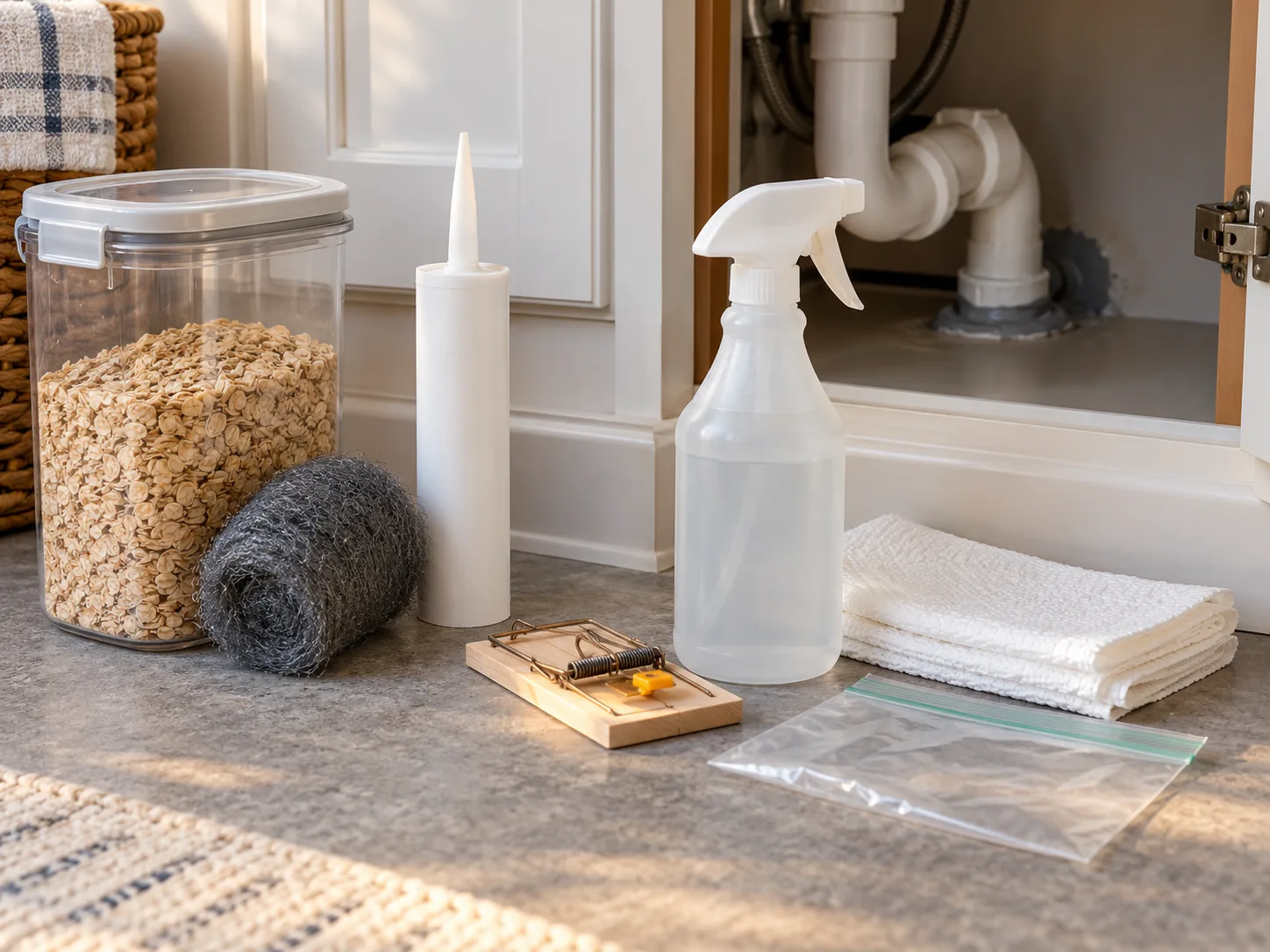
To get rid of mice in your home, combine trapping, food control, and exclusion. Snap traps can remove mice already indoors, while sealed food and repaired gaps make the home less rewarding and harder to enter. Start by finding fresh activity, place traps along those routes, and clean any droppings safely.
A single catch does not prove the problem is over, and a clean kitchen alone will not seal a gap. The goal is to stop new mice from getting in, remove the ones that are inside, and then confirm that fresh signs have stopped.
A reliable plan combines removal and exclusion
There are three jobs to do in parallel: remove easy food and nesting cover, close the small openings mice use, and trap the animals already moving indoors. Traps address mice that are present now; exclusion and storage changes reduce the chance that another one replaces them. This integrated approach is more dependable than relying on a strong smell, a single trap, or poison alone.
The Illinois Department of Public Health, with assistance from University of Illinois Extension, explains that sanitation reduces food and shelter and can make traps more effective, but sanitation alone rarely eliminates mice in buildings where food is used. Its durable control strategy is to combine sanitation, mouse-proof construction, and population reduction. (Illinois Department of Public Health)
You do not need to diagnose a whole infestation before taking sensible steps. If you find one fresh dropping or a gnawed food package, start securing food and inspecting likely routes today; if you find signs in several rooms or repeated activity, set multiple traps and plan to close entry points as well.
Confirm that mice are active
A live sighting is useful evidence, but mice often stay out of view. Droppings, gnawed packages, nesting material, and new damage can show where they have been; a scratching noise by itself is less conclusive because pipes, birds, and other animals can sound similar.
Treat mouse waste as potentially contaminated, but do not panic or handle it to identify the animal. The CDC notes that rodents can spread germs through urine, droppings, saliva, contaminated food, and bites; careful cleanup and exclusion are practical precautions whether or not you can identify a species. (CDC rodent-control guidance)
| What you find | What it suggests | Next useful move |
|---|---|---|
| New droppings, crumbs, or gnawed food packaging | A mouse has likely been feeding nearby | Remove food access, then place a trap at the active edge |
| Shredded paper or fabric tucked into a quiet space | Possible nesting activity | Avoid stirring it; secure the area and use the safe cleanup steps below |
| Scratching after dark with no other evidence | Possible rodent activity, but not proof by itself | Inspect nearby walls, cabinets, and pipe openings with a flashlight |
| A hole, gap, or damaged screen | A possible route into the home | Note the location and repair it with a chew-resistant barrier |
Find the route, not just the dropping
Use a flashlight to inspect the edges of rooms where food, warmth, and shelter meet: beneath sinks, behind a refrigerator or stove, along pantry walls, around pet-food storage, in a garage, and near the basement or attic access. Look for fresh droppings, gnaw marks, shredded nesting material, and gaps around plumbing or cables. Do not reach blindly into a dark void or move a heavy appliance unless you can do it safely.
Good Housekeeping’s pest-control overview likewise recommends locating likely entry points and active areas before placing traps, rather than scattering them across an open floor. (Good Housekeeping) Make a quick note or take a photo of each sign from a safe distance; after you clean a small, accessible patch correctly, new droppings in that spot give you a clearer activity check than old marks do.
A gap about 1/4 inch (6 millimeters) wide, roughly pencil-width, can be enough for a mouse to enter. Check where pipes, wires, vents, and doors meet the wall, as well as the garage door and foundation. The opening may be hidden behind a stored box or cabinet, so inspect the room perimeter rather than only the floor in the center. (CDC guide to sealing out rodents)
Start with these actions today
Work from the food source toward the route and then the trap. This order makes the bait easier for a mouse to find, reduces competition from pantry scraps, and helps you avoid moving traps around without knowing what they were meant to catch.
Before moving anything, keep children and pets out of the immediate area where you found droppings or nesting material. Wear disposable or rubber gloves for cleanup, and do not sweep or vacuum dry waste; the safe cleanup process appears below.
Remove easy food and water
Move cereal, grains, pet food, birdseed, and other dry goods out of thin bags and cardboard boxes into thick plastic, metal, or glass containers with tight lids. Wipe crumbs and cooking spills, close the garbage, clean pet bowls after meals, and put food away overnight when practical. Mice can make use of small scraps, so concentrate first on the areas where you found signs rather than trying to make every room immaculate.
A dripping pipe, condensation, or a pet water bowl left out overnight can also make a room attractive. Fix a persistent leak if you can, dry standing water, and avoid leaving food or water bowls on the floor overnight if your pet’s routine allows it. Keep food trash in a lidded bin and empty it regularly; a bag of kibble in a torn sack or a paper grocery bag is much easier to reach than food in a rigid container.
Removing clutter helps most where it hides signs or creates a sheltered nest site. Clear the corners behind stored goods, move cardboard off the floor, and use lidded plastic totes for things that must stay. This is targeted prevention, not a cleanliness test: mice enter through openings, and a tidy home can still have an access gap.
Close safe-to-reach entry points
Look first at openings around utility pipes and wires, the foundation, door thresholds, garage doors, and damaged screens. Repair holes larger than about 1/4 inch; for a small opening, pack steel wool or copper mesh into it and secure the edge with an appropriate sealant. For a larger opening, use a durable material that fits the gap, such as metal mesh, hardware cloth, flashing, mortar, or another building repair designed for that location.
Do not rely on loose foam, plastic, rubber, or wood alone where mice can gnaw through them. The Illinois Department of Public Health advises using hard-to-chew materials and notes that mouse-proof construction is the most lasting form of control. For doors, fit or repair a snug sweep or weatherstrip; for vents, use a properly sized screen rather than blocking airflow. (Illinois Department of Public Health)
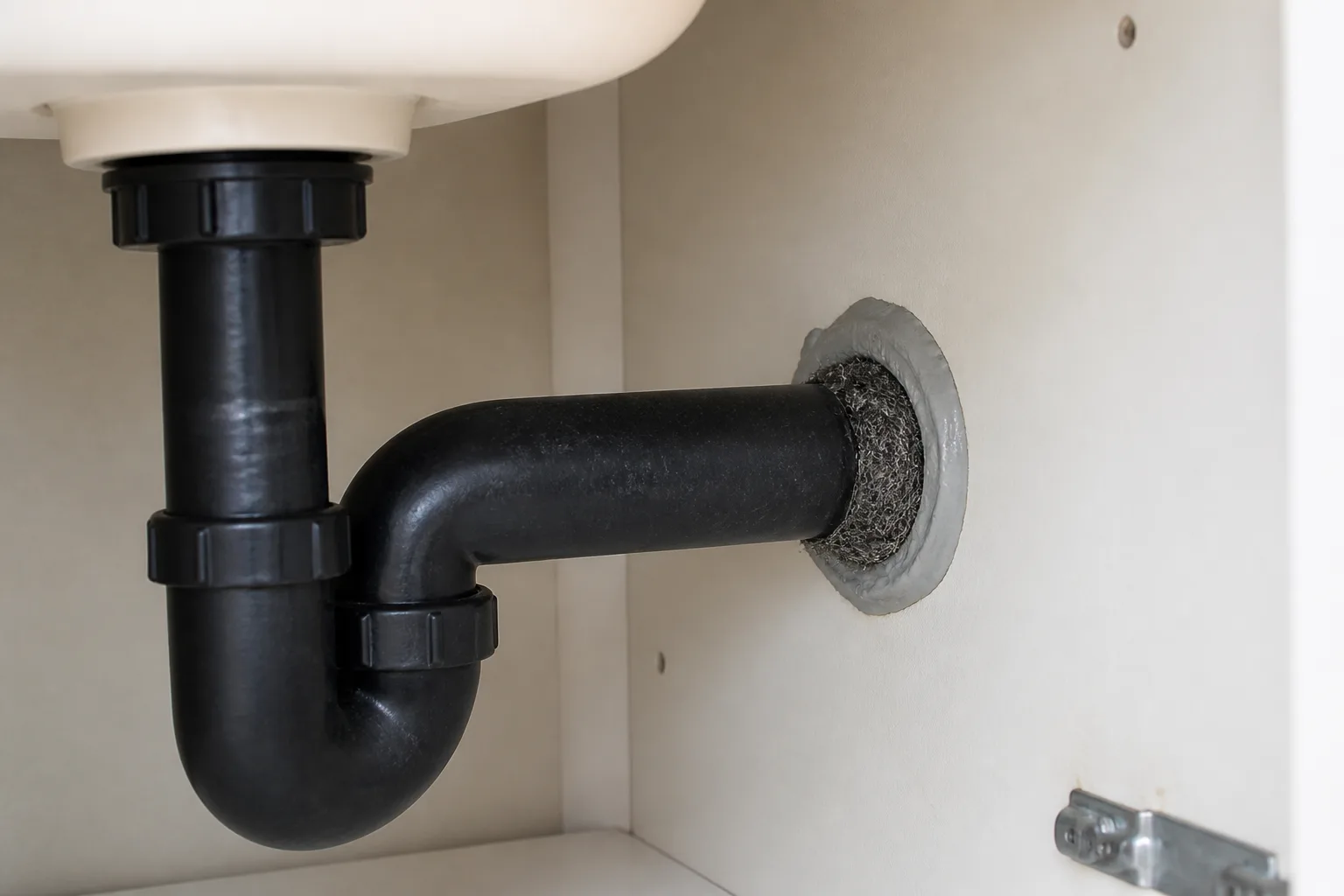
If you rent, send the property manager a photo and location of gaps in a wall, shared corridor, or utility chase. Do not stuff a hole that might be a drain, combustion-air inlet, dryer exhaust, or another required opening. Use an approved screen or have a qualified repair person close the access without interfering with the appliance or building system.
Place snap traps along the route
Set traps where you have signs, not just where there is spare floor space. Mice tend to travel along edges and behind objects, so place a mouse-sized snap trap beside a wall with the bait end toward the wall, forming a T. Likely spots include the back edge of a pantry, under a sink, behind an appliance only if it is safe to reach, and along a basement wall where fresh activity appears. (CDC trapping instructions)
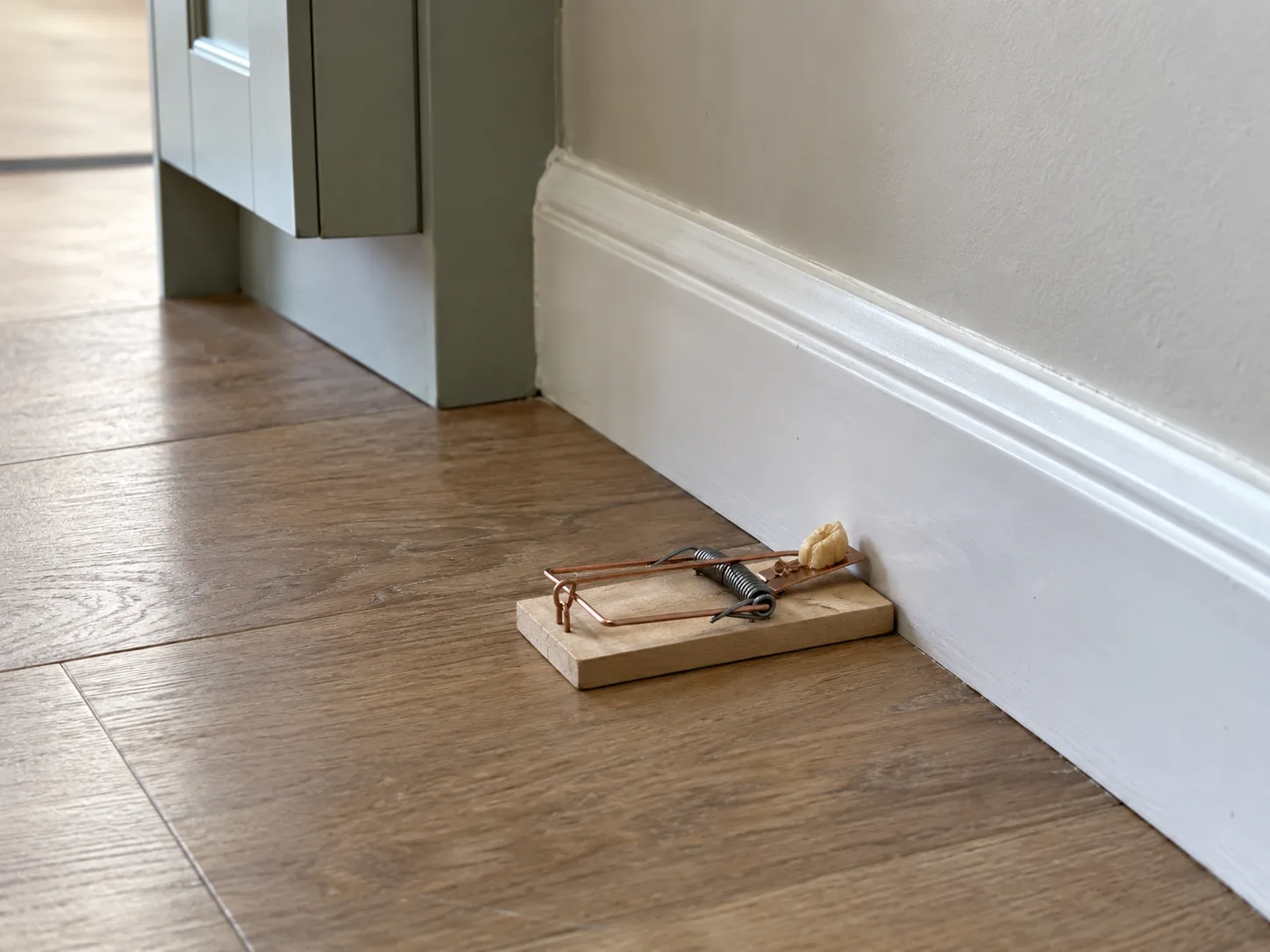
One well-placed trap on an active route is more useful than several traps in a room with no evidence. If activity appears along a longer wall or in multiple locations, add traps at those points; New York State Department of Health gives about 6 to 10 feet apart as a practical spacing range for suspected routes. That is a starting point, not a substitute for placing a trap beside fresh signs. (New York State Department of Health)
Choose a trap strategy that fits your home
For a small number of mice inside a home, snap traps are usually the clearest first choice: they provide a visible result, can be checked, and avoid leaving bait poison where a child, pet, or wildlife could reach it. Choose a mouse trap rather than a rat trap, follow the package instructions, and make sure the trigger moves freely before you set it. Put it where you can inspect it daily and where people will not accidentally step on or touch it.
The CDC recommends traditional snap traps around the home and says traps and bait must be kept away from children and pets. It advises using poison or bait stations only for infestations that persist, and recommends EPA-registered products if you reach that point. (CDC trapping instructions)
Bait and position traps for a clean catch
Use a small dab of peanut butter or another food that matches what the mouse has been eating. More bait is not better: a mouse should have to work the trigger, not pull off a large lump from the edge. If you see that bait has vanished but the trap has not fired, clean and reset it with less bait attached directly to the trigger, then move it a few inches along the same wall route if the evidence points there.
Check traps at least once a day. Remove a catch safely, refresh the bait if it has dried or been taken, and reset traps while activity continues. CDC guidance says to keep trapping until there are no more rodents; one week with no captures and no new signs is a useful checkpoint, not an absolute guarantee that mice will never return. (CDC trapping instructions)
If children, cats, or dogs can reach a trap, place it inside a protective box designed for that trap or in a location they cannot access. A trap that is merely hidden behind a trash can is not protected if a child can move the can or a pet can get behind it. Never put traps or bait where a household member could contact them while reaching into a cupboard.
Skip quick fixes that do not solve an infestation
Peppermint oil, dryer sheets, mothballs, and ultrasonic plug-ins may sound easier than sealing a gap, but a strong scent does not remove food or prevent a mouse from using an opening. San Diego County’s house-mouse guidance says repellents rarely control mouse problems and that electronic or sonic devices do not work; mice can adapt to scent-based deterrents. (San Diego County Environmental Health)
Glue boards can leave a live animal stuck for a long time and do not tell you whether a route has been closed. The CDC advises against glue and live traps in household rodent control, noting that frightened rodents can urinate and increase contamination concerns. If you are hoping to release a live mouse, check the method and local rules with a qualified local authority; trapping a live animal does not solve the entry or food problem. (CDC trapping instructions)
Rodenticide has a limited role because a mouse may die in an inaccessible place, and poison can harm children, pets, and non-target animals if used carelessly. If the infestation continues despite traps and exclusion, follow current CDC and product-label guidance, use only a labeled product in its required bait station, and keep it inaccessible to people and animals. For many homes, a licensed pest professional can evaluate whether poison is actually needed and how to reduce exposure risk.
Clean droppings and nests without stirring dust
Never dry-sweep or vacuum mouse droppings, urine, or nesting materials. Dry cleanup can stir contaminated particles into the air, which is why CDC guidance calls for wetting the material with disinfectant before wiping it up. Wear rubber or plastic gloves and keep other people and pets away while you work. (CDC cleanup guidance)
For a small amount on a hard surface, spray the droppings and surrounding area with a household disinfectant labeled for that use or a bleach solution; let it stay wet for five minutes or the contact time on the product label. Pick up the material with paper towels, place waste in a bag, disinfect the hard surface, and wash gloved hands before removing gloves. Then wash your hands with soap and water. Do not mix bleach with ammonia or other cleaners.
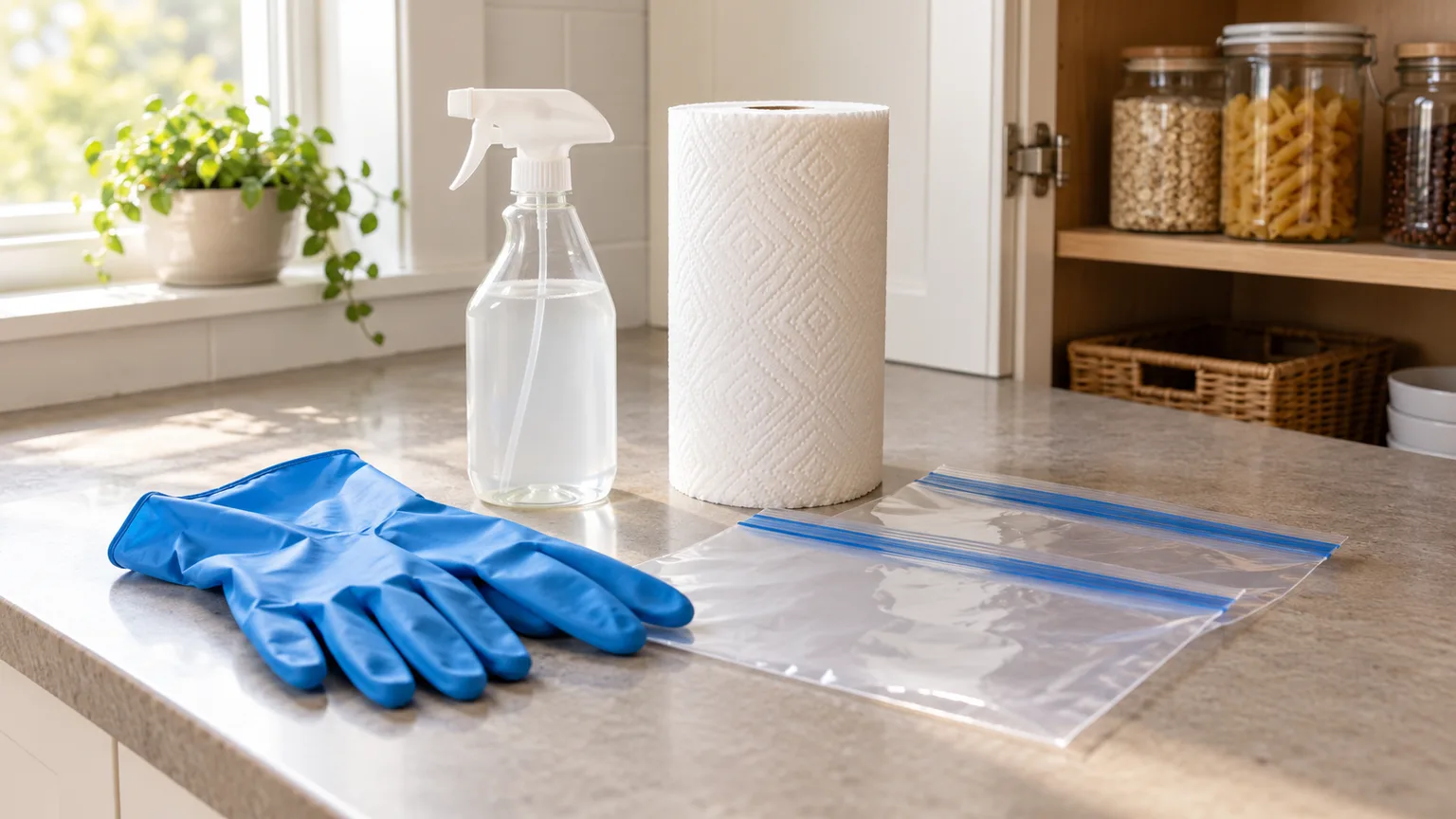
For a dead mouse or nest, wet it with disinfectant, let it soak for the label’s contact time, and place the rodent or nesting material and used disposable items in a sealed plastic bag. Put that bag inside a second bag and place it in a covered garbage can, following local rules. If you need to reuse a snap trap, follow the CDC cleaning instructions and the trap maker’s directions rather than handling it bare-handed.
If you find droppings throughout a room, contaminated insulation, a large nest, or signs in heating and cooling ducts, do not treat it as an ordinary kitchen cleanup. CDC advises ventilating an affected building before cleanup and contacting a professional when rodents have accessed ventilation systems. Heavy infestations can require protective equipment and removal methods beyond a routine household job. (CDC cleanup guidance)
Keep trapping until the signs stop
Do not judge success only by whether you saw a mouse yesterday. Record where you placed traps and whether bait was touched, then look for fresh droppings, new gnaw marks, shredded material, or food that has been disturbed. Once you catch a mouse, keep traps active in the same sign-rich areas and continue to check daily.
If a trap is ignored, first ask whether it is actually on the route: is it beside a wall, near fresh droppings, and away from competing food? If the bait is missing without a catch, use less bait and attach it securely to the trigger; if nothing changes after several nights, reposition the trap a short distance along the same wall or add one at the next active sign. Do not shift every trap at once, or you lose the ability to tell which change helped.
After you have safely cleaned a small area, new droppings are a stronger indication of continued activity than old droppings that were already there. If you see new signs after a week, continue trapping and recheck the outside of the building for a missed opening. CDC says that no captures for one week together with no new signs is a reasonable indication that rodents have been removed; keep monitoring if there was activity in multiple rooms or if new evidence returns. (CDC trapping instructions)
Prevent mice from returning
Keep dry foods and pet food in lidded, chew-resistant containers; close garbage and clean crumbs promptly. Wash pet bowls after feeding when possible, repair drips, and avoid leaving accessible food out overnight. These habits reduce the rewards inside, but durable repairs are what stop mice from using the same route back in.
Inspect the building perimeter and rooms seasonally, after construction, and when you move stored boxes. Pay special attention to utility penetrations, the garage door, window screens, foundation cracks, and the gap beneath exterior doors. The CDC recommends checking both indoors and outdoors and keeping food and garbage sealed; use a durable patch that suits each gap rather than relying on temporary scented products. (CDC guide to sealing out rodents)
Outside, keep trash lids secure, clean food spills around grills and feeders, and move stored materials away from the foundation when possible. Trim dense plant growth that presses against siding or blocks your view of the foundation, but remember that yard cleanup is supporting work, not a substitute for sealing. If mice keep appearing after you have closed visible openings, recheck the garage, attic, and the places where plumbing or cable enters the home.
When to hire a pest professional
Get help if you keep finding fresh signs after a week or two of correctly placed traps, if activity appears in several rooms, or if the source seems to be inside a wall, crawlspace, attic, or duct. A professional can inspect inaccessible voids, identify whether the animal is actually a mouse, and determine whether building repairs or a different control method are needed. The CDC specifically advises professional help when rodents reach heating or cooling ventilation systems. (CDC cleanup guidance)
Also bring in a qualified professional if you cannot safely reach the affected area, find contaminated insulation or an extensive nest, notice chewed wiring, or have people or pets who could be exposed to traps or bait. Good Housekeeping’s expert-reviewed guide notes that a trained pest specialist can assess hidden activity and identify routes a homeowner may miss; that is a useful reason to hire help when the signs keep returning, not just because one mouse appeared. (Good Housekeeping)
This Old House’s homeowner guide also describes professional removal as an inspection and exclusion job when activity is extensive or persistent, not simply a pesticide visit. Before hiring, ask what inspection and exclusion are included, where traps or bait will be placed, whether any product can be reached by children or animals, and how many follow-up visits are covered. Ask for a plan to correct the entry point as well as reduce mice already indoors. A one-time treatment without a repair may solve today’s catch while leaving tomorrow’s route open. (This Old House)
Conclusion
The dependable way to get rid of mice is to find the active route, remove easy food, close safe-to-reach gaps, trap along walls, and clean waste without stirring dust. Keep mouse traps where fresh evidence appears and check them daily; if you have a child or pet, protect the trap or choose a genuinely inaccessible location.
Continue trapping until a full week passes with no captures and no fresh signs, then keep food stored and inspect the repaired areas. If evidence continues, appears in hidden spaces, or involves contamination you cannot safely clean, get a pest professional to locate the source and close it.