11 Rabbit-Resistant Plants for a Less-Browsed Garden
Choose 11 rabbit-resistant plants for sun, shade, and dry beds; match each to its site, understand where resistance fails, and protect tender new growth.
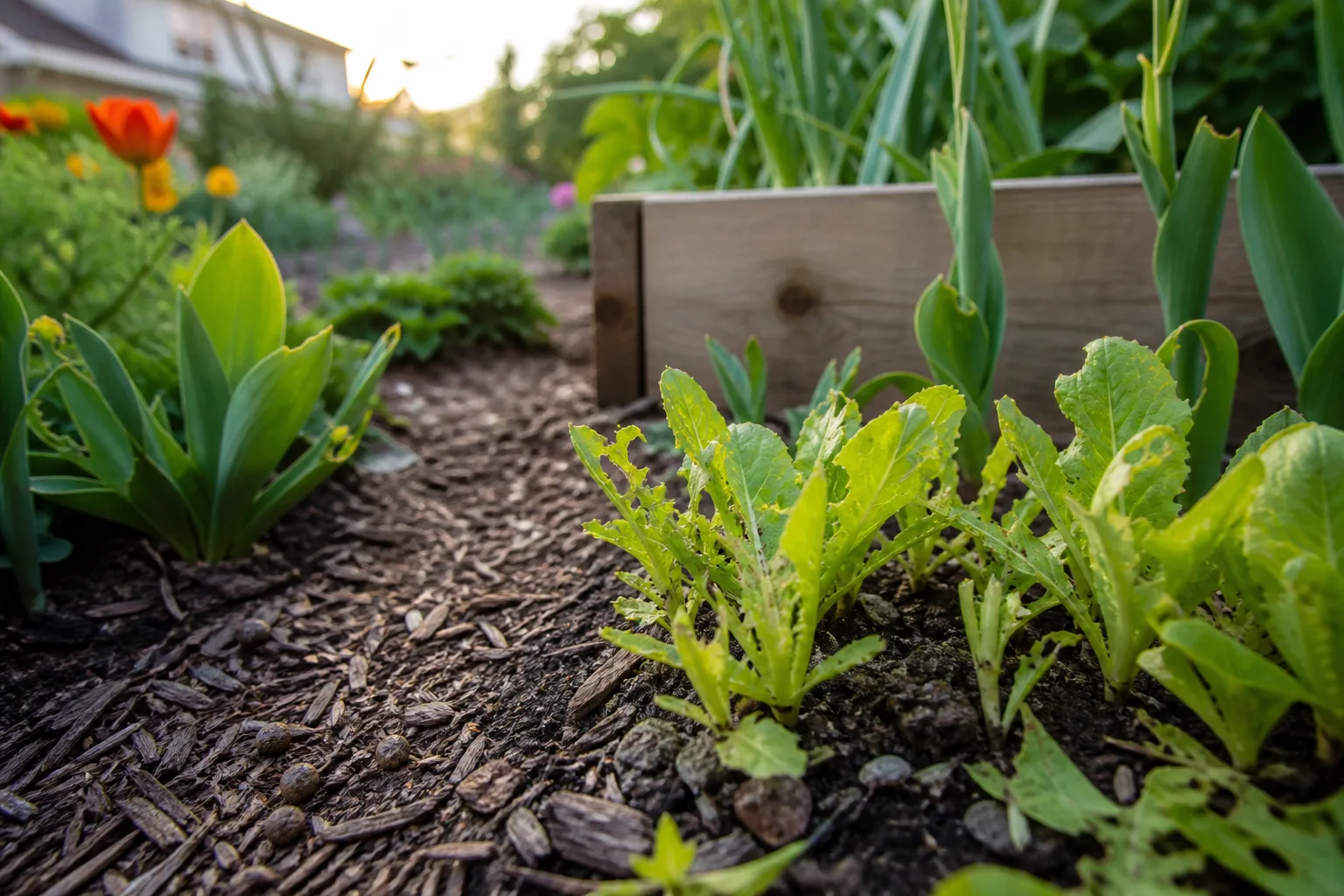
If rabbits keep clipping your flowers, start with plants they tend to sample less often—but plan to protect anything you cannot afford to lose. Rabbit-resistant describes a lower chance of damage, not a guarantee: even plants that usually escape browsing can be nibbled when food is scarce or when their shoots are soft and new. Iowa State University Extension says rabbit preferences vary with population and the availability of alternate foods, while the RHS warns that new plantings and spring growth can still be eaten (Iowa State University Extension; RHS).
The 11 choices below are drawn from extension and horticultural-society lists of plants seldom or less often damaged by rabbits. Each earns its place for a different reason—aromatic foliage, coarse or fuzzy leaves, a woody habit, or a strong garden role—but the best choice is still the one that fits your soil and light. A plant struggling in the wrong spot is a poor investment even if rabbits are not the first problem it faces.
What rabbit-resistant really means
No plant is reliably rabbit-proof across every yard, season, and rabbit population. “Resistant” lists summarize observed preferences; they cannot predict what an individual animal will eat. Iowa State’s annual, perennial, bulb, and shrub lists are compiled from several Midwestern sources, and the university specifically notes that pressure and available food affect browsing. The RHS makes the same practical point: plants can be damaged when newly planted or putting on tender growth.
That distinction matters when you compare recommendations. For example, Iowa State separates herbaceous peony hybrids—which it places among plants seldom damaged—from tree peony, which appears among shrubs and young trees often damaged. Snapdragons also appear on some resistant lists but are in Iowa State’s moderately to severely damaged annuals. A plant name without a species or local context can mislead; ask your county extension office which plants have held up in nearby gardens.
One more distinction is essential if you share a yard with a pet rabbit: a plant that wild rabbits often avoid is not necessarily safe for a domestic rabbit to eat. Hellebore and geranium are listed as toxic to rabbits by UC Davis Veterinary Medicine, and the House Rabbit Society’s plant list (compiled by the University of Illinois) includes daffodil, flowering tobacco, and rhododendron among poisonous plants. That list is not complete, so don’t use ornamental plant lists as a rabbit diet guide; keep pet rabbits away from unknown garden plants and check with a rabbit-savvy veterinarian before offering any plant as food (UC Davis Veterinary Medicine; House Rabbit Society / University of Illinois).
11 plants rabbits usually leave alone
These selections cover shrubs, flowering perennials, herbs, and groundcovers. Extension lists describe them as seldom or less likely to be damaged, not immune. Plant several that suit your conditions instead of making a whole garden depend on a single supposed deterrent.
1. Butterfly bush
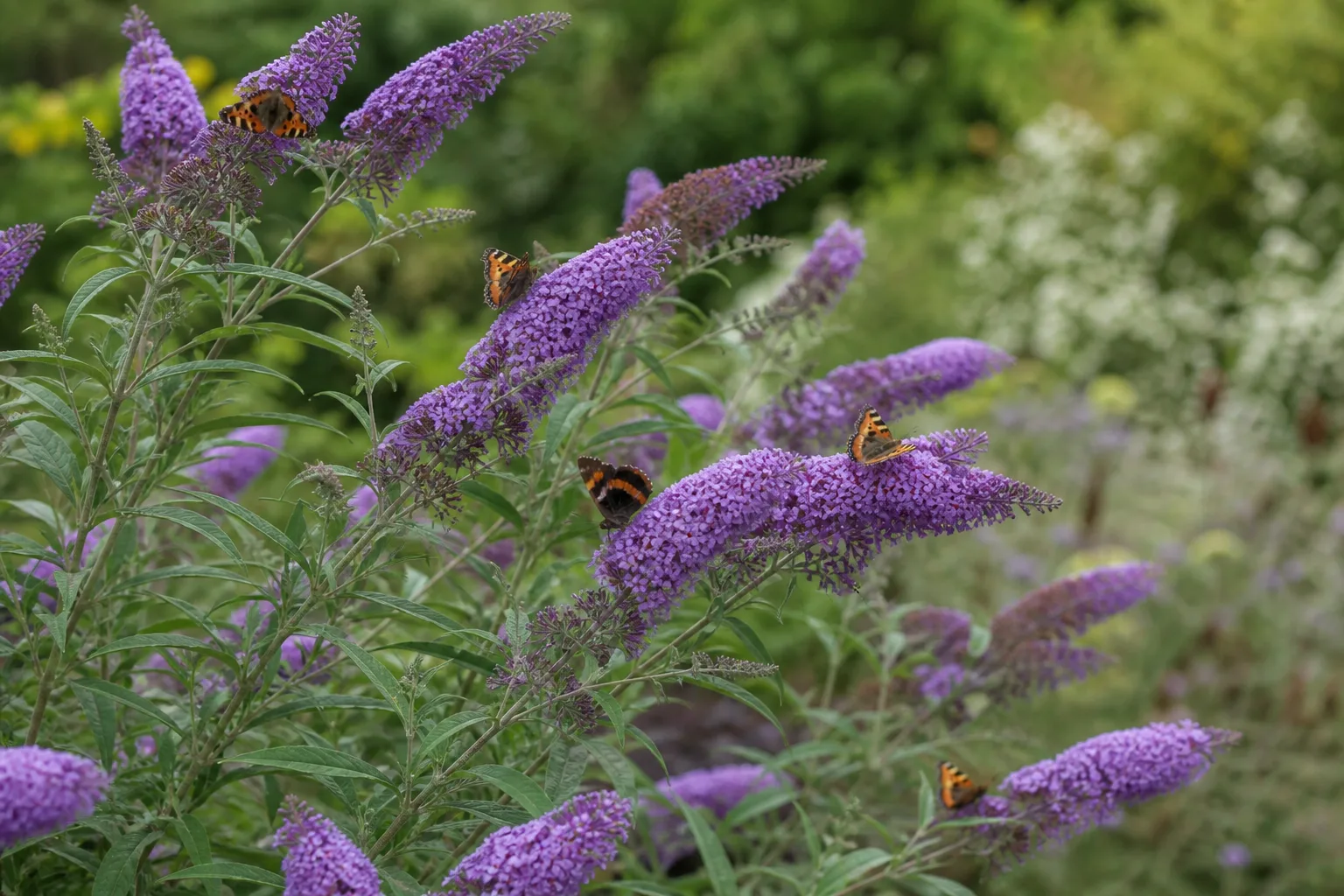
Butterfly bush (Buddleja davidii) is a woody shrub with arching stems and long summer flower panicles. It can give a sunny border height and a long season of nectar for adult butterflies; established stems are less tender than the soft seedlings rabbits often target. Give it full sun, room for its mature size, and soil that drains well. In cold regions, the top may die back and regrow from the base, so protect fresh shoots while the plant is getting established.
Check local invasive-plant guidance before buying. Butterfly bush spreads by seed in some regions and can displace native plants; Penn State Extension recommends avoiding invasive forms and points out that “sterile” claims should be verified rather than assumed from a label. Where it is restricted or invasive, choose a locally appropriate native shrub instead, such as a serviceberry or native viburnum if those suit your site (Penn State Extension on butterfly bush; University of Maryland Extension).
2. Columbine
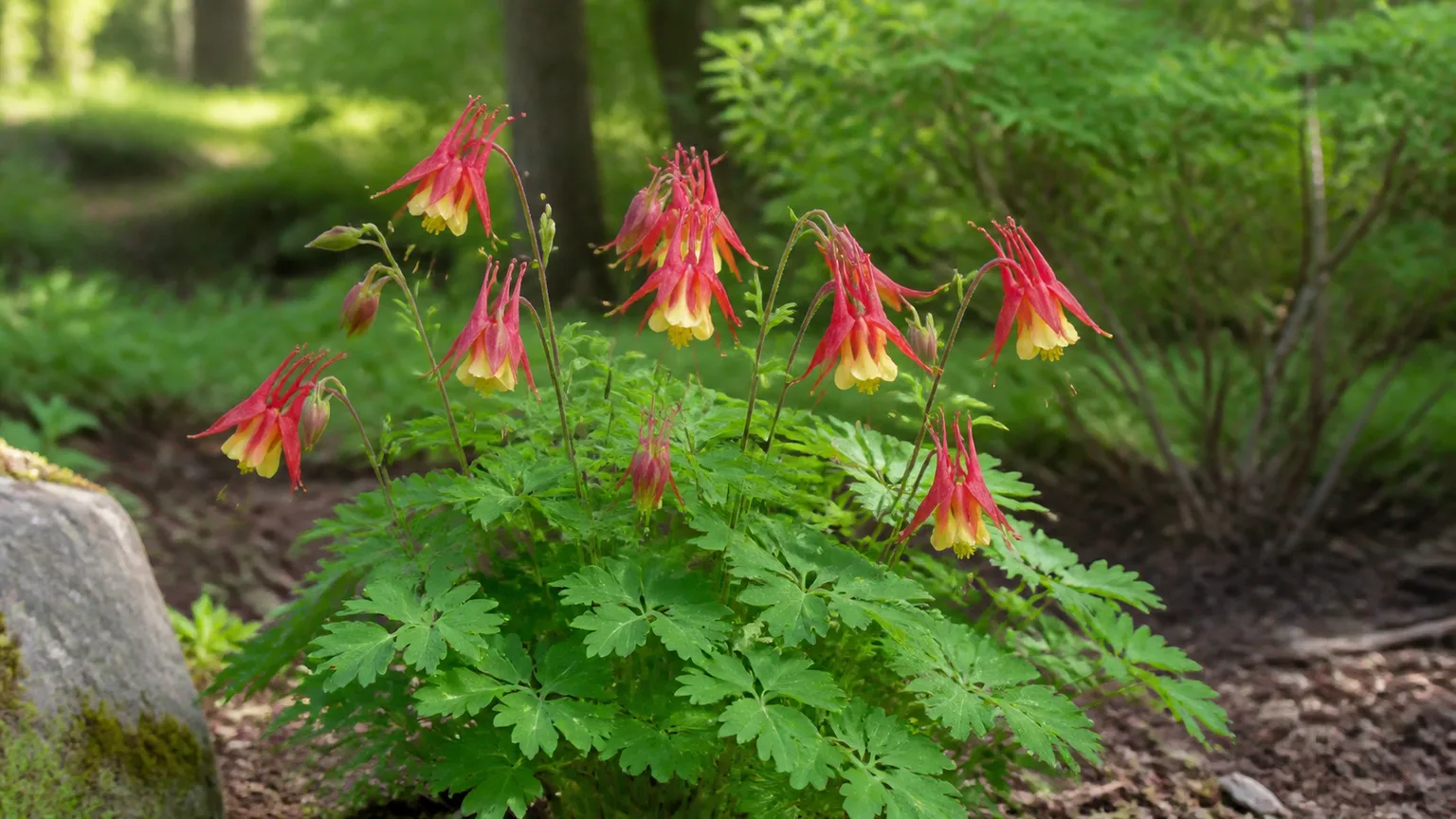
Columbine (Aquilegia spp.) is a useful choice for dappled shade, woodland edges, and the front or middle of a mixed perennial bed. Its spring flowers attract hummingbirds and early pollinators, then its airy leaves leave room for later perennials. The plant is usually short-lived, but many kinds self-seed gently; seedlings may differ in flower color from the parent.
Columbine’s light foliage can be vulnerable while young, so protect fresh transplants for their first flush of growth. A native species such as eastern red columbine can suit a naturalistic garden in its native range, but check your region before choosing a species. Both Iowa State and Penn State include columbine among plants less likely to be browsed, though that does not make a new plant safe from a hungry rabbit.
3. Herbaceous peony
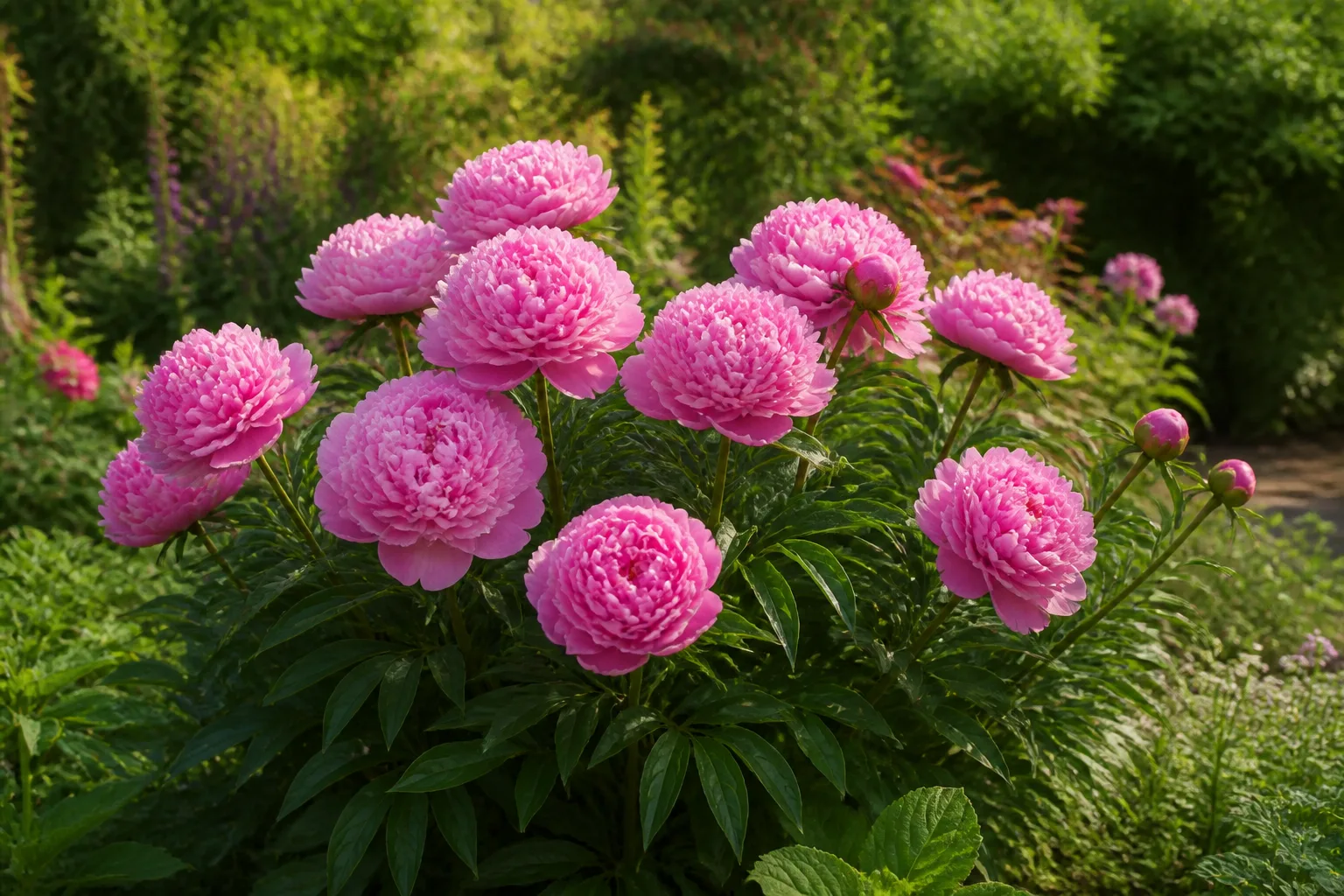
Choose an herbaceous peony (Paeonia hybrids) if you want a long-lived clump with large late-spring flowers. Give it sun for reliable flowering, open space for air movement, and a permanent position; established peonies dislike frequent moving and may take a few seasons to flower well. Their foliage remains useful after the brief bloom period, so place the clump where it can anchor a bed after the flowers fade.
The type matters. Iowa State lists hybrid peonies among perennials seldom damaged but lists tree peonies (Paeonia suffruticosa) among woody plants often damaged. That is a good example of why “peony” is too broad a label for a rabbit-resistant promise. Guard new divisions or newly planted roots while they settle in, then record whether your local rabbits leave the mature foliage alone.
4. Russian sage
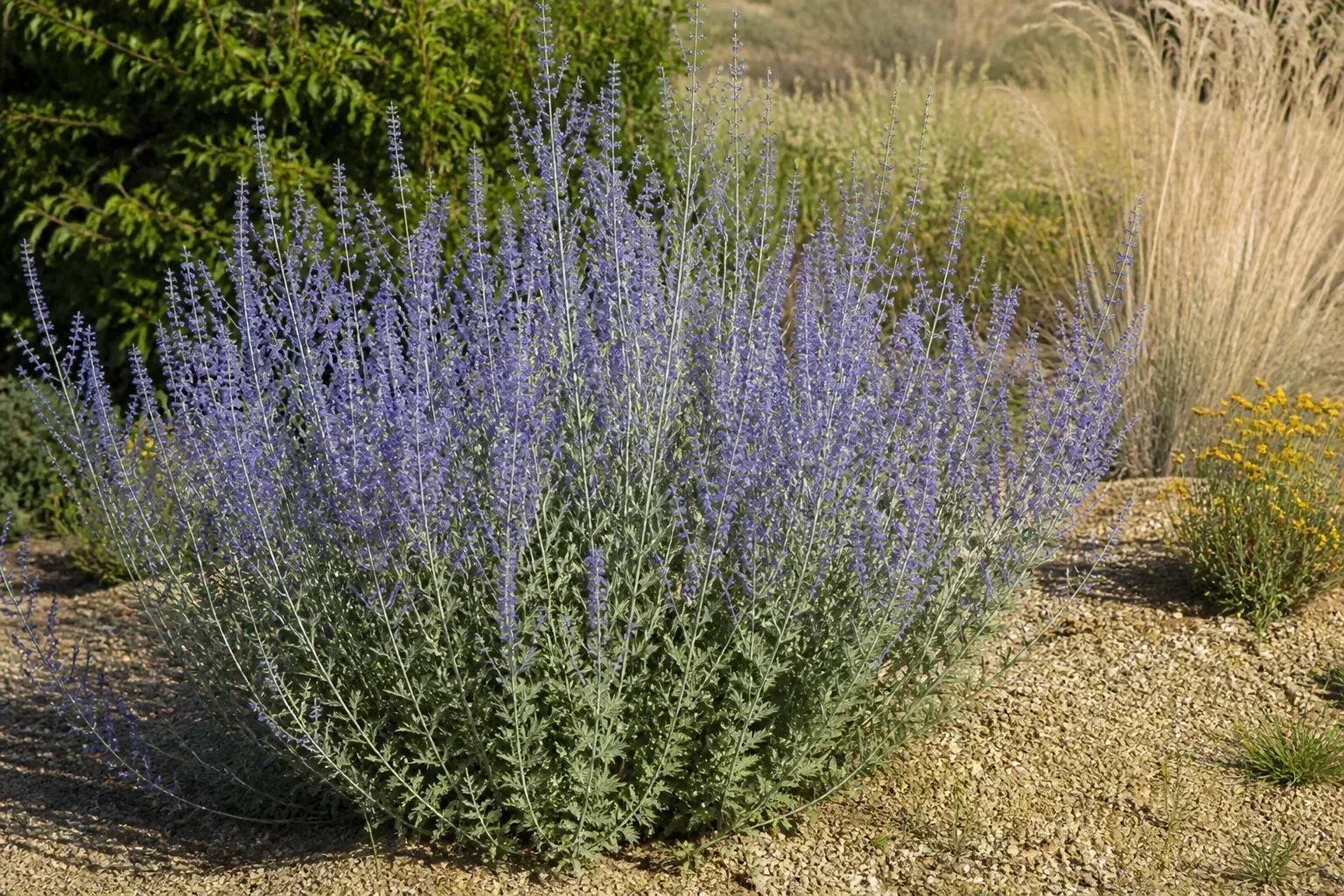
Russian sage (Salvia yangii, often sold under the older name Perovskia atriplicifolia) suits hot, sunny borders with fast-draining soil. Its aromatic gray-green foliage and upright lavender-blue flower wands bring height and texture from summer into fall. Give it space and avoid a soggy planting hole; once established, it is a better fit for a lean, dry site than for a regularly watered shade bed.
Iowa State includes Russian sage in its seldom-damaged perennial list, and fragrant foliage is one of the traits extension sources associate with lower browsing. It still needs protection as a new transplant, especially if it is surrounded by more tempting young growth. Use it as part of a broad border, not as a living fence around lettuce or other favorites.
5. Lamb’s ear
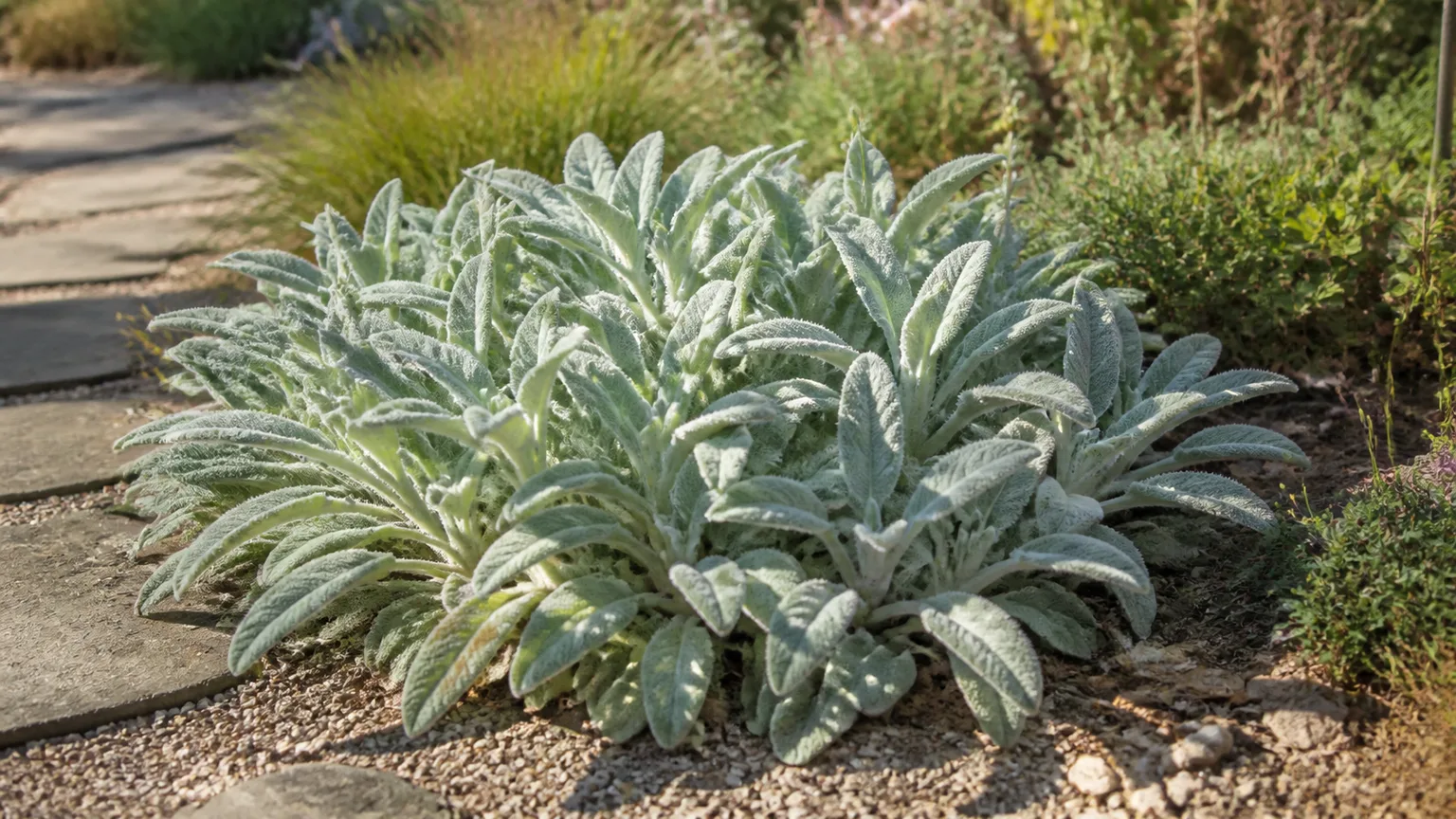
Lamb’s ear (Stachys byzantina) is grown as much for its soft, silvery foliage as for its summer flower spikes. The dense, fuzzy leaves make a tidy low edging along a sunny path or a dry perennial bed, and the texture is a poor match for the tender, smooth leaves rabbits often prefer. Penn State and Iowa State both include lamb’s ear among plants less likely to be damaged.
The site is the deciding factor: choose full sun and soil that drains promptly, especially where summers are humid or winters are wet. Crowded, persistently damp foliage can decline, so leave enough room for air to move through the clump. Rabbits may still test new leaves; protect a new planting rather than expecting its fuzzy texture to act like mesh.
6. Lavender
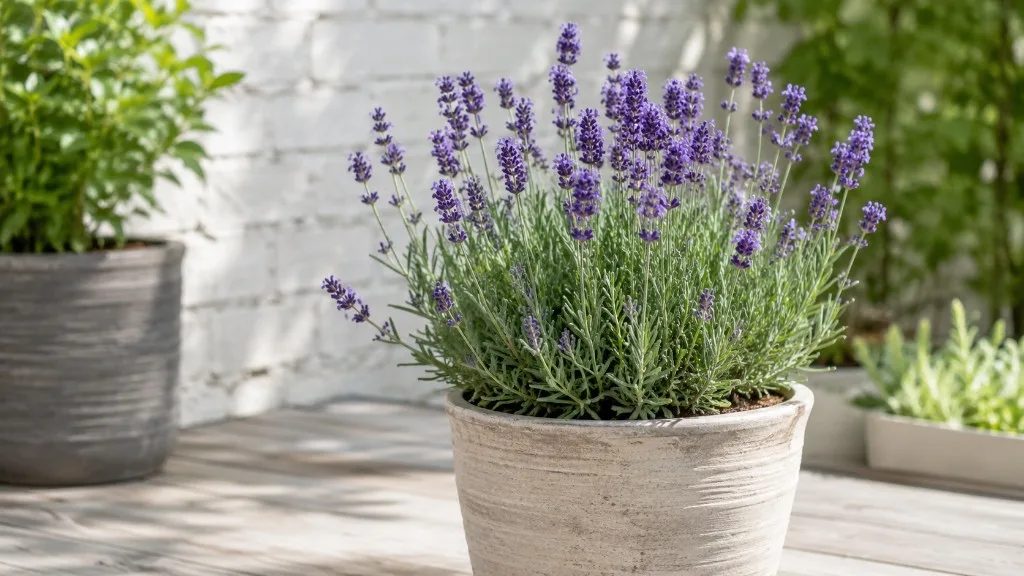
Lavender (Lavandula spp.) offers fragrant foliage, pollinator-friendly flowers, and a compact shape for a dry sunny border. Its scent makes it a sensible low-browse candidate, but the plant is fussy about drainage. Choose a cultivar hardy for your winters, give it full sun, and avoid heavy soil that remains wet after rain; a raised or slightly sloped bed may help in a damp climate.
Lavender is not a dependable barrier around crops. New growth is softer than mature stems, and rabbit resistance depends on what else is available nearby. Pennsylvania State Extension lists English lavender among rabbit-resistant garden plants, while RHS lists lavender among suitable choices. If rabbits have already entered the bed, protect the lavender while it roots instead of waiting for the aroma to do that job (Penn State Extension plant list; RHS).
7. Thyme
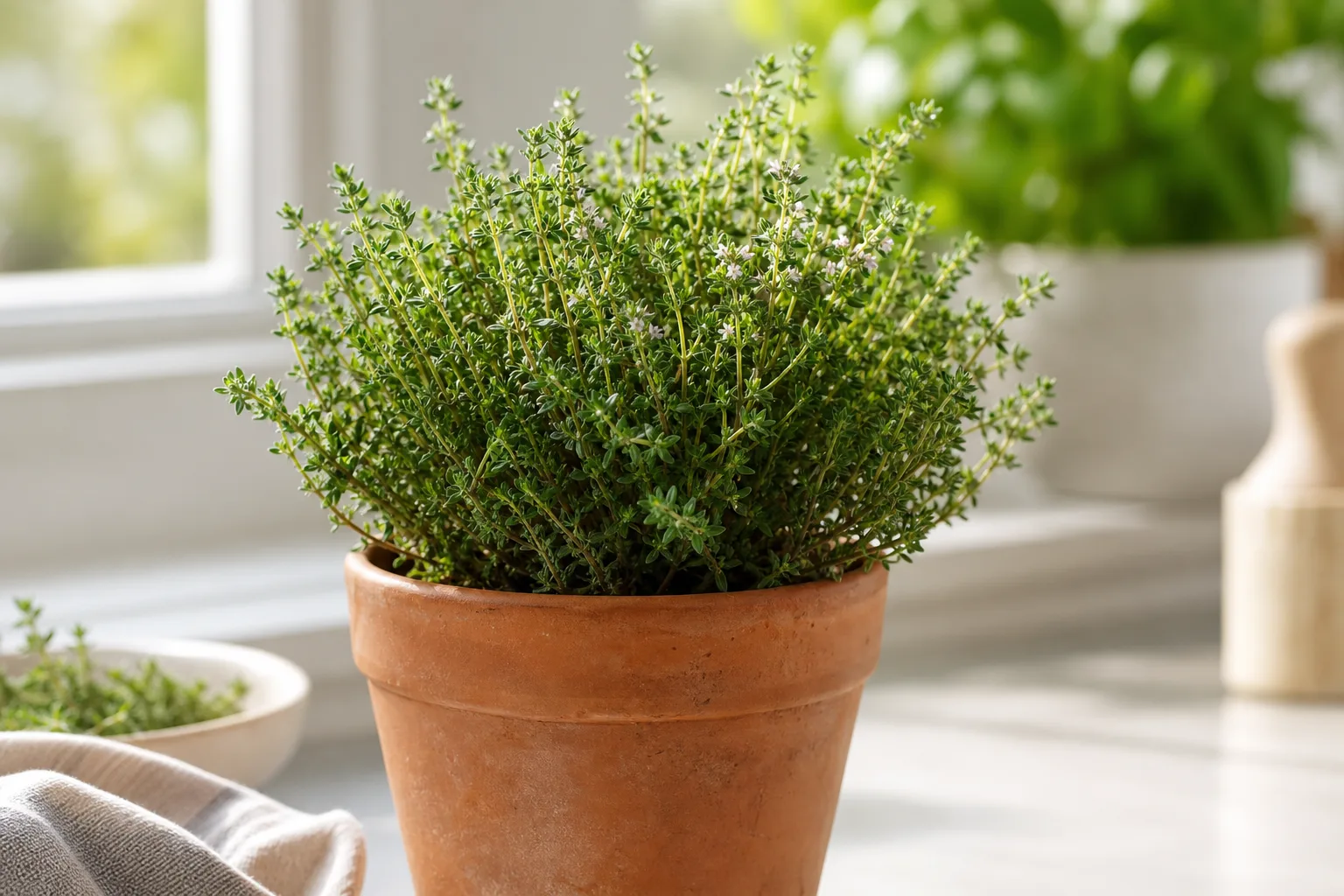
Garden thyme (Thymus spp.) is a low, aromatic herb for sunny, sharply drained spots. It works along a path, between stepping stones, or at the front of a dry bed where a taller plant would hide smaller flowers. Its dense mat can soften bare soil, but it will not stop rabbits from hopping over it to reach a more palatable plant behind it.
Plant thyme where water drains quickly and avoid burying the crown under mulch. Penn State’s rabbit-resistant list includes thyme; the broader pattern is that aromatic herbs are often less attractive to browsers than soft, lush foliage. Let the plant establish before harvesting heavily or expecting full groundcover, and use a wire guard if rabbits repeatedly clip its fresh tips.
8. Globe thistle
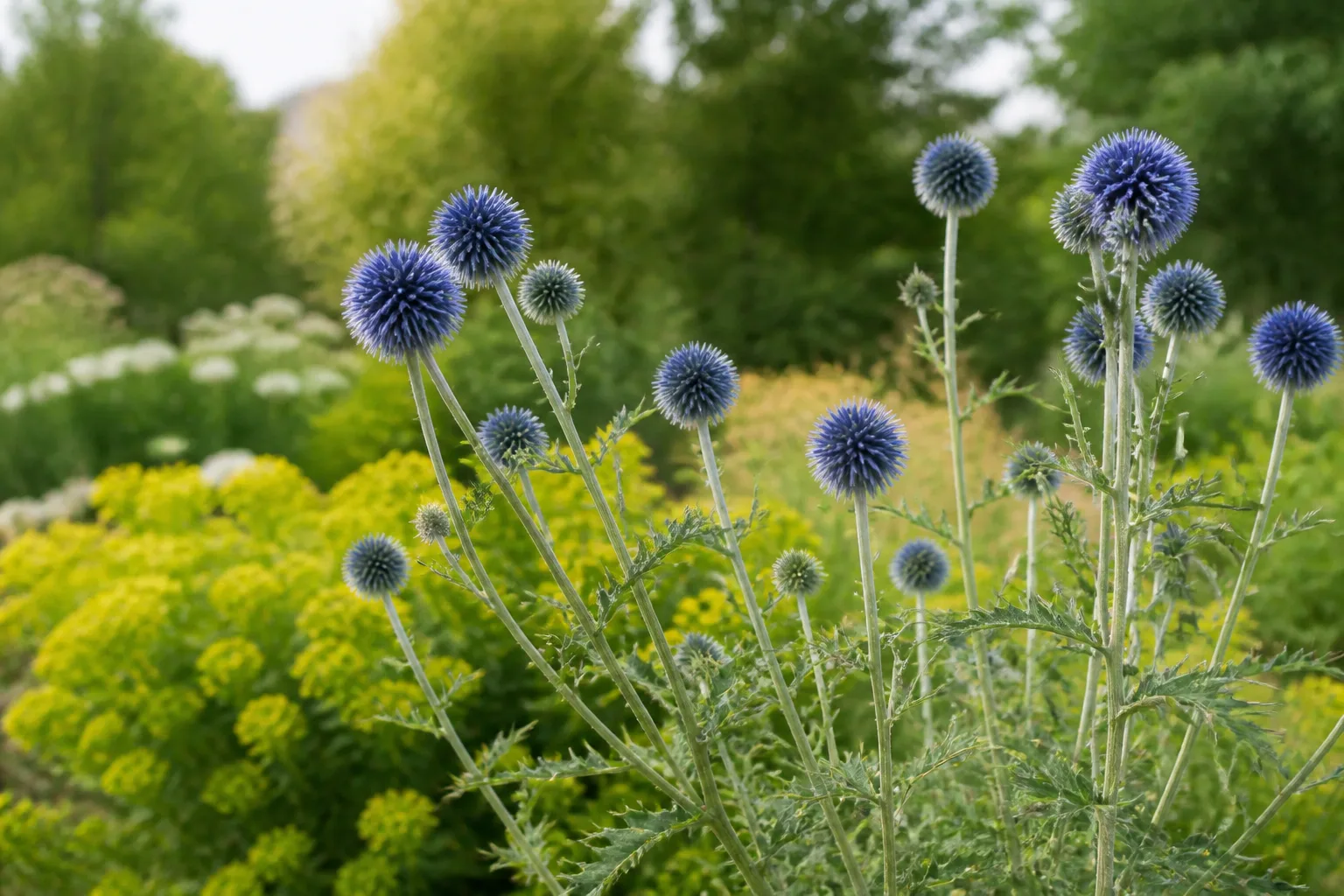
Globe thistle (Echinops spp.) brings steel-blue, spherical flower heads and coarse foliage to a sunny border. It adds vertical structure above low herbs and is attractive to pollinators, while its firmer, pricklier form is less inviting than tender annual flowers. Give it sun and a well-drained site; its tall stems need room so they do not crowd neighboring plants.
Penn State Extension includes globe thistle among rabbit-resistant plants. Treat that as a useful tendency, not an animal-proof property: rabbits may still nip young leaves or browse other parts of the plant when pressure is high. A temporary cage during establishment protects the crown without forcing you to give up the strong shape that makes globe thistle useful in a mixed planting.
9. Catmint
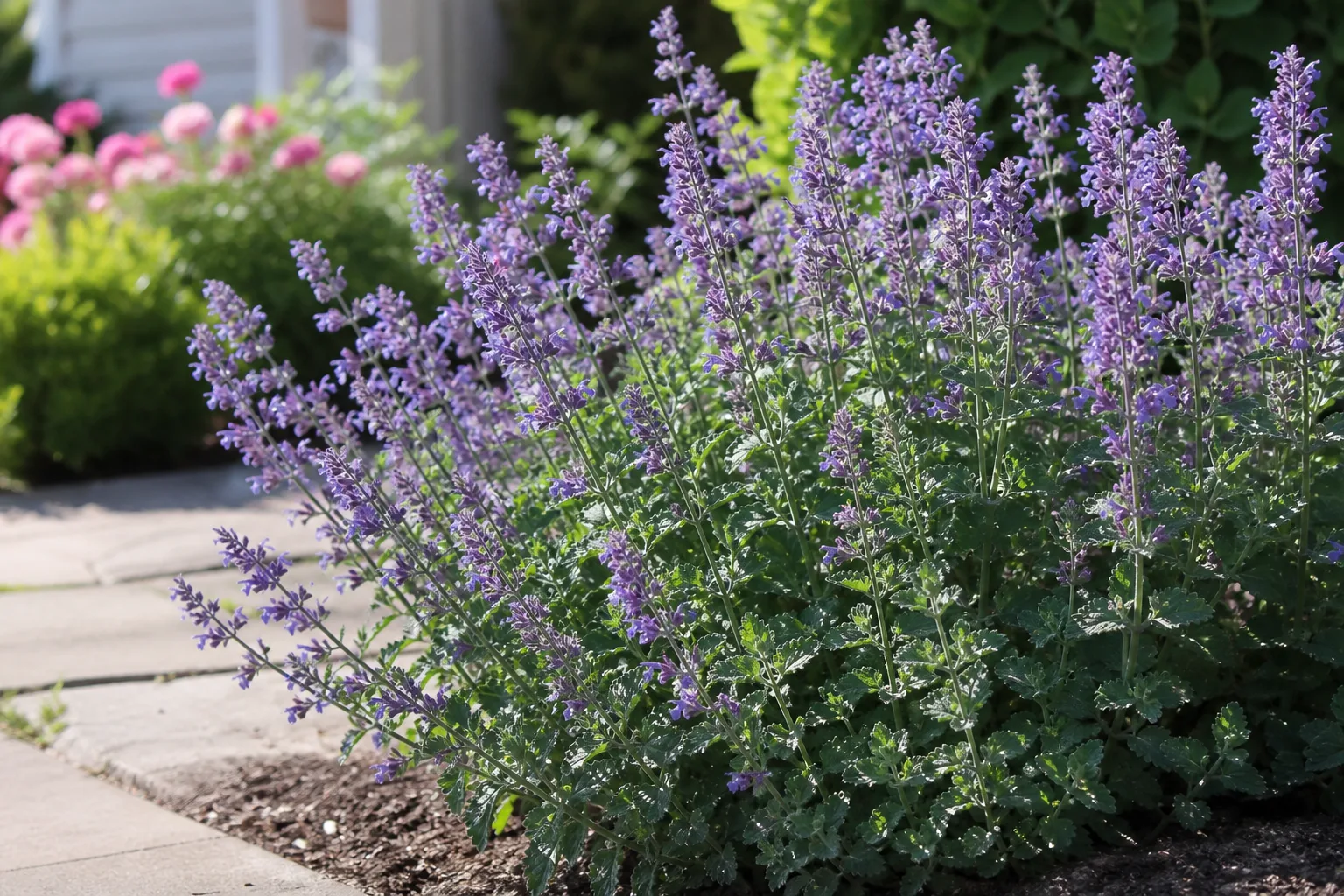
Catmint (Nepeta spp.) forms a loose mound of aromatic leaves with blue or violet flower spikes. Many kinds flower over a long stretch of summer and can be cut back after the first flush to encourage a neater second round. Use it in full sun or light shade, with soil that drains well; compact cultivars suit the front of a border, while larger ones can spill over a low wall.
Penn State and RHS include catmint on their rabbit-resistant lists, and garden-design guidance often groups aromatic plants such as catmint with other lower-browse choices. The scent can make rabbits less interested, but don’t count on a catmint edging to defend a vegetable bed. Keep a new plant watered while it roots, then avoid overwatering once it is established.
10. Blanket flower
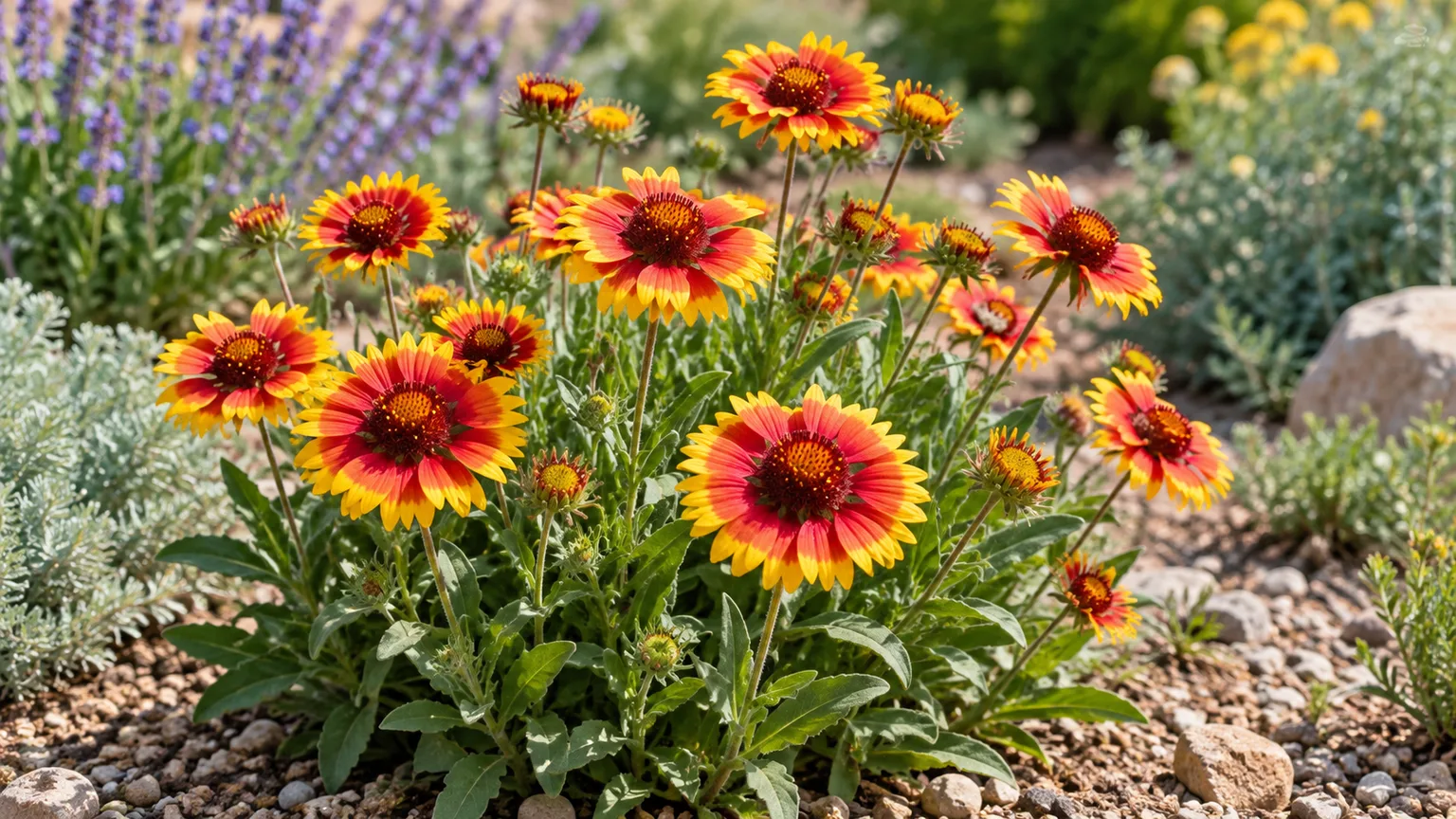
Blanket flower (Gaillardia spp.) gives a sunny, dry bed bold daisy-like blooms through summer. It is a practical choice for a hot spot where moisture-loving flowers struggle, and deadheading can prolong the show. Use it as a low-to-medium layer with taller Russian sage or globe thistle behind it; the combination gives a border more texture than a single row of similar plants.
Iowa State includes blanket flower among perennials seldom damaged by rabbits. Give it full sun and well-drained soil, and do not overfeed it into soft, lush growth. Its status can vary by rabbit pressure, so keep a small barrier handy for newly set plants and judge the result after the first growing season in your own yard.
11. Lady’s mantle
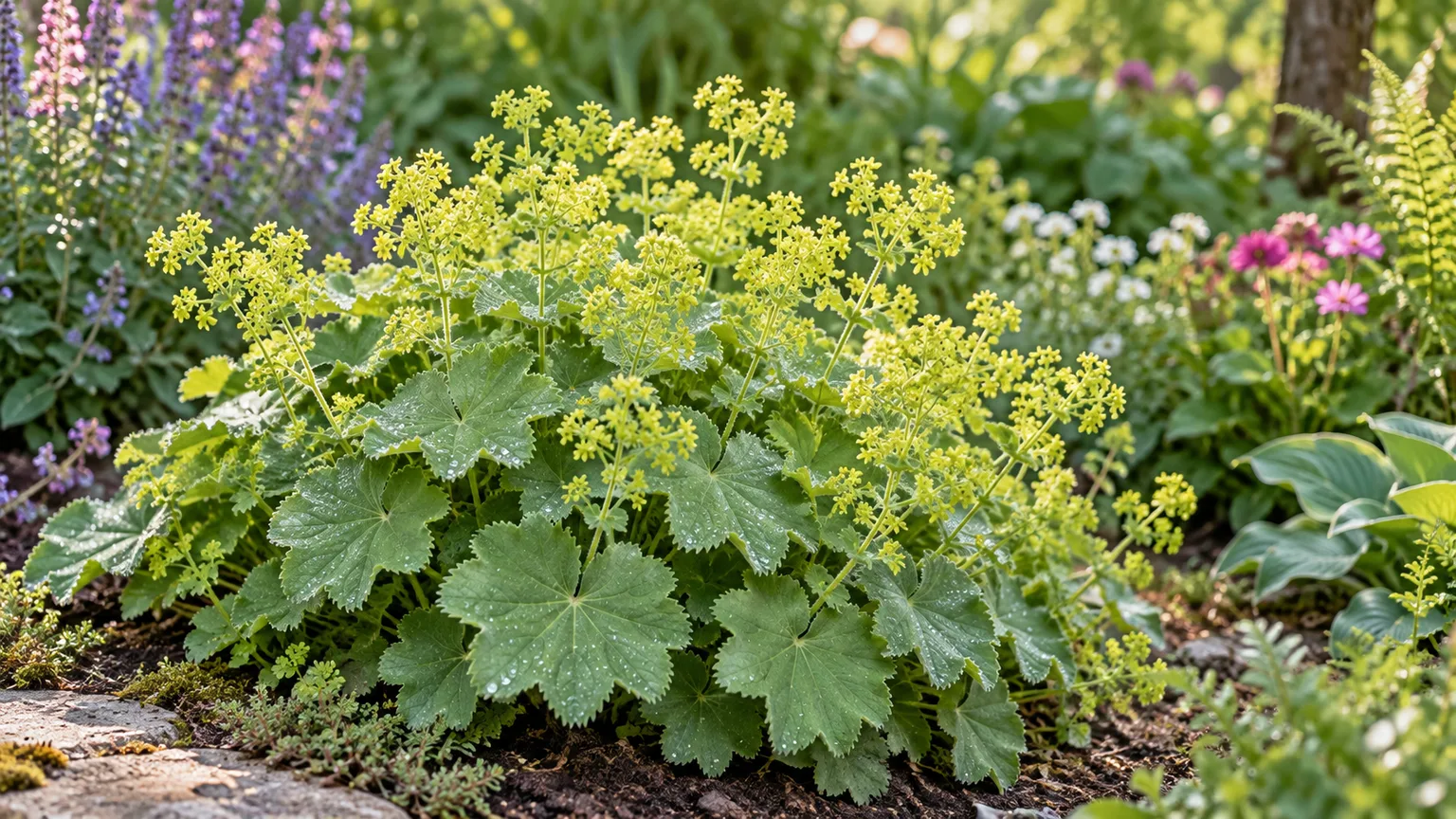
Lady’s mantle (Alchemilla mollis) is a low, spreading perennial with pleated leaves and airy yellow-green flower clusters. It fills a front-of-border gap and softens the edge of a path in morning sun or light shade. Unlike lavender or thyme, it prefers more moisture; water it during establishment, then keep it evenly moist without leaving the roots in standing water.
Iowa State and Penn State include lady’s mantle among plants seldom or less likely to be damaged. It can spread by seed in favorable conditions, so remove spent flowers if you want to keep the clump contained. In a hot, exposed bed it may look tired by midsummer; a shadier position with steady moisture is usually a better match than trying to make it serve as a drought-tolerant groundcover.
Match plants to light, soil, and the job
A short site check helps more than choosing eleven plants at random. Count hours of direct sun, note whether water drains or pools after rain, and decide whether you need a low edging, a spring focal point, or a shrub with summer flowers. Then choose only a few candidates that meet those conditions and are listed as low-damage in a regional source.
For sun and fast drainage
For a hot, dry bed, start with lavender, thyme, Russian sage, lamb’s ear, or globe thistle. These choices combine aromatic or coarse foliage with conditions that favor them; lavender and lamb’s ear are particularly poor fits for heavy, wet soil. Add a locally suitable butterfly bush only if it is not invasive or restricted where you live. A mixed planting spreads risk: if a rabbit samples one species, the entire border is not lost.
For dappled shade and moisture
Columbine and lady’s mantle suit lighter shade, while herbaceous peonies need more sun to flower well. Use columbine where spring color and self-seeding are welcome; choose lady’s mantle for a low, leafy edge where the soil stays evenly moist. Do not plant a shade-loving species under a dense canopy if it will receive neither light nor rain, and keep a guard over young crowns if rabbit activity is already visible.
For a simple sunny border, put Russian sage or globe thistle toward the back, a peony or blanket flower in the middle, and thyme or lamb’s ear along the front edge. In a lighter shade bed, use columbine behind lady’s mantle and let each keep its own moisture conditions. Think about when the plants provide interest as well as what rabbits may prefer: columbine flowers early, peonies flower briefly in late spring, and Russian sage carries the border later in summer. This layered plan gives you a coherent planting even if one species proves more attractive to local rabbits than the lists suggest.
Match cultivars to your climate before ordering. A USDA hardiness zone describes average winter minimums, but it does not tell you whether a lavender cultivar will tolerate humid summers or whether a shrub will handle winter wet. Read the plant tag for mature spread and drainage needs, then check a regional extension source for local performance. A rabbit-resistant plant that repeatedly struggles with heat, damp soil, or winter dieback may put out weak replacement growth that is easier to browse.
What to do when rabbits browse
First check that rabbits are the cause. They tend to leave clean, angled cuts on stems and feed close to the ground; winter browsing can climb higher when snow raises the animal’s reach. Deer usually leave ragged tears and browse higher, while voles may gnaw bark near the soil line without clipping stems. Correctly identifying the damage saves you from changing the plant list when a different animal is responsible.
For favorite plants, young shrubs, or vegetables, use a physical barrier. Penn State Extension says a two-foot chicken-wire fence with its bottom tight to the ground or buried a few inches is sufficient for a backyard garden; mesh with openings of one inch or smaller helps keep young rabbits from passing through. Close gaps at gates and corners, and check the fence after mowing, digging, or heavy rain. For an individual tree or shrub, a wire cylinder or trunk guard is more efficient than fencing the whole yard (Penn State Extension on cottontail rabbits).
Winter protection needs its own check. When snow covers the ground, rabbits can reach higher stems and bark than they can in summer; a short guard that worked in October may leave the trunk exposed after a snowfall. Fit a ventilated wire cylinder around the lower trunk, keep it clear of the bark, and make it taller than the expected snow depth plus the rabbit’s reach. Inspect it during winter so it does not press into expanding stems, and remove or adjust it when the risk passes. This matters most for new trees and shrubs, whose thin bark is easier to damage than the thicker bark of mature specimens.
Protect newly planted perennials until they are established, then see whether the plant’s mature growth escapes browsing. Keep temporary netting taut and inspect it often so wildlife cannot become tangled; the RHS specifically recommends checking netting for damage. If a rabbit eats one “resistant” plant, do not assume every one of the other ten will fail. Note what was eaten, when it happened, and whether the plant was new; replace repeat losses with a locally documented option or keep that plant behind mesh.
Use the amount of damage to decide how much effort to spend. A few clipped shoots on a new plant call for a temporary cage and another look in a week; repeated losses across several beds point to a gap in exclusion, not a need to buy a longer list of supposedly resistant plants. Keep a short seasonal record of which species were touched, whether shoots were young, and whether rabbits had grass or other cover nearby. That record turns a generic regional list into a useful plan for your own yard.
A fragrant border can reduce how inviting a bed looks, and the same idea appears in horticultural-design advice that groups aromatic and rough-leaved plants together. But scent is a preference cue, not a fence: rabbits can move through a border, reach under a raised bed, or switch plants when food is limited (Garden Design; Iowa State University Extension). Use plant choice to lower risk and wire to exclude rabbits where exclusion matters.
Conclusion
The strongest rabbit-resistant garden is built from plants that fit the site and from barriers placed around the plants you most want to save. Start with a few choices—such as aromatic herbs in sun, columbine in light shade, or herbaceous peonies for a sunny perennial bed—and observe how local rabbits respond. If a prized plant is repeatedly browsed, protect it with mesh; no label can promise that a hungry rabbit will leave it alone.



