Does Hot Water Kill Bacteria? What to Know
Hot tap water can loosen grease, but it is not a reliable disinfectant. Get practical guidance for hands, dishes, laundry, surfaces, and drinking water at home.
The short answer: hot tap water is not a disinfectant
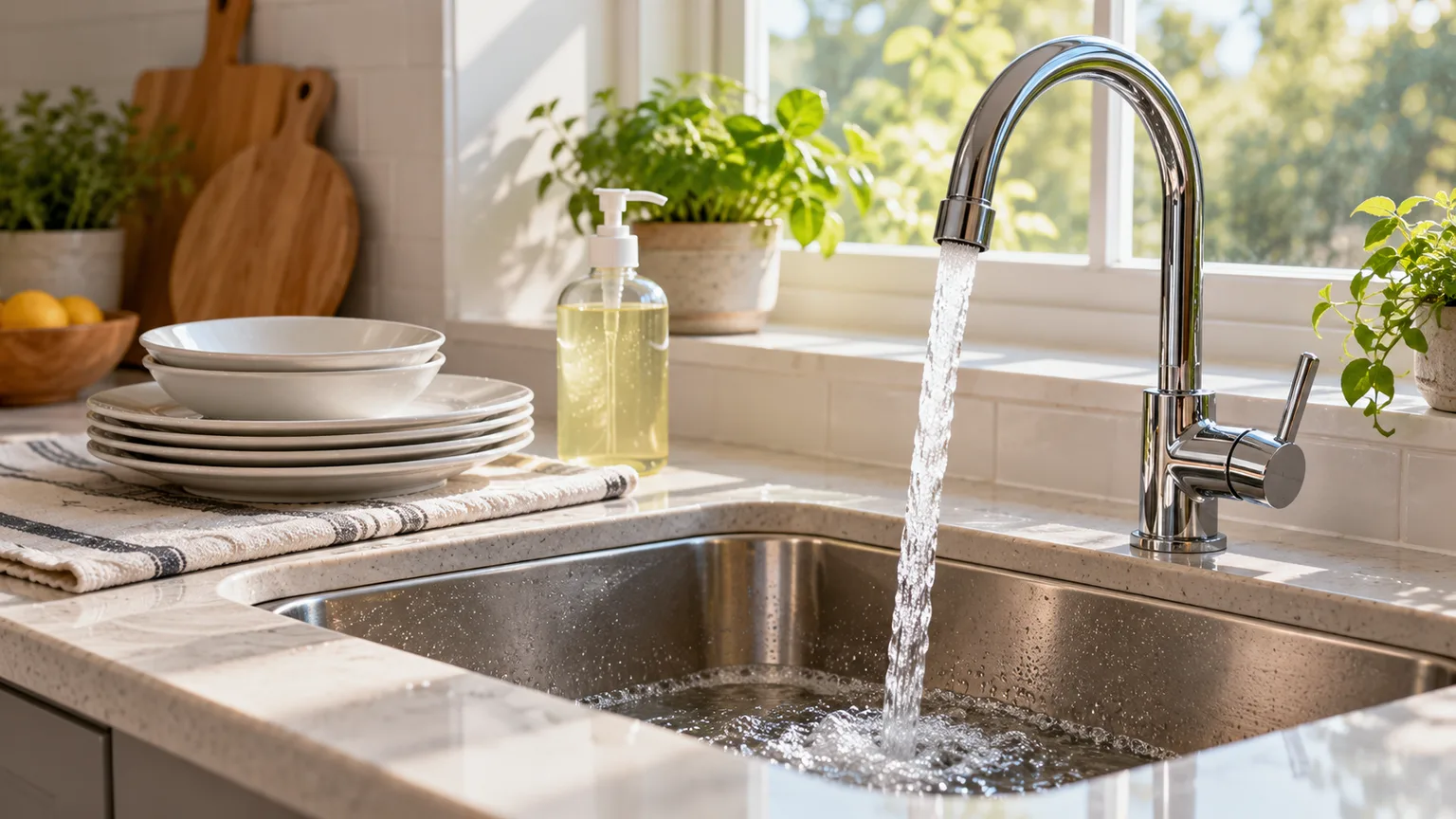
Hot water can inactivate some microorganisms when it stays hot enough for long enough, but ordinary hot water from a household faucet is not a reliable way to disinfect hands, dishes, laundry, counters, or drinking water. The result depends on the exact temperature at the item, how long it stays there, what organism is present, and whether grease, food, or other material protects it. A quick rinse from the tap does not provide a controlled heat treatment.
For everyday cleaning, the useful work usually comes from soap or detergent, rubbing or agitation, rinsing, and drying. Comfortable warm water can make greasy dishes easier to handle, but turning the faucet as hot as possible does not make a sink a sanitizing machine. For a task that truly calls for disinfection or sanitizing, use a method tested or labeled for that purpose.
Why heat needs both temperature and time
Heat damages the structures that microbes need to function, but “hot” is not a single biological threshold. A lower temperature can reduce some organisms if exposure lasts long enough; a higher temperature may act faster. That relationship is why a validated heat process specifies both a temperature and a holding time rather than saying that any hot splash kills germs.
The relevant temperature is the temperature reached by the contaminated item, not the number printed on the water heater or the temperature of water as it leaves the faucet. A plate, a folded towel, and a deep container warm at different speeds. Water also cools as it flows through pipes, enters a sink, mixes with cooler water, and touches a room-temperature object.
The item’s temperature matters more than the faucet setting
A thermometer reading at the tap cannot tell you how much heat every area of a dish or textile received. The water may contact only one side of a plate for a few seconds, while food residue shelters microbes in crevices or under a greasy film. A validated washer or dishwasher cycle controls a much more complete exposure than a person can reproduce by hand.
A few seconds of contact is also different from a sustained process. Even if water feels very hot, the item may never stay at that temperature long enough to deliver a measured reduction in microorganisms. So “my faucet is hot” is not evidence that a surface has been sanitized.
Bacteria, viruses, spores, and toxins do not share one kill point
Bacteria are not all equally heat-resistant, and the word “germs” also includes viruses, fungi, and parasites. Some bacteria can form spores that are harder to destroy than ordinary growing cells. A food toxin can remain hazardous even after the organism that produced it is no longer alive, so killing bacteria is not a substitute for safe food handling.
That variation makes universal claims such as “water at X degrees kills all bacteria” misleading unless they specify the organism, the material, and the exposure time. A controlled test may establish that a particular appliance reduces particular test organisms under a defined cycle; it does not certify every use of hot water against every pathogen.
Why household tap water is not reliably hot enough
Home water systems are designed to supply usable water, not to sterilize everything it touches. The temperature at a sink varies with the heater, plumbing distance, mixing valves, fixture design, and how long the tap has run. Even when the heater stores hotter water, a mixing valve may lower the temperature delivered to a faucet to reduce scald risk.
A hand-washing study by Michaels and colleagues examined water temperatures across a broad range and found no meaningful improvement in handwashing efficacy from hotter water. The CDC’s research summary on handwashing likewise says temperature does not appear to affect germ removal, while warmer water may irritate skin. The study concerns handwashing under tested conditions; it is not a universal temperature chart for every organism or household surface. (Original study)
What warm water can contribute to cleaning
Warm water can make oily residue easier to loosen from a plate or pan and can make dishwashing more comfortable. Dish detergent does the chemistry of lifting grease into the rinse water, while rubbing and rinsing remove the loosened soil. The benefit is practical cleaning, not a germ-killing threshold.
The useful temperature is the warmest one you can handle comfortably for the task. If a sink feels painful or makes you pull your hands away, lower the temperature; hotter water can irritate skin and is not needed for effective handwashing. In laundry, a hotter setting can damage color, elastic, or fabric, so follow the garment and detergent labels instead of treating a warm or hot cycle as automatic disinfection.
This distinction helps explain why detergent instructions and appliance settings matter more than a vague “use hot water” rule. A cleaner can be formulated for a range of cycles, while delicate fabrics and finishes may be harmed by excessive heat. Choose heat to help with the soil or the validated appliance cycle, not as a substitute for a tested sanitizing method.
Handwashing: choose a comfortable temperature
Use clean running water at a temperature that feels comfortable, then apply soap and rub all hand surfaces. Work the lather across palms, backs of hands, between fingers, and under nails, and scrub for at least 20 seconds before rinsing and drying. The rubbing and rinse help remove soil and microbes; the water does not have to be scalding to do that job. The CDC’s hand-hygiene guidance emphasizes soap-and-water technique and a thorough scrub.
A hot faucet can make handwashing harder, especially for children, older adults, and anyone with reduced sensation or mobility. If hot water makes you rush, use cooler water and spend the time on complete coverage instead. Do not hold your hands under painfully hot water in the belief that you are killing organisms on your skin; that adds a burn risk without a proven household benefit.
If soap and water are not available and your hands are not visibly dirty or greasy, an alcohol-based hand sanitizer may be an option; follow public-health guidance for the situation. Sanitizer is not a replacement for washing when hands are visibly soiled, and neither sanitizer nor hot tap water turns a contaminated surface into a safe one.
Hand-washing dishes: clean first, sanitize only when needed
For ordinary plates, glasses, and cookware, wash away food residue with dish detergent, friction, and a thorough rinse. Warm water can soften oily residue and make dishes more comfortable to handle, but a sink full of hot water is not a measured sanitizing treatment. A clean-looking plate is not automatically sterile, yet everyday dishes do not normally need to be sterilized after each meal.
The order matters more than chasing a higher temperature: scrape food into the trash or compost, wash with detergent, rinse off the loosened soil, and let the dish drain or dry on a clean rack. Reusing a dirty sponge or wiping each clean dish with a damp towel can put soil back on the surface. Keep raw-meat utensils and cutting boards separate while you work, and clean them promptly after use.
When ordinary washing is enough
Routine washing is appropriate for most household dishes when the water supply is safe and there is no specific health or public-health instruction to sanitize. Extra disinfection is not automatically safer: it can expose people to unnecessary chemicals, damage cookware, or leave residues if a product is used outside its label directions. If a local health department issues instructions after a boil-water advisory or contamination event, follow those instructions instead of improvising a bleach mixture.
When sanitation is specifically required for a food-contact item, use a dishwasher sanitizing cycle that is identified in the appliance manual or a sanitizer whose label explicitly covers that food-contact use. “Disinfectant” and “sanitizer” are not interchangeable marketing words; the product directions should identify the surface, dilution if any, wet contact time, and whether rinsing is required. Do not combine bleach with vinegar, ammonia, or other cleaners.
Dishwashers: use the actual sanitizing cycle
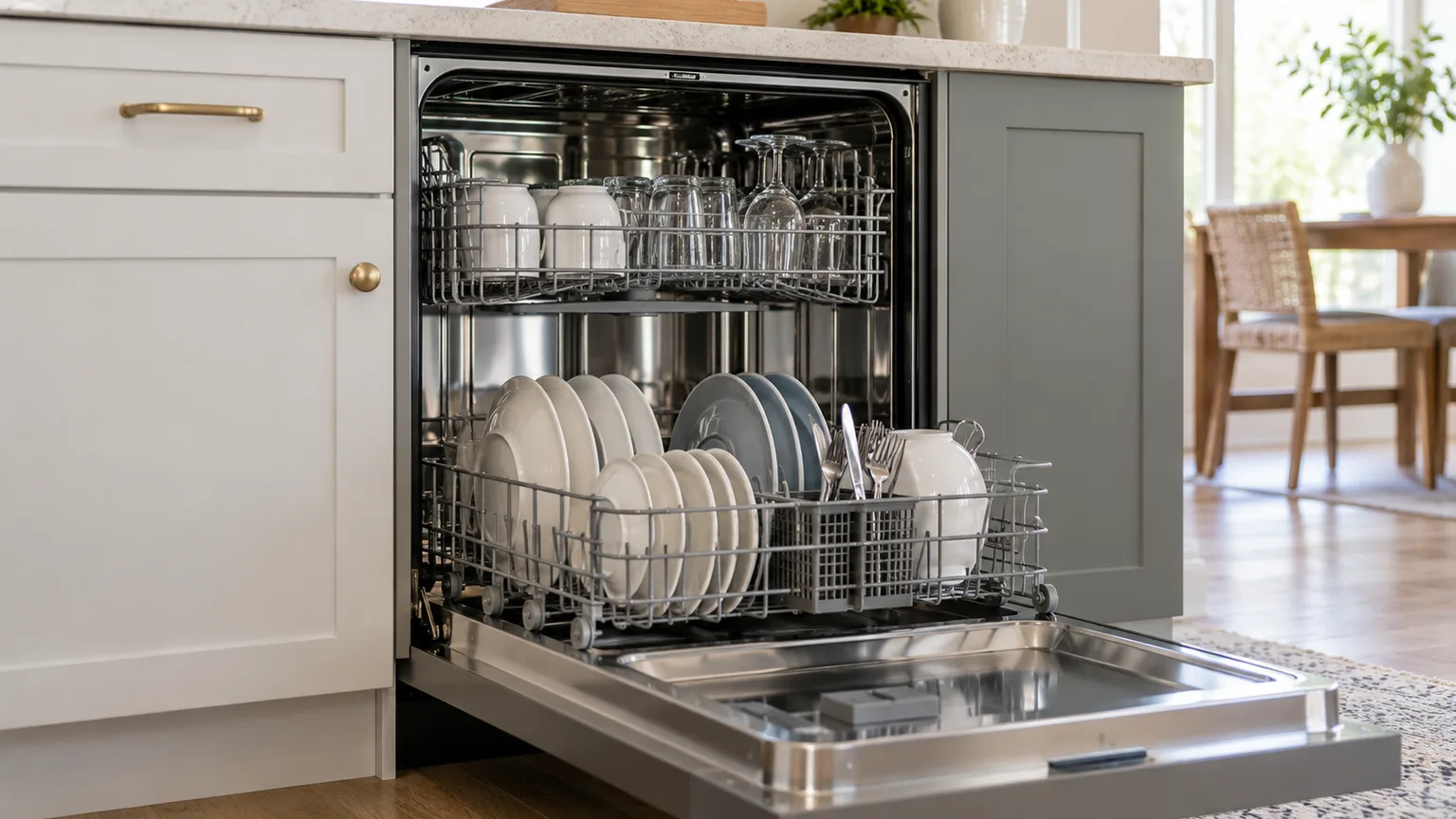
A dishwasher can provide a more dependable heat process than handwashing, but only if the model and cycle are designed and tested for sanitizing. NSF says a residential dishwasher certified to NSF/ANSI 184 must achieve at least a 5-log reduction in bacteria on its sanitizing cycle, with the final rinse reaching 150°F. That is a defined test result for the certified appliance and cycle, not a claim that every dishwasher cycle kills every virus, spore, or pathogen.
This is why a branded cycle name alone is not enough to compare two machines: the standard and the exact model certification matter. NSF testing also does not tell you whether a contaminated countertop, sponge, or drinking-water supply is safe; each is a different surface and a different exposure. Use the sanitize setting when its purpose fits the job, then keep ordinary dishes on the regular cycle unless the manufacturer or public-health guidance says otherwise.
Look for the word Sanitize or the equivalent in your dishwasher’s manual, and select that cycle when the extra treatment is appropriate. Do not assume that a “heated dry” option, a long normal cycle, or warm water at the sink offers the same result. If the manual says the machine needs hot-water supply conditions, follow those specifications; if the cycle fails or the machine is overloaded, its performance may not match the tested setup.
Scrape off large food particles and load the racks so spray arms can reach the dishes. Pre-rinsing every item is usually unnecessary for modern machines unless the manufacturer says otherwise, but a packed rack or blocked spray arm can prevent good cleaning. Let the cycle finish, and handle clean dishes with clean hands rather than returning them to a soiled sink or towel.
Laundry: follow the fabric label and finish drying
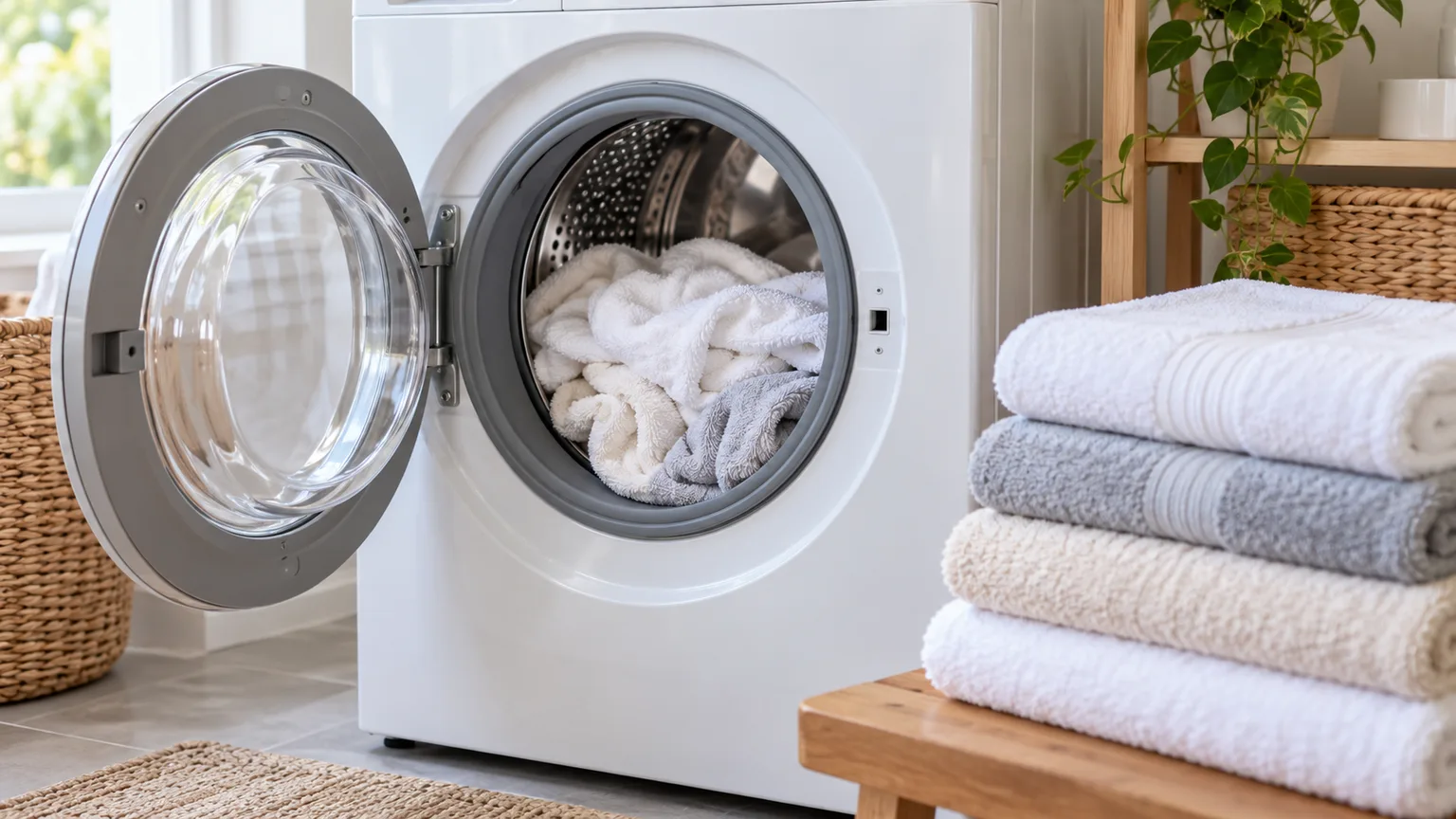
For routine laundry, the safest starting point is the garment care label and the detergent instructions. Hot water is not necessary for every household load, and the warmest setting a fabric tolerates may be a useful choice for heavily soiled items when the care label allows it. A hot tap does not prove that the washer maintained a germ-killing temperature throughout the load.
The New York Times’ laundry coverage reports the practical guidance to use the warmest temperature listed on clothing and detergent labels, rather than treating all domestic laundry as a hot-water disinfection process. (How to Kill Germs in the Laundry) For routine loads, detergent, agitation, rinsing, and complete drying all contribute to the result; the dryer should not be described as a universal sterilizer either.
If someone at home has a diagnosed infection or your household is managing a higher-risk medical situation, ask the clinician or public-health authority for pathogen-specific laundry instructions. Use bleach or a laundry sanitizer only when it is appropriate for the fabric and the product label gives directions for that use. Keep wet laundry from sitting in a heap, avoid shaking contaminated textiles, and clean the washer according to its manufacturer’s schedule.
Counters and other hard surfaces need the right product
For a counter, table, handle, or other hard surface, hot water alone is a poor substitute for the product intended for the job. First remove visible soil with a cleaner; organic material can interfere with some disinfectants. If the task calls for disinfection, choose a product labeled for that surface and target organism, then keep the surface visibly wet for the full contact time stated on the label.
A disinfectant that dries in a few seconds has not necessarily completed its labeled contact time. Do not dilute a ready-to-use product, pour boiling water over a countertop, or use a surface disinfectant on dishes or food unless its label specifically permits that use. Follow ventilation, gloves, rinse, and storage directions; more chemical or more heat is not automatically more effective.
For a normal spill or everyday dust, routine cleaning is often enough. Reserve sanitizing or disinfecting for the circumstances where it is called for, such as raw-food contamination or specific public-health advice, and use the correct product rather than escalating to hotter water. For porous materials, electronics, upholstery, and delicate finishes, check the manufacturer’s care instructions because the wrong heat or chemical can cause damage.
Drinking water is a separate job: follow boil guidance
A kitchen faucet’s hottest setting does not make questionable drinking water safe. During a boil-water advisory or an emergency when tap water may contain germs, follow local instructions and use bottled water if directed. CDC guidance says to bring clear water to a rolling boil for one minute, or three minutes at elevations above 6,500 feet, then cool it and store it in clean, covered containers. (CDC: How to Make Water Safe in an Emergency)
Boiling is for biological contamination, not every hazard. CDC warns that boiling cannot make water containing fuel, toxic chemicals, or radioactive materials safe; use bottled or another approved source and contact the local health department for direction. A boil-water advisory can also specify whether water must be boiled for drinking, food preparation, brushing teeth, or other uses, so do not infer the rules from the tap’s temperature.
Do not use water from a home heating radiator or boiler as drinking water. It can contain contaminants from the system and is not a safe substitute for potable tap water. Emergency instructions should come from the water utility or local health department, not from a home-heater setting.
Water-heater settings involve safety, not quick disinfection
Turning up a household water heater to kill bacteria is not a safe do-it-yourself disinfection plan. Stored-water settings, delivery temperatures, thermostatic mixing valves, plumbing conditions, and time all matter, while hotter water at a faucet increases the chance of a scald. The CPSC’s tap-water scald guidance discusses lower residential settings as a way to reduce scald risk; young children, older adults, and people who cannot move away quickly are especially vulnerable.
A thermostat setting is not the same as a verified outlet temperature, and it is not a validated treatment cycle for every organism. If you are worried about Legionella or another water-system problem—especially in a building with complex plumbing or a resident at elevated medical risk—ask the property manager, water utility, local health department, or a licensed plumbing professional for a system-specific assessment. Do not change the tank setting on the assumption that a hotter shower is a safer disinfectant.
If a tap is unexpectedly scalding, use the fixture’s temperature control cautiously and have the heater or mixing valve checked by a qualified professional. Homes have different heater types and plumbing configurations, and the right adjustment depends on the equipment and local guidance. Keeping hands and dishes safe at the sink should never require holding them in water that hurts.
Choose the right method for the job
| Household job | What to do | What hot tap water does not prove |
|---|---|---|
| Hands | Soap, full coverage, rubbing, rinse, and dry; use a comfortable temperature. | That skin has been disinfected. |
| Everyday dishes | Detergent, friction, rinse, and clean drying. | That a sink soak sanitized the dishes. |
| Dishes that need sanitizing | Use a certified dishwasher’s sanitizing cycle or a product labeled for food-contact use. | That every normal cycle or chemical is suitable. |
| Routine laundry | Follow garment and detergent labels; dry fully. | That the load received a validated disinfection process. |
| Hard nonporous surface | Clean first; then use a suitable labeled product for the required contact time. | That hot water alone disinfected the surface. |
| Drinking water under advisory | Follow local instructions; boil or use an approved alternative when directed. | That the hot side of the tap is potable or treated. |
Food-contact items and dishes
Choose washing for ordinary soil and sanitizing only when it is required by the situation. A dishwasher’s certified sanitizing cycle is the clearest household option when your model has one; otherwise, use local public-health guidance or a sanitizer label written for food-contact surfaces. Never substitute an arbitrary amount of bleach, vinegar, or dish soap for a validated direction.
Hard surfaces and household laundry
For surfaces, the product’s label determines where it can be used and how long it must remain wet. For clothing, the fabric and detergent labels determine the safest cycle; if a specific infection changes the risk, seek instructions tied to that organism rather than assuming a hotter load solves it. These are different processes, even if both involve water and soap.
Mistakes that make hot-water cleaning less safe
- Cranking the faucet hotter: This raises burn risk and still does not establish time at temperature on the item.
- Equating clean with sanitized: Removing food, grease, or dirt is not the same as meeting a measured microbial-reduction standard.
- Using a “sanitizing” claim without checking the cycle: Verify the model and cycle in the manual; NSF testing applies to the tested standard and operation.
- Mixing cleaning chemicals: Bleach can react dangerously with acids or ammonia. Use one product at a time and follow its label.
- Assuming hot water fixes unsafe drinking water: Boiling instructions apply only to biological hazards and only when the advisory says boiling is the correct response.
- Disinfecting every dish and laundry load: Unnecessary chemical use can damage items and create exposure without improving routine cleaning.
The practical test is not whether water feels hot; it is whether the method is designed and labeled for the outcome you need. For most daily chores, ordinary detergent and sound cleaning technique are enough. For a real sanitation need, use a tested appliance cycle, a suitable labeled product, or public-health instructions.
Conclusion: use heat for the job it can do
Hot water can help loosen oily grime and can be part of a validated sanitizing process, but hot tap water by itself is not a dependable bacteria-killing shortcut. For hands, choose a comfortable temperature and wash thoroughly; for dishes and laundry, follow the appliance, detergent, and care-label directions; for hard surfaces, use the right product and contact time; for drinking water, follow an official boil or treatment advisory.
Do not turn up a water heater to chase an unverified germ-killing temperature. Protect people from scalds, use heat only in controlled cycles, and let the job determine the method.