Indoor Palm Tree Care & Growing Guide
Learn indoor palm tree care: pick the right species, nail light and watering, fix brown tips, and avoid the pruning mistakes that kill palms.
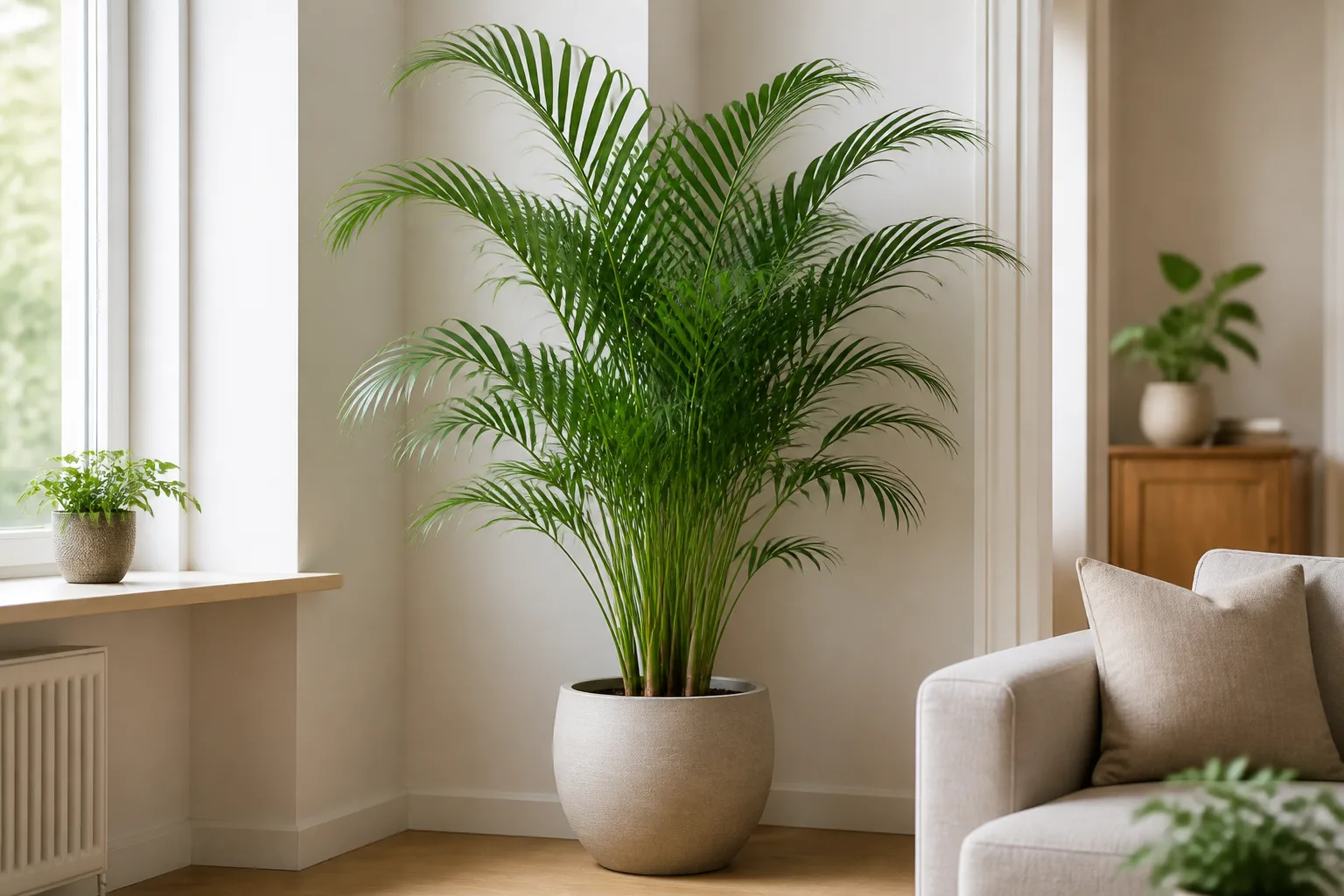
An indoor palm can fill a corner with arching fronds and instant tropical calm—until lower leaves yellow, tips go crispy, and spider mites show up on the undersides. That cycle is so common it makes people think palms are finicky. Most of the time the plant is simply the wrong species for the room or getting generic houseplant advice that ignores how palms grow. True palms belong to Arecaceae: they produce fronds from a single terminal bud (the growing tip), recycle nutrients from older leaves, and hate both soggy roots and desert-dry heating-season air. Match species to your light and humidity, water by touch—not calendar—and stop trimming every yellow frond, and an indoor palm can stay handsome for years.
Indoor Palm Quick Reference
Use this table before you change fertilizer, repot, or prune. If several rows are off, fix light and water first.
| Factor | Most indoor palms | Notes |
|---|---|---|
| Light | Bright indirect; some tolerate lower light | Parlor and lady palms handle shade best |
| Water | When top 1–2 inches dry; even moisture, never soggy | Empty saucers within 30 minutes |
| Soil | Loose, well-drained peat-based mix with perlite | Palm or cactus blends work; avoid heavy garden soil |
| Humidity | 40–50% minimum; 50–60% for majesty/areca | Humidifier beats misting |
| Temperature | 65–85°F; avoid sustained below 55°F | Cold drafts cause red-brown leaf spots |
| Fertilizer | Dilute balanced liquid spring–summer; slow-release optional | Palm formulas include extra K and Mn |
| Pruning | Remove fully brown fronds only; never cut the growing tip | Yellowing fronds may still feed the plant |
| Pets | Many true palms non-toxic; sago palm is not a palm and is toxic | Verify on ASPCA before buying |
| Repot | Only when root-bound; often every 2–3 years | Slightly pot-bound slows height |
For tall specimens that fit specific rooms, see the best indoor trees guide—several entries are true palms with pet-safety notes.
True Palms vs Lookalikes You Should Not Confuse
Big-box stores label many “palm-shaped” plants as palms. Only Arecaceae members are true palms. Sago palm (Cycas revoluta) is a cycad, not a palm, and is highly toxic to pets and people if ingested—do not assume a feathery floor plant is safe because it looks like a palm. Ponytail palm (Beaucarnea recurvata) is an asparagus relative with a swollen base; it wants much drier soil than any true palm. Yucca has stiff, sword-like leaves and tolerates neglect and dry air in ways palms do not.
Buying mistake number one is treating all three like the same watering schedule. If you want classic indoor palm care, stick to Arecaceae species from the comparison section below.
Choose the Right Indoor Palm for Your Room
Pick by window quality, ceiling height, humidity, and pets—not by whichever nursery palm is tallest today. Here is a decision-first breakdown.
Parlor Palm — Best Default for Low Light
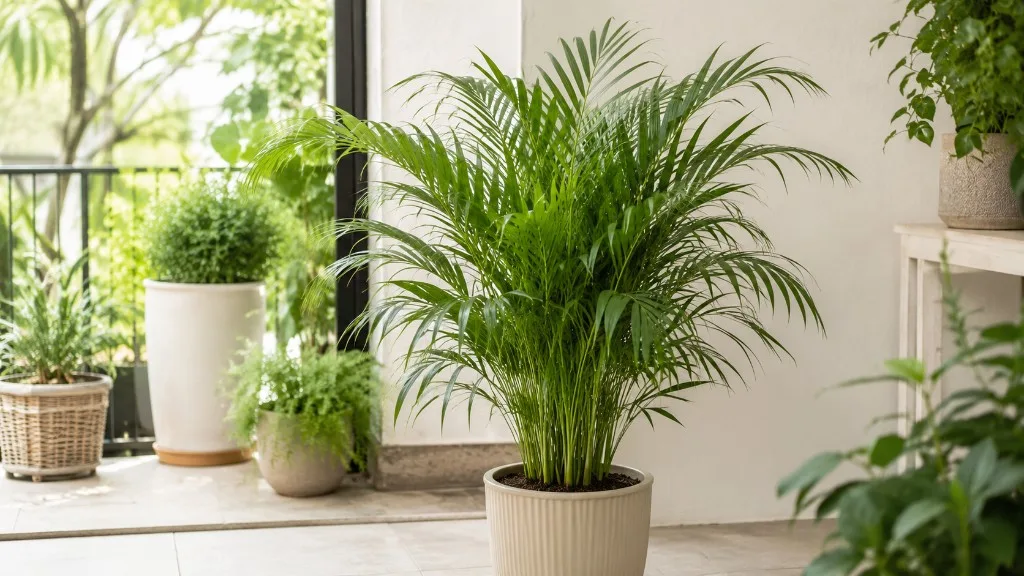
Parlor palm (Chamaedorea elegans) is the most forgiving true palm for average apartments. NC State Extension notes it tolerates low to medium humidity, bright indirect light, and even lower light, though north- or east-facing windows produce the lushest growth. (NC State Extension) It prefers soil that dries slightly between waterings, resists brief drought, and needs repotting only every two years or so. Nurseries often plant three stems in one pot for fullness; over time one stem may outcompete others—that is normal, not disease.
Best for: dim living rooms, beginners, offices, pet homes (ASPCA lists parlor palm as non-toxic to cats and dogs). Skip if: you want a 8-foot statement tree in six months—growth is slow. Deep care: parlor palm plant hub.
Areca Palm — Bright Rooms and Pet-Safe Height
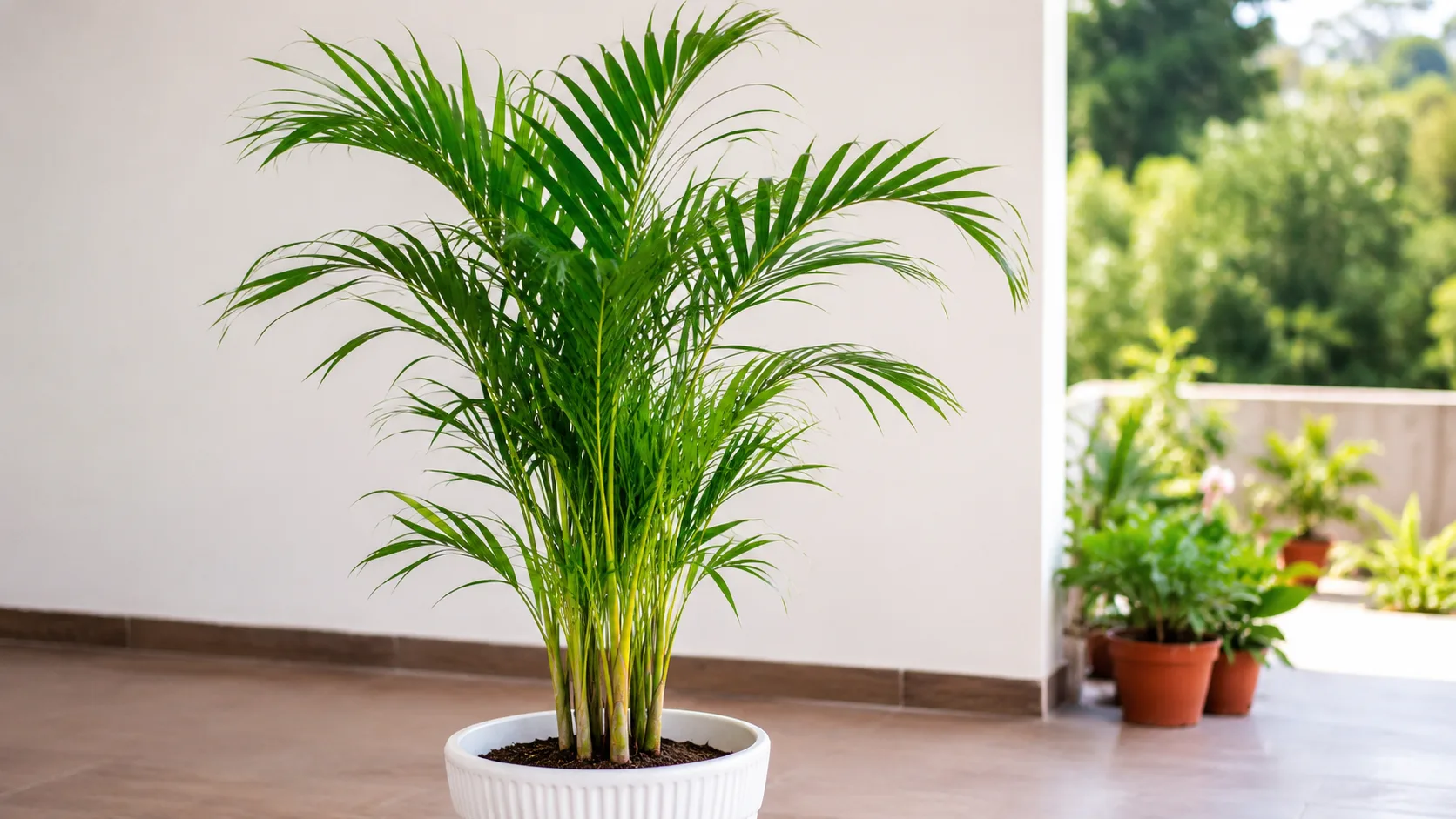
Areca palm (Dypsis lutescens, also sold as bamboo palm) is a clustering palm with multiple cane-like stems and soft, arching fronds. NC State recommends bright indirect light, warm average room temperatures, and moist but not soggy soil during the growing season, with higher humidity when possible. (NC State Extension) It can reach substantial indoor size over years and is one of the most popular large houseplant palms. ASPCA lists areca palm as non-toxic to cats, dogs, and horses.
Best for: bright living rooms, pet-safe height, grouped tropical corners. Watch for: spider mites and scale in dry winter air; potassium deficiency showing as translucent yellow-orange spotting before tips brown. Skip if: your only spot is a dim hallway. Deep care: areca palm plant hub.
Kentia and Lady Palm — Quiet, Shade-Tolerant Elegance
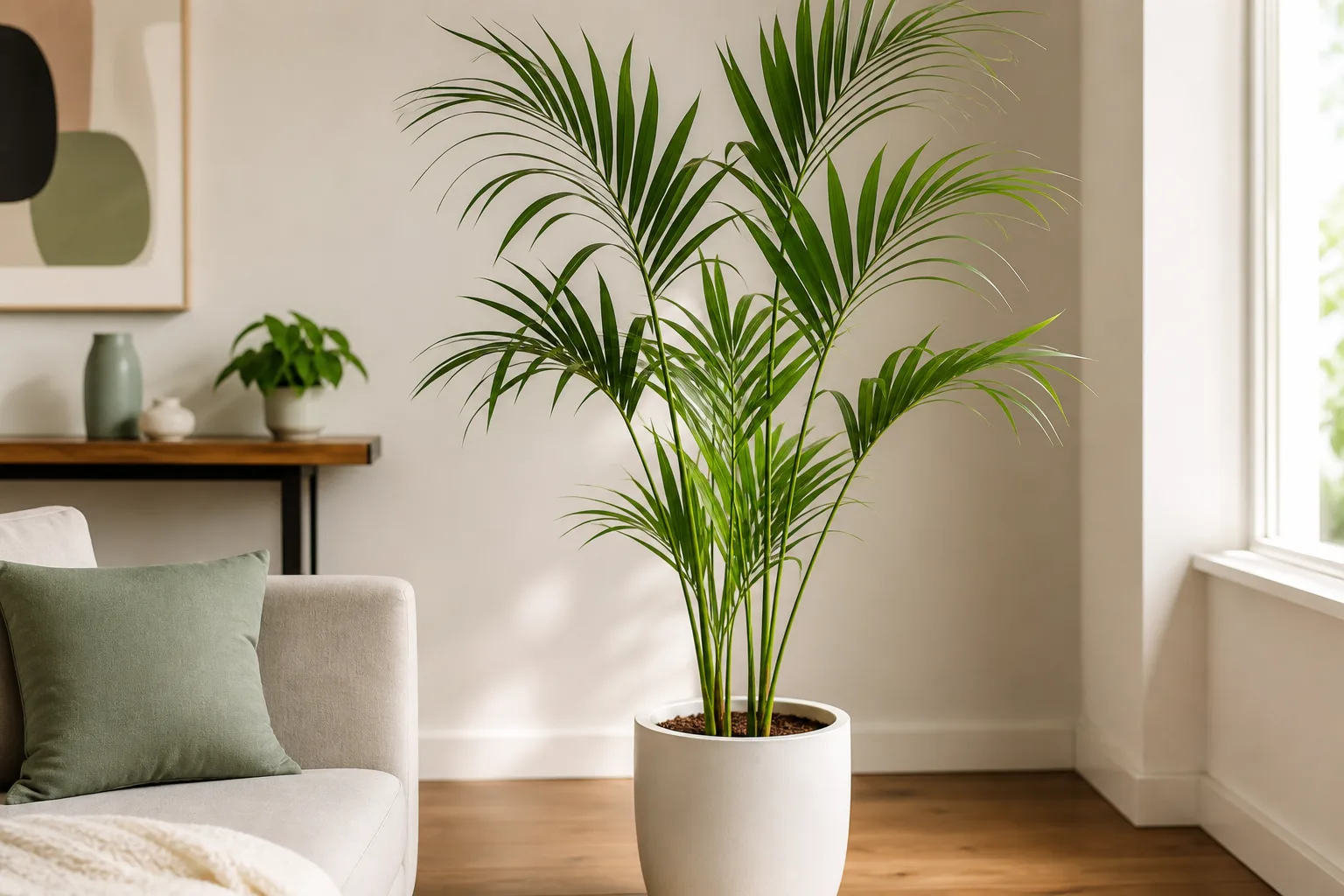
Kentia palm (Howea forsteriana) survived Victorian parlors for a reason: NC State describes it as tolerant of low light, dust, central heat, drought, and rough handling relative to other palms—though it still prefers moderate light and a humus-rich mix that does not dry out completely. (NC State Extension) Its main indoor enemy is potassium deficiency (tip necrosis on older leaves) and occasional spider mites. Slow growth is the tradeoff for stability.
Lady palm (Rhapis excelsa) is a rhizomatous clustering palm with fan-shaped, deeply divided leaves. NC State highlights tolerance of deep shade, low humidity, and even periodic winter cold drafts near doors—unusual among tropical houseplants. (NC State Extension) Propagation is by division of rhizomes, not cuttings. Both kentia and lady palm are tagged non-toxic for pets on NC State plant profiles.
Best for: elegant shade rooms, entryways with draft risk (lady palm), patient growers who want a palm that does not demand a humidifier running 24/7.
Majesty Palm — Only When You Can Commit to Humidity
Majesty palm (Ravenea rivularis) is sold everywhere because it looks full on day one—and struggles in dry, dim homes. It needs bright indirect light, consistent moisture, and 50%+ humidity. If you cannot provide that, choose parlor or lady palm instead. Full majesty-specific targets live in the majesty palm care guide.
Light Requirements for Indoor Palms
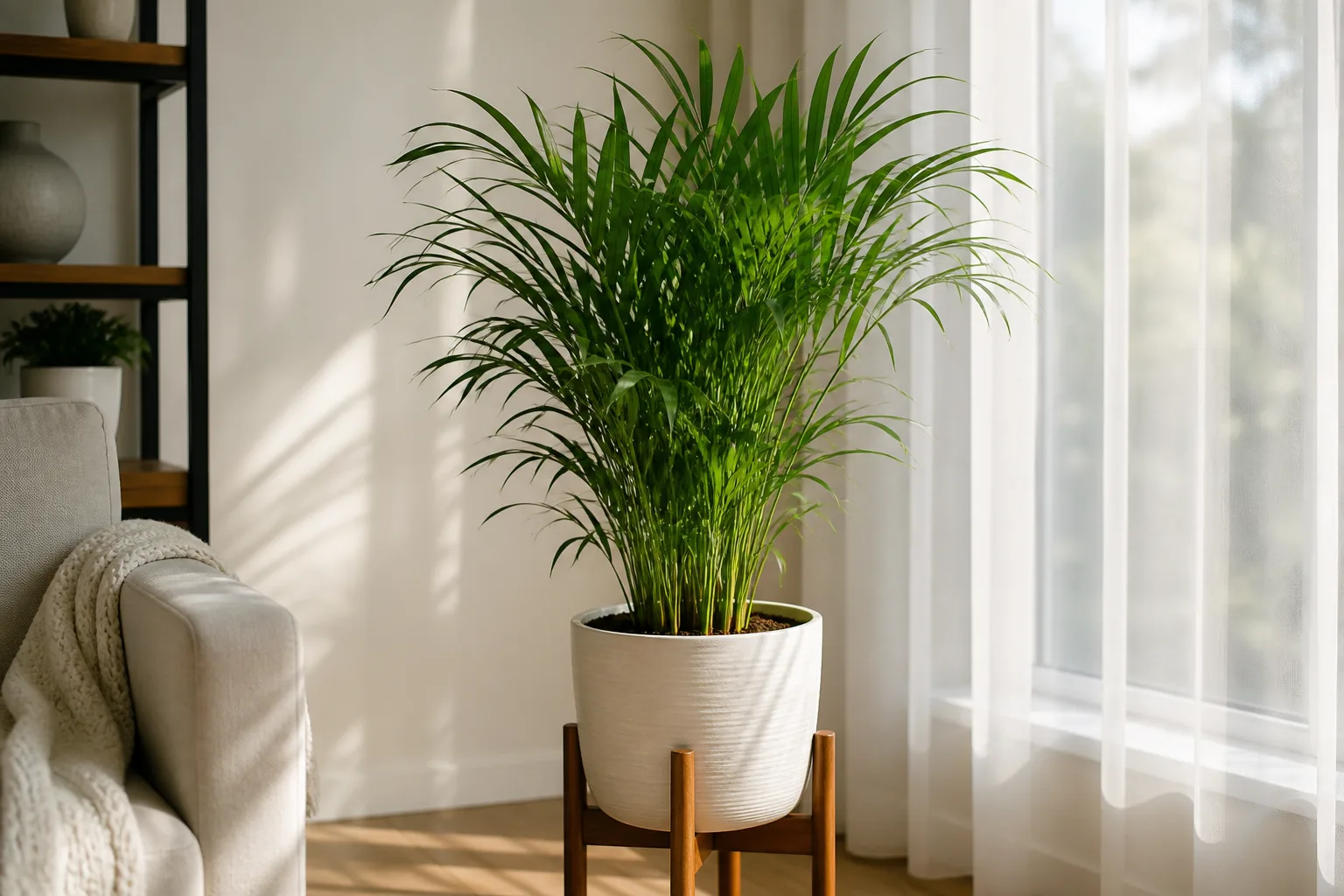
Most indoor palms want bright indirect light for most of the day: within a few feet of an east window, or a south/west window softened by a sheer curtain. NC State tags parlor palm for bright indirect but documents low-light tolerance; areca palm is tagged bright light and suffers in dim corners. (NC State Extension) Leggy, sparse fronds with long petioles mean move closer to the glass or add a full-spectrum grow light for 10–12 hours daily.
Direct sun is species-dependent. Areca can take some direct outdoors in zones 10–11; indoors, hot afternoon sun through glass often scorches fronds. Kentia handles more sun outdoors but still prefers filtered light inside. If fronds bleach or crisp on the window side, pull the pot back or diffuse the light. Rotate the pot a quarter turn monthly so growth stays balanced.
Watering Indoor Palms Without Root Rot
Palms die from overwatering more often than underwatering. The reliable rule: water when the top 1–2 inches of potting mix feel dry to your knuckle—not on a weekly calendar. Soak until water runs from the drainage holes, then empty the saucer within 30 minutes. Never let the pot sit in standing water.
Parlor palm tolerates slightly drier intervals between drinks; majesty and areca prefer more even moisture and wilt faster when dry. In winter, when growth slows and heaters run, stretch intervals but do not let the root ball turn to dust for weeks. If soil stays wet for days after watering, the mix is too heavy or the pot too large—see the soil section before watering again.
Signs you are overwatering: yellow lower fronds, musty smell, black mushy stem base, fungus gnats. Signs you are underwatering: gray-green drooping fronds, crispy tips on newest growth, pot weight light for days.
Soil, Pots, and Drainage That Palms Actually Need
Use a loose, well-drained mix: commercial palm/cactus blend, or general potting soil amended with perlite and bark for airflow. Palms have shallow, fibrous roots that suffocate in dense, water-retentive soil. Every pot needs a drainage hole; decorative cache pots are fine only if the inner nursery pot lifts out after watering.
Terracotta or unglazed clay wicks excess moisture—helpful if you tend to overwater. Plastic retains moisture longer—better for areca/majesty if you underwater. Choose pot width over depth: palms rarely need deep containers. When repotting, go one size up (about 2 inches wider), not a huge tub that holds wet soil for weeks.
Temperature, Humidity, and Air Flow
Keep palms in 65–85°F for active growth. Sustained exposure below 55°F causes reddish-brown cold spots on fronds; below 50°F damages most tropical species. Keep pots away from cold window glass, AC vents, and frequently opened doors in winter. Lady palm tolerates brief cold drafts better than areca or majesty, but no palm belongs in a freezing porch.
Humidity: aim for 40–50% minimum household humidity; 50–60% helps areca and majesty. A humidifier near the plant is the only reliable fix—misting leaves does not raise room humidity meaningfully and can spread foliar diseases if water sits overnight. Grouping palms raises local humidity slightly; pebble trays help only within a few inches of the pot.
Fertilizing and Palm Nutrition
Feed during spring and summer when new fronds emerge. Use a balanced liquid houseplant fertilizer diluted to half strength monthly, or a slow-release palm formula with supplemental potassium (K) and manganese (Mn)—palms are prone to deficiencies generic fertilizers miss. NC State recommends periodic feeding for parlor palm during the growing season and none in winter. (NC State Extension) Skip fertilizer on stressed plants (recent repot, pest outbreak, severe underwatering) until growth stabilizes.
Flush the pot with plain water every few months in hard-water areas to reduce salt buildup that browns leaflet edges. If new fronds look pale and stretched despite good light, you may be over-fertilizing—cut back before adding more.
Potassium Deficiency and the Pruning Trap
Potassium deficiency is the hidden reason so many indoor palms look “messy.” UF/IFAS documents that K is mobile in palms: the oldest fronds yellow, spot, and brown first while the plant mines potassium from them to feed new growth. (UF/IFAS) Areca palms show translucent yellow-orange spotting and tip necrosis on older leaves when K is low.
The trap: cutting off every yellowing frond accelerates decline because you remove the plant’s K reserves before soil nutrition is fixed. UF/IFAS warns that repeated pruning of K-deficient leaves can speed palm death. Fix the fertilizer first; remove only fully brown, dead tissue. This is why your palm looks bare after aggressive trimming—it is starving, not “due for a haircut.”
Pruning Rules Palms Need You to Follow
Never cut the central growing tip. Palms do not branch like ficuses; removing the terminal bud kills the stem. Do not “top” a palm or cut it down to one or two new fronds—the feather-duster look is unhealthy, not tidy.
Remove completely brown, dead fronds at the base with clean pruners. Leave partially green or yellow fronds in place until they are fully brown unless they are clearly diseased. UF/IFAS emphasizes that half-dead lower leaves on K-deficient palms should stay until nutrition improves. (UF/IFAS) Wipe fronds with a damp cloth or rinse the plant in the shower twice a year to remove dust that blocks photosynthesis—faster than wiping each leaflet.
Flower and fruit stalks on rare indoor blooms can be removed without harm; most houseplant palms never flower indoors.
Repotting and Controlling Indoor Height
Repot only when roots circle the pot or water runs straight through dry mix—often every two to three years for parlor palm, slightly sooner for fast-draining areca in bright light. Palms dislike root disturbance; NC State advises repotting parlor palm only when necessary. (NC State Extension)
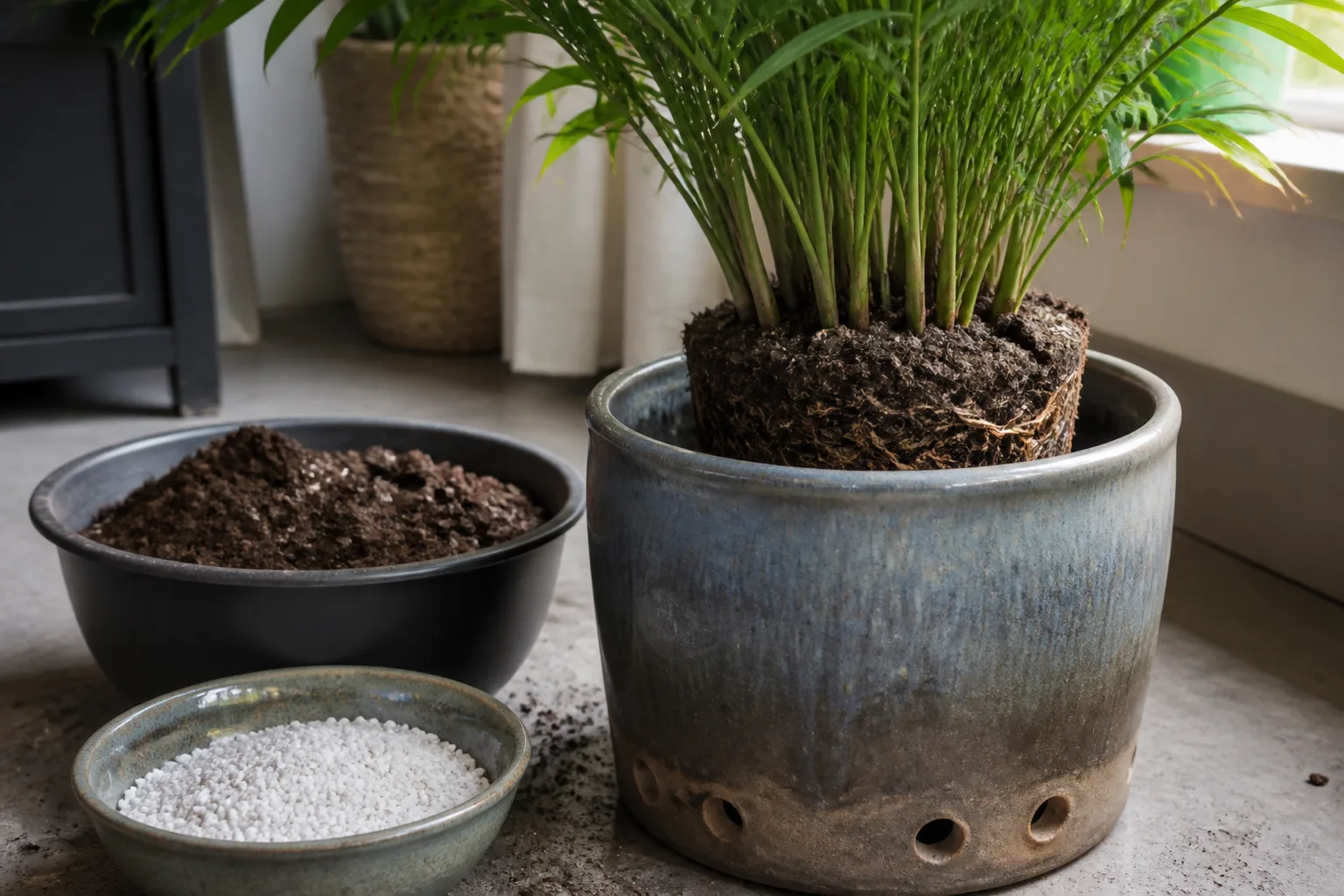
Choose a container one size larger with drainage holes. Slide the root ball out gently; tease circling roots lightly without bare-rooting. Backfill with fresh mix at the same planting depth—burying the stem invites rot. Water thoroughly once, then resume normal checks after a week.
Size control: keeping a palm slightly pot-bound slows vertical growth without starvation. If you want a 6-foot areca instead of 10, avoid upsizing every year. Lady palm can be divided at repot time to share or reduce spread.
Common Pests on Indoor Palms
Dry indoor air invites spider mites—look for stippled yellow leaves and fine webbing on frond undersides. Mealybugs and scale hide on stems and leaf bases; NC State lists them on parlor, areca, kentia, and lady palms. (NC State Extension)
Isolate affected plants, rinse fronds, and treat with insecticidal soap or neem oil on a weekly cycle for three weeks, covering undersides. Increase humidity and improve airflow after treatment—mites explode when heating runs and humidity crashes. Repeat treatments miss eggs; consistency matters more than a single spray.
Troubleshooting Yellow Leaves, Brown Tips, and Cold Damage
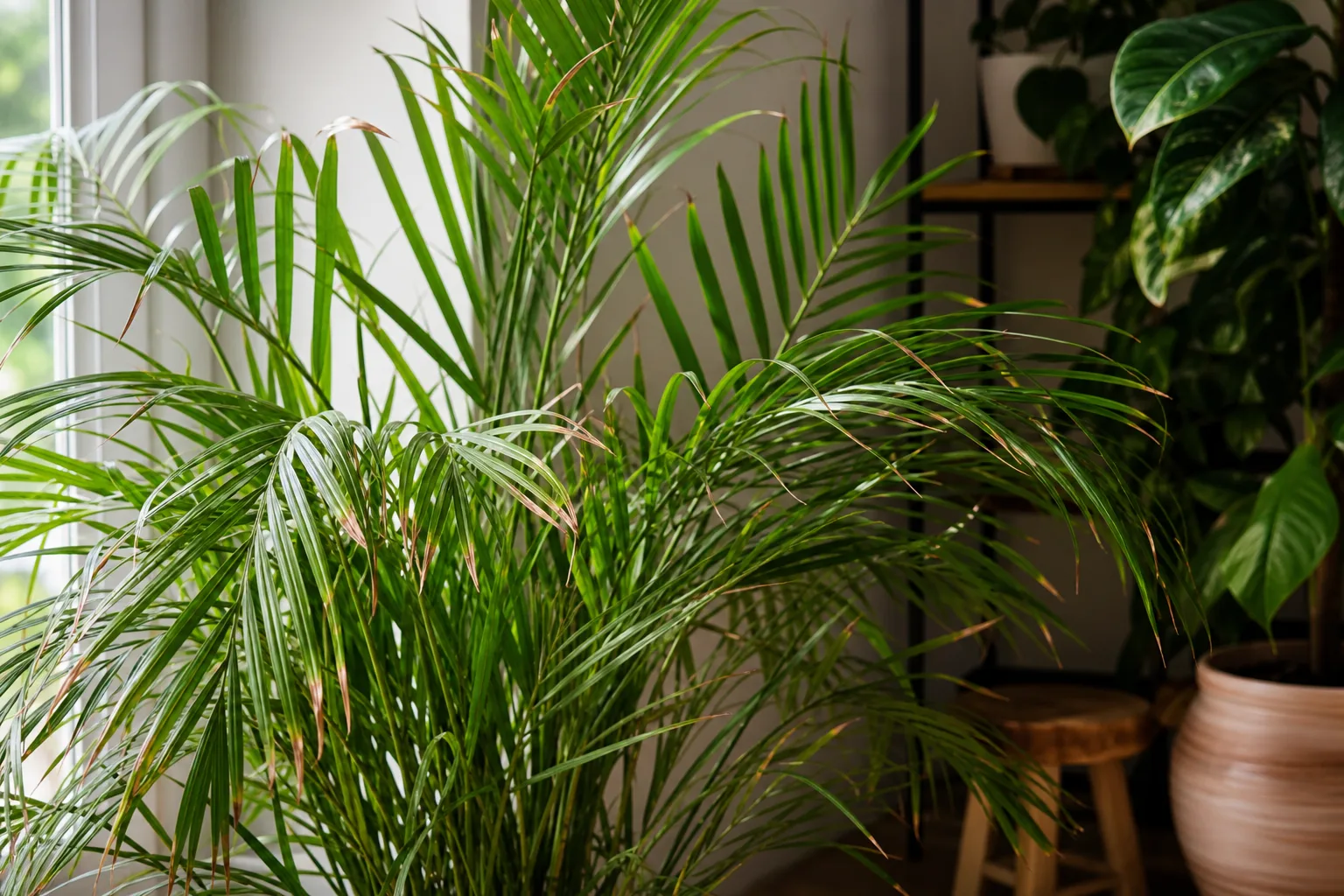
Work through causes in order—do not fertilize a palm sitting in a dark, wet pot.
Yellow lower fronds: usually overwatering or too little light. Check moisture depth and window distance before anything else. On older plants, a few yellowing lowest fronds can be natural senescence—wait until fully brown to remove.
Brown tips only: hard water salts, underwatering, low humidity, or potassium deficiency. Flush soil, adjust watering, add humidity, then switch to palm fertilizer with K.
Reddish-brown patches: cold exposure—move away from drafts; damaged tissue will not green up. Do not prune cold-injured green fronds until stable warm weather returns; they still photosynthesize.
Whole-plant browning after freeze: if the heart (newest spear) is mushy and brown, recovery is unlikely. If green spears remain, warm the plant, maintain humidity, and fertilize lightly after new growth appears—rehab takes months.
Growing Palms From Seed (When It Makes Sense)
Most home growers buy potted palms; seed propagation is slow but possible for species like parlor palm. Germination often takes two months or longer in warm, humid conditions with evenly moist—not wet—seed mix. After sprouting, seedlings need bright indirect light and gentle feeding after several true fronds form. Transplant into larger pots only when roots fill the starter container.
Division works for clustering palms (areca clusters at repot, lady palm by rhizome). Cuttings and air layering fail on true palms—there is no stem node to root. For practical indoor results, buying a healthy nursery plant matched to your room beats seed unless you enjoy the wait.
Conclusion
Indoor palm tree care comes down to honest species choice, bright indirect light, water when the top inch dries, and patience with older fronds while nutrition catches up. Parlor and lady palms forgive dim, dry apartments; areca and kentia reward bright, stable rooms; majesty palm demands humidity you can actually maintain. Keep true palms separate from toxic sago palm, fix potassium before you prune, and link out to species-specific guides when one palm—not the whole family—needs attention. Get those basics right and your palm stops looking like a temporary décor prop and starts behaving like the slow, structural houseplant it is.