How to Grow and Care for Majesty Palm
Grow majesty palm indoors with bright light, steady moisture, high humidity, and fixes for yellow fronds, spider mites, and the multi-stem nursery pot trick.
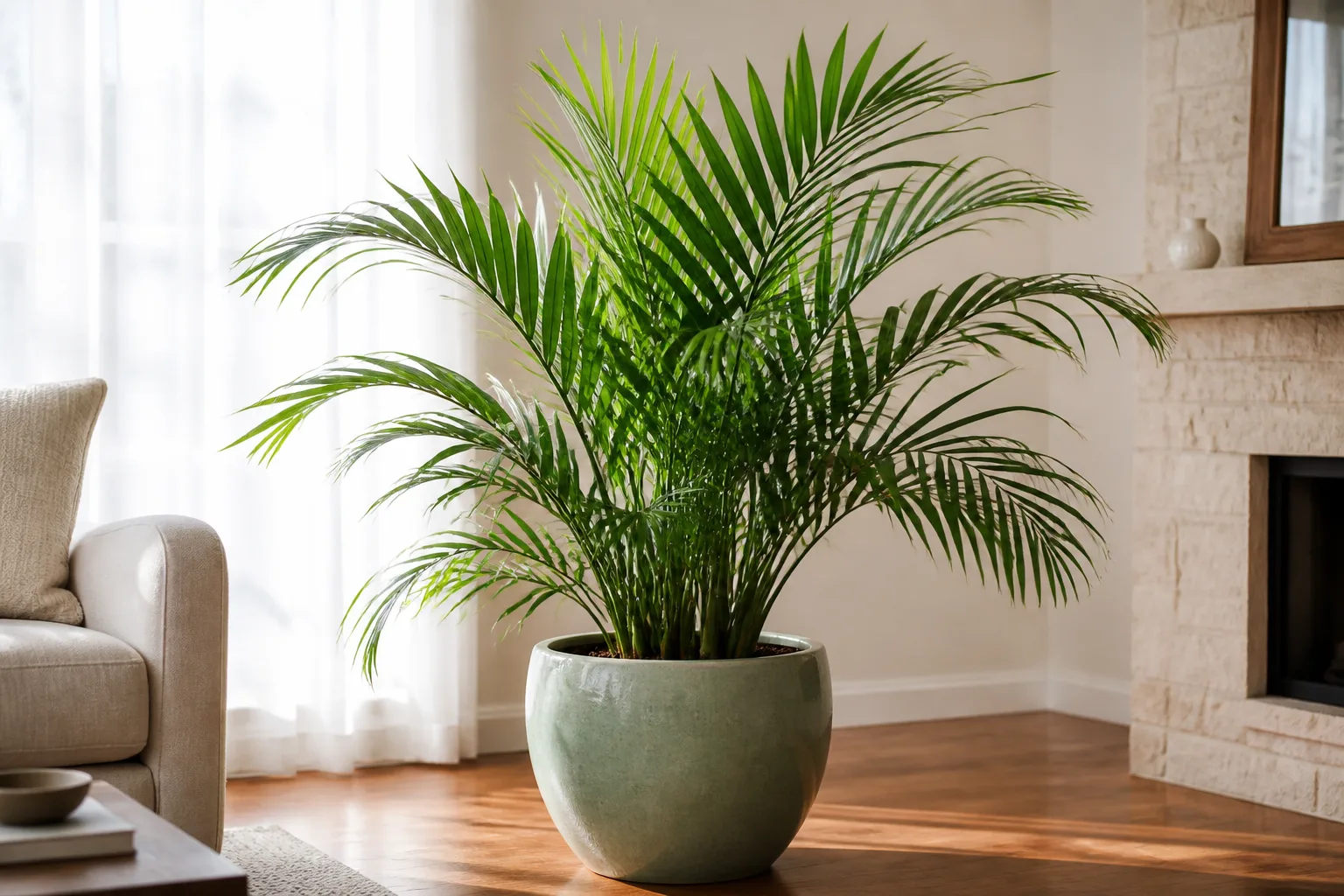
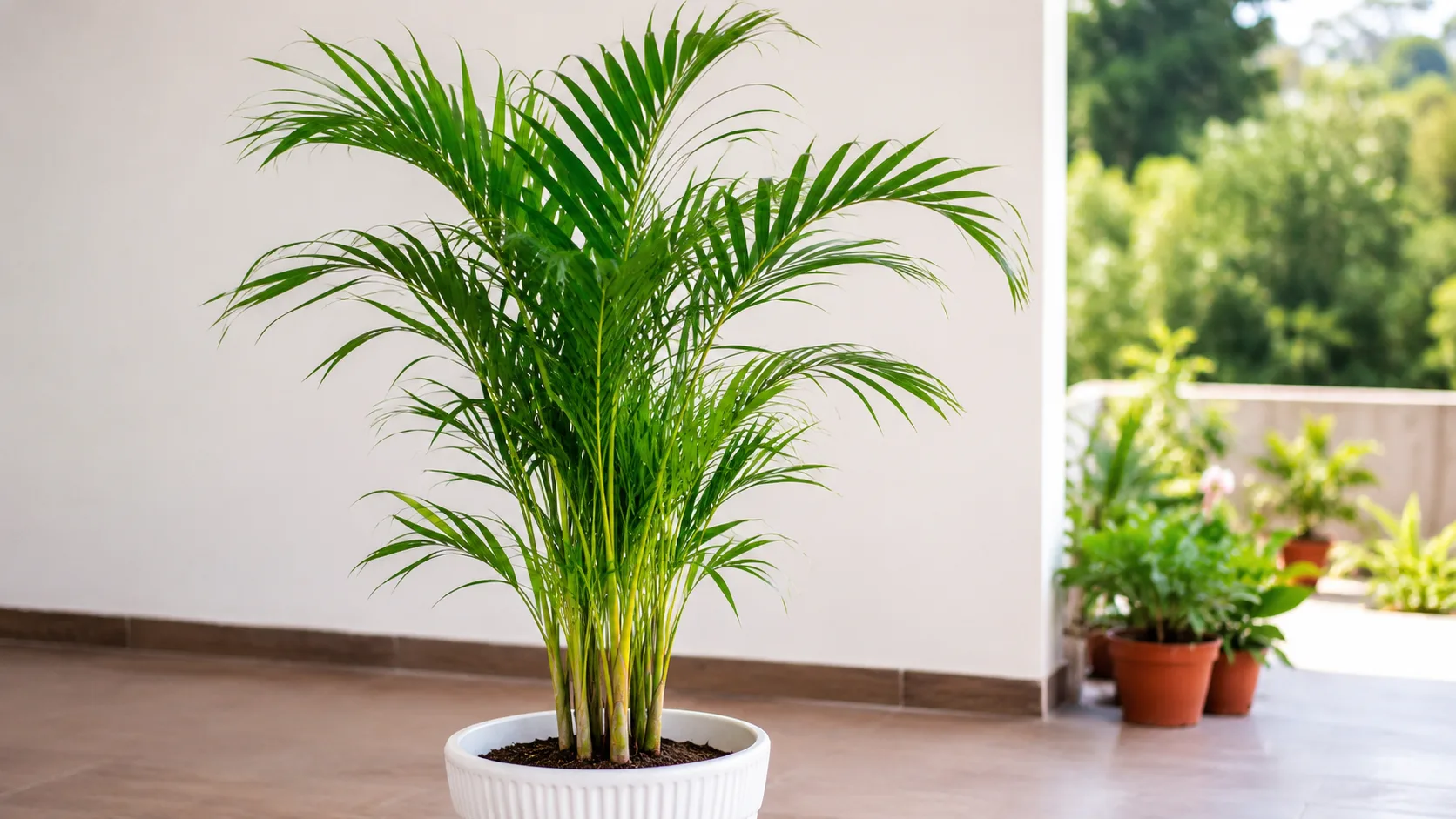
Majesty palm (Ravenea rivularis) looks like instant tropical furniture the day you bring it home—upright stems, long arching fronds, and a canopy that fills a corner. Six months later, the same plant often tells a different story: lower fronds yellow and drop, tips crisp brown, and spider mites appear as if from nowhere. That crash is not bad luck. Majesty palm evolved on riverbanks in Madagascar, where light is filtered, air stays humid, and roots sit in consistently moist—but not stagnant—soil. Most living rooms run too dry and too irregular on water. The job of this guide is to close that gap with clear targets, or to help you decide honestly when a parlor palm or kentia palm fits your space better.
Majesty Palm Quick Reference
Use this table before you change anything. If several factors are off, fix light and watering first—fertilizer rarely saves a palm in a dark, dry corner.
| Factor | Indoor target | Notes |
|---|---|---|
| Light | Bright indirect; 2–4 hours gentle morning or late-day sun | Leggy stretch = too dim; scorched fronds = too much hot direct sun |
| Water | Even moisture; never bone-dry, never soggy | Check top 1–2 inches; empty saucers after watering |
| Soil | Peat-rich potting mix with perlite; excellent drainage | NC State lists loam/clay tolerance outdoors; pots need fast exit for water |
| Humidity | 50–60%+ ideal; 40% minimum in winter | Dry air invites spider mites faster than underwatering invites crisp tips |
| Temperature | 65–85°F days; avoid cold drafts below 55°F | Hardy outdoors USDA 10a–11b only |
| Fertilizer | Dilute liquid 1–2× in spring–summer; none in winter | Stop if new growth looks pale and stretched |
| Pets | Non-toxic to cats and dogs | ASPCA lists Ravenea rivularis as non-toxic |
| Propagation | Division at repot time | Seeds impractical for most home growers |
| Realistic indoor height | Often 5–10 ft over years | Much slower than outdoor trees in the tropics |
What Majesty Palm Is (and Why It Struggles Indoors)
Majesty palm belongs to Arecaceae, the palm family. Its species name rivularis refers to river edges—the wet, partially shaded banks where wild plants root. North Carolina State Extension describes it as a tropical evergreen that requires high humidity, bright indirect light, and consistent moisture, and notes it may be difficult to grow indoors. (NC State Extension) Outdoors in habitat it can reach nearly 100 feet; as a houseplant, expect roughly 5–10 feet over time if conditions stay stable. SelecTree records outdoor growth rates around 24 inches per year in favorable climates, but indoor growth is typically much slower once the early nursery flush fades. (SelecTree)
You are not failing as a gardener if a majesty palm declines in average winter heating—it is a demanding species marketed like a bulletproof floor plant. Before you buy, ask whether you can keep one bright window, a humidifier or pebble tray, and a steady watering rhythm in the same room year-round. If not, scroll to the comparison section and pick a palm that matches your actual conditions.
Wild populations in central Madagascar are vulnerable to deforestation and habitat loss, which is why responsible sourcing matters even though the species is widely cultivated. (SelecTree) In Madagascar, majesty palm grows as an understory to edge-of-water tree: bright but filtered light, warm nights, and roots that never sit in air pockets yet rarely dry to dust. Flowers and fruit appear on mature outdoor specimens—small yellowish-white blooms and red berries—not on typical indoor pots. Do not buy a majesty palm expecting indoor flowers; focus on frond health instead.
Here is the detail most care pages skip. Majesty palm is solitary in nature, but growers often plant three or more seedlings in one container so the pot looks full at sale. NC State Extension explicitly notes you can divide the cluster and pot each plant separately, expanding your collection in one repot session. (NC State Extension) If your palm suddenly looks sparse after a year indoors, part of what you bought may have been a temporary visual trick—multiple crowded root systems competing for the same dry air.
Light Requirements for Healthy Fronds
Majesty palm is not a low-light palm. It wants bright, indirect light for most of the day, with optional gentle direct sun from an east window or filtered south/west exposure. NC State lists partial shade (2–6 hours of direct sun) as the outdoor cultural range; indoors, translate that to bright ambient light plus soft morning rays—not hot midday beams on the glass. (NC State Extension)
Watch the fronds, not the tag. New leaves smaller and farther apart mean the plant is stretching for light. Bleached or crispy patches on the side facing the window mean too much direct intensity. Move stretched plants closer to the glass with a sheer curtain; move scorched plants back or filter afternoon sun.
Best indoor window placement
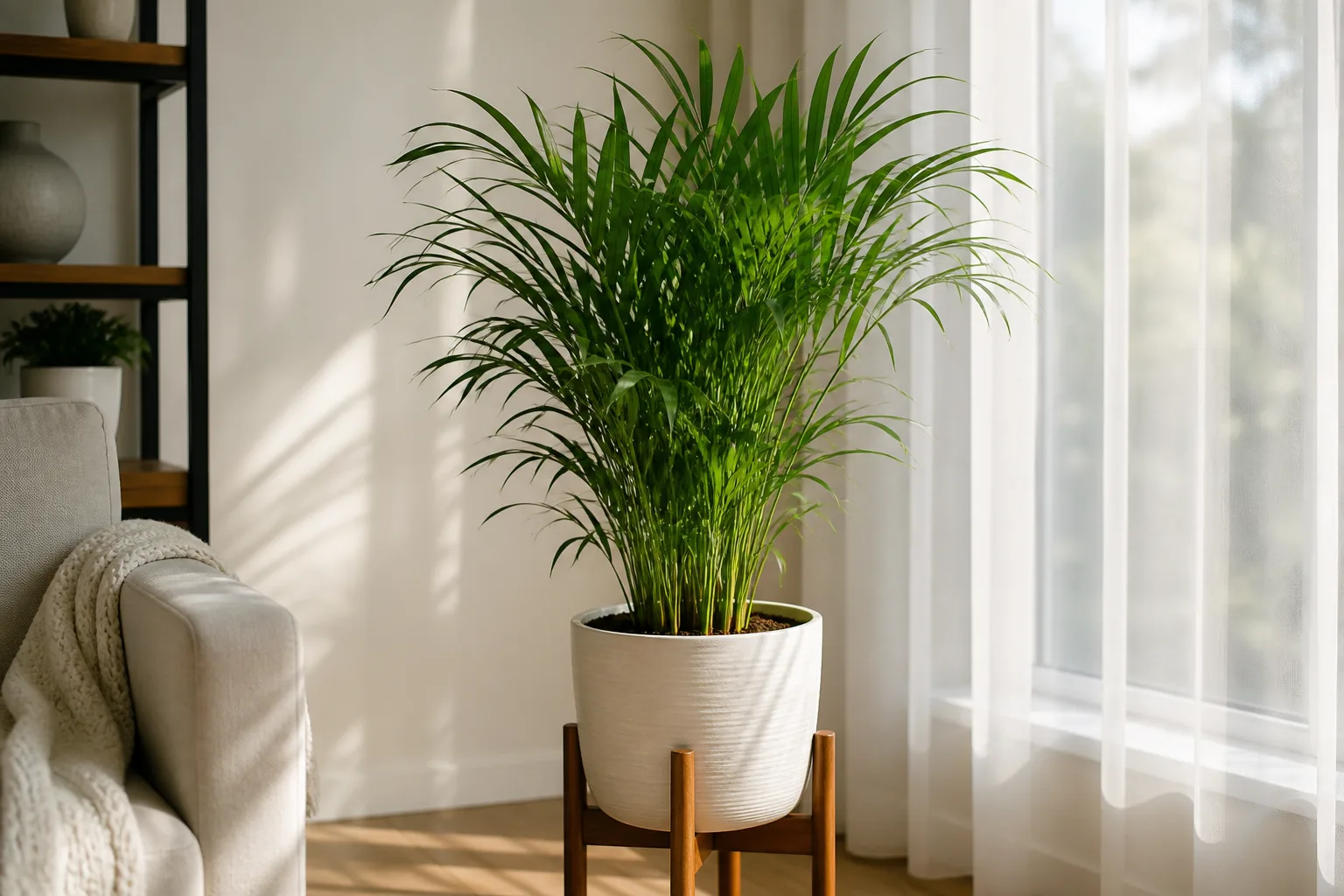
A bright east-facing window is the classic sweet spot: strong morning light, softer afternoon. South or west windows work if filtered by a sheer curtain or if the palm sits several feet back from the pane. North windows can work only if the room is otherwise bright; compare with best low-light indoor plants if your brightest spot is still dim—majesty palm will not behave like parlor palm in a north corner.
Rotate the pot a quarter turn every week so all sides receive similar light. Dust fronds gently with a damp cloth monthly; a dusty canopy blocks photosynthesis and invites pests.
In USDA zones 10–11, majesty palm can live outdoors year-round in partial shade—dappled patio light, not open midday sun. In cooler zones, treat outdoor time as a summer boost: after nights stay above 55°F, harden the plant for a week in bright shade, then place it on a covered patio or under a tree where it gets bright indirect light and protection from wind. Bring it back indoors before frost; the palm will not survive winters in zone 9 or colder. Sudden moves from dim indoors to full outdoor sun burn fronds in days—always acclimate.
Soil, Drainage, and Pot Choice
Use a standard peat-based houseplant mix amended with perlite or coarse bark so water flows through in seconds after a soak. Majesty palm tolerates moist and occasionally wet soils in the ground, but container culture demands drainage holes and no standing water in saucers. NC State notes preference for loam or clay textures with high organic matter outdoors; indoors, the priority is steady moisture without anaerobic mud at the bottom of the pot.
Choose a heavy, wide pot—ceramic or thick plastic with a broad base—because mature fronds make the plant top-heavy. A narrow tall pot tips easily and dries unevenly. Repot into a container only 1–2 inches wider than the root ball; oversized pots stay wet too long and encourage root rot.
Watering Majesty Palm the Right Way
Riverbank ecology explains the watering rule: keep the mix evenly moist, never waterlogged, never fully desiccated. Letting the soil go completely dry between drinks is the fastest way to lose lower fronds that will not return. Sitting in soggy soil causes root rot and yellowing that spreads from the base upward.
Water until excess runs from the drainage holes, then empty the saucer within 30 minutes. In active growth (spring and summer), many indoor majesty palms need water every 5–10 days depending on pot size, light, and humidity—but the calendar is a bad boss.
Stick a finger 1–2 inches into the mix. If it feels dry at that depth, water thoroughly. If it still feels cool and slightly damp, wait. For large pots, lift a corner: noticeably lighter weight means dry; heavy means wait. Brown tip burn on older fronds often tracks inconsistent drying, not only underwatering—roots that swing from wet to dry stress the whole canopy. In winter, when growth slows and heaters run, stretch intervals slightly but do not let the root ball go crisp. Heated dry air pulls moisture faster than you expect.
Temperature and Humidity Targets
Majesty palm prefers 65–85°F and sulks in cold drafts from doors, single-pane winter glass, or air-conditioning vents blowing directly on fronds. NC State recommends avoiding cold drafts and direct heat sources. (NC State Extension) Brief dips toward 55°F stress the plant; sustained cold below that damages tissue.
Humidity is the other half of the battle. NC State tags the species as #high-humidity and notes low humidity encourages insect pests. (NC State Extension) Aim for 50–60% relative humidity near the canopy; 40% is a workable floor in many homes if you watch for mites.
Reliable ways to raise humidity
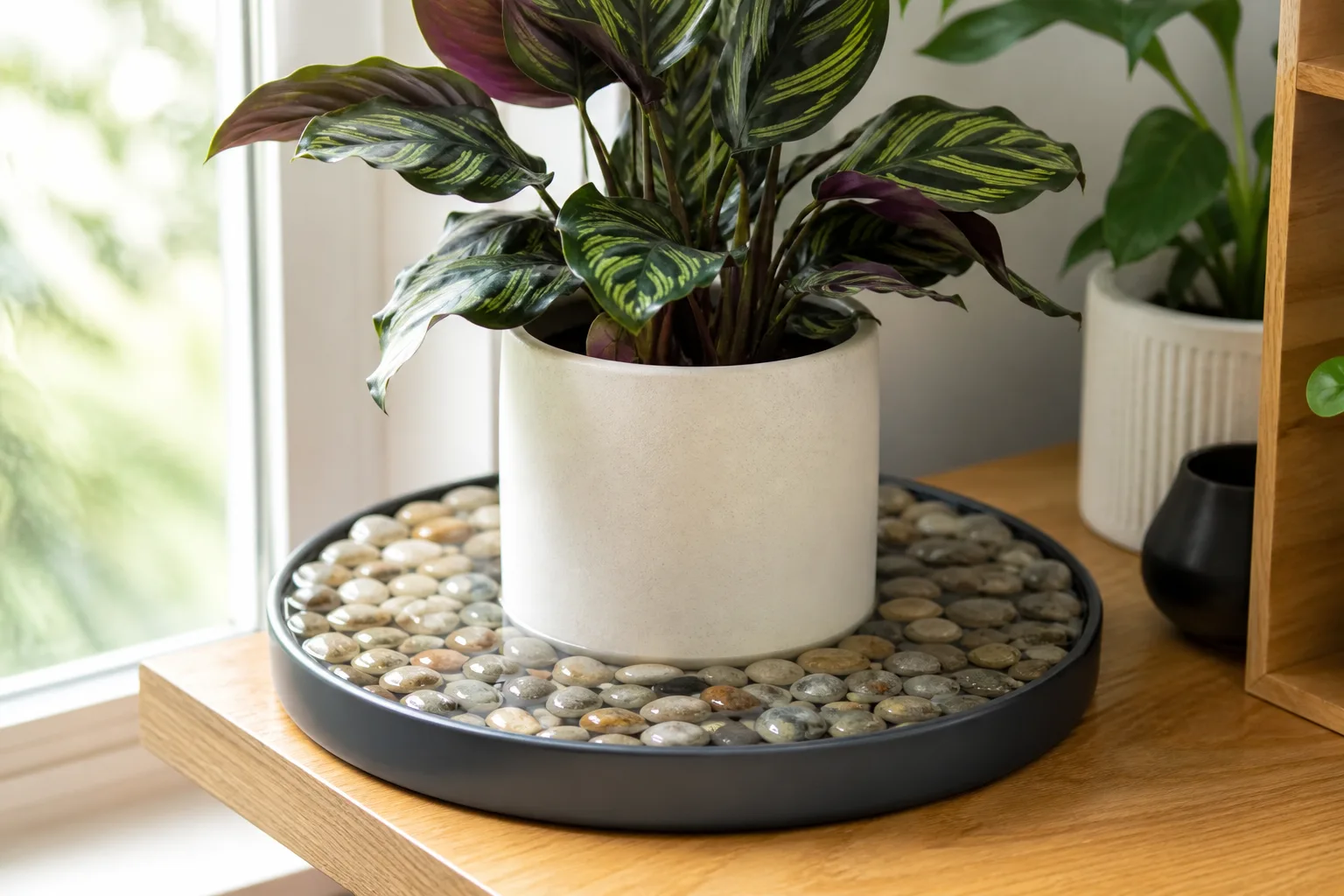
Rank methods by reliability:
- Small humidifier near the plant (best sustained fix)
- Pebble tray with the pot base above the water line—see the DIY pebble tray for tropical houseplants guide for correct setup
- Grouping plants to share transpired moisture in a bright corner
- Misting (short-lived; can spot leaves if airflow is poor—use only as a supplement)
Measure with a hygrometer instead of guessing. If humidity stays below 40% all winter, expect spider mites unless you humidify.
Fertilizer During the Growing Season
Feed once or twice during spring and summer with a diluted balanced liquid fertilizer—half the label rate is a safe starting point. Skip fertilizer entirely in fall and winter when growth slows. If fronds look pale and unnaturally stretched, back off feeding and improve light first; excess nitrogen on a stressed palm makes weak, insect-prone tissue.
Some growers use cactus or palm-specific formulas with lower nitrogen; either works if applied lightly. Never fertilize dry soil—water first, then feed, to avoid root burn.
Pruning Brown or Yellow Fronds
Pruning is cosmetic and sanitary, not a growth hack. Remove fully brown or yellow fronds at the base with clean, sharp pruners—one smooth cut without tugging. Do not cut green tissue to “shape” the palm; each frond is a photosynthetic factory you cannot replace quickly indoors.
If only tips are brown, fix water, humidity, or light before mass pruning. Older lower fronds naturally senesce one at a time on healthy plants; several dying at once signals culture, not age.
Propagating Majesty Palm by Division
Home propagation is division only—NC State lists division as the recommended strategy. (NC State Extension) Seed and stem cuttings are not practical routes for most growers.
Best timing: active spring repot, when the plant is unstressed and roots are waking up.
- Water the day before so the root ball holds together.
- Tip the pot on its side and slide the plant out; never yank by the trunk.
- Inspect for separate stems with their own root systems—common in multi-plant nursery pots.
- Tease roots apart with fingers; use a sterilized knife only if they are tightly bound.
- Pot each division in fast-draining mix, water thoroughly, and place in the same bright indirect light as the parent.
- Hold fertilizer for 4–6 weeks while roots settle.
Expect temporary transplant droop; keep humidity high and avoid direct sun until new growth appears.
Repotting Without Shock
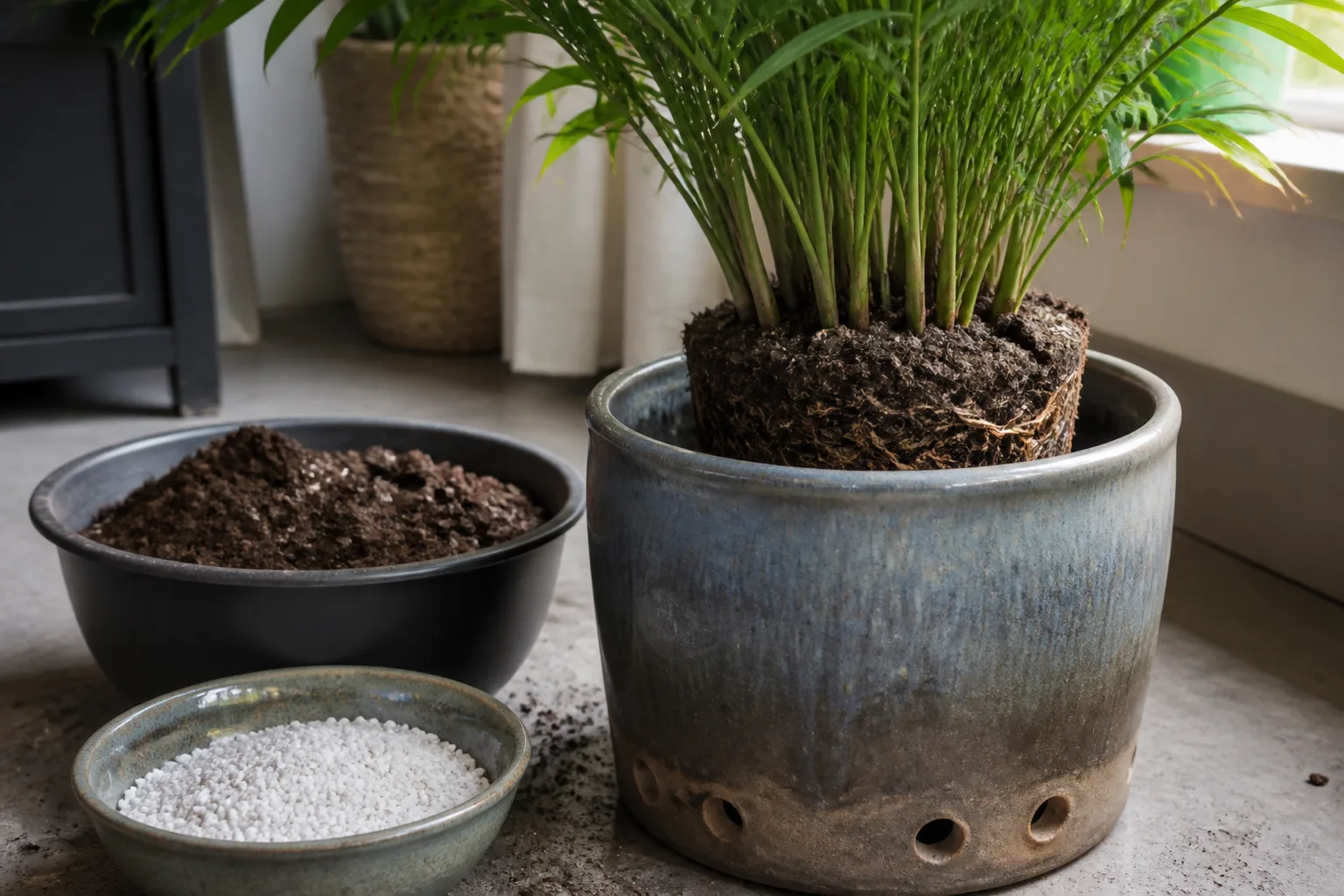
Repot every 1–2 years while the plant is actively growing, or when roots circle the pot surface and water runs straight through. Move up one pot size only. Disturb the root ball as little as possible—majestic palms resent bare-rooting.
After repotting, maintain even moisture and high humidity for several weeks. Skip fertilizer until you see new spear or frond movement. A stable, heavy base matters: repotting is the moment to fix a tippy container before height makes accidents inevitable.
Seasonal Care and Overwintering
Winter indoors means lower light, drier air, and slower growth—adjust water slightly, stop fertilizer, and prioritize humidity. Keep fronds away from radiators and forced-air vents. If leaf tips brown despite good watering, humidity is the usual suspect, not “winter dormancy.”
In frost-free climates, outdoor specimens need no special winter prep beyond normal moisture checks. In seasonal climates, patio plants must move indoors before the first frost; treat the transition like summer hardening in reverse—bright indoor spot first, not a dim hallway.
Common Pests and Treatment Order
NC State lists spider mites, aphids, whiteflies, mealybugs, and scale as the common insect issues, with low humidity favoring mites. (NC State Extension) Inspect frond undersides and leaf axils weekly in dry months.
Treatment sequence—least abrasive first:
- Isolate affected plants from clean palms.
- Rinse fronds in the shower or with a gentle spray to knock off mites and aphids.
- Raise humidity and improve airflow (fan on low nearby, not blasting the plant).
- Insecticidal soap or horticultural oil on thorough coverage of undersides; repeat per label.
- Systemic or stronger chemistry only if infestations persist after two careful soap/oil cycles—always follow label directions for indoor use.
Scale and mealybugs need physical removal with a cotton swab dipped in rubbing alcohol on visible individuals, plus follow-up sprays for crawlers you cannot see. Check neighboring areca palm clusters too—mites hitchhike between palm pots on the same shelf.
Troubleshooting Leaf Problems
Leaf color is your dashboard. Use the ordered checks below instead of random repotting or fertilizer dumps.
Yellow leaves — check in this order
- Watering: Overwatering yellows multiple fronds from the base with soft, dark stems; underwatering yellows oldest fronds first with dry mix and crispy edges.
- Light: Overall pale yellow-green canopy with long petioles = too dim. Move brighter with filtration.
- Humidity: Tip yellowing plus webbing = spider mites from dry air—humidify and treat pests.
- Nutrients: Uniform pale new growth after light and water are correct may need light feeding—rare compared with the first three causes.
NC State explicitly ties yellow leaves to inadequate light, insufficient water, overwatering, low humidity, or nutritional deficiencies. (NC State Extension) Work the list top to bottom.
Brown tips, scorch, and spotty damage
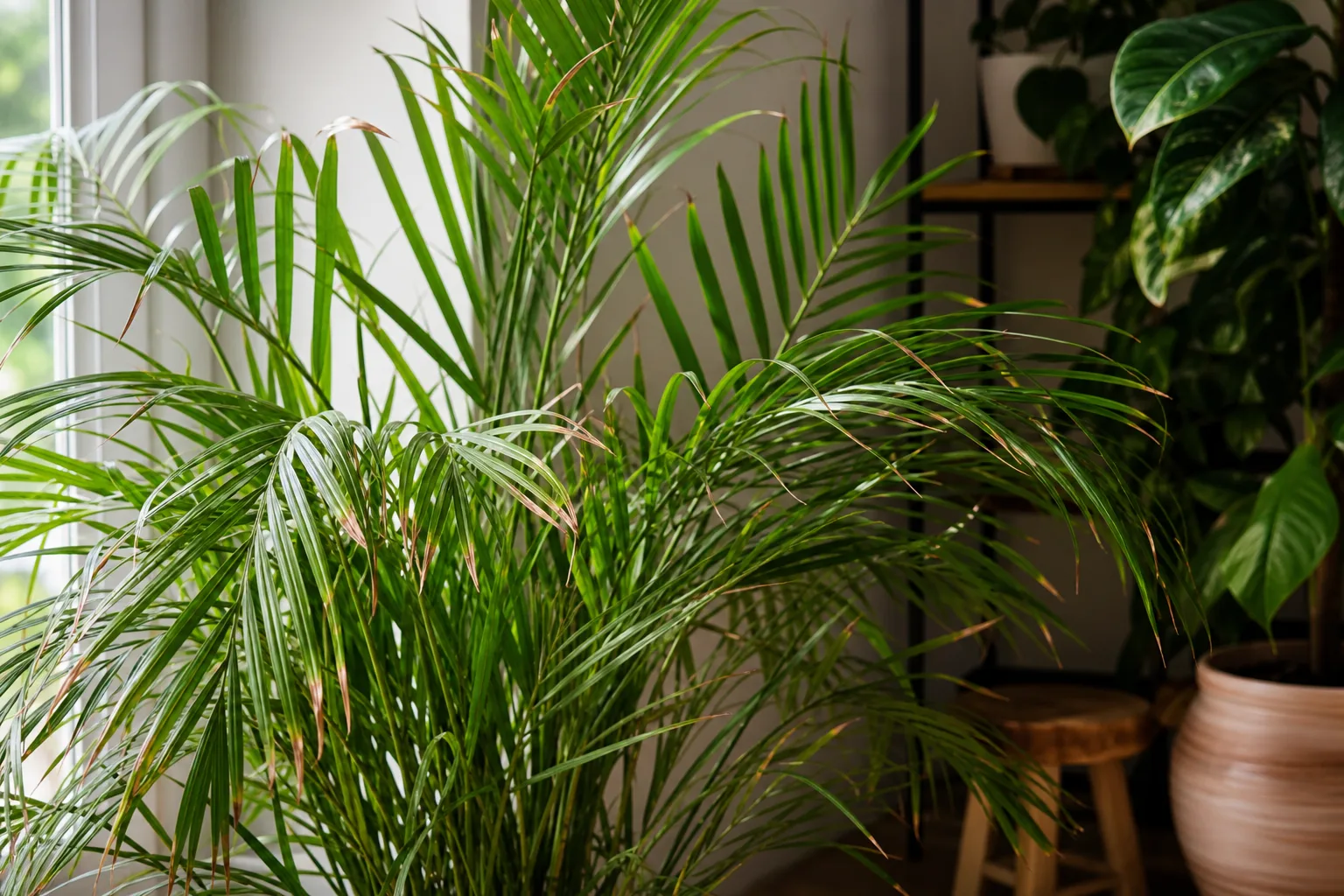
Crispy brown tips on otherwise green fronds usually mean underwatering swings, low humidity, or salt buildup from hard tap water or over-fertilizing. Flush the pot occasionally with plain water until runoff runs clear.
Large bleached patches on the sun-facing side mean leaf scorch—reduce direct intensity.
Small brown spots with sticky residue suggest scale or fungal spotting after wet leaves sit overnight—improve airflow and treat pests; avoid evening misting.
Majesty Palm vs Easier Indoor Palms
Buy majesty palm when you have bright light, humidity control, and patience. Choose another species when you cannot provide those three.
| Palm | Best for | Majesty palm contrast |
|---|---|---|
| Parlor palm | Low to medium light, average humidity | Tolerates dimmer rooms; slower but steadier indoors |
| Kentia palm | Bright indirect light, elegant vertical habit | More forgiving of indoor air; slower, costlier, but less crash-prone |
| Areca palm | Bright light, clustering bamboo look | Clustering stems, different watering rhythm—do not confuse tags at the nursery |
Majesty palm demands wetter, more humid conditions than areca and far more light than parlor palm. Misidentification at the store is common—confirm solitary vs clustered stems and the botanical tag before applying any palm guide.
Conclusion
Majesty palm rewards growers who treat it like a riverbank tropical, not a set-and-forget floor filler: bright filtered light, even moisture, real humidity, and stable warmth. Get those four right and division at repot time, light summer patio time, and careful pest checks keep the canopy full for years. Miss two of the four and yellow fronds plus spider mites arrive on schedule. If your home runs dry and dim, a parlor palm or kentia palm is the smarter buy—and that is not defeat; it is matching the plant to the room you actually have.