Kentia Palm Care Guide: Light, Water, Soil and Indoor Size
Howea forsteriana
Grow Kentia Palm in bright filtered or indirect light and a humus-rich, well-drained mix. Water when the top 2 inches are dry, let the pot drain, and avoid both prolonged saturation and severe dryness.
Kentia Palm Care Guide
Start with wateringThe most common care mistake for Kentia PalmWatering guide →Kentia Palm care essentials
Light
Bright filtered or indirect light; partial shade is suitable. More moderate light supports better growth than a dim corner.
Water
Water thoroughly when the top 2 inches (5 cm) of mix have dried. Let excess drain away; do not leave the pot standing in water or let the entire root ball become bone dry.
Soil
Use a humus-rich, well-drained palm or houseplant potting mix. It should hold some moisture without becoming waterlogged.
Humidity
Temperature
Fertilizer
About Kentia Palm
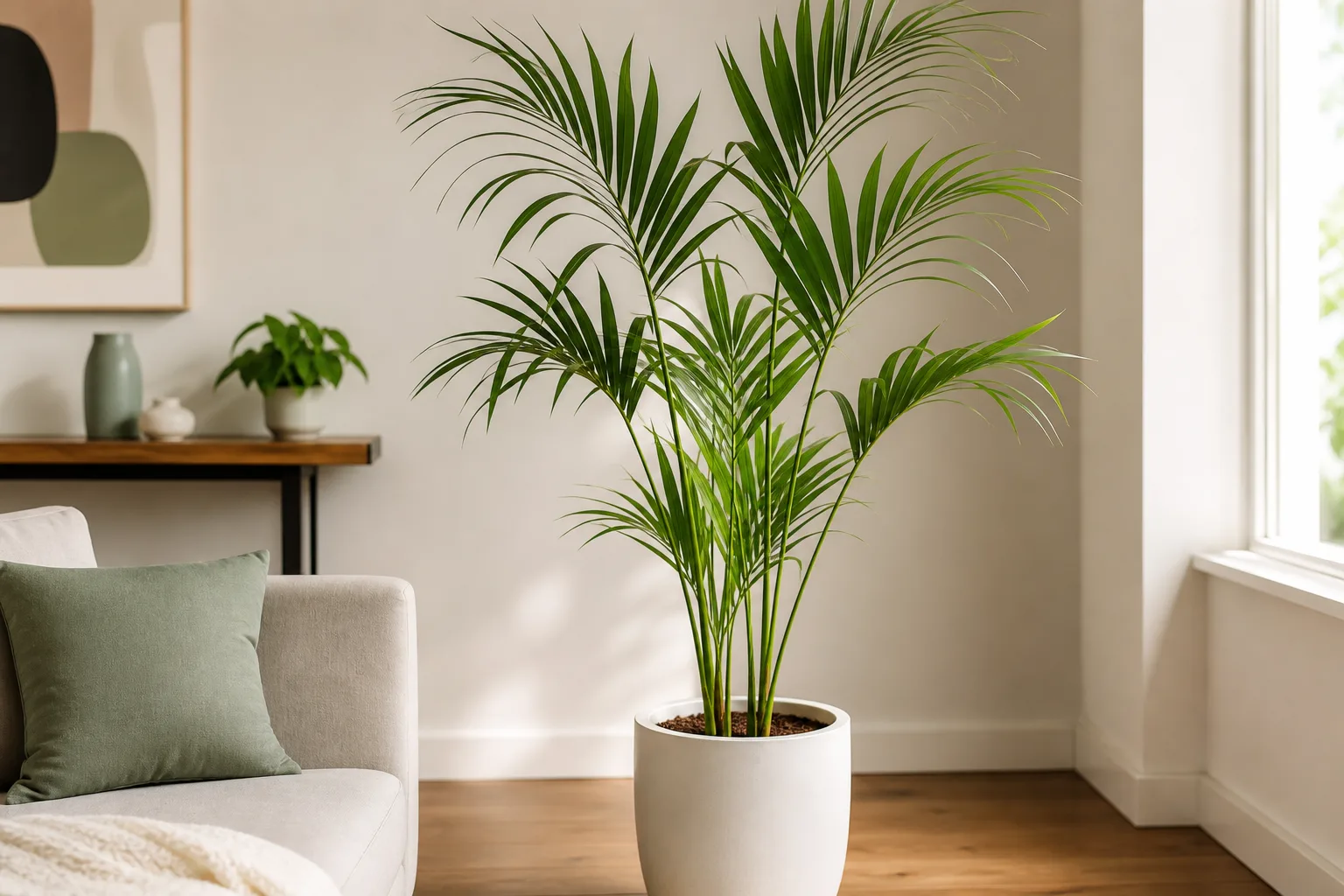
Kentia Palm is native to Lord Howe Island, off the east coast of Australia, typically reaches A slow-growing indoor container palm that commonly reaches around 2 m under glass; in suitable outdoor climates the species can reach about 8–12 m, with long arching feather-shaped fronds. indoors, with slow growth. Kentia Palm has a solitary, single stemmed evergreen palm growth habit and part of the Arecaceae family. It is also known as Sentry Palm, Forster Sentry Palm, Paradise Palm, and Thatch-leaf Palm.
| Detail | Information |
|---|---|
| Also known as | Sentry Palm, Forster Sentry Palm, Paradise Palm, Thatch-leaf Palm |
| Native region | Lord Howe Island, off the east coast of Australia |
| Mature size | A slow-growing indoor container palm that commonly reaches around 2 m under glass; in suitable outdoor climates the species can reach about 8–12 m, with long arching feather-shaped fronds. |
| Growth rate | Slow |
| Growth habit | Solitary, Single Stemmed Evergreen Palm |
| Scientific name | Howea forsteriana |
| Family | Arecaceae |
How to care for Kentia Palm?
How much light does Kentia Palm need?
Bright filtered or indirect light; partial shade is suitable. More moderate light supports better growth than a dim corner.. Lower indoor light, with slower growth. Partial shade. low light
- Bright filtered or indirect light - Bright filtered or indirect light; partial shade is suitable.
- partial shade is suitable. More moderate light supports better growth than a dim corner - More moderate light supports better growth than a dim corner..
- Lower indoor light, with slower growth - Lower indoor light, with slower growth.
- Partial shade - Partial shade.
- low light - Lower indoor light, with slower growth.
When should you water Kentia Palm?
Water thoroughly when the top 2 inches (5 cm) of mix have dried. Let excess drain away; do not leave the pot standing in water or let the entire root ball become bone dry.
- Feel the top 2 inches (5 cm) of potting mix and check that the pot drains freely - Water thoroughly when the top 2 inches (5 cm) of mix have dried.
- do not follow a fixed calendar - Let excess drain away; do not leave the pot standing in water or let the entire root ball become bone dry.
- Drain excess water - Let excess drain away; do not leave the pot standing in water or let the entire root ball become bone dry.
What soil works best for Kentia Palm?
Use a humus-rich, well-drained palm or houseplant potting mix. It should hold some moisture without becoming waterlogged.
- Loam-based or quality palm potting mix rich in organic matter - Use a humus-rich, well-drained palm or houseplant potting mix.
- Add bark or perlite if the mix stays wet too long - Use a humus-rich, well-drained palm or houseplant potting mix.
- Use a pot with unobstructed drainage holes - Use a humus-rich, well-drained palm or houseplant potting mix.
Grower notes for Kentia Palm
Confirm the botanical label
Kentia palm is Howea forsteriana, a solitary palm native to Lord Howe Island. Majesty palm (Ravenea rivularis) needs higher humidity and more consistently moist soil; Areca palm (Dypsis lutescens, also listed as Chrysalidocarpus lutescens) forms a clump of canes; Parlor palm (Chamaedorea elegans) stays smaller indoors and tolerates lower light. Check the botanical label before applying care advice for another palm.
Give it time to grow
Kentia is naturally slow-growing, so a quiet spell between new fronds is not automatically a problem. Judge progress over months, not days, and avoid trying to speed it up with frequent feeding or repeated repotting.
Choose steady, filtered light
A bright room with filtered or indirect light is a reliable indoor placement. Kentia tolerates lower light than many palms, but growth slows there; protect the fronds from abrupt exposure to hot direct sun.
Water by the soil, not the week
Feel the mix before watering. Let the top couple of inches dry, then water evenly and allow the pot to drain. Kentia has moderate drought tolerance, but that does not mean the root ball should be left severely dry; continual overwatering is also harmful, especially in winter.
Keep the roots aerated
Use a humus-rich mix that drains freely and a pot with open drainage holes. If the soil stays soggy, check the mix and drainage before adding more water or fertilizer.
Plan for a tall, long-lived plant
Young nursery Kentias are manageable, but the species can become a large palm over time. Indoors it is commonly grown as a container specimen; make room for its upright trunk and arching fronds rather than expecting a compact tabletop palm.
Kentia Palm and pets
NC State Extension tags Howea forsteriana as non-toxic to cats, dogs, and horses. The researched species page does not establish safety for rabbits, birds, turtles, or tortoises, so keep the plant out of reach of those animals unless an appropriate veterinarian confirms otherwise. Non-toxic status is not an invitation to let pets eat the fronds.
The NC State Extension profile for Howea forsteriana includes non-toxic tags for cats, dogs, and horses. The sources reviewed here do not provide a species-specific safety classification for rabbits, birds, turtles, or tortoises. Keep it from being chewed and confirm uncertain cases with a veterinarian familiar with that animal.
Watering Kentia Palm
For Kentia Palm, feel the top 2 inches (5 cm) of potting mix and check that the pot drains freely; do not follow a fixed calendar. and water check about weekly in active growth; water only when the top layer is dry. Expect longer intervals in winter and in lower light. Growth and water use usually slow in winter, so allow more time between waterings while still preventing prolonged, severe dryness.
| Detail | Information |
|---|---|
| How often | Check about weekly in active growth; water only when the top layer is dry. Expect longer intervals in winter and in lower light. |
| How to check | Feel the top 2 inches (5 cm) of potting mix and check that the pot drains freely; do not follow a fixed calendar. |
| Seasonal changes | Growth and water use usually slow in winter, so allow more time between waterings while still preventing prolonged, severe dryness. |
Signs of overwatering
- Mix remains wet for many days
- Yellowing lower fronds together with persistently wet soil
- Sour-smelling mix or soft, declining roots
Signs of underwatering
- Potting mix has become dry well below the surface
- Frond tips become dry while the whole root ball is very light
Soil & potting for Kentia Palm
Use a mix of Loam-based or quality palm potting mix rich in organic matter, Add bark or perlite if the mix stays wet too long, Use a pot with unobstructed drainage holes for Kentia Palm. Well-drained; empty the saucer or cachepot after watering and avoid a dense mix that stays saturated. Target soil pH around Slightly acidic to neutral. Repot check the roots and mix every 2–3 years; repot only when the plant is crowded or the mix has broken down., ideally in spring or early active growth.
| Detail | Information |
|---|---|
| Recommended mix | Loam-based or quality palm potting mix rich in organic matter, Add bark or perlite if the mix stays wet too long, Use a pot with unobstructed drainage holes |
| Drainage | Well-drained; empty the saucer or cachepot after watering and avoid a dense mix that stays saturated. |
| Soil pH | Slightly acidic to neutral |
| Repotting frequency | Check the roots and mix every 2–3 years; repot only when the plant is crowded or the mix has broken down. |
| Best season to repot | Spring or early active growth |
Signs it needs repotting
- Roots crowd the pot or emerge from drainage holes
- Water no longer moves through the mix freely
- Potting mix has become compacted or degraded