How to Care for Kentia Palms Indoors: A Full Guide
Learn how to care for a Kentia palm with practical advice on light, watering, soil, feeding, repotting, pests, and the fixes that prevent recurring brown tips.
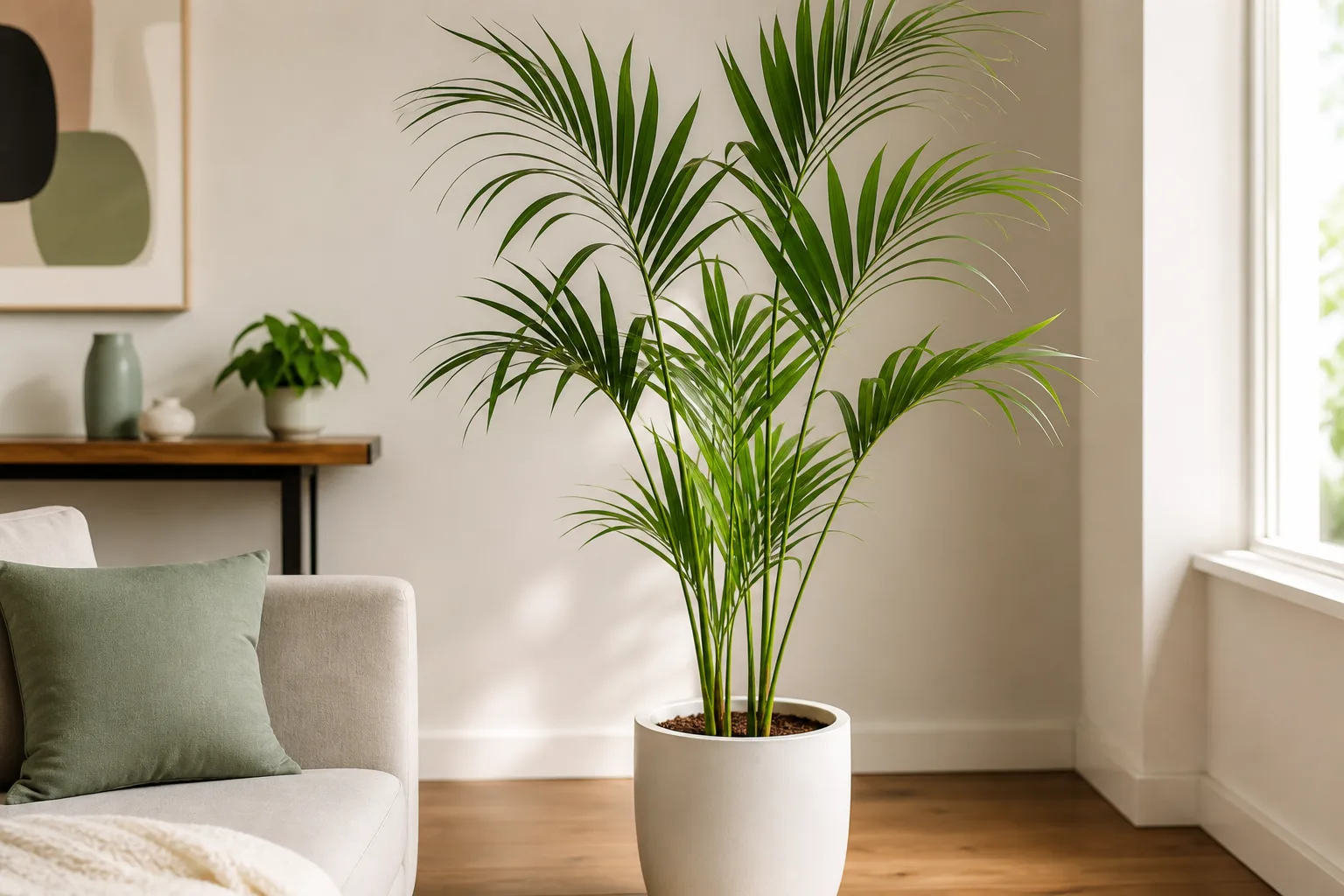
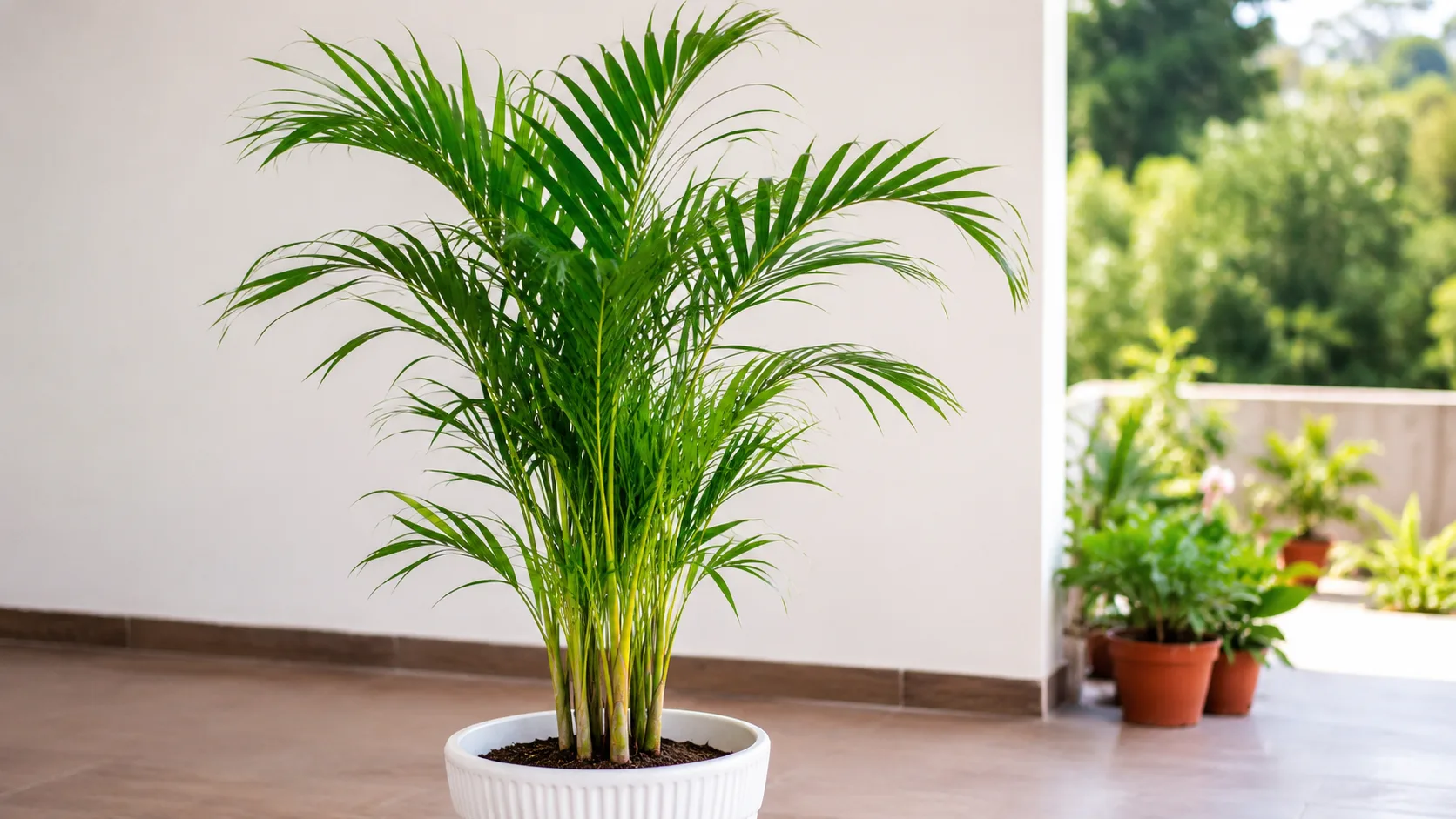
The Kentia palm (Howea forsteriana) is a slow-growing, single-stemmed palm from Lord Howe Island, valued indoors for its arching, dark-green fronds and tolerance of lower light than many palms. That tolerance is a safety net, not a reason to hide it in a dark corner: a brighter position usually supports better growth, while soggy soil and unnecessary root disturbance are the problems most worth preventing. The Royal Horticultural Society’s plant profile describes it as an evergreen palm with a solitary stem; Penn State Extension notes its slow growth and ability to live in lower-light interiors.
Most care decisions come down to observing the pot rather than following a fixed schedule. Check how quickly the mix dries, keep water moving out of the drainage holes, protect the fronds from harsh direct sun and cold drafts, and give the palm time to adjust before changing several conditions at once.
Quick Kentia Palm Care
| Need | Practical starting point |
|---|---|
| Light | Bright, filtered or indirect light; lower light is tolerated, but growth may slow. |
| Water | When the upper inch of mix feels dry in active growth; let the surface dry a little farther in cool, low-light winter conditions. |
| Pot and mix | A draining pot with an open indoor mix that holds some moisture without staying saturated. |
| Temperature | Keep winter nights near or above 16°C (61°F), away from cold drafts, air-conditioning blasts, and radiators. |
| Feeding | A modest houseplant or palm fertilizer during active spring and summer growth, following its label. |
| Repotting | Only when roots crowd the pot or the mix has broken down; move up one pot size and disturb roots as little as possible. |
Use this table as a starting point, then adjust to your room and container. A small palm in a plastic nursery pot, for example, will stay wet longer than a larger palm in a porous clay pot, while a plant in bright warmth will use water faster than one in a cool corner.
Expect slow, measured growth rather than a new frond every few weeks. Penn State Extension says indoor Kentias often remain around 2 to 3 feet tall, though size varies with age, light, and container. That makes a mature specimen a long-term floor plant, but not a good choice if you expect a small desktop palm to fill a room quickly.
Choose Bright, Filtered Light
Set a Kentia palm where it receives bright indirect light for much of the day: near an east-facing window, behind a sheer curtain, or a few feet back from a brighter south- or west-facing window. It can tolerate lower light than many indoor palms, but “tolerates” does not mean it will grow quickly or maintain dense foliage in a dim hallway. If new fronds arrive slowly and the palm leans toward the window, improve the available light gradually or add a suitable grow light.
The RHS indoor-palm guidance notes that Howea tolerates fairly low light, while also warning that strong sun through glass can scorch palm leaves. If you move a Kentia outside for summer, first place it in a sheltered, shaded position and increase exposure gradually; an indoor frond can burn when abruptly exposed to direct afternoon sun. Rotate the pot a small amount every few weeks if growth becomes one-sided, rather than shifting the palm between very different light levels every few days. A north-facing room can work if the palm is close to the window and the room stays bright; a plant several meters from any window may survive but is unlikely to grow well. In the Southern Hemisphere, use the same light test but remember that the strongest sun comes from the north-facing side.
Water by the Mix, Not a Calendar
Water when the top layer of mix is beginning to dry, not because a reminder says the plant is due. During bright, warm spring and summer weather, feel about an inch below the surface; if it is dry, water thoroughly. In winter or in a dim room, the palm uses water more slowly, so let the surface dry a little more before watering again while avoiding a bone-dry root ball.
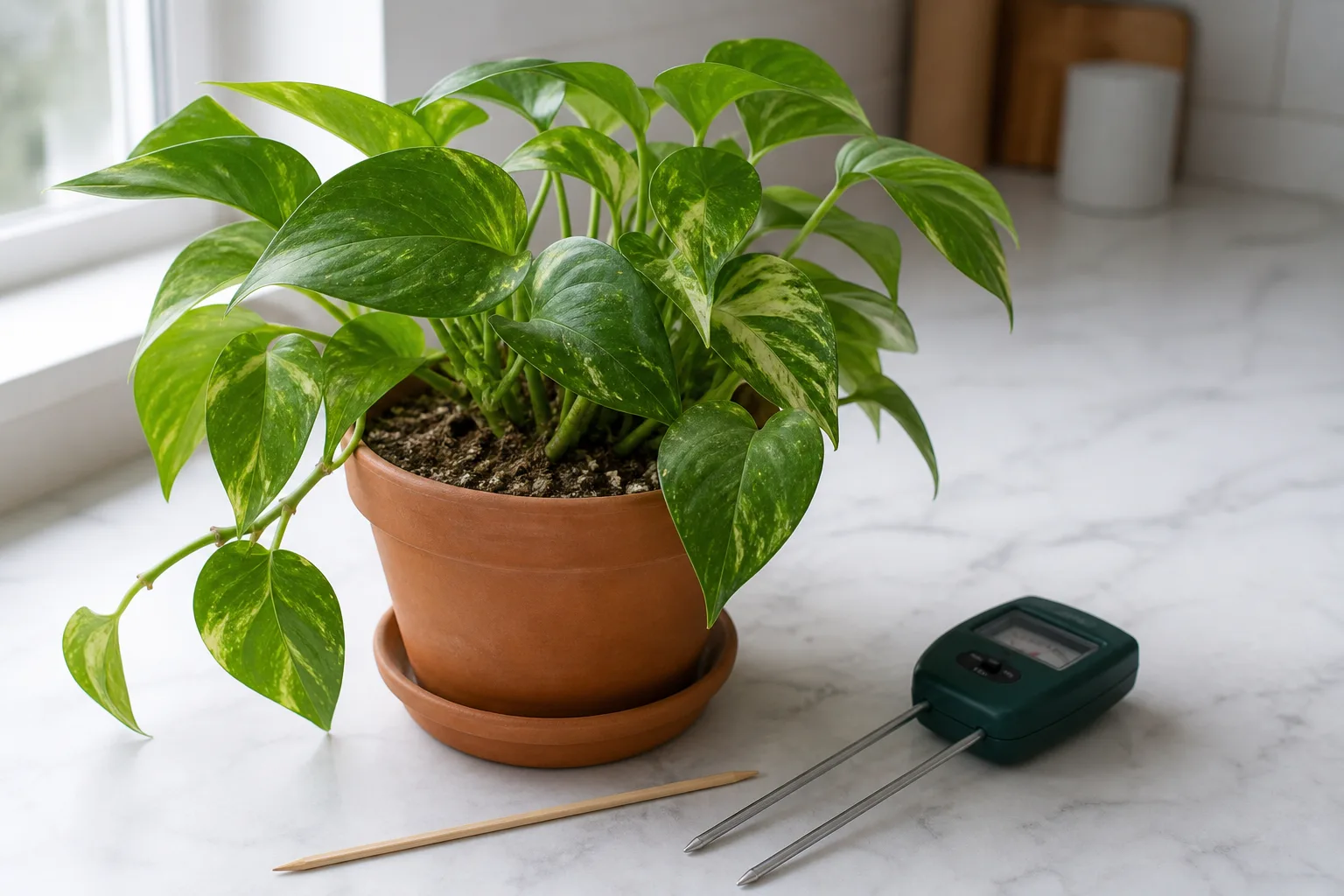
Apply water over the whole soil surface until it drains freely from the bottom, then empty the saucer or cachepot. A decorative cover pot can trap runoff even when the nursery pot itself has holes, leaving the roots in stagnant water. Better Homes & Gardens’ indoor watering guidance also recommends checking the mix rather than watering by habit and emptying collected runoff; for a Kentia, that check matters because both dry roots and persistently wet roots can produce yellowing or drooping.
If water runs down the pot wall without wetting the center, the mix may have become difficult to rewet. Add water slowly in two passes, allowing the first pass to soak in, and make sure the drainage holes are open. Do not leave the pot standing in a full saucer to “bottom-water” indefinitely; if you bottom-water, remove it after the mix has taken up moisture and let it drain.
Room-temperature tap water is normally a reasonable starting point. If you use water from a sodium-based softener or see recurring mineral crust along with damaged tips, switch to rainwater or another suitable unsoftened source and observe new growth before making more changes; Better Homes & Gardens notes that softened water can add salts to potting mix. Avoid buying distilled water or treating every brown tip as a water-chemistry problem without a visible reason.
Use an Airy, Moisture-Retentive Potting Mix
Kentia roots need both moisture and air. Choose a quality indoor potting mix that drains well, then improve a dense or fine-textured mix with a moderate amount of perlite, pumice, or fine orchid bark. The goal is not a gritty mix that dries in a day; it is a mix that wets evenly, drains excess water, and then loses moisture gradually. The RHS recommends a peat-free, loam-based mix amended with composted bark and leaf mould for glasshouse-grown Howea in its Kentia plant profile, while its indoor-palm advice gives peat-free multipurpose or houseplant mix as workable options.
Use a container with open drainage holes and do not try to compensate for a hole-free decorative pot by adding a layer of stones at the bottom. Drainage depends on water having a way out and the growing mix having enough air space; a stone layer does not turn a sealed pot into a reliably draining one. If you want to use a cachepot, keep the palm in a removable inner pot and pour out any water that collects in the outer container.
For a fresh mix, choose a normal indoor potting blend as the base and amend only if it packs down or remains wet for too long. The right particle size depends on your watering habits and room: a warm, bright room may call for a mix that holds a little more water, while a cool, dim room benefits from faster drainage. Kentias are commonly grown in ordinary peat-free houseplant mixes, so routine pH testing or adding lime is not necessary for a container plant with healthy growth.
Keep Temperatures Steady and Humidity Moderate
A normal, stable indoor temperature suits a Kentia better than repeated hot-and-cold swings. Keep it away from an exterior door that opens into cold air, an air-conditioning vent, a radiator, and hot glass in summer. The RHS indoor-palm guidance gives Howea a winter night minimum around 16°C (61°F), while Penn State Extension recommends keeping indoor palms away from drafty windows, doors, and vents. Avoid treating a brief temperature tolerance reported for outdoor plants as a safe target for a potted palm inside a home.
Moderate household humidity is usually enough. If a heater makes the room very dry, first move the plant away from the airflow and check its watering; if the room remains persistently dry, a room humidifier can help create steadier conditions. Misting is brief and does not replace watering or maintain room humidity for long. Wiping dust from the leaflets with a damp, soft cloth is more useful for keeping foliage clean, and it also gives you a chance to spot pests.
Feed Lightly During Active Growth
Feed only while the plant is actively making growth, usually in spring and summer in a temperate home. Use a balanced indoor-plant or palm fertilizer according to the label, at the low end of its recommended frequency; a slow-growing Kentia does not need heavy feeding to stay healthy. The RHS recommends a monthly liquid feed in summer for glasshouse-grown plants, while Penn State Extension suggests limited spring and summer feeding for indoor palms.
Do not fertilize a palm that is badly stressed, sitting in waterlogged mix, or freshly repotted. The RHS advises waiting six to eight weeks before feeding newly potted palms. A crust on the mix or pot rim can signal mineral or fertilizer-salt accumulation; pause feeding, water thoroughly so runoff can drain, and correct the cause before resuming. More fertilizer will not repair roots that are short of air or a frond damaged by direct sun.
Repot Only When Roots Need Room
A Kentia palm can stay in the same pot for years because it grows slowly and dislikes root disturbance. Repot when roots densely circle the root ball, emerge from several drainage holes, or the mix has degraded so much that it stays waterlogged or will not wet evenly. A single root showing at a hole is not, by itself, an emergency. Penn State Extension’s palm guidance recommends avoiding unnecessary container changes because palms are sensitive during repotting; the RHS likewise suggests repotting indoor palms when pot-bound rather than on a rigid annual schedule.
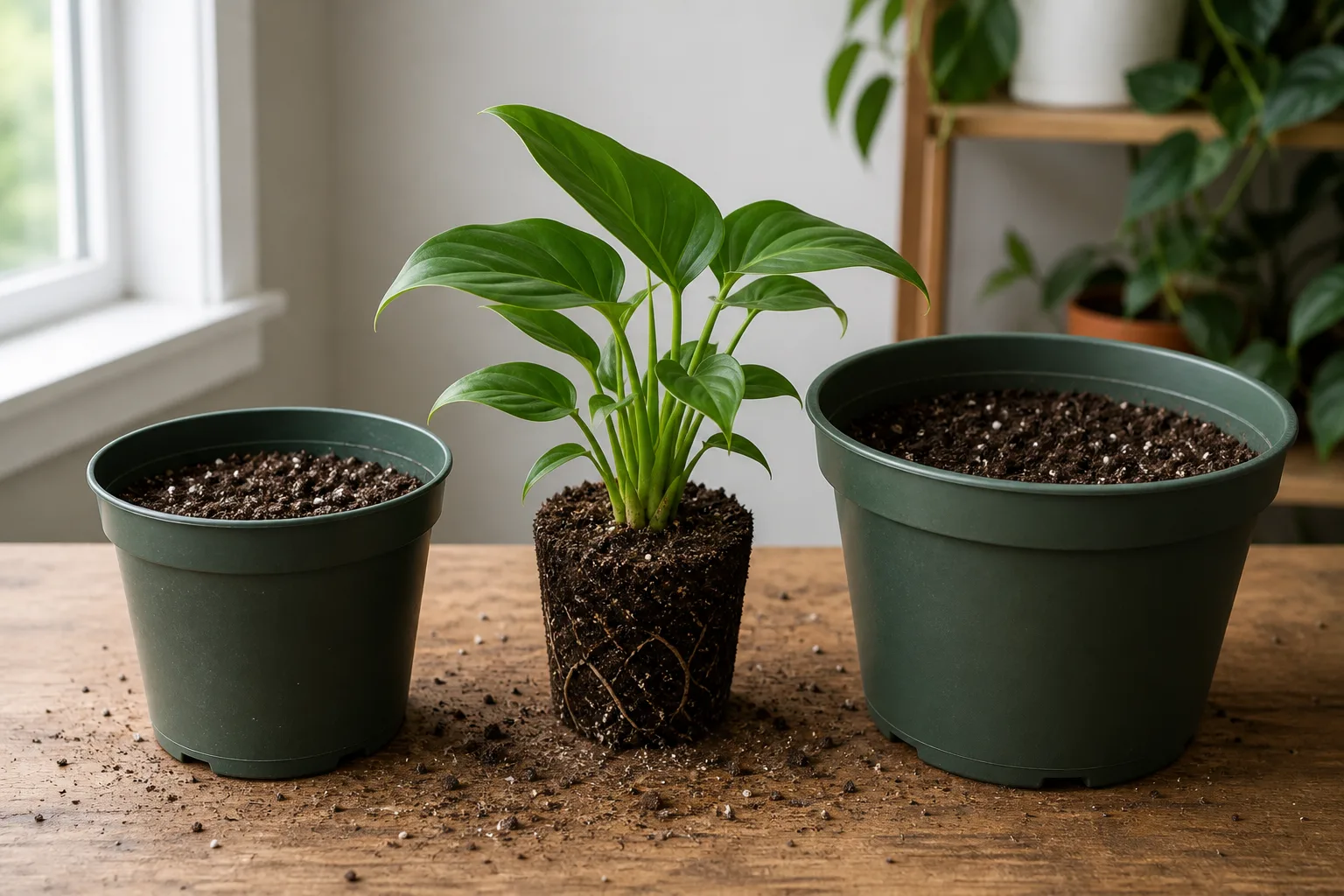
When the signs are convincing, choose a pot only one size larger, with drainage holes, and keep the palm at its original soil depth. Loosen only the roots that are circling tightly around the outside; do not shake all the mix away or aggressively tease apart the root ball. Water it in, let excess drain, and hold fertilizer for several weeks while it settles. For a large, stable palm, top-dressing with fresh mix can be a better choice than disturbing the entire root system.
Do not repot automatically the day a new palm comes home. First check that the inner pot drains, remove any standing water from its cover pot, and let the plant adjust to its new light and temperature for a few weeks. Repot sooner only if the nursery mix is staying saturated, the container has no working drainage, or roots are so dense that water cannot reach them evenly.
Prune and Clean the Fronds With a Light Touch
Kentia palms do not need routine shaping. Leave green fronds in place even if their tips are imperfect; removing healthy foliage reduces the plant’s working leaf area, and trimming every brown leaflet can make a naturally arching frond look ragged. Wait until a frond is fully brown and dry, then cut the stalk cleanly near its base with sharp, clean pruners without cutting into the trunk or central growing point. The RHS recommends removing old palm leaves by cutting rather than pulling.
Dust can settle between narrow leaflets, especially in a still room. Support a frond with one hand and wipe gently with a damp cloth, or rinse it with a soft stream of room-temperature water if the pot can drain freely. Avoid leaf-shine oils: they can coat the leaf surface, and Penn State Extension specifically advises cleaning palms with a damp cloth rather than using shine products.
Propagate With Patience, Not Routine Root Division
Kentia palms are generally propagated from seed, but seed-grown plants are a slow project rather than a quick way to make a matching plant. The RHS Kentia profile recommends sowing seed at not less than 19°C (66°F), and its broader palm propagation guidance says viability can decline within 8 to 16 weeks depending on the species. If you try this route, use a reputable source for fresh seed, keep the medium warm and evenly moist rather than saturated, and expect germination to take patience; do not count on a guaranteed timetable.
A pot sold as a full clump may contain several separate young palms planted together, rather than one plant with several trunks or offsets. Gardening Know How describes separating young plants from such a group, but a Kentia is slow-growing and its roots are sensitive to disturbance. For most owners, leaving the group intact is the safer choice; only attempt separation if the individual root systems are already distinct and you can divide them without tearing away most of the roots. It is not a dependable rescue method for a declining palm.
Grow Outdoors Only in a Warm, Sheltered Climate
In a frost-free climate, Kentia palms can grow outdoors in a protected, partly shaded site with free-draining soil. Gardening Know How places them in USDA zones 9b–11, but a zone label is a broad climate guide, not a guarantee for a windy, exposed garden or a pot whose roots chill faster than those of a planted specimen. They are also grown as patio-container plants in warm weather. In colder regions, keep the palm indoors year-round or take a container outside only after nights are reliably warm, then bring it back before cold weather returns.
Acclimate a houseplant to outdoor light over a week or more: begin in open shade, then allow brighter filtered light if the fronds stay unmarked. Protect it from strong wind, which can split or shred leaflets, and avoid placing it in direct sun during the hottest part of the day. Inspect the foliage and pot before bringing it indoors so you do not carry pests into the rest of your houseplants.
Diagnose Yellowing, Brown Tips, and Drooping
A single old lower frond that slowly yellows and browns can be normal aging. A pattern across several new or established fronds is more useful evidence: check soil moisture, drainage, recent moves, drafts, and light before changing fertilizer or adding humidity. Purdue Extension’s indoor plant care guide notes that both overwatering and underwatering can lead to yellowing and leaf drop, so the symptom alone cannot tell you to add water.
Brown tips and edges
Dry, crisp tips can follow prolonged dry soil, a very dry or hot air stream, fertilizer salts, or sun and cold stress. Start with the simplest checks: feel the mix below the surface, check for a white crust, and look for the side of the plant facing a window, heater, or vent. If the mix stays wet for many days, do not “fix” brown tips by watering more; improve drainage and reassess the roots if the pot also smells sour or the plant is collapsing.
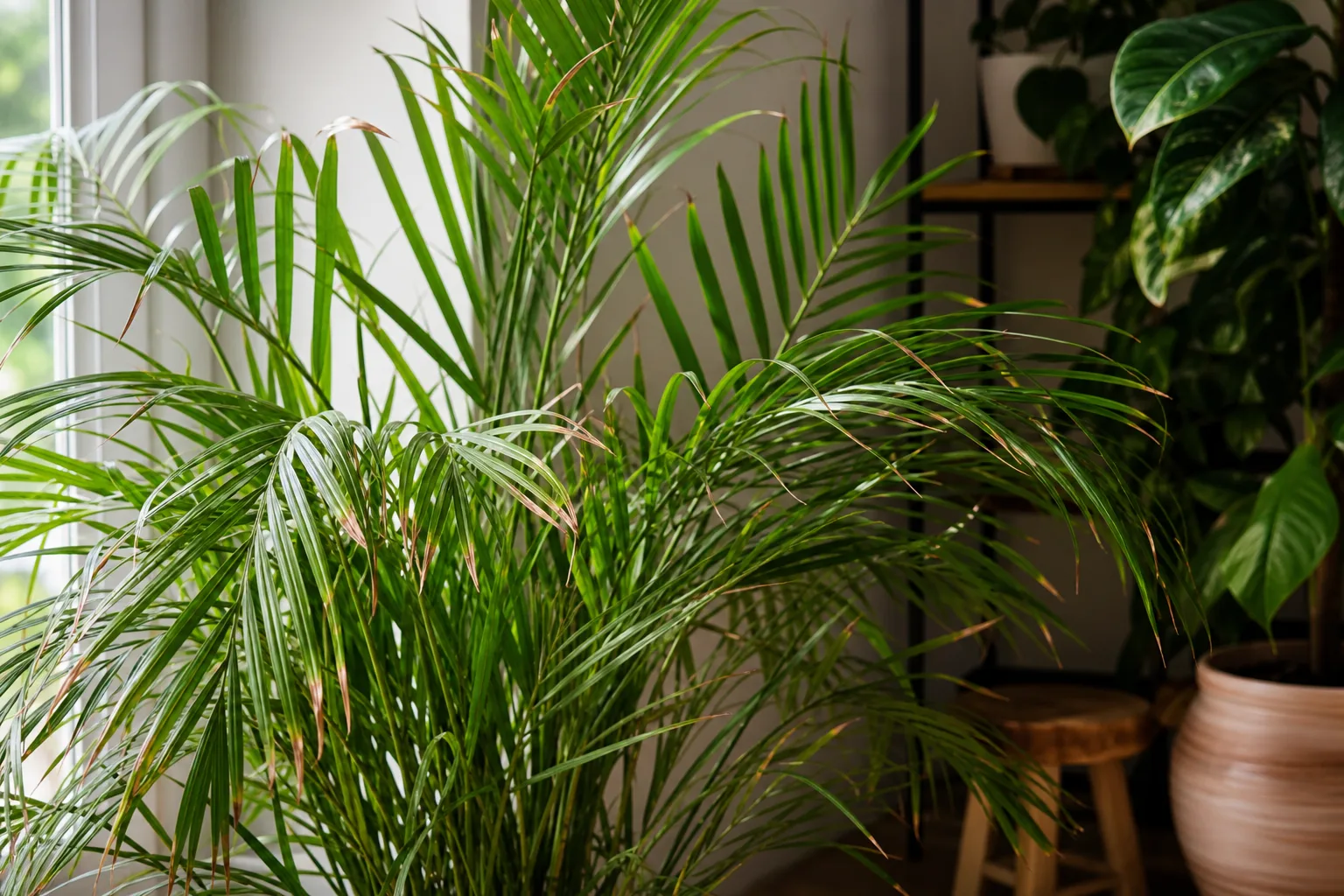
Brown ends will not turn green again. Once you have corrected the likely cause, you can trim the dry portion with clean scissors, following the natural shape of the leaflet and leaving a thin brown margin instead of cutting into healthy tissue. If browning continues on new fronds, reassess light, water quality, fertilizer, and root health one at a time; changing several variables at once makes the real cause harder to identify.
Yellow or drooping fronds
If the mix is dry well below the surface and the pot feels light, water slowly and thoroughly, then check whether the fronds regain firmness. If the mix is wet, heavy, or sour-smelling, stop watering until the upper layer dries and confirm that the pot drains. Persistent wetness plus soft, dark roots points toward root damage; remove the palm from the pot only when those signs justify it, trim clearly mushy roots with clean tools, and replant in fresh, open mix.
If one lower frond changes gradually while new growth remains firm and green, monitor it rather than repotting immediately. Several yellowing fronds, stalled growth, or damage that began after a move can point to broader light or temperature stress. Change the most obvious condition first and give the palm time to show a response; old damaged tissue will not recover even when care improves.
Inspect for Scale, Mealybugs, and Spider Mites
Check along the midrib and undersides of leaflets, at the base of each frond, and where stalks meet the trunk. Scale insects look like small fixed bumps, mealybugs like white cottony deposits, and spider mites may leave pale stippling and fine webbing. The RHS lists scale, thrips, and red spider mite among possible pests of Howea; Penn State Extension also flags spider mites and mealybugs on indoor palms.
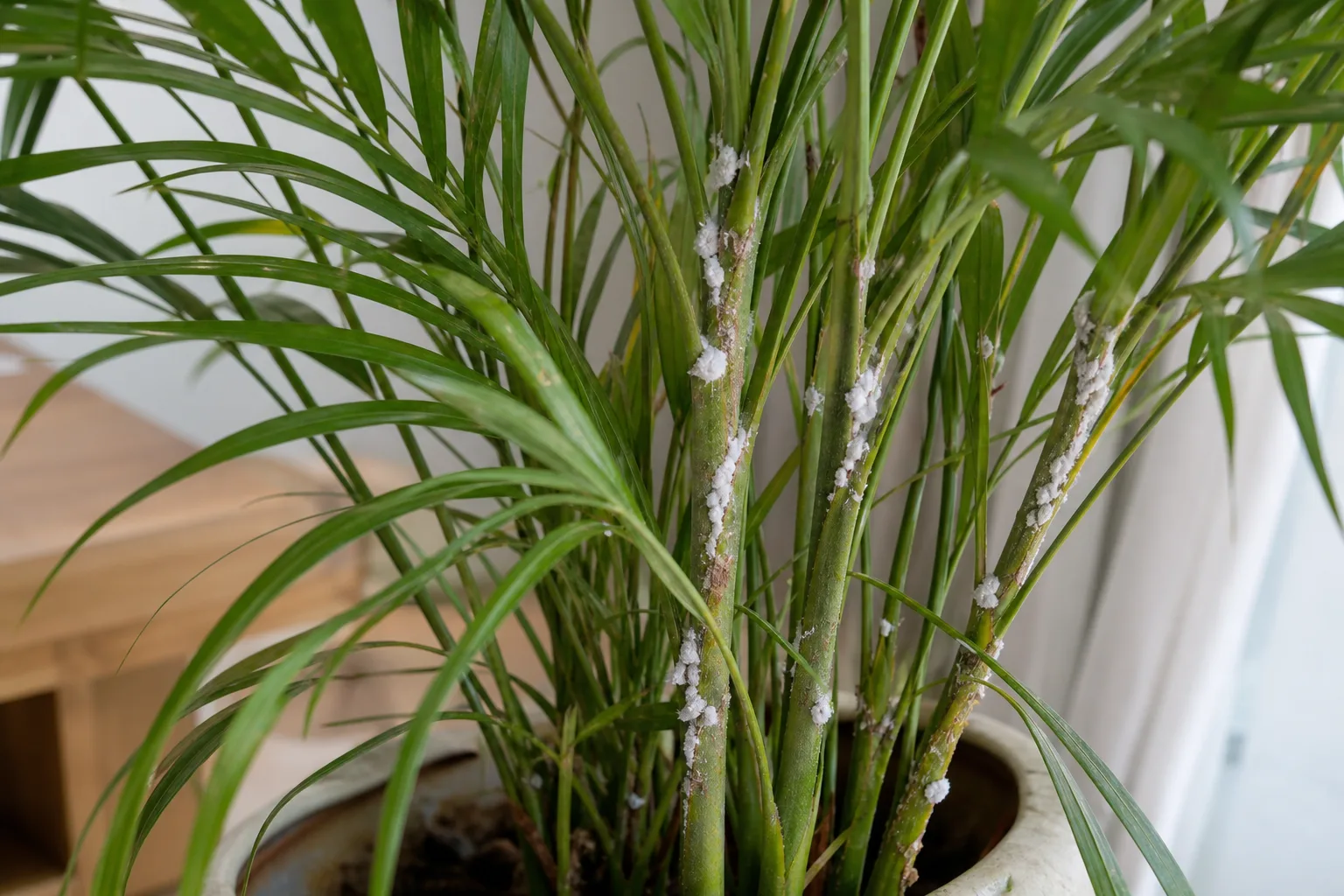
Isolate an infested palm, then wash or wipe the foliage to remove visible insects and dust. Inspect again every few days because eggs and hidden insects may escape a first pass. For a persistent infestation, use only a product labeled for indoor plants and the pest you identified, following its instructions and testing a small area first; avoid applying treatments in direct sun or to a stressed plant. Clean tools and the nearby shelf before returning the palm to a group.
Kentia Palm vs. Areca Palm
Both are feather-leaved indoor palms, so compare the whole plant rather than relying on one leaflet. A Kentia usually has darker, broader, more widely spaced leaflets on arching fronds and grows from a single slim trunk; an areca typically forms a denser clump of cane-like stems and looks lighter green. Penn State Extension describes the Kentia’s slender trunk and arching fronds; the RHS identifies Howea as solitary-stemmed.
| Feature | Kentia palm | Areca palm |
|---|---|---|
| Botanical name | Howea forsteriana | Areca / butterfly palm |
| Habit | One stem per palm; several seedlings may share a pot | Naturally clumping, with multiple cane-like stems |
| Fronds | Darker green, arching, and more open | Usually denser, with lighter green leaflets |
| Growth indoors | Slow; tolerates lower light than many palms | Forms a fuller, denser clump and often needs more space |
A nursery pot with several Kentias can look like an areca at first glance. Look at the stems: several similarly sized, separate seedlings in one pot still have the Kentia’s slender individual trunks, while an areca forms its characteristic clump of canes as it grows. This distinction matters when repotting because separating a Kentia group is a choice that risks root damage, not a routine pruning task.
Conclusion
For a healthy Kentia palm, choose the brightest filtered light you can offer, water only after checking the mix, and let excess water drain away. Keep its temperature steady, feed lightly during active growth, and repot only when the roots or deteriorating mix give you a clear reason.
When fronds brown or yellow, look for a pattern before reaching for fertilizer or water: check moisture, drainage, light, drafts, and pests in that order. A Kentia’s slow pace is part of its appeal, so patient, small adjustments—and leaving its roots undisturbed—usually serve it better than frequent interventions.