Environmentally Friendly Weed Control for Lawns and Beds
Use environmentally friendly weed control for the right job: see which methods suppress seedlings, which burn leaves, and how to avoid damage in your garden.
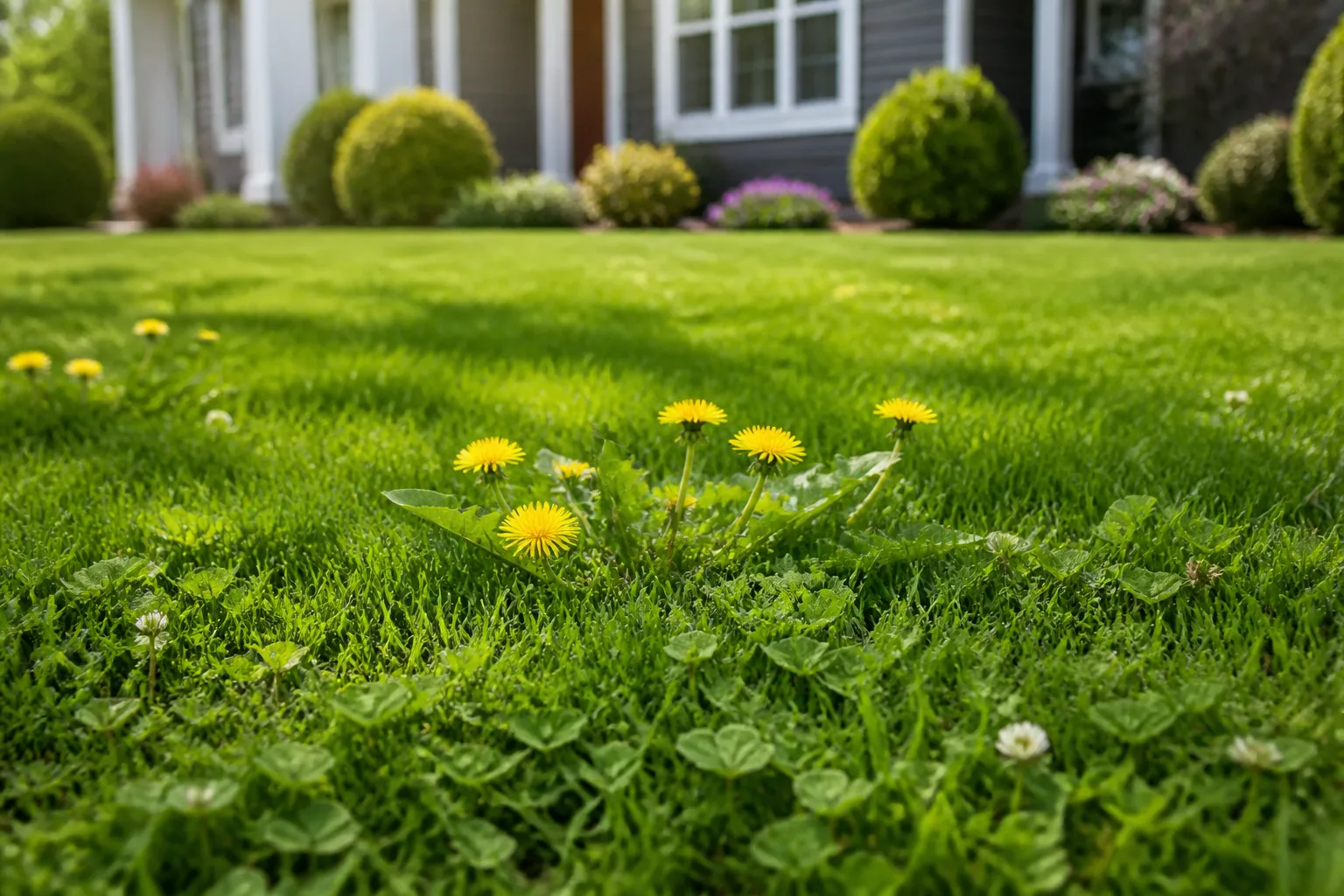
Weeds do not all respond to the same treatment. Pulling a young annual, digging out a dandelion taproot, suppressing a bed with mulch, and burning leaves with a contact spray solve different problems. The most environmentally friendly method is usually the one that controls the target with the least disturbance to the soil and the fewest effects on plants, people, pets, and nearby water.
That means starting with the weed, not the bottle. A low-impact plan combines identification, prevention, timely removal, and targeted treatment only when the first steps are not enough. The National Pesticide Information Center (NPIC) recommends nonchemical options such as hand removal and mulch as part of weed management, while NC State Extension notes that organic herbicides often work best on very small weeds and may have a narrow window for effective control. NPIC’s weed-control guidance and NC State Extension’s review of acetic-acid herbicides help explain why the order matters.
Start with the weed and your tolerance for it
Before removing anything, ask whether the plant needs to go. A single clover patch in a lawn, a few dandelions in a pollinator-friendly yard, or a flowering plant at the edge of a large bed may be acceptable if it is not invasive, poisonous, spreading into a neighbor’s space, or competing with a crop. Choosing a reasonable tolerance threshold prevents a small, harmless population from triggering a broad treatment.
If removal is necessary, identify the plant well enough to understand how it returns. Annual weeds live for one season and spread mainly by seed, so stopping seed production and removing seedlings early can reduce the next flush. Perennial weeds survive for multiple years using crowns, bulbs, rhizomes, stolons, or deep roots. Cutting off their leaves may make a bed look tidy for a week, but the underground plant can still send up new growth.
Also identify the site. A weed in a vegetable bed calls for a different approach than one in turf, gravel, a patio joint, or a bed you plan to replant. Ask whether desirable roots are close by, whether children or pets use the area, whether you can reach the root, and whether the soil is about to be replanted. A little scouting prevents the common mistake of using a nonselective solution where it can reach plants you want to keep.
Use this quick match before choosing a treatment:
| Situation | First method to try | Why it fits |
|---|---|---|
| A few annual seedlings in a bed | Hand-pull or shallow-hoe | Removes small plants before they set seed, with little soil disturbance |
| A dandelion or other taprooted weed | Loosen the crown with a hand weeder | Removes more of the root than snapping off the leaves |
| A perennial spreading through a small bed | Repeated root removal or a well-sealed cover | Contact sprays often leave underground growth alive |
| Bare soil between plants | Organic mulch or sheet mulch | Blocks light and reduces new seedlings |
| A sunny, vacant bed with a dense flush | Solarization in the hottest suitable season | Treats a broad patch without spraying individual plants |
| A few weeds in a pavement joint | Pull, scrape, or use a labeled spot treatment | Limits the treatment to a small, isolated site |
This is a starting point, not a guarantee: weed species, weather, soil moisture, and the distance to desirable roots can change what is practical. When in doubt, test a small area with a reversible physical method and check for regrowth before widening the treatment.
Prevent new weeds before they start
Prevention is not a promise of a weed-free yard; wind, birds, compost, and neighboring plants will continue to introduce seeds. It does reduce the number of seedlings that establish, which is often the easiest point in the life cycle to interrupt. Keep beds planted or mulched, fill bare spots in lawns, avoid unnecessary soil disturbance, and cut off flowering weeds before seed heads mature.
Soil condition helps desirable plants compete, but “improve the soil” is not a complete weed-control plan. Adding fertilizer without a soil-based reason can feed weeds as readily as the plants you want. Fix the specific weakness instead: cover exposed soil, use irrigation where it reaches crop roots rather than the entire bed, and correct compacted or chronically wet areas before reseeding or replanting.
Mulch bare soil without smothering plants
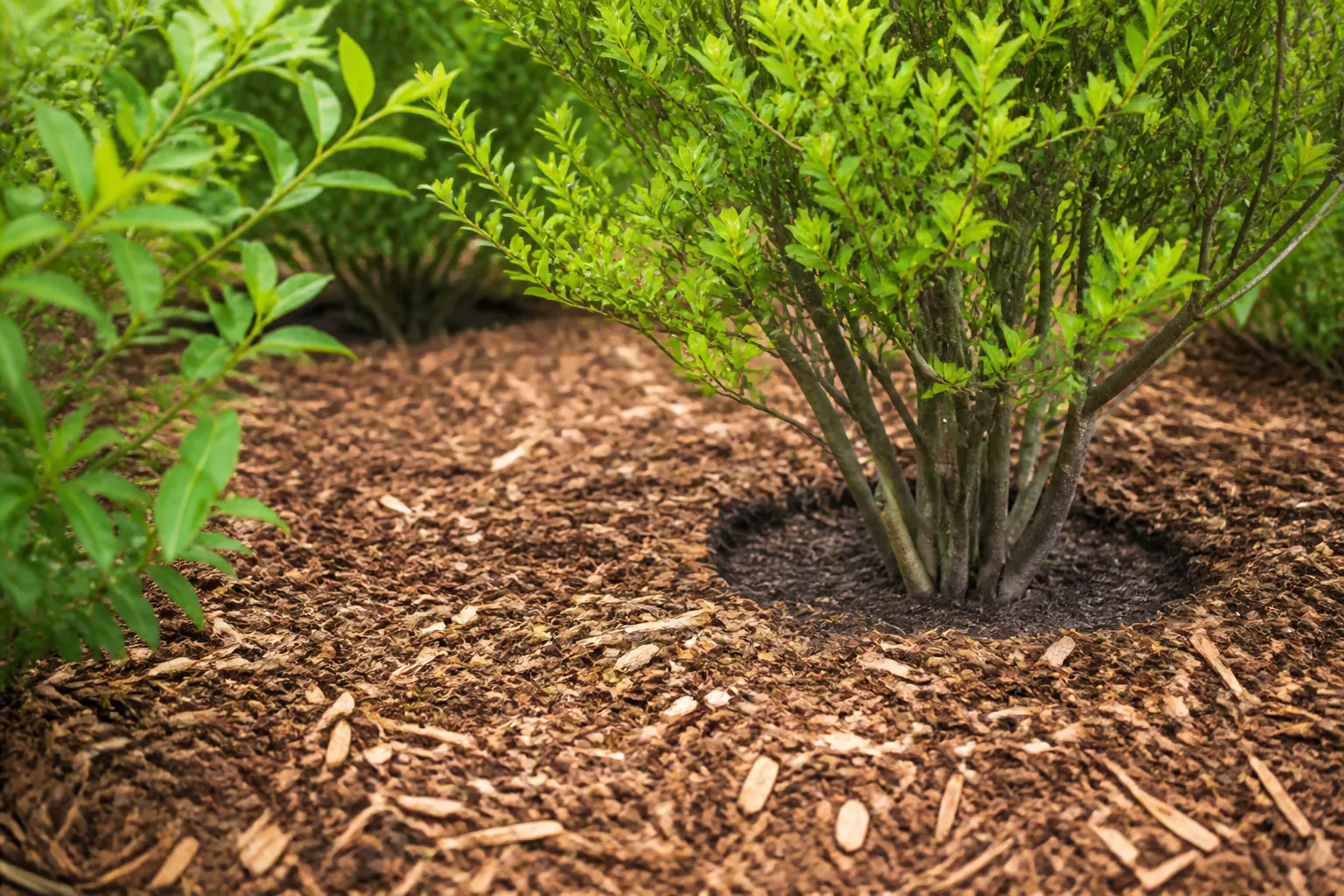
A consistent layer of mulch blocks light from many weed seeds and makes any seedlings that do emerge easier to pull. For most garden beds, an even layer about 2 to 3 inches deep is a useful starting point, using clean organic mulch such as shredded leaves, straw, or wood chips. Adjust for the material and crop, and shade the soil without burying crowns, stems, or shallow-rooted seedlings.
Mulch suppresses new seedlings much better than it kills established perennial weeds. Pull or cut back large weeds first, especially those with rhizomes or creeping stems, then mulch the open soil. Leave a gap around trunks and plant crowns so moisture does not stay pressed against living tissue, and renew the layer when it thins rather than piling new material into a dense mound. The Farmers’ Almanac guide to mulching for weed control describes how an adequate layer, clear space around stems, and seasonal replenishment affect results.
Organic mulch decomposes, which improves soil structure and adds organic matter but means it needs maintenance. Keep an eye on windblown seeds that germinate in the mulch itself; remove those small seedlings before roots reach the soil below. In a lawn, mulch is not a substitute for dense turf: repair bare patches and mow at the height appropriate for your grass so it can shade the ground.
Sheet mulch beds you are ready to replant
Cardboard or several layers of plain paper under organic mulch can smother an area that is currently vacant, such as a future flower bed or an overgrown strip you plan to redesign. Remove tape, labels, plastic, and anything that will not break down; wet the paper so it conforms to the ground; overlap edges so light does not leak through; and cover it with a breathable organic mulch. This is a slow suppression method, not an instant way to save a plant already growing in the spot.
Use it where you can wait for the cover to weaken weeds, then cut planting holes or remove the paper before planting as needed. Do not wrap the root crowns of existing perennials or cover plants you intend to keep. Persistent bindweed, grasses with rhizomes, and other spreading perennials can exploit gaps at edges, so inspect the perimeter and pull escaping shoots instead of assuming the barrier has eliminated the whole root system.
Living groundcovers can occupy exposed soil in established beds, but choose them carefully. A vigorous groundcover can become another weed if it spreads beyond the boundary, and dense planting can compete with young crops for water and space. Use a plant suited to the site, leave sufficient growing room, and keep pathways or bed edges accessible for maintenance.
Remove small weeds before they make seed
For a handful of seedlings, physical removal is often quicker and more precise than mixing or applying a spray. It also avoids coating nearby leaves or treating soil that does not need treatment. Make short, regular inspections after rain or irrigation; catching seedlings when they are small takes less force and disturbs less soil than waiting until they form a dense patch.
Take care with flowering weeds. Bag seed heads that are already mature, and do not drag them through the garden or add them to a cool home compost pile that may not heat enough to kill seeds. If a plant is invasive or its identity is uncertain, follow local disposal guidance rather than scattering cut stems or roots in a brush pile.
Hand-pull perennial weeds while the soil is damp
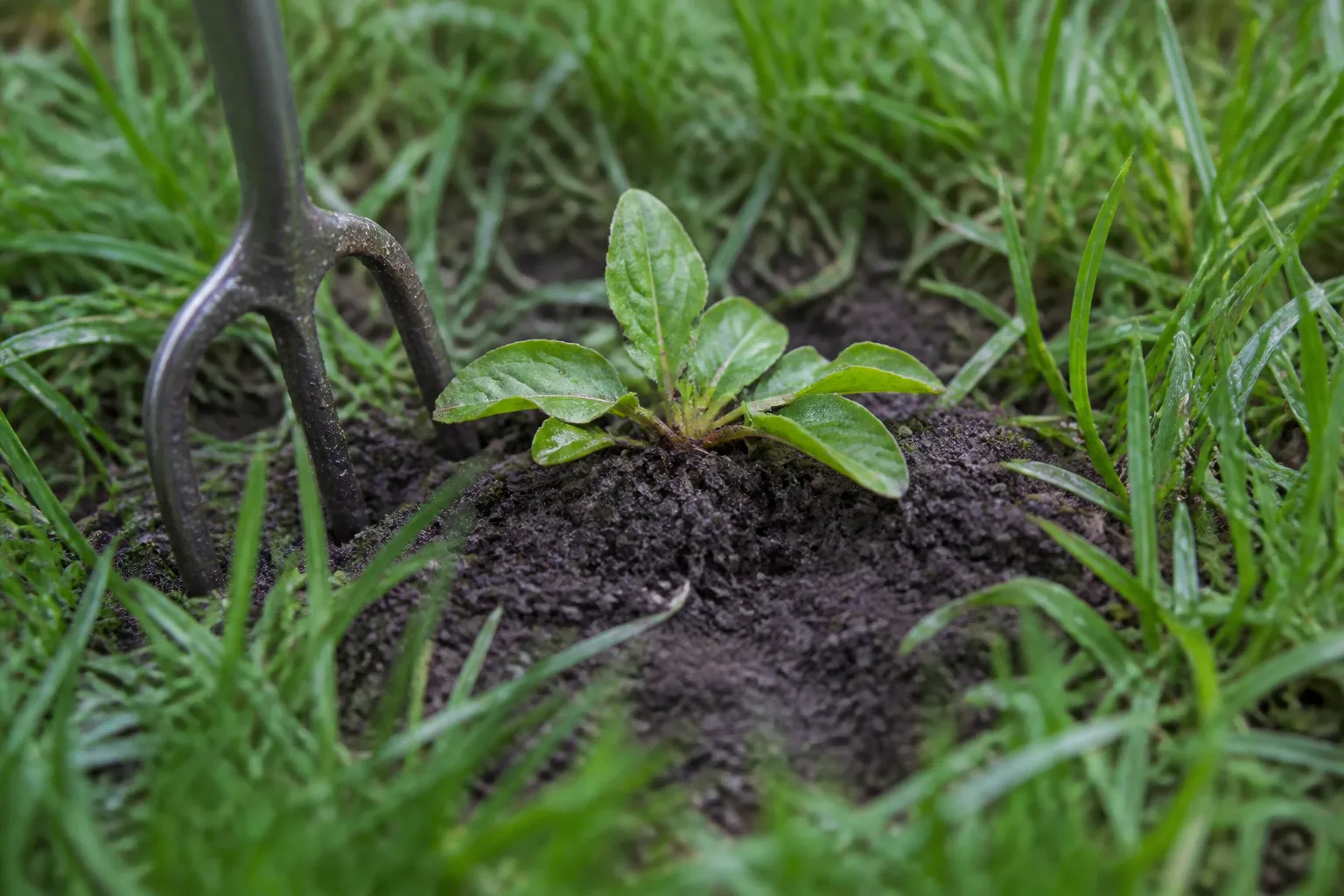
Moist soil loosens around roots, so a weed is less likely to snap at the surface when you pull slowly. Grip close to the crown and lift steadily; for a deep taproot, work a hand fork or dandelion weeder beneath the crown and lever the root out rather than yanking on the leaves. A small hole is usually less damaging than repeatedly pulling the top growth and leaving the plant’s storage root intact.
The goal is not always to retrieve every inch of a root. Some perennial weeds fragment readily, and aggressive digging can spread pieces or bring buried seeds to the surface. Remove what you can without turning the whole bed; then revisit the spot as soon as new shoots appear. Repeatedly removing those shoots weakens a perennial over time, but it takes persistence, and a dense infestation may need a dedicated smothering or replanting plan.
Pulling by hand works especially well in small vegetable beds, containers, and around ornamentals where a broad treatment could injure desirable plants. Wear gloves if you do not recognize the plant, and clean tools before moving from an infested patch to a clean one. For a large lawn, work a manageable section at a time rather than treating a weekend of weeding as a one-time rescue.
Hoe annual seedlings while they are small
A sharp hoe can sever tiny annual weeds just below the soil surface. On a dry, sunny day, skim the blade through the top layer around crops, then leave the severed seedlings exposed to dry. Shallow cultivation disturbs less soil and avoids bringing as many buried seeds up into the light, where they may germinate.
Hoeing is less useful once a weed has a substantial crown or underground runners. It can also injure shallow crop roots, so do not swing the tool indiscriminately close to seedlings. Work between rows while weeds are small, switch to hand-pulling near stems, and stop if the soil is wet enough to smear or clump. The point is to cut the weed, not churn the bed.
Smother a larger patch with solarization or a cover
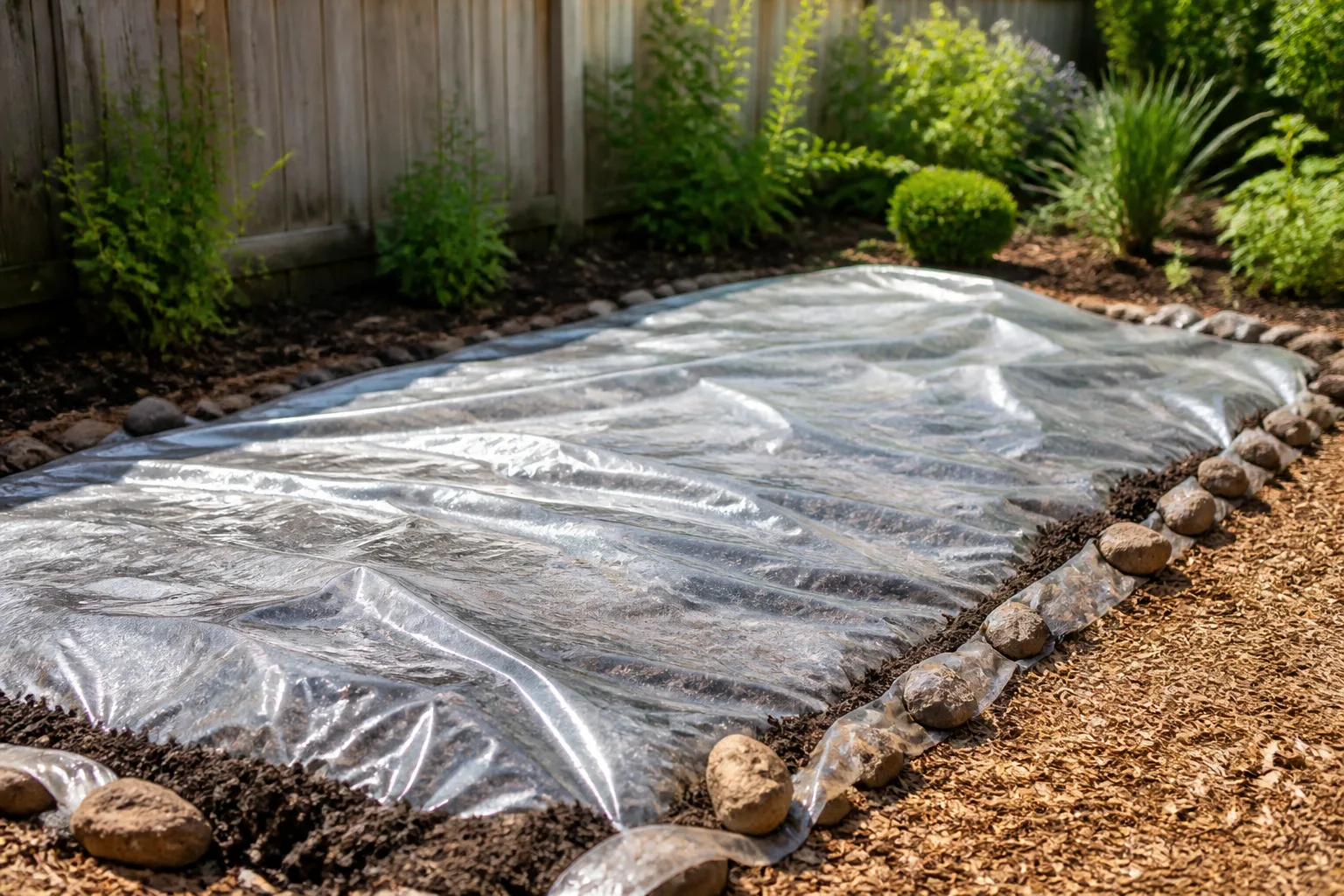
For a sunny, empty bed with many weeds, soil solarization can reduce weeds without a herbicide. Water the soil, stretch clear plastic tightly over it, seal the edges so heat stays trapped, and leave it in place for several weeks during the hottest, sunniest part of the season. The University of California Statewide IPM Program describes four to six weeks as a typical treatment window under strong summer conditions and notes that solarization is less reliable on deep-rooted perennial weeds, whose underground parts can survive below the heated layer. UC IPM’s solarization guide gives the detailed site and timing conditions.
Solarization is best when you have time before planting and can leave the plastic undisturbed. It will heat soil broadly, so it is not appropriate around established plants you want to keep. In cooler, cloudy, or windy locations, the treatment may be weaker or take longer; do not assume a short cover kills a mature rhizome or every buried seed.
Opaque covers such as tarps can suppress weeds by excluding light, a practice sometimes called occultation. Unlike clear-plastic solarization, the main mechanism is darkness rather than soil heating. It can be useful on a dormant or vacant patch, but results depend on how long the cover remains, how vigorous the weed is, and whether the edges stay sealed. Lift a corner and inspect before planting, then remove weakened material and keep watching for regrowth.
Plastic creates its own disposal issue and can be damaged by wind, animals, or sunlight. Use a reusable tarp if the job allows it, anchor the edges securely, and avoid unnecessary plastic for a few seedlings that a hand tool can remove in minutes. For broad areas with established grass or invasive perennials, compare smothering with staged mowing, digging, or repeated cutting; one treatment rarely solves every underground weed.
Match an organic herbicide to the job
Organic herbicides can have a place, but they are not the same as an environmentally harmless spray. Many are nonselective contact products: they injure the plant tissue they touch, including desirable leaves if drift or splash reaches them. NC State Extension notes that products based on acetic acid and other ingredients often need to be applied when weeds are very small, so correct timing and coverage matter more than the word “organic.”
Before buying a product, decide what result you need. If the aim is to stop annual seedlings in a gravel path, a labeled contact product may be a fit. If a perennial weed is returning from a large root or rhizome, burning its foliage once will not remove that underground reserve. If the patch is next to vegetables or a pond, a shielded hand treatment or physical removal may be more appropriate than spraying.
Vinegar and acetic acid burn foliage, not every root
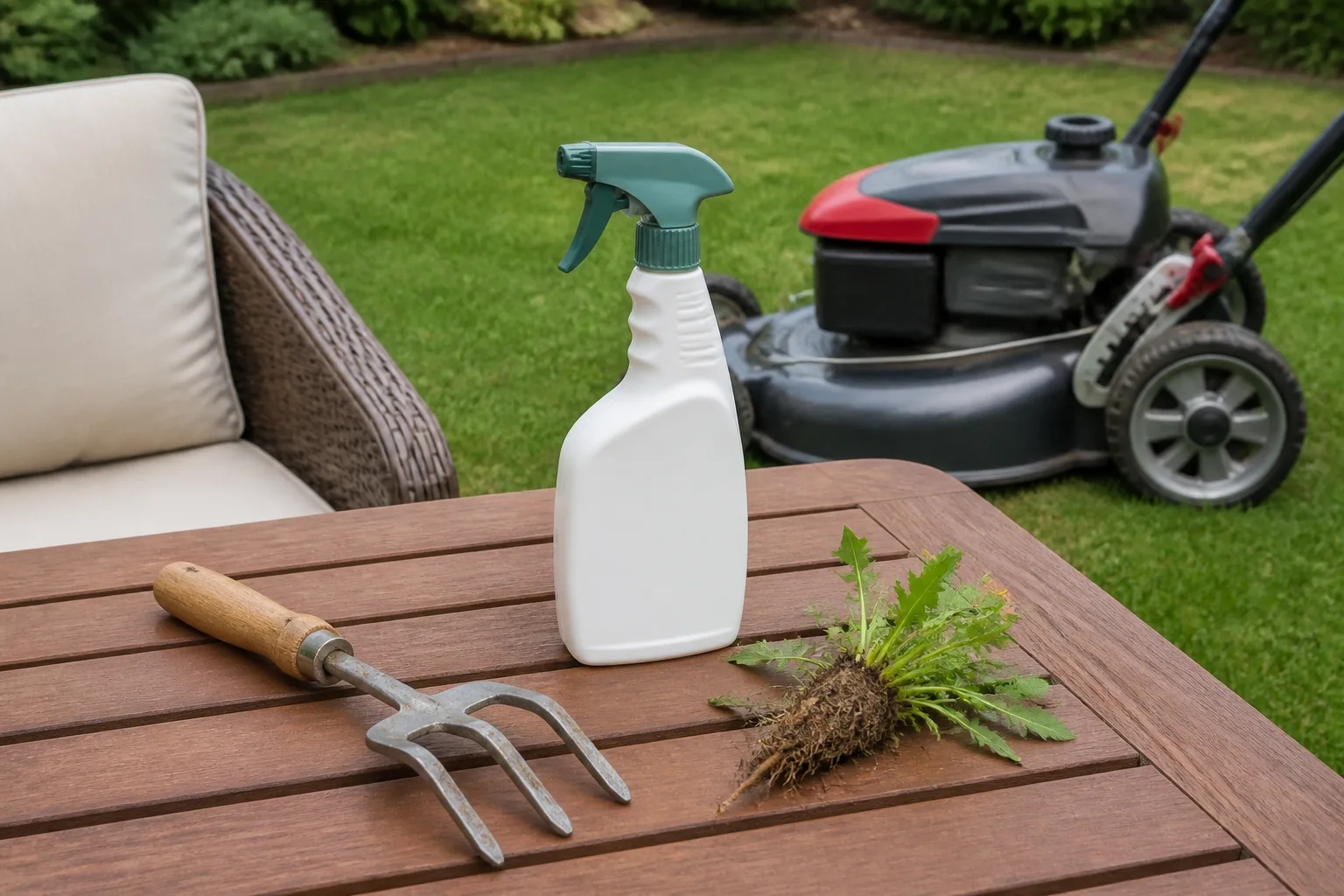
Household vinegar generally contains about 4% to 6% acetic acid; concentrated horticultural vinegar is much stronger. Acetic acid is a contact herbicide: it must reach the foliage, breaks down plant tissue, and does not travel through the plant to kill every root. It may visibly dry a small annual weed while a perennial with a deep taproot or creeping stem grows back. NPIC explains both the contact action and the difference between household vinegar and concentrated acetic-acid products in its vinegar weed-control safety guidance.
Do not treat concentrated vinegar as a stronger version of salad vinegar. NPIC warns that higher-concentration acetic acid can burn skin and cause permanent eye damage; vapor can irritate the nose, throat, and lungs. If you choose a product, select one registered for the intended use in your location, read the full label, and use the required protective equipment and application method. Avoid homemade mixtures: they lack tested directions, may injure nearby plants, and adding salt can make a site less suitable for future growth.
Even a properly applied contact spray is not selective. Shield desirable plants, avoid windy conditions, and apply only to the target foliage if its label allows that use. A brown top is evidence of tissue injury, not proof that the whole weed is gone. Recheck the plant after new growth would normally appear and switch methods if it returns.
Plant-oil herbicides work only where they make contact
Products containing clove oil, citrus-derived ingredients, or other plant-based acids can also scorch leaves on contact. They may be useful against young annuals on hardscape or in a place where a small, visible patch needs prompt treatment. They generally do not move through a mature plant’s entire root system, so perennial weeds can regrow and may require repeated physical removal or a different labeled approach.
Coverage and temperature can affect results, and these products can burn leaves of garden plants just as easily as weed leaves. Read the label for permitted sites, application rates, protective gear, and restrictions around edible crops, water, or pets. Do not assume a product is harmless to pollinators or soil simply because its ingredients come from plants; avoid applying any herbicide to flowers or where it can run off.
Corn gluten meal is a narrow prevention tool
Corn gluten meal is sold as a pre-emergent weed-control product, meaning its intended role is to interfere with the establishment of some germinating seeds. It does not kill mature weeds already growing in a lawn or bed, and it cannot distinguish a weed seed from a seed you have just sown. If you are overseeding turf or starting vegetables from seed, applying a seed-inhibiting product at the wrong time can work against your planting plan.
Treat it as a narrow option, not a general organic weed killer. Check whether a product is labeled for your site and target, follow its timing instructions, and compare the cost and expected benefit with simply mulching or pulling a small flush of seedlings. If the weed problem is an established perennial, use another method that addresses the living roots or the conditions allowing it to spread.
Skip risky home remedies and broad applications
A household ingredient can still affect plants, soil, water, and people. Homemade sprays often look inexpensive because the bottle is already in the kitchen, but cost should include repeat applications, damaged plants, replanting, and time spent treating the same roots again. Do not mix cleaning products, acids, salts, soaps, or other ingredients to create an untested pesticide.
Salt, borax, and dish soap are not universal weed killers
Salt can injure plant roots beyond the leaves you intended to treat, especially when dissolved and carried through soil or runoff. That makes it a poor choice for a garden bed, lawn, or any spot where desirable plants may grow later. A weed dying after a salty treatment does not mean the soil has recovered; if salt reaches the root zone, nearby plants can suffer too.
Borax recipes are also easy to overapply and are not a general-purpose lawn treatment. A narrow, weed-specific claim should not be translated into a broadcast recipe for a whole yard. Dish detergent is not a substitute for a labeled herbicide: it can disrupt leaf surfaces and may injure plants, but it does not reliably kill roots or prevent seeds from germinating. If a product is intended to kill weeds, use one labeled for that purpose rather than assuming household soap provides a safe adjuvant.
Boiling water and flame belong only in constrained sites
Boiling water can scald a weed in a pavement crack, but heat spreads to any foliage, roots, soil organisms, or small animals it touches. Carrying a kettle across a crowded bed adds a burn risk and makes it difficult to treat only a weed. Reserve hot water for a few isolated weeds in a hardscape setting where runoff will not reach plants you want to keep, and keep children and pets away until the area is cool.
Flame weeders have a similar site restriction and introduce an obvious fire hazard. They are meant to wilt small weeds rather than set vegetation on fire; they are unsuitable near dry mulch, leaf litter, fences, overhanging branches, or during dry and windy weather. Follow the tool instructions and local fire restrictions, and do not use a torch where a spark or heat plume can reach structures or combustible material.
For a path with recurring weeds, filling wide gaps, regrouting, or changing the paving surface may reduce the seedbed itself and make future removal easier. For a dense garden bed, mulch or careful hand work is usually more precise. Choose the smallest intervention that solves the site’s problem instead of escalating heat or chemistry because the first quick attempt failed.
Use a registered herbicide carefully when it is justified
There are situations where a targeted, labeled herbicide may cause less overall disturbance than repeated digging or ineffective home remedies. An established invasive patch, a difficult-to-reach area, or a persistent weed among plants that cannot be removed may justify considering a product. “Environmentally friendly” does not require refusing every herbicide; it means choosing deliberately, minimizing exposure, and following the legal label.
In the United States, check that the product label names the site and weed or use pattern you intend to treat. Read the entire label before purchase, including protective equipment, weather limits, re-entry instructions, storage, disposal, and restrictions near water or edible plants. NPIC emphasizes that the product label governs how a pesticide should be used and that more is not better; use only the stated rate and application method. In other countries, consult the equivalent local pesticide regulator and follow its requirements.
Prefer spot treatment to broadcast application when the label supports it, use a shield or applicator that limits drift, and avoid treatment before rain if runoff is possible. Do not apply near a storm drain, waterway, or well unless the label explicitly permits the use and gives appropriate precautions. Keep people and pets out of the area for the period listed on the label, and store remaining product in its original container. If you are unsure which weed you have or which product is appropriate, ask a local extension office or licensed professional before treating.
Build a seasonal routine that reduces repeat work
A small routine prevents the cycle of ignoring weeds until the yard needs a heavy treatment. Walk the beds, lawn edges, and paths once a week during active growth. Pull or hoe the smallest seedlings, remove flower heads before seeds mature, inspect the edges of tarps and mulched areas, and note which patches return from roots rather than new seed.
In spring, cover exposed soil, repair thin turf, and remove early seedlings while their roots are shallow. During summer, check pathways and bed edges after rain, keep mulch at an effective but plant-safe depth, and water the crops rather than every bare patch. Before seeds mature, cut or bag flowering weeds. At season’s end, clear diseased or seed-bearing material, then cover ground that would otherwise sit bare through winter.
Record the weed, site, method, and result. If an annual weed returns, it may have reseeded or been introduced in compost or mulch. If the same perennial sends up shoots from the same place, the treatment likely missed its roots or left a viable fragment. That distinction tells you whether to improve the barrier, change the timing, repeat shallow removal, or choose a different targeted treatment.
This approach also makes tolerance practical. You do not have to eliminate every plant that is not part of the original design. Remove weeds that threaten crops, spread aggressively, set unwanted seed, or create a safety problem; manage the rest at a level you can sustain. Simplify Gardening’s practical discussion of weed prevention and garden maintenance likewise emphasizes early intervention and soil cover, but the most effective schedule is the one you can repeat in your own yard.
Conclusion
The most reliable low-impact weed control comes from combining methods, not from finding one perfect natural spray. Identify the plant, decide whether it truly needs removal, prevent new seedlings with covered soil and healthy plantings, and use hand-pulling or shallow hoeing while weeds are young. For larger patches, consider sheet mulching or solarization where the site and season fit, and remember that established perennials can survive shallow treatments.
If a herbicide is necessary, choose a product labeled for that exact site and target, use the smallest practical treatment, and follow every safety direction. Vinegar, salt, soap, boiling water, and flame are not automatically safe or permanent because they are familiar or natural. A method is genuinely lower impact when it solves the actual weed problem while protecting the plants, soil, and people around it.