24 Shade-Loving Flowers for Gardens With Less Sunlight
Choose shade-loving flowers by light, moisture, climate, and mature size. Compare 24 annuals, perennials, and shrubs for beds under trees before you plant.
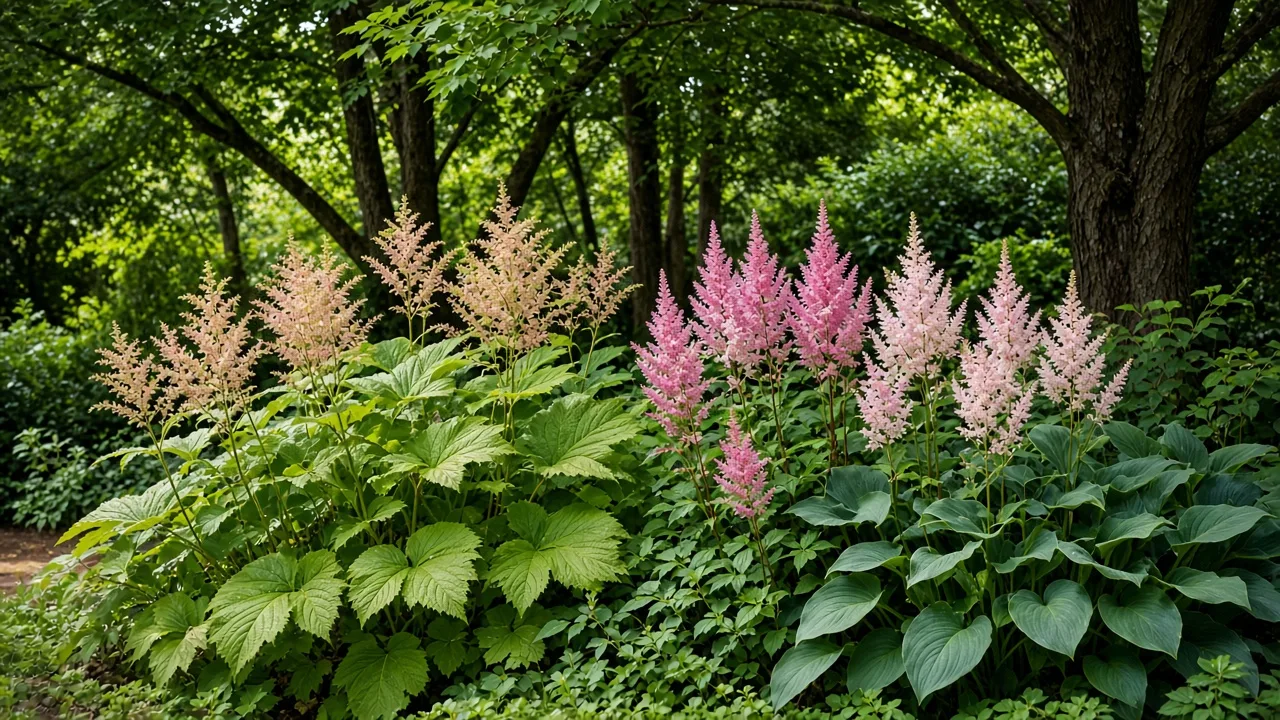
A shady garden can flower from late winter into fall, but “shade” is not one growing condition. A bed under a deciduous tree may get bright spring sun, filtered summer light, and dry soil; a north-facing wall may stay cool and evenly moist; a dense evergreen canopy can be both dark and dry. The right plant depends on the light that actually reaches the leaves, the moisture roots can access, your climate, and how much space the plant will occupy when mature.
The 24 flowers below include perennials, shrubs, annuals, and biennials. Some are reliable bloomers in partial or dappled shade, while others earn their spot mainly through foliage or need a brighter edge to flower well. Use the light and size notes as a starting point, then check the label for the species or cultivar sold in your region.
First, map the shade
Dappled, partial, and deep shade are different
The Royal Horticultural Society describes partial shade as roughly three to six hours of direct midsummer sun, dappled shade as filtered light through an open canopy, and heavy shade as fewer than about two hours of direct sun. These are useful guideposts, not universal label rules: sun strength, latitude, season, reflected light, and nearby buildings all change what a plant receives. A spot with gentle morning sun and hot afternoon shade can behave differently from one with the same number of hours at midday. (RHS shade gardening guide)
Watch the bed at a few times of day in spring and summer before choosing plants. Deciduous trees let in much more light before leaf-out, which is why woodland spring flowers can bloom and replenish energy early, then retreat as the canopy closes. NC State Extension notes that many native woodland wildflowers flower before tree leaves greatly reduce available light; summer and fall bloomers generally need filtered or dappled light rather than dense shade. (NC State Extension Gardener Handbook)
The soil under shade may still be dry
A roof, fence, or north wall can shade a bed without competing for its water. A mature tree is different: its roots intercept rainfall and draw moisture from the same soil where new flowers must establish.
Evergreen canopies also block winter and summer light, and dense shade often comes with compacted, root-filled soil. The RHS highlights this link between tree shade and dry soil, so do not assume a dark planting spot stays damp. (RHS shade gardening guide)
Feel the soil a few inches below the surface and note whether water drains after rain. Moist woodland plants such as astilbe, primrose, and foamflower need steadier moisture than a dry-shade edge can provide; lamb’s ear and established yellow corydalis are more forgiving of short dry spells but still need suitable light and drainage. A plant described as “shade tolerant” can survive less sun while flowering poorly, so separate survival from the show you want.
24 shade-loving flowers for different garden situations
These entries focus on where each plant earns its space. Approximate dimensions and USDA zones are typical garden ranges, not guarantees: species, cultivar, climate, and growing conditions can shift them. For a mixed plant group such as hydrangeas or primroses, check the tag for the exact species before you buy.
Woodland spring flowers
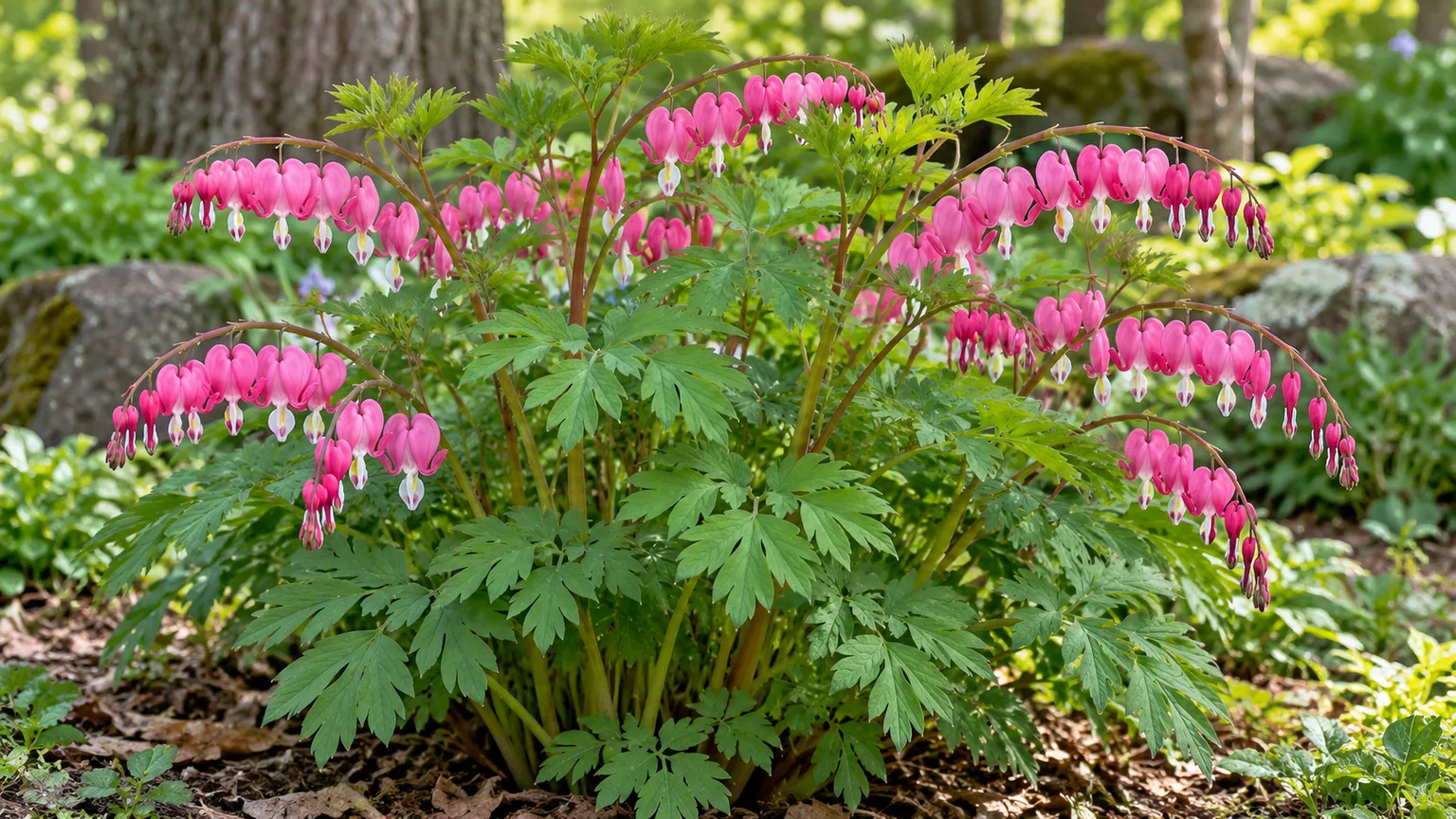
1. Bleeding heart (Lamprocapnos spectabilis) makes an arching spring display of pink or white heart-shaped flowers above finely divided leaves. Give it morning sun or dappled shade, humus-rich soil that stays moist but drains, and room for a clump about 2 to 3 feet tall and wide; it is commonly hardy in Zones 3–9.
It often fades or goes dormant by midsummer, so plant it beside hostas or ferns that expand after its leaves die back. NC State Extension notes that every part is poisonous if eaten and the foliage can irritate skin, so site it with that in mind. (NC State Extension plant profile)
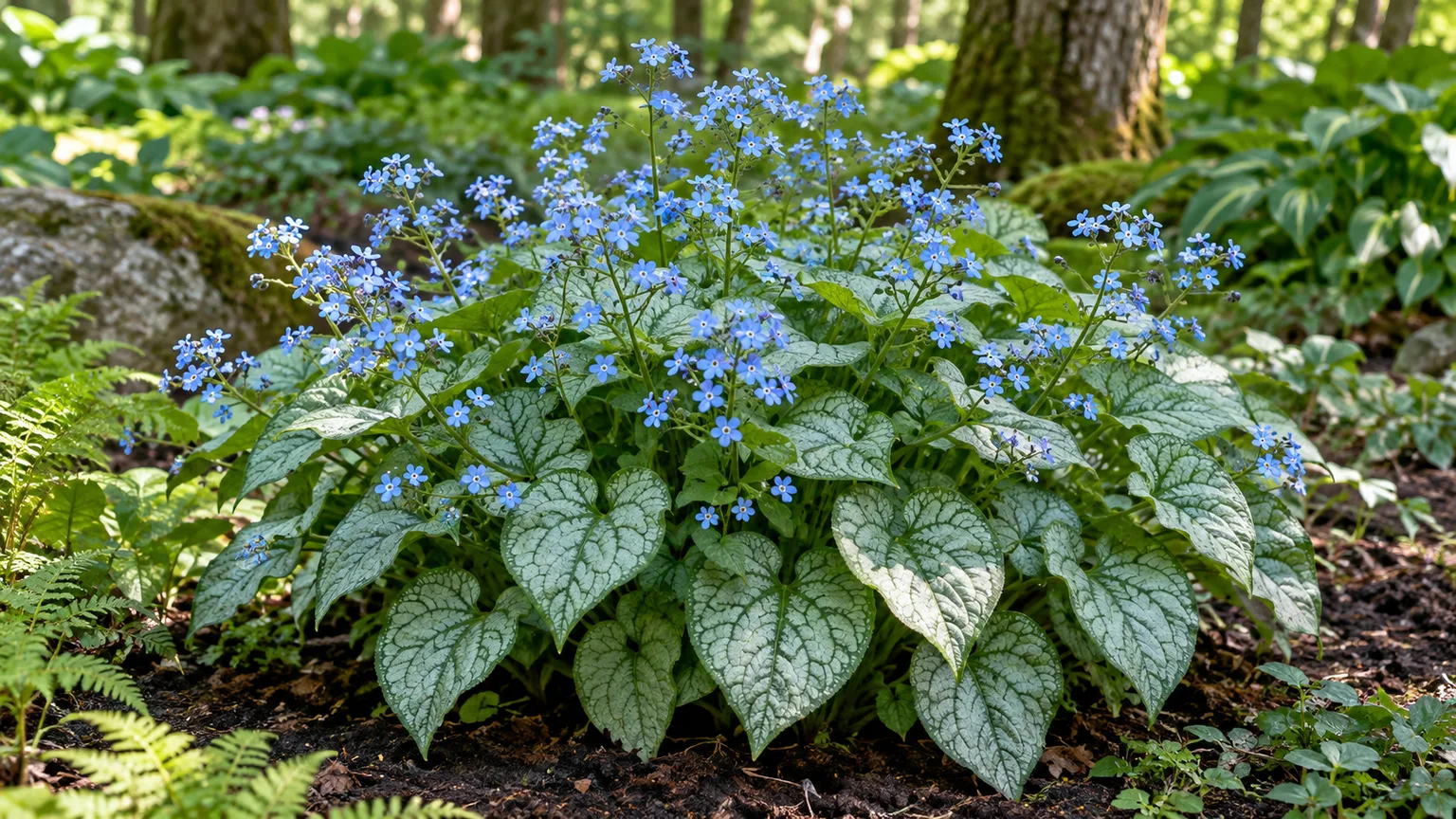
2. Siberian bugloss (Brunnera macrophylla) offers tiny blue spring flowers and heart-shaped leaves that keep a shady bed attractive after bloom. It grows roughly 12 to 18 inches tall and 18 to 24 inches wide in Zones 3–8, with best color in partial shade and evenly moist, well-drained soil.
Too much afternoon sun can scorch the leaves; in heavy shade, expect the foliage to do more work than the flowers. Silver-leaved cultivars can lift a dark corner without relying on bloom alone.
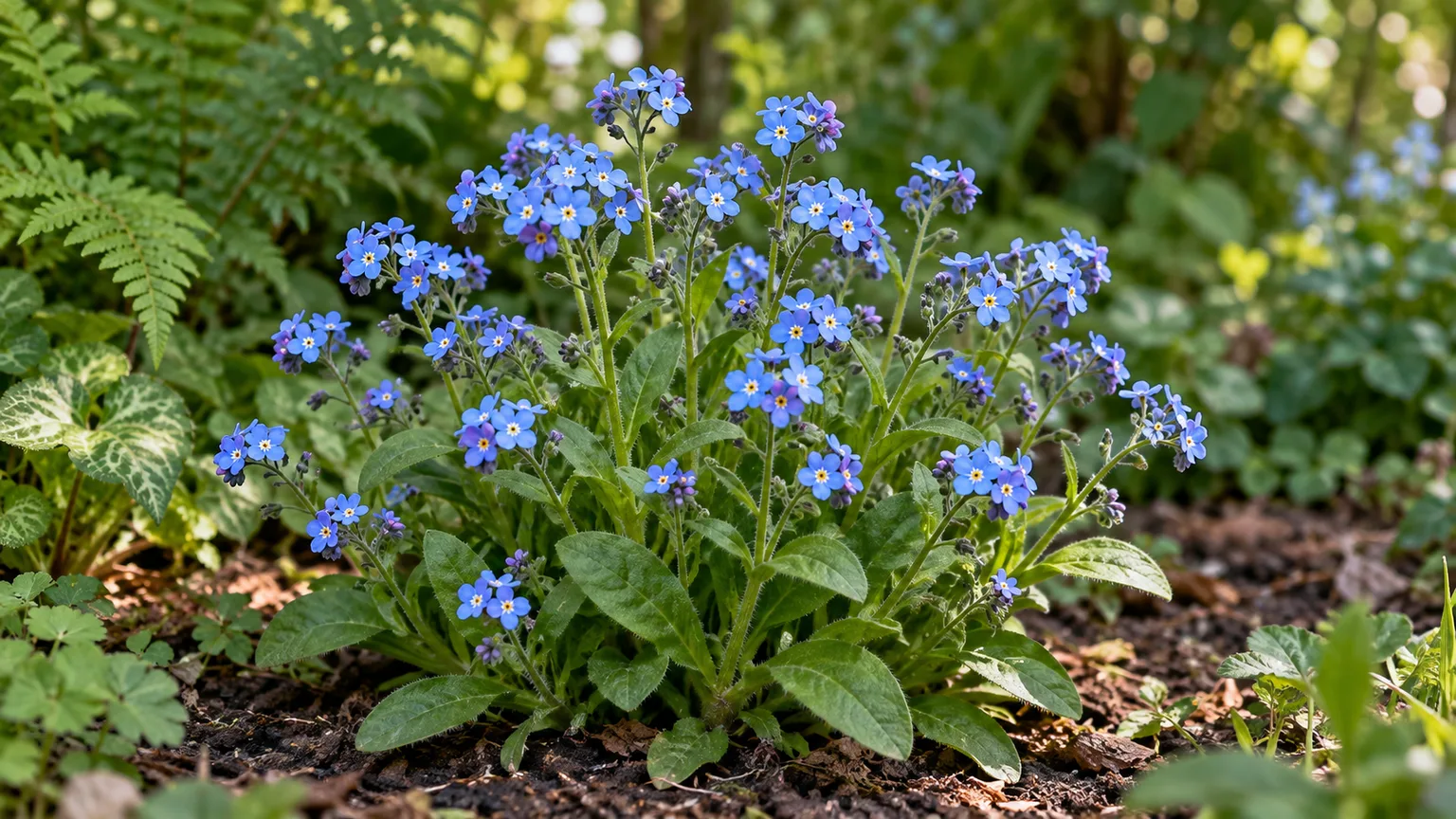
3. Forget-me-not (Myosotis sylvatica) is a short-lived biennial or perennial that covers a moist spring bed with blue flowers. Plants are usually about 6 to 12 inches tall and spread by seed; they suit cool, moist partial shade and are commonly grown in Zones 3–8.
Allow seedlings where you want a soft, natural patch, or remove spent flowers before seed forms if you need a tidy border. It is not a solution for hot, dry shade.
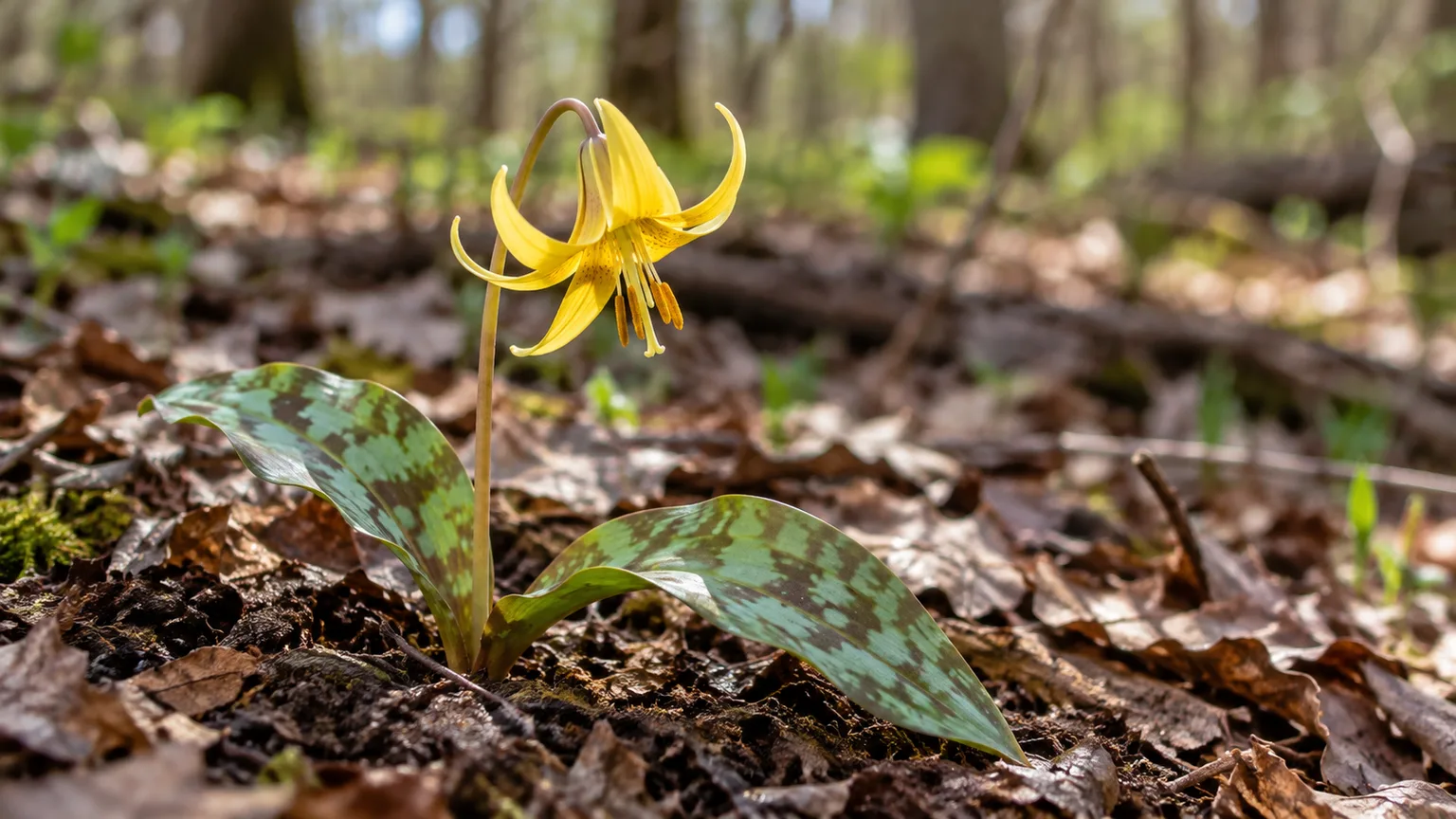
4. Dogtooth violet or trout lily (Erythronium spp.) is a spring ephemeral for a woodland floor, not a summer bedding flower. It grows from a bulb-like corm, typically only 4 to 12 inches tall, and likes dappled shade, leaf-rich soil, and steady moisture while it is actively growing; many garden species suit Zones 3–8.
The foliage naturally disappears after flowering as the plant goes dormant, so mark its location and avoid digging there later in the season. Give colonies time to settle rather than expecting an instant carpet.
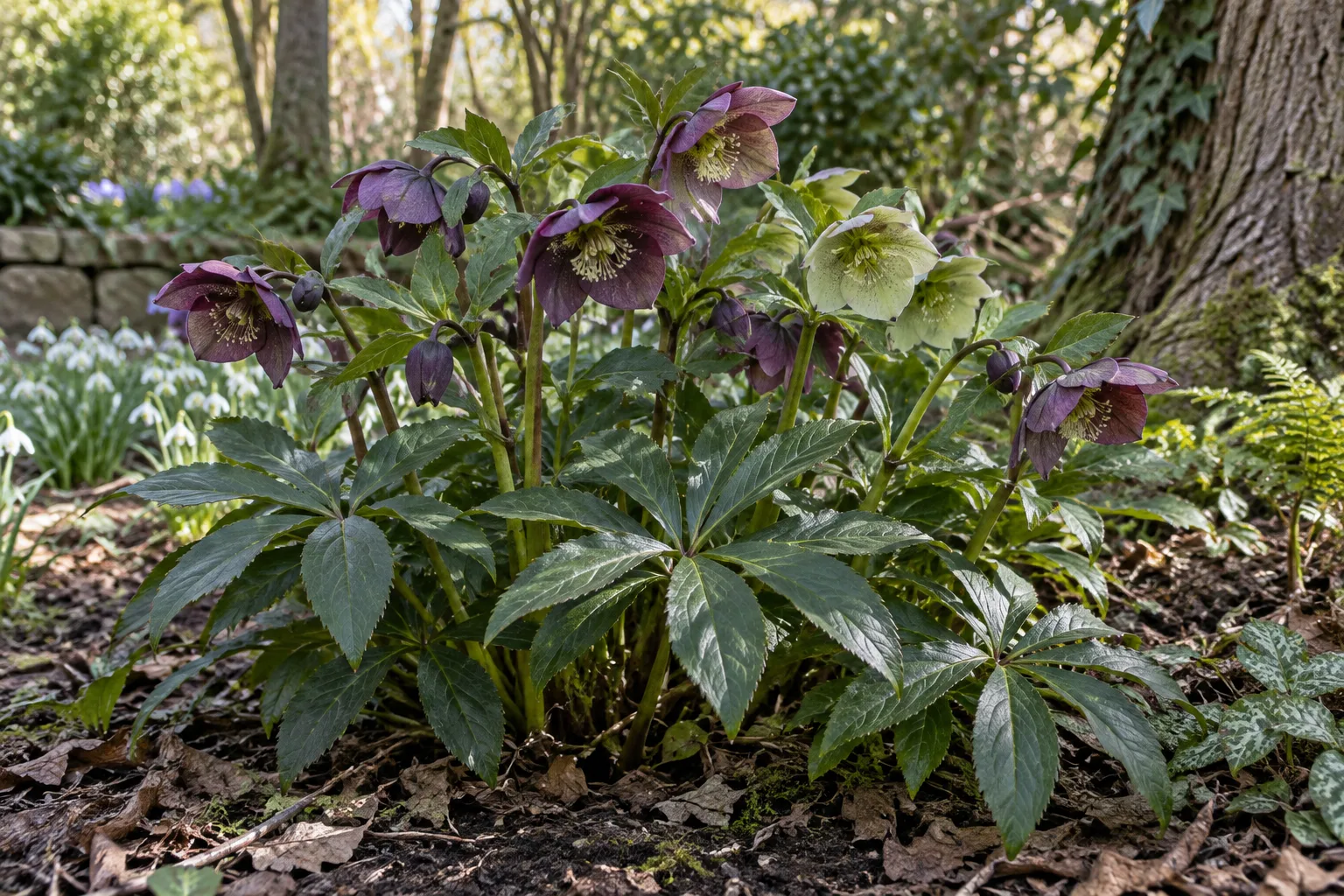
5. Hellebores (Helleborus spp.) bring early flowers when many shade plants are still dormant. The commonly grown Lenten rose hybrids form evergreen or semi-evergreen clumps around 12 to 18 inches tall and wide, often hardy in Zones 4–9; they prefer partial shade and well-drained soil that does not stay waterlogged.
Their flowers can last for weeks, but the exact season depends on winter temperature and cultivar. Keep the plant away from nibbling pets and children, and use gloves if your skin reacts to plant sap.
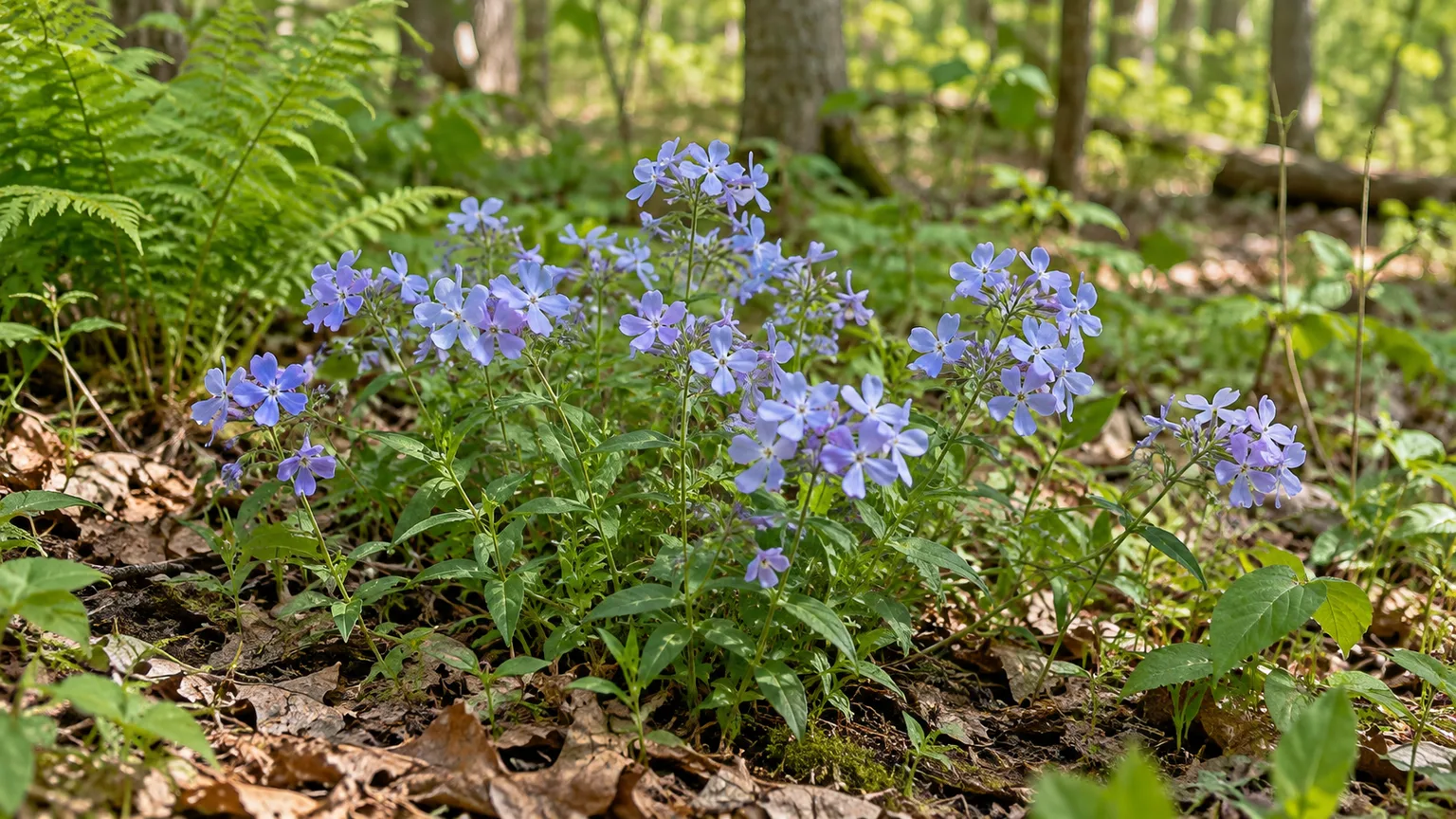
6. Woodland phlox (Phlox divaricata) is an eastern North American native with fragrant blue, lavender, pink, or white spring flowers. It grows around 6 to 15 inches tall and slowly spreads into a loose mat; Wisconsin Horticulture Extension gives a broad hardiness range of Zones 3a–8b and recommends partial shade with rich, moist, well-drained soil.
It can tolerate some dryness once established, though flowering and foliage are usually better with moisture. Its open habit is lovely at a path edge but does not smother weeds like a dense groundcover. (Wisconsin Horticulture Extension)
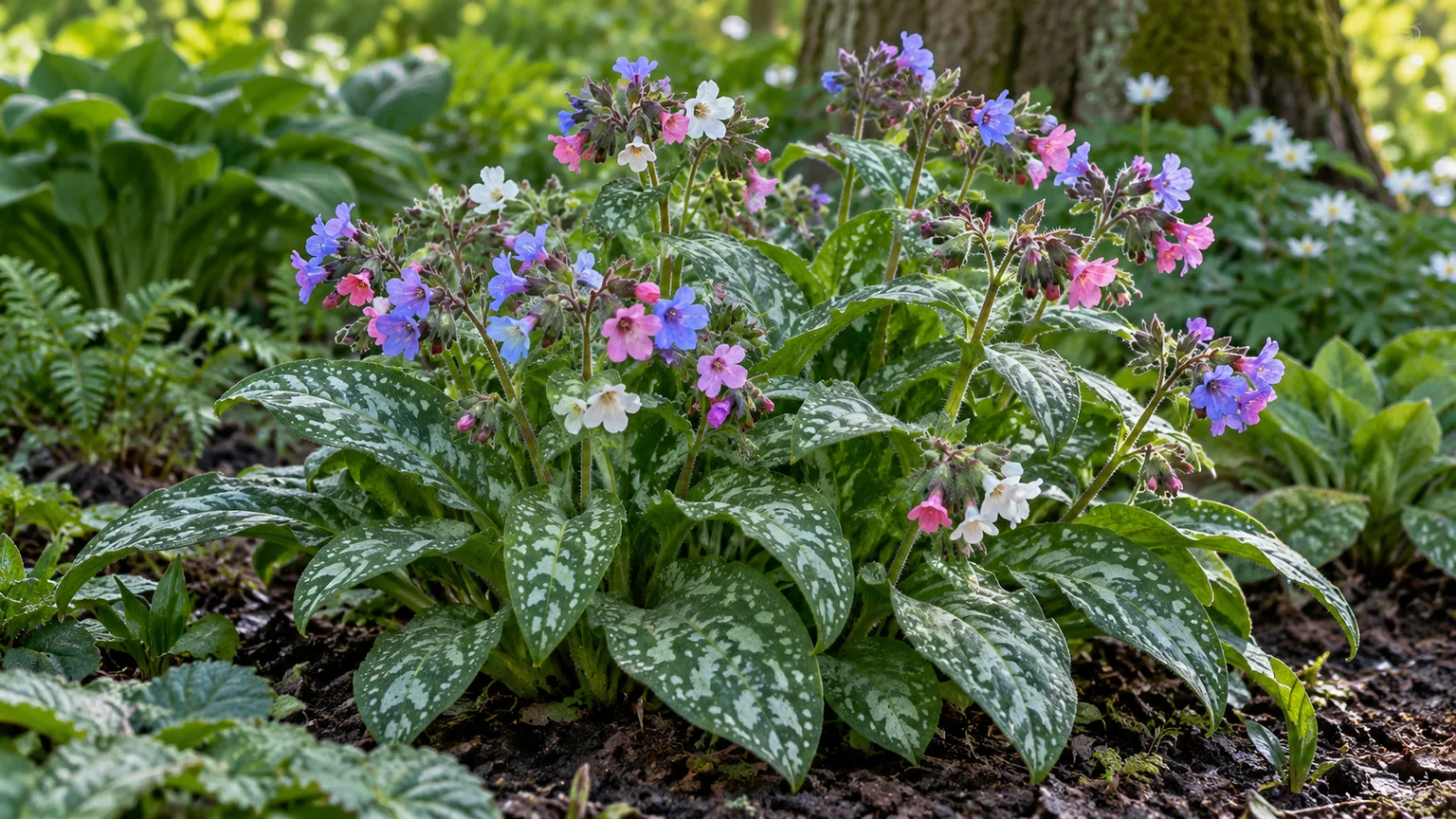
7. Lungwort (Pulmonaria spp.) pairs spotted or silver-marked leaves with clusters of pink, blue, or white flowers in early spring. Most varieties stay about 8 to 14 inches tall and spread 18 to 24 inches in Zones 3–8; choose cool partial or dappled shade and moist, well-drained soil.
It makes a useful front-of-border plant because its leaves remain after flowers fade. Give it more light in cool regions if bloom is sparse, but protect the foliage from hot afternoon sun.
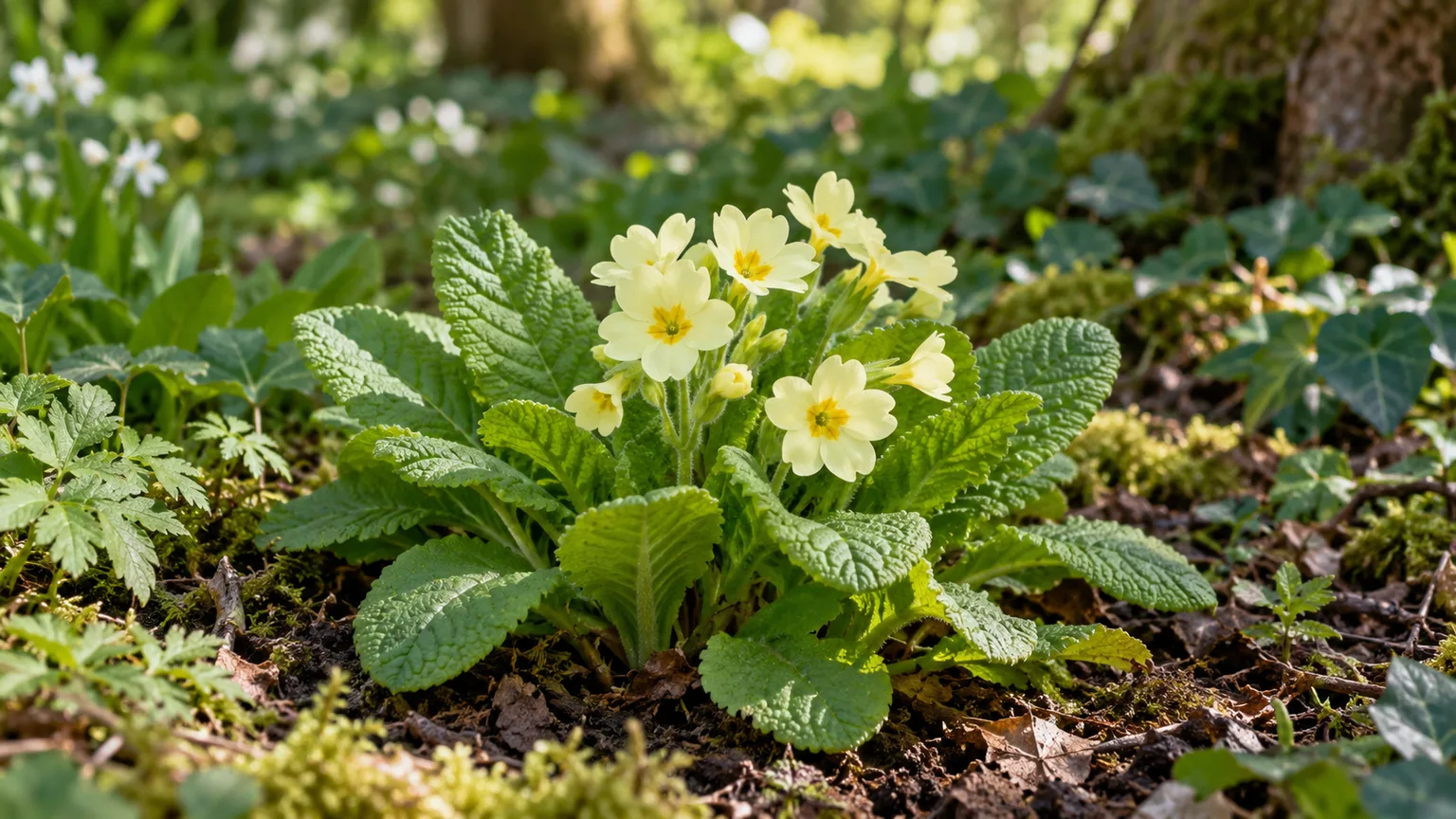
8. Primrose (Primula spp.) is a broad group, so its needs depend on the species and cultivar. Many garden primroses grow 6 to 12 inches tall and wide in Zones 3–8, flowering in spring in partial shade with cool, consistently moist soil; bog species need more water, while some tolerate brighter sites.
Choose by the plant label rather than assuming every primrose thrives in deep shade. If a plant wilts repeatedly between waterings, move it to a cooler, more moisture-retentive pocket rather than keeping the crown soggy.
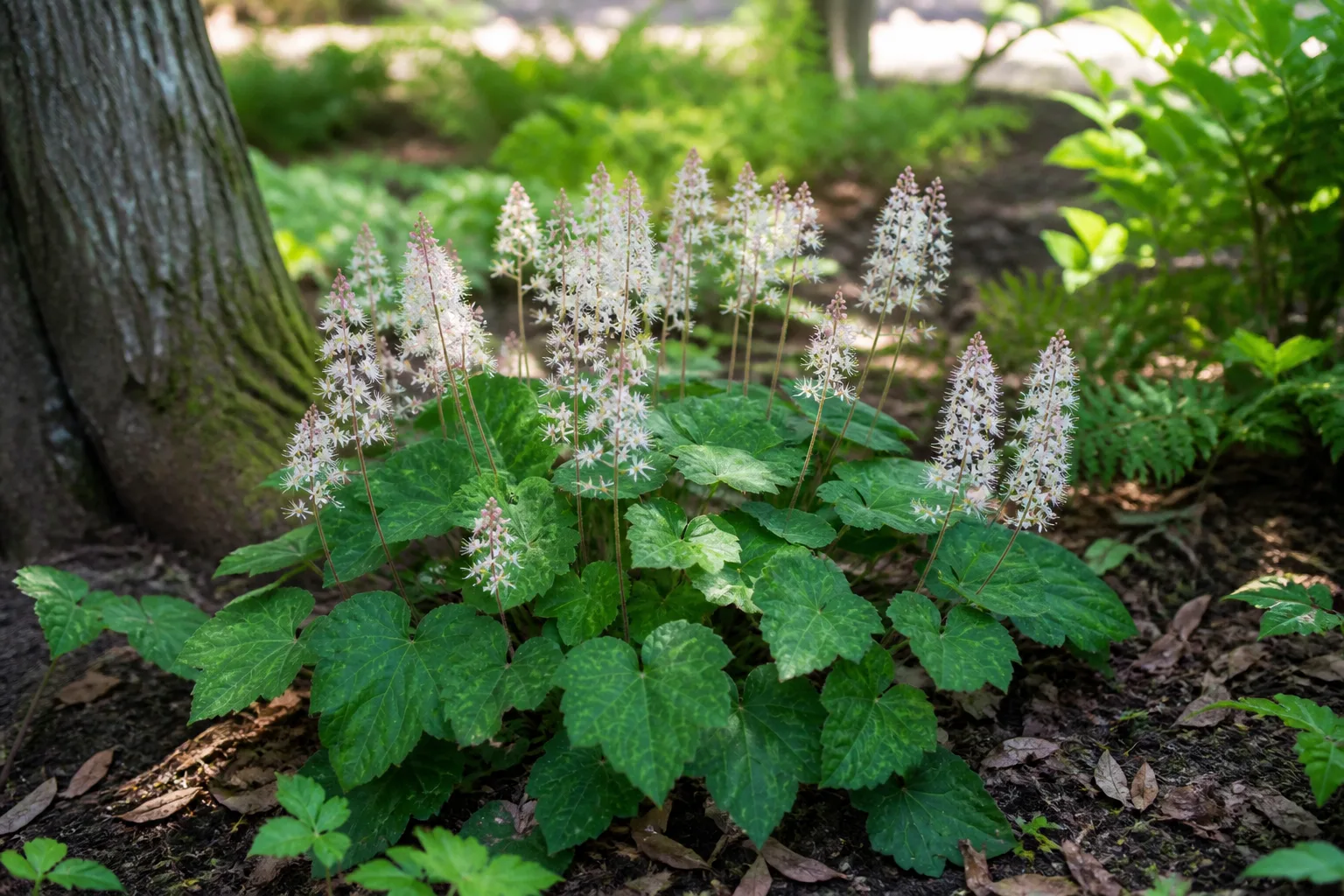
9. Foamflower (Tiarella cordifolia) sends airy white or pale pink flower spikes above maple-shaped leaves in spring. It typically stays 6 to 12 inches tall and can spread 1 to 2 feet, especially where it can form a woodland groundcover; Zones 3–9 are commonly listed.
Give it dappled to partial shade, humus-rich soil, and even moisture with good drainage. NC State Extension includes foamflower among woodland plants that prefer uniform moisture, which makes it a better fit for a cool bed than for the dry soil directly beneath thirsty tree roots. (NC State Extension Gardener Handbook)
Reliable perennials for foliage and bloom
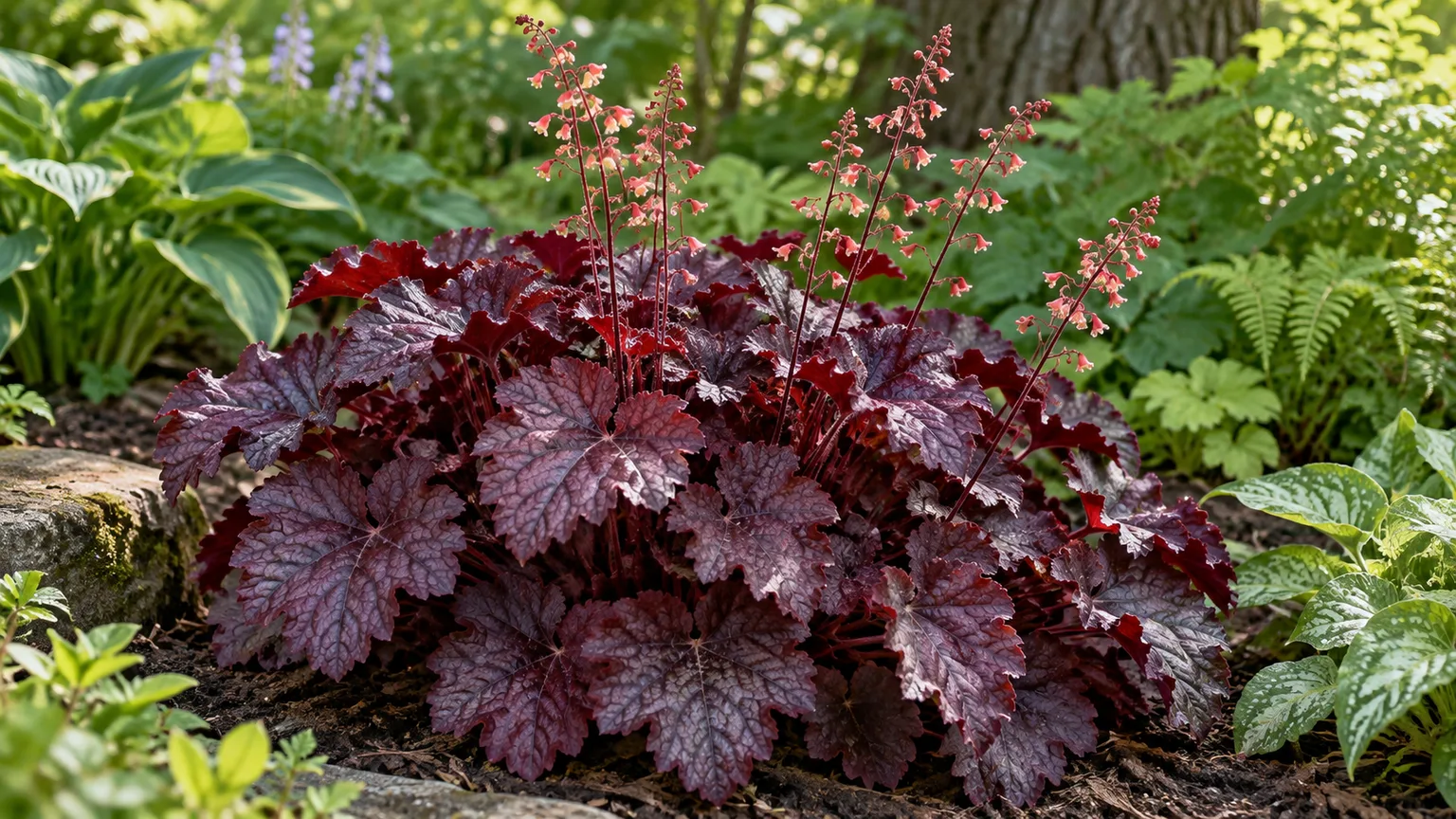
10. Coral bells (Heuchera spp.) are grown mainly for foliage—green, burgundy, silver, amber, or variegated leaves—with delicate flower wands as a bonus. Most form a 1- to 2-foot mound in Zones 4–9, depending on cultivar, and do best in partial shade with drainage and moderate moisture.
A little morning sun can improve color and bloom, but hot afternoon exposure can scorch some varieties. Use them at the front of a bed where leaf color stays visible after the flowers pass.
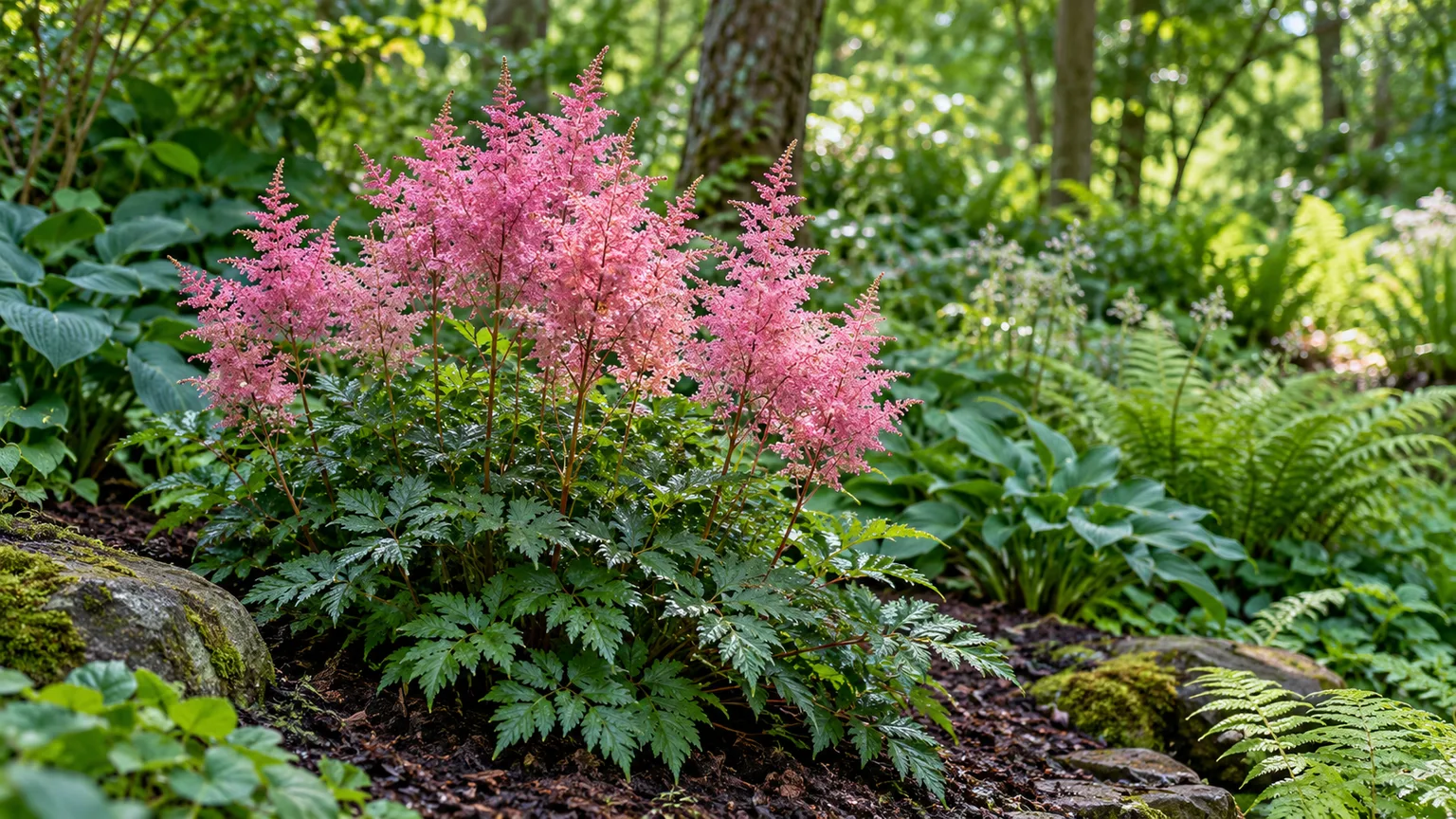
11. Astilbe (Astilbe spp.) produces feathery summer plumes in pink, red, white, or lavender. Depending on variety, plants range from about 1 to 3 feet tall and wide and are generally hardy in Zones 3–8; they need partial shade and consistently moist, well-drained soil.
They are a poor match for dry shade beneath a large tree unless you can irrigate through summer. University of Minnesota Extension’s astilbe diagnosis guide documents heat stress as a problem, a reminder that “shade plant” does not mean “ignore water.” (University of Minnesota Extension: Astilbe)
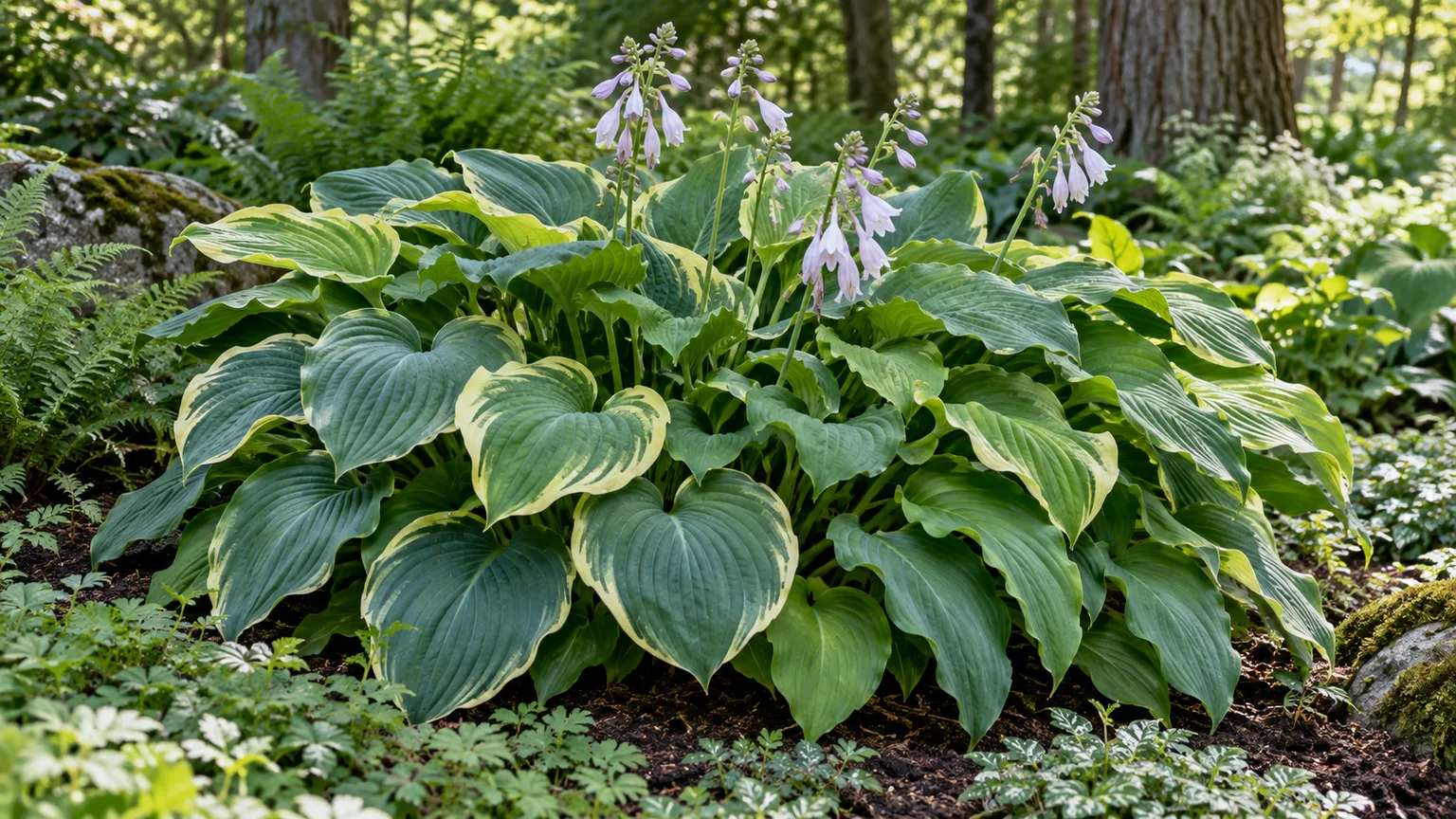
12. Hosta (Hosta spp.) earns its place with foliage in many sizes, textures, and colors, then sends up tubular flowers in summer. Miniatures may be only a few inches wide, while large cultivars can exceed 5 feet across; most are hardy in Zones 3–9 and favor partial to full shade with evenly moist, well-drained soil.
Choose a mature spread before planting because a small nursery pot can become a broad clump. Hostas are also toxic to cats and dogs if eaten, according to the ASPCA, and deer often browse them. (ASPCA hosta record)
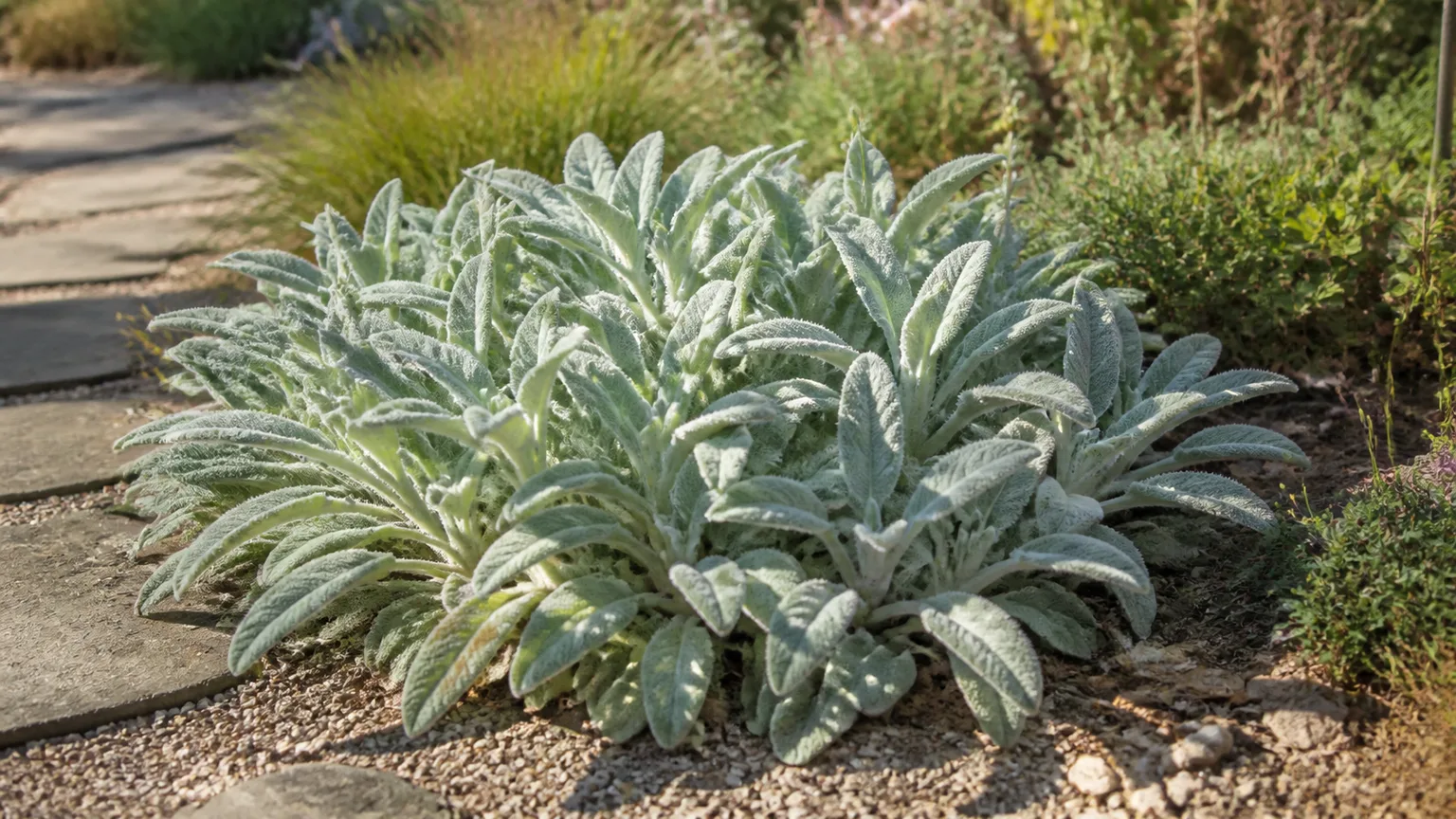
13. Lamb’s ear (Stachys byzantina) is a light-shade edge plant, not a choice for a dark woodland bed. Its silver, velvety leaves are the main attraction, with small pink-purple flower spikes in summer; clumps are about 8 to 18 inches tall and can spread 1 to 2 feet in Zones 4–9.
It prefers excellent drainage and tolerates dry spells once established, but damp, stagnant shade invites rot and reduces its silvery look. Place it where a path or open border gives it brighter light, and treat the flowers as a bonus rather than expecting it to thrive under a dense canopy.
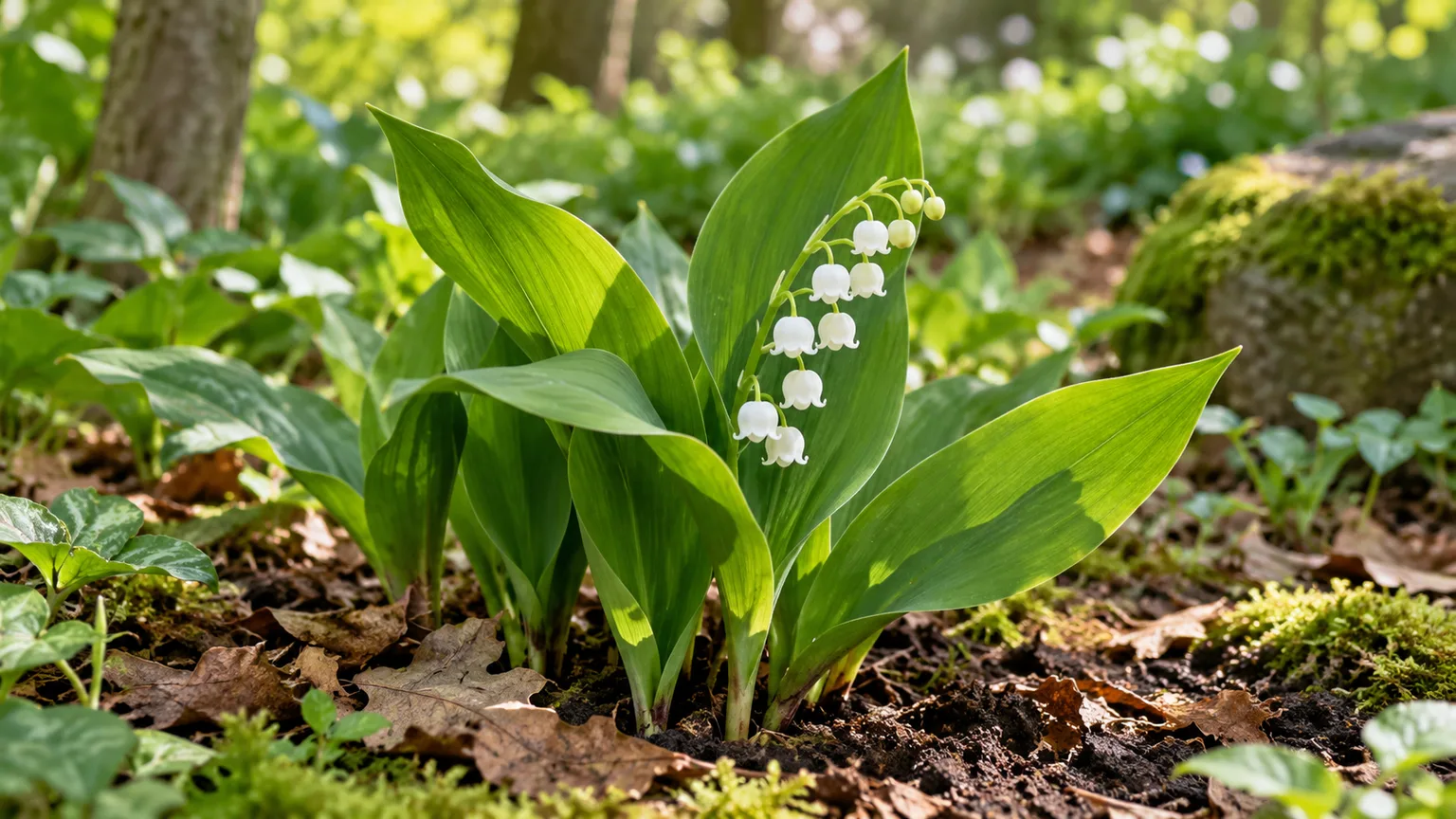
14. Lily-of-the-valley (Convallaria majalis) has fragrant white bell-shaped flowers in spring and spreading underground rhizomes. It stays about 6 to 12 inches tall, but a patch can widen quickly; it is commonly hardy in Zones 2–9 and tolerates partial to full shade in moist, humus-rich soil.
Use it only where you can contain it and local rules allow it, since it can escape garden boundaries in some regions. The ASPCA lists it as toxic to pets, so do not plant it where animals chew garden foliage. (ASPCA lily-of-the-valley record)
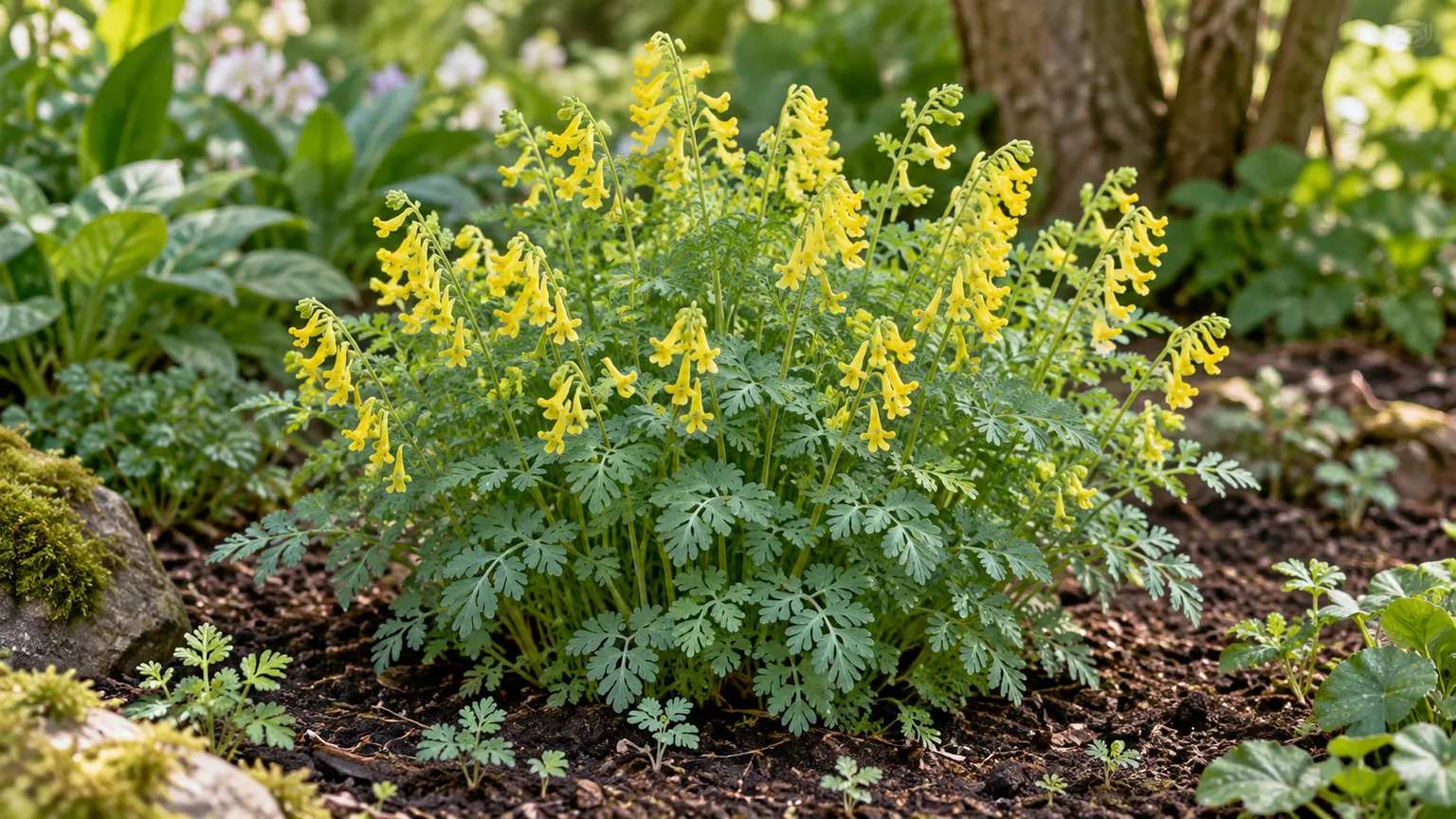
15. Yellow corydalis (Corydalis lutea) can flower from late spring into fall in a cool, lightly shaded bed. It forms a rounded clump about 12 inches tall and 12 to 18 inches wide, commonly hardy in Zones 5–8; it tolerates ordinary, well-drained soil and can handle some dry periods once established.
It also self-seeds, so deadhead before seed ripens if you want to keep it in a defined spot. Better Homes & Gardens includes it among shade perennials for its long season, but local climate determines how long the flowers continue. (Better Homes & Gardens shade-perennial guide)
Flowering shrubs for partial shade
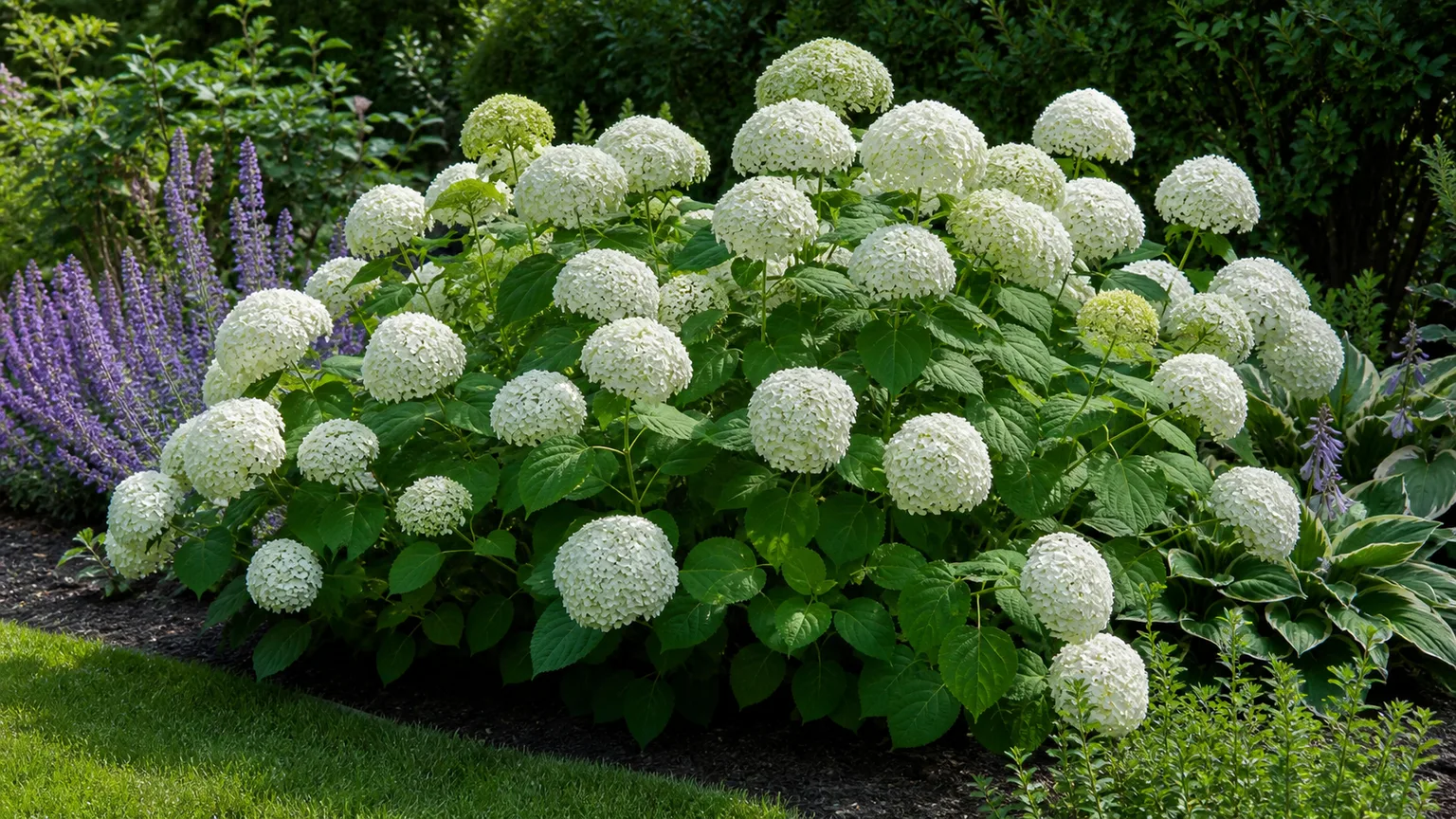
16. Hydrangeas (Hydrangea spp.) can flower well with morning sun and afternoon shade, but “hydrangea” covers species with different hardiness, size, and light needs. Smooth hydrangeas such as ‘Annabelle’ and oakleaf hydrangeas can suit a partly shaded border; bigleaf types also appreciate protection from hot afternoon sun.
Depending on species and cultivar, mature shrubs may be roughly 3 to 8 feet tall and wide. Smooth hydrangeas can be hardy into Zone 3, while bigleaf types are commonly grown in Zones 5–9; confirm the exact cultivar because hardiness varies. Keep the soil evenly moist but not waterlogged.
Very deep shade usually means fewer flowers, even if the leaves look healthy. Hydrangea can be toxic to pets if eaten; check the exact plant and contact a veterinarian after suspected ingestion. (ASPCA hydrangea record)
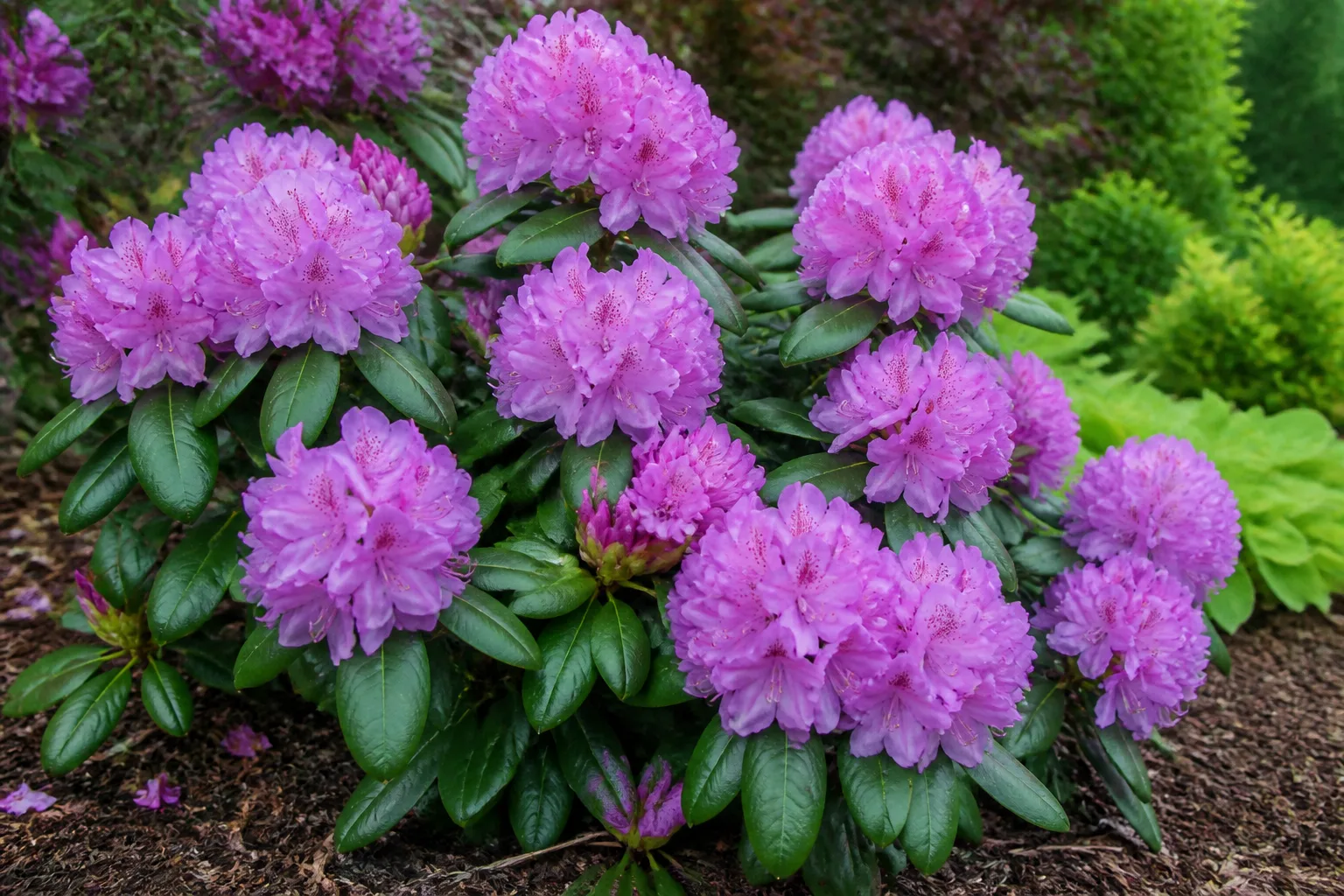
17. Rhododendrons (Rhododendron spp.) are evergreen or deciduous flowering shrubs for bright shade, not the deepest, driest corner. Many need acidic, organic soil that stays evenly moist while draining well; mature height and spread vary from compact cultivars under 3 feet to large shrubs several times that size.
Many common garden selections are hardy in Zones 4–8, but the genus spans a wider range, so check the species and cultivar. Protect roots from heat with a light mulch and avoid planting where shallow tree roots will outcompete them for water. The ASPCA lists rhododendrons as toxic to pets and notes that even a small amount can cause serious effects. (ASPCA rhododendron record)
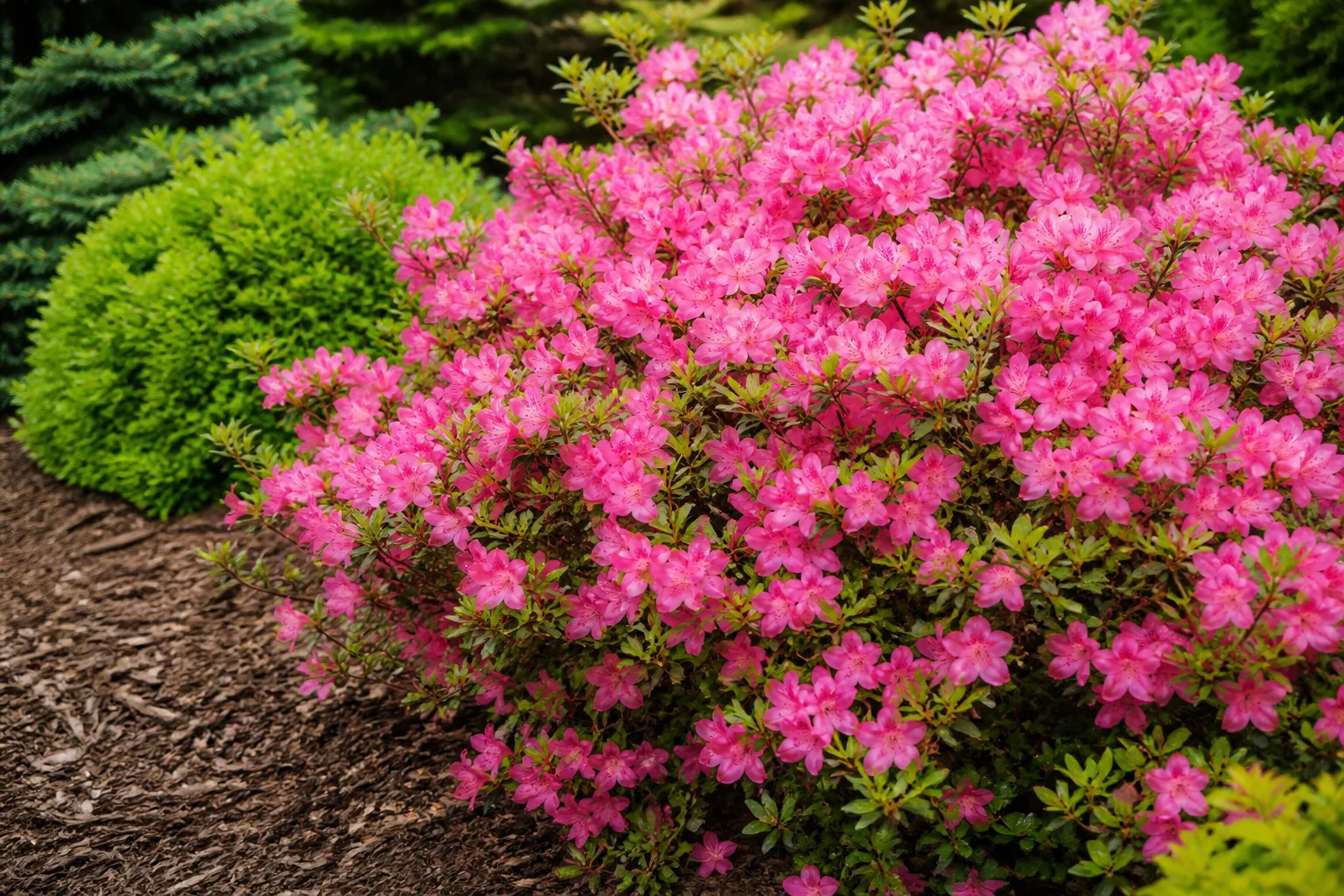
18. Azaleas (deciduous or evergreen Rhododendron species) are a useful choice for spring color under high trees when they receive some filtered or morning light. Most prefer acidic, moist but well-drained soil and afternoon protection; size can range from dwarf cultivars around 2 feet to shrubs 6 feet or more.
Common garden cultivars span roughly Zones 4–9, but hardiness varies by species and cultivar, so confirm the plant label. Deep shade may keep an azalea alive but reduce flowering, so choose a site with bright filtered light rather than judging only by temperature. Azaleas are toxic to dogs and cats, according to the ASPCA; keep fallen blooms and pruning debris away from pets. (ASPCA azalea record)
Annuals and biennials for seasonal color
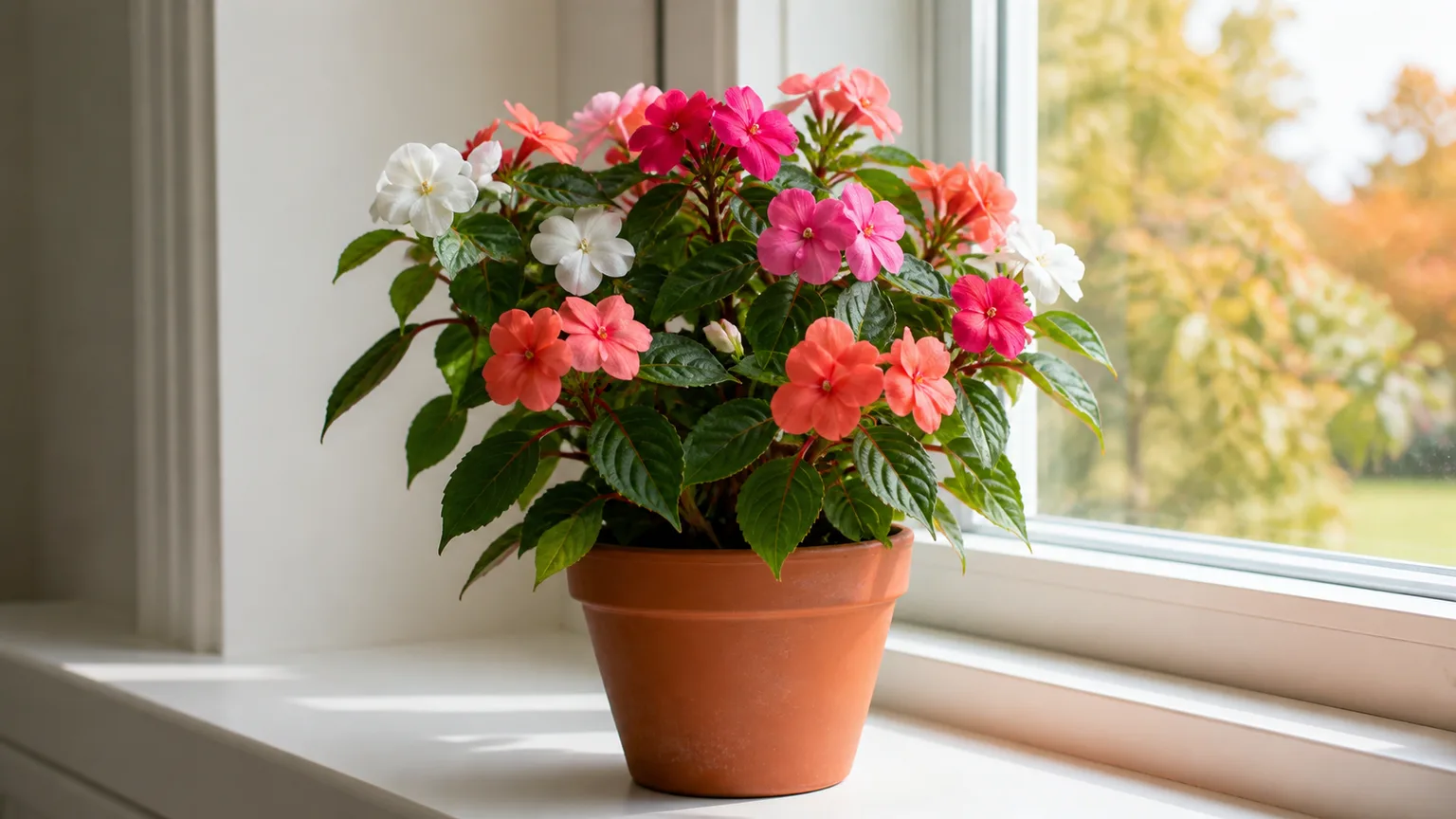
19. Impatiens (Impatiens walleriana and garden hybrids) fill a shady container or bed with flowers from late spring until frost in many climates. Plants are usually 6 to 18 inches tall and wide, grown as warm-season annuals outside tropical hardiness zones; they prefer shade or gentle morning sun, moist soil, and good drainage.
The common bedding types flower in less light than many annuals, but still need water during hot spells. Keep them out of harsh afternoon sun, and check labels because New Guinea impatiens and other species have somewhat different light tolerances.
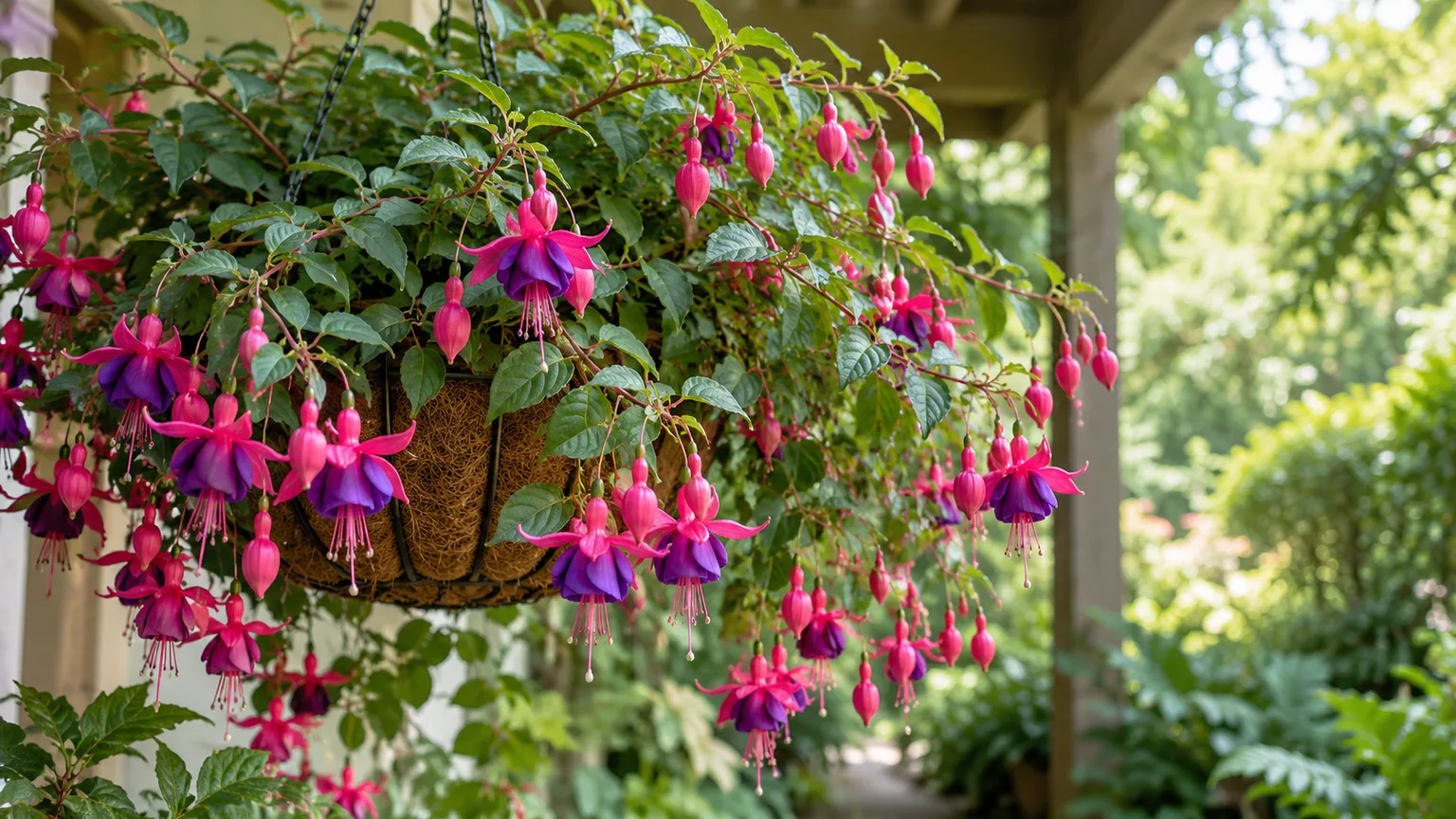
20. Fuchsia (Fuchsia spp. and hybrids) brings dangling, two-tone flowers to hanging baskets and sheltered beds. Trailing forms may spread 1 to 2 feet, while upright types can be taller; most are grown as annuals in cold climates, though some are hardy in Zones 6–11 depending on cultivar.
Give them bright shade or morning sun, shelter from hot winds, and moist but freely draining potting mix. They need enough light to flower, so deep shade may produce leafy stems with fewer blooms. A covered porch can work better than a dark bed beneath dense trees.
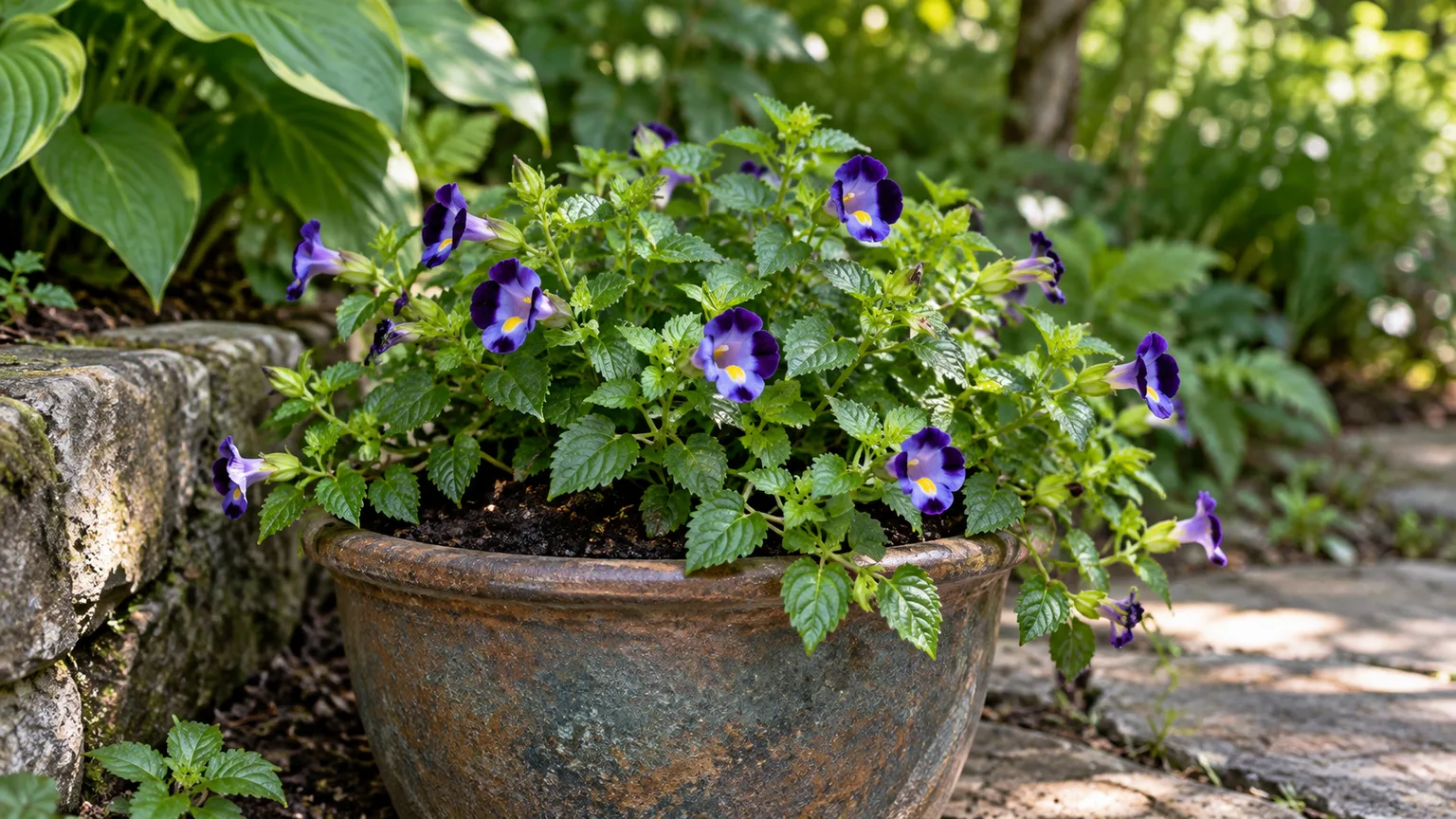
21. Wishbone flower (Torenia fournieri) keeps producing small trumpet-shaped flowers in summer and fall when heat and direct sun would stress many shade annuals. It is usually grown as an annual, reaching about 6 to 12 inches tall and spreading 12 to 18 inches; it prefers partial shade, moist soil, and protection from drying afternoon heat.
In cooler areas, a few hours of morning sun can support more bloom, while hot-summer gardens benefit from brighter shade. Use it as a container spiller or compact border plant where consistent moisture is easy to maintain.
22. Begonias (Begonia spp.) are a large group rather than one uniform garden plant. Wax begonias often grow 6 to 12 inches tall, while tuberous hybrids can be taller and have larger flowers; most are tender perennials grown as annuals in cold-winter regions.
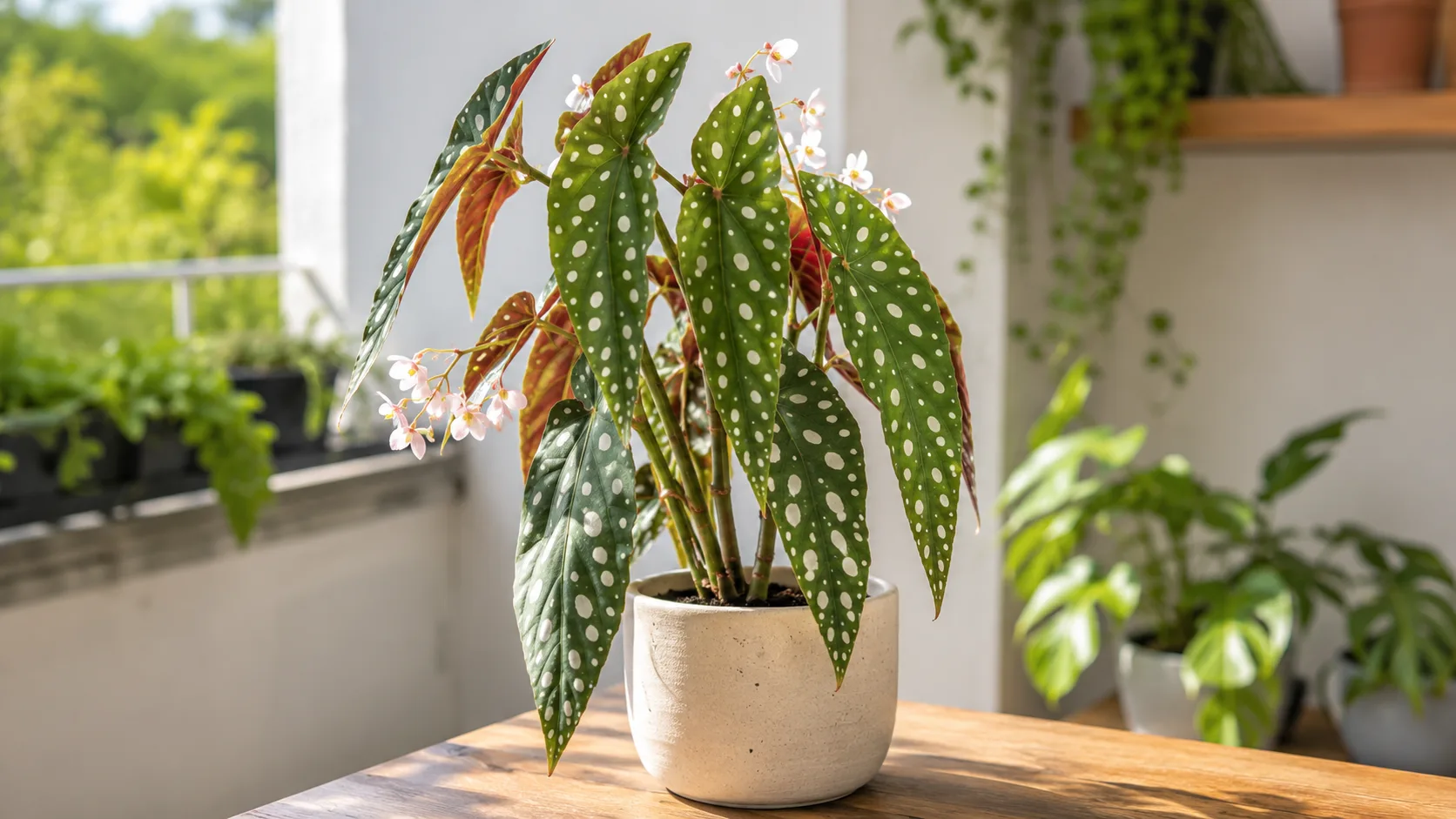
Give them bright shade or filtered light and moist, well-drained soil, then choose the type for your climate and desired flower size. They are useful where a bed needs long-lasting color, but standing water and soggy crowns can cause decline. The ASPCA lists begonias as toxic to pets, with the underground portion especially concerning. (ASPCA begonia record)
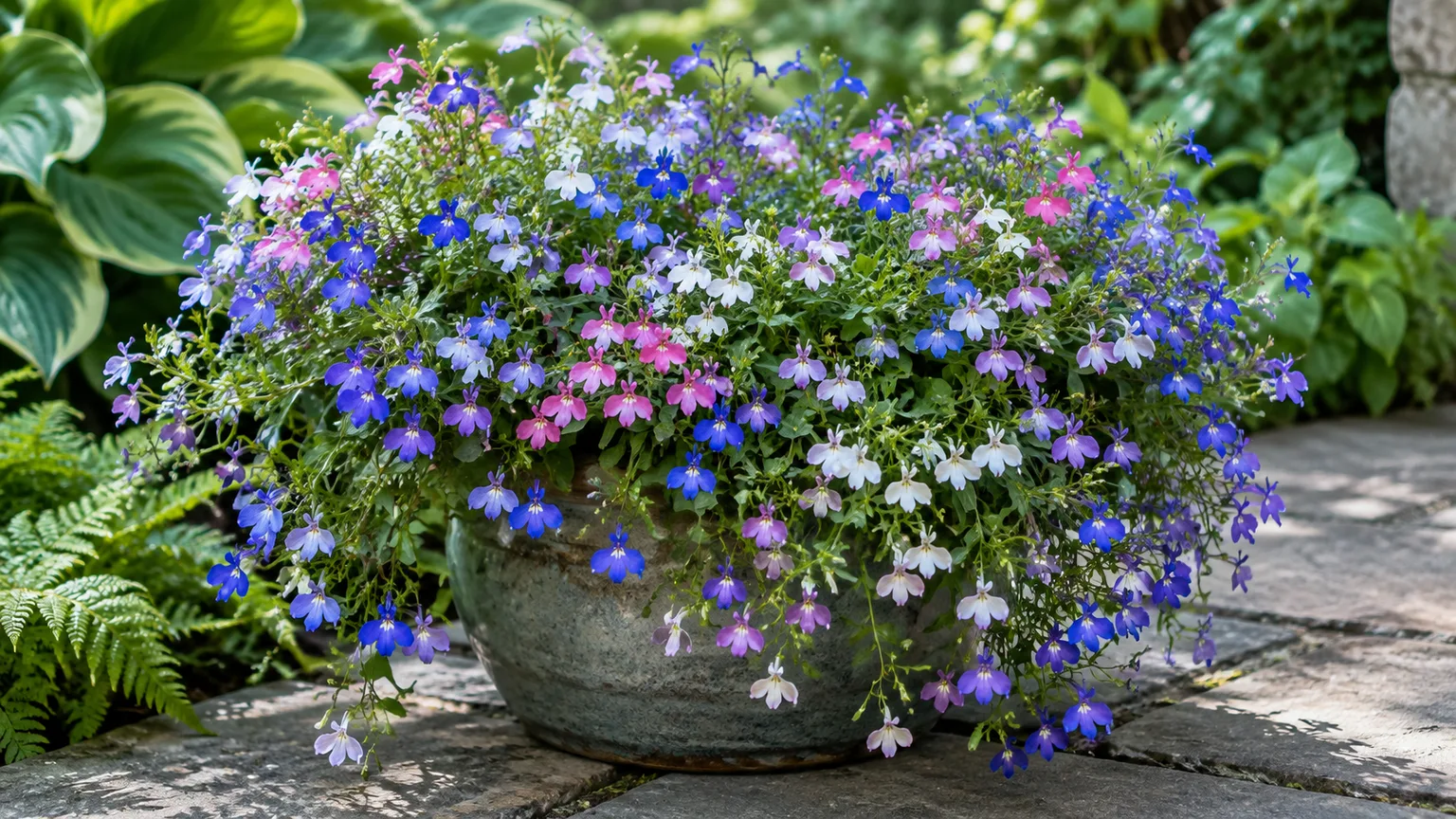
23. Lobelia (Lobelia erinus) makes small blue, violet, pink, or white flowers that soften the edge of a shaded pot. It is a tender perennial commonly grown as an annual, usually 4 to 10 inches tall with a trailing spread around 8 to 18 inches; it prefers cool conditions, evenly moist soil, and partial shade.
Heat can pause flowering even when the plant has enough water, so it often performs best in spring and again in cooler autumn weather. Do not confuse this bedding lobelia with taller species such as cardinal flower, which have different needs.
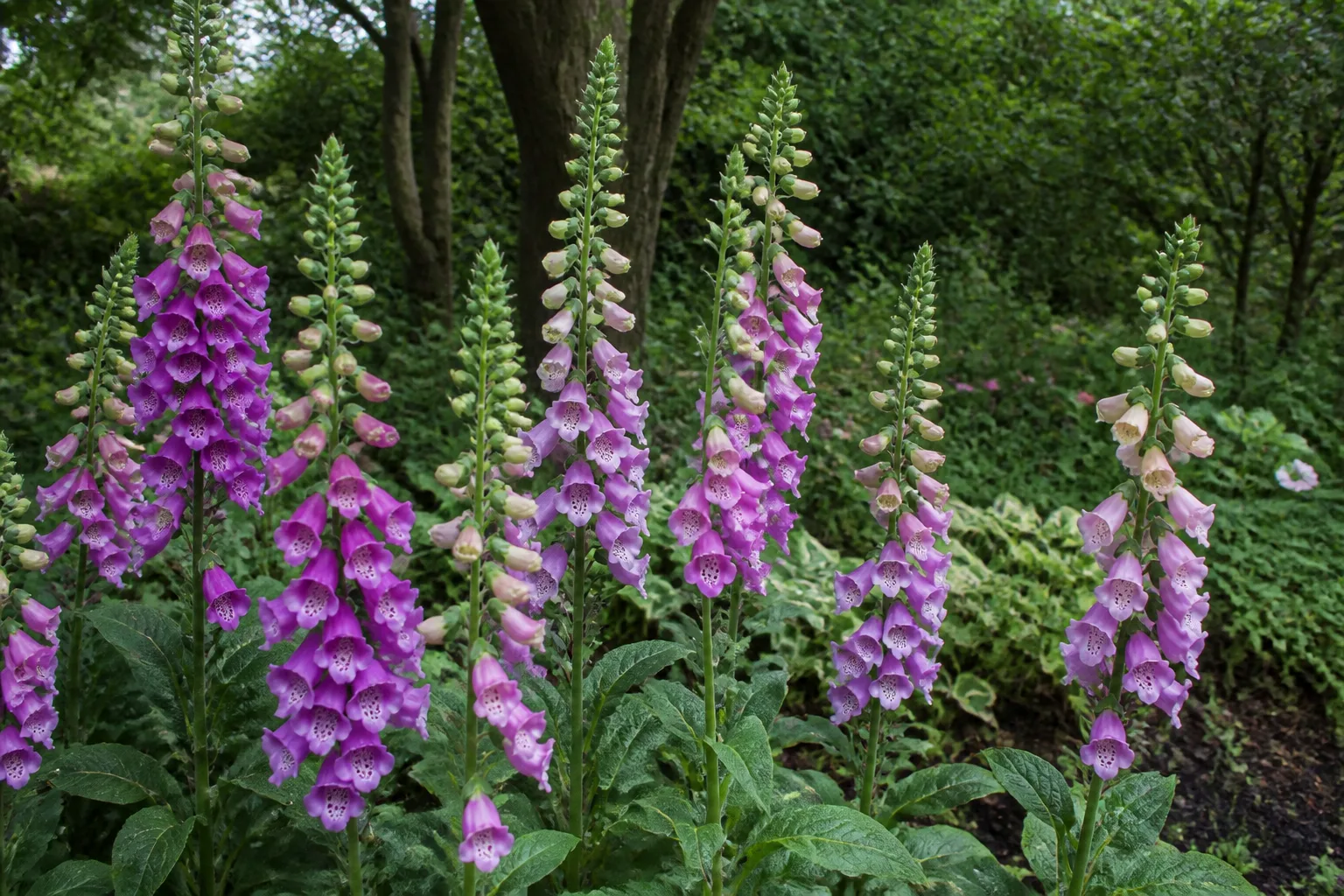
24. Foxglove (Digitalis purpurea) sends tall flower spikes above a low rosette, usually in its second year. It grows about 2 to 5 feet tall and 1 to 2 feet wide in Zones 4–9, and performs well in partial shade with moist, well-drained soil; it may self-seed where conditions suit it.
Treat this as a biennial or short-lived perennial, not a permanent clump, and leave room for the vertical stems. All parts of foxglove are poisonous if swallowed; Poison Control advises against growing it where children or pets play.
The ASPCA also lists it as toxic to dogs and cats. Do not use it in edible arrangements or home remedies. (Poison Control foxglove article, ASPCA foxglove record)
Quick chooser: match the plant to the site
- Dry shade beneath tree roots: start with established yellow corydalis, some hellebores, woodland phlox, and selected brunnera or heuchera cultivars. Even these need regular water while establishing, and none will thrive in extremely dry, root-packed soil without help.
- Moist, humus-rich woodland shade: consider foamflower, astilbe, primrose, lungwort, bleeding heart, and spring ephemerals such as trout lily. Check drainage; “moist” does not mean saturated.
- Bright partial shade with morning sun: hydrangeas, azaleas, rhododendrons, coral bells, fuchsia, and many begonias can bloom or color well, provided their other needs fit.
- A seasonal pot or small border: impatiens, wishbone flower, lobelia, and compact begonias provide quicker color than slow-spreading perennials. Group plants with similar watering needs in the same container.
- Very deep shade: favor attractive foliage and realistic expectations. Hostas, some hellebores, and foliage-focused heucheras may persist, but even shade-adapted plants flower less when light is extremely limited. If possible, brighten the site by removing only small, appropriate branches—not by damaging a tree or removing protected vegetation.
Planting under trees without fighting their roots
Use small planting pockets and light mulch
Do not rototill or raise the soil level across a tree’s root zone to create a flower bed. Both actions can damage roots or bury the trunk flare.
Instead, place small container-grown plants in individual openings between larger roots, keep the planting depth consistent with the nursery pot, and water the root ball thoroughly after planting. NC State Extension recommends individual holes in woodland areas to minimize damage to established trees. (NC State Extension Gardener Handbook)
Spread a modest layer of leaf mold or fine organic mulch around new plants to reduce moisture loss, but keep it away from trunks and crowns. Avoid piling fresh compost or several inches of soil over surface roots.
Water newly planted flowers directly at the root zone until they establish, then check soil before watering again; tree roots can make the bed dry even after a brief shower. If roots leave no workable planting pockets, use containers placed around the canopy edge rather than forcing plants into a hostile site.
Make a shade border bloom from spring to fall
Layer plants by height and bloom time
A shade bed can feel empty if every plant is chosen for one brief spring display. Combine early ephemerals—trout lily, bleeding heart, lungwort, primrose, and woodland phlox—with later foliage from hostas, heuchera, and foamflower; add astilbe or a container of impatiens for summer color where there is enough moisture. The spring flowers do not need to stay in bloom all season if their neighbors cover the soil after they go dormant.
Place shrubs such as azaleas, rhododendrons, or hydrangeas toward the back or as a separate foundation layer, leaving space for their mature spread. At the front, low plants such as foamflower, coral bells, and lobelia make edges legible from a path. BBC Gardeners’ World recommends choosing shade plants by shade type and soil condition; that practical split is more helpful than treating every low-light bed as interchangeable. (BBC Gardeners’ World shade plant guide)
Buy for mature width, not nursery-pot size
A one-gallon shrub or perennial may look small beside its label’s mature measurements. Follow the cultivar’s expected width, leave enough air between crowns, and use fewer plants rather than crowding them into a gap they will outgrow in two seasons.
This is especially important for large hostas, hydrangeas, rhododendrons, and fast-spreading lily-of-the-valley. A tight planting can hide weeds at first but often reduces airflow and makes later division or removal harder.
Treat a plant tag’s hardiness zone as one filter, not a promise of success. Zone describes average annual extreme winter minimums; it does not account for summer heat, soil drainage, humidity, winter wet, or the light in your exact bed. Choose varieties tested for your local climate, and ask a local extension office or reputable nursery about species that perform reliably in your region.
Check toxicity and spreading habits first
Keep potentially toxic plants out of reach
Several flowers on this list can harm pets if eaten. The ASPCA identifies foxglove, lily-of-the-valley, rhododendron, azalea, hydrangea, begonia, and hosta as toxic to dogs and cats; bleeding heart is also poisonous if ingested according to NC State Extension. Plant identification matters because common names can refer to different species, and the ASPCA notes that its records are not exhaustive. (ASPCA toxic and non-toxic plant database, NC State Extension bleeding-heart profile)
If a pet or child may have eaten a plant, do not wait for symptoms or rely on a photo match alone. Keep the plant label or a clear sample available and contact a veterinarian, poison-control service, or local medical professional for case-specific instructions. If safety is a priority, select only plants confirmed for the people and animals who use the garden.
Contain runners and reseeders
Lily-of-the-valley spreads by rhizomes; forget-me-nots, foxgloves, and yellow corydalis may seed themselves; woodland phlox expands gradually through rooted stems. Those habits can be useful when you want a naturalized patch, but they can complicate a narrow border or a garden shared with neighboring land. Check your state or regional invasive-plant list before planting any vigorous species, especially near woodland or waterways.
To keep a plant in bounds, remove seedlings while small, deadhead before seed matures, and divide clumps before they crowd slower neighbors. Do not assume every self-seeder is invasive or every native plant stays put: climate, soil, and rainfall change how fast a plant spreads. Choose the garden behavior you want, then buy a species or cultivar whose mature size and reproduction fit that plan.
Conclusion
The best shade-loving flowers are the ones matched to the actual shade, soil, climate, and space you have. Start by observing the bed through the season, decide whether it is dry or moist, and then choose a short list: spring woodland flowers for dappled light, moisture-loving perennials for cool soil, bright-shade annuals for fast color, or flowering shrubs for a partly shaded structure.
Check hardiness and mature spread on the exact plant label, and make room for foliage after bloom. If you plan around tree roots, water new plants well, and confirm toxicity and spread before planting, even a low-light corner can become a layered garden with flowers across more than one season.



