10 Fall Lawn Care Tips for a Healthier Lawn
Use these 10 fall lawn care tips for leaves, mowing, aeration, seed, weeds, pests, and sod—timed to your grass type, climate, and first frost.
Fall is a useful time to repair turf, but it is not a universal “do everything” season. Many familiar lawn jobs work best only for particular grass types, soil conditions, and weather windows. A cool-season lawn in the North may benefit from fall growth, while a warm-season lawn in a mild climate may be slowing toward dormancy. First identify what you have, then choose only the tasks that solve a real problem.
The ten tips below cover the usual fall jobs—leaves, mowing, aeration, thatch, fertilizer, seed, weeds, disease, insects, and sod—with the decision points that tell you whether to do each one. The calendar dates from a regional guide are starting points, not a promise that every lawn in the same month should be treated.
Before you start, identify your grass and growing season
Cool-season grasses such as Kentucky bluegrass, ryegrass, and fescues tend to grow best during cool spring and fall weather. Warm-season grasses such as bermudagrass, zoysiagrass, and St. Augustinegrass do most of their growing during warm weather and slow as days and soil cool. The UC Integrated Pest Management lawn guide lists examples of both groups and emphasizes that care timing depends on grass species, season, and local growing conditions.
If you do not know the turf, look for a seed label, sod invoice, or earlier landscape plan before you buy fertilizer or seed. A lawn may also contain several species, especially after years of patching. When you cannot identify it, take a small sample or clear photos to a local Cooperative Extension office; applying the wrong seed or treatment can create more work than leaving a minor imperfection alone. Color alone can mislead: cool-season grass may brown from drought in summer, and warm-season grass may turn straw-colored as it enters normal dormancy. Check blades and growth habit, then use local extension identification help if the choice affects a costly renovation.
1. Mulch light leaf fall and clear heavy mats
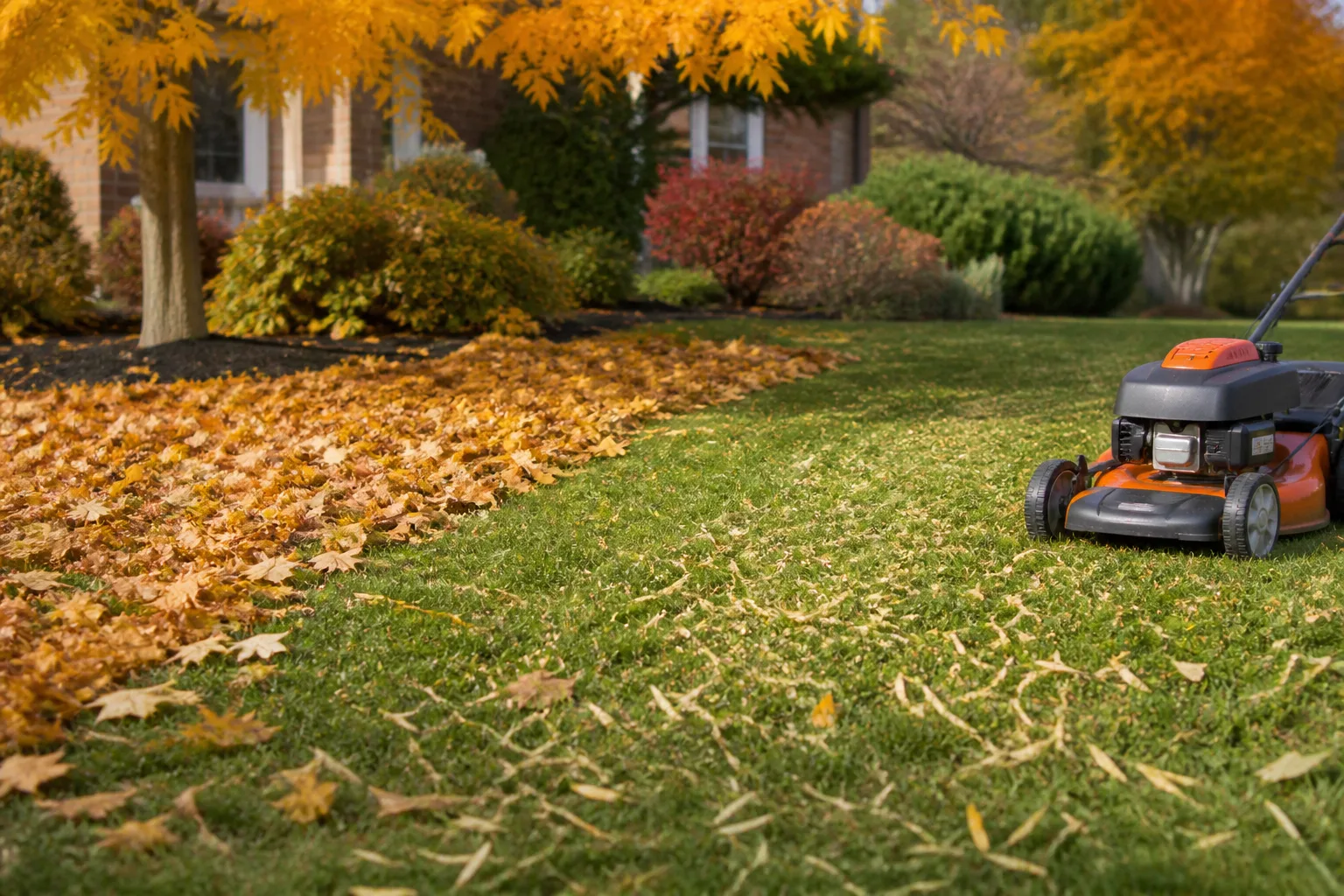
You do not have to rake every leaf. A thin scattering can be chopped with a mulching mower and left to break down, as long as the grass remains visible and the fragments do not form a wet blanket. A thick layer of whole leaves blocks light and keeps the turf surface damp, so rake, blow, or vacuum heavy drifts and move them to a compost pile or planting bed.
Work in smaller passes while the leaves are dry. If the mower leaves large pieces or the lawn still looks covered after one pass, make another pass or collect the excess rather than forcing a thick load into the turf. Gardening Know How’s leaf guidance makes the same practical distinction: finely chopped fragments behave differently from an intact, wet mat.
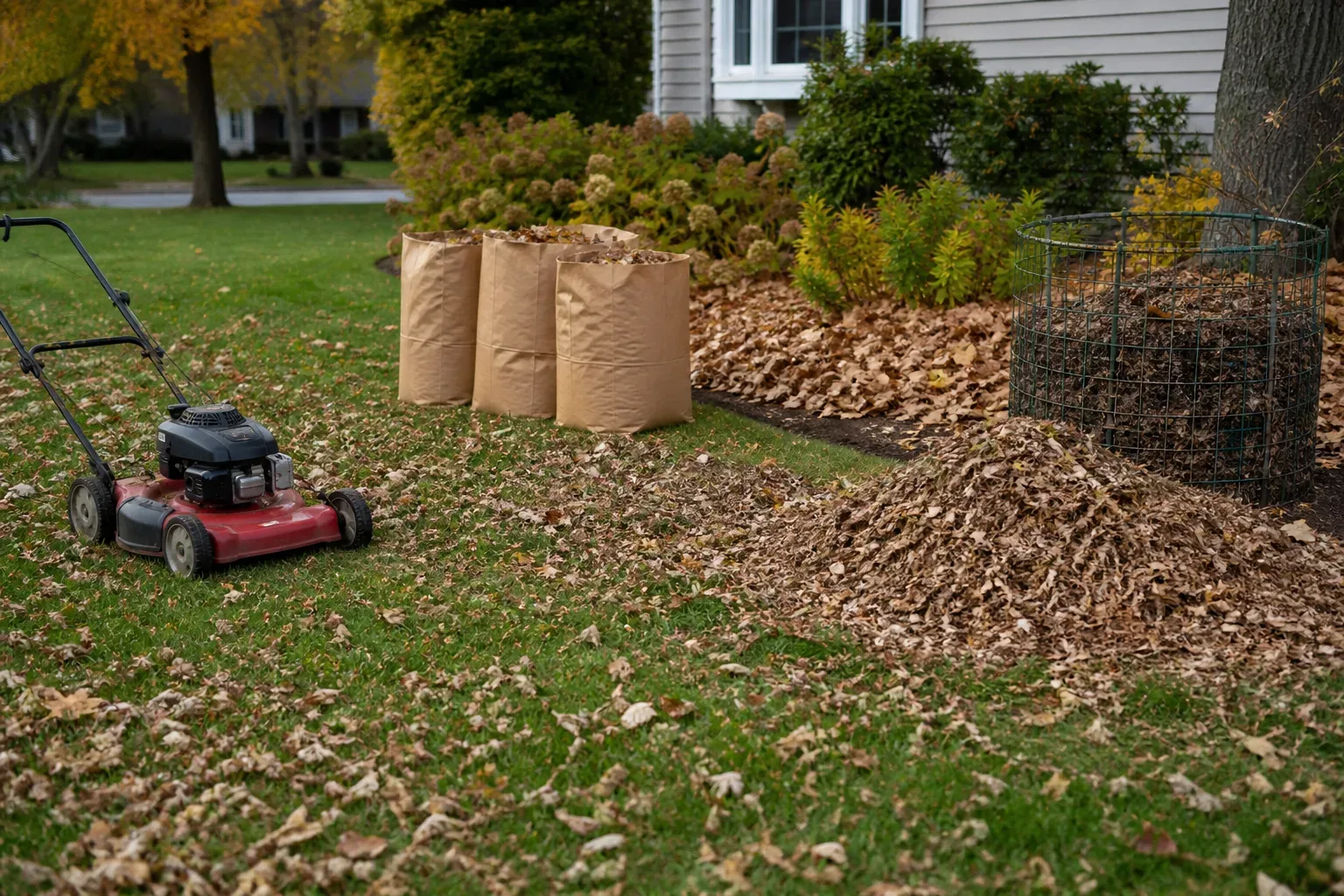
Do not wait for every tree to finish dropping before you act. One short mowing or raking pass during a heavy drop is usually easier on turf and on you than moving a saturated pile later. Keep leaves out of storm drains, sidewalks, and places where runoff can carry them into waterways.
2. Keep mowing while grass is actively growing
Continue mowing until the grass stops growing, but let growth rate set the schedule. Fall growth often slows, so the lawn may need fewer cuts than in spring. Penn State Extension advises mowing regularly while turf is growing and keeping most lawns at 2 inches or higher; that guidance is regional, so use the height recommended for your grass rather than copying a single number from a general chart.
A useful rule for any season is to avoid removing more than one-third of the blade at a time. Cutting too low to “put the lawn to bed” removes leaf area the grass needs to make energy and exposes crowns to stress. Gardeners’ World recommends raising the mower setting in autumn and avoiding wet or frosty grass; the exact height may differ in a U.S. lawn, but the point is not to scalp a slowing turf.
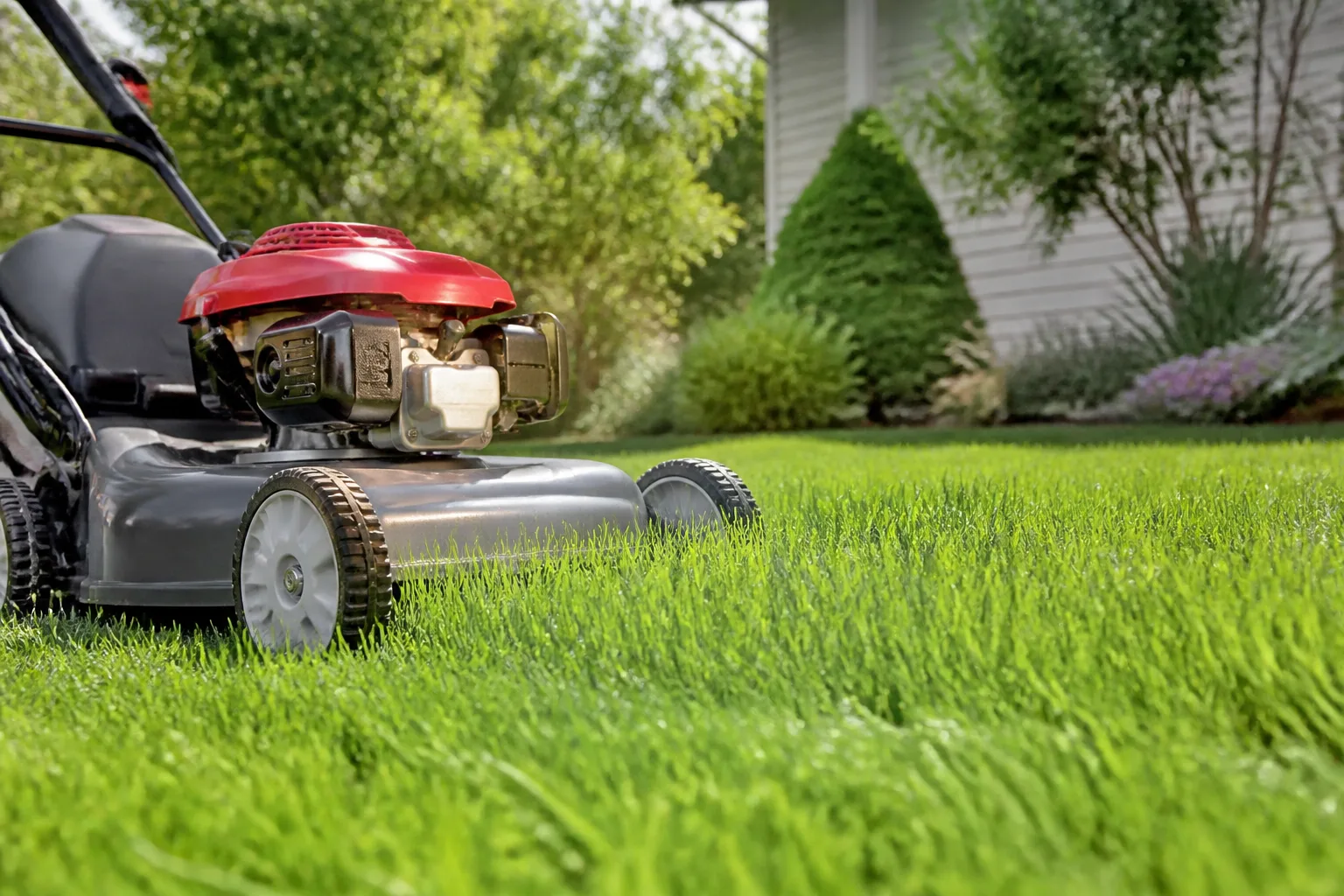
Sharp blades leave cleaner cuts than dull ones, which tear and brown leaf tips. If leaves are falling, mowing can also chop a light leaf layer, but do not use that as a reason to leave thick clumps behind. Stop when growth stops or when the ground is too wet or frosty to mow without rutting or tearing the turf. There is no benefit to making a final cut unusually short just because winter is approaching. If the lawn is still growing, keep using a suitable height and remove no more than a third of the blade; if growth has stopped, leave it alone rather than scalping dormant crowns.
3. Core-aerate only compacted soil
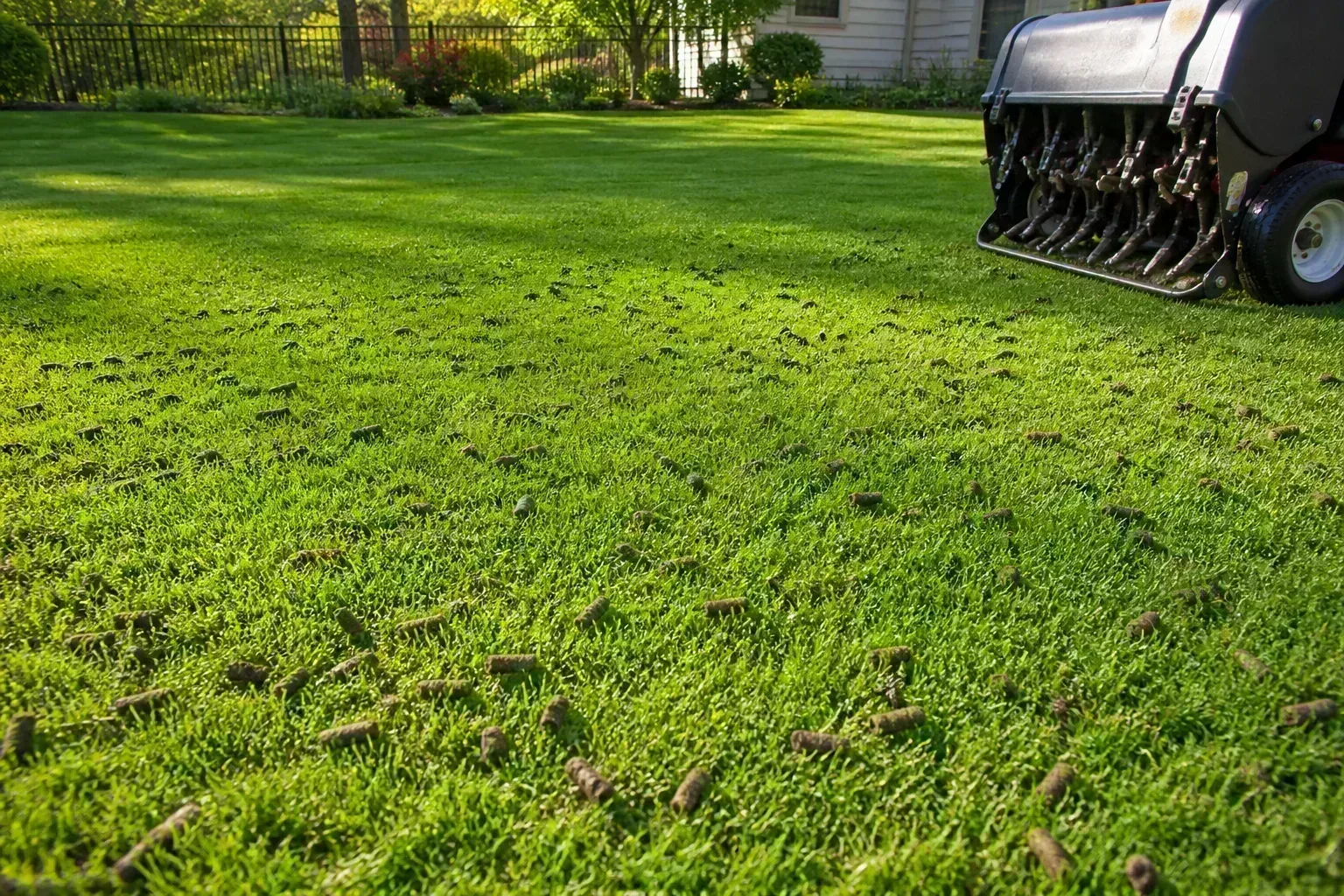
Aeration is useful when soil is compacted—not as a ritual every fall. Clues include water running off instead of soaking in, hard soil under frequent foot traffic, or thin turf where roots struggle to penetrate. Penn State Extension explains that aeration removes soil plugs to create pores for air and water; a core aerator with hollow tines does this, while spike tools push soil sideways and are not the same operation.
Timing follows the grass’s active growth. For a cool-season lawn, late summer to early fall can offer a recovery window before winter. Warm-season turf is usually aerated while it is actively growing in warm weather, not automatically in fall as it slows. In either case, the soil should be moist enough for tines to enter, but not so wet that equipment smears or compacts the surface.
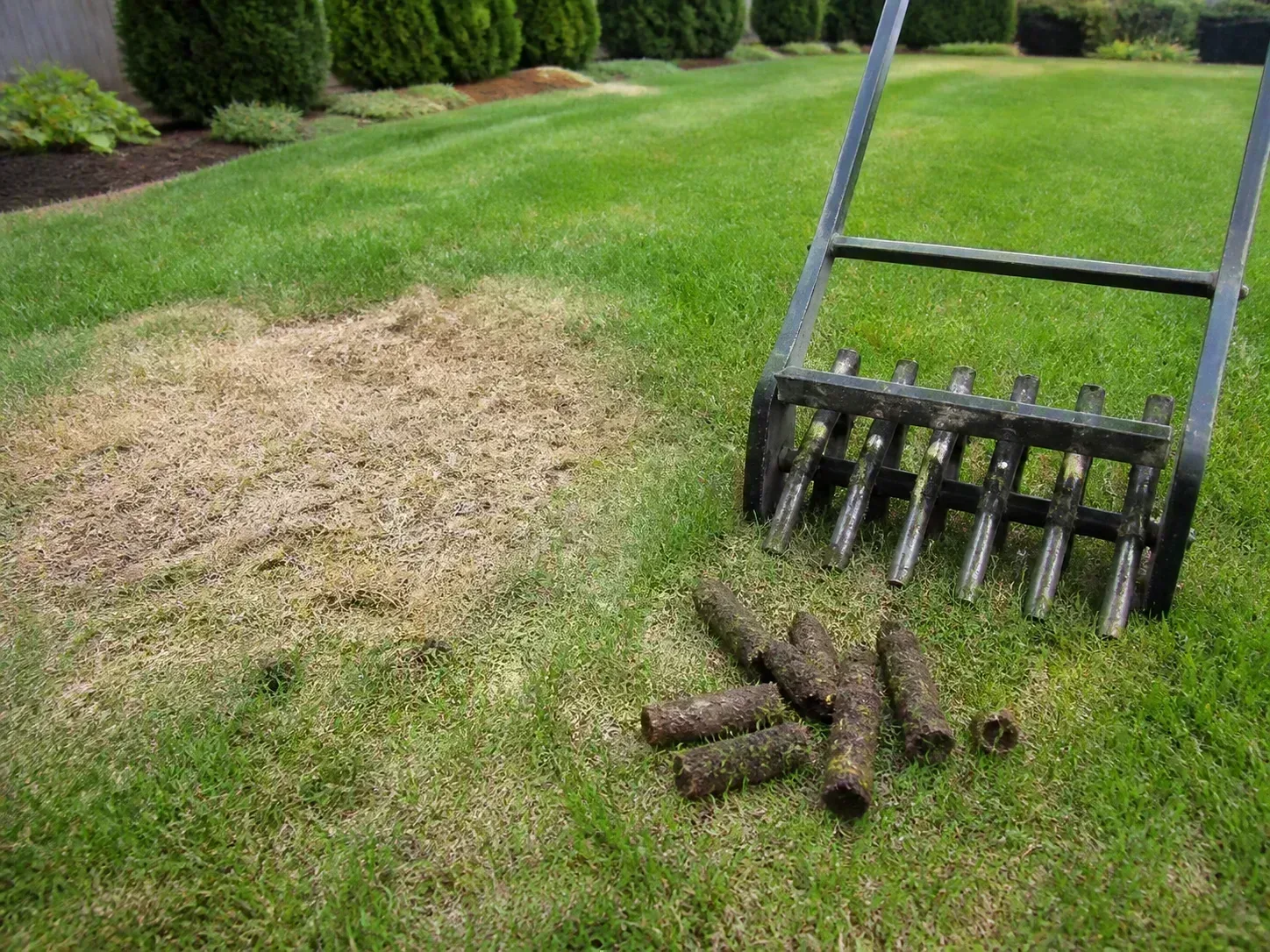
If the lawn is not compacted, skip the machine rental. Aeration can be paired with overseeding in a suitable cool-season window because the holes help seed contact the soil, but repeated or poorly timed passes can stress turf. Fine Gardening’s fall renovation sequence describes this approach for a Mid-Atlantic lawn; adapt its timing to local conditions. A simple check before renting: push a screwdriver into several parts of the lawn when the soil is moist. If it meets strong resistance in high-traffic areas and water ponds or runs off there, those are better candidates than an entire yard with loose, well-drained soil. Avoid aerating saturated ground, which can smear the sides of the holes and defeat the purpose.
4. Measure thatch before you dethatch
Thatch is a tight layer of partly decomposed stems and roots between the green blades and the soil. It is not the same as fallen leaves, and it is not simply the grass clippings left after mowing. A thin layer is normal; dethatching a healthy lawn without checking wastes effort and can tear up living crowns.
Pull back a small plug of turf and measure the springy brown layer above the soil. There is no single threshold that fits every grass: Penn State Extension says to remove excessive thatch at about 1 inch or more and only when weather is cool and turf is adequately moist, while UC IPM flags buildup over 1/2 inch as a concern for some grasses. Use your regional turf guidance for the species you have rather than treating either number as a universal trigger.
Dethatch only when the layer is truly excessive and the grass has time to recover. Penn State advises against doing it in late fall, drought, or high heat because stressed turf may not repair the damage before winter. If you find no substantial layer, leave the rake and machine in the shed. To check, cut several small wedges from representative spots, including the thinnest area and a healthy one, rather than judging from a single patch. If the brown layer is mostly loose leaves or upright stems, the right response may be cleanup or mowing—not a power rake. A machine can remove living plants along with thatch, so consider overseeding afterward only if the grass type and remaining growing season make recovery realistic.
5. Fertilize only when the grass and soil call for it
“Fall fertilizer” is not one product or one date. A soil test is the best way to decide whether phosphorus, potassium, or lime is needed; Penn State Extension notes that soil testing can determine the need for phosphorus and potassium, while nitrogen needs are managed separately. If a test recommends an amendment, use the amount and timing it specifies and keep granules off pavement and out of drains.
Many cool-season lawns can use nitrogen during late summer or early fall while they are actively growing. A warm-season lawn that is slowing toward dormancy has a different schedule, and a late high-nitrogen application can encourage tender growth at the wrong time. Gardeners’ World notes that many lawns recover from summer without a feed; skip fertilizer if the lawn is healthy and local guidance does not call for it.
Use a grass-specific timing window
The Penn State lawn calendar is built around Pennsylvania seasons, where late-summer or early-fall feeding can suit many turfgrasses. That is not a national schedule. Before buying a “winterizer,” check the grass type, soil-test result, local fertilizer rules, and product label; some places restrict when or how much lawn fertilizer can be applied.
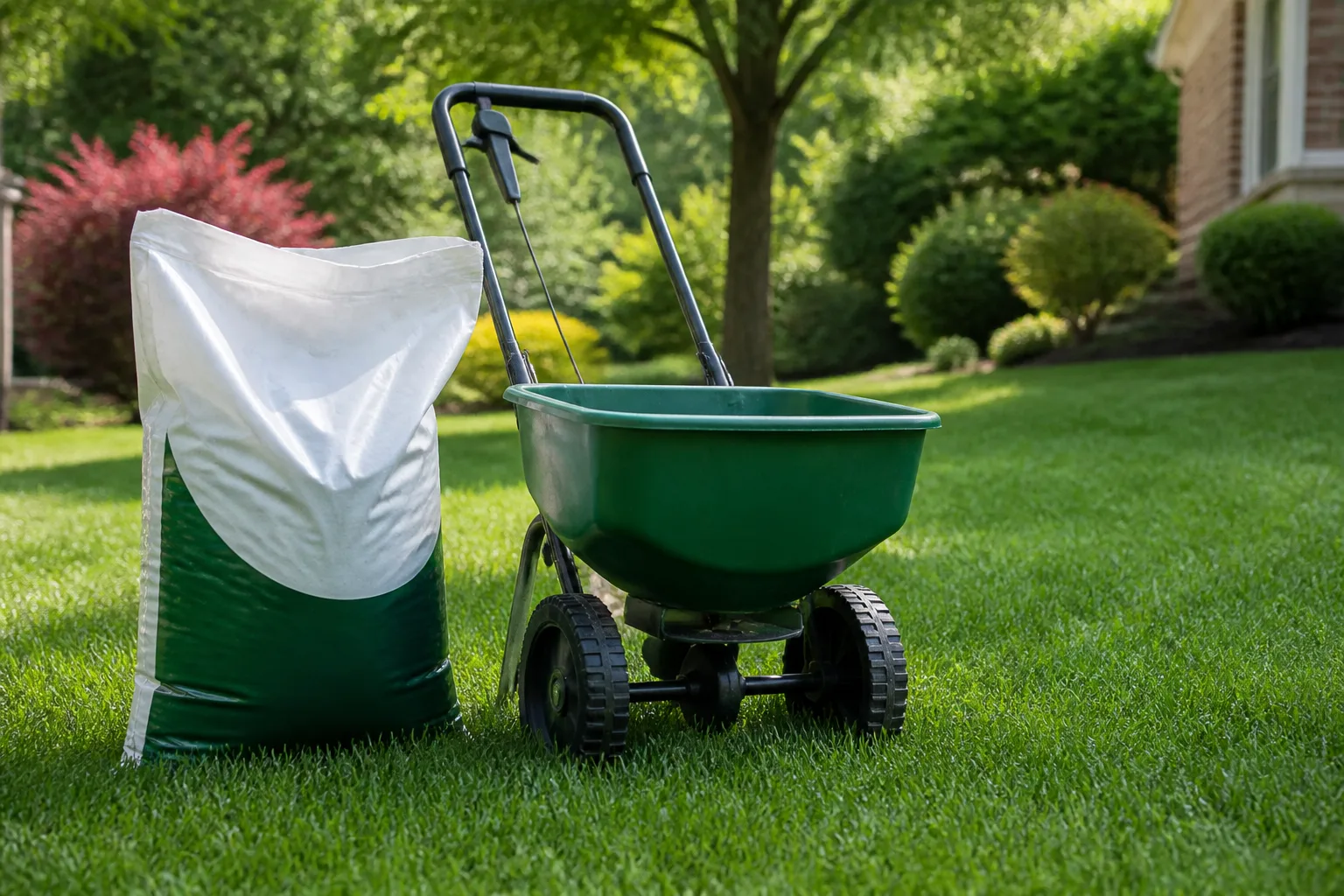
Do not combine fertilizer with an insecticide simply because a bag advertises both. The UC IPM lawn guide warns against preventive insecticide use with fertilizer when there is no pest reason to treat. If the lawn needs nutrients, feed it according to the label; if you suspect insects, identify the cause separately first. Also check local restrictions before spreading: some jurisdictions limit lawn fertilizer near waterways or during particular seasons. Sweep granules from driveways and sidewalks back onto the lawn as the product label allows, and never apply before heavy rain when runoff is likely. A soil test can prevent adding phosphorus or lime that the ground does not need.
6. Overseed thin cool-season lawns early enough
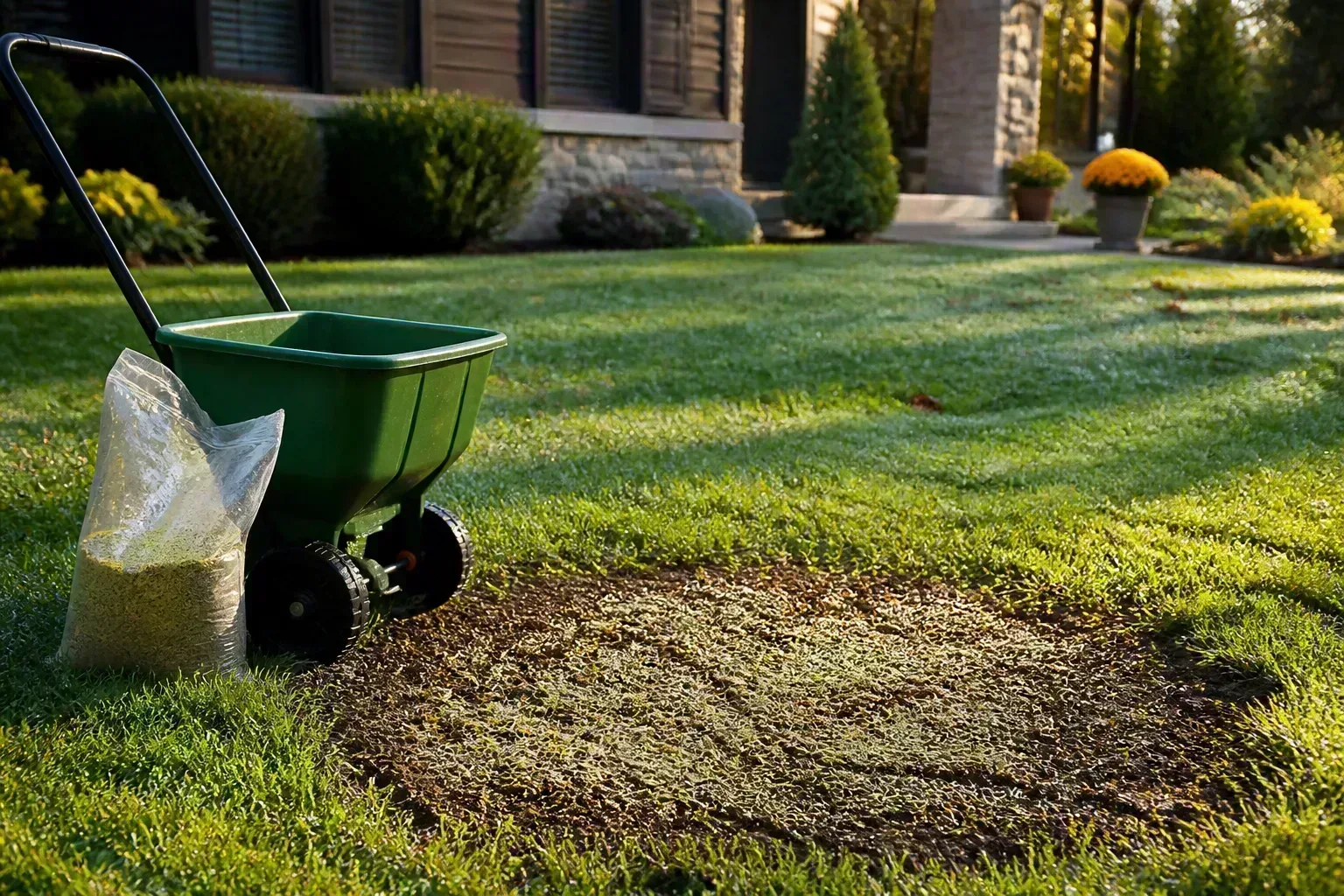
Fall overseeding can thicken a cool-season lawn after summer wear, but the seed needs enough time to germinate and establish before growth shuts down. Choose a mix suited to your climate, shade, and intended use; “sun and shade” blends are not interchangeable with every region’s turf. The Penn State seasonal guide places the best seeding window in late summer to early fall for much of Pennsylvania, while Fine Gardening’s Mid-Atlantic renovation guide advises starting about 45 days before first frost. Those are regional examples, not a nationwide deadline.
Prepare the thin area so seed can reach soil. Mow, remove loose debris, and rake or core-aerate if the surface is compacted; then spread seed at the package rate and gently rake it into contact with the soil. Keep the seed zone consistently moist according to the seed instructions until seedlings are established, then adjust watering as roots deepen.
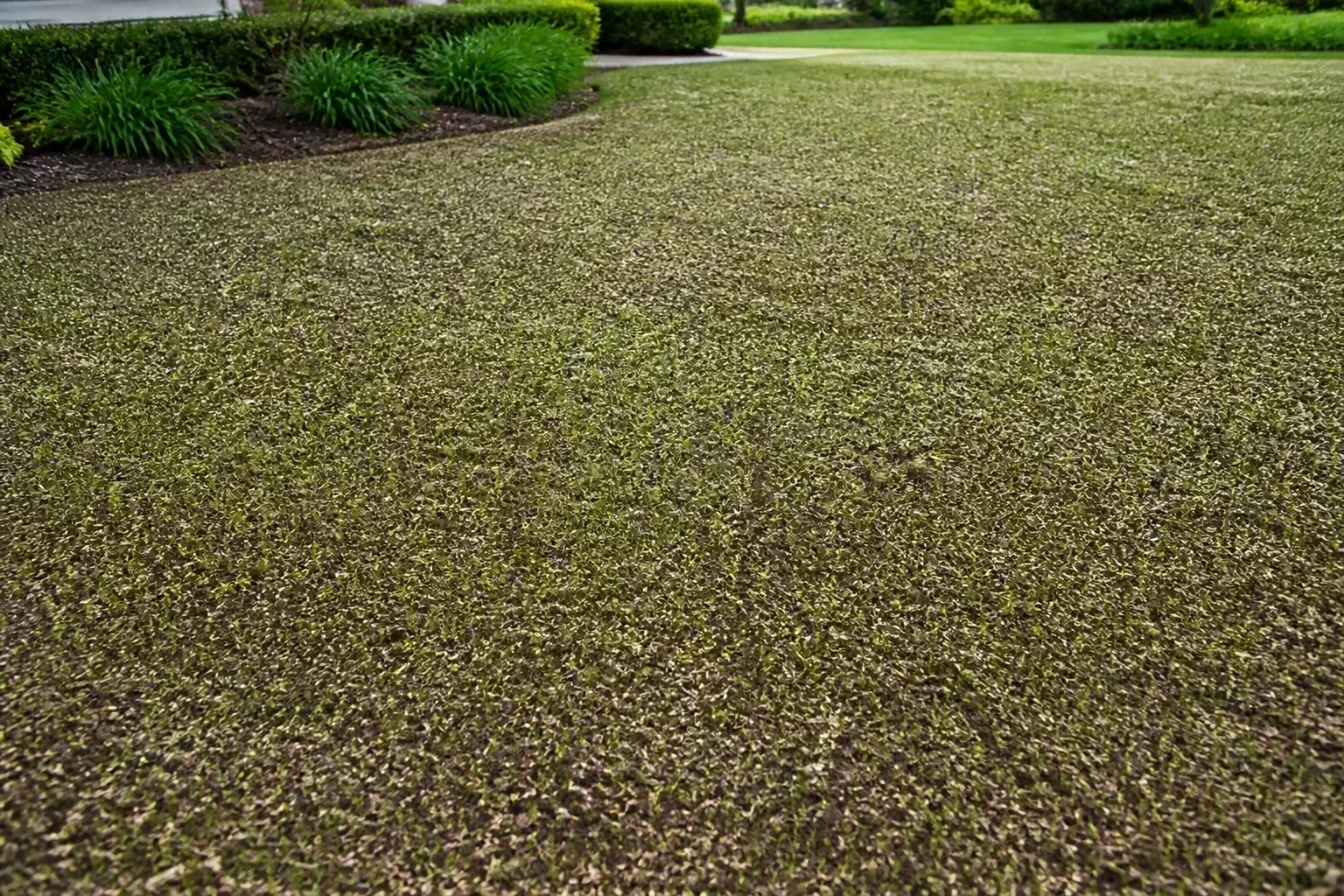
Do not overseed just before a forecasted freeze and expect a spring-green result. If the useful window has passed, wait for the next appropriate season or use sod for a localized repair if your turf type and water supply make that practical. Warm-season grasses often need a different repair window, so do not apply cool-season seeding dates to them. If you plan weed control as well, read both seed and herbicide labels before choosing the order: some products restrict reseeding for a period after application, and newly emerged seedlings may be more sensitive than established turf. Plan the repair calendar around those restrictions rather than guessing or layering products together.
7. Identify weeds before choosing a control
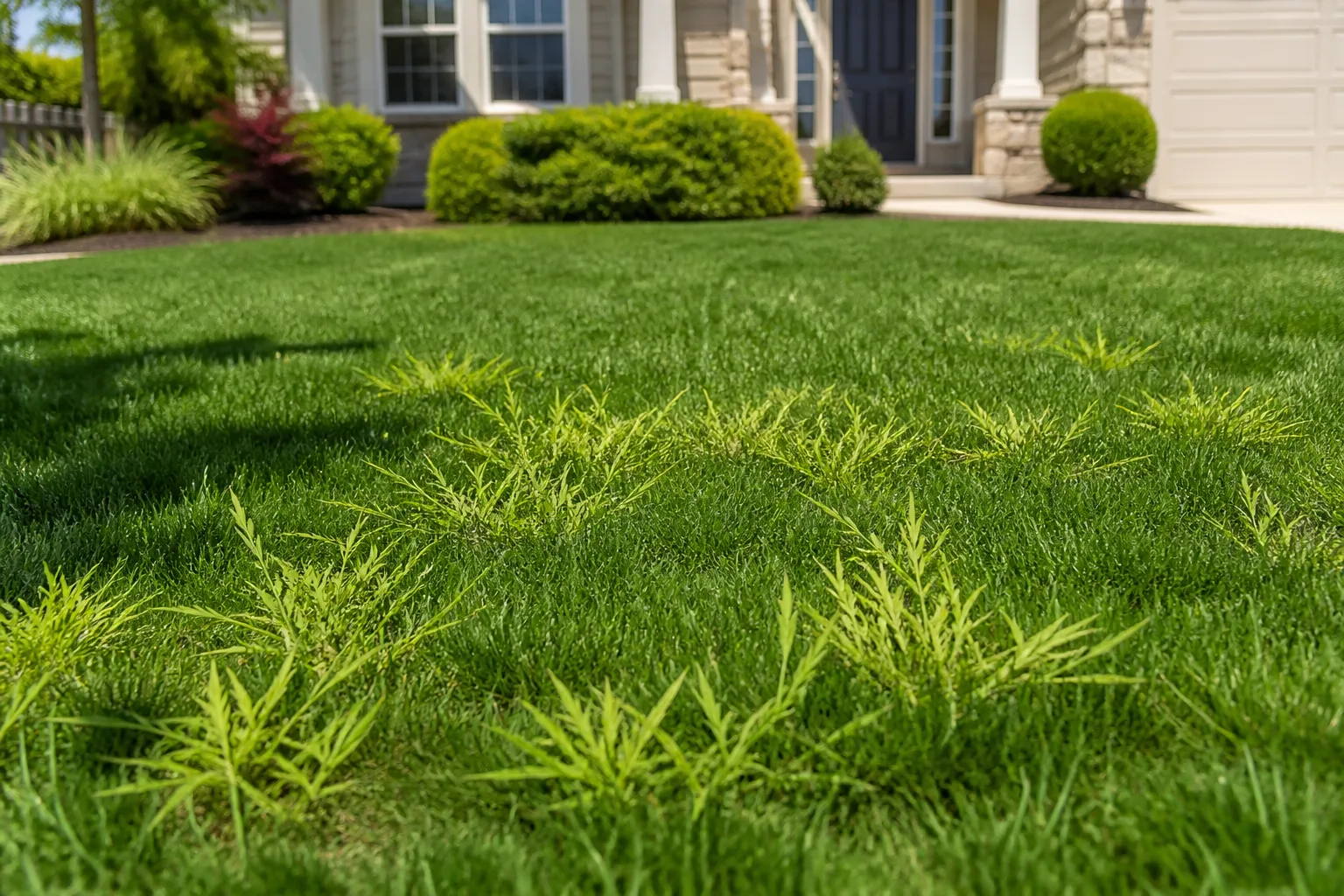
A weed is a symptom as well as a plant: thin grass, compacted soil, shade, or excess moisture can leave open ground for weeds to occupy. First identify whether the invader is a broadleaf perennial, annual grass, sedge, or something else. Pull a few small weeds after rain while soil is soft, taking the root or crown where possible; repeated mowing alone will not eliminate every perennial.
For widespread weeds, choose a product only if its label lists both the weed and your turfgrass. “Selective” does not mean safe on every lawn species, and blanket spraying can injure desirable grass or nearby plants. Penn State’s lawn guidance says weed identification comes before selecting a herbicide and places broadleaf treatment when weeds are actively growing; timing and permitted products vary by region and label.
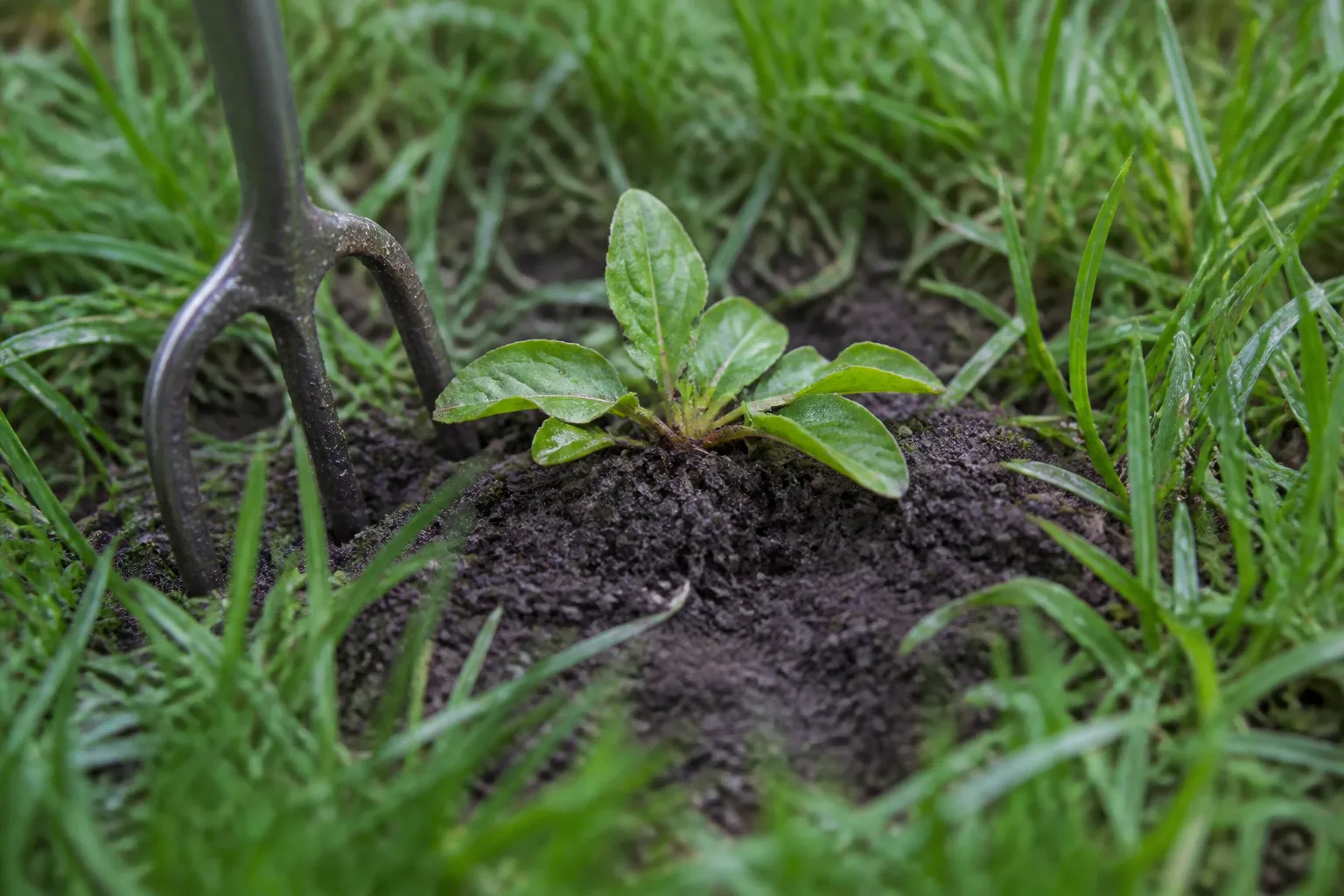
If weeds return, do not keep escalating the chemical treatment without fixing the cause. Overseeding a thin cool-season patch, improving drainage, changing mowing height, or reducing traffic may help a dense lawn compete. For weed identification or a pesticide decision, a local Cooperative Extension office can check the species and local recommendations. For a small number of perennial weeds, careful hand removal can be more precise than treating the whole lawn, but refill the bare opening if soil is exposed. A weed-free-looking surface is not always worth injuring desirable grass; tolerate a few low-impact plants while addressing the conditions that keep turf sparse.
8. Diagnose lawn disease before treating it
Brown patches are not a diagnosis. Drought, excess water, fertilizer or herbicide spill, dog urine, disease, and insects can all produce similar dead or thinning areas. UC IPM specifically cautions that several different problems can look alike in lawns, so note the patch pattern, recent weather, irrigation, and any product applications before deciding what to do.
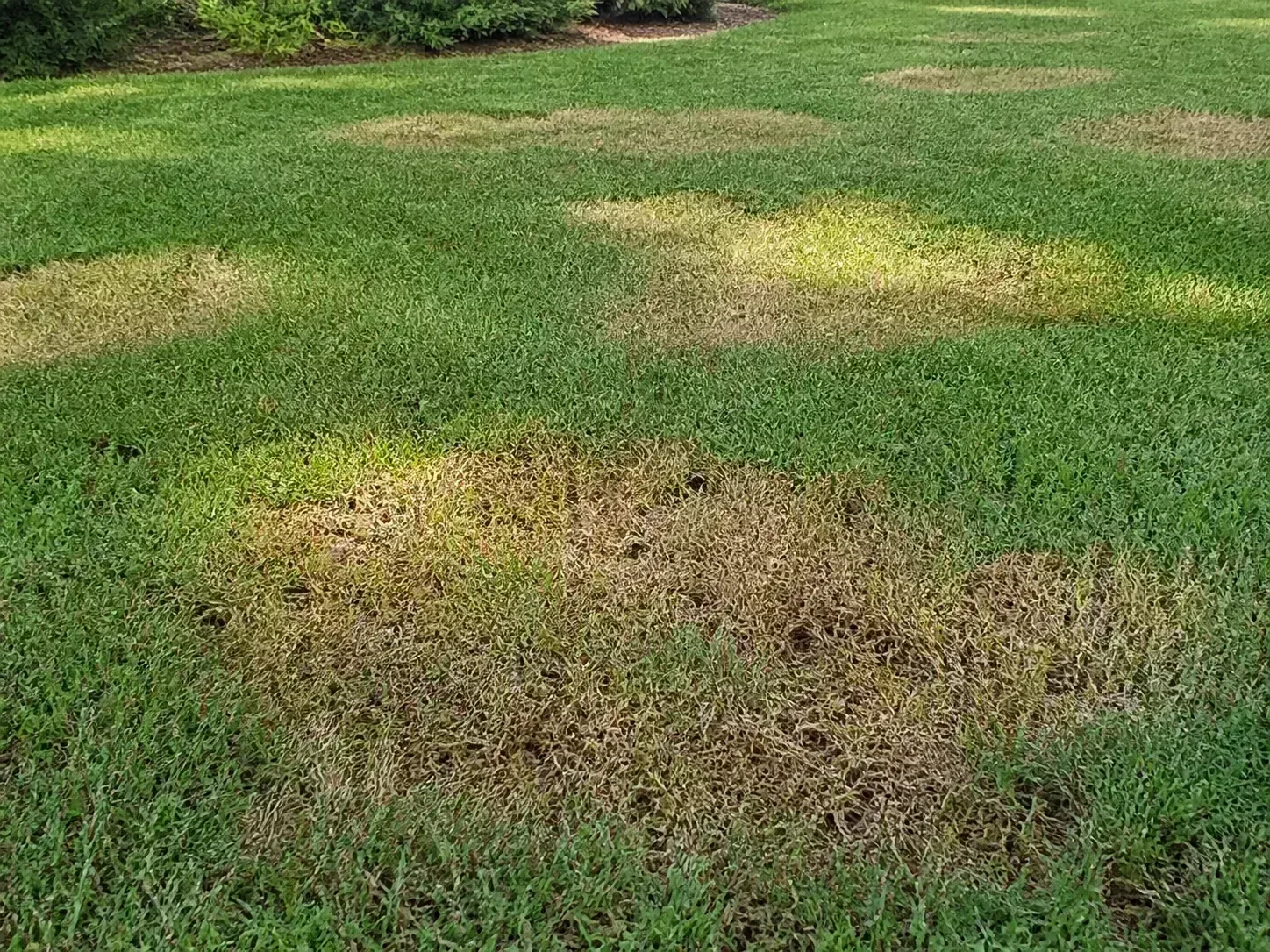
Penn State Extension says accurate diagnosis is the first step in turf disease management. A fungus-specific product will not fix a dry sprinkler zone or a chemical spill, and unnecessary fungicide adds cost and can affect non-target organisms. If damage is spreading or you see distinctive lesions, ask a local extension office or turf specialist to identify it before treating.
Cultural changes may help once the cause is clear: correct watering, mow at the appropriate height, improve airflow, and avoid excess fertilizer. Aeration is for compaction; dethatching is for excessive thatch. Neither should be used as a catch-all “fungus cure.” Before changing anything, mark the edge of a suspicious patch and take a photo from the same place a few days later. A stable area that follows a sprinkler pattern calls for a different check than a spot that expands despite appropriate watering. Keep a short record of rain, irrigation, mowing, and recent applications; those details can help an extension diagnostician distinguish look-alike problems.
9. Confirm insect damage before using a pesticide
Grubs and other lawn insects can injure turf, but a bird pecking at grass or a few insects in the soil do not prove that pests caused a brown patch. Look for roots that have been eaten, turf that lifts unusually easily, and larvae in the affected area; compare the damage with nearby healthy grass. Drought and disease can also weaken turf and attract animals, so check irrigation and root condition too.
UC IPM’s lawn insect guidance emphasizes inspecting and identifying a pest, and says its mere presence does not automatically justify treatment. Action thresholds depend on the pest, turf, and region. Use the local extension threshold and follow the pesticide label if a treatment is warranted; do not apply an insecticide as a routine fall “insurance” step.
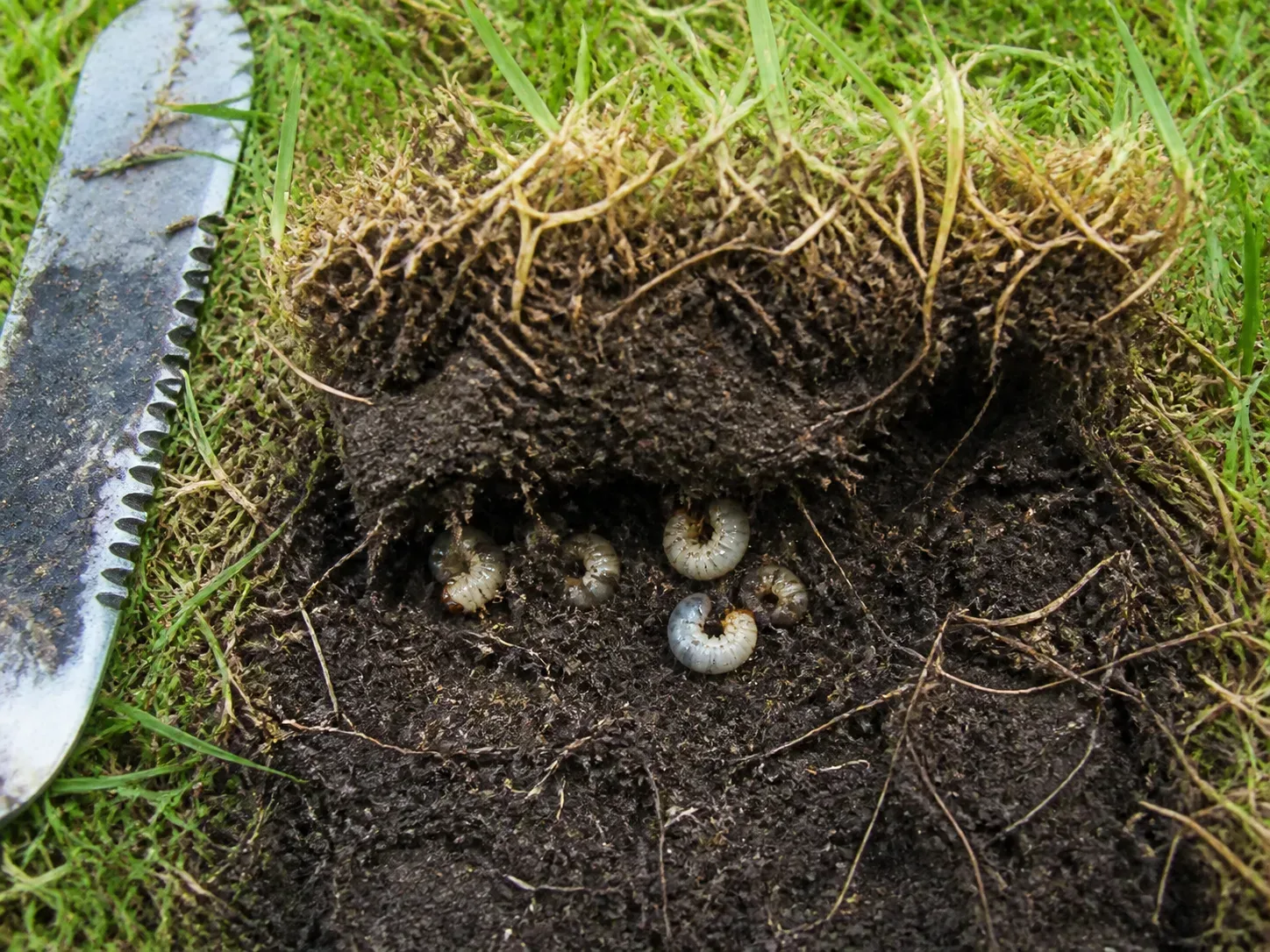
A healthy, dense lawn and appropriate irrigation are part of pest prevention, but they do not replace diagnosis when damage is severe. If you cannot identify the insect, take a photo and a small sample of the affected turf to an extension office before buying a product. Check more than one spot because larvae may be unevenly distributed, and record the affected area rather than treating a whole property based on one small sample. The proper threshold and treatment window differ by insect and region; a product that is timed for one pest may not work for another. Avoid broad treatment when the evidence points to drought, poor drainage, or another non-insect cause.
10. Lay sod only when it can establish
Sod is useful for larger bare areas, steep spots, or a new lawn when waiting for seed is not practical. It is not a routine fall chore. Match the sod species to your climate and sun, prepare a smooth, firm seedbed, and lay pieces close together so roots contact soil without gaps or overlapping seams.
The rolls need water while roots knit into the ground. Penn State Extension notes that sod can be installed at many times if irrigation is available, but hot, dry conditions require more frequent watering and lengthen establishment. Cold soil, frozen ground, or a shrinking fall window can also leave a new lawn poorly rooted before winter, so check regional guidance before scheduling delivery.
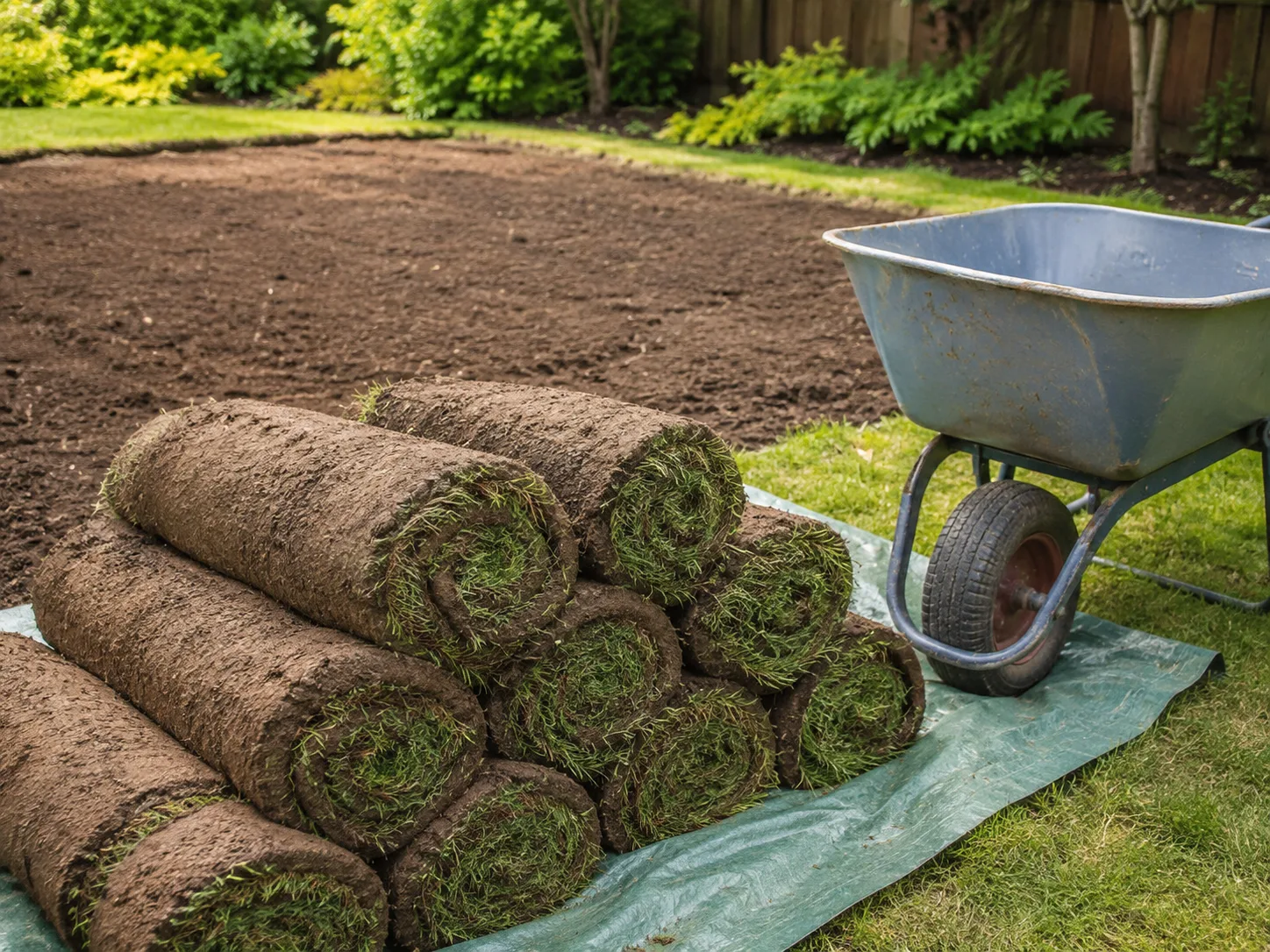
After installation, follow the supplier’s watering and first-mow instructions, and avoid heavy traffic until the pieces resist a gentle lift. If the lawn is only thin rather than bare, overseeding may be cheaper and simpler. If a project is too late for local conditions, protect the soil and wait for the next safe installation window rather than rushing. Stagger seams like bricks so water does not run through a continuous gap, and trim edges tightly around beds and walks. Check moisture beneath the sod edge, not just the leaf surface: a green top can hide a dry root zone. Once roots hold, gradually return to the normal irrigation schedule instead of keeping the new lawn constantly wet.
Put fall lawn tasks in a sensible order
Start by identifying the grass and checking for leaves, bare patches, compacted soil, thick thatch, weeds, or unexplained damage. Clear heavy leaf mats first, then mow while the turf is growing. If the lawn needs repair, decide whether it has time for seed or whether sod is more suitable; do not aerate or dethatch automatically just because you plan to seed.
Use a soil test before fertilizing or liming, and diagnose disease or insect damage before using a pesticide. If your lawn is healthy, a little leaf mulching, normal mowing, and keeping equipment ready may be all it needs this fall. The best task list is the one that fits your grass and solves the problem you can actually see. When the local repair window is closing, prioritize the operation that must happen while the grass is actively growing, then defer optional cleanup or cosmetic projects. If the lawn has stopped growing, frozen soil, or no reliable water for new seed or sod, the sensible fall plan may simply be leaf management, safe mowing as needed, and a note to reassess in spring.
Conclusion
Fall lawn care works best as a set of choices, not a fixed ten-step prescription. Remove heavy leaf mats, mow without scalping, and use aeration, dethatching, fertilizer, seed, sod, or pest control only when the grass type, soil, and symptoms call for them.
Cool-season turf often has a useful fall recovery window, while warm-season grass follows another calendar. Identify the lawn first, use local extension timing and product labels, and skip any job whose conditions are wrong. That approach leaves you with a healthier lawn and fewer unnecessary treatments when spring arrives.