Majesty Palm Care Guide – Light, Water, Humidity & Pet
Ravenea rivularis
Majesty Palm care for Ravenea rivularis: bright indirect light, evenly moist draining mix, high humidity, warm rooms, nutrient checks, and ASPCA-listed safety for cats, dogs, and horses.
Majesty Palm Care Guide (Ravenea rivularis)
Start with wateringThe most common care mistake for Majesty PalmWatering guide →Majesty Palm care essentials
Light
bright indirect light with gentle, filtered morning sun
Water
Keep the potting mix evenly moist but not waterlogged. Water thoroughly when the surface begins to dry slightly, then empty the saucer; do not let the whole root ball dry out.
Soil
Use a moisture-retentive but freely draining palm or houseplant mix. A standard indoor mix amended with a little peat or coir can hold moisture; add perlite or fine bark if it stays dense or wet for too long.
Humidity
High; use a humidifier when indoor air is dry
Temperature
18–29°C (65–85°F)
Fertilizer
Feed lightly with a weak liquid fertilizer once or twice during active growth; stop feeding in winter. Do not use fertilizer as the first response to yellow fronds.
About Majesty Palm
Majesty Palm is native to Madagascar, especially wet river and stream margins, typically reaches 5–10 ft (1.5–3 m) indoors; up to about 100 ft (30 m) in tropical landscapes indoors, with fast in its native habitat; slow indoors growth. Majesty Palm has a upright growth habit and part of the Arecaceae family. It is also known as Majestic Palm.
| Detail | Information |
|---|---|
| Also known as | Majestic Palm |
| Native region | Madagascar, especially wet river and stream margins |
| Mature size | 5–10 ft (1.5–3 m) indoors; up to about 100 ft (30 m) in tropical landscapes |
| Growth rate | Fast in its native habitat; slow indoors |
| Growth habit | Upright |
| Scientific name | Ravenea rivularis |
| Family | Arecaceae |
How to care for Majesty Palm?
How much light does Majesty Palm need?
bright indirect light with gentle, filtered morning sun
- bright indirect light with gentle, filtered morning sun - bright indirect light with gentle, filtered morning sun.
When should you water Majesty Palm?
Keep the potting mix evenly moist but not waterlogged. Water thoroughly when the surface begins to dry slightly, then empty the saucer; do not let the whole root ball dry out.
- Feel the top 2–3 cm of mix and check pot weight - Keep the potting mix evenly moist but not waterlogged.
- water before the root ball becomes fully dry - Water thoroughly when the surface begins to dry slightly, then empty the saucer; do not let the whole root ball dry out.
- and confirm excess water can drain away - Keep the potting mix evenly moist but not waterlogged.
- Drain excess water - Keep the potting mix evenly moist but not waterlogged.
What soil works best for Majesty Palm?
Use a moisture-retentive but freely draining palm or houseplant mix. A standard indoor mix amended with a little peat or coir can hold moisture; add perlite or fine bark if it stays dense or wet for too long.
- standard palm or houseplant potting mix - Use a moisture-retentive but freely draining palm or houseplant mix.
- peat or coir for moisture retention - A standard indoor mix amended with a little peat or coir can hold moisture; add perlite or fine bark if it stays dense or wet for too long.
- perlite or fine bark for drainage - A standard indoor mix amended with a little peat or coir can hold moisture; add perlite or fine bark if it stays dense or wet for too long.
Grower notes for Majesty Palm
What matters most with Majesty Palm
Majesty Palm is easiest to grow when the care checkpoint is simple: bright indirect light with gentle, filtered morning sun. Pair that with a moisture-retentive but freely draining potting mix, and avoid harsh direct sun or leaving the container in standing water.
Best placement in a real home
Majesty Palm belongs where bright indirect light and some gentle filtered sun are realistic for most of the day, not only where the pot looks good. Keep the mix evenly moist but not waterlogged; check often in warm, bright periods and water when the surface begins to dry slightly. If the pot stays wet, verify drainage and light before adding more water. Humidity target: High; use a humidifier when indoor air is dry. Temperature comfort zone: 18–29°C (65–85°F).
Tell Majesty Palm apart from other palms
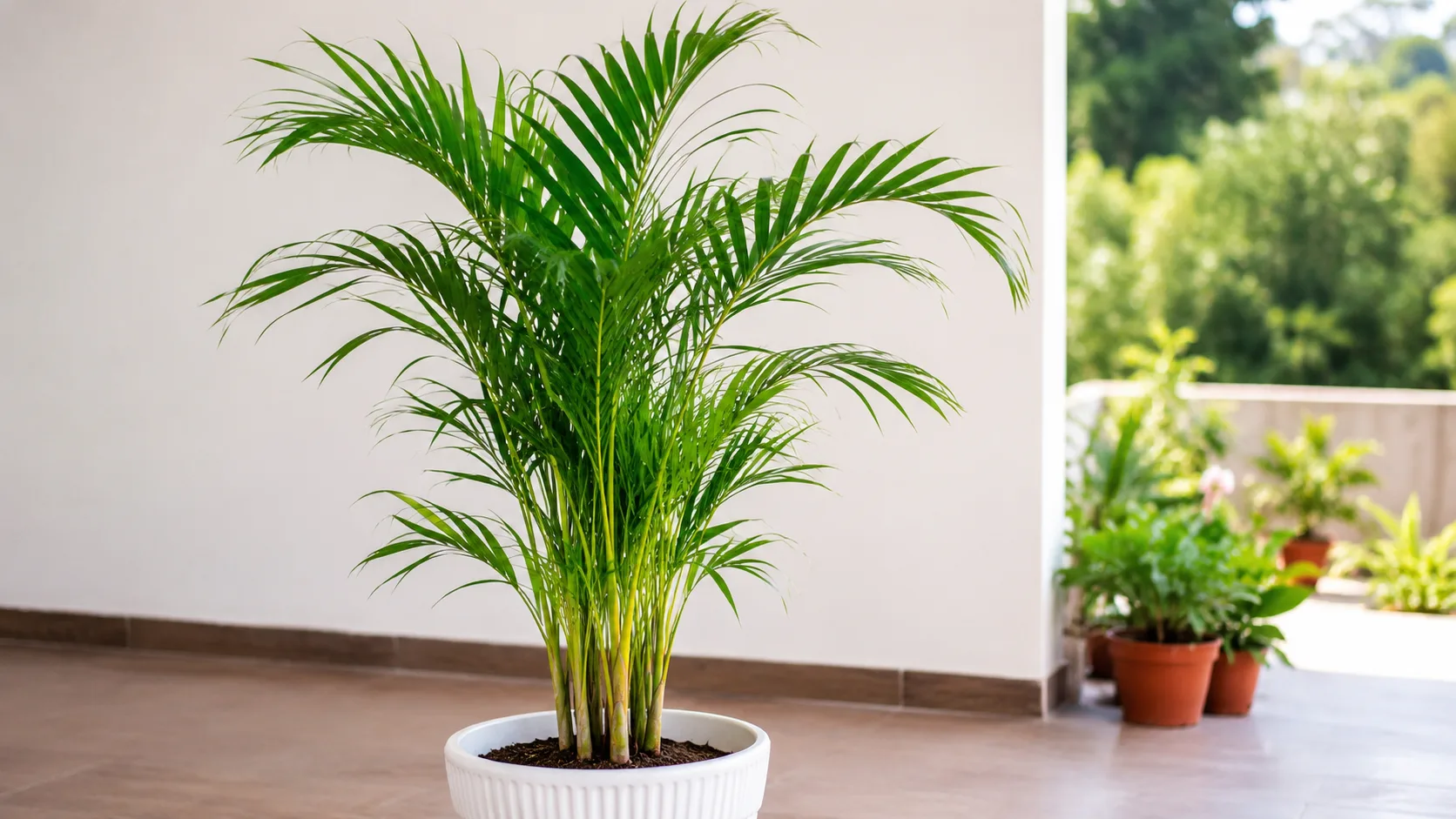
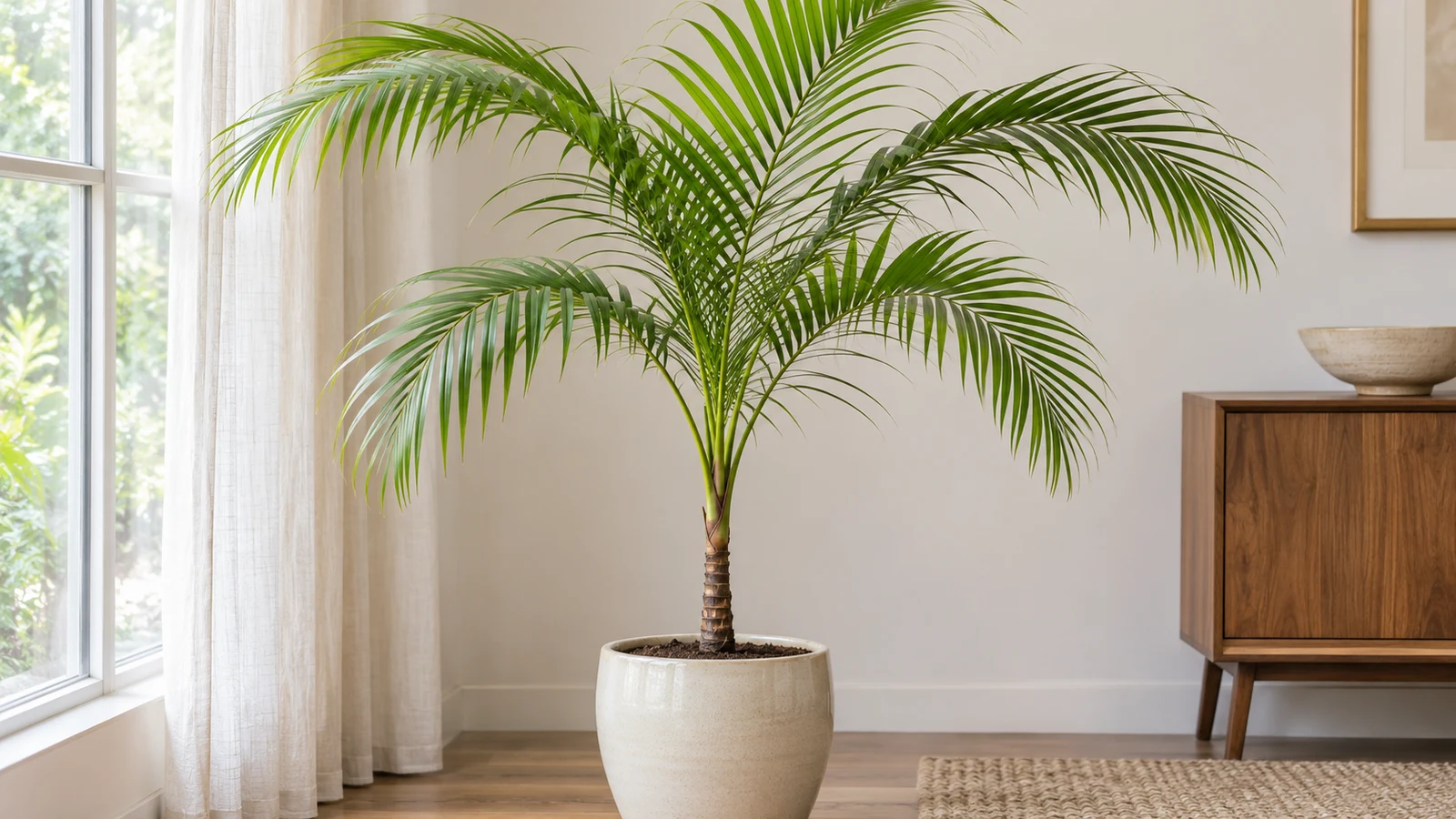
Majesty Palm is Ravenea rivularis, not Kentia palm (Howea forsteriana) or Areca palm (Dypsis lutescens), so do not transfer care advice by the broad label “indoor palm.” The species is solitary even though growers often sell several young plants together in one pot; its long, arching pinnate fronds and strong need for bright light help identify its care profile.
Yellow fronds need a diagnosis before feeding
Yellowing can follow too much or too little water, inadequate light, low humidity, or a nutrient deficiency. Check the moisture and drainage, placement, and underside of fronds before changing fertilizer. If the palm is actively growing and its basic conditions are sound, feed weakly once or twice in the growing season and stop in winter.
Indoor growing has real limits
Majesty Palm is a challenging indoor palm because it wants bright light, warm temperatures, high humidity, and steady moisture without sitting in saturated soil. It grows slowly indoors but can still reach about 5–10 feet, so allow headroom and space for its broad arching fronds. Low humidity can make pest pressure worse; inspect leaf undersides regularly.
Safety around pets
ASPCA lists Ravenea rivularis as non-toxic to cats, dogs, and horses. Its database does not establish safety for rabbits, birds, turtles, or tortoises, so keep the plant out of reach of those animals. Any plant material may still upset a cat or dog's stomach if chewed.
Is Majesty Palm pet safe?
ASPCA lists Majesty Palm (Ravenea rivularis) as non-toxic to cats, dogs, and horses. Any plant material may still cause stomach upset if chewed; ASPCA's listing does not establish safety for rabbits, birds, turtles, or tortoises, so keep the palm out of their reach.
ASPCA lists Ravenea rivularis as non-toxic to cats, dogs, and horses. The listing does not evaluate every pet group, and chewing any plant material may still cause gastrointestinal upset in cats and dogs.
Watering Majesty Palm
For Majesty Palm, feel the top 2–3 cm of mix and check pot weight; water before the root ball becomes fully dry, and confirm excess water can drain away. and water check often during warm, bright growth; water when the upper layer begins to dry rather than following a fixed calendar. Check less often when winter light and growth slow. Reduce frequency as light and growth slow in winter, but keep the root zone from drying completely. Resume more frequent checks as warm, bright growth returns.
| Detail | Information |
|---|---|
| How often | Check often during warm, bright growth; water when the upper layer begins to dry rather than following a fixed calendar. Check less often when winter light and growth slow. |
| How to check | Feel the top 2–3 cm of mix and check pot weight; water before the root ball becomes fully dry, and confirm excess water can drain away. |
| Seasonal changes | Reduce frequency as light and growth slow in winter, but keep the root zone from drying completely. Resume more frequent checks as warm, bright growth returns. |
Signs of overwatering
- yellowing fronds while the mix remains wet
- a sour smell or persistently saturated mix
- declining roots or a pot that does not drain
Signs of underwatering
- mix drying completely between waterings
- lower fronds yellowing or dropping
- crispy tips alongside a light, dry pot
Soil & potting for Majesty Palm
Use a mix of standard palm or houseplant potting mix, peat or coir for moisture retention, perlite or fine bark for drainage for Majesty Palm. Moisture-retentive and well-drained; never leave the pot standing in water. Target soil pH around Mildly acidic to neutral is suitable for container culture; use a stable commercial mix rather than adjusting pH without a test. Repot every 1–2 years, or when crowded roots, rapid drying, or an unstable top-heavy pot show that the container needs attention., ideally in spring or early active growth.
| Detail | Information |
|---|---|
| Recommended mix | standard palm or houseplant potting mix, peat or coir for moisture retention, perlite or fine bark for drainage |
| Drainage | Moisture-retentive and well-drained; never leave the pot standing in water. |
| Soil pH | Mildly acidic to neutral is suitable for container culture; use a stable commercial mix rather than adjusting pH without a test. |
| Repotting frequency | Every 1–2 years, or when crowded roots, rapid drying, or an unstable top-heavy pot show that the container needs attention. |
| Best season to repot | Spring or early active growth |
Signs it needs repotting
- roots crowding the container
- mix drying much faster than before
- the palm becoming unstable or top-heavy
Humidity & temperature for Majesty Palm
Majesty Palm prefers high; use a humidifier when indoor air is dry, though normal home humidity is usually fine. Keep temperatures around 18–29°C (65–85°F).
| Detail | Information |
|---|---|
| Humidity | High; use a humidifier when indoor air is dry - normal home humidity is fine. |
| Ideal temperature | 18–29°C (65–85°F) |
Fertilizer & pruning for Majesty Palm
Use feed lightly with a weak liquid fertilizer once or twice during active growth; stop feeding in winter. Do not use fertilizer as the first response to yellow fronds. for Majesty Palm.
| Detail | Information |
|---|---|
| Fertilizer type | Feed lightly with a weak liquid fertilizer once or twice during active growth; stop feeding in winter. Do not use fertilizer as the first response to yellow fronds. |