21 Types of Palm Tree Varieties to Grow
Compare 21 palm tree varieties by frond type, hardiness, mature size, and indoor vs outdoor fit. ID tips, cold-hardy picks, and care rules that prevent root rot.
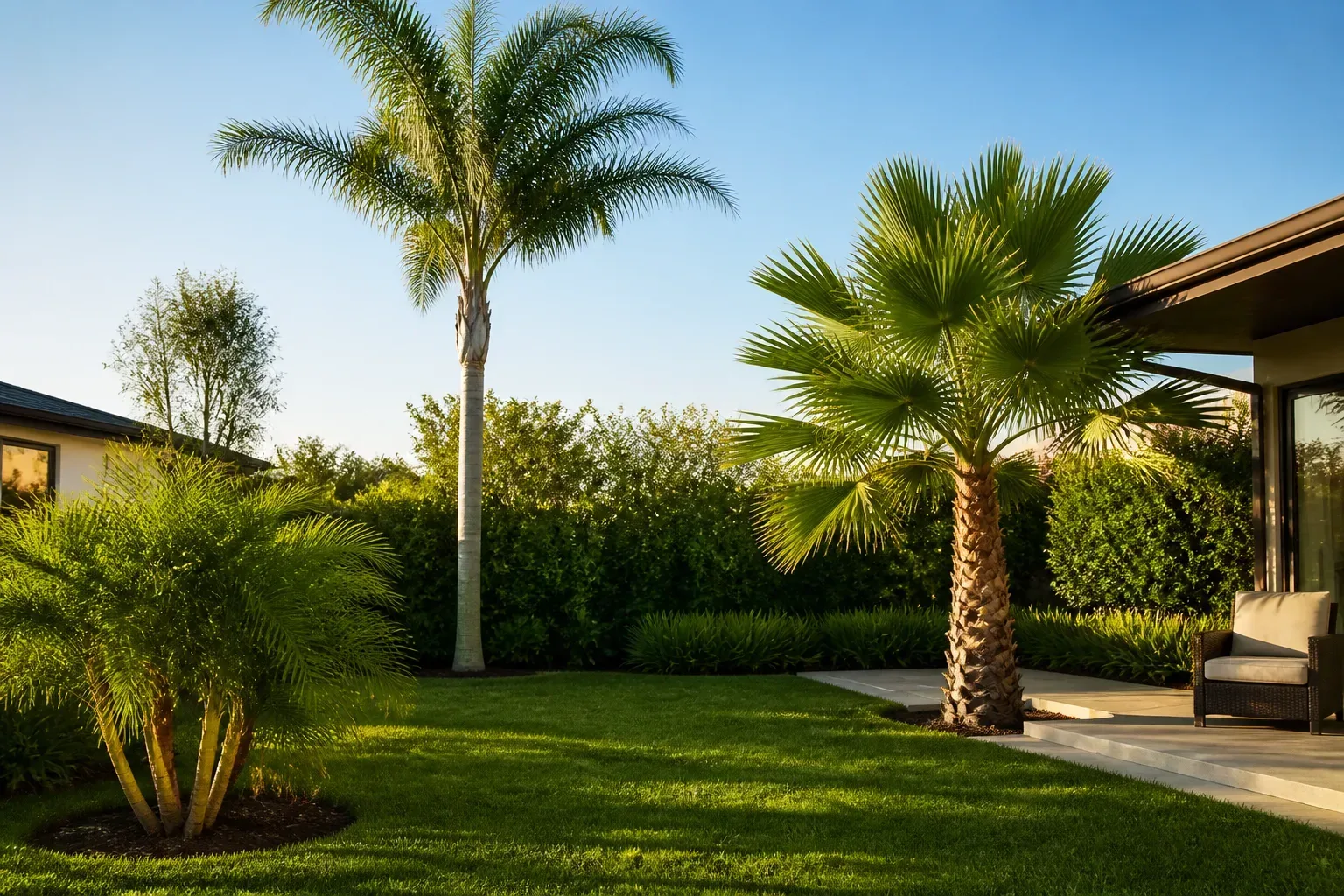
Walk the palm aisle at a big-box nursery and every pot looks tropical — but the plants behind those tags range from 80-foot skyline trees to desk-sized houseplants that tolerate a north window. True palms belong to the family Arecaceae; they are not cycads like sago “palm,” which is a completely different, highly toxic plant. Before you fall for a photo of swaying fronds, you need three filters: frond shape, USDA hardiness zone, and mature height. This guide covers 21 palm varieties you are most likely to see at nurseries — grouped by how people actually use them, with spacing warnings, disease notes, and honest indoor guidance so you do not plant a skyline tree in a 20-foot lot or put a humidity-loving majesty palm in a dry hallway.
How to Tell Palms Apart Before You Buy
Nursery tags often say “tropical palm” and stop there. Identification starts with what you can see in the first ten seconds.
Fan Palms vs Feather (Pinnate) Palms
Fan ( palmate ) palms carry fronds that radiate from a central point like a folded hand — think windmill, cabbage palmetto, and Mexican fan palm. Feather ( pinnate ) palms have leaflets arranged along a central midrib like a feather — date palm, queen palm, kentia, and areca. Fan-leaf species tend to handle brief cold snaps better than most pinnate types, which is why windmill and cabbage palms push into zone 8 while queen and foxtail palms stay firmly subtropical. When a seller cannot tell you which group you are holding, step back until they can; cold tolerance and mature size follow frond architecture more reliably than marketing copy.
Size, Zone, and Placement Quick Checks
Use this table before you commit to a hole in the ground or a permanent floor spot indoors. Heights are typical outdoor mature ranges in warm climates — container specimens stay smaller but still outgrow apartments if you pick the wrong species.
| Palm group | Examples in this guide | Typical outdoor height | USDA zones (general) | Best fit |
|---|---|---|---|---|
| Cold-hardy landscape | Windmill, cabbage, jelly, European fan, saw palmetto | 6–40 ft | 8–11 | Temperate yards, coastal SE |
| Warm-climate skyline | Mexican fan, California fan, date, queen, Chinese fan | 30–100 ft | 9–11 | Large lots, parks, avenues |
| Compact outdoor | Foxtail, Manila, bottle, robellini | 6–30 ft | 10–11 | Patios, pool decks, small yards |
| Indoor / shade tolerant | Kentia, parlor, lady, areca, cat, majesty | 6–30 ft outdoors; often 6–10 ft indoors | 10–11 outdoor; indoor anywhere with heat | Rooms, offices, bright corners |
| Collector / humidity | Ruffled fan | 10–15 ft | 10–11 | Greenhouse, humid sunroom |
If your lot line is closer than half the mature spread listed on a tag, choose a smaller species or keep the palm in a pot you can move. Palms are expensive to remove once trunks thicken.
Shared Palm Care Rules That Prevent Root Rot
Every species in this list shares one fatal weakness: roots that sit in wet soil. Palms are not lawn turf — they want deep, infrequent irrigation in most landscapes and pots that drain fast.
Light, Drainage, and Watering Rhythm
Light: Match the species to your brightest realistic spot. Outdoor palms labeled “full sun” need six or more hours of direct light once established. Indoor palms vary widely — parlor and lady palms tolerate lower light; majesty and areca want bright filtered windows. Soil: Loose, well-draining mixes are non-negotiable. Sandy loam outdoors; for containers, use a palm or general potting mix amended with perlite or coarse bark so water exits within minutes. Water: Soak the root zone when the top few inches of soil feel dry outdoors; for indoor pots, water when the upper third of the mix dries. Empty saucers. UF/IFAS notes that windmill palm tolerates drought once established but still benefits from deep watering during dry spells — the pattern applies to most landscape palms (UF/IFAS Gardening Solutions). Fertilizer: Use a slow-release palm formula or balanced fertilizer with magnesium and manganese during active growth; yellowing on older fronds often signals deficiency, not thirst. Pruning: Never cut the growing tip — palms do not branch like oaks. Remove only fully brown fronds, and on fan palms that hold dead leaves as a “skirt,” trim for fire safety if you live in dry climates.
Cold-Hardy Palms for Temperate Landscapes
These species let you grow real palms far north of Miami — provided you choose the right one and accept that tropical pinnate palms are not interchangeable with them.
Windmill, Cabbage, and Jelly Palms
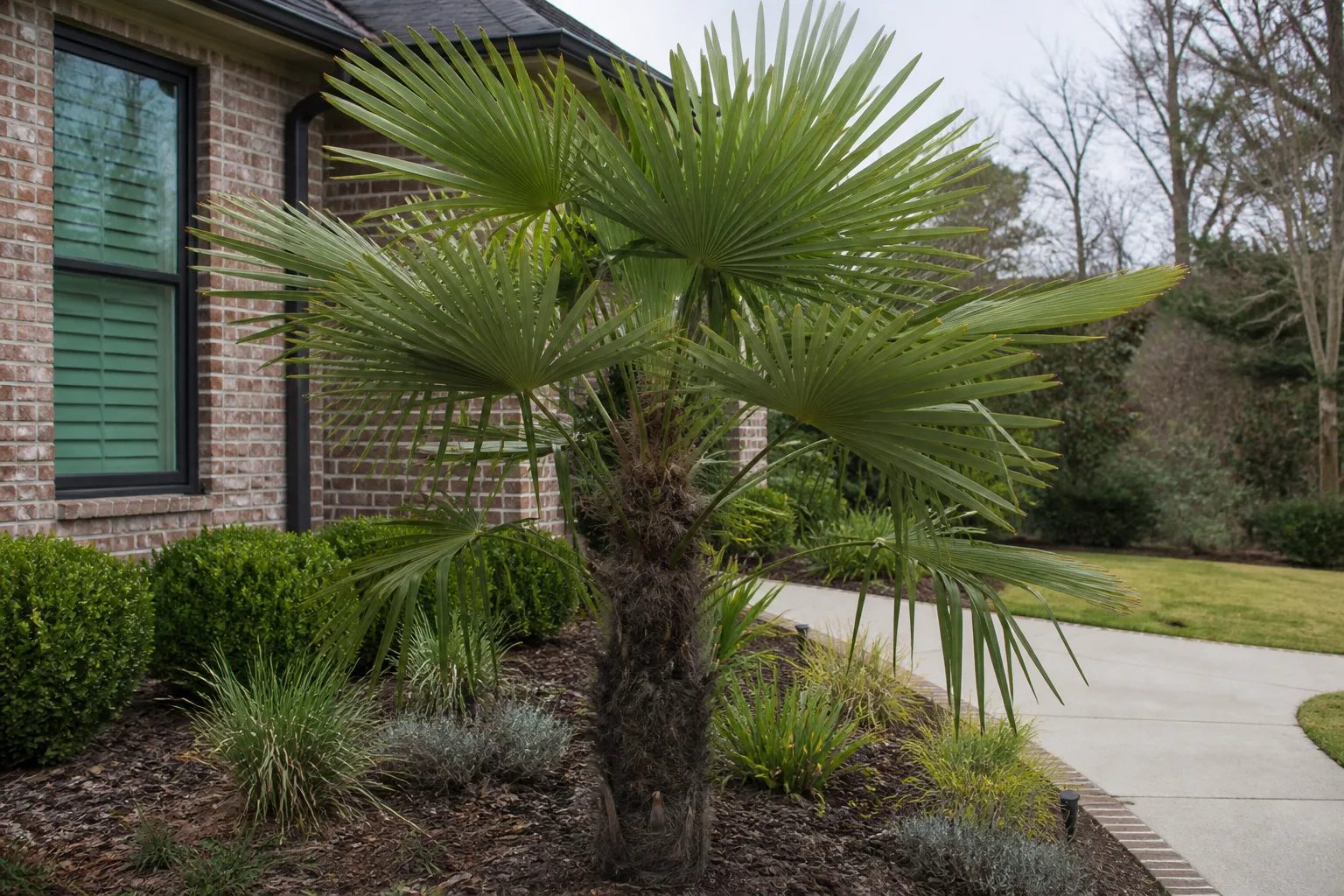
Windmill palm (Trachycarpus fortunei) is the cold-hardy workhorse. UF/IFAS lists it for USDA zones 8–11, noting it survives brief dips toward 10°F when established and sheltered from icy wind (UF/IFAS Gardening Solutions). Fan-shaped fronds on a hairy trunk reach roughly 10–40 feet. It prefers partial shade in hot climates and even moisture when young. Cabbage palm (Sabal palmetto), the state tree of Florida and South Carolina, handles salt, wind, and cold to about 15°F according to USDA Forest Service silvics data (USDA FS). Mature height tops out near 30 feet with a smooth, bootless trunk in many landscapes. Jelly palm (Butia capitata) brings curving blue-green pinnate fronds with surprising cold tolerance — often rated zones 8–10 — in a compact 10–20 foot frame. It produces edible fruit used for jelly, though harvest is optional for ornamental use. All three want drainage first; winter wet kills more cold-hardy palms than frost alone.
European Fan Palm and Saw Palmetto
European fan palm (Chamaerops humilis) forms a clumping, shrubby fan palm with silver-green leaves, typically 6–15 feet tall. The RHS describes it as one of the hardier palms, tolerating brief cold when dry (RHS). It works in zones 8–11, in full sun to partial shade, and adapts to containers on sunny patios. Saw palmetto (Serenoa repens) stays lower — 8–15 feet — with a spreading, saw-edged frond stem that gives the species its name. Native to southeastern coastal plain, it tolerates drought, salt spray, and shade, making it a workhorse for understory and dune plantings in zones 8–10. Neither species delivers a single tall trunk silhouette; both read as sculptural shrubs — plan spacing for spread, not just height.
Tall Palms for Warm-Climate Yards
If you have acreage, avenue planting space, or a commercial landscape in zones 9–11, these palms make the iconic skyline silhouette — and several carry maintenance or pest baggage Spruce-style blurbs skip.
Mexican, California, and Chinese Fan Palms
Mexican fan palm (Washingtonia robusta) shoots up fast to 50–100 feet with a slender trunk and large fan fronds. It needs full sun, deep irrigation when dry, and room — lots of room. The California Invasive Plant Council lists it as moderately invasive in parts of California, where seedlings escape into wildlands (Cal-IPC). It is also less drought- and storm-tolerant than marketing suggests and can carry fungal diseases. Plant it only where height is an asset, not a future liability. California fan palm (Washingtonia filifera) is the native counterpart, slower to 30–80 feet, with a thicker trunk and persistent dead-frond skirt that becomes a fire hazard if not trimmed in dry regions. Budget for regular skirt removal or hire arborists who know fan palms. Chinese fan palm (Livistona chinensis) offers a medium fan crown at 30–50 feet, slow enough for some suburban streets in zones 9–11. It accepts full sun to partial shade and even moisture; Missouri Botanical Garden notes its widespread landscape use in warm regions (Missouri Botanical Garden).
Date Palm and Queen Palm
Date palm (Phoenix dactylifera) is the classic feather-frond food palm, reaching 50–80 feet with arching gray-green leaves. It needs full sun, sharp drainage, and space for suckers if you grow multiple trunks. Young plants work in large containers temporarily; mature specimens belong in orchards or estate yards, not standard suburban plots. Queen palm (Syagrus romanzoffiana) is the graceful 50–60 foot feather palm common along streets in zones 9–11. It is drought tolerant once established and accepts a range of soils if drainage holds. Watch for nutrient deficiencies (frizzling fronds) and regional lethal yellowing risk in Florida and parts of the Gulf — a phytoplasma that kills queen palms and makes replacement species choice a local decision, not a catalog default.
Compact Palms for Patios and Small Lots
When a skyline tree is out of the question, these species deliver tropical shape without overwhelming a pool deck or courtyard.
Foxtail palm (Wodyetia bifurcata) earns its name from bushy, plume-like pinnate fronds on a smooth trunk, typically 8–30 feet. It wants full sun to light shade, excellent drainage, and warm zones 9–11. It can live indoors temporarily with very bright light but is primarily an outdoor specimen. Manila palm (Adonidia merrillii), often sold as Christmas palm, stays 15–25 feet with a clean trunk and red winter fruit clusters in frost-free climates (zones 10–11). It is frost-sensitive — treat it as indoor/outdoor only where nights stay above freezing. Bottle palm (Hyophorbe lagenicaulis) is slow, 10–15 feet, with a swollen trunk base that looks like a bottle in youth. It needs even moisture, full sun, and humid warmth (zones 10–11); perfect for sheltered courtyards and large containers. Robellini palm (Phoenix roebelenii), the pygmy date palm, is the small-yard feather palm at 6–12 feet, happy in zones 10–11 outdoors and long-term containers on warm decks. It prefers slightly rootbound pots indoors and shows manganese deficiency as yellowing if you skip palm fertilizer — a soil test beats guessing.
Best Palms for Indoors and Low-Light Rooms
Indoor palms fail for two predictable reasons: too little light or too erratic watering. Match species to your actual window and humidity, not the showroom display.
Kentia, Parlor, and Lady Palms
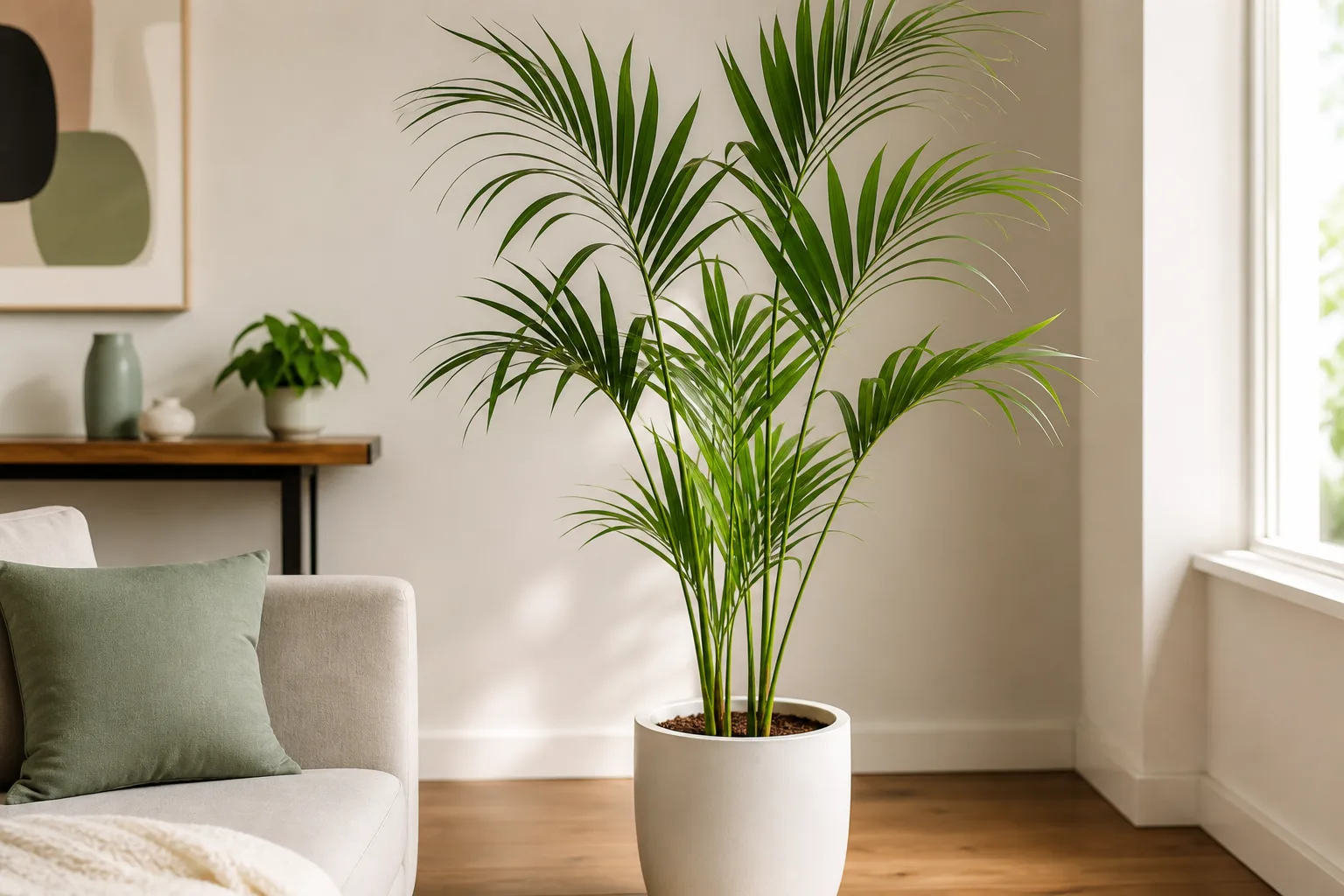
Kentia palm (Howea forsteriana) is the gold standard for elegant interiors — arching pinnate fronds, tolerance for medium indirect light, and less fuss about humidity than true rainforest palms. Outdoors it reaches up to 40 feet in zones 9–11; indoors it grows slowly for years. Parlor palm (Chamaedorea elegans) is the beginner classic, accepting lower light than most palms and staying 6–16 feet outdoors in warm climates (zones 10–12). Missouri Botanical Garden lists it among the most widely grown indoor palms (Missouri Botanical Garden). Keep soil evenly moist but never soggy.
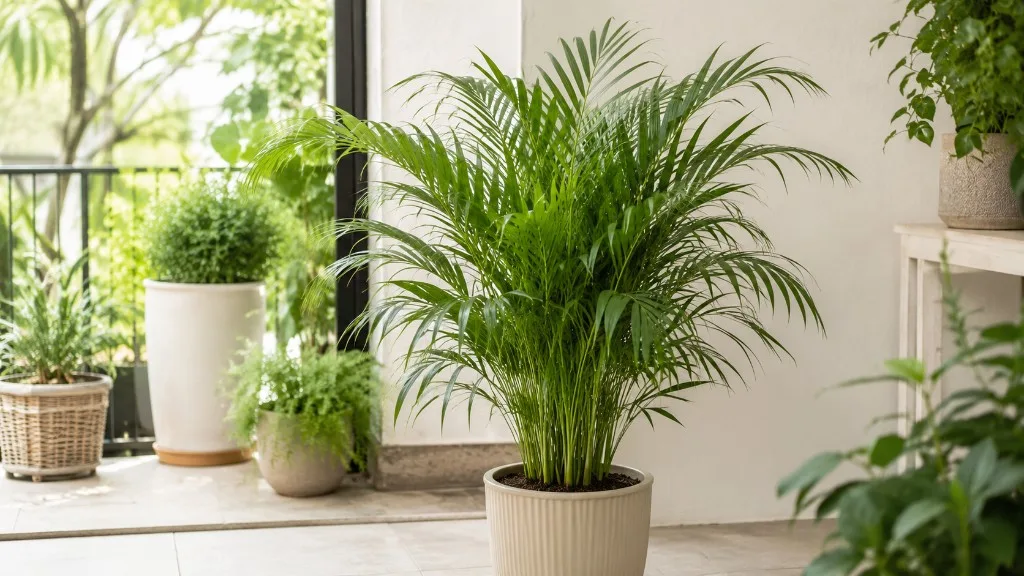
Lady palm (Rhapis excelsa) forms a dense, clumping habit with deeply divided fan-like segments, thriving in partial shade indoors and shady shrub borders outdoors (zones 9–11). It tolerates lower humidity than areca and handles neglect better than majesty — ideal for offices and north-facing rooms.
Areca, Cat, and Majesty Palms
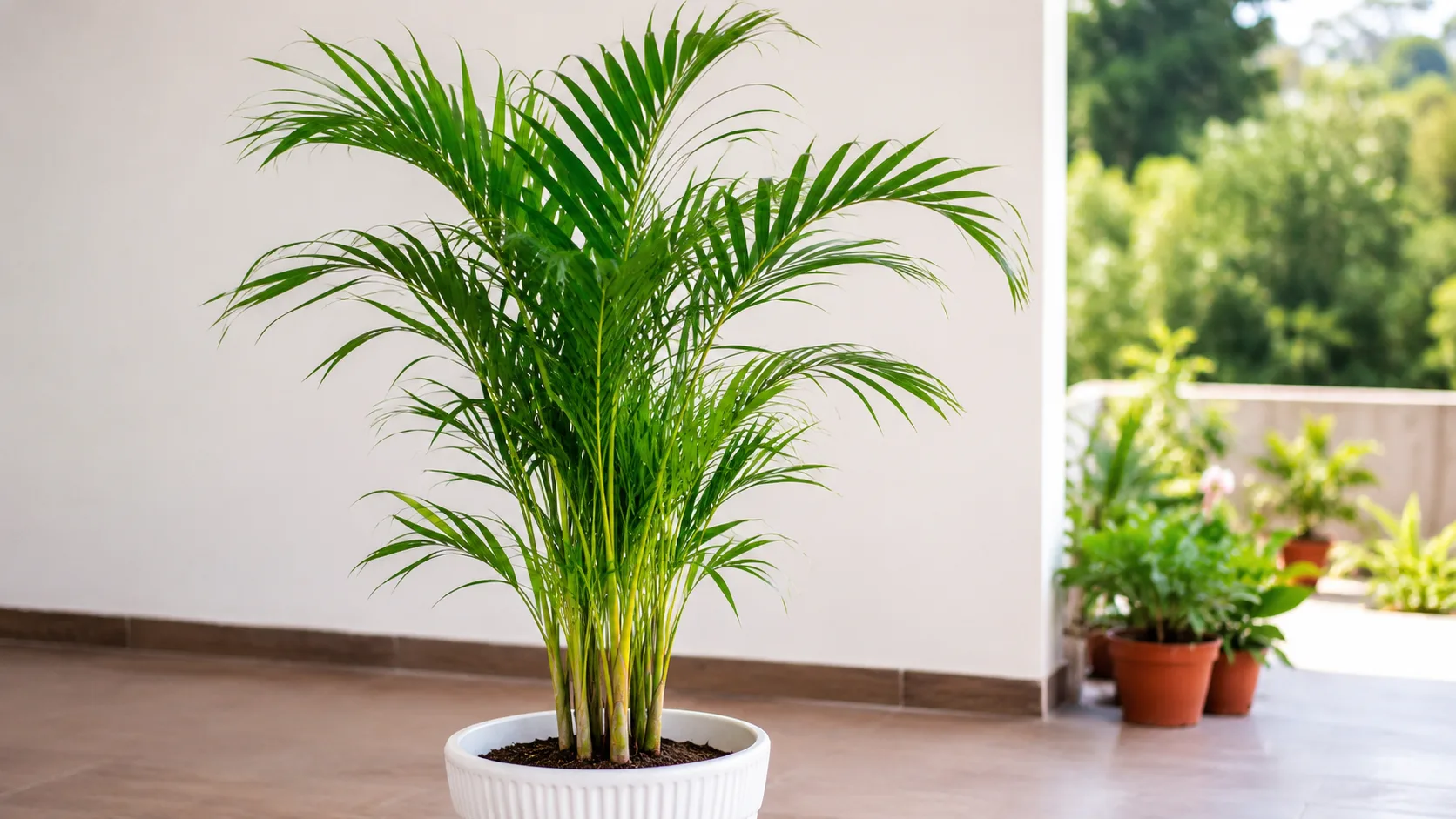
Areca palm (Dypsis lutescens) — the bamboo palm — wants bright indirect light, steady moisture, and humidity to keep tips from browning. Outdoors it hits 15–30 feet in zones 10–11; indoors it is a multi-stem floor plant. Cat palm (Chamaedorea cataractarum) stays smaller (6–8 feet), with glossy pinnate fronds that prefer partial shade and damp-but-drained soil — excellent for bathrooms with windows or shaded patios in zone 10–11. Watch for spider mites when air is dry.
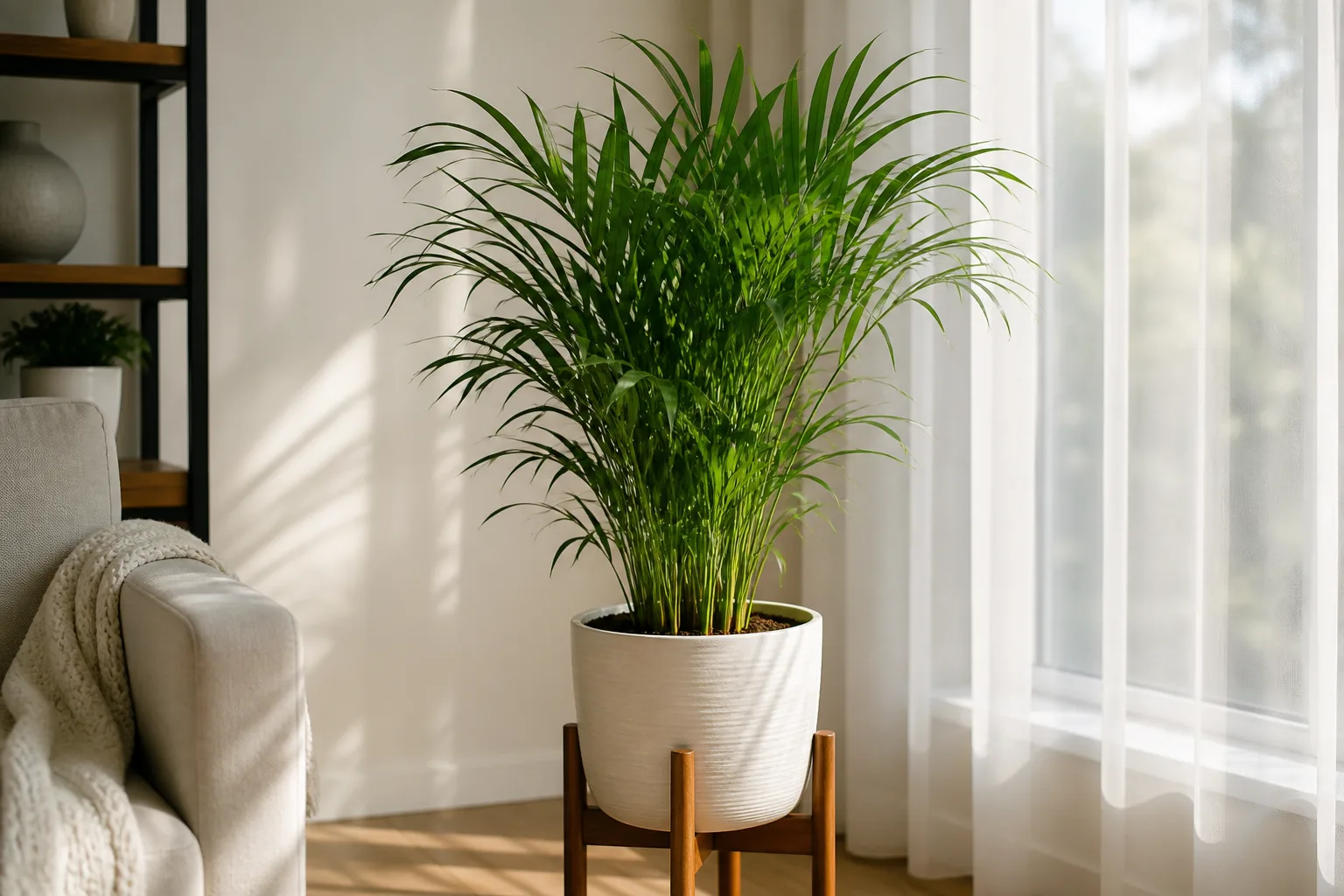
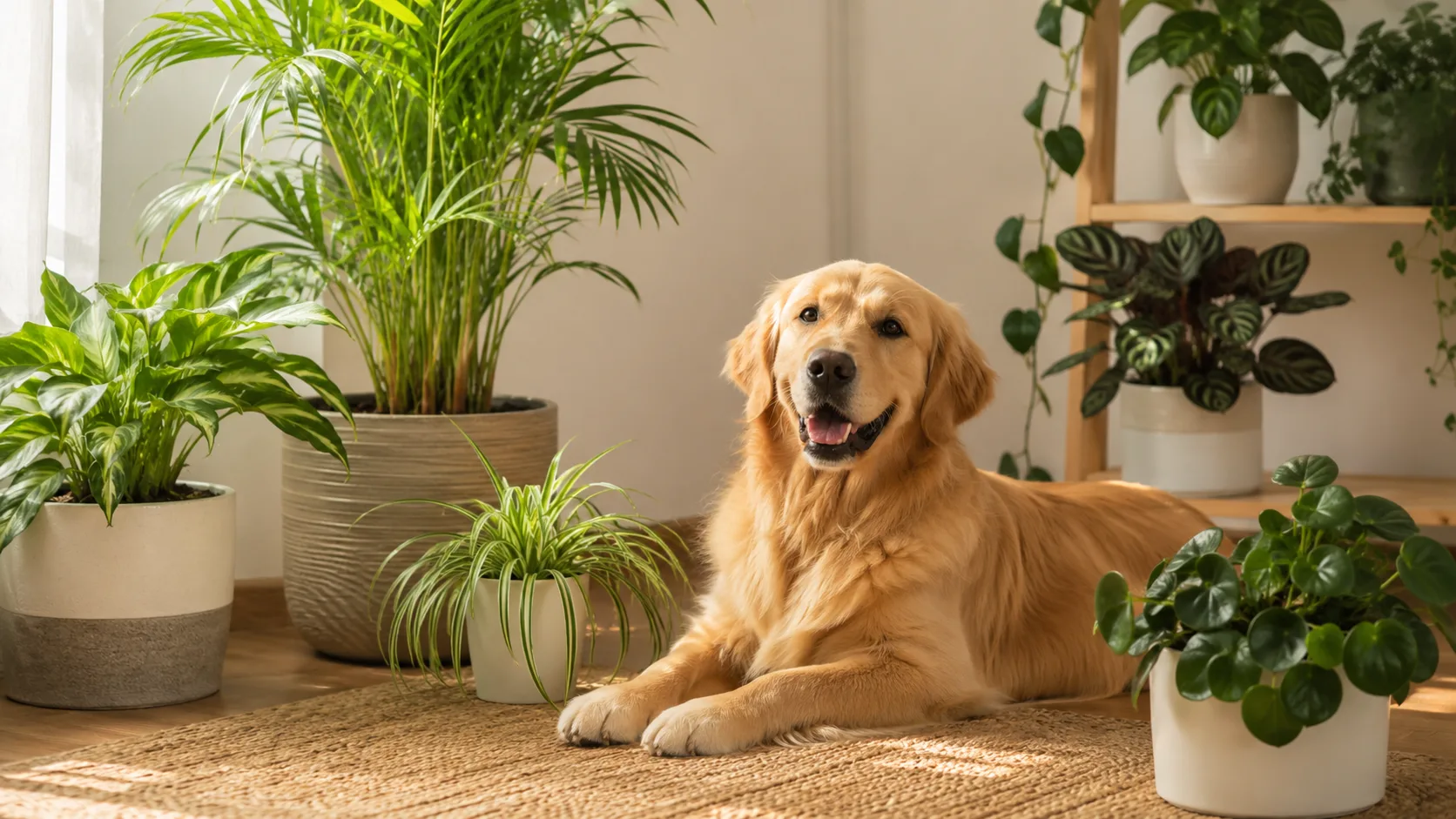
Majesty palm (Ravenea rivularis) is sold everywhere as an indoor palm but is honestly demanding: it evolved on humid riverbanks in Madagascar and sulks in dry, dim rooms. ASPCA lists it as non-toxic to cats and dogs, unlike sago cycads (ASPCA). If you want majesty palm to survive past one winter indoors, read our dedicated majesty palm indoor care guide for humidity, watering rhythm, and when to choose kentia or parlor instead.
Ruffled Fan Palm for Collectors
Ruffled fan palm (Licuala grandis) is the showpiece for palm nerds — circular, pleated fan leaves on a short trunk, usually 10–15 feet in the landscape (zones 10–11). It needs warmth, high humidity, bright indirect light, and protection from wind that tears the pleated fronds. This is not a beginner porch plant unless you run a humid sunroom or greenhouse. Pair it with consistent moisture and rich, well-drained soil; reward is one of the most sculptural leaves in the plant world.
Conclusion
The right palm is never “whichever looks tropical at checkout.” Start with frond type (fan vs feather), then hardiness zone, then mature height — and only then fall in love with a photo. Cold climates get windmill, cabbage, jelly, European fan, or saw palmetto; warm estates get date, queen, or Washingtonia species with eyes open about invasiveness and skirts; apartments get kentia, parlor, or lady palm unless you can supply majesty-level humidity. Compact yards lean on foxtail, Manila, bottle, or robellini; collectors chase ruffled fan under glass. Give every palm sharp drainage, appropriate light, and deep but infrequent water, and you avoid the root rot that kills more palms than winter ever does. Pick once, plant once, and let the fronds do the talking.