10 Types of Night-Blooming Cereus (ID Guide)
Compare 10 night-blooming cereus types by stem shape, bloom color, hardiness, and care group so you buy the right cactus—not a mislabeled cutting.
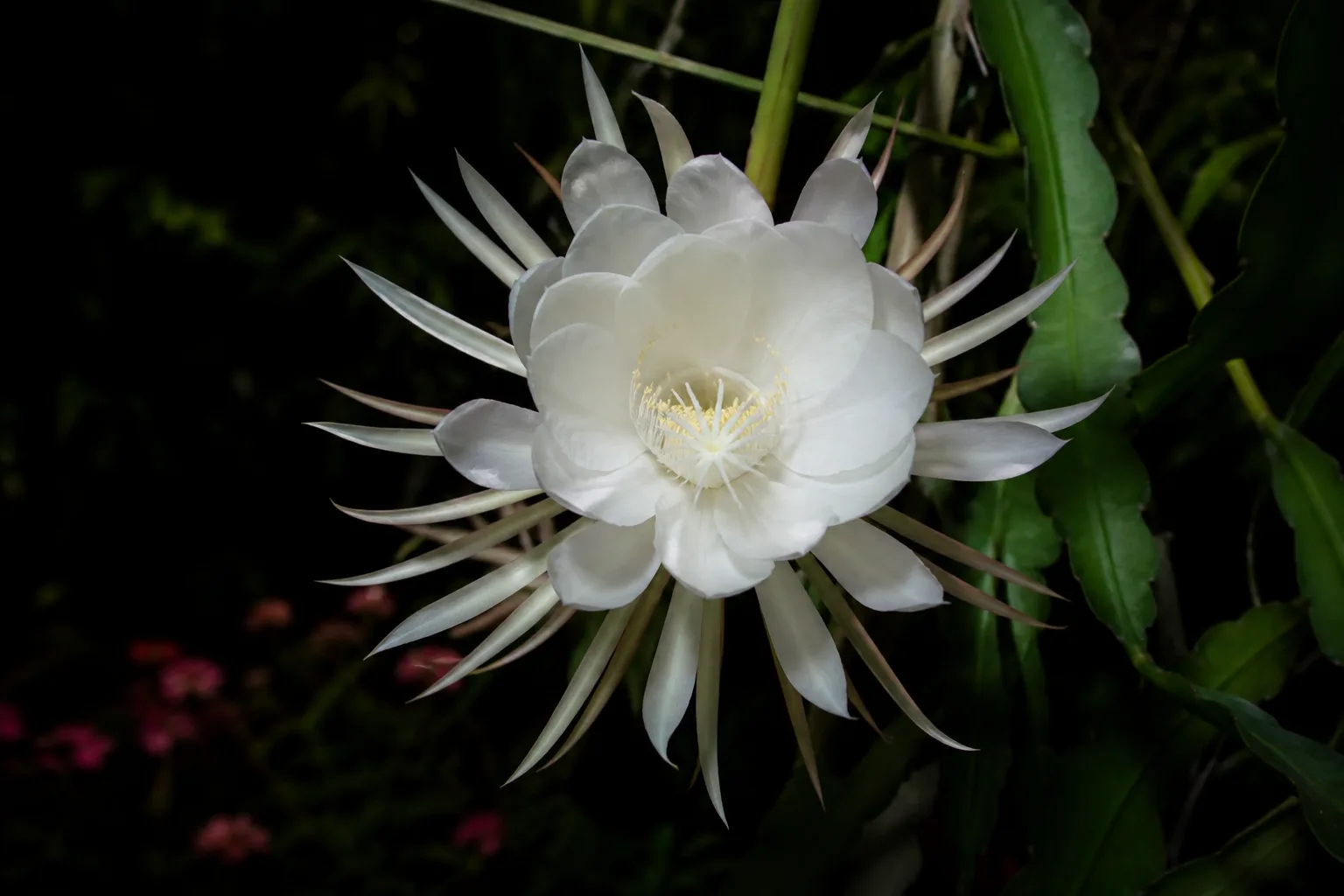
Buy a plant labeled night-blooming cereus at a nursery and you might bring home a flat-leafed jungle cactus, a neon-pink fruiting vine, or a 15-foot desert column—and each wants different water, light, and winter treatment. Night-blooming cereus is not one species. It is a catch-all common name for cacti whose large, fragrant flowers open after dark and usually wilt by morning. The word cereus hints at cactus ancestry, but the plants grouped under this nickname span Epiphyllum, Selenicereus, Echinopsis, Cereus, and other genera with very different stems and habitats.
This guide covers the 10 types home gardeners most often encounter, with botanical names, ID field marks, USDA zones, and the care split that determines whether your plant ever flowers. If you already own one labeled “queen of the night” or “orchid cactus,” start with the identification section—getting the genus wrong is the fastest way to underwater a jungle cactus or drown a desert column.
What “Night-Blooming Cereus” Actually Means
In horticulture, night-blooming cereus describes a blooming habit, not a single taxonomic group. Most types produce white or pale flowers 6–12 inches across that unfurl between dusk and midnight, release a sweet fragrance, and collapse by the next afternoon. Each flower typically lasts one night only, though a mature plant may open several blooms across a week.
The show exists to attract nocturnal pollinators. NC State Extension notes that Epiphyllum oxypetalum flowers in the wild are pollinated by bats and moths (NC State). Indoor plants rarely see those visitors, so fruit set on epiphytic types usually requires hand pollination unless you move pots outdoors during bloom in moth-rich climates.
Several unrelated plants share the queen of the night label—Epiphyllum oxypetalum is the houseplant most Americans mean, but Selenicereus grandiflorus (vanilla cactus) and even Peniocereus greggii (Arizona queen of the night, rare in cultivation) carry similar names. Always confirm the botanical name on the tag before copying care advice from a forum post.
How to Tell NBC Types Apart Before You Buy
Nursery tags that say only “night-blooming cereus” are unreliable. Experienced growers recommend buying only when a Latin name is printed on the label (Liquidambar Girl Gardening). Run through two quick checks—stem shape first, then flower and fruit potential.
Growth Habit and Stem Shape
Flat, leaf-like segments with wavy edges point to Epiphyllum (queen of the night and orchid cactus hybrids). Three-sided, climbing stems with aerial roots suggest dragon fruit (Selenicereus undatus). Round, ribbed columns with spines indicate San Pedro, Peruvian apple, or cardeiro types. Angular, branching stems that look like antlers belong to deer horn cactus (Stenocereus group). If your “NBC” is a pencil-thin runner with no flat segments yet, pot it up and wait—cuttings often look nothing like the mature plant for the first year.
Bloom Color, Fragrance, and Fruit
Most night bloomers open white flowers, but orchid cactus hybrids add deep pink and red cultivars such as ‘Fifty Grand’ and ‘Thousand Pinks’. Dragon fruit, Peruvian apple, and cardeiro follow bloom with edible fruit when pollinated. Epiphyllum oxypetalum also produces purplish-red edible berries after successful pollination (NC State). Fragrance intensity varies: queen of the night is strongly perfumed; Hooker’s orchid cactus is milder.
| Type | Stem clue | Typical bloom | Edible fruit? | USDA zones |
|---|---|---|---|---|
| Queen of the night | Flat phylloclades | White, fragrant | Yes (if pollinated) | 10–11 |
| Orchid cactus hybrids | Flat segments | Pink to red | Sometimes | 9–11 |
| Dragon fruit | 3-angled climber | White, yellow center | Yes (main crop) | 9–11 |
| Deer horn cactus | Angular branches | White to pink | Rare in pots | 9–10 |
| Vanilla cactus | Thin climbing stems | Pink, yellow, white | Small berries | 10–11 |
| San Pedro | Blue-green columns | White | No | 8–10 |
| Cardeiro | Tree-like column | White with pink outer petals | Yes | 9–11 |
| Peruvian apple | Thick column | White to pink | Yes | 8–11 |
Three Care Groups That Share the Same Nickname
Watering all “night-blooming cereus” like a desert cactus—or like a rainforest epiphyte— kills more plants than pests do. Sort yours into one of three care groups before you adjust light or fertilizer.
Jungle Epiphytes (Epiphyllum and Allies)
Queen of the night and orchid cactus hybrids evolved in tropical forests, clinging to trees with minimal soil. They want bright indirect light, more frequent water than desert cacti, and high humidity tolerance. NC State recommends soaking the mix when the top dries, then reducing water in fall and winter (NC State). These plants often flower better slightly root-bound—tight pots mimic the tree-crotch conditions where they bloom in habitat.
To trigger blooms on mature Epiphyllum (typically 3–5 years old), give a cool, dry winter rest: withhold water from November through March, keep night temperatures between 35 and 60°F if possible, then resume watering when buds appear (Liquidambar Girl Gardening). Fertilize at half strength every two weeks in spring and summer with a cactus-specific formula.
Climbing Fruit Cacti (Dragon Fruit and Vanilla Cactus)
Dragon fruit and vanilla cactus are vining night bloomers that need full sun, a sturdy trellis, and regular deep watering during summer fruiting. They are not houseplant-sized long term—plan for poles, fences, or greenhouse space. Our dragon fruit growing guide covers trellis setup, cultivar pairing, and hand pollination in detail; the summary here is that each flower opens one night and many cultivars need cross-pollination for full-sized fruit.
Vanilla cactus (Selenicereus grandiflorus) tolerates partial shade better than dragon fruit and stays smaller in containers (1–2 feet), but still wants regular—not soggy—water and excellent drainage. Feed two or three times during the growing season.
Desert Columnar Types (San Pedro, Cereus, Deer Horn)
San Pedro, Peruvian apple, cardeiro, and deer horn cactus come from drier climates. They prefer full sun, leaner watering, and fast-draining mineral soil. Allow the mix to dry almost completely between drinks on cardeiro and deer horn; give Peruvian apple deep weekly summer soakings when actively growing fruit, then nearly dry winters. San Pedro is the hardiest of this list—USDA zone 8 in protected spots (NC State)—but remember it contains mescaline and is restricted or illegal to grow in some jurisdictions. Treat it as an ornamental cactus, not a casual houseplant experiment.
How to Plan a Bloom Watch Party
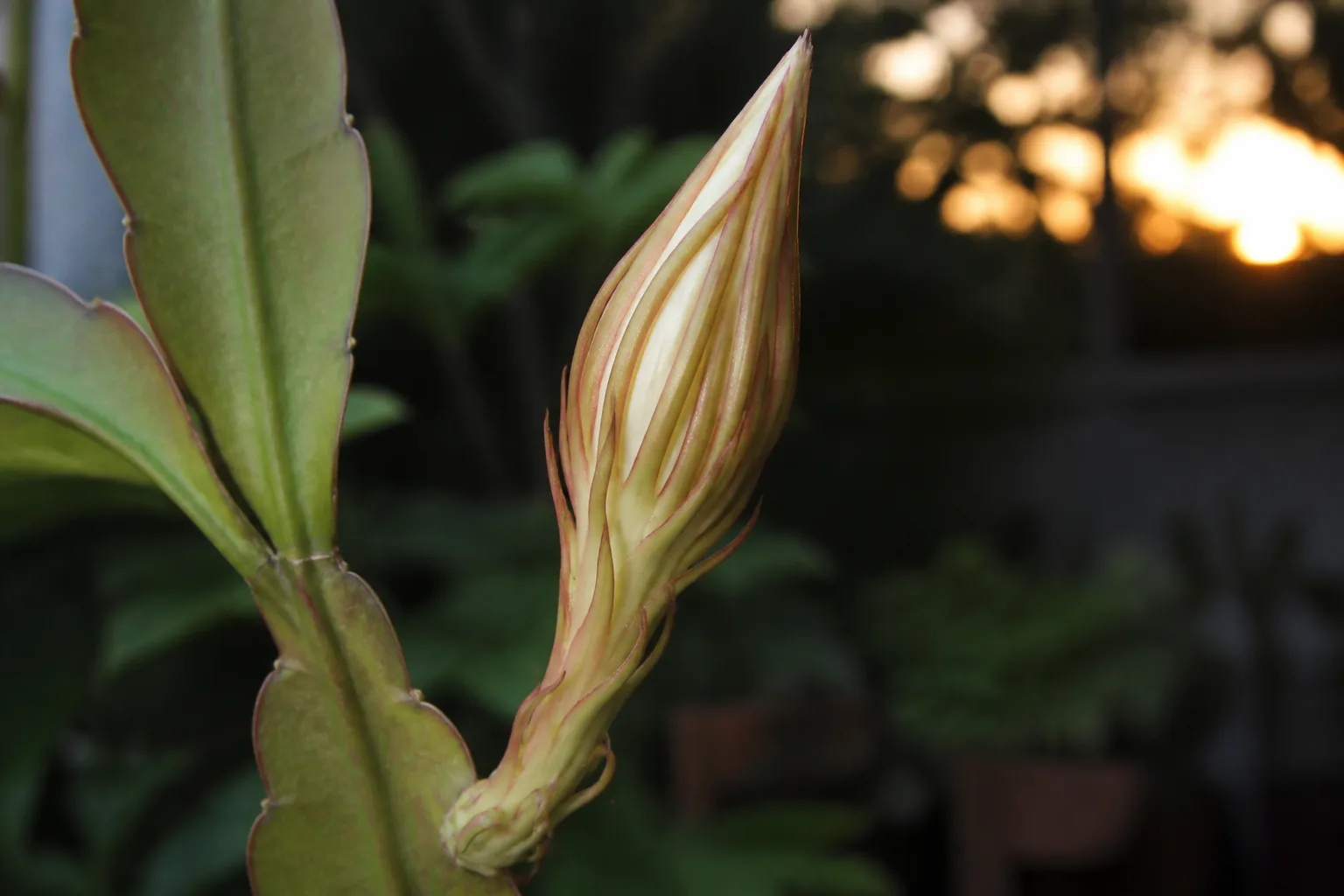
In New Orleans and across the Gulf South, gardeners host night-bloom watch parties when Epiphyllum buds show signs of opening—often seven to ten days after the bud tip turns upward and the floral tube elongates. Peak opening usually falls between 10 p.m. and midnight, with fragrance building as petals spread.
Bud stages to watch: First you see a small bump on a mature flat stem—not on the newest thin growth. The bud swells, then the tube points upward (the cue many growers use to invite friends). The night of opening, petals peel back slowly over one to two hours. Have cameras ready early; wilting starts near dawn.
For indoor plants, move the pot to a dim room the afternoon of the expected opening so you can observe without blasting the flower with ceiling lights—brief darkness does not hurt a bud that is already mature. If you miss the show, do not panic; healthy mature plants often produce multiple buds across several weeks in late spring or early summer.
Queen of the Night (Epiphyllum oxypetalum)
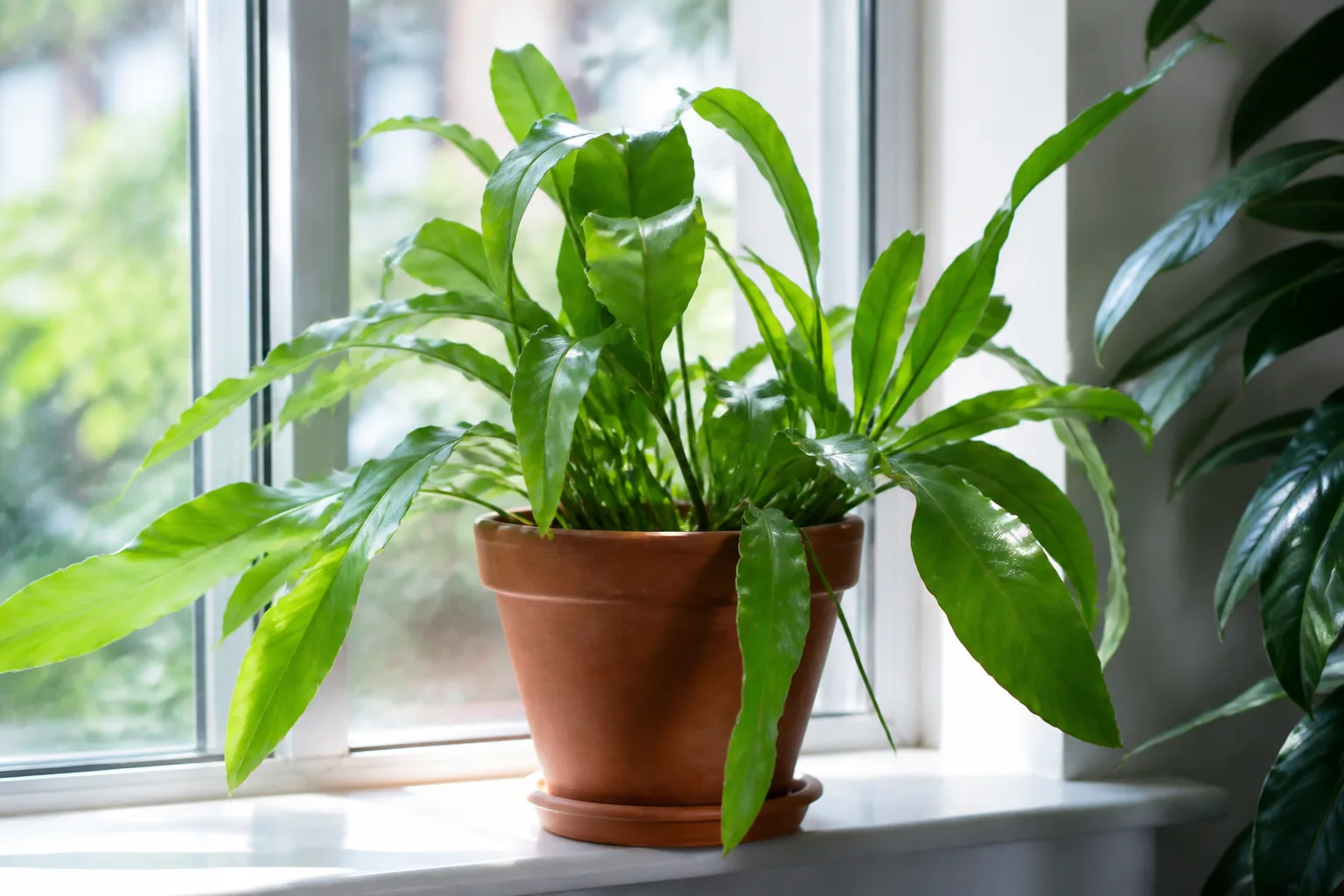
Queen of the night—also sold as Dutchman’s pipe cactus, lady of the night, or orchid cactus—is the most widely cultivated night-blooming cereus. Flat, spineless phylloclades arch from a central base, reaching 1–2 feet indoors and up to 10 feet in tropical landscapes (NC State). Flowers measure up to 12 inches long and 8 inches wide, pure white, intensely fragrant, and gone by morning.
Light: Bright indirect; a few hours of gentle morning sun is fine. Avoid harsh afternoon glass magnification. Soil: Succulent mix with extra perlite. Water: Soak when the top several inches dry; never leave the pot in standing water. Bloom triggers: Age (3–5 years), cool dry winter, slight root binding. Pets: ASPCA lists night-blooming cereus as non-toxic to dogs and cats (ASPCA), though stiff stems can still pose a choking hazard to chewers.
Do not confuse this cactus with Dutchman’s pipe vine (Aristolochia macrophylla)—completely different plant, same confusing common name.
Orchid Cactus Hybrids (Red, Pink, and Hooker’s)
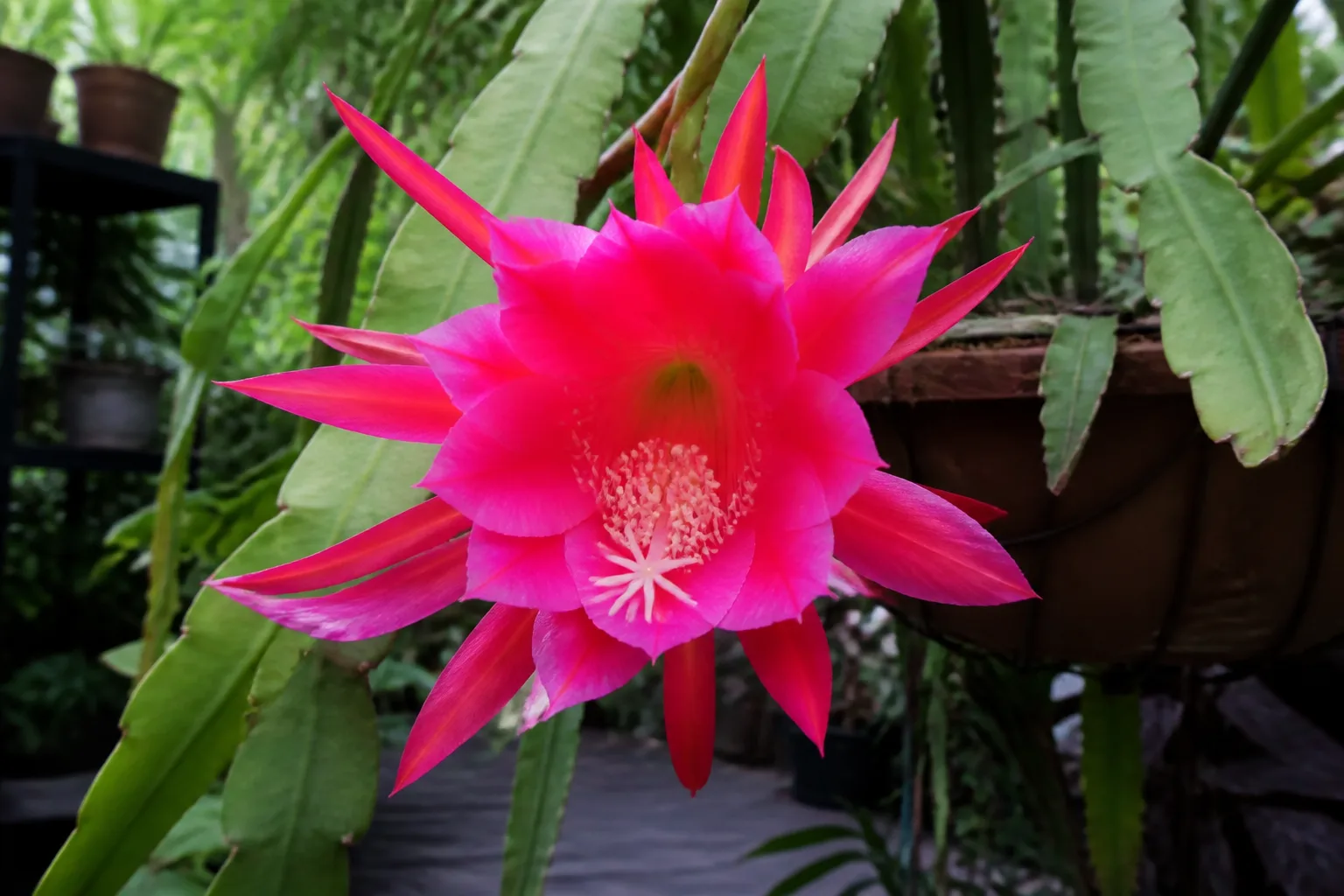
The orchid cactus group covers Epiphyllum hybrids bred for flower size and color, not a separate genus. Three popular night-blooming types:
Red orchid cactus (‘Fifty Grand’): Deep rosy-pink blooms to 8 inches across on the same flat stems as queen of the night. Excellent in hanging baskets on a shaded patio in summer.
Pink orchid cactus (‘Thousand Pinks’): 6–8 inch pink flowers on a slightly taller plant (to 3 feet). Pollinated blooms can yield tasty fruit—rare indoors but common in warm greenhouse collections.
Hooker’s orchid cactus (Epiphyllum hookeri): Narrower petals, lighter fragrance, blooms 9 inches long. Same care as E. oxypetalum; often used in hybrid breeding.
All three want zones 9–11 outdoors, bright shade, and the Epiphyllum winter rest described above. Share care with queen of the night; differences are mainly flower color and plant height.
Dragon Fruit Cactus (Selenicereus undatus)
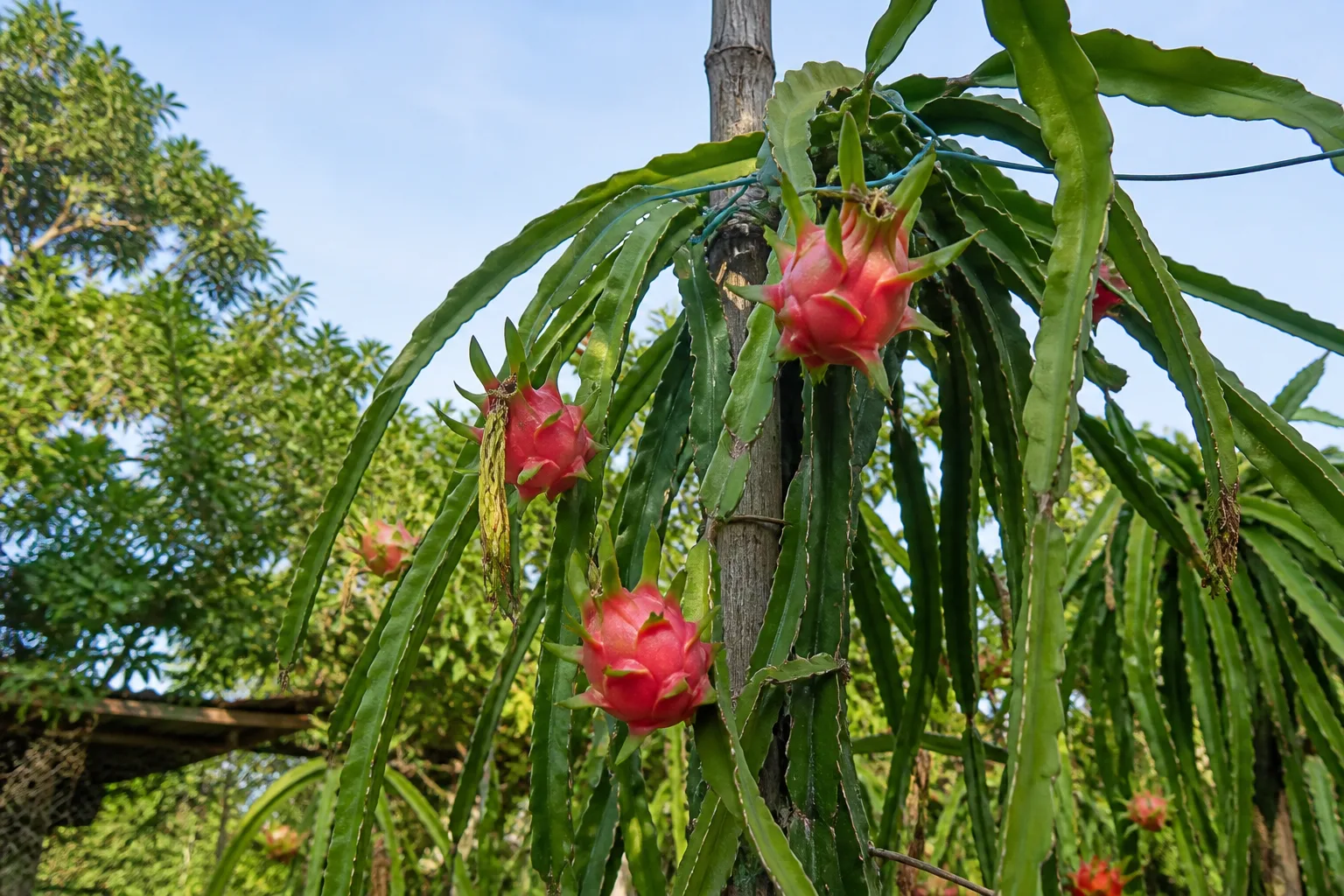
Dragon fruit—formerly classified as Hylocereus undatus—is the most productive edible night-blooming cereus. Three-angled stems climb 8–20 feet on a trellis, opening massive white flowers with yellow-green outer petals from summer through fall, then ripening neon-pink or yellow fruit.
Unlike Epiphyllum, dragon fruit wants full sun, heavy summer irrigation (often three deep soakings per week in hot weather), and low-nitrogen cactus fertilizer every month or two while fruit develops. Winter water should drop to bare maintenance. Stems need stout support—mature fruit weighs down vines.
For container sizing, pollination pairing, and Florida invasive-species cautions, see our full dragon fruit care guide.
Deer Horn Cactus
Deer horn cactus (Stenocereus aragonii and related species sold under this name) forms upright, antler-like branches that can reach 10 feet in desert habitat. Flowers are white to pink, night-opening, and smaller than Epiphyllum dinner-plate blooms.
Treat it as a warm desert type: filtered sun, sandy, mineral soil, water three to five times monthly in summer containers, less in cool weather, and almost none in winter. Fertilize two or three times per year with cactus food. Best in zones 9–10; a cool, bright conservatory works north of that.
Vanilla Cactus (Selenicereus grandiflorus)
Vanilla cactus—related to dog-tail cactus (Selenicereus testudo)—is a climbing night bloomer with variable flower colors (pink, yellow, white, or cream) and a lighter perfume than queen of the night. It tolerates partial shade better than dragon fruit and stays compact (1–2 feet) in pots, making it a manageable conservatory plant.
Water regularly in growth but never leave roots soggy. Good drainage matters more than a strict dry-down interval. Zones 10–11 outdoors; indoors, give bright light and a small trellis or moss pole for wandering stems.
San Pedro Cactus (Echinopsis pachanoi)
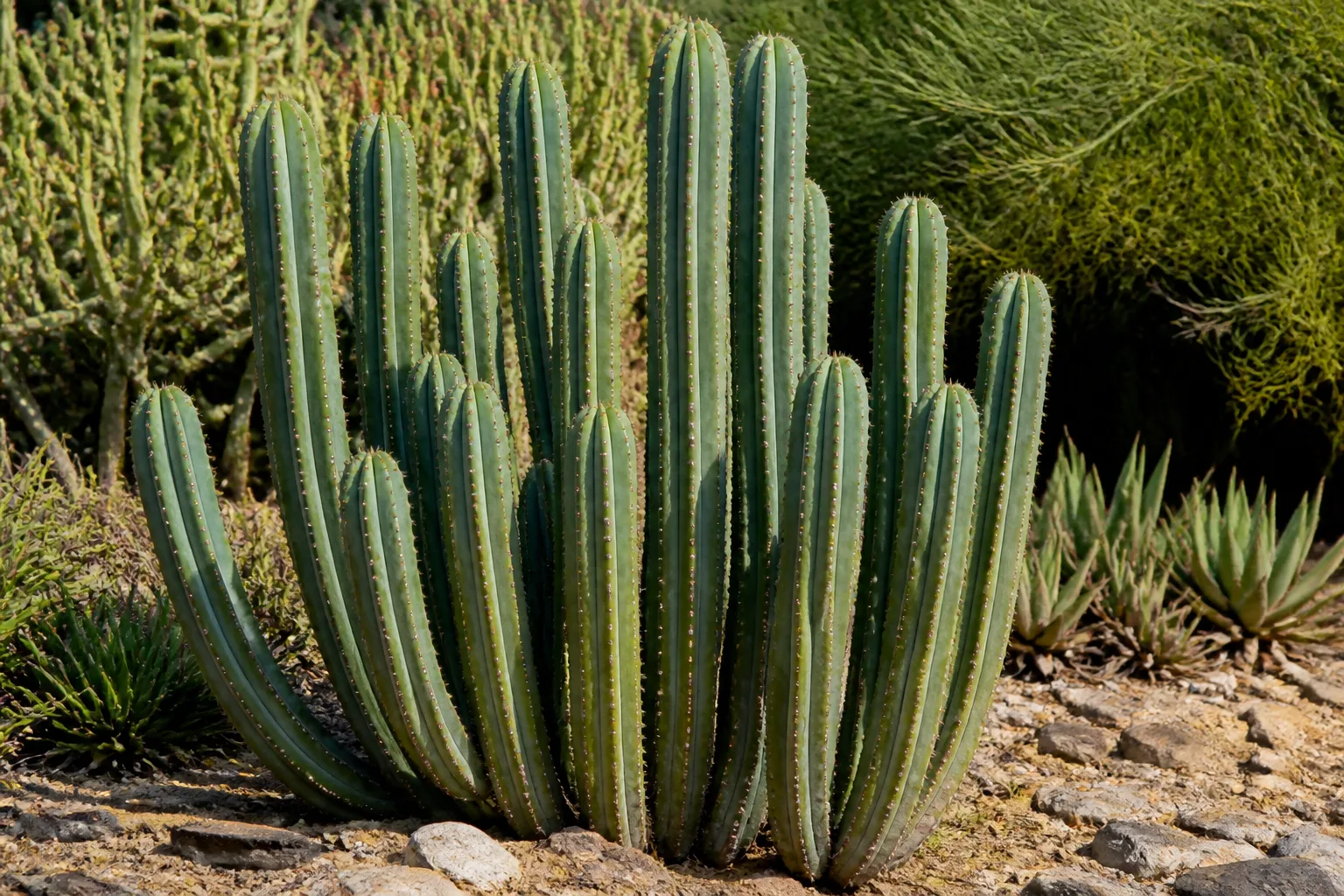
San Pedro is a fast-growing, multi-stemmed column reaching 10–20 feet outdoors with night-opening white flowers along the ribs. It is more cold-tolerant than most tropical night bloomers—USDA zones 8–10 with protection—and wants full sun and infrequent deep watering once established.
Critical context: San Pedro contains mescaline, a controlled substance in the United States and many other countries. Growing it purely as a landscape cactus is legal in some areas and criminal in others; verify local law before planting. This is an ornamental identification entry, not encouragement to harvest. For night-bloom viewing, mature outdoor specimens are spectacular; indoor pots rarely reach flowering size.
Cardeiro (Cereus jamacaru)
Cardeiro is a tree-like Brazilian column from dry northeast Brazil, growing to 20 feet in habitat with white flowers edged in pink outer petals. It wants full sun, well-drained soil, and desert-style watering—let the pot nearly dry between drinks.
Edible pinkish-red fruit follows pollinated blooms. It suits zones 9–11 and warm arid gardens more than humid Gulf Coast summers, where rot can strike if drainage is poor.
Peruvian Apple Cactus (Cereus peruvianus)
Also called Peruvian torch apple or apple cactus, Cereus peruvianus (often reclassified under Cereus repandus) forms a thick blue-green column to 30 feet in the wild. Night flowers are white to pink; red, apple-sized fruit is sweet when ripe.
Give full sun, slow-release cactus fertilizer through the growing season, and deep summer watering three times weekly when pushing growth or fruit. Winter: keep almost dry. Zones 8–11. Excellent warm-climate hedge or specimen; in pots, use a heavy container so the tall column does not topple.
Conclusion
Night-blooming cereus is a shared stage name for cacti that perform after dark—not a single plant you can care for from one generic blog post. Match your specimen to its care group (jungle epiphyte, fruiting climber, or desert column), confirm the botanical name, and give mature Epiphyllum types the cool dry winter they need before expecting white dinner-plate blooms. Whether you want a hanging orchid cactus, a dragon fruit trellis, or a San Pedro skyline, the right type plus the right water schedule turns a confusing nickname into one unforgettable midnight show.