Dragon Fruit Care Guide: Light, Water, Soil & Support
Selenicereus undatus
Grow dragon fruit in full sun on a sturdy trellis with free-draining soil. Learn watering for bloom and fruit, pruning, hand pollination, and container tips for Selenicereus undatus.
Dragon Fruit Care Guide: Light, Water, Soil & Support
Start with wateringThe most common care mistake for Dragon FruitWatering guide →Dragon Fruit care essentials
Light
Water
Water thoroughly when the mix is almost completely dry. Keep moisture steadier from flowering through fruit set, and reduce watering in cool or dry winter months without letting the root ball stay bone-dry for weeks.
Soil
Free-draining loam or cactus-style potting mix enriched with organic matter. Avoid soggy, compacted, or poorly aerated soil.
Humidity
Temperature
Fertilizer
About Dragon Fruit
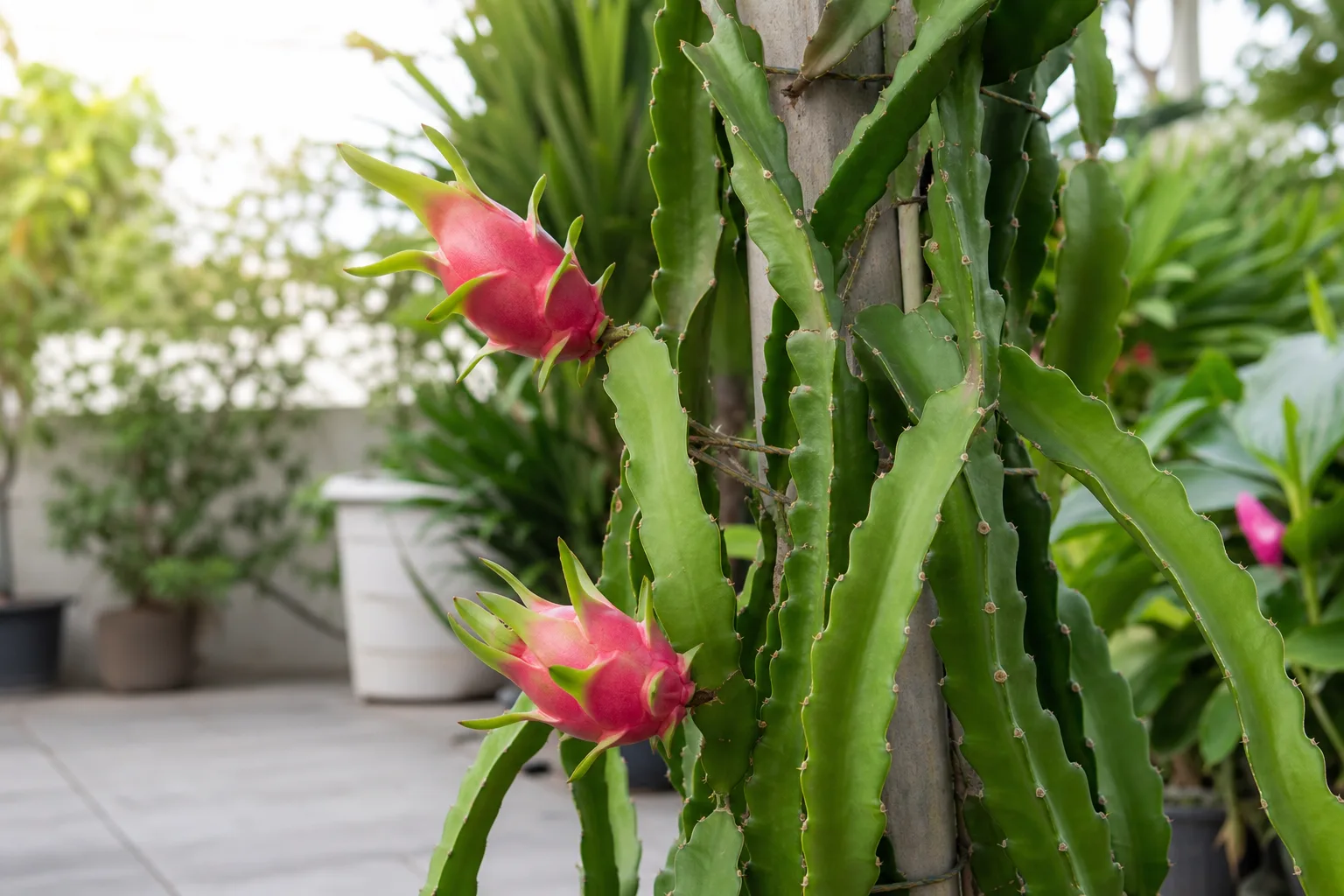
Dragon Fruit is native to Mexico to Honduras (tropical America); widely cultivated in warm regions, typically reaches 8–20 ft (2.4–6 m) tall with sprawling stems that can reach about 20 ft (6 m); usually kept smaller on a trellis or in a large container indoors, with rapid in warm, sunny conditions growth. Dragon Fruit has a climbing, vine like cactus (epiphytic or terrestrial) growth habit and part of the Cactaceae family. It is also known as Pitaya, Pitahaya, White-fleshed Pitahaya, Strawberry Pear, Night-blooming Cereus, and Hylocereus undatus.
| Detail | Information |
|---|---|
| Also known as | Pitaya, Pitahaya, White-fleshed Pitahaya, Strawberry Pear, Night-blooming Cereus, Hylocereus undatus |
| Native region | Mexico to Honduras (tropical America); widely cultivated in warm regions |
| Mature size | 8–20 ft (2.4–6 m) tall with sprawling stems that can reach about 20 ft (6 m); usually kept smaller on a trellis or in a large container |
| Growth rate | Rapid in warm, sunny conditions |
| Growth habit | Climbing, Vine Like Cactus (Epiphytic Or Terrestrial) |
| Scientific name | Selenicereus undatus |
| Family | Cactaceae |
Dragon Fruit Care Guide: Light, Water, Soil & Support
Dragon fruit care is simpler once you stop treating this plant like a desert cactus or a small windowsill succulent. Dragon fruit (Selenicereus undatus, still widely sold as Hylocereus undatus) is a climbing, night-blooming cactus grown for edible fruit and dramatic flowers. It wants strong light, a draining root zone, a sturdy support, and watering that matches weather—not a calendar. In Indian balconies, terraces, and warm gardens, those four decisions decide whether you get firm green stems or soft, rotting ones.
This overview is the hub for whole-plant setup. Use it to place the plant correctly, choose a pot and mix that dry predictably, understand flowering and fruit set, and know which sibling guide to open next when one variable goes wrong.
What Is Dragon Fruit?
Dragon fruit, also called pitaya or pitahaya, is a perennial member of the cactus family (Cactaceae) with fleshy, three-angled stems, aerial roots, fragrant nocturnal flowers, and scale-covered edible berries. NC State Extension describes it as a succulent epiphyte native from Mexico to Honduras, with creeping, sprawling stems that climb trees or rocks in warm tropical climates. The familiar market fruit—pink or yellow skin, white or red flesh, tiny black seeds—is what most growers are chasing, but the plant itself is a vigorous vine-like cactus first.
Indoors without strong light and space, dragon fruit usually survives as a novelty stem plant. Outdoors in frost-free warmth with a trellis, it behaves like the commercial crop grown across Southeast Asia, Taiwan, and tropical America: fast vegetative growth, seasonal flushes of night blooms, and fruit when flowers are successfully pollinated.
Botanical Identity and Names You Will See on Tags
The accepted name used throughout this guide is Selenicereus undatus. Older labels and many garden references still use Hylocereus undatus; for care purposes they refer to the same white-fleshed commercial dragon fruit species. The Royal Horticultural Society lists common names including pitaya, night-blooming cereus, queen of the night, and strawberry pear, and describes a vigorous epiphytic cactus with jointed three-angled stems, fine grey-brown spines, and large fragrant white flowers to about 30 cm across.
Related crops sold as “dragon fruit” include red-fleshed Hylocereus types and yellow pitaya (Selenicereus megalanthus). Care is similar—climbing cactus, draining soil, strong light—but pollination behavior and fruit traits can differ by clone. When you buy plants for fruit, prefer named, productive selections rather than anonymous cuttings of unknown fertility.
Growth Habit, Mature Size, and Why Support Matters
Dragon fruit is not a compact tabletop cactus. NC State lists landscape dimensions of roughly 8–20 ft tall and 3–10 ft wide, with stems that can climb by aerial roots for many metres. The RHS similarly places mature height and spread in the 2.5–4 m range under greenhouse culture. In a pot you can keep plants smaller with pruning and a single post, but you still need a vertical structure early—waiting until stems flop is harder than training a leader from the start.
University of Hawaiʻi CTAHR’s pitaya bulletin notes that aerial roots grow from stem undersides and anchor plants to walls, rocks, or trees, and that commercial systems use posts or trellises that can carry heavy stem weight. For home growers that usually means a concrete or wooden pillar with a branching top frame, a sturdy tomato-cage style cylinder, or a balcony railing system that will not cut into soft stems. Train one or a few leaders upward, then allow lateral stems to arch downward—those hanging sections are where flowers and fruit typically form best.
Dragon Fruit Care at a Glance
Give dragon fruit full sun to very bright light outdoors in humid climates, with light shade during extreme dry heat if stems bleach. Water when the upper mix is nearly dry, then soak and drain—more often in hot dry weather and flowering, less often in cool or monsoon-saturated periods. Use a well-drained, slightly acidic mix (cactus/epiphytic blend) in a pot with open holes. Feed lightly only during active growth. Provide a strong trellis or post. Expect night blooms in warm months; plan for hand pollination if natural pollinators or a second compatible clone are missing.
Light Needs for Healthy Stems and Fruit
Dragon fruit prefers bright, direct sunlight for much of the day once established. NC State lists cultural light as full sun (6+ hours). That matches its use as a fruiting crop. At the same time, CTAHR warns that the species originated in shady subtropical/tropical habitats and is not suited to extreme heat above about 102°F (39°C) with intense sunlight, and growable summaries of Florida extension guidance note that plants can be injured by extreme sunlight while too much shade cuts fruiting.
For Indian conditions, translate that into a practical rule: open terrace or south/west exposure for fruiting, with temporary 20–30% shade cloth during the first months after planting or during peak May–June heat if stems show sunscald. The RHS greenhouse advice of bright indirect light applies more to cool-climate indoor culture than to Indian outdoor fruiting. Indoors in most apartments, expect survival and slow growth, not reliable crops, unless you use a strong grow light and a large support.
Pale, elongated, weak stems point to insufficient light. Bleached, yellow-brown, corky patches on the sun-facing ribs point to sudden or excessive intensity—move gradually and improve airflow rather than dunking the plant in water. Details and window-by-window placement live in the Dragon Fruit light guide.
How to Water Dragon Fruit Without Causing Rot
Water dragon fruit when the mix is almost dry through the top several centimetres, then water thoroughly until excess leaves the drainage holes, and empty the saucer. NC State recommends watering when soil is nearly completely dry, providing adequate moisture through spring, summer, and flowering, then reducing in winter without allowing the plant to dry out completely. CTAHR emphasizes careful irrigation during production and notes that uneven moisture can split fruit, while excessive rain can cause flower drop and fruit rot.
In India, follow the weather more than a fixed weekday. Hot, dry terrace pots may need water every few days in peak summer. During monsoon, a draining mix still helps, but you may water rarely—or move pots under a roof edge—because prolonged saturation is the fastest path to stem and root rot. Soft, yellowing stems above a wet, sour mix mean stop watering and inspect roots; wrinkled ribs above a bone-dry mix mean soak and then reassess light and pot size. Use the Dragon Fruit watering guide when you are unsure which side of the mistake you are on.
Soil, Drainage, and Pot Setup
Roots need oxygen as much as moisture. NC State recommends well-drained loam or cactus potting mix with acidic to neutral pH, while the RHS suggests peat-free epiphytic cactus compost that stays well drained. A practical home blend is roughly half quality potting mix and half coarse aerators (orchid bark, perlite, pumice, or coarse sand), adjusted so water runs through promptly and the pot feels light within a few days in warm weather.
Always choose containers with open drainage holes. Avoid sealed cachepots that hold runoff. CTAHR notes cuttings root best in a well-drained medium after a 5–7 day cure. For established plants, refresh compacted mix when watering becomes unpredictable or the root ball stays heavy for a week after a soak—see the Dragon Fruit soil guide and repotting guide.
Temperature, Humidity, and Growing Dragon Fruit in India
This is a tropical/subtropical crop. NC State places hardiness in USDA zones 10–11 and notes frost kills plants outdoors in colder regions. CTAHR reports tolerance of short freezes with rapid recovery, but also sensitivity to extreme heat and intense sun. Warm coastal and peninsular Indian climates suit vegetative growth and flowering; cooler hill stations and frost-prone northern winters require container culture and shelter.
Moderate humidity helps tender new growth and reduces mite pressure, but stagnant damp air around wet stems invites anthracnose and soft rot—NC State specifically links overwatering and poor airflow to stem and root disease. Give plants morning sun, open air movement, and space between hanging stems. Do not confuse “tropical” with “likes wet feet.”
Fertilizer Basics for Active Growth
Feed only when the plant is actively growing and roots are healthy. The RHS advises a half-strength liquid feed monthly in growth and keeping the plant just moist in winter. CTAHR’s Taiwan commercial program used composted manure plus a balanced fertilizer on a seasonal schedule—useful as a reminder that fruiting plants are heavier feeders than neglected ornamentals, not as a license to dump high-nitrogen products into a stressed pot.
Skip fertilizer on newly rooted cuttings, waterlogged plants, or cold-slowed winter growth. Excess salts show as crispy stem edges and a white crust on the mix surface. For schedules, dilution, and deficiency clues, use the Dragon Fruit fertilizer guide.
Flowers, Pollination, and Getting Fruit
Dragon fruit flowers are large, fragrant, and usually open for a single night. CTAHR describes buds developing over roughly two weeks, evening anthesis, moth pollination, and wilt by morning. The RHS notes that flowers need hand pollination for fruit in greenhouse culture where moths or bats are absent. A 2025 PubMed study under subtropical Indian conditions found that a white-fleshed S. undatus clone could be self-compatible yet still produced heavier fruit with manual cross-pollination, while a red-fleshed clone was strictly self-incompatible—so clone identity matters.
If your plant blooms but never sets fruit, hand-pollinate at night or early morning with a soft brush, moving pollen onto the stigma, and consider adding a genetically different flowering plant nearby. Fruit is non-climacteric; CTAHR recommends waiting longer after fruit set (toward ~50 days) for better size and sweetness when conditions allow. Young plants may take a couple of years to fruit heavily even when vegetative growth looks vigorous.
Container Growing vs Landscape Planting
Containers work well on Indian balconies and terraces if the pot is large and stable (often 40–60+ litres for mature fruiting), drainage is excellent, and a post is fixed so wind cannot topple the plant. You gain mobility during monsoon storms and cold snaps, but you must water and feed more attentively because the root volume is limited.
In-ground planting in frost-free gardens can produce larger canopies and heavier crops, provided the soil drains and you install a permanent trellis early. Avoid low spots that pond during monsoon. Whether in pot or ground, train early, prune congested stems for airflow, and keep the crown from becoming an unmanageable tangle—see the Dragon Fruit pruning guide and propagation guide for cuttings.
Common Dragon Fruit Care Mistakes
The costliest mistake is desert-cactus watering in a monsoon climate: infrequent deep drought followed by days of standing wet mix. Next is planting without a support, then wondering why stems break. Other frequent failures include starting shade-grown nursery cuttings in full afternoon sun without acclimation, expecting fruit from a single self-incompatible clone with no hand pollination, and using heavy garden soil in a pot with no drainage.
Another misconception is that “cactus” means neglect. Dragon fruit stores water in stems and tolerates short dry spells, yet CTAHR and extension summaries both note a fairly high water need during flowering and fruiting. Drought-tolerant is not the same as drought-loving year-round.
Warning Signs and the First Action to Take
Read patterns, not single symptoms:
- Soft, yellow, or blackening stems + wet mix: stop watering, improve airflow, inspect for rot.
- Shrivelled ribs + light dry pot: water thoroughly, then check whether the pot is too small or the plant is root-bound.
- Bleached, corky sun patches: add temporary shade and acclimate more slowly.
- Plenty of night flowers, no fruit: hand-pollinate and/or add a compatible partner plant.
- Scale, mealybugs, or ants on stems: isolate, wipe, and treat pests before they stress the plant further—NC State flags mealybugs and scale as common insect issues.
Do not stack fertilizer, repotting, and hard pruning on the same day as a rescue attempt. Fix moisture and light first.
Spines, Sap, and Pet Safety Notes
Wear gloves when training or pruning; stem margins carry short spines that are easy to miss. NC State tags the species as non-toxic for cats and dogs, but spines, fallen fruit, and pesticides still make it a poor chew toy. Keep pots stable so pets cannot pull stems down, and wash hands after handling cuttings. Some older horticultural notes warn that stem sap can be irritating—treat cuts carefully and avoid eye contact.
When to Use This Page vs Other Dragon Fruit Guides
- Stay here for identity, placement, support, seasonal rhythm, and first-pass diagnosis.
- Open the light guide for sunscald, shade cloth, and indoor light limits.
- Open the watering guide when stems soften or shrivel and the mix moisture is unclear.
- Open the soil or repotting guides when drainage fails or roots crowd the pot.
- Open the fertilizer guide for feeding timing and salt buildup.
- Open propagation or pruning when you are multiplying plants or reshaping a canopy for fruit.
Related Dragon Fruit Guides
- Dragon Fruit light — sun hours, shade cloth, and low-light limits.
- Dragon Fruit watering — dry-down checks, monsoon risk, and fruit-stage moisture.
- Dragon Fruit soil — draining mixes and pH-friendly blends.
- Dragon Fruit fertilizer — active-season feeding without salt burn.
- Dragon Fruit repotting — pot size, timing, and root checks.
- Dragon Fruit propagation — cured stem cuttings and aftercare.
- Dragon Fruit pruning — training leaders and opening the canopy.
- Dragon Fruit plant hub — profile overview and cluster entry point.
Conclusion
Dragon fruit succeeds when you respect what it is: a climbing tropical cactus that wants bright light, draining soil, a real support, and weather-aware watering. Place Selenicereus undatus where stems can harden in strong light without cooking, water only after the mix dries appropriately, train hanging fruiting wood on a sturdy post, and plan pollination if you want fruit—not just night flowers. Fix light and moisture before adding fertilizer or new pots, and use the sibling guides when one care lever needs a deeper fix.
How to care for Dragon Fruit?
When should you water Dragon Fruit?
Water thoroughly when the mix is almost completely dry. Keep moisture steadier from flowering through fruit set, and reduce watering in cool or dry winter months without letting the root ball stay bone-dry for weeks.
- Probe the mix until it is almost dry through most of the pot - Water thoroughly when the mix is almost completely dry.
- then water deeply and empty any saucer water promptly - Keep moisture steadier from flowering through fruit set, and reduce watering in cool or dry winter months without letting the root ball stay bone-dry for weeks.
- Drain excess water - Water thoroughly when the mix is almost completely dry.
What soil works best for Dragon Fruit?
Free-draining loam or cactus-style potting mix enriched with organic matter. Avoid soggy, compacted, or poorly aerated soil.
- 40% quality potting mix or loam - Free-draining loam or cactus-style potting mix enriched with organic matter.
- 30% coarse sand, perlite, or pumice - Free-draining loam or cactus-style potting mix enriched with organic matter.
- 20% finished compost or well-rotted manure - Free-draining loam or cactus-style potting mix enriched with organic matter.
Grower notes for Dragon Fruit
What matters most with Dragon Fruit
Dragon fruit is a climbing cactus grown for night flowers and edible fruit, not a desert pot cactus that thrives on neglect. Give it full sun (or very light shade in extreme heat), a strong trellis or post, and a free-draining root zone. Overwatering is the fastest way to lose stems; underwatering after bloom starts can cut fruit quality.
Best placement in a real home
Outdoors, choose a warm frost-free site with six or more hours of direct sun and room for a sturdy pole or arbor. Young plants or high-altitude/low-humidity sites may need about 30% shade for a few months to prevent sunscorch. Indoors or on balconies, use the brightest south- or west-facing exposure you can provide, and expect fruiting to be harder without strong light and hand pollination.
Water for bloom and fruit, not by cactus myth
UF/IFAS notes that pitaya has a fairly high water need for a cactus once flowering begins, yet excess moisture invites bacterial and fungal disease. Keep a drier cool-season rest for bloom induction, then water during dry spells from flowering through harvest. Always let excess drain; never leave the pot standing in water.
Support, pruning, and pollination
Train one main stem up a post, tip it to encourage branching on the trellis top, and prune crowded stems so light and air reach the canopy. Many cultivars are self-incompatible—plant two genetically different types or hand-pollinate nocturnal flowers with a brush for reliable fruit set. Flowers open for one night and are fragrant and showy.
Before you buy a Dragon Fruit
Choose firm, green stem segments without soft rot, scale, or mealybugs. Prefer a named cultivar if you want fruit color and self-compatibility clarity. Wear gloves—areoles can carry short spines. Reject plants in sour, waterlogged mix, and plan the trellis before the plant gets heavy.
Pet-aware placement
NC State tags Selenicereus undatus as non-toxic for cats, dogs, and horses, but spines and heavy cascading stems are still physical hazards. Keep pots and pruning waste out of high-traffic pet paths, and do not assume edible fruit means chewing stems is harmless or desirable.
Is Dragon Fruit safe for pets?
NC State lists Selenicereus undatus as non-toxic for cats, dogs, and horses. Spines and heavy stems can still injure curious pets, so place the plant thoughtfully and keep pruning waste out of reach.
The ripe fruit is edible for people. NC State classifies the species as non-toxic for cats, dogs, and horses. Physical injury from spines is the main household concern; keep stems and cuttings away from pets that chew plants, and contact a veterinarian if a large amount of plant material is ingested or spines become embedded.
Watering Dragon Fruit
For Dragon Fruit, probe the mix until it is almost dry through most of the pot, then water deeply and empty any saucer water promptly and water check every 7–14 days in warm weather; less often in cool dormancy, but more often once flowers and fruit are developing. Use a drier cool-season rest to encourage bloom induction; resume more frequent watering once buds and fruit develop, then ease off again after harvest.
| Detail | Information |
|---|---|
| How often | Check every 7–14 days in warm weather; less often in cool dormancy, but more often once flowers and fruit are developing |
| How to check | Probe the mix until it is almost dry through most of the pot, then water deeply and empty any saucer water promptly |
| Seasonal changes | Use a drier cool-season rest to encourage bloom induction; resume more frequent watering once buds and fruit develop, then ease off again after harvest |
Signs of overwatering
- soft or yellowing stems
- stem or root rot
- sour-smelling mix
- fungal or bacterial spots after prolonged wet soil
Signs of underwatering
- wrinkled or shriveled stem segments
- stalled growth in heat
- poor fruit set during prolonged drought after flowering begins
Soil & potting for Dragon Fruit
Use a mix of 40% quality potting mix or loam, 30% coarse sand, perlite, or pumice, 20% finished compost or well-rotted manure, 10% orchid bark or coarse grit for Dragon Fruit. Excellent drainage is essential; wet feet quickly lead to stem and root rot. Target soil pH around Mildly acidic to neutral, roughly 5.5–7.5 (tolerates a broader range if drainage is excellent). Repot every 2–3 years, or when the plant clearly outgrows its container, ideally in warm season after the cool dry rest, once new growth is underway.
| Detail | Information |
|---|---|
| Recommended mix | 40% quality potting mix or loam, 30% coarse sand, perlite, or pumice, 20% finished compost or well-rotted manure, 10% orchid bark or coarse grit |
| Drainage | Excellent drainage is essential; wet feet quickly lead to stem and root rot |
| Soil pH | Mildly acidic to neutral, roughly 5.5–7.5 (tolerates a broader range if drainage is excellent) |
| Repotting frequency | Every 2–3 years, or when the plant clearly outgrows its container |
| Best season to repot | Warm season after the cool dry rest, once new growth is underway |
Signs it needs repotting
- roots densely circling or pushing from drainage holes
- pot tipping under heavy stem weight
- mix staying wet for many days after watering
- growth stalling despite adequate sun and support
Humidity & temperature for Dragon Fruit
Fertilizer & pruning for Dragon Fruit
Common problems on Dragon Fruit
Yellow Leaves
MediumLikely cause: Common on this plant type; confirm with recent watering, light, and root checks.
Quick fix: Inspect the plant and correct the most likely care stressor before stacking treatments.
Full fix guide →Brown Tips
MediumLikely cause: Common on this plant type; confirm with recent watering, light, and root checks.
Quick fix: Inspect the plant and correct the most likely care stressor before stacking treatments.
Full fix guide →Root Rot
MediumLikely cause: Common on this plant type; confirm with recent watering, light, and root checks.
Quick fix: Inspect the plant and correct the most likely care stressor before stacking treatments.
Full fix guide →Overwatering
MediumLikely cause: Common on this plant type; confirm with recent watering, light, and root checks.
Quick fix: Inspect the plant and correct the most likely care stressor before stacking treatments.
Full fix guide →Underwatering
MediumLikely cause: Common on this plant type; confirm with recent watering, light, and root checks.
Quick fix: Inspect the plant and correct the most likely care stressor before stacking treatments.
Full fix guide →Spider Mites
MediumLikely cause: Common on this plant type; confirm with recent watering, light, and root checks.
Quick fix: Inspect the plant and correct the most likely care stressor before stacking treatments.
Full fix guide →Mealybugs
MediumLikely cause: Common on this plant type; confirm with recent watering, light, and root checks.
Quick fix: Inspect the plant and correct the most likely care stressor before stacking treatments.
Full fix guide →Aphids
MediumLikely cause: Common on this plant type; confirm with recent watering, light, and root checks.
Quick fix: Inspect the plant and correct the most likely care stressor before stacking treatments.
Full fix guide →Leggy Growth
MediumLikely cause: Common on this plant type; confirm with recent watering, light, and root checks.
Quick fix: Inspect the plant and correct the most likely care stressor before stacking treatments.
Full fix guide →Slow Growth
MediumLikely cause: Common on this plant type; confirm with recent watering, light, and root checks.
Quick fix: Inspect the plant and correct the most likely care stressor before stacking treatments.
Full fix guide →Wilting
MediumLikely cause: Common on this plant type; confirm with recent watering, light, and root checks.
Quick fix: Inspect the plant and correct the most likely care stressor before stacking treatments.
Full fix guide →Drooping Leaves
MediumLikely cause: Common on this plant type; confirm with recent watering, light, and root checks.
Quick fix: Inspect the plant and correct the most likely care stressor before stacking treatments.
Full fix guide →Low Humidity
MediumLikely cause: Common on this plant type; confirm with recent watering, light, and root checks.
Quick fix: Inspect the plant and correct the most likely care stressor before stacking treatments.
Full fix guide →Not Enough Light
MediumLikely cause: Common on this plant type; confirm with recent watering, light, and root checks.
Quick fix: Inspect the plant and correct the most likely care stressor before stacking treatments.
Full fix guide →Fungus Gnats
MediumLikely cause: Common on this plant type; confirm with recent watering, light, and root checks.
Quick fix: Inspect the plant and correct the most likely care stressor before stacking treatments.
Full fix guide →Mold on Soil
MediumLikely cause: Common on this plant type; confirm with recent watering, light, and root checks.
Quick fix: Inspect the plant and correct the most likely care stressor before stacking treatments.
Full fix guide →