Low Humidity on Dragon Fruit: Causes, Checks & Fixes
Quick answer
Dragon fruit tolerates drier air than tropical foliage plants, but intense sun in low-humidity climates can sunburn ribs, and hot dry indoor corners invite spider mites. First step: decide whether ribs are bleaching in full sun or wrinkling from dry soil—shade young stems or soak a light pot, not both at once.
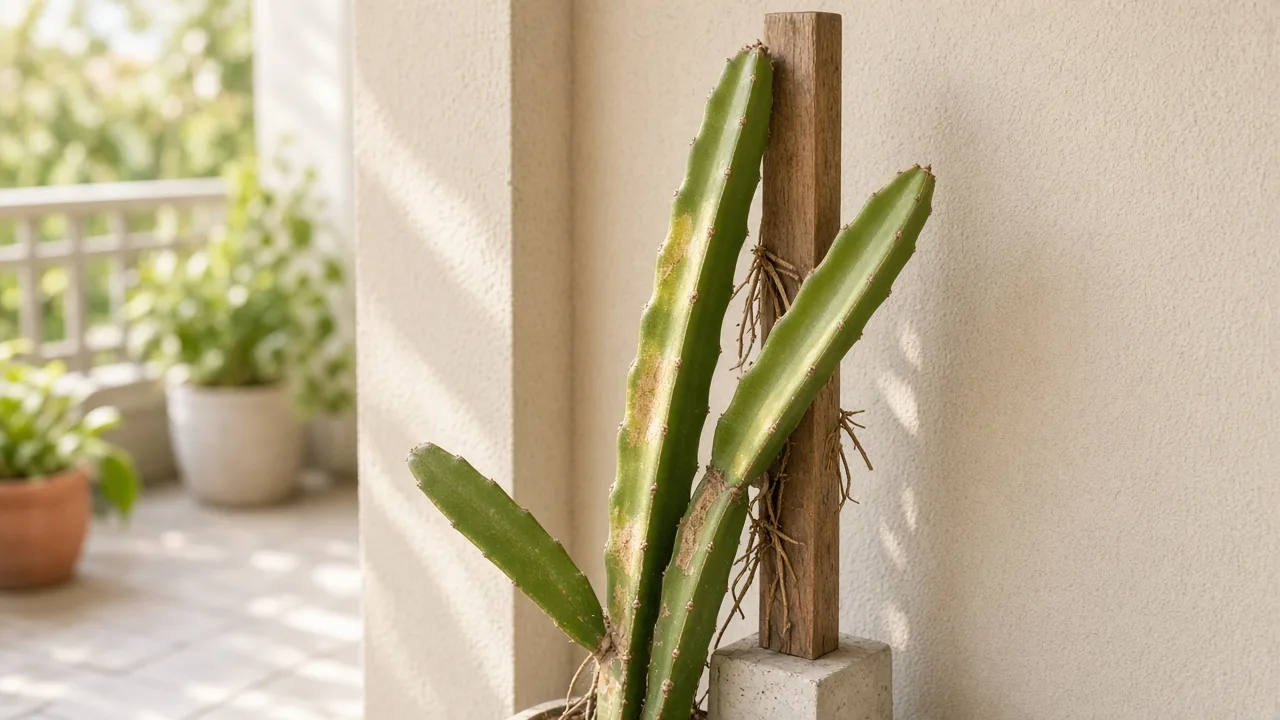
Low Humidity on Dragon Fruit: Causes, Checks & Fixes
This guide covers low humidity on Dragon Fruit. See also the general Low Humidity guide, watering, and light pages for this plant.
Low Humidity on Dragon Fruit: Causes, Checks & Fixes
Quick answer
Dragon fruit (Selenicereus undatus, pitaya) is a climbing cactus grown in full sun—not a rainforest foliage plant that needs a humidifier on every windowsill. Most growers searching “low humidity” are really seeing sunburn on stem ribs in dry, intense light, wrinkled cladodes from underwatering in heat, or spider mites in warm dry indoor corners.
For how dry indoor air stresses thin-leaved houseplants in general, see the low humidity guide. On dragon fruit, the pattern shows up on three-angled stems and flowering wood, not crispy leaf margins.
First step: look at the sun-facing ribs and probe the mix. Bleaching or corky tan patches after a move to harsh terrace sun mean shade and acclimation, not more water. A light, dry pot with shriveled ribs means soak and drain per the watering guide—do not mist stems or run a humidifier before you know which pattern you have.
What low humidity looks like on dragon fruit
Pitaya has no broad leaves—diagnosis happens on jointed stems (cladodes), areoles, and new tip growth on the trellis.
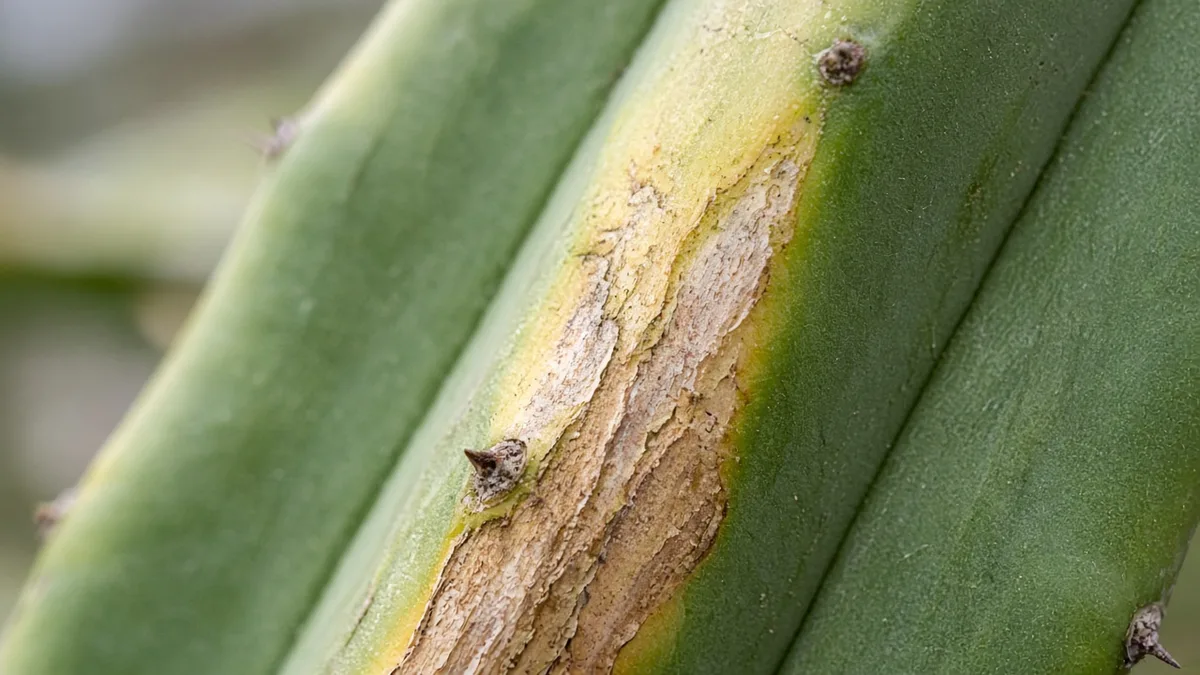
Pale bleached rib tissue beside healthy green cladode skin—compare sun-facing damage with pot weight and recent light changes before treating dry air alone.
Sunburn in dry, intense exposure (the most common “low humidity” confusion outdoors):
- Pale yellow or whitish patches on ribs that faced afternoon sun, often within days of moving from shade to open terrace
- Dry tan or corky brown scars that stay stiff—not soft rot
- Damage clustered on one side of the post or trellis, matching sun angle
- UF/IFAS reports severe stem damage from sunburn in regions with low humidity or high altitude, and recommends about 30% shade during early establishment where sunlight is damaging
Drought stress in hot dry weather (often mislabeled as humidity):
- Longitudinal wrinkling or slight rib collapse on segments
- Pot feels very light; mix dry several centimetres down
- Stems may look “thirsty” while air is dry—roots could not keep up with transpiration in heat, not because RH was fatally low
Indoor dry heating season:
- Thin, slow new growth on a dim windowsill with furnace air
- Fine yellow stippling and webbing on stems—warm, dry indoor air favors spider mites on houseplants; see spider mites on dragon fruit
- Not the same as outdoor sunburn; treatment targets pests and placement, not tropical humidity hardware
What low humidity is usually not on pitaya:
- Soft, watery stem lesions spreading in humid monsoon weather—that is more often overwatering or disease with poor airflow (NC State links wet conditions to stem and root disease)
- Yellowing entire stems on soggy mix—water stress from the root zone, not dry air alone
Cool dry rest vs harmful dry air
Dragon fruit culture includes an intentional dry period in winter and early spring to support bloom induction—UF/IFAS notes a dry season is required for abundant flowering, while periodic watering from flowering through harvest is still recommended.
That planned rest is not the same as chronic harmful low humidity:
| Situation | What you did | Stem response |
|---|---|---|
| Planned cool dry rest | Reduced water in cool months; mix nearly dry by design | Firm ribs, slow growth, possible flower bud initiation later |
| Harmful dry + blazing sun | Full unfiltered sun on soft tissue in arid heat | Bleached ribs, corky scars within days |
| Harmful dry + drought | Hot weather, no water while mix is bone dry | Wrinkled segments, poor fruit set if flowering |
| Indoor dry heat + weak light | Furnace season, dim room | Mites, etiolated growth—see not enough light |
Do not cancel a healthy winter dry-down because you read a generic “raise humidity” article written for calatheas.
Why dragon fruit reacts differently to dry air
Cactus water storage, tropical fruiting appetite. Pitaya stems store moisture like a cactus, yet UF/IFAS classifies pitayas as having a fairly high water need once flowering begins. Dry air in extreme sun pulls water from ribs faster than roots replace it—NC State notes too much sun can cause sun-scorch and dehydration. Dry air without adequate irrigation during fruit development can cut yield—drought after bloom is a production problem, not cosmetic tip burn.
Low humidity amplifies sun, not always “dry leaves.” In coastal humid tropics, full sun is standard. In dry highland or desert-edge terraces, the same UV load without atmospheric moisture burns epidermis before you see classic “underwatering” wilt. That is why extension recommends temporary shade for new plantings in damaging insolation.
Indoor culture is the opposite trade. The RHS describes greenhouse culture with bright indirect light and higher humidity—a fair model for apartments where you cannot offer terrace sun. There, “low humidity” means mite-prone, stagnant heated air, not sunburn on ribs.
Epiphytic roots still need oxygen. CTAHR notes aerial roots and climbing habit; drowning roots to compensate for dry air destroys the plant faster than 35% RH ever would.
How to confirm the cause
Work through these checks in order:
- Light history (last 2–3 weeks). Did the plant move from nursery shade to bare west terrace, or did you remove shade cloth during a heat wave? Directional bleaching on sun-facing ribs supports sunburn in dry intense light—not a humidifier fix.
- Pot weight and soil depth. Light pot, dry mix 5–8 cm down, wrinkled ribs → underwatering. Heavy wet pot with soft base → stop water; see root rot.
- Texture of discolored tissue. Papery, corky, stiff tan scars → sun or old burn. Soft, spreading, smelly lesions → disease or rot—not humidity.
- Hygrometer (indoor only). Place near the canopy. RH below 25–30% for weeks plus mite stippling supports dry indoor stress. Outdoor terrace readings matter less than sun and irrigation.
- Heat path map. Furnace vent, radiator, or sun-heated glass within 60 cm? Move the pot before buying humidity gadgets.
- Pest check. White paper tap test under ribs; webbing confirms mites before you raise RH.
- Growth stage. Flowering or fruiting wood in hot dry weather needs steady irrigation when mix is nearly dry—drought after flowering can mean poor production. Winter rest with firm dry ribs is normal.
You have likely ruled out ambient low humidity as the main issue when bleaching appeared immediately after a light increase, the pot was already light and dry (thirst), or soft rot appears on wet mix.
First fix for dragon fruit
Apply one correction first so you can read the plant’s response.
If ribs are bleaching in harsh dry sun
Hang ~30% shade cloth (or move pots to filtered light) for new plantings or recently moved stems—matching UF/IFAS establishment shade guidance. Harden by increasing direct sun hours every few days rather than jumping from shade to all-day exposure. Do not soak the root zone daily to “cool” stems—that invites rot in warm weather. Details: dragon fruit light guide.
If ribs are wrinkled and the pot is light
Water thoroughly until excess drains, empty the saucer, then wait until the upper mix is nearly dry before the next soak—NC State’s when-soil-is-nearly-dry rhythm. In flowering and fruit, avoid long drought spells; uneven moisture can split fruit.
If indoors with stippling in dry heat
Rinse stems, isolate from other plants, treat active spider mites, and move off the vent path. A small room humidifier is optional for people and nearby tropical plants—it is not the primary pitaya fix. Improve light if stems are etiolated.
Do not mist cladodes
Wet stems in stagnant corners worsen fungal and bacterial pressure—UF/IFAS warns excess soil moisture drives stem disease; surface wetting without airflow is the same mistake on a different surface.
Recovery timeline
Corky sunburn and tan scars are permanent on the affected cladode face. Judge success by new green growth from healthy segments and firm ribs without spreading soft rot.
- After shade and acclimation: New areoles and tips may look normal within 2–4 weeks in warm weather.
- After correcting underwatering: Rib turgor often returns within 3–7 days; fruit sizing may need a full season to recover if drought hit during development.
- After mite treatment: Stippling stops spreading within 1–2 weeks when humidity and airflow improve alongside control.
If burns keep spreading on soft tissue despite shade, inspect for rot—not more sun or more misting.
What not to do
- Do not run a humidifier as step one on outdoor terrace plants showing sunburn—shade and water rhythm fix the biology.
- Do not increase watering on a heavy wet pot because ribs look pale—confirm dryness first.
- Do not fertilize burned or drought-shocked stems to “green them up”; feed only during active healthy growth per the fertilizer guide.
- Do not stack repotting, heavy pruning, and pesticide the same day—one stressor at a time.
- Do not confuse planned winter dry-down with an emergency humidity crisis.
How to prevent dry-air problems next season
- Establish with shade: Plan ~30% shade for the first months where sun is intense and air is dry (UF/IFAS HS303).
- Match water to season: Nearly dry mix, then deep soak; more consistent moisture from flowering through harvest; drier cool rest without weeks of total abandonment.
- Trellis for airflow: Open canopy so stems dry after rain—pairs with soil drainage and morning sun.
- Indoor winter: Brightest window or supplemental light, mite checks, keep pots away from furnace blasts.
- Acclimate every move: Nursery to terrace, repot to brighter roof—give transition light (CTAHR heat limits above ~39°C with intense sun).
When to worry
Escalate within a few days if:
- Stems soften, smell sour, or ooze at the base on wet mix—rot, not dry air.
- Burn patches turn mushy during humid weather—possible infection; improve airflow and inspect.
- Mites coat new growth despite treatment—see the pest guide before cosmetic pruning.
A few corky sun scars on a firm trellised vine that keeps pushing clean tips is lower urgency.
Conclusion
Low humidity on dragon fruit is context-dependent. Outdoor growers in dry, intense sun usually need shade and acclimation, not misting. Growers in hot dry weather with wrinkled ribs need timely soak-and-drain watering, especially around bloom and fruit. Indoor collectors fight dry heat plus mites and dim light, not a missing pebble tray. Pitaya tolerates drier air than tropical herbs but is not a desert windowsill cactus that ignores water during fruiting. Recovery shows on new stem growth, not repaired scar tissue.
When to use this page vs other Dragon Fruit guides
- Dragon Fruit watering — Use when ribs wrinkle and the pot is light; thirst beats humidity on most terraces.
- Dragon Fruit light — Use when bleaching follows a sudden exposure increase or heat wave.
- Brown tips — Edge-focused damage on ribs that may overlap salt, sun, or drought.
- Underwatering — Wrinkled segments with dry mix deep down.
- Spider mites — Stippling and webbing in warm dry indoor air.
- Dragon Fruit problems hub — Browse all common issues on this species.