Not Enough Light on Dragon Fruit: Causes, Checks & Fixes
Quick answer
Not enough light on dragon fruit shows as pale, thin three-angled stems with long gaps between segments, little new branching on the trellis, and no night flowers despite warm temperatures. First step: move the pot to full open sun outdoors (or the brightest plant-facing exposure you have) and acclimate over 10–14 days—do not add fertilizer or extra water first.
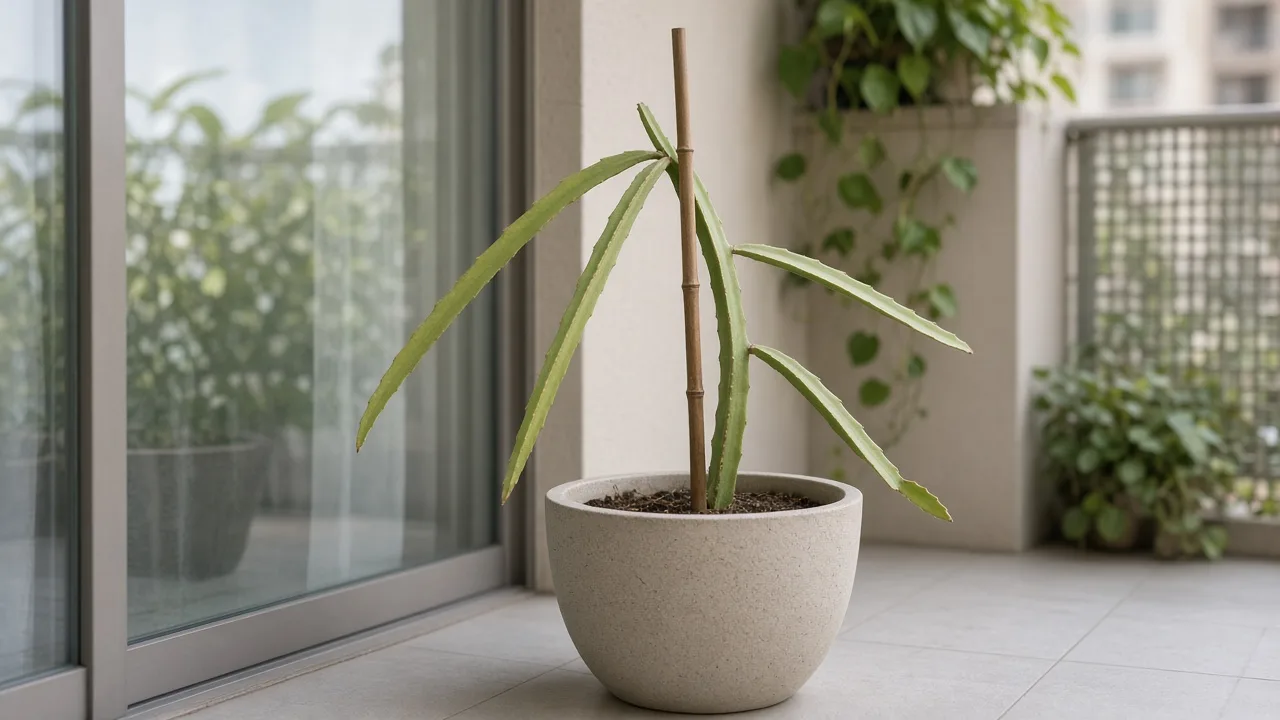
Not Enough Light on Dragon Fruit: Causes, Checks & Fixes
This guide covers not enough light on Dragon Fruit. See also the general Not Enough Light guide, watering, and light pages for this plant.
Not Enough Light on Dragon Fruit: Causes, Checks & Fixes
Quick answer
Dragon fruit (Selenicereus undatus, often sold as Hylocereus) is a climbing cactus grown for night-blooming flowers and edible fruit, not a low-light desk plant. The green three-angled stems (cladodes) are the entire photosynthetic engine—when they do not receive strong daylight, they stay thin, pale, and slow to branch on the trellis.
For how weak light stalls growth in general, see our not enough light guide. On dragon fruit, the pattern usually shows up as long internodes on upright stems, faded yellow-green ribs, no flower buds after years of care, and potting mix that stays wet too long in a dim corner.
First step: relocate the container to full open sun outdoors (six or more hours of direct light on clear days) or the brightest plant-facing exposure you can provide, and acclimate over 10–14 days. Do not increase watering or fertilizer until you see how the stems respond in the new spot.
What not enough light looks like on dragon fruit
Low light stress shows on new cladode growth first. Older stem segments can stay deceptively green while the plant quietly stops fruiting.
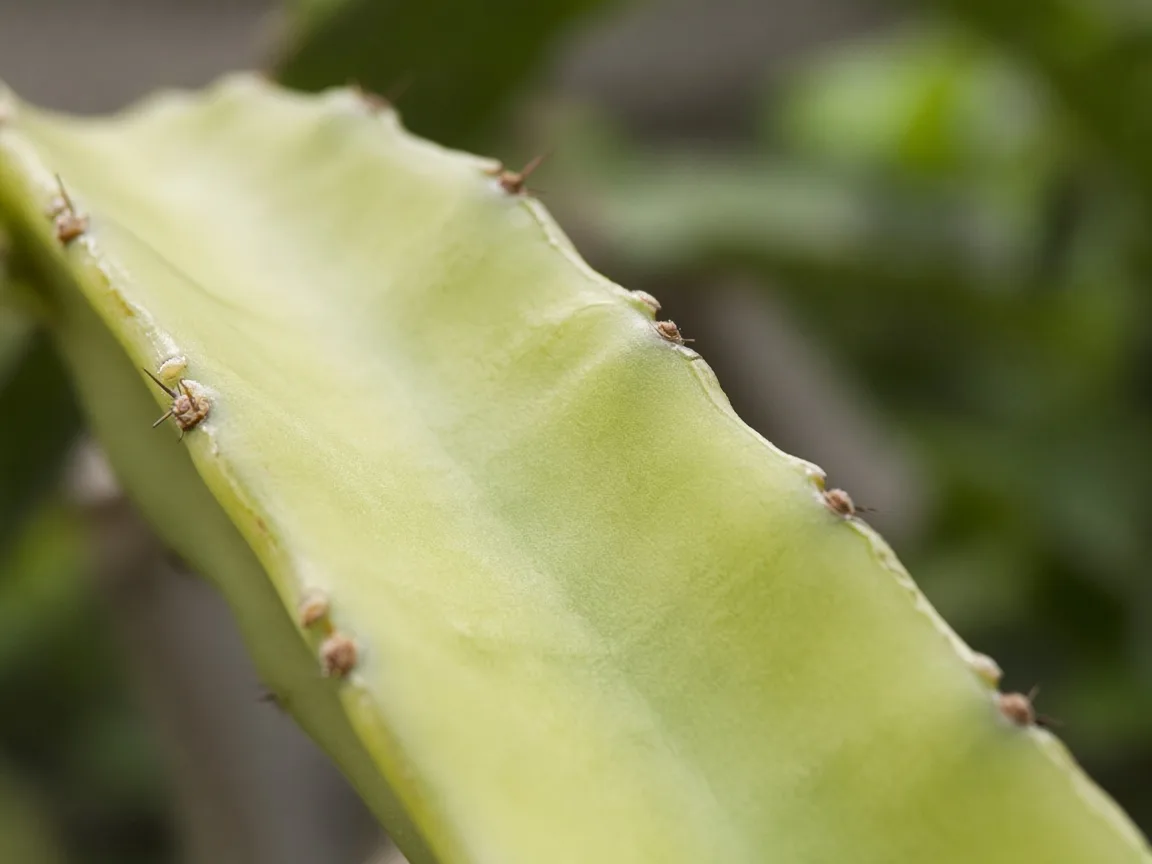
Low light on dragon fruit — compare the pale, widely spaced rib segments with firmer green tissue lower on the same stem.
Typical low-light signs:
- New stem segments paler yellow-green than last season’s growth, sometimes described as faded or washed out (Epic Gardening)
- Long gaps between areoles along the three ribs—weak “reach” toward the brightest sky or window
- Stems leaning or arching toward one direction instead of building a stiff upright leader on the post
- Little lateral branching on the trellis top despite warm temperatures and correct soil
- No night flowers for multiple seasons even when you hand-pollinate—buds never form without prior strong light
- Mix staying damp for many days after a normal deep watering because transpiration dropped in shade
What low light does not look like:
- Dry corky bleached patches on ribs that faced harsh afternoon sun after a sudden move—that is sunscorch, not too little light (NC State Extension)
- Soft, mushy stem bases with sour-smelling mix—that points to overwatering or root rot, though chronic shade can worsen wet mix
- Wrinkled, thin ribs on a very dry pot—that is underwatering, not light deficiency
Judge the leading tip and the last two segments it produced, not the whole mass of older stems on a mature trellis.
Why dragon fruit struggles in low light
Pitaya evolved as a warm-climate, full-sun crop in its native range. UF/IFAS Extension lists pitayas as a full-sunlight crop and recommends planting in full or almost full sun for best growth and fruit. NC State Extension likewise specifies full sun (six or more hours of direct sunlight daily) for Selenicereus undatus.
That requirement clashes with three common grower assumptions:
Treating it like a desert windowsill cactus. Dragon fruit tolerates drying between waterings, but it is not a low-light succulent. Dim rooms can keep cuttings alive while refusing to build the stem mass needed for flowering.
Balcony shade and “bright to humans” interiors. Overhangs, tinted glass, neighboring walls, and pots set back from the railing cut photons sharply. A spot that feels bright to you may deliver shade-level energy to vertical stems.
Self-shading on an unpruned trellis. UF/IFAS notes that without pruning, stems form a dense mass that reduces light penetration and interferes with harvest. Lower cladodes on a crowded frame can starve even when the pot sits in open sun—this is a dragon-fruit-specific pattern, not generic “leggy houseplant” stretch alone.
Greenhouse culture tells a different indoor story: the RHS advises bright indirect light with high humidity under glass, with outdoor garden position listed as partial shade on sheltered east- or west-facing aspects. Those labels describe protected UK conservatory culture, not a permanent shaded balcony if you want fruit. Translate them as “maximum honest brightness you can supply,” usually supplemented in winter.
How trellis training exposes (or hides) light problems
Dragon fruit is trained up a post, then outward on a frame. The first year focuses on a single upright leader; tips are cut later to force lateral “arms” that bear flowers.
In low light:
- The upright leader stretches instead of thickening, so the post support wobbles under weak tissue.
- Lateral branches stay sparse, so you never get the umbrella of flowering stems commercial growers plan for.
- Aerial roots along shaded stems may search for moisture in humid air without powering new growth—do not mistake them for success.
Compare your plant to the dragon fruit light guide targets: outdoor fruiting culture needs open sky; indoor culture needs intentional grow lighting, not hope.
If stems look thin and reachy, also read leggy growth on dragon fruit—the symptoms overlap, but the first fix for both is usually more usable sun, not repotting.
How to confirm insufficient light
Work through these checks before changing fertilizer, repotting, or blaming slow growth on “patience”:
- Open-sky test at the pot — At midday, can the stem canopy see open sky for most of the day? Full sun culture means direct light on clear days, not reflected glow from a wall.
- Hand-shadow on the ribs — Hold your hand 12 inches from the top cladodes. A soft but clear shadow suggests adequate outdoor intensity. No shadow means too dim for fruiting goals. A hard black shadow at midday on unacclimated stems risks sunscorch—acclimate instead of jumping from shade to blazing pavement.
- Internode ruler — Measure the distance between areoles on the newest segment. Widening gaps versus last year’s growth confirm etiolation from low light.
- Flower calendar — Mature, well-lit plants in warm climates flower on long days. If stems are years old, temperatures are warm, and no buds appear, light is a prime suspect before pest or feed issues.
- Mix dry-down — After a deep watering per your watering guide, note how many days until the pot feels lighter. Shade doubles dry-down time; do not respond by watering more often.
- Rule out crowding — If only the interior of the trellis is pale while outer ribs are dark green, prune for airflow and light penetration per UF/IFAS production guidance rather than moving the pot again.
If new cladodes are pale, spaced out, and leaning with no scorch history and no drought, insufficient light is the most likely limiter.
First fix for dragon fruit
Move the container gradually into full sun (or maximum available direct light) over 10–14 days.
Outdoor growers: place the pot in the warmest frost-free site with open sky, away from walls that cast long shadows. UF/IFAS recommends selecting the warmest non-flooding part of the landscape in full or almost full sun. Young or recently moved plants may need about 30% shade for the first three to four months or where sunburn risk is high—but permanent shade lowers production and fruit quality.
Balcony growers: pull the pot to the outer railing where stems see sky, not just reflected light from the ceiling. Epic Gardening container guidance suggests full sun with light afternoon shade protection on harsh exposures—east or south placement with morning sun is a practical default.
Indoor or winter protection: position at the brightest plant-facing window and add a full-spectrum grow light if stems still fade. Epic Gardening notes that northern indoor growers often need six to eight hours of direct sunlight equivalent and supplemental light when protecting plants from cold.
Acclimate: shift six inches toward sun every few days, or use shade cloth briefly while moving from deep shade. Do not simultaneously repot, prune heavily, or increase fertilizer—one variable at a time.
Use the Light Requirement Calculator to sanity-check placement labels, and the Grow Light Distance Calculator if you supplement indoors.
Step-by-step recovery on the trellis
Once light improves:
- Wait two to three weeks before judging new tissue. Old pale ribs will not re-darken.
- Retie the leader if stretch made it floppy; support prevents wind snap while new growth firms.
- Prune only crowded or damaged stems after you see stronger new segments—UF/IFAS pruning opens the canopy so light reaches inner ribs and reduces disease pressure.
- Resume watering for growth, not on a calendar from the dim corner. Brighter sun dries mix faster; follow probe-at-depth checks from the watering guide.
- Hold fertilizer until new cladodes look firm and green in the brighter spot—feeding a shaded plant does not replace photons.
- Plan pollination only after flowers return. Many cultivars need a second genotype or hand pollination at night; light must come first.
Recovery timeline
Improvement shows on new cladodes only. Expect darker green, shorter internodes on the next flush within three to six weeks in warm weather, sometimes longer after a winter move.
Flowering may lag a full growing season after a severe shade period because the plant must rebuild carbohydrate reserves on the trellis frame. Pale old segments remain useful—do not strip the canopy unless rot or pests demand it.
If growth stays weak after a confirmed light upgrade in summer, inspect roots for rot and pests on weakened stems before assuming the plant is a lost cause.
Lookalike symptoms to rule out
| What you see | Likely cause | Where to go |
|---|---|---|
| Pale stretch toward one window | Low light | Stay on this page |
| Yellowing with soggy mix | Too much water in shade | Overwatering |
| Wrinkled ribs, light pot | Drought | Underwatering |
| Bleached corky patches after sudden sun | Sunscorch | Dragon fruit light guide |
| General stall, few new ribs | Light or roots | Slow growth |
| Soft droop with wet mix | Root failure | Wilting |
Mistakes to avoid
Do not keep a fruiting pitaya permanently under dense tree canopy or deep balcony shade and expect night flowers.
Do not jump from a dim shop corner to unshaded west pavement in summer—acclimate or sunscorch follows.
Do not water more because pale stems look “thirsty”; shaded plants use less water and rot faster in wet mix.
Do not fertilize heavily to force blooms without fixing light—salts stress roots while the plant still cannot photosynthesize enough.
Do not confuse self-shading with insufficient outdoor sun—prune and train before moving the pot again.
How to prevent low light next time
Site new plants in full sun frost-free placements with trellis installed at planting, as UF/IFAS landscape guidance describes.
Prune one to three times per year to keep lateral stems from forming a light-blocking tangle.
On containers, follow Epic Gardening’s full-sun east or south exposure habit with temporary afternoon shade only while stems are tender.
When overwintering indoors, plan grow lights early rather than waiting for stretch.
Re-audit placement after monsoon cloud cover, pollution haze, or new construction shades the terrace.
Match watering to seasonal light—winter dim + cool rest needs less moisture, not the summer fruiting schedule.
When to worry
Low light alone is a slow limiter, but low light plus wet mix invites stem rot. When pale ribs, sour-smelling soil, and soft basal segments appear together, fix light and drainage before the leader collapses.
Replace plants with advanced rot on the main stem rather than expecting brighter light alone to heal mushy tissue.
Conclusion
Not enough light on dragon fruit is common because the plant survives shade while refusing to fruit. Read new cladode color and spacing on the trellis, not the memory of last year’s green canopy. Move to full sun or honest supplemental light, acclimate, prune for canopy openness, then adjust watering to match the new drying rate.
Fix light first, observe for several weeks, and judge success by firmer new ribs and eventual flower buds—not by whether last year’s pale segments suddenly darken.
When to use this page vs other Dragon Fruit guides
- Dragon fruit light guide — Routine full-sun placement, temporary shade cloth, and sunburn vs stretch.
- Leggy growth on dragon fruit — Overlapping stretch symptoms when etiolation is the main complaint.
- Dragon fruit problems hub — Browse all common issues on this species.