Root Rot on Dragon Fruit: Stem Softening & Salvage Steps
Quick answer
Root rot on dragon fruit is stem-base decay after roots suffocate in wet, poorly drained mix—common when lawn sprinklers, monsoon rain, or bloom-season watering keep the pot saturated. Stop all irrigation, unpot, and feel whether ribbed stems are firm before repotting or taking cuttings.
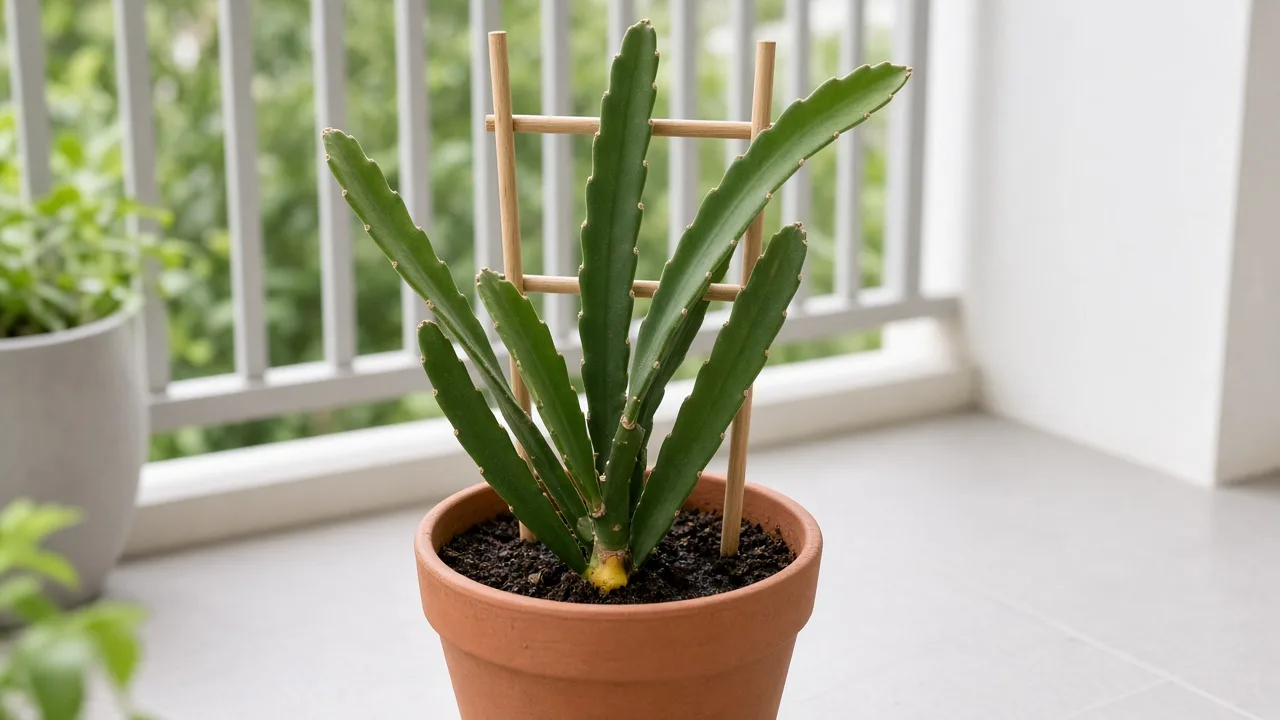
Root Rot on Dragon Fruit: Causes, Checks & Fixes
This guide covers root rot on Dragon Fruit. See also the general Root Rot guide, watering, and light pages for this plant.
Root Rot on Dragon Fruit: Causes, Checks & Fixes
Quick answer
Root rot on dragon fruit (Selenicereus undatus, often sold as Hylocereus undatus) is decay at the root zone and lowest stem segments after mix stays wet too long. This climbing cactus stores water in its three-winged ribs, so the top of the vine can look fine while the base turns mushy underground. For how chronic wet soil kills roots in general, see our root rot guide. On dragon fruit, the tell is a heavy pot, sour-smelling mix, and soft yellowing ribs at the soil line while you have been watering on schedule—or while lawn sprinklers keep the container soaked.
First step: stop all watering and irrigation touching the pot. Do not soak because stems look slightly wrinkled if the mix is still damp. Unpot only after you confirm weight and stem firmness at the base; then trim rot and repot dry, or salvage firm upper stems as cuttings.
What root rot looks like on dragon fruit
Dragon fruit shows stress on its jointed, triangular stems, not on broad leaves. Healthy segments are firm, plump, and green with crisp wing margins. Root rot usually appears at the lowest segment buried or touching wet mix, then moves upward.
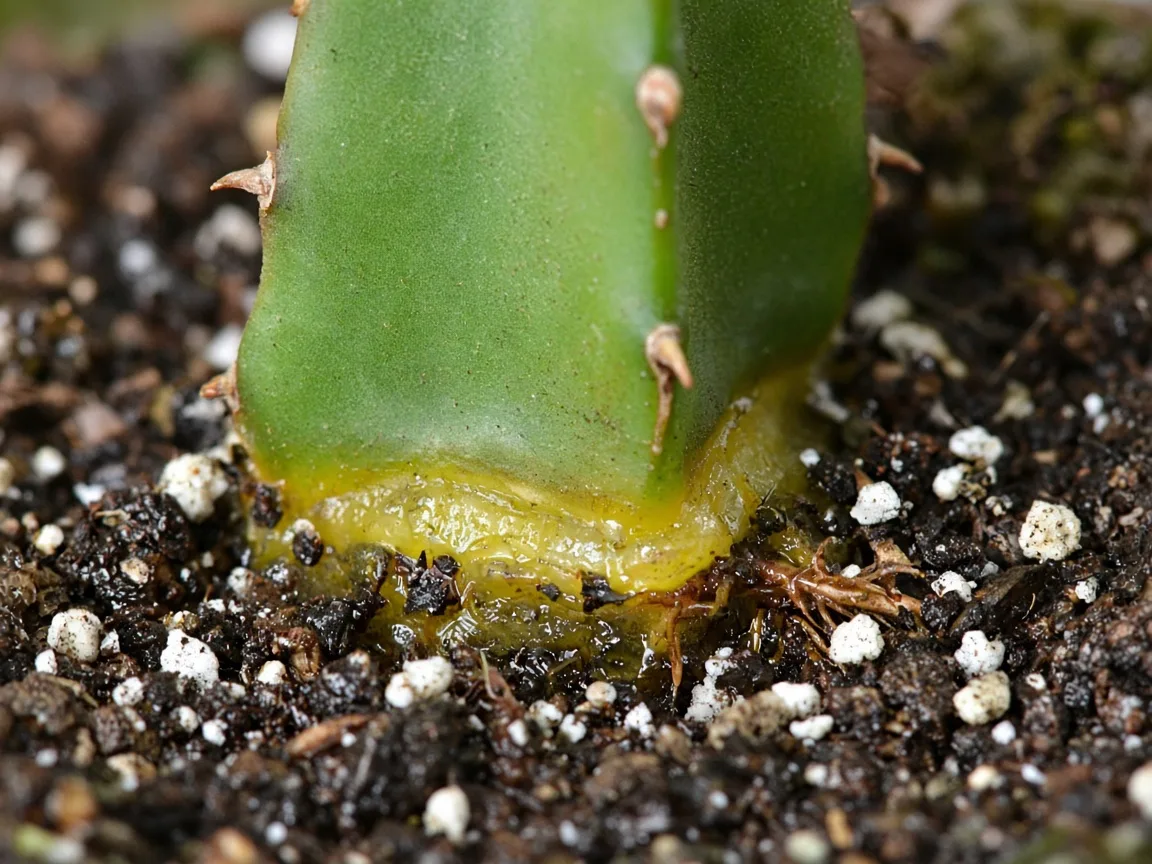
Root rot symptoms on dragon fruit - compare soft stem tissue at the soil line with firm ribs above.
Early signs (roots failing, upper stems still firm)
- Pot stays heavy many days after watering; surface may look dry while the core stays wet
- Sour or rotten smell from drainage holes or when you slide the plant from its pot
- Lowest rib segment turns yellow, translucent, or soft while higher growth still feels solid
- New areoles or side branches stall even in warm weather
- Fungus gnats hover over constantly damp mix—a moisture warning, not proof of rot alone
- Mold on soil on a surface that never dries between drinks
Advanced signs (stem rot climbing the column)
- Base segment collapses or dents when pressed; tissue may be brown or black inside
- Whole lower stem feels hollow; aerial roots near the rot zone turn brown and papery
- Wilting or limp ribs despite wet mix—damaged roots cannot move water upward (UW Extension on root rots)
- Black or water-soaked patches spread up the stem, sometimes after cool wet weather or monsoon weeks
Do not confuse slight rib wrinkling on dry, light mix with rot—that pattern fits underwatering on dragon fruit. Rot pairs wet mix + soft base tissue.
Why dragon fruit gets root rot
Dragon fruit is a fast-growing epiphytic cactus with aerial roots and high water use during bloom and fruit—but it still requires well-drained soil and dries down between drinks. Root rot is almost always care-driven saturation, sometimes accelerated by fungi and bacteria that thrive on wet stems.
The “cactus never needs water” myth. Owners underwater all winter, then switch to daily drinks when flowers appear. That swing is safer than constant moisture—but keeping mix wet through the cool dry rest or running sprinklers on a timer is not. UF/IFAS warns that lawn sprinkler systems on timers may overwater pitaya and cause root rot because water arrives too often for cactus roots (UF/IFAS HS303).
Monsoon rain plus hand watering. NC State notes that overwatering or too much rainfall can lead to stem and root rot on this species (NC State Extension). Container plants on balconies and patios get double water when drainage is poor.
Heavy mix and oversized pots. Dragon fruit needs loam or cactus-style mix with excellent drainage (overview soil notes). Dense peat, closed cachepots, and pots much larger than the root ball hold water around ribs that were never meant to sit in swampy soil.
Low light slowing dry-down. Dim indoor placements slow transpiration; the same watering rhythm that worked in full sun keeps mix wet for weeks—see not enough light if ribs stretch and pots stay heavy.
Pathogens after wet tissue. UF/IFAS lists fruit and stem rot (Colletotrichum gloeosporioides, Bipolaris cactivora) and stem canker on commercial pitaya; crowded, wet canopies worsen disease (UF/IFAS HS303). Home containers rarely need fungicides first—dry, airy root conditions are the main fix.
Bloom-season watering without drowning roots
Dragon fruit legitimately needs more frequent irrigation from flowering through harvest than during the cool dry rest (watering guide). That seasonal increase is not permission to keep mix soggy. UF/IFAS still notes that excessive soil moisture invites bacterial and fungal disease, while drought after flowering can hurt fruit set (UF/IFAS HS303).
The balance for containers: deep soak when almost dry, then full drainage—not shallow daily sips that wet only the top while the base stagnates.
Aerial roots and the soil-line failure point
Dragon fruit forms aerial roots along ribs to cling to posts and trellises. In pots, those roots often enter the mix near the surface. When the bottom of the pot stays wet, feeder roots die first, then decay reaches the lowest anchored segment. Owners may see healthy aerial roots higher on the stem while the buried base is already compromised—reason to inspect from the drainage hole upward, not only at the trellis top.
Lookalike symptoms to rule out
| What you see | Likely cause | How to tell it apart |
|---|---|---|
| Soft base, sour smell, wet heavy pot, mushy roots | Root rot | Confirmed on unpotting; lowest ribs fail first |
| Wrinkled firm ribs, light pot, dry mix throughout | Underwatering | No sour odor; roots tan and firm when checked |
| Yellow ribs, wet mix, recent daily watering | Overwatering | Early stage before roots melt; fix drainage and dry-down |
| Limp ribs after repot, firm roots, neutral smell | Transplant shock | Follows repotting; improves with stable light |
| Thin stretched ribs, wet pot in dim corner | Not enough light plus overwatering | Improve light and dry-down together |
| Brown dry patches on sun-exposed ribs | Sun scorch | Dry mix; tissue firm, not mushy |
How to confirm the cause
Work through these checks before cutting stems or repotting:
- Weigh the pot. Heavy days after the last soak means saturation—not drought.
- Probe depth. Dry surface with a wet core still counts if you watered recently; dragon fruit should dry through most of the volume between soaks (NC State Extension).
- Press the lowest rib where it meets mix. Squishy or hollow confirms rot climbing from roots.
- Smell the drainage hole. Sour odor means active decay.
- Unpot and rinse roots lightly. Healthy roots are firm and whitish to tan. Rotted roots are brown, slimy, or slip off with a tug.
- Compare to overwatering signs on the overwatering page if stems are only slightly yellow without mush.
Confirmed rot: wet mix, foul smell, and mushy roots or soft lowest segment. No fungicide replaces removing wet soil and dead tissue.
First fix for dragon fruit
Stop irrigation immediately—including nearby sprinklers that hit the pot.
Then unpot and work fast:
- Knock the plant out; discard saturated, sour mix entirely.
- Trim all brown, mushy roots back to firm tissue with clean, sharp pruners.
- Cut the lowest stem segment upward until ribs are solid green and firm—rot must be gone, not painted over.
- Let cut surfaces callous in dry shade for several days, the same principle UF/IFAS uses for cured pitaya cuttings before planting (UF/IFAS HS303).
- Repot into fresh, gritty cactus mix in a pot only slightly larger, with open drainage holes—see soil and repotting.
- Wait at least one week before the first light soak; then return to almost-dry checks in the watering guide.
If the base is hollow but firm green stems remain higher up, top the plant above healthy tissue and root the cutting per the propagation guide instead of saving a dead base.
Recovery timeline
Mild cases caught while only roots and the lowest inch of stem are affected often stabilize within two to four weeks after dry repotting, judged by firm new rib growth and no spread of discoloration. Severe stem rot that required topping may take several months before new shoots lengthen—dragon fruit can grow quickly once roots re-establish in warmth and bright light (overview).
Yellowed rib tissue does not green up again; recovery means new firm segments and stable moisture—not cosmetic reversal of old damage.
Mistakes to avoid
- Watering because upper stems look slightly shrunken while mix is still damp—the classic overwater trap (Missouri Botanical Garden on overwatering).
- Fertilizing a rotting plant “to perk it up”—fix roots first; see fertilizer only after new growth is firm.
- Repotting into a huge decorative pot “for the trellis”—extra wet soil volume invites repeat rot.
- Leaving the plant in standing saucer water or a cachepot after monsoon soaks.
- Spraying fungicide on mushy stems without drying and trimming—surface sprays do not restore dead vascular tissue.
How to prevent root rot next time
- Water when mix is almost completely dry through the pot, not on a calendar (NC State Extension).
- Use excellent drainage; avoid compacted peat-heavy blends for long-term containers.
- Redirect lawn sprinklers away from pitaya pots (UF/IFAS HS303).
- Match seasonal rhythm: drier cool rest, more frequent deep soaks only from flowering through harvest (watering guide).
- Prune for airflow on trellises so ribs dry after rain—see pruning.
- Empty saucers within minutes of every soak.
When to worry
Treat as urgent when the lowest ribs collapse, black decay spreads multiple inches in a week, or the entire root ball is mush. Same-day trimming and dry repotting—or topping to save upper stems—gives the best odds.
Salvage is unlikely when every root is gone and the stem is hollow to the trellis clip. Before discarding, check whether a firm upper segment can become a cutting; many pitaya selections root readily from stem sections once calloused.
Conclusion
Root rot on dragon fruit is wet-soil failure at the base of a water-storing vine. The plant hides damage until ribs soften at the soil line or the pot smells sour. Stop water first, confirm firm tissue, trim all decay, callous cuts, and repot into fast-draining mix with a strict dry-down rhythm. Firm new ribs mean you caught it in time; a hollow base means top the vine and restart from healthy stems.
When to use this page vs other dragon fruit guides
- Dragon fruit watering — Use for routine soak-and-dry timing before assuming rot is the main issue.
- Overwatering on dragon fruit — Use when stems yellow on wet mix but you have not yet confirmed mushy roots.
- Dragon fruit problems hub — Browse all common issues on this species.
- Wilting on dragon fruit — Use when ribs droop but root firmness is still unknown.
- Mold on soil — Use when the surface stays damp without confirmed stem decay.