Dragon Fruit Soil: Mix, Drainage & pH
Dragon Fruit Soil: Mix, Drainage & pH
Dragon Fruit Soil: Mix, Drainage & pH
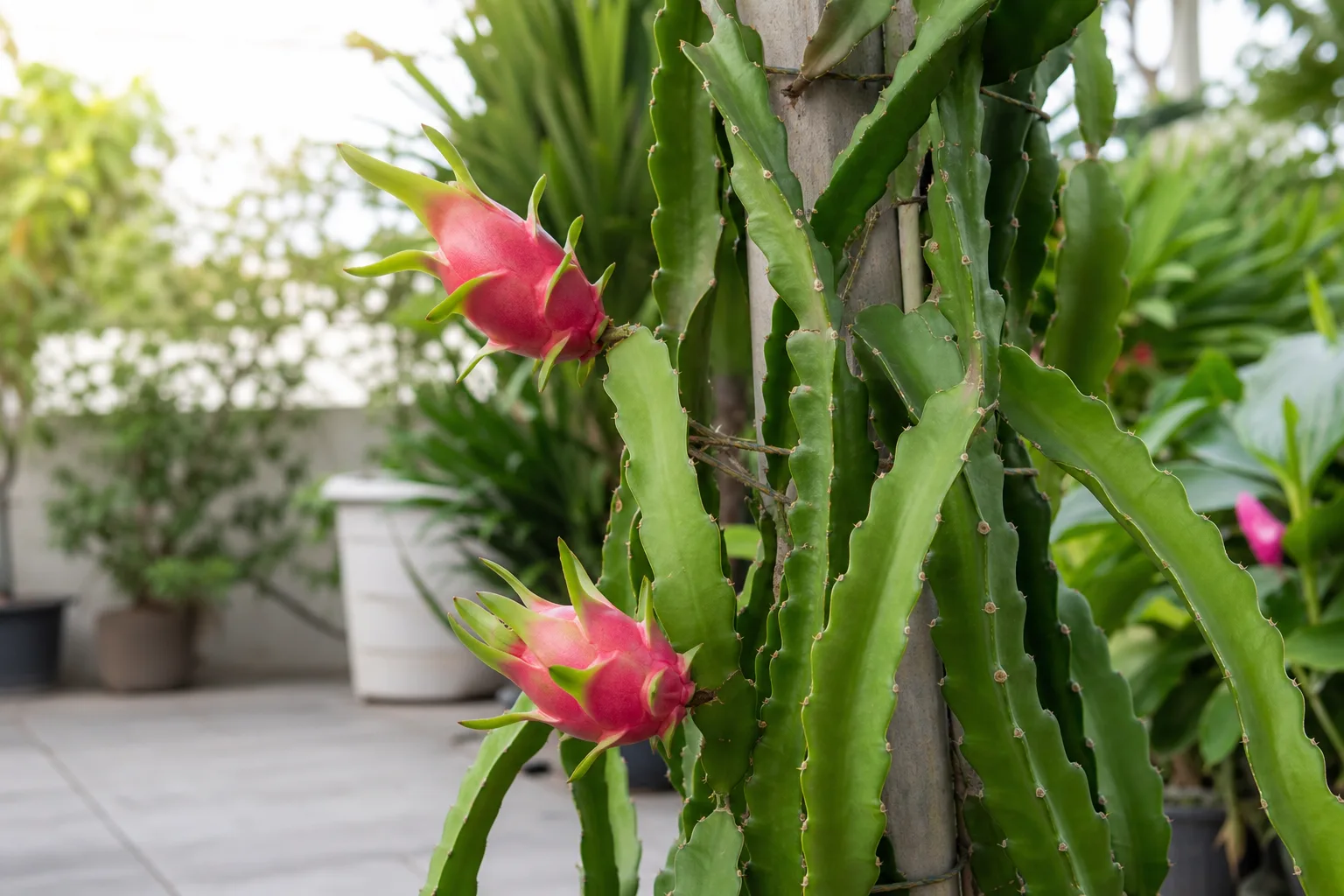
Dragon fruit fails in soil that stays wet, not in soil that looks “too sandy.” Selenicereus undatus (still widely labeled Hylocereus undatus, also called pitaya) is a climbing, vine-like cactus with fleshy triangular stems and aerial roots that cling to supports. Those stems store water, so the plant forgives a dry stretch far better than a soggy root zone. The soil job is simple: drain fast, stay aerated, and still hold enough organic matter to feed active growth.
This guide covers the mix dragon fruit actually wants, why all-purpose garden soil backfires, DIY recipes for pots and beds, pH targets, pot and mulch choices, monsoon-safe drainage for India and similar climates, and the warning signs that mean you should refresh the substrate before stems soften.
What dragon fruit actually needs from its soil
The best soil for dragon fruit is a well-drained blend that never floods after rain or a deep watering, yet is richer in organic matter than a lean desert cactus mix. UF/IFAS describes pitaya as adapted to a wide range of soils provided they are well-drained, and notes that plants thrive where organic matter is high or manure is added. In container culture, that usually means a cactus-style base amended with bark and compost so water exits quickly while roots still find nutrition.
North Carolina Extension summarizes the same preference in shorter form: well-drained loam or cactus potting mix, with soil drainage listed as good drainage to occasionally dry, and a pH window spanning acid to neutral. In practice, aim for a crumbly, chunky texture you can squeeze and open without forming a sticky ball.
Climbing cactus roots are not desert cactus roots
Dragon fruit is a member of the cactus family, but it is not a barrel cactus sitting on mineral grit in open desert. UF/IFAS describes it as a vine-like climbing cactus that originated in tropical America and is grown widely as a fruit crop in warm regions. In nature and in orchards, plants climb posts, trees, or trellises and send aerial roots onto supports while underground roots explore moist but oxygenated soil.
That biology changes the mix you buy. Pure mineral grit can dry too hard between waterings once stems are heavy and fruiting. Peat-heavy tropical houseplant soil holds water for days and starves roots of air. The sweet spot is cactus drainage plus organic fertility: enough coarse particles for oxygen, enough compost or aged manure for growth, and never a sealed wet layer at the pot bottom.
Target texture, aeration, and pH
Texture comes first. After you water thoroughly, excess should leave the drainage hole within seconds, and the surface should feel lighter within a day or two in warm weather. If the pot stays heavy for a week in monsoon humidity, the mix is too fine or the pot is too large for the root mass.
For pH, NC State lists acid (below 6.0) through neutral (about 6.0–8.0). A practical container target of 6.0–7.0 keeps most nutrients available without chasing chemistry unless leaf yellowing persists despite good light and watering. UF/IFAS also notes that plants can show minor-element stress in poor, high-pH calcareous soils—useful if you garden on alkaline rock or heavily limed ground. Salt tolerance is moderate to high for pitaya, so coastal or lightly saline irrigation is less of a deal-breaker than chronic waterlogging.
Why regular garden soil and moisture-control mixes fail
Native clay or dense garden loam packs around dragon fruit roots and stays wet after irrigation or monsoon rain. UF/IFAS is explicit: excessive soil moisture encourages bacterial and fungal diseases, and sites that flood or remain wet after summer rains are a poor choice. Soft basal stems, sour smell, fungus gnats, and stalled growth usually track back to that wet zone long before pests become the main story.
Bagged “moisture control” potting soils and fern/tropical blends are the indoor version of the same problem. They are built to keep foliage plants damp. Dragon fruit needs the opposite dry-down pattern. Even many cactus mixes still need amendment—add chunky orchid bark and a measured scoop of compost so the bag drains and still feeds. Skip gravel layers at the bottom of the pot; Wayne County Extension explains that “drainage material” under the soil does not improve drainage and can raise the perched water table. Use a real drainage hole and a mix that drains on its own.
What happens when roots stay wet
When pore spaces stay filled with water, root tissue loses oxygen and weakens. Soft tissue then invites the same stem and fruit rot organisms that pressure commercial plantings when air movement and dry-down are poor. You may still see firm green stems for a while because the cactus stores moisture above ground while underground roots fail. By the time the base collapses, recovery is slow. Prevention through texture and pot choice beats rescue.
Best soil recipes for pots and beds
Match the recipe to where the plant lives. Balcony pots need a lighter, bark-heavy blend that dries on a predictable schedule. In-ground plants need loosened native soil plus organic matter, and often a raised mound where the water table rises in rain.
Reliable DIY container mix
For most pot-grown dragon fruit, blend by volume:
- 2 parts quality cactus or succulent mix
- 1 part orchid bark or pine bark chips (about 1–2 cm / ⅜–¾ in)
- 1 part perlite or pumice
- ½–1 part well-aged compost or coco coir (coir if you want less peat)
That lands near the practical “cactus base plus roughly 20% bark” structure many growers use for aeration while keeping the organic matter UF/IFAS associates with strong growth. Moisten a handful and run the squeeze test: the mix should crumble open, not hold a tight mud ball. Then run a one-minute drainage test in the empty pot—water should not sit on the surface.
If you only have all-purpose potting soil, do not plant in it straight. Cut it with at least equal parts bark plus perlite until it behaves like the recipe above. For fruiting plants in large patio containers, a slightly higher compost fraction is fine as long as drainage still finishes in seconds.
Ground planting and monsoon drainage
In the ground, dig a wide planting hole and mix excavated soil with compost or well-decomposed manure rather than dropping a cutting into raw clay. UF/IFAS recommends mixing manure or compost into sandy planting holes and, where flooding is possible, planting on a 2–3 ft (0.6–0.9 m) mound. That advice translates cleanly to Indian monsoon gardens: raise the crown, improve structure with compost, and never site dragon fruit in a low spot that ponds for days.
Keep mulch 8–12 inches (20–30 cm) away from the stem base so constant damp bark does not sit against tissue that can rot. A 5–15 cm mulch layer beyond that ring helps conserve moisture and cool the soil in hot, dry months without creating a wet collar.
Choosing bags, pots, and mulch that keep roots alive
Buy cactus or succulent mix as a base, then amend. Avoid “moisture control,” “tropical,” and dense topsoil bags. Prefer pots with large drainage holes; terracotta or fabric pots dry faster than thick plastic in humid rooms, which helps if your watering hand is heavy. UF/IFAS notes that plants can be established in artificial-media-filled containers and even set with the pot base open to the soil beside a trellis—useful when you want container control on a patio but eventual rooting into bed soil.
Pot material and size
Size the pot to the plant. An oversized container holds unused wet mix around a small cutting and invites rot. Start cuttings in a well-drained media pot, then step up as roots fill the volume. Terracotta and fabric pots forgive overwatering better than sealed plastic in humid balconies; plastic is fine if the mix is chunky and you empty saucers after every soak. Pair soil choice with your watering rhythm and plan a soil refresh when you repot. Fertilizer cannot fix a drowned mix—feed only after drainage and light are right; see the fertilizer guide for rates.
How often to refresh tired dragon fruit soil
Organic bark and compost break down. After one to three seasons, fine particles settle, the mix densifies, and dry-down stretches longer even when you water the same way. Refresh when the squeeze test fails, when salt crust builds on the rim, or when a mature plant drinks unevenly because half the root ball is anaerobic mud. Spring through early monsoon growth is the best window in tropical India: replace the substrate, trim soft roots, and wait several days before a full watering so cut surfaces can callous.
Warning signs your mix is wrong
Act on patterns, not one wet day. Suspect soil failure when water pools on the surface for more than a few seconds, the pot stays heavy for many days in warm weather, the mix smells sour, stems soften near the soil line, new growth stalls despite heat and light, or white mold films the surface because the top never dries. Yellowing with a constantly damp root ball points to oxygen loss more often than simple hunger.
First action: stop watering, tip the pot to drain, and check roots if stems feel soft. Move the plant into brighter airflow if the mix stays cold and wet. If the substrate has collapsed into fine mud, replace it—do not just sprinkle dry fertilizer on top. Healthy roots are firm and light-colored; mushy brown roots need trimming before replanting into fresh, airy mix.
When to use this page vs other Dragon Fruit guides
Use this page when you are choosing, mixing, diagnosing, or refreshing the substrate. Use the Dragon Fruit watering guide when the mix is already correct but you are unsure how often to irrigate through heat, monsoon, or winter slowdowns. Use repotting when roots circle the pot or the mix is exhausted. Use fertilizer only after drainage works. Use light when pale, stretched stems suggest placement, not soil chemistry. Start with the overview if you need the full care picture, and use propagation when you are rooting cuttings in a starter medium.
Related Dragon Fruit guides
- Dragon Fruit overview — habit, placement, and how soil fits the whole routine
- Dragon Fruit watering — how fast your mix should dry between irrigations
- Dragon Fruit repotting — when to refresh tired substrate and pot size
- Dragon Fruit fertilizer — feeding once roots have oxygen and drainage
- Dragon Fruit light — sun and shade that drive water use through the soil
- Dragon Fruit propagation — well-drained media for cured stem cuttings
Conclusion
Dragon fruit soil succeeds when it drains like a cactus mix and feeds like a fruit crop: chunky, aerated, organic-enriched, and never flooded. Build or amend toward bark and perlite with compost, keep pH near mildly acid to neutral, raise beds where monsoon water sits, and refresh pots when the mix collapses. Get the substrate right first, then watering and feeding become straightforward instead of a guessing game.