Dragon Fruit Repotting: When, Pot Size & Soil
Dragon Fruit Repotting: When, Pot Size & Soil
Dragon Fruit Repotting: When, Pot Size & Soil
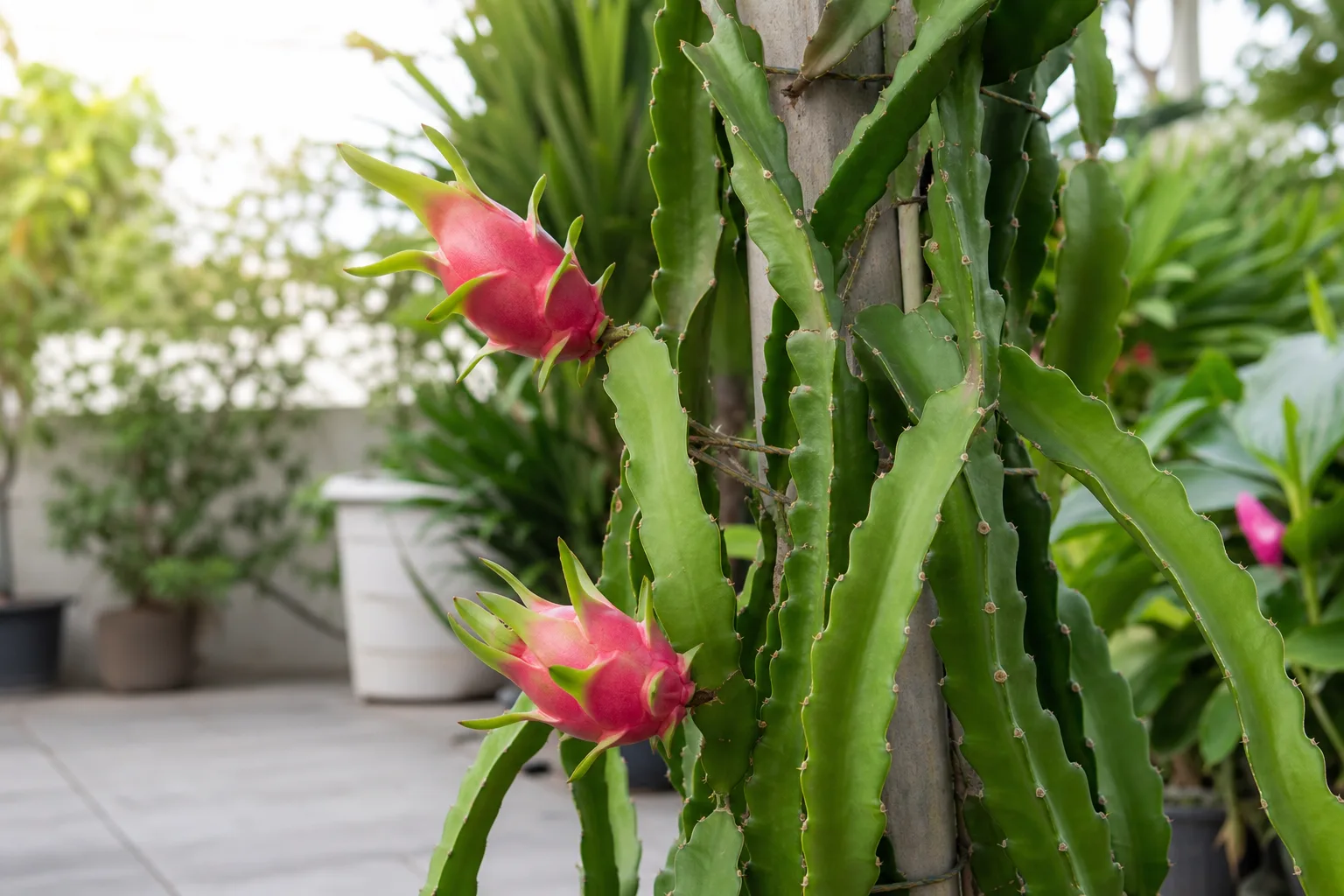
Dragon fruit (Selenicereus undatus, still widely labeled Hylocereus undatus) is a climbing cactus, not a tidy desktop succulent. In containers it builds long three-winged stems, sends out aerial roots for grip, and can stretch many metres if you keep giving it light and a sturdy post. That growth habit is why dragon fruit repotting is less about “upsizing every spring” and more about refreshing a mix that still drains, keeping the root zone oxygenated, and rebuilding a support system the plant will not pull over. Get the timing and pot right and the plant settles quickly. Overpot into heavy, wet soil during monsoon humidity and soft stems and root rot follow fast.
This guide is for patio, balcony, and greenhouse growers — especially in warm Indian and similar tropical climates — who need a practical path: when to move the plant, which pot and mix to use, how to handle spines and aerial roots, and what to do in the first weeks after the transplant.
Why Dragon Fruit Repotting Is Different From Ordinary Houseplants
Climbing stems, aerial roots, and container physics
Most houseplants fill a pot with a fibrous rootball and then ask for a slightly larger circle of soil. Dragon fruit works differently. Above the rim you get segmented, triangular stems that climb by aerial roots along a trellis, wall, or pillar. Below the rim you get a fibrous feeder-root system that still needs air spaces — this species evolved as an epiphytic climber on trees and rocks in tropical America, not as a swamp plant sitting in stagnant water. University of Hawaiʻi CTAHR describes pitaya as a perennial climbing cactus with aerial roots that anchor stems to supports, and notes that cuttings can be started in pots with a well-drained potting medium. UH–CTAHR pitaya guide
NC State Extension’s plant profile for this species adds the container-care details growers actually use: prefer well-drained loam or cactus mix, water when the soil is nearly dry, and repot every 2 to 3 years or when the plant outgrows its container, with a trellis or arbor for upright growth. Overwatering is explicitly tied to stem and root rot. NC State Extension
Those two facts set the whole strategy. You are not chasing a huge soil volume. You are chasing drainage, stability, and space for a support post that will not tip when stems get heavy with water or fruit.
When to Repot Dragon Fruit
Best season and Timing Windows
Repot when the plant is actively growing and can rebuild roots quickly. In most warm climates that means late winter to early monsoon — roughly the weeks when nights stay mild and new stem tips are already pushing, but before weeks of daily rain keep a freshly watered pot soggy. Clemson’s indoor transplanting guidance matches this logic: repot as needed in spring and summer while growth is active, and avoid routine moves on dormant, ailing, or flowering plants. Clemson HGIC
In India and similar monsoon zones, aim for a dry stretch after winter or early in the pre-monsoon heat, then keep the new mix on the dry side of “barely moist” until roots re-knit. Mid-monsoon emergency moves are possible for rot, but they demand a grittier mix, a brighter, windier spot, and stricter watering restraint than a spring refresh.
Clear Signs the Pot Is Finished
Use the plant and the pot, not the calendar alone. Strong green lights include:
- Roots circling the rootball or poking from drainage holes
- Water racing through in seconds because little mix remains
- The plant wilting soon after watering even though you watered thoroughly
- A sour smell, persistently wet core, or soft lower stem bases
- The pot tipping because stem mass and the trellis outweigh the base
- Growth stalled despite decent light and a sensible feed schedule
NC State’s 2–3 year interval is a useful baseline for a healthy container plant. Fast growers in full sun with frequent feeding may need a full refresh closer to every 2 years; a slow balcony plant in a still-draining mix can sometimes stretch longer if you top-dress the top few centimetres of tired soil.
When Not to Repot (Yet)
Skip a routine upgrade if the mix still drains within a couple of days, stems are firm, and the plant is just entering a flush of flower buds. Clemson advises against repotting plants that are beginning to flower; dragon fruit spends a lot of energy on night-blooming flowers and fruit set, so moving it mid-cycle often costs buds. Also wait if the plant arrived last week and is still adjusting — quarantine first, learn how fast the pot dries, then decide. The exception is emergency work: cracked pots, obvious root rot, or pest-ridden media should not wait for a perfect calendar window.
If the only problem is a leaning post, try resetting the stake and adding weight to the pot before you jump two pot sizes. Extra soil volume is not free insurance on a cactus that hates wet feet.
Choosing the Right Pot for Dragon Fruit
Size, Weight, and Drainage Rules
Move up only about 2.5–5 cm (1–2 inches) in diameter from the current pot unless the plant is severely root-bound and already in a very small nursery container. Clemson’s houseplant standard — select a pot 1 or 2 inches larger, with a real drainage hole, and skip the folklore “rock layer” that slows drainage — applies cleanly here. Clemson HGIC
Prioritize width and weight over depth. A wide, heavy terracotta or concrete-style container anchors a central post better than a tall, skinny plastic pot that tips the moment stems lean. Drainage holes are non-negotiable. Cachepots without holes are decorative shells only: keep the plant in a draining liner, water at a sink or open courtyard, and empty the outer pot after runoff stops.
For fruiting plants, plan the support at repotting time. CTAHR notes commercial systems use pillars, T-trellises, fencing, or horizontal trellises because the crop is a climbing cactus, not a free-standing shrub. UH–CTAHR In a home pot, a sturdy central post or small frame set while the mix is still loose saves you from stabbing through roots later.
The Best Soil Mix for Repotting Dragon Fruit
Dragon fruit wants a mix that holds a little moisture and organic matter — CTAHR describes preference for rich organic soil in a warm, moist climate — but still drains freely in a closed pot. UH–CTAHR NC State’s practical answer for containers is well-drained loam or a cactus potting mix. NC State Extension
A reliable home recipe for Indian balconies is roughly equal parts quality potting compost, coarse perlite or pumice, and chunky orchid bark or coconut chips, with a small scoop of composted manure if you want extra fertility. The finished mix should feel open in your hand and not squeeze into a sticky mud ball. Avoid moisture-control bagged soils, garden clay, and pure peat that stays wet for a week after rain. Pair this section with your Dragon Fruit soil guide if you need a deeper mix discussion; the point at repotting is simple: new mix must dry faster than the collapsed, salt-crusted stuff you are throwing away.
How to Repot Dragon Fruit Step by Step
Unpotting, Root Check, and Spine Safety
Wear thick gloves and long sleeves. NC State flags the spines along stem margins and recommends protective gloves for container handling. NC State Extension Water lightly a day ahead only if the rootball is bone dry and welded to the pot; otherwise work with a barely moist ball that slides cleanly.
Lay the plant on its side, support the stem base (not the fragile tips), and ease the rootball out. Tease away old, broken-down media. Healthy roots are firm and light-colored; discard black, mushy, or foul-smelling tissue with clean shears and start over with fresh mix. If roots form a tight mat, gently loosen the outer layer or score it lightly so new roots can push into fresh medium — the same approach Clemson describes for bound houseplants. Clemson HGIC
Replanting Depth and Rebuilding Support
Set the plant so the original soil line stays at the same depth. Burying stem bases deeper invites rot; planting too high leaves feeder roots exposed. Center your support post first, then backfill around roots without packing the mix into a brick. Leave 2–3 cm of rim space for watering. Tie stems loosely to the post with soft ties so aerial roots can still find purchase as they grow.
If you divided long stems during the move, treat those pieces as cuttings: CTAHR recommends curing cut ends in a cool, dry place for 5–7 days before planting into well-drained medium. UH–CTAHR That detail belongs to Dragon Fruit propagation when your goal is new plants rather than a simple pot upgrade.
Care After Repotting
Place the plant back in bright light — dragon fruit wants bright, direct sunlight once established, but give a freshly moved container a few days of slightly gentler exposure if stems look stressed, then return it to its usual bright spot. See the Dragon Fruit light guide for placement details.
Water thoroughly once to settle the mix, then wait until the top several centimetres dry before the next drink. Follow the rhythm in the Dragon Fruit watering guide rather than a fixed calendar; a larger pot of fresh mix often stays wet longer than the old, root-filled container. Skip fertilizer for 3–4 weeks so new root tips are not burned, then resume a light schedule from the Dragon Fruit fertilizer guide only after you see firm new growth.
Expect a short pause in tip growth. Soft, yellowing, or collapsing lower stems with a sour smell are not normal transplant sulking — that pattern points to wet mix or leftover rot and needs an emergency check.
Emergency Repots for Root Rot or Failed Mix
If stems wrinkle while the pot stays heavy, or the base turns mushy, unpot immediately regardless of season. Trim to firm tissue, discard contaminated soil, scrub the pot, and replant into a grittier, faster mix. Keep the plant brighter and airier than usual, water sparingly, and do not feed until recovery growth appears. NC State links overwatering and poor drying directly to stem and root rot on this species, so the first fix is the root environment, not another dose of fertilizer. NC State Extension
When to Use This Page vs Other Dragon Fruit Guides
Use this page when the question is pot size, timing, soil refresh, support rebuild, or post-move recovery. Switch to Dragon Fruit watering when the plant is soft or wrinkled but the pot size is still fine. Use Dragon Fruit soil when you need mix recipes without a full transplant. Use Dragon Fruit pruning to manage stem load on the trellis after the plant is stable. Use Dragon Fruit propagation when you are starting cuttings rather than upsizing a mother plant. For the whole care picture, start at the Dragon Fruit overview or the Dragon Fruit hub.
Related Dragon Fruit Guides
- Dragon Fruit overview — habit, climate fit, and how the care topics fit together
- Dragon Fruit soil — drainage-first mixes and pH notes for containers
- Dragon Fruit watering — how often to water before and after a pot change
- Dragon Fruit light — sun levels that drive growth and drying speed
- Dragon Fruit fertilizer — when to resume feeding after transplant
- Dragon Fruit propagation — cuttings and callusing if you divide during repotting
- Dragon Fruit pruning — thinning stems so a newly potted plant stays manageable
Conclusion
Repot dragon fruit when roots or tired mix force the issue — typically every 2–3 years — using a pot only slightly larger, heavy enough to hold a trellis, and filled with open, fast-draining media. Work in active growth, protect yourself from spines, keep the old soil line, and water conservatively until new roots take hold. That sequence respects what this climbing cactus actually is: a tropical epiphyte that wants air around its roots, a firm place to climb, and a container that never turns into a puddle.