Dragon Fruit Propagation: Cuttings & Seeds
Dragon Fruit Propagation: Cuttings & Seeds
Dragon Fruit Propagation: Cuttings & Seeds
Dragon fruit propagation is unusually forgiving for a fruiting plant — if you treat Selenicereus undatus (still widely labeled Hylocereus undatus) like a climbing cactus, not like a soft tropical herb. The white-fleshed pitaya sold across India and other warm regions roots readily from stem cuttings, keeps the parent cultivar’s fruit and growth habit, and can reach flowering size far sooner than a seedling. (UF/IFAS — Pitaya Growing in the Florida Home Landscape) Seeds work, but they scramble genetics and can delay fruit for years.
This guide covers the cutting method that commercial and home growers actually use, when seeds are worth the wait, how to avoid stem rot while roots form, and how to move a rooted plant onto a trellis and full-sun routine without shocking it. For day-to-day culture after establishment, lean on the cluster pages for watering, soil, and overview care rather than treating propagation as a substitute for full vine management.
Why Dragon Fruit Prefers Stem Cuttings Over Seed
UF/IFAS notes that pitaya may be grown from seed, but fruit and stem traits vary and the wait to production may be up to seven years. Asexual propagation is preferred, and stem cuttings are the widespread method. (UF/IFAS — Pitaya Growing in the Florida Home Landscape) That is the practical fork for home growers: clone a vine you already like, or accept a genetic lottery and a long juvenile phase.
NC State describes dragon fruit as a succulent epiphytic cactus with creeping, sprawling stems that climb by aerial roots, night-blooming flowers, and edible berries — and lists seed or stem cuttings as propagation options. (NC State Extension — Hylocereus undatus) Cuttings win for speed and fidelity; seeds win only when you want experimentation or you lack cutting material.
What Selenicereus undatus Is Doing as a Climbing Cactus
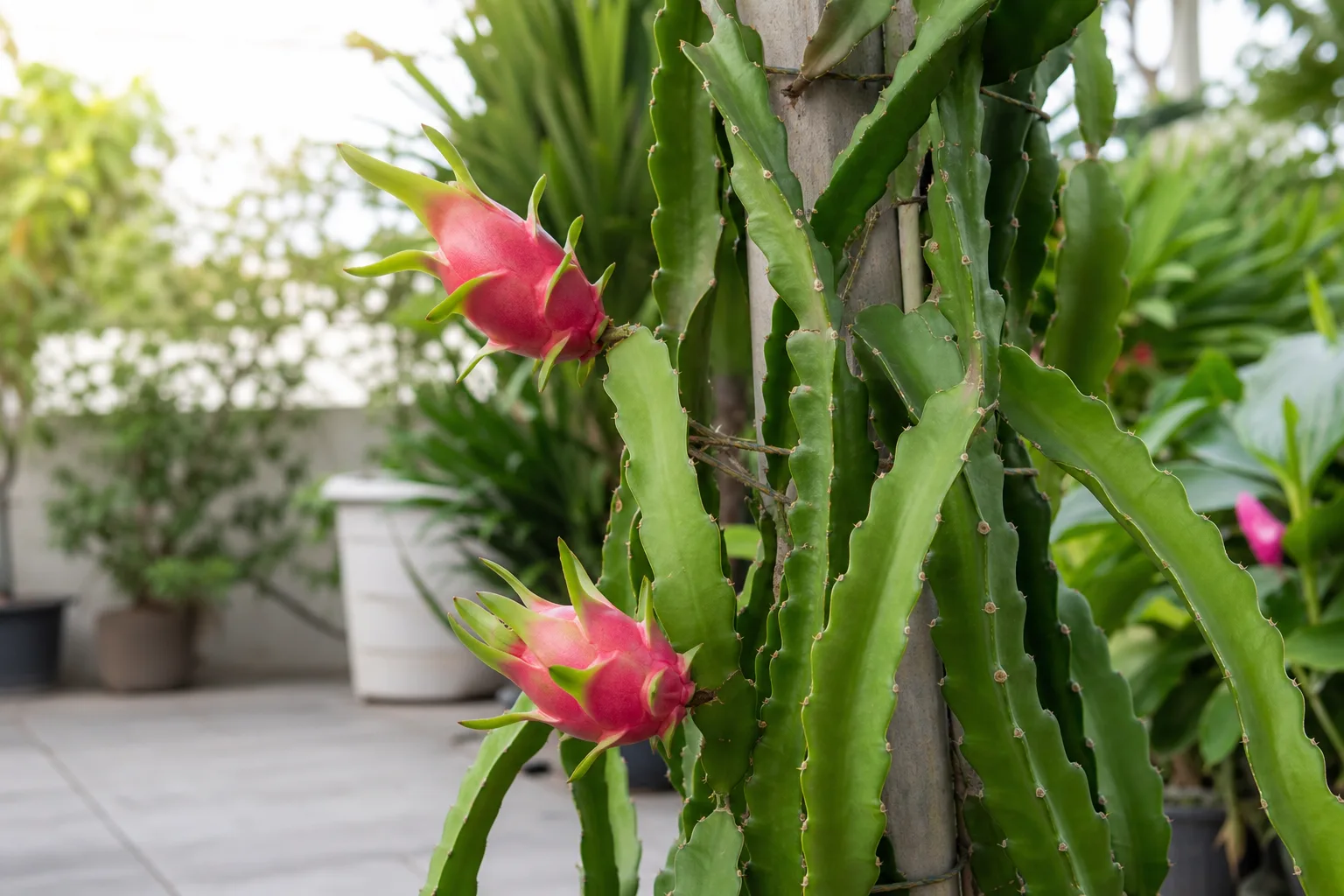
Dragon fruit is not a desert barrel cactus sitting in bone-dry grit. It is a vine-like, jointed cactus with triangular (sometimes multi-ribbed) fleshy stems that cling and climb. UF/IFAS describes fast-growing perennial stems that can reach about 20 ft (6.1 m) and form aerial roots that adhere to supports. (UF/IFAS — Pitaya Growing in the Florida Home Landscape) Propagation succeeds when you respect that biology: thick stem tissue holds water and energy for rooting, but the cut face rots if you bury a wet wound in soggy mix.
Those same stems need a post or trellis once they grow. Plan support early. A rooted cutting without something to climb will sprawl, shade itself, and invite disease later when the mass thickens. Pair new plants with the training ideas in the pruning guide once the main leader reaches the top of a stake.
When Seeds Still Make Sense
Grow from seed when you are curious about variation, breeding, or teaching germination — not when you need fruit on a known schedule. Seedlings are also useful if you want rootstock material for experimental grafting; UF/IFAS notes grafting is possible but uncommon for home plantings. (UF/IFAS — Pitaya Growing in the Florida Home Landscape) If your only material is a supermarket fruit, seeds will sprout, but the resulting vines will not necessarily match the fruit you ate.
If your goal is edible harvests from a named cultivar, skip seed. Take cuttings from a productive neighbor, nursery plant, or your own vine after a healthy growth flush.
Best Time to Take Cuttings in India and Warm Climates
UF/IFAS tropical-fruit propagation guidance lists May through September as the best window for cuttings in south Florida, while noting pitaya roots easily and does not require misting. (UF/IFAS — Tropical and Subtropical Fruit Propagation) Translate that to Indian and similar monsoon climates as warm months with reliable heat — typically late spring through the rainy season — when stems are actively growing and night temperatures stay soft.
Avoid taking cuttings from drought-stressed, sunburned, or soft-rotting parents. In peak monsoon, protect new pots from constant rain so the mix does not stay saturated. In dry, blazing summer, give new cuttings the light shade described later rather than rooftop full sun on day one. Planting into the landscape can happen any warm period if you can water carefully; UF/IFAS otherwise favors the warm, rainy season for field planting once roots are established. (UF/IFAS — Pitaya Growing in the Florida Home Landscape)
How to Propagate Dragon Fruit From Stem Cuttings
Stem cuttings are the default home method. UF/IFAS’s tropical fruit guide calls pitaya one of the tropical fruits that grow very easily from cuttings in well-draining soil without mist. (UF/IFAS — Tropical and Subtropical Fruit Propagation) Rooting hormone is optional, not mandatory.
Choose and Cut Healthy Stem Segments
Select firm, green stem sections free of soft spots, corky cankers, or insect damage. UF/IFAS landscape guidance typically uses entire stem segments of 6–15 inches (12–38 cm); the tropical propagation sheet suggests pitaya cuttings about 12 inches or more. (UF/IFAS — Pitaya Growing in the Florida Home Landscape) (UF/IFAS — Tropical and Subtropical Fruit Propagation) Longer cuttings reach a trellis faster once planted. Mark the basal end clearly — cuttings planted upside down fail.
Make a clean cut with a sterilized knife or shears. Landscape practice often uses a slanted cut at the stem base so the wound sheds water and seats cleanly in media. (UF/IFAS — Pitaya Growing in the Florida Home Landscape) Wear gloves if the cultivar has spines. Discard any mushy tissue rather than trying to “save” a soft tip.
Callous, Pot, and Root Without Misting
Allow the cut surface to heal before planting. Extension sources differ slightly on timing: the tropical fruit guide recommends roughly 24 hours in a dry, cool place for callusing, while the pitaya landscape publication recommends curing cuttings 7–8 days in a dry, shady location (often with a fungicide dust before curing). (UF/IFAS — Tropical and Subtropical Fruit Propagation) (UF/IFAS — Pitaya Growing in the Florida Home Landscape) In humid Indian weather, err toward the longer dry cure if the wound still looks wet or translucent. Do not seal cuttings in a plastic bag while curing — trapped moisture invites rot.
Pot into a one-gallon or similar container with fast-draining cactus or coarse potting mix. Keep media moist but not wet. Place pots in dappled shade, not harsh full sun. (UF/IFAS — Tropical and Subtropical Fruit Propagation) Some growers dip cured bases in rooting hormone; UF/IFAS states hormones are not needed for pitaya, though they are used on harder tropical cuttings. (UF/IFAS — Tropical and Subtropical Fruit Propagation) Research on related pitaya cuttings shows substrate and auxin choices can influence root mass — for example, balanced sand:vermicompost mixes and modest NAA+IBA rates performed well in one controlled study — but home growers succeed without specialty chemistry if drainage is right. (SciELO — Auxins in pitaya cutting propagation)
Aftercare Until Roots Fill the Pot
Check pots daily at first: the cutting should stay firm and upright, with mix that dries slightly between drinks. Overwatering is the fastest path to stem and root rot. NC State warns that overwatering or excessive rainfall leads to stem and root rot on this plant. (NC State Extension — Hylocereus undatus) A gentle tug after a few weeks that meets resistance usually means roots have formed; commercial guidance often describes a good root system in pots within about 4–6 months before landscape planting. (UF/IFAS — Pitaya Growing in the Florida Home Landscape)
For the first months after planting outdoors, UF/IFAS recommends about 30% shading for 3–4 months where sunburn risk is high, then move toward stronger light so fruiting later is not compromised. (UF/IFAS — Pitaya Growing in the Florida Home Landscape) Tie the leader to a sturdy post early. Wait roughly a month after planting, or until growth resumes, before light feeding — heavy fertilizer on an unrooted or freshly planted cutting is counterproductive. Match ongoing water and mix choices to the watering and soil guides once the plant is established.
Cuttings can grow quickly — UF/IFAS cites stem elongation on the order of about 1.2 inches (3 cm) per day under good conditions — and many plantings produce fruit in 6–9 months after planting from cuttings, though home timelines vary with cultivar, light, and nutrition. (UF/IFAS — Pitaya Growing in the Florida Home Landscape) If fruit set is your goal, remember that self-incompatibility occurs in several nursery cultivars; planting two or three different genetic types (not the same clone) improves fruit set and size. (UF/IFAS — Pitaya Growing in the Florida Home Landscape) Cloning one vine forever may give you a beautiful plant that still needs a pollen partner.
Growing Dragon Fruit From Fruit Seeds
Scoop seeds from ripe fruit, rinse pulp thoroughly, and dry briefly. Sow on the surface of a moist, well-draining mix and cover lightly. Keep warm and bright without baking the tray. Germination is often measured in weeks, but the real cost is time to harvest: UF/IFAS puts seed-to-fruit waits at up to seven years, versus much faster returns from cuttings. (UF/IFAS — Pitaya Growing in the Florida Home Landscape)
Transplant seedlings only after they form sturdy mini-stems and a small root network. Harden them gradually into stronger light the same way you would a cutting. Expect more plant-to-plant variation in spine density, fruit quality, and vigor than you get from a clone. For terrace growers who want edible pitaya on a known schedule, treat seed as a side experiment, not the main path.
Common Propagation Failures and First Fixes
Soft, black, or foul-smelling bases mean the cutting was planted too wet, too soon, or into poor drainage. Unpot, cut back to firm green tissue, re-callous in dry shade, and restart in coarser mix. UF/IFAS lists stem and fruit diseases — including stem canker (Neoscytalidium dimidiatum) and fruit/stem rot pathogens — as important problems on pitaya; keeping plants open to sun and air after establishment reduces disease pressure. (UF/IFAS — Pitaya Growing in the Florida Home Landscape)
No roots after many weeks often means the cutting was inverted, chronically dry, or sitting in cold, dim conditions. Confirm polarity, warm the root zone, and keep media lightly moist. Sunburned, bleached ribs on new cuttings mean you skipped the dappled-shade phase — move pots to filtered light and introduce direct sun slowly. Yellowing while the mix stays wet is an overwater signal; fix drainage before adding fertilizer. When you later move a rooted plant into a larger container or bed, use careful handling from the repotting guide so you do not snap the young root mass.
When to Use This Page vs Other Dragon Fruit Guides
Use this page when you are making new plants — choosing cutting length, curing wounds, rooting media, seed vs clone trade-offs, and early aftercare. Switch to other cluster pages once the new vine is alive and growing:
- Dragon fruit overview for whole-plant identity and care priorities
- Dragon fruit light for sun, shade cloth, and placement after rooting
- Dragon fruit watering for soak-and-dry rhythm once roots fill the pot
- Dragon fruit soil for long-term mix and drainage
- Dragon fruit fertilizer only after active growth resumes
- Dragon fruit repotting when upsizing containers
- Dragon fruit pruning for training to a trellis and thinning crowded stems
Propagation does not replace pollination planning. If you clone a single self-incompatible cultivar and want fruit, you still need a genetically different partner or hand pollination during night-open flowers. (UF/IFAS — Pitaya Growing in the Florida Home Landscape)
Related Dragon Fruit Guides
- Overview — hub for the full dragon fruit cluster
- Watering — keep rooted cuttings from sitting wet
- Soil — match mix porosity to cactus roots
- Light — step cuttings from shade into productive sun
- Repotting — move rooted pots without transplant shock
- Fertilizer — light feeding after establishment
- Pruning — train a single leader, then fruiting arms
Conclusion
The reliable path for dragon fruit propagation is a healthy stem cutting: take a firm 6–15 inch segment, cure the wound until dry, pot into free-draining mix, keep it lightly moist in dappled shade, then train the new leader onto a support as roots fill the container. Seeds will grow, but they trade years and genetic certainty for novelty. Respect the plant’s climbing-cactus biology — thick stems that store water, wounds that rot when buried wet, and vines that need light and airflow — and most cuttings root without mist benches or complicated hormones. Once your clone is established, follow the cluster’s watering, soil, and light guides so the new plant becomes a productive pitaya vine rather than a soft, crowded tangle.