How to Prune Dragon Fruit: When, Where & What to Cut
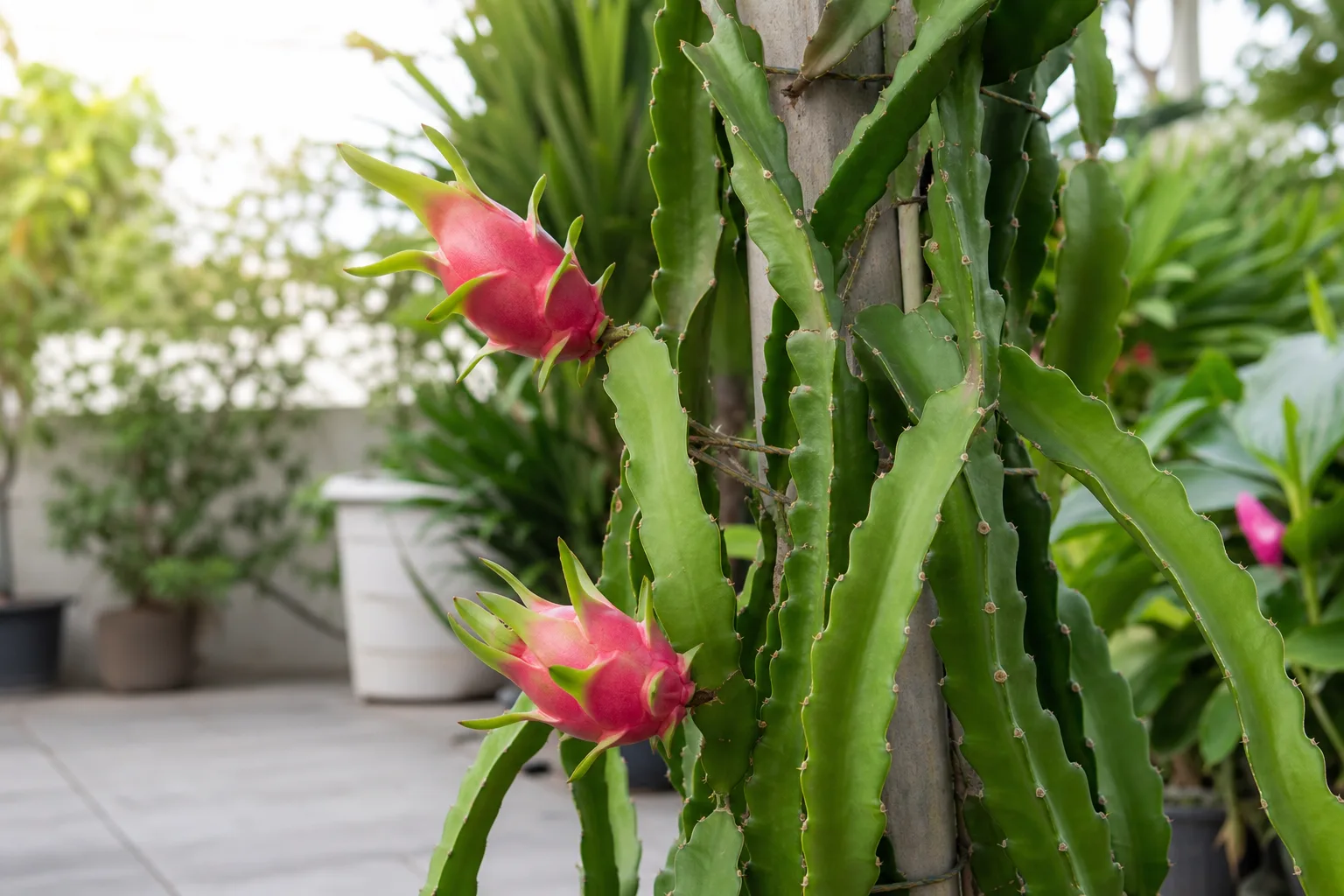
How to Prune Dragon Fruit: When, Where & What to Cut
How to Prune Dragon Fruit: When, Where & What to Cut
First, remove only dead, soft-rotted, sunburned, insect-damaged, or soil-touching stems with clean bypass pruners while wearing gloves. Do not tip the main leader or thin a healthy canopy until that cleanup is finished and you can see which firm green cladodes deserve to stay. For whole-plant context — light, watering rhythm, and climbing habit — see the Dragon Fruit overview.
Reviewed by LeafyPixels Review Board · Author: sai-ananth
Quick answer
For dragon fruit (Selenicereus undatus, also widely listed as Hylocereus undatus), pruning has two jobs: train a young plant up a strong post or trellis, then thin a mature canopy so light and air reach the hanging fruiting stems. UF/IFAS recommends eliminating side shoots on the main stem until it reaches the trellis top, tip-cutting there to force branching, and later removing damaged, diseased, dead, or soil-reaching stems while selectively thinning crowded growth. Prune soon after harvest when possible, and expect vigorous plants to need cleanup one to three times per year. Pruning improves manageability and can encourage branching and flowering, but it cannot replace a sturdy support, bright placement, or a well-draining mix — fix light and watering before expecting a hard cut to “fix” a weak plant.
What pruning does for dragon fruit
Dragon fruit is a climbing cactus with thick, segmented, usually three-angled stems that scramble with aerial roots. NC State Extension describes creeping, branching stems that can grow many meters long and climb by aerial roots, with night-opening flowers followed by edible fruit. Without pruning, those stems stack into a shaded tangle that is hard to harvest and stays wet longer after rain or irrigation.
Four pruning jobs show up repeatedly:
- Sanitation cleanup removes dead, rotten, cankered, or pest-damaged cladodes whenever you see them.
- Training keeps one (or a few) leaders climbing cleanly to the support and strips early laterals that waste energy near the base.
- Tip cutting stops the leader at trellis height so new laterals arch outward and hang — the fruiting “umbrella.”
- Production thinning opens the canopy so remaining stems get light, dry faster, and stay tied securely.
UF/IFAS notes that dense, unpruned masses reduce light penetration, complicate harvest, and raise insect and disease pressure, while pruning can induce flowering and stem branching. University of Guam Extension likewise advises encouraging upward growth in year one, then removing dead stems and selectively thinning live stems for airflow as the canopy matures.
When to prune dragon fruit
Best windows for training and production cuts
Make training cuts whenever the plant is actively pushing growth and you can still see the leader clearly — usually during warm growing months. Tip-cut as soon as the main stem reaches the top of the post or trellis so branching starts where you want the canopy.
Schedule major production thinning soon after a harvest flush, when fruit is off and you can judge which stems are spent, shaded, or damaged. Florida home-landscape guidance from UF/IFAS is to prune after harvest and remove all pruned material from the planting. In humid subtropical plantings, UF/IFAS plant pathology guidance describes commercial off-season pruning after the last harvest and before the next flowering wave (typically late fall into winter in south Florida), removing diseased and damaged stems and often 30–50% of canopy volume as a canker-management practice. Home growers outside Florida should translate that to “after fruiting, before the next bloom push,” not to a fixed calendar month.
Light cleanup of clearly dead or soft tissue is fine any time you can keep tools clean and the plant is not already collapsing from root failure.
When not to prune hard
Delay heavy canopy removal if:
- The plant is mid-flower or loaded with developing fruit and there is no urgent disease or breakage problem.
- The support post is leaning or the ties have failed — stabilize the structure first.
- Roots are soft, the mix stays sour and wet, or stems are wrinkled from chronic drought. Correct soil drainage and watering before large live cuts.
- You repotted within the last few weeks and the plant has not yet reanchored.
Hard pruning during peak bloom can cost that wave of fruit. Sanitation of cankered or rotting stems is the exception — remove those promptly even during the season.
What to check before cutting
Walk the plant with gloves on and answer these checks before any tip cut or thinning:
- Support strength — Can the post or trellis hold several hundred pounds of stem weight at maturity? UF/IFAS warns weak trellises buckle under mature pitaya.
- Leader clarity — Is there one clear main stem to train, or a crowd of equal stems fighting at the base?
- Stem health — Firm green tissue vs soft, sunken, yellow-spotted, orange-to-brown canker lesions, or dry hollow stubs.
- Contact with soil — Note any hanging stems touching the ground; those are priority removals.
- Crowding and shade — Can you see light through the hanging canopy, or is it a solid green mat?
- Flower buds and fruit — Mark stems carrying buds or fruit so you do not thin them without a reason.
- Tools and sanitation — Sharp bypass pruners or loppers, alcohol or bleach wipe between plants (and between diseased and healthy stems), long sleeves, and eye protection around spines.
If the plant is stretched toward a single light source with thin, pale new growth, improve placement using the light guide before expecting structural cuts alone to build a dense fruiting umbrella.
The first cut to make
Remove only dead, damaged, diseased, or soil-touching stems first. Cut each unwanted cladode back to healthy tissue at a natural joint or cleanly at the branch junction so you do not leave a long rotting stub. Bag or compost diseased material away from the plant — UF/IFAS advises taking pruned stems away from the planting rather than leaving them under the canopy.
Stop after cleanup. Reassess. Only then decide whether the plant still needs training, a tip cut, or production thinning.
How to prune dragon fruit step by step
Train one leader to the support
On young plants, choose the strongest upright stem and loosely tie it to the post as it climbs. Rub or cut off early side shoots along that leader so energy stays in height gain. UF/IFAS training guidance is explicit: eliminate lateral stems along the main stem until it reaches the trellis, and keep the leader tied as it climbs. Guam Extension’s first-year advice matches this upward focus.
If several stems leave the base, keep one or two leaders for a home plant unless your support is built for a multi-plant pole system. Extra basal stems that flop outward early become hard to manage later.
Tip-cut for an umbrella of laterals
When the leader reaches the top ring, beam, or platform of the support, cut the tip to stop vertical runaway growth. New laterals should emerge below the cut; train and tie those outward so they hang. That hanging curtain is where most home plants flower and fruit. Skipping the tip cut is a common reason plants keep climbing past the support into a tangled topknot.
Production thinning for light and airflow
On established plants, selectively remove:
- Damaged, diseased, or dead stems
- Stems that reach or drag on the soil
- Weak, shaded interior stems that never see sun
- Extra stems that block harvest paths or chafe against each other
Keep healthy, well-spaced hanging stems and retie them so wind or fruit weight does not snap joints. UF/IFAS frames this as selecting strong stems, preventing breakage and crowding, and improving light to the remaining canopy. Aim for a canopy you can see through, not a solid wall of cladodes.
Where to cut and how much is safe
Cut at a clear stem joint or branch junction with a single clean stroke. Avoid crushing soft tissue with dull blades. On thorny types, work slowly — NC State notes sharp spines along the stems and recommends protective gloves for handling.
How much is safe depends on the job:
| Goal | Typical removal | Notes |
|---|---|---|
| Sanitation only | Just the bad stems | Anytime; lowest stress |
| Training / tip cut | Side shoots on the leader + tip at support height | Young plants; small live-tissue loss |
| Home production thin | Enough to open light and remove weak wood | Often a modest fraction of hanging stems |
| Heavy reset / disease cleanup | Up to about one-third to one-half of canopy in one session | Matches commercial off-season ranges reported by UF/IFAS; expect a recovery pause |
For a healthy home plant without severe disease, prefer lighter, more frequent thinning over a single severe chop. If you do remove a large share of canopy for canker or tangle cleanup, do it after harvest, remove debris, and give the plant bright light and careful watering while new cladodes push.
UF/IFAS notes cuts may be treated with a fungicide in plantings where stem rot is a problem. Home growers can keep wounds clean and dry and avoid misting cut surfaces.
What not to cut
Leave these alone unless they are diseased or broken:
- The selected main leader before it reaches support height
- Healthy hanging laterals that are flowering or carrying fruit
- The structural arms you just trained at the trellis top — thinning everything that hangs will delay the next crop
- Aerial roots that are helping the plant cling, unless they are attached to a stem you are removing anyway
Do not “topiary” the plant into a short stump. Dragon fruit needs length of mature hanging stem to flower well. Also do not prune as a substitute for fixing a collapsing stake — retie or rebuild the support first.
Using healthy pruned stems as cuttings
Healthy green segments removed during thinning are excellent propagation material when the parent plant is disease-free. UF/IFAS describes using stem segments about 6–15 inches (12–38 cm) long, making a slanted basal cut, curing cuttings in a dry shaded place for about 7–8 days, then planting in well-drained media. Shorter home cuttings in the 6–8 inch range are also common in Guam Extension guidance, with several days of curing before potting.
Do not propagate from cankered, soft, or pest-infested stems. For rooting media and aftercare details, use the Dragon Fruit propagation guide.
Aftercare and recovery timeline
After pruning:
- Remove all cut stems from around the base.
- Retie remaining arms so they cannot twist or snap.
- Water only when the mix has begun to dry — do not flood a freshly cut plant sitting in shade. Follow your usual watering rhythm.
- Keep the plant in strong appropriate light so new laterals harden instead of etiolating.
- Hold fertilizer until you see firm new cladode growth; then resume a light growing-season feed if the plant was already an established feeder.
Recovery expectations: new side shoots after a tip cut often appear within a few weeks in warm weather. After a moderate thin, the canopy should look open immediately, with replacement stems filling in over the following growth flush. After a heavy 30–50% reset, expect several weeks of quieter top growth while remaining stems thicken and new cladodes emerge. Signs pruning worked: cleaner airflow through the canopy, new laterals at the tip-cut zone, fewer soft or spotted stems, and easier access for tying and harvest. Warning signs you cut too hard or at a bad time: widespread yellowing of remaining stems, soft bases, stalled buds that abort, or no new growth for many weeks while roots stay wet.
Mistakes to avoid
- Skipping cleanup and jumping straight to random tip cuts on diseased wood
- Letting every basal shoot climb until the post is a crowded cylinder
- Never tip-cutting at the top, so the plant climbs past the support
- Leaving soil-touching stems in place, which stay wet and invite rot
- Leaving pruned debris under the plant where canker spores can persist
- Heavy live cuts during peak flowering for looks alone
- Pruning a plant with a failing stake or chronically wet roots
- Reusing soft or spotted stems as cuttings
Related Dragon Fruit guides
- Dragon Fruit overview — habit, fruiting basics, and how pruning fits the full care cluster
- Dragon Fruit light — brightness needed before you expect dense branching after cuts
- Dragon Fruit watering — how to water a freshly pruned canopy without inviting stem rot
- Dragon Fruit soil — drainage that keeps cut plants from sitting wet
- Dragon Fruit propagation — curing and rooting healthy stems removed during thinning
- Dragon Fruit fertilizer — when to resume feeding after new cladodes appear
- Dragon Fruit repotting — avoid stacking a hard prune and a pot-up on the same day
Conclusion
Dragon fruit pruning is training first, thinning second. Clean out dead and soil-touching stems, keep a clear leader to a strong support, tip-cut at the top to build hanging laterals, then open the canopy after harvest so light and air reach the fruiting wood. Work with gloves, remove debris, and let bright light plus restrained watering finish the recovery — that sequence keeps Selenicereus undatus productive instead of turning into an unmanageable green tangle.