Mold on Soil on Dragon Fruit: Causes, Checks & Fixes
Quick answer
White or gray mold on dragon fruit soil is usually harmless saprophytic fungus on damp organic mix—not a disease attacking three-winged stems. Stop watering, scrape the top layer, and dry the whole pot before the next soak-and-drain cycle.
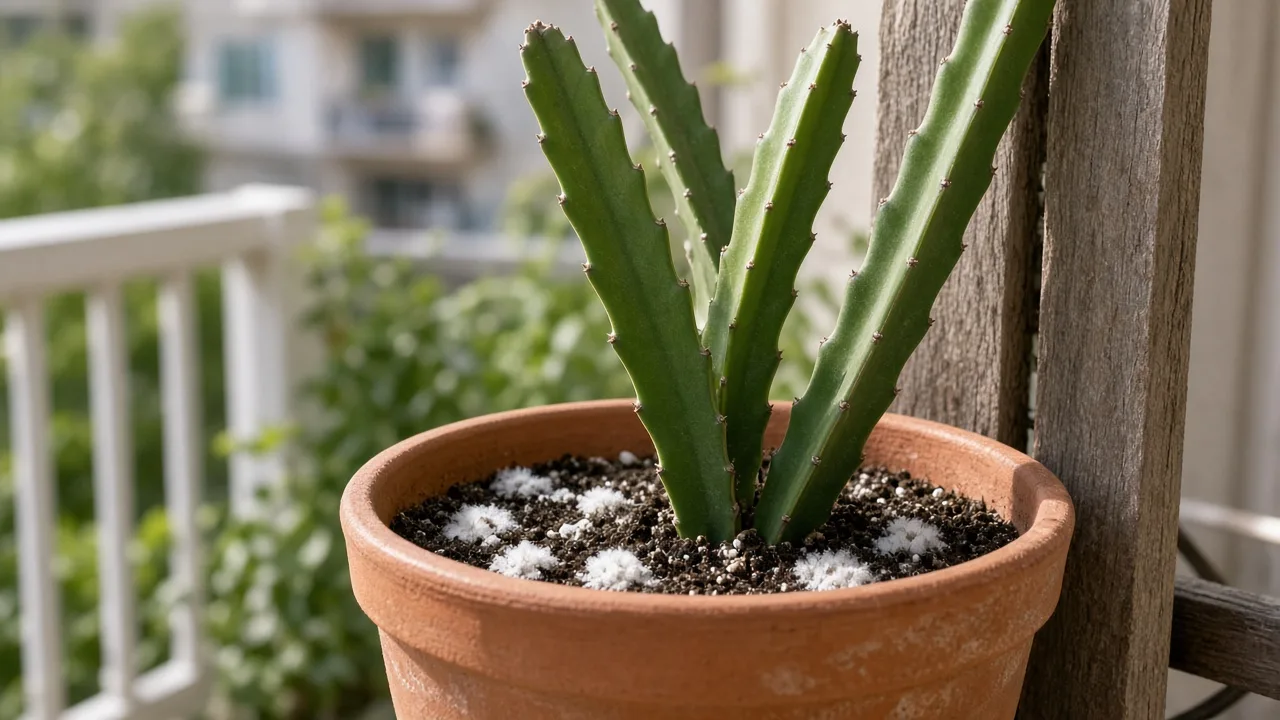
Mold on Soil on Dragon Fruit: Causes, Checks & Fixes
This guide covers mold on soil on Dragon Fruit. See also the general Mold on Soil guide, watering, and light pages for this plant.
Mold on Soil on Dragon Fruit: Causes, Checks & Fixes
Quick answer
Your dragon fruit (Selenicereus undatus, pitaya) has white or gray fuzz on the potting mix at the trellis post and you need to know whether to scrape, repot, or panic. Start with what makes pitaya different from leafy houseplants: it is a fast-growing, epiphytic, vine-like cactus with water-storing three-winged stems—not a plant built for a constantly damp soil surface.
For how saprophytic fungi colonize wet organic mix in general, see our mold on soil guide. On dragon fruit, the practical pattern is fuzzy soil at the post base while upper stems still look green, a heavy pot days after a light watering, or mold appearing right after monsoon weeks when you have not cut irrigation back.
First step: stop watering and scrape off the top inch of affected mix with a spoon—then let the entire pot dry before the next deep soak-and-drain cycle.
When to use this page vs other dragon fruit guides
This page is the symptom-first entry for fuzzy soil on a pitaya pot or container at the trellis base.
- Overwatering — go here for the full dry-down rhythm, sprinkler mistakes, and soft yellow lowest segments on saturated mix
- Root rot — go here when segments are mushy, soil smells sour, or you need unpot-and-trim steps
- Fungus gnats — go here when small flies swarm after every watering alongside surface mold
- Watering — go here for seasonal shifts: cool dry rest, flowering-through-harvest moisture, and monsoon cuts
- Soil — go here for gritty cactus blends that dry faster at the surface
- All dragon fruit problems — full cluster index
What mold on soil looks like on dragon fruit
Healthy pitaya containers should show a pale, dry, or lightly dusty soil surface within a few days of a proper soak. Mold shows up differently on a climbing cactus than on a fern or peace lily:
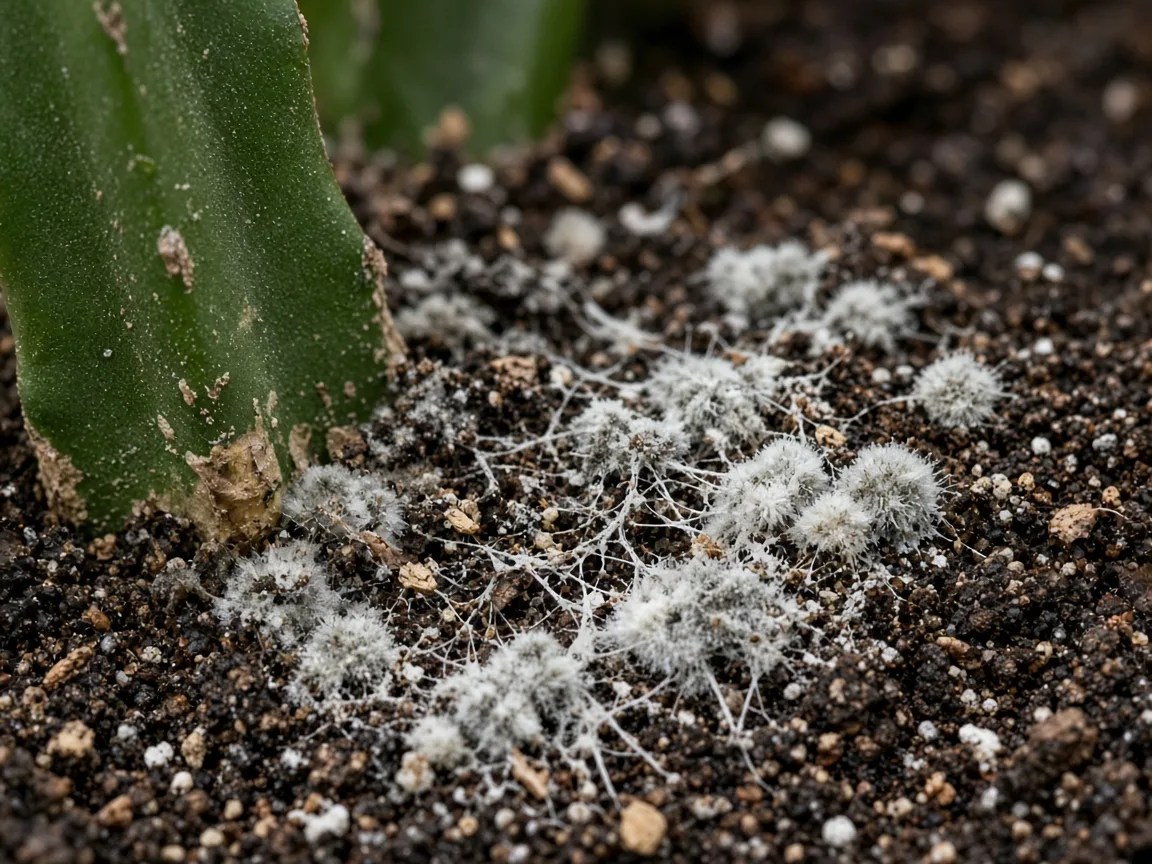
Mold on soil on dragon fruit — compare fuzzy threads on damp mix with firm green ribs on the same plant.
Typical harmless surface mold:
- White, gray, or tan fuzzy patches on the top of the mix, often around the post where stems emerge
- Growth concentrated on compost fines, old bark mulch, or fallen stem debris
- Soil surface still cool and damp days after watering while upper stem wings stay firm
- No sour smell; lowest segment still rigid when you press the ribs gently
Signs the wet conditions behind mold are hurting pitaya:
- Mold returns within days of scraping
- Fungus gnats hover when you disturb the pot
- Pot feels heavy long after watering; cachepot or saucer still holds water
- Yellowing or soft tissue at the lowest stem segment where it meets wet mix
- Sour or swampy smell—distinct from normal earthy potting mix
Because dragon fruit stores moisture in fleshy stems, upper growth can look fine while the base sits in fungus-friendly wetness. Do not treat surface mold as purely cosmetic when the container stays heavy and damp.
Monsoon, flowering, and the “two watering rules” trap
Pitaya care sounds contradictory until you separate root-zone dryness from fruit-stage moisture. UF/IFAS notes pitaya has a fairly high water requirement for a cactus once plants flower, yet excessive soil moisture fuels bacterial and fungal disease. NC State Extension advises watering when soil is almost completely dry, then providing good drainage.
Surface mold usually means you are satisfying the fruiting rule (“keep moisture steadier while fruit develops”) without the cactus rule (“let the profile dry between deep soaks”). In practice:
- During cool dry rest for bloom induction, mold after a single winter drink often means the pot was already wet—pitaya should not sit in soggy mix while you want flowers.
- During flowering through harvest, you may water more often, but each pass should still be soak-and-drain with an empty saucer—not daily sprinkles that leave only the top inch wet for a week.
- In monsoon or rainy terrace months, pause scheduled irrigation when rain already saturates the mix; mold on a rain-soaked pot is a sign to improve drainage and airflow, not to add another watering pass.
Why dragon fruit gets mold on soil
Pitaya evolved as a terrestrial or epiphytic climber in tropical America, rooting on trees or rocks with excellent drainage and periodic dry spells. Container culture fails when the surface of rich organic mix stays wet while stems above still look healthy.
Common pitaya-specific triggers include:
Calendar watering on a cactus root system. Lawn sprinklers or “every Tuesday” schedules can overwater pitaya and cause root rot because water arrives too often for ribs that expect a real dry-down. See overwatering if stems are already soft.
Peat-heavy or water-retentive mix in a large pot. Dragon fruit likes organic matter, but NC State lists well-drained loam or cactus mix and warns against soggy, poorly aerated soil. A 30-liter pot of standard indoor mix holds moisture at the post base long after stems have had enough.
Mulch and compost piled against the stem. UF/IFAS recommends mulch to retain moisture but keeping mulch 8–12 inches from the base of the stem. Decorative bark or manure touching the lowest segment traps humidity exactly where mold and stem rot start.
Low light on a balcony post. Dim winter corners slow evaporation while growth slows—continuing summer watering frequency leaves the top fungus-friendly for weeks.
Trellis training debris. Pruned stem pieces, fallen flower buds, and top-dressed moss give saprophytic fungi more food at the soil line.
The mold itself is usually not attacking living tissue. The problem is the environment that grows it—the same environment that leads to root rot and fungus gnats.
How to confirm the cause
Work through these checks before repotting, fungicide sprays, or cutting stems:
- Lowest-segment firmness — Press the bottom few inches of the main stem. Firm, plump ribs suggest mold is a moisture warning only. Soft, yielding, or yellow tissue at the soil line means escalate toward root rot today.
- Depth moisture — Push a skewer 10–15 cm into the mix (deeper in large trellis pots). Dark, clinging wood means wet soil throughout—not just a harmless surface bloom.
- Pot weight and drainage — Lift the container. Heavy days after a light watering confirms saturation. Confirm holes are open, cachepots are emptied, and the plant is not sitting in runoff.
- Smell check — Earthy odor is normal. Sour or rotten smell points to anaerobic decay in wet mix (UW Extension on wet soil and root decline).
- Gnat check — Small flies rising from the surface mean larvae are feeding in damp organic compost in the same layer as the mold.
- Season and fruit stage — Mold after monsoon rain, after moving the pot to shade, or while you are still on a fruiting-season soak schedule tells you which watering rule you violated.
Lookalike comparison
| What you see | Likely cause | How to tell apart |
|---|---|---|
| White/gray fuzzy threads on damp soil | Saprophytic surface mold | Scraping reveals wet peat beneath; lowest stem firm |
| Hard white or tan crust on pot rim | Mineral salt buildup from fertilizer or hard water | Gritty crystals, not fuzzy threads; often on dry edges |
| Smooth green film on wet surface | Algae in low light | Same moisture fix; needs brighter light |
| Mold only under bark mulch touching stem | Trapped humidity at base | Pull mulch back per UF/IFAS clearance guidance |
| Brief white threads after repotting | Normal mycelium in fresh organic mix | Fades once pot dries; no sour smell |
First fix for dragon fruit
Stop watering immediately and remove the upper inch of growing media along with the moldy surface using a spoon or fork.
University of Maryland Extension recommends discarding the upper layer when algae or fungal mats appear on indoor plant soil. Bag the scraped material and trash it—not the compost pile. Leave the vine on the post and let the remaining mix dry completely before the next drink.
Do not mist stems, do not top-dress with fresh compost while correcting moisture, and do not resume fruiting-calendar watering until you have verified dryness at depth. One targeted correction first: dry-down, then read the plant’s response for seven to ten days.
If stems are still firm
After the pot dries through:
- Replace the scraped top inch with coarse grit, perlite, or fast-draining cactus mix from the soil guide—not more peat alone.
- Pull any mulch or organic debris away from the lowest segment.
- Resume watering: almost dry, then deep soak, then drain fully.
If the lowest segment is soft or sour
Skip scraping-only fixes. Open the root rot guide, unpot if needed, and trim decay before the climbing stem collapses with little warning.
Recovery timeline
Judge progress on pitaya by firm new stem growth and a stable, lighter pot between soaks—not by whether old mold stains disappear from the pot rim.
- Mild surface mold on firm stems: Often stabilizes within one to two corrected dry-down cycles (roughly two to three weeks in warm weather).
- Mold plus fungus gnats: Flies taper as the mix dries; pair with the fungus gnat guide if adults persist after the surface stays dry.
- Soft base or sour smell: Recovery is measured in months after surgery and repot—not days. Some segments may not refill; new side shoots from higher nodes may be the salvage path.
Yellowed or corky tissue on the lowest inch often does not turn perfect green again. Success means the problem stops spreading and new ribs above stay firm.
What not to do
- Do not blast the soil daily to “wash mold away”—that keeps the profile wet.
- Do not apply fertilizer to a stressed vine before moisture is fixed.
- Do not repot, hard-prune, and spray fungicide on the same day unless rot is confirmed.
- Do not copy tropical foliage watering during the cool dry rest pitaya uses for bloom induction.
- Do not pile mulch or manure against the stem while troubleshooting surface mold.
How to prevent mold next time
Align watering, mix, and post hygiene with pitaya’s seasonal rhythm:
- Check dryness at depth—not surface color alone—before every soak (NC State almost-dry rule).
- Use free-draining cactus-style mix in a pot sized to the root ball, not an oversized display container.
- Keep mulch and compost away from the stem base; maintain airflow around the post.
- Cut scheduled irrigation during monsoon when rain already wets the profile.
- Remove pruned stem pieces and fallen floral debris from the soil surface weekly.
- After harvest, return to the drier rest window before ramping water again for the next fruit cycle.
Related dragon fruit guides
- Dragon fruit overview — climbing cactus basics and trellis culture
- Watering — soak-and-drain, bloom rest, and fruit-stage moisture
- Soil — gritty blends for epiphytic roots
- Light — sun exposure and evaporation from the pot
- Overwatering — primary cause behind surface mold
- Root rot — stem-base surgery when probe fails
- Fungus gnats — companion pest on wet mix
- Wilting — when dry-down goes too far after you cut water sharply
- All dragon fruit problems
Related tool
Use the Plant Problem Diagnosis Tool to narrow causes for mold on soil on this plant before changing multiple variables at once.