Yellow Leaves on Dragon Fruit: Causes, Checks & Fixes
Quick answer
On dragon fruit (pitaya), yellowing almost always shows on the three-winged stems, not separate leaves. Wet mix with soft, pale ribs near the pot is the classic overwatering pattern. First step: stop watering, confirm drainage holes are open, and squeeze the lowest stem segment—firm green tissue above dry mix means wait; soft yellow tissue above a heavy pot means root stress.
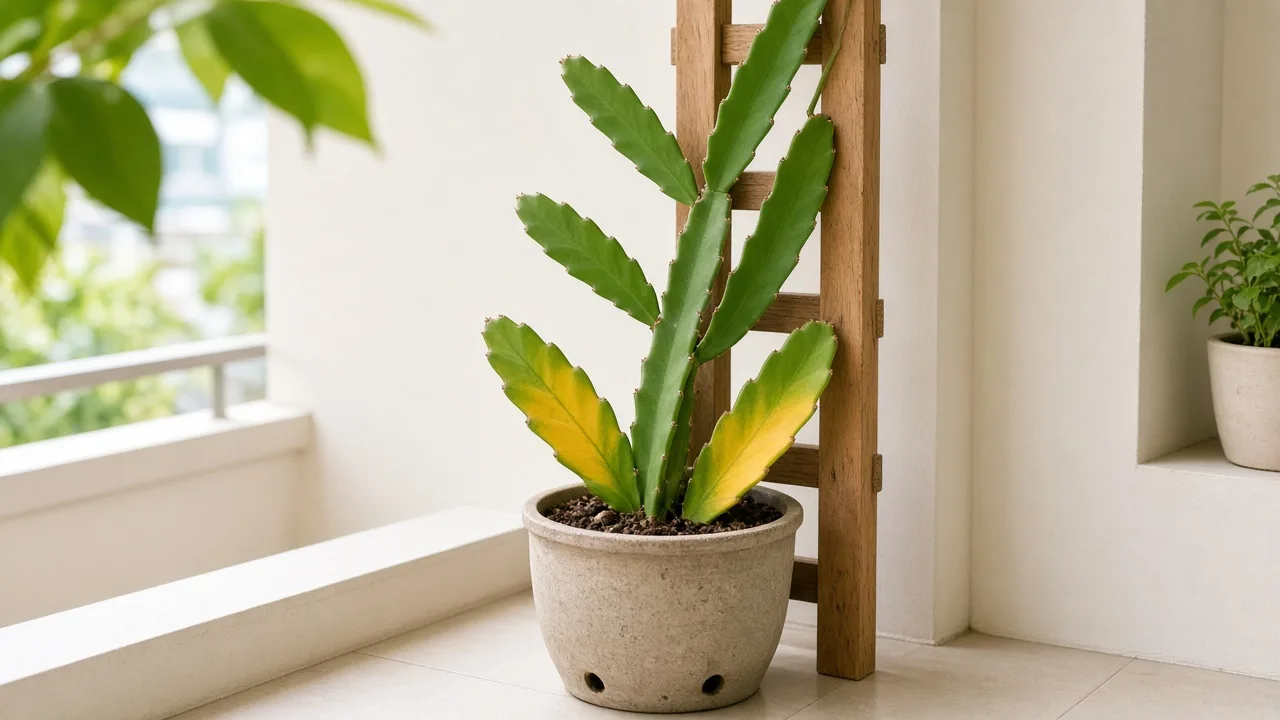
Yellow Leaves on Dragon Fruit: Causes, Checks & Fixes
This guide covers yellow leaves on Dragon Fruit. See also the general Yellow Leaves guide, watering, and light pages for this plant.
Yellow Leaves on Dragon Fruit: Causes, Checks & Fixes
Quick answer
On dragon fruit (pitaya), yellowing almost always shows on the three-winged stems, not separate leaves. Wet mix with soft, pale ribs near the pot is the classic overwatering pattern. First step: stop watering, confirm drainage holes are open, and squeeze the lowest stem segment—firm green tissue above dry mix means wait; soft yellow tissue above a heavy pot means root stress.
Dragon fruit (Selenicereus undatus, still sold as Hylocereus undatus) is a succulent epiphyte and climber with fleshy ribs that store water. Searchers ask about “yellow leaves,” but the visible tissue is usually stem wings fading from deep green to yellow-green, lime, or tan. Before you repot, prune hard, or feed, compare pot weight, rib firmness at the soil line, and whether new tip growth still looks plump.
For how chlorosis and root stress yellow foliage in general, see our yellow leaves hub. On pitaya, the split is stem rib color plus pot weight—wet heavy pots with soft basal ribs are not the same as dry wrinkled ribs or sun-bleached patches on one facing side.
What yellow “leaves” look like on dragon fruit
Dragon fruit photosynthesizes through succulent three-angled stems trained up a post or trellis. What growers call yellow leaves is usually:
- Uniform yellow-green or lime ribs on one or more segments, often starting at the lowest cladodes touching the pot collar
- Soft, translucent, or waterlogged tissue at the base while the mix stays dark and cool
- Interveinal pale green on newer segments when roots are healthy but nutrients or pH are off (less common than wet feet)
- Yellow-brown, bleached, or corky patches on the sun-exposed wing after a sudden move to harsh terrace sun
- Wrinkled, gray-green ribs with a very light pot—underwatering, not chlorosis
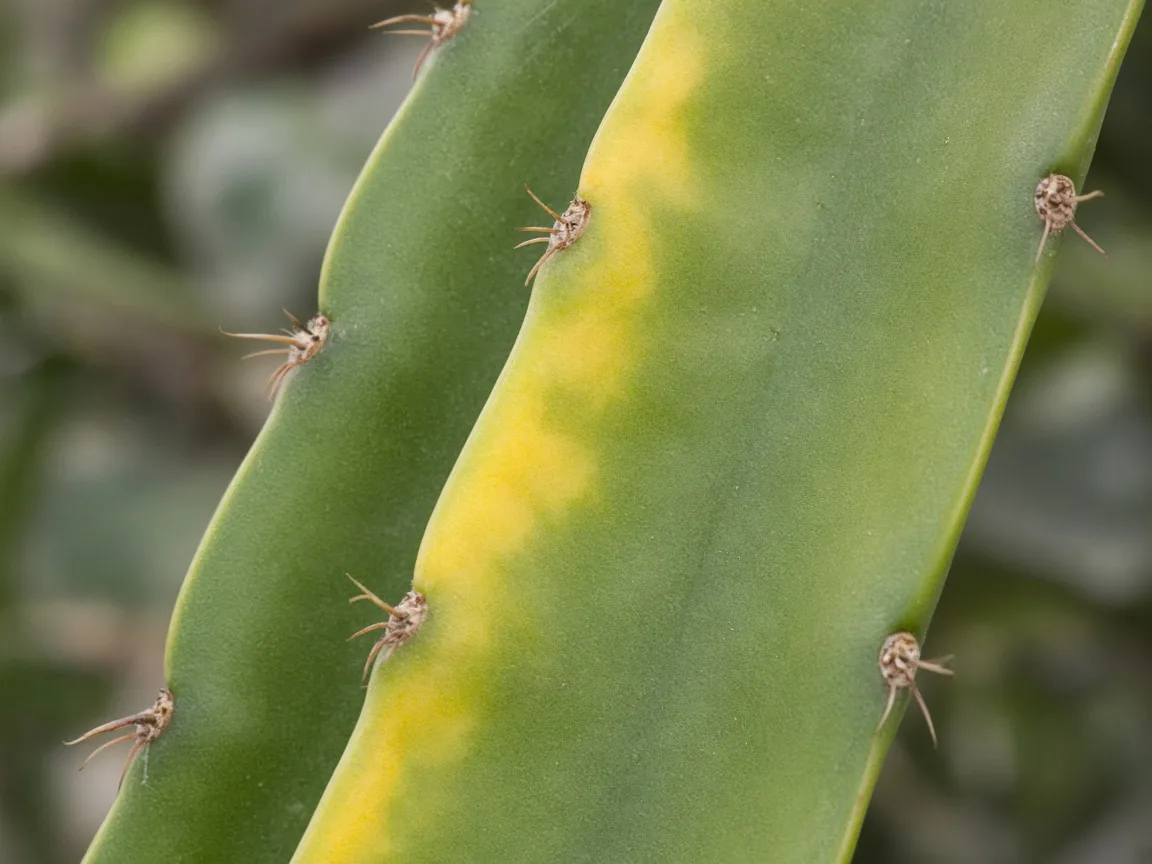
Yellowing on dragon fruit stem ribs—compare firm green tissue at the growing tip with pale basal segments.
Healthy stems feel firm and plump, with crisp wing edges and medium to deep green color in good light. NC State Extension describes rapid growth in warm sun with moist, well-drained soil—not permanently saturated mix.
Symptom comparison table
| Pattern | Likely cause | Dragon fruit clue |
|---|---|---|
| Basal ribs yellow, pot heavy, soft tissue at soil line | Overwatering / root stress | Sour smell, gnats; see overwatering |
| Wrinkled ribs, light pot, dry mix 5–7 cm down | Underwatering | Improves after one deep soak; see underwatering |
| One-sided yellow-brown corky patch, dry pot | Sunscorch / heat | Sun-facing wing only; see light guide |
| Pale new ribs, firm roots, good dry-down | Nutrient / pH stress | Alkaline soil context; see fertilizer |
| Limp hanging segments, wet mix | Advanced root failure | Wilting despite moisture—root rot |
| Only oldest collar segment fading, firm tips | Normal aging | Slow fade over months; tips still growing |
Why dragon fruit stems turn yellow
Overwatering and poor dry-down
Pitaya tolerates drought better than continuous wetness. UF/IFAS warns that excess moisture fuels bacterial and fungal disease and that automated sprinklers can overwater plants and cause root rot. When roots lose oxygen in saturated mix, uptake fails; lower tissue often yellows first as the plant sheds what it cannot support.
On a balcony pot, the usual chain is: peat-heavy mix + oversized container + monsoon rains or daily saucer water → basal ribs soften and yellow while tips still look okay for a week. That delay tricks growers into watering again. Dragon fruit needs water when soil is almost completely dry, then a full soak and empty saucer—not a damp root ball all week.
Monsoon and cool-season rhythm mistakes
In tropical climates, monsoon weeks can keep containers waterlogged even when you stop hand-watering. During the cool dry rest UF/IFAS recommends for bloom induction, stems use less water; a summer calendar applied in winter leaves ribs pale above cold, wet mix. Yellow basal cladodes after a wet monsoon on a terrace often clear only after you improve drainage, move under a roof edge, and let the profile dry—not after fertilizer.
Chlorosis and micronutrients (after you rule out wet feet)
UF/IFAS notes minor-element stress in poor, high-pH calcareous soils. On dragon fruit, that can show as pale or yellow-green new ribs while older segments stay greener and the pot dries normally. This is a confirmed branch only when roots are firm, drainage is good, and watering matches the watering guide. Do not chase iron while stems are soft in wet soil.
Low light plus routine watering
Dim indoor or shaded placement slows water use. A pot that dried in five days on a sunny trellis may stay wet for two weeks in a corner—functionally the same as overwatering. Pale, elongated growth with yellowing lower ribs pairs with not enough light more than with true nutrient deficiency.
Sun bleach vs nutrient yellow
Young stems moved from nursery shade to full terrace sun without hardening can develop yellow-brown, corky sun-facing wings while the pot is dry and tissue stays firm. That is not fixed by more water. Partial shade for a few weeks, then gradual exposure, matches how NC State positions pitaya in full sun with good air movement.
Pests and wet-soil clues
Chronic damp mix invites fungus gnats at the soil surface. Gnats rarely yellow ribs directly, but they signal the same overwet profile that yellows basal cladodes and invites mold on soil. Check aphids or mealybugs only if you see sticky residue or clusters on new growth—not for plain uniform rib fade.
How to confirm the cause
Work in this order so you change one variable at a time.
1. Pot weight and deep moisture. Lift the container after watering and again several days later. Push a finger or skewer 5–7 cm into the mix (deeper in large pots). Dark, cool, clinging soil means wait. Dragon fruit should approach “almost dry” before the next soak per NC State.
2. Basal rib squeeze. Pinch the lowest green segment above the soil collar. Firm plump tissue with a light pot suggests underwatering or sun bleach elsewhere—not rot. Soft, spongy, or yellow translucent tissue with a heavy pot points to moisture stress.
3. Smell and drainage. Sour odor at the surface, blocked holes, or a cachepot holding runoff confirms the wet-soil branch. Tilt the pot and verify water exits within seconds of a test pour.
4. Symptom direction. Yellowing climbing from the collar upward on multiple ribs while tips still green fits root stress. One-sided tan patches on an otherwise firm vine fit sun. Wrinkling along the whole length with dry mix fits drought.
5. Recent changes. Repotting into heavy garden soil, moving under monsoon eaves, or doubling water during flowering without checking dry-down are common triggers—cross-check repotting timing and soil structure.
If soil is wet, basal tissue is soft, and several ribs are yellowing together, treat as urgent root-zone stress—not a feed deficiency.
First fix for dragon fruit
Stop watering and open the drainage path.
Do not resume until the mix is dry through most of the container—often two to three weeks in cool weather, sometimes faster on a windy terrace. Move the pot to bright light and airflow so evaporation helps, but avoid baking a stressed vine in new full sun. Empty saucers and cachepots after every future soak.
Make this single correction first. Stacking repot, hard pruning, and fertilizer on day one hides which change helped and stresses roots that need oxygen.
Step-by-step recovery
Once the pot is light and ribs at the collar feel firmer:
- Resume soak-and-drain watering only when the skewer test reads dry at depth. Water until runoff, then discard saucer water—see the watering guide.
- Trim only mushy or clearly dead segments with clean pruners. Leave firm partly yellow ribs in place until the plant sheds them or you see stable new growth.
- If mix stays wet more than ten days after one watering, unpot on a dry day. Trim brown mushy roots, let cuts air-dry briefly, and repot into gritty cactus-style mix in a modest pot. Wait a week before the first light soak if you removed significant root mass—details on root rot.
- For sun bleach, shade lightly until color stabilizes, then harden off over two to three weeks per the light guide.
- For confirmed pale new growth on dry, healthy roots, feed at half strength during active growth using guidance on the fertilizer page—never on wet, soft vines.
UW Extension notes that plants may wilt despite wet soil when roots are damaged; dragon fruit hanging limp on a wet terrace needs root inspection, not another drench.
Recovery timeline
Fully yellow or corky rib tissue does not re-green. Success means yellowing stops spreading, new tip or lateral cladodes emerge firm and greener, and the pot dries on a predictable cycle.
Mild overwatering with mostly firm roots often stabilizes in one to two dry-down cycles (two to six weeks). Basal soft rot with sour soil may need four to eight weeks after trim-and-repot. Severe collar rot into the main stem is not always reversible—focus on saving firm tissue above the damage.
What not to do
Do not fertilize yellowing stems in a heavy, wet pot. Do not keep a summer watering schedule through monsoon weeks without checking weight. Do not confuse sun-bleached wings with nitrogen deficiency and water more. Do not remove every pale rib immediately—partially firm segments still photosynthesize while roots recover.
Avoid repotting into a much larger container “to help it recover”—extra soil holds extra water against a cactus root system.
Lookalike symptoms
Wilting on hanging trellis segments can match wilting from drought or from dead roots in wet mix—moisture at depth decides. Drooping without color change may appear before yellowing; see drooping leaves when ribs hang but stay green.
Brown tips on rib edges are often sun or salt, not whole-segment yellow—compare with brown tips. Slow growth with pale new cladodes in shade overlaps leggy growth and low light.
Dragon fruit care cross-check
- Watering: Almost dry, then deep soak; reduce in cool dry season; more consistent moisture only from flowering through harvest (UF/IFAS)
- Soil: Free-draining cactus-loam blend; no standing water at the collar (soil guide)
- Light: Full sun when acclimated; avoid sudden exposure on soft nursery stems (light guide)
- Support: Keep the post collar dry—wet moss or wrapped bases yellow cladodes where they touch damp material
How to prevent yellow ribs next time
Water from dryness checks, not weekdays. Use pots with open holes and gritty mix. During monsoon, shelter or tilt pots so they do not sit in trays of rain. Match winter watering to slower growth and bloom-rest goals on the overview.
After repotting, wait until the root ball stabilizes before increasing water. Train new growth so basal segments are not buried under wet mulch or soggy moss at the trellis tie point.
When to worry
Escalate quickly if:
- Yellowing spreads up multiple ribs within one to two weeks
- Basal segments feel mushy or smell rotten
- The vine wilts in wet soil (root rot pattern)
- New tips stay pale and soft while the pot never lightens
- Black or orange canker lesions appear (disease branch—inspect and isolate)
A single oldest segment slowly fading at the collar on an otherwise firm, growing vine is lower urgency.
Conclusion
Yellow “leaves” on dragon fruit are almost always yellowing stem ribs tied to how this climbing cactus uses water. Confirm pot weight and basal firmness before you feed or repot. Let wet mix dry, restore soak-and-drain rhythm from the watering guide, and judge recovery by new firm cladodes—not old rib color. When wet soil, softness, and sour smell align, treat the root zone as urgent and follow the root rot guide.
Related Dragon Fruit problems
- Dragon Fruit overview
- Overwatering
- Underwatering
- Root rot
- Wilting
- Not enough light
- All Dragon Fruit problems
When to use this page vs other Dragon Fruit guides
- Dragon Fruit watering guide — Use for routine dry-down checks before assuming yellow ribs are the main issue.
- Dragon Fruit problems hub — Browse common issues on this species.
- Overwatering on Dragon Fruit — Entry point when the pot stays heavy and soil smells sour.
- Root rot on Dragon Fruit — Entry point when stems wilt despite wet mix or bases turn mushy.