Aphids on Dragon Fruit: Causes, Checks & Fixes
Quick answer
Aphids on Dragon Fruit cluster on soft new three-ribbed stems, areoles, and flower buds, leaving shiny honeydew on succulent wings. First step: isolate the plant and rinse aphids off new growth and bud clusters with a strong stream of lukewarm water before any spray.
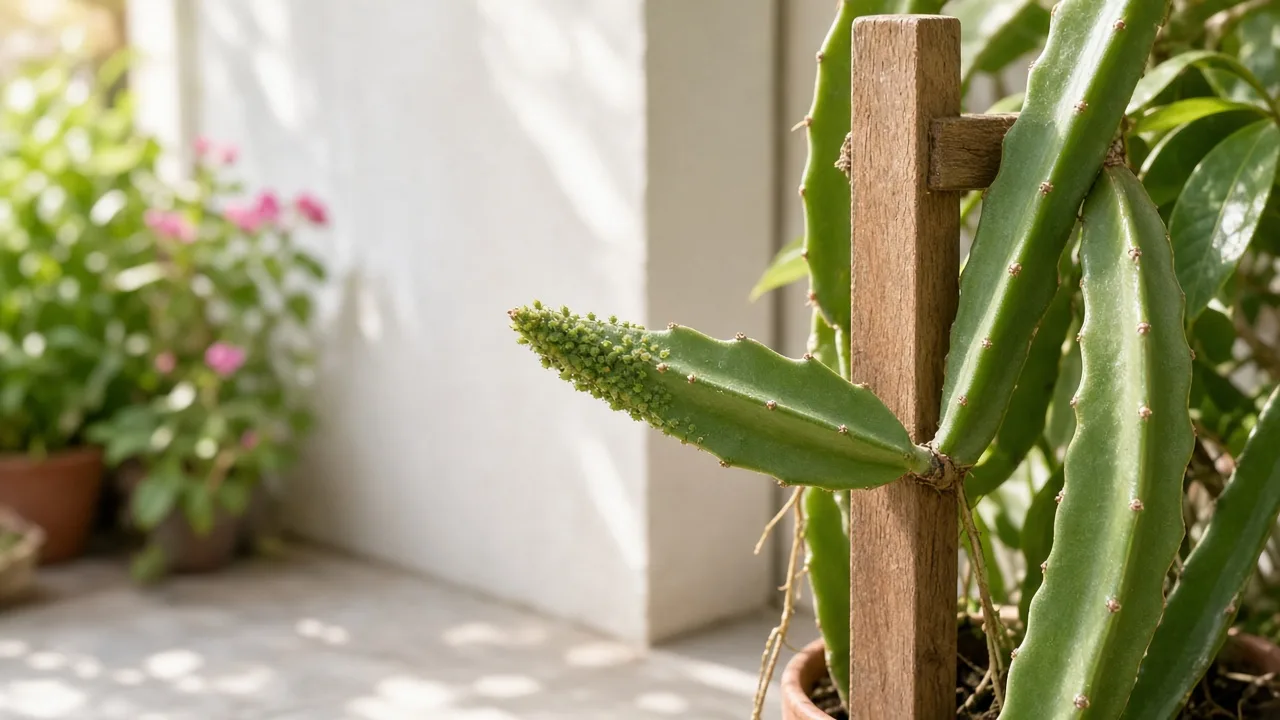
Aphids on Dragon Fruit: Causes, Checks & Fixes
This guide covers aphids on Dragon Fruit. See also the general Aphids guide, watering, and light pages for this plant.
Aphids on Dragon Fruit: Causes, Checks & Fixes
Quick answer
Aphids on Dragon Fruit (Selenicereus undatus, pitaya) are small sap-sucking insects that settle on the softest tissue on each three-ribbed stem—new areoles, unfolding wings, aerial root pads, and tight flower buds before the one-night bloom. They pierce tender succulent tissue as it expands, leaving shiny honeydew on ribbed stems, sometimes ants on the trellis post, and distorted spring shoots. Established vines on a sturdy trellis rarely die from aphids alone when you catch colonies before buds open.
For how aphids behave on plants in general, see our aphids guide. On pitaya, the decisive check is live insects and stickiness on new ribs and buds—not wrinkled mature stems from underwatering or yellow mushy segments from overwatering without any insects.
First step: isolate the plant and rinse aphids off each new stem segment, areole line, and bud cluster with a strong stream of lukewarm water. Work along each rib from base to tip, angle the spray so water runs off rather than pooling at the stem base, and let stems dry in bright sun or strong light the same day so wet ribs do not sit in humid shade. Only after a thorough rinse should you consider insecticidal soap on persistent colonies.
When to use this page vs other Dragon Fruit guides
- Dragon Fruit overview — Species profile, trellis needs, and bloom timing when pests are not the main question.
- Dragon Fruit problems hub — Browse all common pitaya issues in one place.
- Mealybugs on Dragon Fruit — White cottony masses in stem joints instead of pear-shaped aphids.
- Spider mites on Dragon Fruit — Fine stippling and webbing in dry heated rooms, not sticky new rib growth.
- Dragon Fruit watering — Dry-down rhythm when stems wrinkle without stickiness or insects.
- Dragon Fruit fertilizer — Nitrogen timing when soft shoots—not pests—are the concern.
Aphids vs mealybugs vs spider mites on ribbed stems
Pitaya pests are easy to mix up because all three can show up on the same trellis in warm weather.
| What you see | Likely pest | Next step |
|---|---|---|
| Pear-shaped insects on new ribs, areoles, and bud tips; sticky honeydew; ants on post or pot | Aphids (this guide) | Isolate, blast new growth, repeat before spray |
| White cottony masses where wings meet the stem or in aerial root clusters | Mealybugs | Mealybugs on Dragon Fruit |
| Fine stippling, webbing, dull gray ribs; worse in dry winter greenhouses | Spider mites | Spider mites on Dragon Fruit |
| Firm wrinkled stems, dry pot weight, no stickiness | Underwatering | Underwatering and watering guide |
| Soft yellow ribs, sour smell, wet mix | Rot / overwatering | Overwatering and root rot |
If honeydew is present but you cannot find insects, follow ant trails upward—they often farm aphids or mealybugs on the softest growth above.
What aphids look like on Dragon Fruit
Pitaya grows as a climbing, often epiphytic cactus with three-winged succulent stems that branch from a trained central leader on a post or arbor (NC State Extension). New segments emerging from areoles are softer than hardened ribs below, which is where aphids feed on soft, new plant growth. UC IPM describes aphids as small, soft, pear-shaped insects that may be green, yellow, brown, red, or black and often cluster in dense groups on stems.
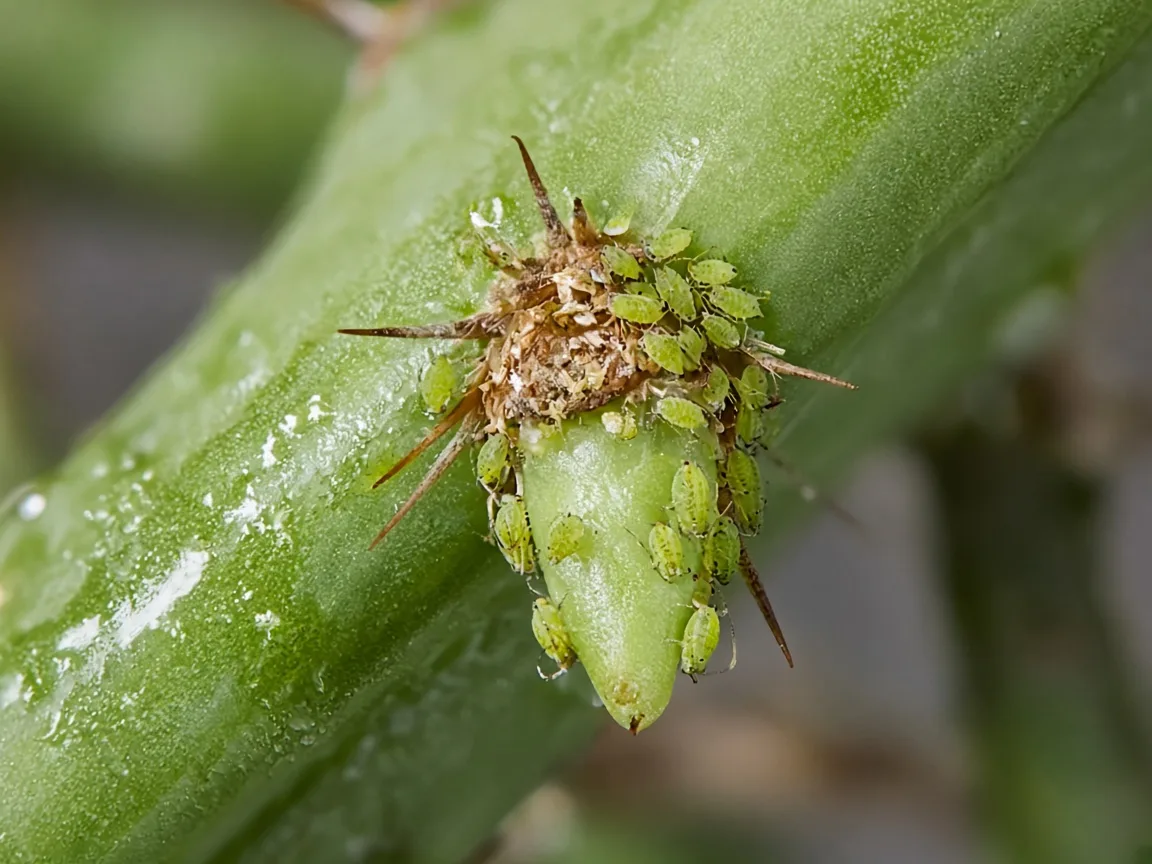
Green aphid cluster tucked where a fresh rib segment meets an areole—compare with firm, dry older wings below.
Typical aphid signs on pitaya:
- Clusters on the newest few inches of each cordon, especially the trellis top where growth is fastest
- Sticky honeydew on rib edges and trellis ties; black sooty mould may follow on dried honeydew (RHS)
- Slightly twisted or shortened new wings compared with clean segments on the same vine
- Ants on the pot rim, post, or attracted to dragon fruit like other pitaya pests
- Winged aphids when colonies are crowded—common before populations spread to neighboring containers
What is usually not aphids:
- White powdery threads in protected crevices (mealybugs)
- Webbing and speckled gray ribs in dry air (spider mites)
- Brown corky patches on sun-exposed mature ribs (normal aging or sun stress)
- Night flowers that fail to open with no insects visible (pollination or chill issues—not this page)
Where aphids hide on trellised pitaya (plant-specific)
Unlike broad-leaf houseplants, dragon fruit has no leaf blades—pests concentrate on stem geometry instead.
Trellis top and tipped leaders. Growers train one stem up a post and tip it to force branching. Those fresh forks and the highest areoles push the softest tissue on the whole plant, especially during warm-season flushes when pitaya grows rapidly in sun.
Flower and fruit buds. Buds form on stem edges before the fragrant one-night bloom. Aphids on tight bud scales can weaken flowers right when you need hand pollination for fruit set. Inspect buds weekly from late spring through the flowering window described in your light and seasonal care routine.
Aerial root pads. Epiphytic habit means roots emerge along ribs where they touch moist support. Ants and aphids sometimes share that humid microclimate. Check behind ties and where stems rest on the post.
Underside of rib “valleys.” The three-winged profile creates shaded grooves where honeydew pools and sooty mould starts. Rotate the pot or walk the trellis so you see every face of each cordon.
Why Dragon Fruit gets aphids
Aphids are opportunists on many hosts; pitaya gives them tender succulent shoots on a predictable warm-season schedule.
Rapid spring and summer growth. When temperatures rise and you resume deeper watering from bloom through harvest, new ribs expand quickly. Populations can increase rapidly when warm, matching pitaya’s most active months.
Nitrogen-rich feeding. Heavy nitrogen during flush pushes soft, high-moisture shoots that draw aphids to tender growth. If you recently fertilized for fruiting, scout extra carefully for the next two weeks—see fertilizer timing before doubling feed to “fix” pests.
Ant protection. Ants protect aphids from natural enemies while harvesting honeydew. Outdoor pitaya on posts often has ant highways from soil to trellis top; indoor balcony plants show the same on saucers.
Crowded canopy after skipped pruning. Dense overlapping ribs trap humidity. UF/IFAS links wet, poorly aired stems to disease on pitaya (UF/IFAS pitaya guide); aphids thrive in the same sheltered pockets. Thin crowded arms for airflow once pest pressure drops.
Stressed vines. Overwatered or shaded vines push weak shoots. Stress alone does not create aphids, but it slows recovery after feeding damage.
How to confirm the cause
Work through these checks before spraying chemicals:
- Live insects — Gently disturb the newest rib tip. Aphids move slowly; cornicles on the rear distinguish them from other insects.
- Stickiness test — Rub a rib edge with a tissue. Honeydew feels tacky; mineral dust or dried sap does not.
- Ant trails — Track ants from soil to the highest sticky zone; that is your primary inspection zone.
- Pot and stem firmness — Firm ribs with dry-weight pot suggest pests, not rot. Soft yellow tissue with sour smell points to root rot instead.
- Season context — New colonies on outdoor pitaya returning from summer often hitchhiked on other container plants—isolate new arrivals before tying them to the same trellis.
- Beneficial signs — Lady beetles, lacewings, or parasitized “mummy” aphids mean biocontrol is working; avoid broad sprays that kill helpers (UC IPM).
If you find sticky ribs but zero insects after two inspections, wipe honeydew and re-check in three days—colonies may be hiding in curled bud scales.
First fix for Dragon Fruit
Isolate the vine and knock aphids off new growth with a strong stream of lukewarm water.
UC IPM recommends spraying sturdy plants with water to dislodge aphids before pesticides. On pitaya:
- Move the pot away from other cacti and edibles so winged aphids cannot resettle.
- Use a hose nozzle or shower sprayer; support the pot so it does not tip on a tall trellis.
- Target areoles, bud clusters, and the undersides of rib valleys—not just the top surface.
- Repeat every two to three days until you see no live aphids on two consecutive checks.
Let ribs dry in full sun the same day when possible. Wet stems in stagnant greenhouse air overlap with the disease risks UF/IFAS warns about on pitaya—dry quickly or improve fan airflow.
Do not coat the whole plant in oil or soap on day one. Confirm live aphids, complete at least one thorough rinse, then escalate only where colonies remain.
Step-by-step recovery if water alone is not enough
After two or three water knock-downs:
- Prune only heavily infested tips — Snip distorted bud clusters or aphid-packed tips into a bag; disinfect pruners between cuts. Do not strip the whole trellis in one session.
- Manage ants — Band the post or pot with sticky barriers or bait ants away so lady beetles can work (UC IPM).
- Insecticidal soap on new growth — Soaps kill only insects contacted during application. Coat rib tips and buds thoroughly; avoid drought-stressed or sun-scorched vines the same afternoon.
- Repeat on a seven-day cadence — Repeat applications are usually necessary because eggs hatch and aphids hide in bud scales where contact sprays miss (UC IPM).
- Hold nitrogen — Pause high-nitrogen feed until new ribs open clean for two weeks; resume on the fertilizer schedule only after pest counts drop.
Avoid systemic insecticides on edible pitaya unless the label explicitly allows fruiting plants and you observe all pre-harvest intervals.
Recovery timeline and what improvement looks like
Mild colonies on one cordon often collapse within one to two weeks of consistent water knock-down and ant control. Multi-arm infestations during peak growth may need three to four weeks including soap cycles.
Signs you are winning:
- New rib segments expand without stickiness
- No live aphids on two weekly inspections
- Ant traffic on the post drops
- Sooty mould stops spreading (existing mould can be wiped off; it is harmless to the plant but unsightly)
Signs you need to escalate:
- Winged aphids appear on several containers
- Bud clusters abort before opening
- Stems stay sticky within 48 hours of each rinse
- Fungus gnats surge in the same wet, organic mix—fix moisture while treating pests
Distorted young ribs usually keep their kink until pruned or aged out; judge success by clean new growth, not perfect old scars.
Mistakes to avoid on pitaya
- Spraying soap on the entire vine in midday sun — Treat new tips in morning or evening so ribs dry before intense light.
- Leaving trellis ties soaked in honeydew — Replace fabric ties that ants colonize.
- Fertilizing through an active infestation — Soft nitrogen flush feeds both vine and aphids.
- Ignoring ants — Biocontrol fails while ants tend colonies.
- Confusing mealybugs for dust — White wax in rib joints needs a different treatment path (mealybugs).
How to prevent aphids next season
- Scout trellis tops at least twice a week during rapid growth.
- Quarantine new cuttings before they share a post with fruiting vines.
- Rinse outdoor plants before moving them into greenhouses for winter.
- Prune for airflow per UF/IFAS pitaya guidance so ribs dry after rain or irrigation.
- Fertilize moderately; tie feed to growth stage in the fertilizer guide.
Related Dragon Fruit guides
- Dragon Fruit overview
- Dragon Fruit watering
- Dragon Fruit light
- Mealybugs on Dragon Fruit
- Spider mites on Dragon Fruit
- Dragon Fruit problems hub
Related tool
Use the Pest Identifier Tool to narrow causes for aphids on this plant before changing multiple variables at once.