Mealybugs on Dragon Fruit: Causes, Checks & Fixes
Quick answer
Mealybugs on dragon fruit cluster in areoles along three-winged cladodes, at trellis ties, and in the crown where stems branch. First step: isolate the vine, inspect ribs and aerial roots with a hand lens, and dab visible insects with 70% isopropyl alcohol on a cotton swab before spraying the whole plant.
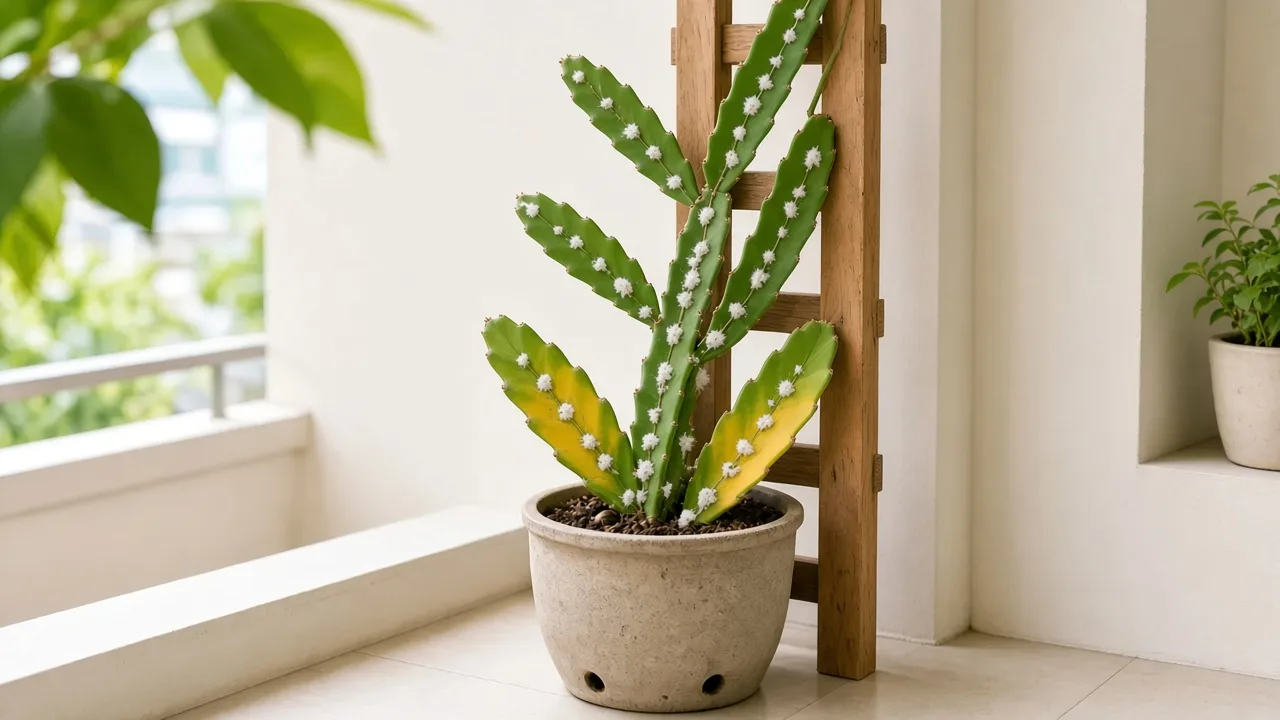
Mealybugs on Dragon Fruit: Causes, Checks & Fixes
This guide covers mealybugs on Dragon Fruit. See also the general Mealybugs guide, watering, and light pages for this plant.
Mealybugs on Dragon Fruit: Causes, Checks & Fixes
Quick answer
Mealybugs on dragon fruit (Selenicereus undatus, pitaya) are small, wax-covered sap feeders that tuck into the sheltered joints this climbing cactus creates—areoles along three-winged cladodes, stem forks at the trellis crown, and aerial roots gripping a post. They rarely kill a firm, well-drained vine overnight, but they weaken new segments, coat ribs in sticky honeydew, and invite ants and sooty mold if left alone.
First step: isolate the plant and inspect ribs from both sides with a hand lens. Mealybugs hide in areole pockets long before white wax shows from across the patio. Once you confirm live insects, dab each cluster with 70% isopropyl alcohol on a cotton swab. Work slowly along the trellis so you do not miss segments tied behind tape or shade cloth.
For how mealybugs behave on houseplants in general, see our mealybugs hub. On pitaya, the useful clues are cotton in areoles on green cladodes, honeydew on ribs or the pot rim, and ants on the post—not the hard scales on ripe fruit.
What mealybugs look like on dragon fruit
Adult mealybugs are soft-bodied insects covered with white, powdery or cottony wax, often about 3/16 inch long. They gather in colonies rather than single dots. On dragon fruit, check:
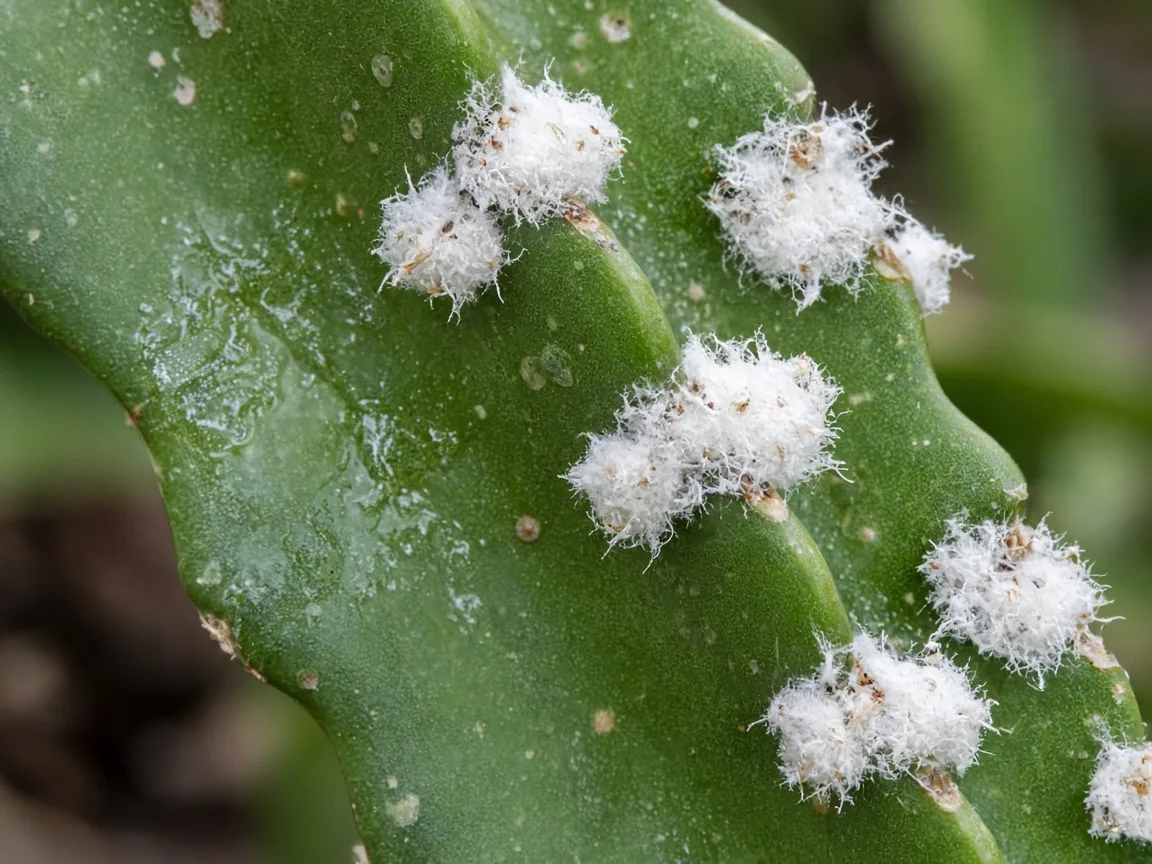
Mealybugs on dragon fruit cladode ribs—compare cottony wax in areoles with firm green tissue at the growing tip.
- Areoles along cladode ribs — the small bumps where spines or bristles emerge; wax clumps here first on sprawling stems
- Stem nodes and forks — where a new segment branches from an older wing, especially under trellis ties
- Trellis crown and tie points — shaded, humid pockets behind tape or cloth wraps
- Aerial roots — white cotton on root tips or along roots climbing a post (easy to confuse with healthy root fuzz until you see honeydew)
- Pot collar and drainage holes — a sign of root-zone mealybugs in heavy patio containers
Supporting signs include white cottony egg sacs, shiny honeydew on ribs or saucers, ants marching up the post to harvest that honeydew, and sooty mold—a black fungal coating on sticky residue, not inside the stem tissue. Heavy feeding can yellow or wrinkle outer segments and slow new tip growth on an otherwise fast vine.
NC State Extension lists ants, scale, and mealybugs among problems to monitor on this species. UF/IFAS reports mealybugs among insect pests on pitaya in Florida production—home trellises see the same insects on a smaller scale.
Why dragon fruit gets mealybugs
Dragon fruit is not uniquely prone among ornamentals, but its architecture helps pests hide. Thick cladodes overlap on a crowded trellis top, shading colonies from casual inspection until honeydew drips onto lower ribs or the pot edge. Warm terrace culture keeps mealybugs active year-round in frost-free climates; indoor wintering can concentrate insects on the one bright plant you brought inside.
Common introduction routes:
- New stem cuttings or nursery pots tied to a post without quarantine
- Neighboring infested succulents, hibiscus, or citrus on the same patio
- Ant-assisted spread — ants protect mealybug colonies and move crawlers between pots
- Dense, unpruned canopies — UF/IFAS notes that a tight mass of stems reduces light penetration and can increase insect and disease pressure; mealybugs thrive in those humid pockets
Stressed pitaya attracts pests faster than a firm vine in full sun with open airflow. Leggy growth in too little light produces soft new tips that mealybugs prefer for egg laying. High-nitrogen fertilizer during active summer growth pushes lush segments that are easier to pierce. Chronic wet soil does not cause mealybugs directly, but root stress slows recovery after feeding damage and overlaps with overwatering symptoms.
Expect more pressure during warm months when dragon fruit elongates quickly—UF/IFAS cites rapid stem growth under good conditions. Monsoon humidity without airflow at the crown can keep wax colonies comfortable even when you cut back water at the roots.
How to confirm the cause
Work through these checks in order:
- Location on the plant — White cotton in areoles and nodes fits mealybugs. Fixed brown or white bumps that do not smear when scraped point to scale instead.
- Crush test — Touch a cluster with a cotton swab. Mealybugs smear pink or reddish when crushed; dried sap or mineral crust wipes off without color.
- Movement check — Young crawlers may shift slowly when disturbed. Scale stays put; corky sunscorch does not move.
- Honeydew and ants — Sticky residue that returns within a day after wiping, plus ant trails on the post, confirms sap feeders.
- Magnified inspection — A 10× lens reveals segmented bodies and waxy filaments. Aphids on Dragon Fruit are pear-shaped without wax; spider mites come with fine stippling and webbing on drought-stressed ribs.
- Root-zone screen — White wax at drainage holes or on roots when you lift the pot suggests soil-dwelling mealybugs—more common in peat-heavy mixes that stay damp at the collar.
- Collection scan — Check every pot within arm’s reach of the trellis. Mealybugs jump hosts across patio rows quickly.
If you see white fuzz but no insects, honeydew, or ants, reconsider healthy aerial root tips or dried latex before treating.
First fix for dragon fruit
Isolate the vine and dab visible mealybugs with 70% isopropyl alcohol on a cotton swab or small brush.
Move the pot away from other plants immediately—if pests are detected, isolate the plant from others. Untie or loosen fabric wraps enough to reach hidden ribs. Dab mealybugs directly; treated insects turn light brown. Avoid flooding the crown or soaking every cladode on the first pass—target colonies, not the whole canopy.
Keep the plant in bright light without scorching midday sun on alcohol-treated ribs for 24–48 hours. Outdoor vines on reflective terraces burn more easily when residue sits on heat-stressed tissue.
Do not apply horticultural oil, soap, or systemic insecticide in the same session as your first alcohol pass unless the infestation is severe and you have already isolated the vine. Confirm live mealybugs remain after dabbing before stacking chemicals.
Step-by-step recovery
Light infestation (few clusters on one or two segments)
- Repeat alcohol dabs every five to seven days for three to four weeks—repeat weekly until the infestation is gone.
- Inspect crown forks and tie points each pass; crawlers resettle behind tape you cleared last week.
- Wipe honeydew from ribs with a dry cloth so sooty mold does not block light to growing tips.
Moderate infestation (multiple ribs, one trellis)
- Continue weekly alcohol dabs on insects and egg sacs.
- Add insecticidal soap labeled for ornamentals if colonies persist—spray until insects are wet, covering areoles and forks. Repeat every four to seven days for two to three cycles to catch newly hatched crawlers. Spray in early morning or evening, not in harsh midday sun.
- Let ribs dry the same day—do not leave soap pooled in the crown. Resume normal soak-and-dry watering only after foliage is dry.
- Open the canopy with selective pruning per UF/IFAS airflow guidance—remove crowded stems that touch soil and improve light into the trellis top.
- Wash sooty mold once insects are gone; the mold itself does not need fungicide.
Heavy infestation (wax throughout crown, multiple pots, or root mealybugs)
- Treat every affected pot on the same weekly schedule so reinfestation does not bounce between neighbors.
- For root mealybugs, unpot, rinse mix from roots, inspect for white wax, and repot into fresh fast-draining pitaya mix. Discard heavily infested soil rather than composting on the terrace.
- If contact methods fail after three full cycles, contact your local UF/IFAS or cooperative Extension office for current labeled options in your area—especially on food-producing vines where residue rules matter.
- Discard segments with mushy bases that resist three weeks of treatment; propagate clean cuttings from firm upper cladodes only after callusing.
Recovery timeline
Within one week of thorough alcohol dabs, live counts should drop sharply if you reached crown forks and aerial roots.
Three to four weeks of consistent weekly treatment usually clears moderate patio infestations. Watch for firm new tip growth—that is the best sign the vine is recovering.
Older fed-upon segments may stay slightly yellow or wrinkled until replaced by normal growth. Do not expect cosmetic recovery on ribs that were heavily drained.
Worsening signs include fresh wax daily after three treatment cycles, ants spreading across multiple trellises, or basal segments softening while honeydew persists—inspect for root rot separately from pest damage.
Lookalike symptoms
| What you see | Likely cause | How to tell apart |
|---|---|---|
| White cotton in areoles | Mealybugs | Pink smear when crushed; sticky honeydew |
| Fixed bumps on ribs | Scale insects | Immobile; hard shell; scrape reveals insect beneath |
| Pear-shaped green insects on soft tips | Aphids | No waxy cotton; often on newest growth |
| Fine stippling, webbing | Spider mites | Hot dry air; near microscopic |
| Tan corky patches on one sun face | Sunscorch | Firm dry tissue; no honeydew |
| Black coating on ribs | Sooty mold on honeydew | Wipes off after insects are gone |
What not to do
Do not leave the vine on a shared trellis while treating—crawlers and ants reach neighbor pots within days.
Avoid soaking the entire plant with alcohol in hot direct sun; targeted dabs are safer on succulent cladodes.
Skip high-nitrogen fertilizer during an active infestation; soft new ribs feed the next generation.
Do not assume one alcohol session solved it—crawlers hatch over several weeks.
Avoid leaving tie tape soaked in soap or water against the stem; rot risk rises when the crown stays wet in low airflow—overwatering and poor drainage already invite stem rot on pitaya.
Do not compost infested prunings beside clean pots on a balcony.
Dragon fruit care cross-check
Mealybug recovery goes faster when baseline care is stable:
- Light — full sun with gradual hardening keeps growth firm; weak shade produces soft tips pests prefer
- Water — water when mix is almost dry, then drain fully; never let the collar stay soggy after treatments
- Soil — coarse, free-draining mix; wet peat hides root mealybugs and mimics yellowing ribs
- Airflow — prune crowded stems so ribs dry after rain; UF/IFAS ties dense canopies to more pest and disease issues
- Season — scout more often during rapid summer elongation; ease off nitrogen on stressed vines
How to prevent mealybugs next time
Quarantine new cuttings and nursery plants for two weeks before tying them to a production trellis—quarantine and monitor newly purchased plants during that window. Inspect areoles, forks, and drainage holes before mixing pots.
Scout monthly during warm growth, especially after buying pollinator partners or moving vines indoors for frost protection. One areole checked early prevents a row-wide outbreak later.
Keep pitaya firm and open rather than overfed. Match fertilizer to the fertilizer guide only when ribs are plump and dry-down is normal.
If ants appear on the post, find the honeydew source on the ribs before the ant trail establishes a long-term nursery on your vine.
For species context, see the Dragon Fruit overview.
When to worry
Most single-trellis mealybug problems are manageable with isolation, alcohol dabs, and three to four weeks of follow-up. Escalate when:
- Multiple pots on a terrace show live wax at the same time
- Root mealybugs appear at drainage holes after unpotting
- Sooty mold coats most of the canopy and blocks light to tips
- Tip growth stops while sticky residue and wax remain after three full treatment cycles
- Basal segments soften—treat rot and pests as separate problems
A heavily wax-coated crown on a firm lower stem can still be saved by treating forks and letting clean side shoots take over. When chronic reinfestation returns every month, propagate insect-free upper cuttings into fresh mix rather than fighting the same trellis indefinitely.
Conclusion
Mealybugs on dragon fruit are a contact pest on cladode joints, not a mystery “leaf” disease. Confirm cotton in areoles, honeydew, and ants; dab with alcohol before you spray the whole terrace. Pair treatment with open airflow, correct dry-down, and quarantine for new cuttings so pitaya can put energy back into firm ribs and night flowers—not feeding the next crawler generation.
Related Dragon Fruit problems
- Dragon Fruit overview
- Aphids
- Spider mites
- Yellow leaves
- Root rot
- Overwatering
- All Dragon Fruit problems
When to use this page vs other Dragon Fruit guides
- Dragon Fruit watering guide — Use for dry-down checks before assuming pests are the only stressor.
- Dragon Fruit problems hub — Browse common issues on this species.
- Aphids on Dragon Fruit — Entry point when insects are pear-shaped on soft tips without wax.
- Brown tips on Dragon Fruit — Entry point when damage is corky and dry at segment ends, not cottony wax.